
This lesson provides a deep dive into motorcycle tyres, covering essential specifications such as size, load index, and speed ratings. You will learn the critical impact of tyre pressure on handling and gain the skills to perform necessary safety inspections required for your Italian motorcycle theory exam.
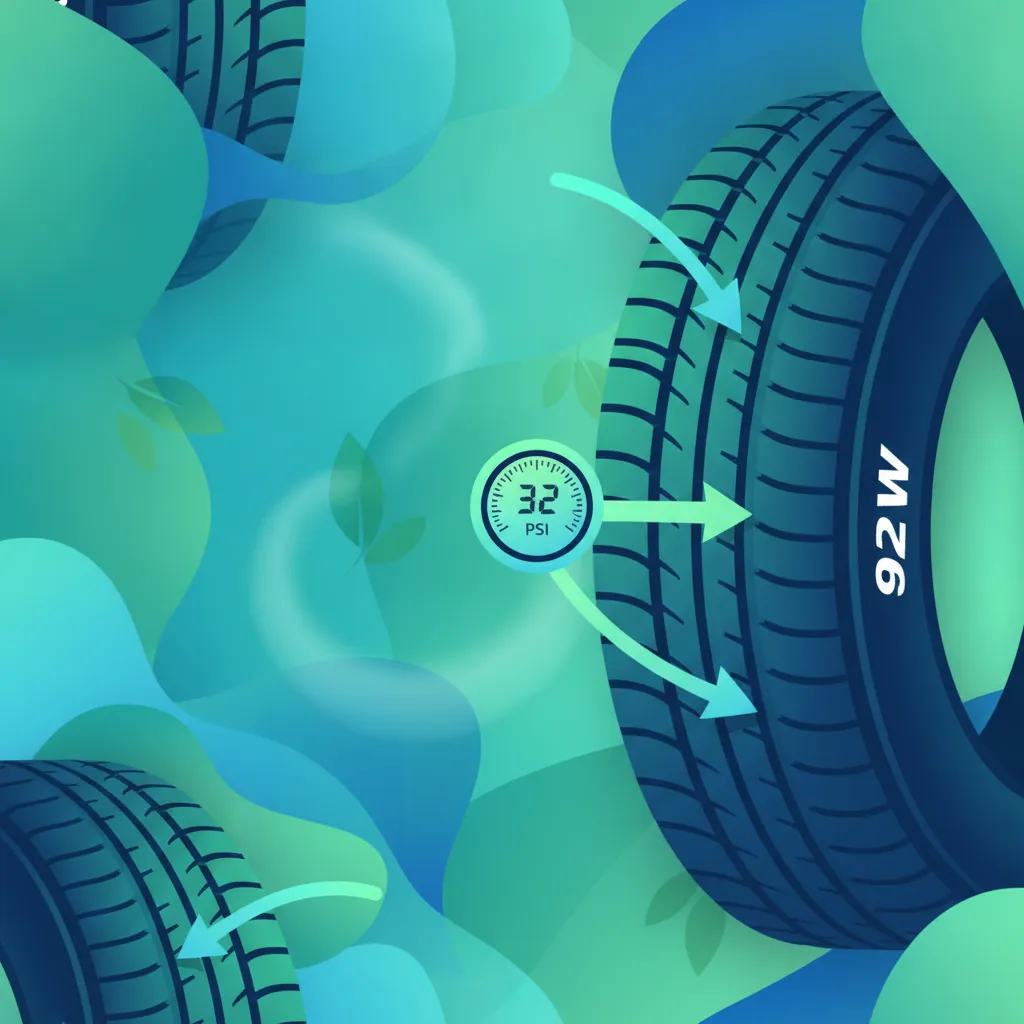
Lesson content overview
Motorcycle tyres are the sole point of contact between your vehicle and the road, making their condition and correct specification paramount for safety, handling, and overall performance. Understanding how tyres work, how to interpret their markings, and how to maintain them properly is fundamental for any rider preparing for the Italian Driving License Theory Course for Motorcycle Categories A1, A2, & A. This lesson delves into the critical aspects of motorcycle tyres, from interpreting sidewall specifications to conducting essential pre-ride inspections.
Every motorcycle tyre carries a wealth of information on its sidewall, encoded in a standardized alphanumeric sequence. These markings dictate everything from the tyre's dimensions to its maximum load and speed capabilities, ensuring compatibility with your motorcycle and safe operation. Correctly interpreting these specifications is the first step towards responsible tyre selection and maintenance.
The primary set of numbers and letters typically found on a tyre's sidewall defines its size and construction type. This code, for example, 120/70 ZR17, provides essential information about the tyre's physical dimensions and structural characteristics.
120 means the tyre is 120 millimetres wide. A wider tyre can offer a larger contact patch, but it can also alter handling characteristics and may not always result in improved grip if it doesn't match the motorcycle's design.70 signifies that the sidewall height is 70% of the 120 mm width. A lower aspect ratio typically means a shorter sidewall, which can offer more precise handling but a harsher ride, while a higher aspect ratio provides more cushioning.Z in ZR is often associated with a high-speed rating, specifically for speeds exceeding 240 km/h. This implies a radial tyre designed for very high speeds.17 means the tyre fits a 17-inch rim. Using a tyre with an incorrect rim diameter is impossible or extremely dangerous.It is crucial that the tyre size installed on your motorcycle matches the manufacturer's specifications. Using an incorrect size can negatively impact handling, stability, and safety, potentially leading to an unsafe riding experience or even damage to the motorcycle.
Beyond dimensions, a tyre's load-carrying capability is vital. The load index is a numerical code on the sidewall that corresponds to the maximum weight, in kilograms, that a single tyre can safely support when properly inflated. This is a critical specification, as exceeding it can lead to tyre deformation, overheating, and catastrophic failure.
For example, a load index of 62 corresponds to a maximum load of 265 kg. When selecting tyres, ensure that their load index is equal to or greater than the requirements specified by your motorcycle manufacturer, taking into account the combined weight of the motorcycle, rider, passenger, fuel, and any luggage. A higher load index than required might mean a stiffer tyre and potentially increased rolling resistance, but it ensures an adequate safety margin for varying loads.
The speed rating is an alphabetic code that denotes the maximum continuous speed for which the tyre is designed. This rating is crucial for ensuring the tyre's structural integrity at high speeds, preventing overheating and potential blowouts caused by centrifugal forces.
Common speed ratings range from Q (up to 160 km/h) to Z (over 240 km/h) and Y (up to 300 km/h), with many intermediate ratings in between (e.g., H for 210 km/h, V for 240 km/h). Your motorcycle's tyres must have a speed rating that meets or exceeds its maximum speed capability. Using a tyre with an insufficient speed rating, especially on a high-performance motorcycle, is highly dangerous and can lead to tyre failure at sustained high speeds.
Correct tyre pressure is perhaps the single most critical factor influencing a motorcycle's handling, grip, braking efficiency, fuel economy, and tyre lifespan. It's not merely about keeping the tyre inflated; it's about maintaining the optimal shape of the tyre's contact patch with the road.
The contact patch is the small area of the tyre that is in direct contact with the road surface at any given moment. Its size and shape are primarily determined by tyre pressure, load, and speed.
pinch flat or even a blowout. Handling will feel sluggish, and the motorcycle may wallow or weave.Tyre pressure should always be checked when the tyres are "cold." Cold pressure refers to the tyre pressure measured before riding, when the tyre temperature is ambient, typically after the motorcycle has been stationary for at least three hours or has been ridden for less than 1.5 km at low speed.
During riding, particularly at higher speeds or under heavy loads, tyres heat up due to friction and flexing. This increase in temperature causes the air inside the tyre to expand, raising the internal pressure. A "hot" tyre might show a pressure reading 0.2 to 0.3 bar (2-3 psi) higher than its cold pressure. This is normal and should be accounted for; never release air from a hot tyre to match its cold pressure specification, as it will become dangerously under-inflated once it cools down.
Ensure the motorcycle has been stationary for at least three hours or ridden minimally.
Remove the valve cap from the tyre.
Press a calibrated tyre pressure gauge firmly onto the valve stem until the reading stabilizes.
Note the pressure reading.
Compare the reading to the manufacturer’s recommended cold pressures (found in your owner's manual or on a sticker on the motorcycle, often near the swingarm or chain guard).
Add or release air as necessary until the correct pressure is reached.
Replace the valve cap to prevent dirt and moisture ingress.
Repeat for both front and rear tyres, as they often have different recommended pressures.
Maintaining correct tyre pressure is not just a recommendation; it's a safety critical practice. Deviations can have severe consequences:
pinch flats, where the tyre is pinched against the rim, often damaging the inner tube or tubeless tyre bead.The tread on your motorcycle tyres is not just for aesthetics; it plays a vital role in providing grip and safety, particularly on wet roads. The depth and pattern of the tread grooves are designed to channel water away from the contact patch, preventing hydroplaning and maintaining traction.
Tyre tread patterns feature a series of grooves, sipes, and blocks designed to optimize performance. On wet surfaces, these grooves act like channels, evacuating water from beneath the tyre. Without adequate tread depth, water cannot be effectively displaced, causing the tyre to ride on a film of water rather than the road surface. This phenomenon is known as hydroplaning, resulting in a complete loss of steering, braking, and acceleration control.
In Italy, as in many European jurisdictions, there is a legal minimum tread depth for motorcycle tyres.
The generally accepted and recommended minimum tread depth for motorcycle tyres is 1.6 millimetres across the central three-quarters of the tread width and around the entire circumference. Riding with tread depth below this legal limit is not only dangerous but also illegal, potentially resulting in fines, penalty points, and possibly invalidating your insurance in the event of an accident.
To assist riders, tyres are typically equipped with wear indicators (often abbreviated as TWI - Tread Wear Indicators). These are small, raised bars located in the main tread grooves. When the tread wears down to the level of these indicators, it means the tyre has reached its minimum legal depth and requires immediate replacement.
Riding with insufficient tread depth severely compromises safety:
Regular inspection and maintenance of your motorcycle tyres are non-negotiable aspects of rider responsibility. These practices help ensure tyre integrity, predict potential issues, and prevent dangerous failures.
Tyre inspection should be an integral part of your pre-ride technical inspection checklist (as discussed in Section 2.5 of the Italian Driving License Theory Course). Before every ride, conduct a quick visual and tactile check:
Beyond routine wear, specific types of damage necessitate immediate attention and often tyre replacement:
Tyres need replacing for several reasons, not just when the tread is worn down:
2223 means the 22nd week of 2023).The Codice della Strada (Italian Road Code) and broader EU regulations impose strict requirements for motorcycle tyres to ensure road safety. Compliance with these rules is mandatory and enforced through penalties.
Rule: Riders must check tyre pressures before each ride and maintain them within the values prescribed by the motorcycle manufacturer.
Rule: Tyres must have a tread depth of at least 1.6 mm across the central three-quarters of the tread surface.
Rule: Tyres must meet or exceed the load index and speed rating specified by the vehicle manufacturer.
Rule: Tyres must not be repaired if the puncture is located on the tyre shoulder or sidewall.
Tyre performance is not static; it's dynamically affected by external conditions and how the motorcycle is used. Riders must understand these contextual variations to make informed decisions about tyre management.
The load carried by your motorcycle directly impacts tyre performance and pressure requirements.
Understanding key terms related to motorcycle tyres is vital for effective maintenance and communication.
The condition and proper maintenance of your motorcycle tyres are directly linked to your safety and the performance of your motorcycle.
By meticulously caring for your motorcycle tyres, you contribute significantly to a safer, more stable, and more enjoyable riding experience.
This lesson covers the critical aspects of motorcycle tyre safety essential for the Italian theory exam and road riding. Learners must understand how to decode sidewall markings for size, load index, and speed rating to ensure tyre compliance with manufacturer specifications. Correct tyre pressure management—checking only when cold and never releasing air from hot tyres—is fundamental to maintaining grip, handling, and preventing tyre failure. The legal minimum tread depth of 1.6mm must be respected, with replacement mandatory when wear indicators become flush. Finally, riders should inspect tyres before every ride for visible damage, understand that sidewall repairs are prohibited, and recognize that load, weather, and road conditions all affect optimal tyre performance and require adjusted maintenance practices.
A short set of high-value points that capture the most important learning from this lesson.
Tyre sidewall markings encode essential specifications: width, aspect ratio, construction type, rim diameter, load index, and speed rating that must meet or exceed manufacturer requirements.
Correct cold tyre pressure maximizes the contact patch for optimal grip; always check pressure when tyres are ambient temperature after at least three hours stationary.
The legal minimum tread depth in Italy is 1.6mm across the central three-quarters of the tread, indicated by wear indicators (TWI) that signal mandatory replacement.
Tyre pressure must never be released from a hot tyre to match cold specifications, as this creates dangerously low pressure once the tyre cools.
Sidewall and shoulder punctures are never safe to repair and require immediate tyre replacement due to structural stress in these areas.
Explore all units and lessons included in this driving theory course.
Load index is a numeric code (e.g., 62 = 265kg max load); speed rating is an alphabetic code (e.g., V = 240 km/h max). Both must equal or exceed motorcycle manufacturer specifications.
Under-inflation causes excessive sidewall flex, heat buildup, and increased blowout risk; over-inflation reduces contact patch and causes harsh, uneven wear.
Tyres degrade over time regardless of use; most manufacturers recommend replacement after 5-7 years, identifiable by the DOT code on the sidewall.
When carrying passengers or luggage, increase rear tyre pressure to the manufacturer's specified heavy-load values to maintain safe handling.
Hydroplaning occurs when insufficient tread depth prevents water displacement, causing complete loss of steering and braking control.
Assuming a visual check alone is sufficient for tyre pressure; a calibrated gauge must be used as even slightly under-inflated tyres feel normal to the touch.
Releasing air from hot tyres to match cold pressure specifications, not realizing the tyre will become dangerously under-inflated when cool.
Attempting to repair punctures on the tyre shoulder or sidewall, which compromises structural integrity and increases failure risk.
Relying solely on tread appearance rather than checking wear indicators (TWI bars), which are the definitive legal reference for minimum depth.
Fitting replacement tyres with a lower load index or speed rating than specified by the manufacturer, creating dangerous conditions at high speeds or under full load.
Lesson content overview
A short set of high-value points that capture the most important learning from this lesson.
Tyre sidewall markings encode essential specifications: width, aspect ratio, construction type, rim diameter, load index, and speed rating that must meet or exceed manufacturer requirements.
Correct cold tyre pressure maximizes the contact patch for optimal grip; always check pressure when tyres are ambient temperature after at least three hours stationary.
The legal minimum tread depth in Italy is 1.6mm across the central three-quarters of the tread, indicated by wear indicators (TWI) that signal mandatory replacement.
Tyre pressure must never be released from a hot tyre to match cold specifications, as this creates dangerously low pressure once the tyre cools.
Sidewall and shoulder punctures are never safe to repair and require immediate tyre replacement due to structural stress in these areas.
Explore all units and lessons included in this driving theory course.
Load index is a numeric code (e.g., 62 = 265kg max load); speed rating is an alphabetic code (e.g., V = 240 km/h max). Both must equal or exceed motorcycle manufacturer specifications.
Under-inflation causes excessive sidewall flex, heat buildup, and increased blowout risk; over-inflation reduces contact patch and causes harsh, uneven wear.
Tyres degrade over time regardless of use; most manufacturers recommend replacement after 5-7 years, identifiable by the DOT code on the sidewall.
When carrying passengers or luggage, increase rear tyre pressure to the manufacturer's specified heavy-load values to maintain safe handling.
Hydroplaning occurs when insufficient tread depth prevents water displacement, causing complete loss of steering and braking control.
Assuming a visual check alone is sufficient for tyre pressure; a calibrated gauge must be used as even slightly under-inflated tyres feel normal to the touch.
Releasing air from hot tyres to match cold pressure specifications, not realizing the tyre will become dangerously under-inflated when cool.
Attempting to repair punctures on the tyre shoulder or sidewall, which compromises structural integrity and increases failure risk.
Relying solely on tread appearance rather than checking wear indicators (TWI bars), which are the definitive legal reference for minimum depth.
Fitting replacement tyres with a lower load index or speed rating than specified by the manufacturer, creating dangerous conditions at high speeds or under full load.
Explore search topics learners often look for when studying Tyres, Pressure, Tread, and Load Index. These topics reflect common questions about road rules, driving situations, safety guidance, and lesson level theory preparation for learners in Italy.
Browse additional driving theory lessons that cover connected traffic rules, road signs, and common driving situations related to this topic. Improve your understanding of how different rules interact across everyday traffic scenarios.
Explore in-depth guidance on motorcycle tyre maintenance, including detailed inspection for damage, wear patterns, and understanding the legal aspects of tyre condition under the Codice della Strada. Learn when replacement is critical for safe Italian motorcycle riding.
This lesson details the importance of adhering to a motorcycle's recommended maintenance schedule to ensure safety and reliability. It explains the typical service intervals for changing critical fluids like oil and brake fluid, as well as replacing wear-and-tear items such as brake pads and tyres. The content highlights how preventative maintenance is key to identifying potential issues before they become hazardous.

This lesson emphasizes the critical role of tyres in vehicle safety, as they are the only point of contact with the road. It details how to check for correct tyre pressure, measure tread depth to ensure it is above the legal minimum, and identify uneven wear patterns. The content explains how proper tyre maintenance is essential for optimal grip, braking, and preventing aquaplaning.

This lesson establishes a crucial routine for every rider: the pre-ride technical inspection. It presents a systematic checklist, often remembered by acronyms, to verify the condition of essential components before starting a journey. Learners will understand how to check tyre pressures, brake function, fluid levels, lights, and final drive systems to prevent mechanical issues and enhance safety on the road.

This lesson emphasizes the rider's responsibility to ensure their vehicle is in safe, working order through regular maintenance and pre-ride checks. It outlines a simple yet effective routine for inspecting critical components like tires, brakes, lights, and mirrors. Performing these checks helps prevent mechanical failures and ensures the vehicle is always compliant and roadworthy.

This lesson focuses on the vital systems for visibility and communication: mirrors, lighting, and signals. It provides instruction on the proper adjustment of mirrors to minimize blind spots and the correct use of headlamps, indicators, and brake lights as per Italian regulations. The content underscores how maintaining these systems in full working order is crucial for being seen and signalling intentions clearly in traffic.
This lesson focuses on the comprehensive duties of a motorcyclist, from ensuring vehicle and equipment legality to following traffic regulations. It covers key obligations mandated by the Codice della Strada, such as mandatory insurance coverage and adherence to environmental rules. The material reinforces the importance of responsible road conduct and the legal consequences of non-compliance.

This lesson focuses on how to adapt riding techniques to maintain traction on compromised surfaces. It identifies common hazards such as wet leaves, manhole covers, gravel, and painted lines that can reduce the tyre's grip. Learners will understand how to use smooth and gentle throttle, brake, and steering inputs to prevent traction loss and maintain control in these challenging situations.
This lesson explains the difference between daily checks and long-term scheduled maintenance. It covers the legal requirement for periodic technical inspections ('revisione') to certify a vehicle's roadworthiness and the importance of adhering to manufacturer-recommended service intervals. Learners will understand their crucial role in reporting any mechanical defects promptly to ensure issues are rectified, maintaining the vehicle's safety and reliability over its service life.
This lesson details three interconnected and critical safety areas: tyres, suspension, and wheels. It teaches drivers how to conduct thorough visual inspections of tyres for correct inflation, sufficient tread depth, and any signs of damage. The lesson also explains the function of different suspension types and emphasizes the absolute importance of checking that all wheel fastenings are secure to prevent catastrophic failure.

This lesson teaches riders how to maintain a safe following distance using the two-second rule, which accounts for reaction time and braking distance. It covers grip management, explaining how tire condition and road surfaces like wet asphalt affect traction. Mastering these concepts is essential for anticipating hazards and preventing rear-end collisions.
Understand how tyre pressure, tread depth, and load index critically influence motorcycle grip and handling. Learn how these factors vary in different Italian weather and road conditions, essential knowledge for safe riding and the theory exam.
This lesson explains the physical effects of different weather conditions on motorcycle safety. It details how rain reduces tyre adhesion and increases the risk of hydroplaning, while fog severely limits visibility, requiring a significant reduction in speed. The content also covers how extreme heat and cold can affect tyre pressure and compound performance, necessitating adjustments from the rider.
This lesson focuses on how to adapt riding techniques to maintain traction on compromised surfaces. It identifies common hazards such as wet leaves, manhole covers, gravel, and painted lines that can reduce the tyre's grip. Learners will understand how to use smooth and gentle throttle, brake, and steering inputs to prevent traction loss and maintain control in these challenging situations.
This lesson emphasizes the critical role of tyres in vehicle safety, as they are the only point of contact with the road. It details how to check for correct tyre pressure, measure tread depth to ensure it is above the legal minimum, and identify uneven wear patterns. The content explains how proper tyre maintenance is essential for optimal grip, braking, and preventing aquaplaning.
This lesson teaches riders how to maintain a safe following distance using the two-second rule, which accounts for reaction time and braking distance. It covers grip management, explaining how tire condition and road surfaces like wet asphalt affect traction. Mastering these concepts is essential for anticipating hazards and preventing rear-end collisions.

This lesson focuses on the rider's active role in controlling the motorcycle through body positioning and weight shifts. It explains how to maintain a relaxed yet engaged posture to absorb road imperfections and provide precise inputs to the handlebars and footpegs. The content covers how leaning with the bike in corners and shifting weight during braking and acceleration significantly impacts the vehicle's stability and performance.

This lesson provides a thorough examination of the Italian motorcycle theory test's structure and content. It details the number of questions, the multiple-choice format, and the minimum score required to pass for the A1, A2, and A license categories. The content is designed to prepare learners for the specific knowledge areas and administrative procedures involved in taking the official exam.

This lesson focuses on the unique demands of mountain riding, from handling steep inclines and declines to understanding the impact of altitude on the motorcycle's engine performance. It covers the effective use of engine braking on descents to prevent brake overheating. The content also prepares riders for the rapidly changing weather conditions, such as wind and fog, that are common at higher elevations.

This lesson trains riders to recognize and safely negotiate common road surface hazards that can suddenly reduce traction. It covers the risks posed by elements like loose gravel, wet leaves, painted lines, and manhole covers, especially when wet. The content provides strategies for scanning the road ahead to identify these dangers early and using smooth control inputs to maintain stability when crossing them.

This lesson explores the practical, on-road consequences of the different motorcycle license categories. It analyzes how power and weight restrictions directly affect a motorcycle's handling, acceleration, and braking capabilities. Learners will understand how these factors shape riding strategies and safety considerations, highlighting the competency development needed for each successive license level.
This lesson details three interconnected and critical safety areas: tyres, suspension, and wheels. It teaches drivers how to conduct thorough visual inspections of tyres for correct inflation, sufficient tread depth, and any signs of damage. The lesson also explains the function of different suspension types and emphasizes the absolute importance of checking that all wheel fastenings are secure to prevent catastrophic failure.
Find clear answers to common questions learners have about Tyres, Pressure, Tread, and Load Index. Learn how the lesson is structured, which driving theory objectives it supports, and how it fits into the overall learning path of units and curriculum progression in Italy. These explanations help you understand key concepts, lesson flow, and exam focused study goals.
In Italy, motorcycle tyres must have a minimum tread depth of 1.0 mm. However, it is highly recommended to replace them well before this point to maintain optimal grip in wet conditions.
You should always refer to the motorcycle owner's manual or the manufacturer's sticker, usually located on the swingarm or under the seat, to find the correct pressure for different load conditions.
Yes. Carrying a passenger or luggage significantly alters the load on your tyres. You must adjust the tyre pressure according to the manufacturer's specified values for a 'fully loaded' or 'passenger' configuration.
The load index indicates the maximum weight a tyre can carry at a specific speed. Using tyres that do not meet the manufacturer's specifications for your motorcycle model is illegal and compromises safety.
Start searching now to pinpoint exactly which Italian driving theory topics, road signs, or traffic rules you need to master. Use our advanced filters to build a custom practice session and ensure you're fully prepared for every aspect of your official driving licence exam.