
This lesson teaches you how to identify and safely react to common Italian road surface hazards that compromise your traction. Understanding these risks is essential for the motorcycle theory exam and for maintaining control in diverse weather and road conditions.

Lesson content overview
Welcome to this essential lesson within your Italian Driving License Theory Course for Motorcycle Categories A1, A2, & A. Mastering the recognition and safe negotiation of common road surface hazards is paramount for every motorcyclist. These seemingly minor obstacles can dramatically reduce tyre grip, leading to a sudden loss of control, especially for motorcycles with their smaller contact patches and inherent balance requirements.
This lesson will equip you with the knowledge to identify dangers such as wet paint, loose gravel, deep potholes, and fallen leaves, particularly when they are wet. We will explore how these hazards affect your motorcycle's stability and provide practical strategies for early detection and smooth handling. Understanding these risks and adopting proactive riding techniques are crucial steps toward preventing accidents, maintaining confidence, and adhering to the safety regulations mandated by the Codice della Strada. This knowledge builds upon your understanding of basic tyre traction, braking, cornering dynamics, and the impact of weather on road surfaces, all covered in previous lessons.
Motorcycles rely heavily on the coefficient of friction between their tyres and the road surface to maintain grip, steer, brake, and accelerate. When this friction is compromised by surface hazards, stability is immediately threatened. Different materials on the road surface, such as water, paint, loose stones, or organic matter, significantly alter this coefficient, requiring riders to adapt their approach.
Effective management of surface hazards on a motorcycle hinges on several core principles:
This section delves into the characteristics of common road surface hazards and outlines specific strategies for safely navigating each one.
Road markings, such as lane lines, pedestrian crossings, and directional arrows, are coated with paint that can become exceptionally slippery when wet. This hazard is particularly pronounced with fresh paint, which may still be drying and highly glossy, but even older, fully cured paint becomes significantly more treacherous in rainy or damp conditions.
Always assume painted lines are slippery when wet, even if they don't look excessively glossy. Reduce your lean angle and inputs when crossing them.
Loose gravel consists of small stones or aggregate that are not firmly embedded in the road surface. This can range from fine, sand-like material to coarser, pebble-sized stones. It is commonly found on rural roads, at the edges of paved roads, near construction sites, or at the entrance to driveways.
Potholes are depressions or holes in the road surface caused by the gradual deterioration of pavement, often exacerbated by traffic loads and weather cycles. They can vary from shallow indentations to deep chasms, sometimes filled with water or loose debris, making their true depth deceptive.
Never brake while crossing a pothole, as this can compress your front suspension and amplify the impact. Brake before the pothole if necessary.
Fallen leaves, particularly common in autumn, accumulate on road surfaces. While a few dry leaves might not pose a significant threat, a dense layer of wet leaves creates an extremely treacherous, low-friction surface, similar to wet paint or ice.
The Codice della Strada (Italian Highway Code) places a strong emphasis on adapting driving behaviour to prevailing road and environmental conditions to ensure safety. While specific articles might not explicitly list "wet paint" or "leaves," the general principles govern how drivers, including motorcyclists, must react to these surface hazards.
Adapt Speed to Surface Conditions:
Exercise Caution on Wet Paint:
Avoid Loose Gravel When Possible:
Report Significant Potholes:
Understanding common errors is as important as knowing the correct procedures. Avoiding these pitfalls can significantly enhance your safety.
Maintaining High Speed Over Wet Paint:
Riding Across Loose Gravel at High Speed:
Attempting to “Jump” a Pothole:
Neglecting Leaf Accumulation in Autumn:
Ignoring Pothole Reporting Obligations:
The impact of surface hazards is not constant; it varies significantly based on several contextual factors. A skilled rider considers these variations to make informed decisions.
Understanding the direct links between your actions and the consequences of encountering surface hazards is fundamental to safe riding.
Effectively managing surface hazards is a cornerstone of safe motorcycle riding within the Italian Driving License Theory Course. This lesson has detailed the critical need to:
By diligently applying these principles and techniques, you will significantly enhance your safety and confidence on Italian roads, transforming potential dangers into manageable challenges.
This lesson teaches motorcyclists to identify and safely negotiate four common surface hazards—wet paint, loose gravel, potholes, and fallen leaves—that compromise tyre grip and stability. The core strategy involves proactive scanning ahead to spot hazards early, significantly reducing speed before encountering them, and applying smooth, controlled inputs when crossing unavoidable hazards. Each hazard type requires specific techniques: crossing wet paint perpendicularly without leaning, staying upright on loose gravel with light handlebar grip, avoiding braking over potholes, and minimizing lean angles on wet leaves. These practices align with Article 141 of the Codice della Strada, which obliges all riders to adapt speed to prevailing road and environmental conditions to prevent accidents.
A short set of high-value points that capture the most important learning from this lesson.
Motorcycle stability depends on tyre-road friction, which surface hazards dramatically reduce by altering the coefficient of friction
The Principle of Anticipation requires continuous scanning ahead for visual cues indicating surface hazards like changes in road colour, texture, or reflectivity
When crossing unavoidable hazards, maintain a steady line with gentle, progressive inputs to throttle, brakes, and steering
Hazard severity varies with conditions—wet paint, wet leaves, and loose gravel become most dangerous when wet or at speed
Article 141 of the Codice della Strada mandates adapting speed to all surface conditions that reduce normal tyre grip
Explore all units and lessons included in this driving theory course.
Wet paint appears darker and more reflective than surrounding asphalt—assume all painted lines are slippery when wet
When riding on loose gravel, keep the motorcycle upright, grip the handlebars lightly, and let the front wheel float through
Never brake while crossing a pothole—brake before reaching it and cross at the shallowest possible angle
Wet leaves create an extremely low-friction surface similar to ice, especially dangerous when cornering
Always check mirrors and blind spots before swerving to avoid a pothole to prevent colliding with other vehicles
Maintaining normal speed through wet painted road markings, believing they are safe if not visibly glossy
Approaching loose gravel at normal cornering speed instead of reducing significantly and staying upright
Attempting to accelerate or 'jump' over a pothole, which destabilizes the front wheel upon impact
Underestimating wet leaf slipperiness and cornering at normal lean angles through leaf-covered areas
Failing to report dangerous potholes that could injure other vulnerable road users like cyclists
Lesson content overview
A short set of high-value points that capture the most important learning from this lesson.
Motorcycle stability depends on tyre-road friction, which surface hazards dramatically reduce by altering the coefficient of friction
The Principle of Anticipation requires continuous scanning ahead for visual cues indicating surface hazards like changes in road colour, texture, or reflectivity
When crossing unavoidable hazards, maintain a steady line with gentle, progressive inputs to throttle, brakes, and steering
Hazard severity varies with conditions—wet paint, wet leaves, and loose gravel become most dangerous when wet or at speed
Article 141 of the Codice della Strada mandates adapting speed to all surface conditions that reduce normal tyre grip
Explore all units and lessons included in this driving theory course.
Wet paint appears darker and more reflective than surrounding asphalt—assume all painted lines are slippery when wet
When riding on loose gravel, keep the motorcycle upright, grip the handlebars lightly, and let the front wheel float through
Never brake while crossing a pothole—brake before reaching it and cross at the shallowest possible angle
Wet leaves create an extremely low-friction surface similar to ice, especially dangerous when cornering
Always check mirrors and blind spots before swerving to avoid a pothole to prevent colliding with other vehicles
Maintaining normal speed through wet painted road markings, believing they are safe if not visibly glossy
Approaching loose gravel at normal cornering speed instead of reducing significantly and staying upright
Attempting to accelerate or 'jump' over a pothole, which destabilizes the front wheel upon impact
Underestimating wet leaf slipperiness and cornering at normal lean angles through leaf-covered areas
Failing to report dangerous potholes that could injure other vulnerable road users like cyclists
Explore search topics learners often look for when studying Surface Hazards: Wet Paint, Gravel, Potholes, Leaves. These topics reflect common questions about road rules, driving situations, safety guidance, and lesson level theory preparation for learners in Italy.
Browse additional driving theory lessons that cover connected traffic rules, road signs, and common driving situations related to this topic. Improve your understanding of how different rules interact across everyday traffic scenarios.
Learn about typical errors riders make when encountering wet paint, gravel, potholes, and leaves. This lesson focuses on understanding how these mistakes lead to loss of control and how to avoid them according to Italian theory.
This lesson focuses on how to adapt riding techniques to maintain traction on compromised surfaces. It identifies common hazards such as wet leaves, manhole covers, gravel, and painted lines that can reduce the tyre's grip. Learners will understand how to use smooth and gentle throttle, brake, and steering inputs to prevent traction loss and maintain control in these challenging situations.

This lesson teaches riders how to maintain a safe following distance using the two-second rule, which accounts for reaction time and braking distance. It covers grip management, explaining how tire condition and road surfaces like wet asphalt affect traction. Mastering these concepts is essential for anticipating hazards and preventing rear-end collisions.

This lesson provides specific strategies for riding on narrow rural roads, which often feature poor surfaces and limited sightlines. It details the techniques for approaching and navigating hairpin bends, including selecting the correct line, managing speed before entry, and using appropriate gear selection. The content emphasizes anticipating oncoming traffic and potential hazards hidden around blind corners for enhanced safety.
This lesson explains the physical effects of different weather conditions on motorcycle safety. It details how rain reduces tyre adhesion and increases the risk of hydroplaning, while fog severely limits visibility, requiring a significant reduction in speed. The content also covers how extreme heat and cold can affect tyre pressure and compound performance, necessitating adjustments from the rider.

This lesson addresses the specific challenges of sharing the road with two-wheeled motor vehicles like motorcycles and scooters. It highlights their reduced visibility and stability compared to cars, requiring drivers to double-check blind spots and maintain a greater following distance. The content also discusses common behaviors like lane filtering and the need for drivers to be predictable and signal intentions clearly.

This lesson focuses on the vital systems for visibility and communication: mirrors, lighting, and signals. It provides instruction on the proper adjustment of mirrors to minimize blind spots and the correct use of headlamps, indicators, and brake lights as per Italian regulations. The content underscores how maintaining these systems in full working order is crucial for being seen and signalling intentions clearly in traffic.
This lesson provides a comprehensive guide to riding on high-speed motorways, or autostrade. It details the correct procedures for safely merging into traffic from an entry ramp and exiting via a deceleration lane. The content reinforces strict lane discipline, rules for overtaking, and the importance of maintaining a significantly larger following distance to compensate for higher speeds and potential wind gusts.
This lesson explains how adverse weather conditions directly affect moped safety by reducing both tire grip and rider visibility. It covers the dangers of riding on wet roads, including the risk of hydroplaning, and provides strategies for managing these conditions. You will also learn techniques for enhancing your visibility to others during fog, rain, and nighttime riding.

This lesson focuses on the unique demands of mountain riding, from handling steep inclines and declines to understanding the impact of altitude on the motorcycle's engine performance. It covers the effective use of engine braking on descents to prevent brake overheating. The content also prepares riders for the rapidly changing weather conditions, such as wind and fog, that are common at higher elevations.
This lesson equips riders to safely manage the challenges posed by road construction zones. It explains how to interpret temporary signage, navigate lane closures or diversions, and maintain heightened awareness for surface hazards like gravel or steel plates. The content emphasizes the need to reduce speed and increase following distances to safely share the road with large construction vehicles and workers.
Understand your legal responsibilities under the Codice della Strada for adapting speed and behaviour to varied road surface conditions like wet paint and gravel, and the importance of reporting hazards in Italy.
This lesson teaches drivers how to adapt their technique for various adverse weather conditions. It explains the risks of reduced grip and visibility in rain, fog, snow, and ice, and the need to significantly increase following distances and reduce speed. The content covers how to avoid and correct skids, the proper use of lights in poor visibility, and the legal requirements for winter tyres or snow chains in certain areas.

This lesson examines the set of legal obligations for all drivers holding a Patente B license under the Codice della Strada. It covers mandatory responsibilities such as maintaining valid vehicle insurance, ensuring proper registration, and adhering to periodic technical inspection (revisione) schedules. The content also emphasizes the legal requirement to carry necessary documents while driving and the penalties for non-compliance.
This lesson provides critical guidance on how to safely share the road with vulnerable users, including pedestrians, cyclists, motorcyclists, and children. It highlights the importance of increased awareness in specific areas like school zones and crosswalks. The content teaches techniques for maintaining a safe lateral distance when overtaking, checking blind spots thoroughly, and anticipating the often unpredictable movements of these users.
This lesson focuses on the comprehensive duties of a motorcyclist, from ensuring vehicle and equipment legality to following traffic regulations. It covers key obligations mandated by the Codice della Strada, such as mandatory insurance coverage and adherence to environmental rules. The material reinforces the importance of responsible road conduct and the legal consequences of non-compliance.

This lesson delves into the specific articles of the Italian Codice della Strada that apply to heavy goods vehicles. It outlines the core legal and professional obligations of a driver, including the heightened duty of care owed to other road users and the responsibility for the vehicle's roadworthiness and load. Learners will understand the legal consequences of non-compliance, such as fines and sanctions, reinforcing the importance of adhering to all traffic regulations.

This lesson provides an in-depth focus on sharing the road with the most vulnerable users. It teaches drivers to be acutely aware of pedestrians at crossings, cyclists filtering through traffic, and motorcyclists who may be in blind spots. The lesson emphasizes the importance of leaving extra space, signaling intentions clearly, and exercising extreme caution at junctions, where the majority of serious incidents occur.

This lesson introduces modern Advanced Driver-Assistance Systems (ADAS) found in many contemporary vehicles. It explains the function of features such as lane-keeping assist, blind-spot monitoring, and adaptive cruise control. Crucially, the content emphasizes that these are assistance systems and do not replace the driver's responsibility to remain fully attentive and in control of the vehicle at all times.
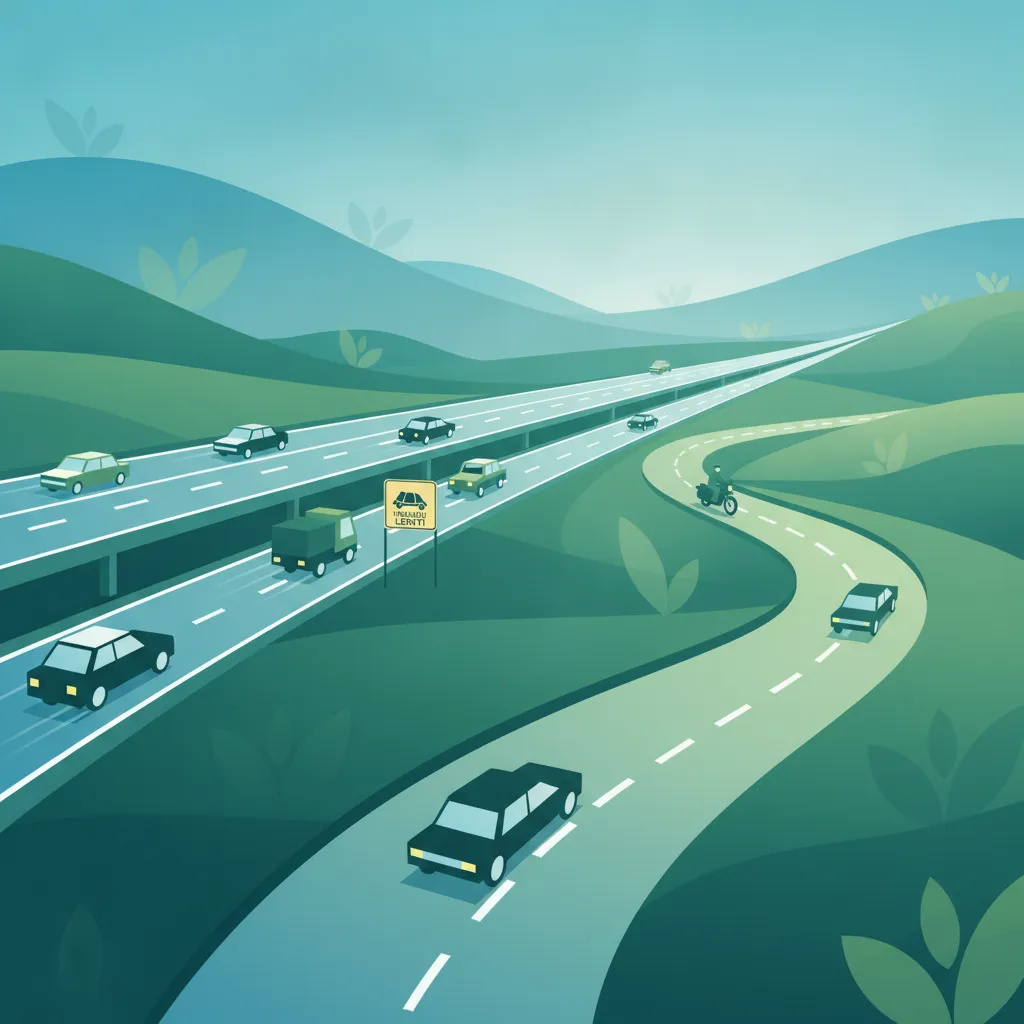
This lesson provides essential rules and techniques for driving on Italian motorways (autostrade) and major extra-urban roads. It explains how to safely merge onto the motorway from an entry ramp, the strict lane discipline required (drive right, overtake left), and how to exit correctly. The content also covers speed regulations, maintaining a safe following distance at high speed, and procedures for using service areas and handling emergencies.
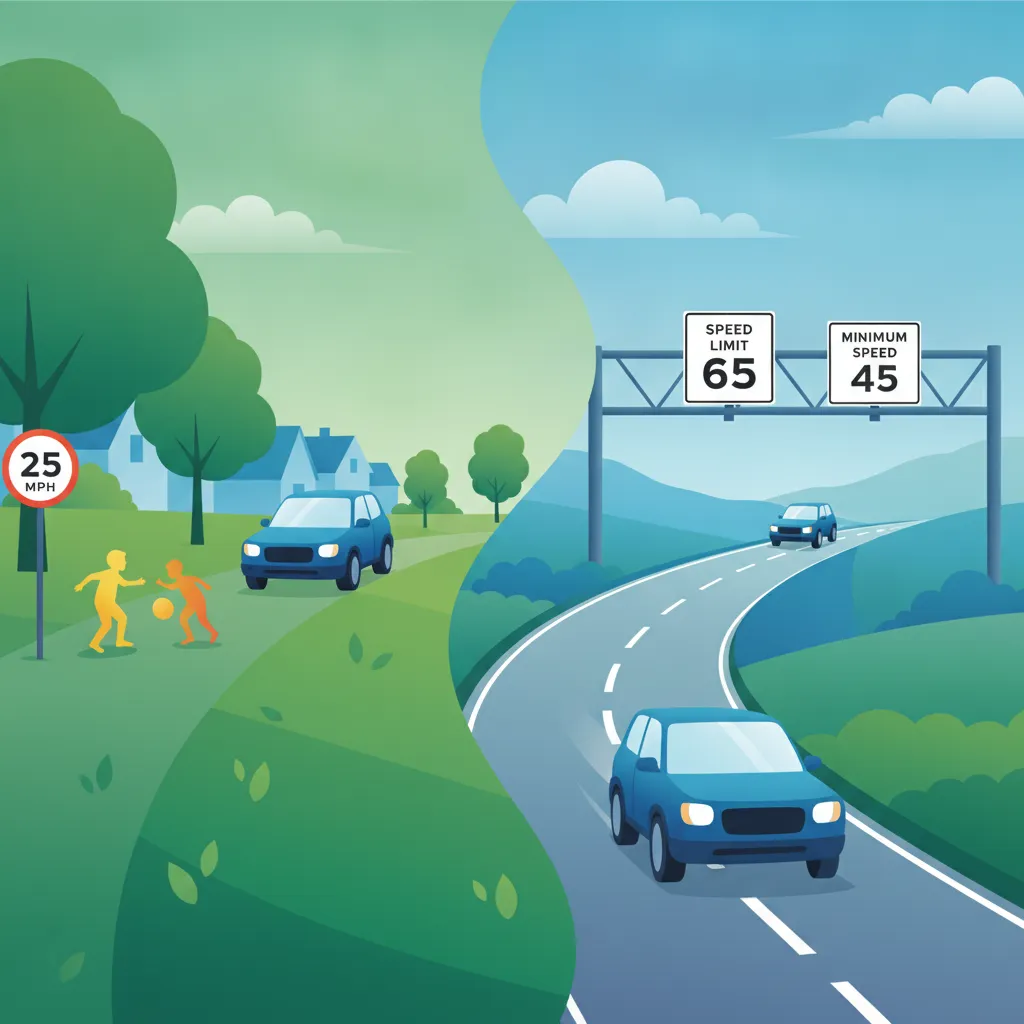
This lesson details the legal speed limits applicable to different road classifications in Italy. It covers the standard limits for urban centers, extra-urban secondary roads, main extra-urban roads, and motorways (autostrade). The content also highlights the lower speed limits that apply to beginner drivers and in specific conditions such as adverse weather or road construction zones.

This lesson focuses on the unique characteristics and challenges of driving on rural and mountain roads. It covers how to safely navigate sharp curves, steep inclines, and narrow lanes with limited visibility, often requiring the use of the horn to signal presence. The content also prepares drivers for potential hazards such as slow-moving agricultural vehicles, unexpected animal crossings, and variable road surface quality.
Find clear answers to common questions learners have about Surface Hazards: Wet Paint, Gravel, Potholes, Leaves. Learn how the lesson is structured, which driving theory objectives it supports, and how it fits into the overall learning path of units and curriculum progression in Italy. These explanations help you understand key concepts, lesson flow, and exam focused study goals.
Painted lines, especially white arrows or zebra crossings, become extremely slippery when wet because they lack the texture of asphalt. As a motorcycle rider, you must avoid aggressive braking or turning while your tyres are on these surfaces to prevent sliding.
When you spot gravel, the best strategy is to reduce your speed before reaching the patch, ensure the motorcycle is upright, and travel in a straight line at a constant speed. Avoid sudden changes in throttle, braking, or steering angle while on the loose surface.
Yes, metal manhole covers are significantly more slippery than the surrounding road, particularly in wet conditions. You should aim to ride around them whenever possible or cross them slowly while the bike is perfectly vertical.
Wet leaves act like a lubricant between your tyres and the road, creating a loss of friction similar to ice. They can hide other hazards like potholes, so it is vital to increase your following distance and reduce your speed significantly.
Start searching now to pinpoint exactly which Italian driving theory topics, road signs, or traffic rules you need to master. Use our advanced filters to build a custom practice session and ensure you're fully prepared for every aspect of your official driving licence exam.