
This lesson details your legal responsibilities as a driver regarding passenger safety and the use of restraint systems. You will learn the mandatory requirements for seat belts and specific configurations for child safety seats, ensuring you are fully prepared for related questions in your Italian Patente B theory exam.

Lesson content overview
As a driver in Italy, obtaining your Patente B driving license requires a comprehensive understanding of traffic laws, including your critical role in ensuring the safety of all passengers. This lesson delves into the mandatory use of seat belts (cinture di sicurezza) for every occupant and the specific legal requirements for child restraint systems (seggiolini auto). Adhering to these regulations is not only a legal obligation but also a fundamental moral responsibility to protect lives on the road.
Every journey begins with the driver taking charge, and this responsibility extends far beyond controlling the vehicle. The driver is legally and morally accountable for the well-being of all passengers from the moment the vehicle starts moving until it comes to a complete stop. This includes ensuring that appropriate safety measures are in place for everyone on board, regardless of their age or seating position.
This duty is integral to safe driving practices and is a core component of the Italian Patente B theory curriculum. Failure to comply can result in significant legal penalties for the driver, including fines and points on the driver's license, alongside the devastating potential for increased injury or fatality in an accident.
Passenger safety directly mitigates the risk of severe injury or death during collisions, abrupt maneuvers, or sudden stops. Seat belts and child restraint systems are designed to restrain occupants, preventing them from being ejected from the vehicle or sustaining secondary impacts with the vehicle's interior components, such as the dashboard, windshield, or other passengers.
The legal framework surrounding passenger safety, enshrined in the Codice della Strada (Italian Road Code), reflects Italy's unwavering commitment to reducing traffic fatalities and serious injuries. Special emphasis is placed on protecting vulnerable groups, particularly children, who require tailored restraint solutions due to their smaller size and developing physiology.
In Italy, the use of a three-point seat belt is mandatory for every occupant in a vehicle whenever it is in motion. This rule applies universally, regardless of whether the passenger is seated in the front or the rear of the vehicle, including any middle seats equipped with a belt. The primary purpose of the seat belt is to secure occupants in their seats, prevent ejection during an impact, and significantly reduce the severity of injuries.
It is a common misconception that rear passengers are exempt from seat belt use, especially for short distances or at low speeds. However, this is incorrect and highly dangerous. Unbelted rear passengers can become projectiles in a collision, posing a significant risk to themselves and other occupants.
Seat belts work by distributing the forces of a sudden stop or collision across the strongest parts of the body – the hips and shoulders. This controlled deceleration minimizes the risk of impact with the vehicle interior and prevents the occupant from being thrown forward. Modern vehicles often include pre-tensioners and load limiters that enhance seat belt effectiveness by tightening the belt in an impact and then allowing a slight controlled yield to absorb energy.
For optimal protection, a seat belt must be worn correctly: the lap strap should be low across the pelvis, not over the stomach, and the diagonal strap should run across the shoulder and chest, away from the neck. It should fit snugly without twists or slack.
The driver bears the ultimate responsibility for ensuring that all passengers, including those in the rear seats, are correctly restrained before the vehicle starts moving. This is a non-negotiable legal duty. While adults are responsible for their own seat belt use, the driver must actively verify and remind passengers to buckle up, especially for children who may require assistance with their restraints.
Failure to ensure seat belt compliance for any passenger can lead to fines and the deduction of points from the driver’s license. There are very few exemptions to seat belt use, typically only for specific medical conditions certified by a doctor or for certain categories of professionals while on duty (e.g., emergency services).
Always double-check that all passengers, particularly children, are securely buckled before commencing your journey. This simple check can prevent serious injury or legal penalties.
Protecting children in vehicles requires specialized restraint systems designed to match their size, weight, and developmental stage. The Italian law, aligned with European regulations, specifies a tiered hierarchy of child restraints (seggiolini auto) based on the child's age, weight, and height. The correct selection and installation of these systems are critical for optimal safety.
Children must be secured in an appropriate child restraint system until they are either over 150 cm tall or weigh more than 36 kg, at which point they can typically use an adult seat belt. The categories are generally as follows:
These restraints are designed for infants and very young children, providing crucial head and neck support. They are installed facing the rear of the vehicle because a child's head is proportionally larger and heavier than their body, making their neck vulnerable in a frontal collision. Rear-facing provides superior protection by cradling the child and distributing impact forces across their entire back.
A child restraint system designed for infants, installed facing the rear of the vehicle to provide maximum protection for their head, neck, and spine.
Once a child has outgrown their rear-facing seat and meets the minimum weight/height requirements, they transition to a forward-facing car seat. These seats have an internal harness system that restrains the child.
Booster seats are used when a child is too large for a harnessed car seat but too small for an adult seat belt alone. They elevate the child so that the vehicle's adult seat belt fits correctly across their shoulder and lap. Booster seats can be backless or have a high back, with high-back boosters offering better head and side-impact protection.
A child restraint that elevates a child to ensure the vehicle's adult seat belt correctly fits across their shoulder and lap, providing optimal protection.
A child is considered tall enough to use an adult seat belt without a booster seat when they are over 150 cm in height or exceed 36 kg in weight, regardless of their age. At this point, the adult seat belt should fit them correctly across the shoulder and lap, without riding up on the neck or abdomen.
A good "5-step test" for an adult seat belt fit: 1. Can the child sit all the way back against the vehicle seat? 2. Do the child's knees bend comfortably at the edge of the seat? 3. Does the shoulder belt lie across the middle of the shoulder and chest? 4. Is the lap belt low on the hips, touching the thighs? 5. Can the child stay in this position for the entire trip? If any answer is no, they still need a booster.
Children under 12 years of age or under 150 cm in height are generally prohibited from sitting in the front passenger seat. The primary reason for this rule is the potential danger posed by the deployment of the front passenger airbag, which is designed for adults and can cause severe injury to a smaller child.
An exception may apply if the child's weight exceeds 36 kg and their height is over 150 cm, even if they are under 12 years old. However, it is always recommended that children travel in the rear seats, which are inherently safer due to the absence of active front airbags. If a rear-facing child seat is absolutely necessary in the front passenger seat (and if legally permissible in exceptional circumstances), the airbag MUST be deactivated.
The effectiveness of any child restraint system hinges entirely on its correct installation and use. An improperly installed car seat offers little to no protection in an accident, potentially making it more dangerous than having no restraint at all. Drivers must meticulously follow the child seat manufacturer's instructions and the vehicle's owner's manual for proper installation.
Common installation errors include not tightening the seat belt or ISOFIX connections sufficiently, incorrect routing of the seat belt through the child seat, or failing to engage anti-rotation devices like top tethers or load legs. Regular checks are essential to ensure the seat remains securely fastened over time.
Many modern vehicles and child seats are equipped with ISOFIX (known as LATCH in some regions) anchorage systems. ISOFIX provides a standardized, rigid connection between the child seat and the vehicle's chassis, offering a more secure and often simpler installation method than using the vehicle's seat belts alone.
An international standard for attachment points in cars for child safety seats, providing a rigid and secure connection directly to the vehicle's chassis.
If your vehicle has ISOFIX anchor points and your child seat is ISOFIX-compatible, it is mandatory to use this system for installation. This typically involves two lower anchor points in the seat bight (where the seat back and cushion meet) and sometimes a top tether strap that attaches to an anchor point on the rear parcel shelf or floor. Always ensure all connectors are fully engaged and the seat is firmly attached without excessive movement.
After installation, always perform a 'wiggle test' to ensure the child seat is secure. It should not move more than 2.5 cm (1 inch) from side to side or front to back at the belt path. For harnessed seats, the harness straps should be snug against the child's body – you should not be able to pinch any slack webbing at the child's shoulder. The chest clip should be at armpit level. For booster seats, verify that the vehicle's seat belt is positioned correctly across the child's shoulder and hips.
Failure to comply with passenger safety regulations in Italy carries significant legal consequences for the driver. These penalties are designed to enforce adherence to the Codice della Strada and underscore the seriousness of the driver's responsibility.
Beyond legal penalties, the most severe consequence of non-compliance is the increased risk of severe injury or fatality in the event of an accident. An unbuckled passenger or an improperly restrained child is at a significantly higher risk of being ejected from the vehicle or suffering life-threatening injuries due to impact with the vehicle's interior. This places a heavy moral burden on the driver and highlights the importance of vigilance.
The principles of passenger safety remain constant, but their application can be influenced by various contextual factors. Drivers must be aware of these variations to ensure safety in all situations.
On motorways or roads with higher speed limits, the forces involved in a collision are significantly greater. This makes the correct use and secure installation of seat belts and child restraints even more critical. In urban settings with frequent stops and starts, drivers might be tempted to overlook seat belt use, but the law still requires it, and even low-speed impacts can cause serious injuries.
Adverse weather conditions, such as rain, snow, or ice, can reduce vehicle traction and increase stopping distances, making sudden braking or swerving more likely. In such situations, properly tightened restraints are vital to keep occupants secure and prevent them from being jostled or slipping out of position.
Children, due to their smaller size and developing bodies, are considered highly vulnerable road users within the vehicle. The specific child restraint hierarchy is designed to provide optimal protection for their unique physiological needs. Similarly, elderly passengers or those with certain medical conditions may require extra attention to ensure their seat belts are comfortable yet securely fastened. Drivers should always prioritize the safety of the most vulnerable occupants.
Mastering passenger safety is an essential part of becoming a responsible Patente B driver in Italy. It encompasses a range of legal duties and practical applications aimed at protecting everyone in the vehicle.
This lesson covers the driver's legal duty under Italian law to ensure all occupants wear seat belts, with rear passengers having the same obligation as front passengers. It details the child restraint hierarchy based on weight and height, from rear-facing cradles for infants through booster seats, until children reach 150 cm or 36 kg. Proper installation using ISOFIX systems and regular checks with the wiggle test are essential for safety. Non-compliance results in fines and license penalty points, with the driver bearing full responsibility for all passengers' restraints.
A short set of high-value points that capture the most important learning from this lesson.
All vehicle occupants in both front and rear seats must wear seat belts whenever the vehicle is in motion
Children must use age-appropriate restraint systems until they exceed 150 cm in height or 36 kg in weight
Children under 12 years or 150 cm tall must generally travel in rear seats due to airbag hazards
The driver bears full legal responsibility for ensuring all passengers are correctly restrained
Child restraints must be installed using ISOFIX where available and checked regularly for secure fit
Explore all units and lessons included in this driving theory course.
Rear-facing cradles (navicella/ovetto) are for infants up to 13 kg; forward-facing seats (Group 1) cover 9-18 kg; booster seats (Group 2/3) cover 15-36 kg
The 5-step test confirms an adult seat belt fits correctly: back against seat, knees bend at edge, shoulder belt across mid-chest, lap belt low on hips, and ability to maintain position
ISOFIX provides a rigid connection to the vehicle chassis using lower anchors and top tether; always use it when available
Front passenger airbag must be deactivated if a rear-facing child seat is placed in the front seat
A child seat should move no more than 2.5 cm during the wiggle test and harness webbing should be pinch-free
Believing rear passengers are exempt from seat belt requirements, especially for short trips or low speeds
Switching to forward-facing seats too early before the child has outgrown the rear-facing weight/height limits
Installing booster seats incorrectly so the shoulder belt rides up on the child's neck instead of across the chest
Failing to deactivate the front passenger airbag when legally permitted to place a rear-facing seat in front
Assuming a child can use an adult seat belt based on age rather than waiting until they exceed 150 cm or 36 kg
Lesson content overview
A short set of high-value points that capture the most important learning from this lesson.
All vehicle occupants in both front and rear seats must wear seat belts whenever the vehicle is in motion
Children must use age-appropriate restraint systems until they exceed 150 cm in height or 36 kg in weight
Children under 12 years or 150 cm tall must generally travel in rear seats due to airbag hazards
The driver bears full legal responsibility for ensuring all passengers are correctly restrained
Child restraints must be installed using ISOFIX where available and checked regularly for secure fit
Explore all units and lessons included in this driving theory course.
Rear-facing cradles (navicella/ovetto) are for infants up to 13 kg; forward-facing seats (Group 1) cover 9-18 kg; booster seats (Group 2/3) cover 15-36 kg
The 5-step test confirms an adult seat belt fits correctly: back against seat, knees bend at edge, shoulder belt across mid-chest, lap belt low on hips, and ability to maintain position
ISOFIX provides a rigid connection to the vehicle chassis using lower anchors and top tether; always use it when available
Front passenger airbag must be deactivated if a rear-facing child seat is placed in the front seat
A child seat should move no more than 2.5 cm during the wiggle test and harness webbing should be pinch-free
Believing rear passengers are exempt from seat belt requirements, especially for short trips or low speeds
Switching to forward-facing seats too early before the child has outgrown the rear-facing weight/height limits
Installing booster seats incorrectly so the shoulder belt rides up on the child's neck instead of across the chest
Failing to deactivate the front passenger airbag when legally permitted to place a rear-facing seat in front
Assuming a child can use an adult seat belt based on age rather than waiting until they exceed 150 cm or 36 kg
Explore search topics learners often look for when studying Passenger Safety, Seat Belts, and Child Restraints. These topics reflect common questions about road rules, driving situations, safety guidance, and lesson level theory preparation for learners in Italy.
Browse additional driving theory lessons that cover connected traffic rules, road signs, and common driving situations related to this topic. Improve your understanding of how different rules interact across everyday traffic scenarios.
Understand the driver's legal responsibilities in Italy for passenger safety. This lesson details mandatory seat belt use and the legal framework for child restraint systems (seggiolini auto) based on age and size.
This lesson defines the scope of the Italian Patente B license according to the Codice della Strada. It clarifies the specific types of vehicles, including maximum weight and passenger capacity, that can be operated. The content also details the official requirements for applicants, such as minimum age, necessary health certifications, and vision standards needed to qualify for the license.

This lesson examines the set of legal obligations for all drivers holding a Patente B license under the Codice della Strada. It covers mandatory responsibilities such as maintaining valid vehicle insurance, ensuring proper registration, and adhering to periodic technical inspection (revisione) schedules. The content also emphasizes the legal requirement to carry necessary documents while driving and the penalties for non-compliance.
This lesson focuses on the specific regulations applicable to beginner drivers (neopatentati) during their first three years of holding a Patente B. It outlines the stricter speed limits on motorways and main roads, as well as the restrictions on vehicle power-to-weight ratios. Furthermore, it details the absolute zero-tolerance policy for alcohol consumption and the increased penalties for traffic violations during this probationary period.

This lesson reinforces the correct procedures for interacting with emergency vehicles that are responding to a call with sirens and lights active. It explains the legal obligation to yield the right-of-way by safely moving to the side of the road and stopping if necessary. The content emphasizes making smooth, predictable movements to create a clear path, allowing emergency responders to proceed without delay.

This lesson introduces the official classification of road users as defined by the Italian Codice della Strada. It distinguishes between various categories, including pedestrians, two-wheeled vehicles, passenger cars, public transport, and heavy goods vehicles. Understanding these classifications is crucial for anticipating behavior and applying the correct traffic rules and safety precautions for each group, especially for vulnerable road users.
This lesson provides a comprehensive review of the legal consequences for violating traffic laws in Italy. It reinforces the workings of the points system, explaining how different offenses lead to deductions and how a total loss of points results in license revocation. The content also covers the scale of monetary fines for various infractions and the conditions under which a driver's license may be temporarily suspended.
This lesson details the correct procedures for interacting with public transport and school buses. It explains the rules for dedicated bus lanes, the absolute priority of trams, and the legal requirement to yield to buses pulling out from a stop. The content also covers the specific laws requiring drivers to stop when a school bus is loading or unloading passengers, to ensure child safety.
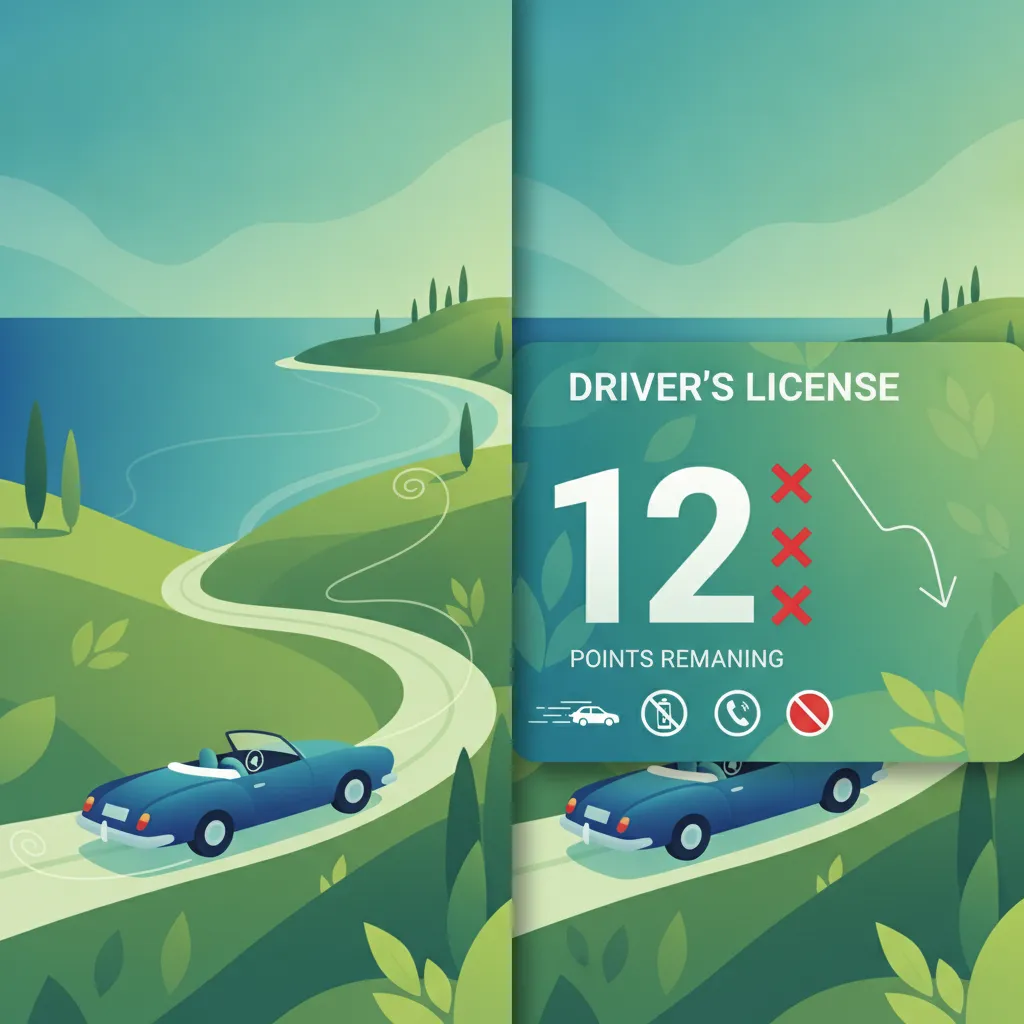
This lesson provides a detailed explanation of the Italian driver's license points system (decurtazione punti). It covers how various traffic infractions lead to specific point deductions and the cumulative effect on a driver's license status. Learners will understand the thresholds that trigger license suspension or revocation, the associated monetary fines, and the official procedures for recovering lost points.
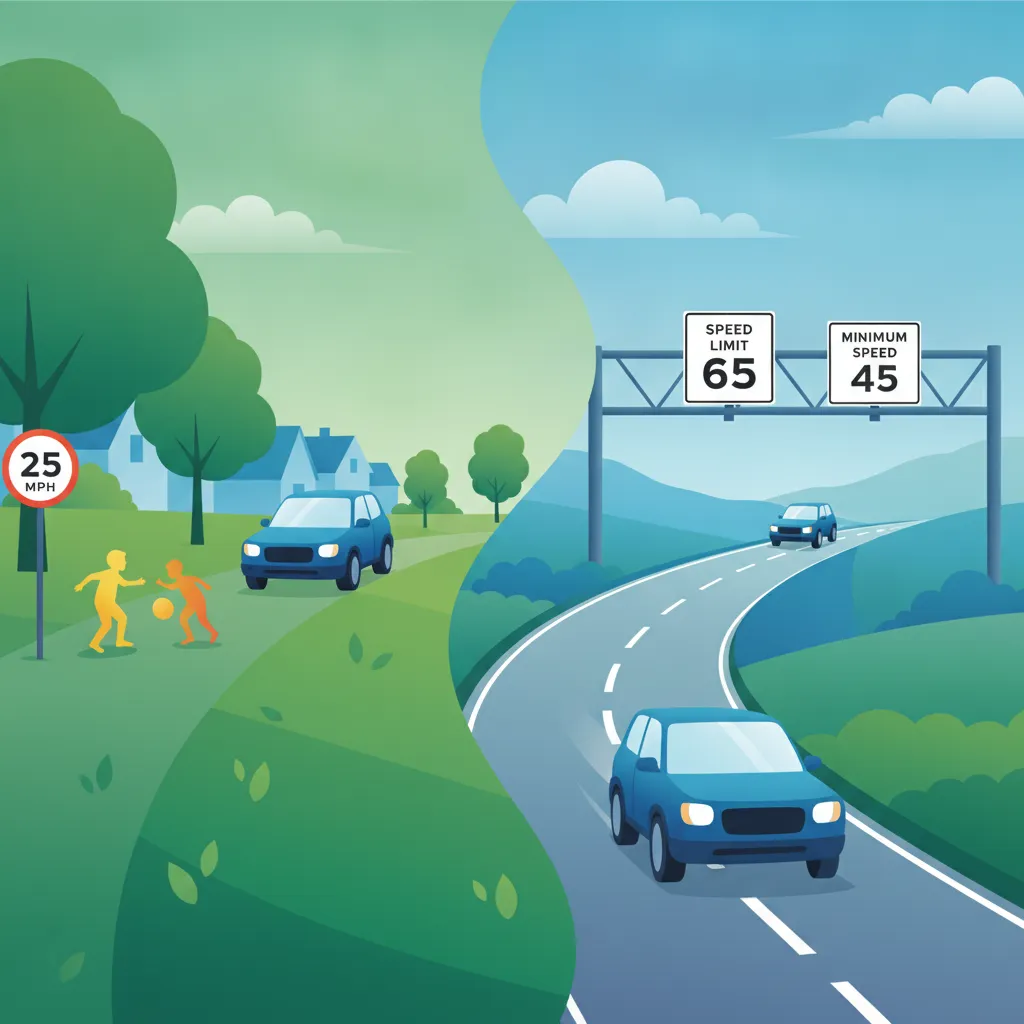
This lesson details the legal speed limits applicable to different road classifications in Italy. It covers the standard limits for urban centers, extra-urban secondary roads, main extra-urban roads, and motorways (autostrade). The content also highlights the lower speed limits that apply to beginner drivers and in specific conditions such as adverse weather or road construction zones.
Find clear answers to common questions learners have about Passenger Safety, Seat Belts, and Child Restraints. Learn how the lesson is structured, which driving theory objectives it supports, and how it fits into the overall learning path of units and curriculum progression in Italy. These explanations help you understand key concepts, lesson flow, and exam focused study goals.
Yes, the use of seat belts is mandatory for all occupants in the vehicle, including those sitting in the rear seats, regardless of the vehicle type or journey length.
You can only place a rear-facing child seat in the front passenger seat if the vehicle's airbag is deactivated. If the airbag cannot be deactivated, the child seat must be placed in the rear.
According to current Italian regulations, children must use an approved restraint system until they reach a height of 150 cm. Once they exceed this height, they may use standard seat belts.
The driver is primarily responsible for ensuring all passengers, especially minors, are correctly restrained. In the case of adult passengers, both the driver and the passenger may be subject to fines.
Start searching now to pinpoint exactly which Italian driving theory topics, road signs, or traffic rules you need to master. Use our advanced filters to build a custom practice session and ensure you're fully prepared for every aspect of your official driving licence exam.