
This lesson details the specific traffic rules and safety protocols required when driving near public and school transport in Italy. Mastering these interactions is vital for your Patente B theory exam, as they frequently appear in priority and hazard perception questions. You will learn to navigate safely around trams, buses at stops, and school transport to ensure road safety for all.
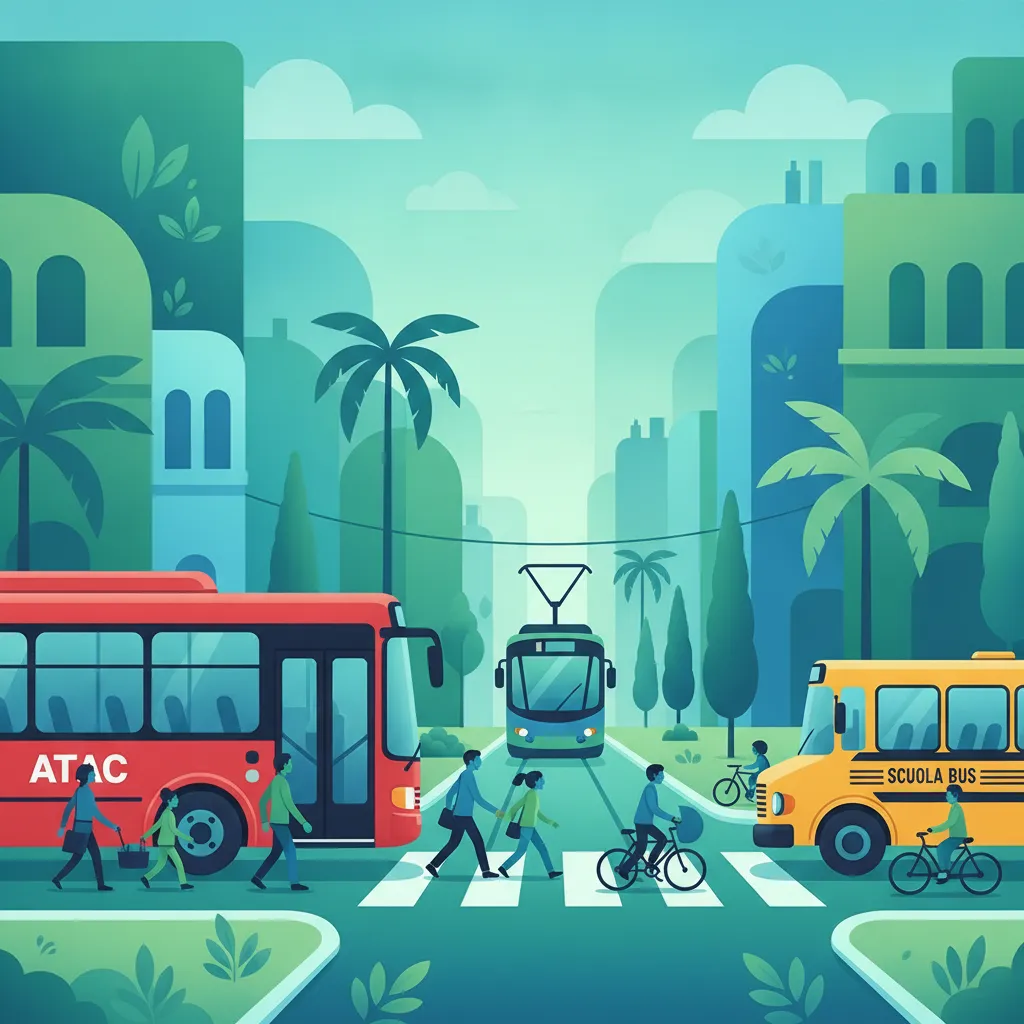
Lesson content overview
Understanding how to interact safely and legally with public transport and school buses is crucial for all drivers in Italy, particularly those preparing for their Patente B theory test. These large vehicles often carry many passengers, operate on fixed routes, and sometimes share road space under specific rules designed to ensure efficiency and, most importantly, safety for everyone, including vulnerable children. This lesson will detail the specific regulations and best practices required when encountering buses, trams, and school transport on Italian roads.
Interacting with public transport vehicles like buses and trams, as well as school buses, requires specific knowledge of traffic laws. These vehicles operate under special conditions because of their size, passenger capacity, and often fixed routes or schedules. Prioritizing their movement helps maintain urban traffic flow and significantly enhances the safety of passengers, especially children.
Trams, known as tram in Italian, are a unique form of public transport that run on rails embedded in the road. Due to their inability to steer or stop quickly, they are granted absolute priority over all other road users. This means that at any intersection or crossing point where tram tracks intersect with vehicular roads, drivers must always yield to an approaching tram. This rule applies regardless of traffic signals or other right-of-way indications that might apply to other vehicles.
Practical Implications for Patente B Drivers:
Failing to yield to a tram is a serious violation under the Italian Codice della Strada and can lead to significant fines and penalty points on your driving license, in addition to the high risk of a dangerous collision.
Dedicated bus lanes, or corsie riservate in Italian, are sections of the road reserved exclusively for public buses and sometimes other authorized public transport vehicles. These lanes are implemented to ensure buses can maintain their schedules, reduce congestion, and provide more efficient public transport services. They are typically identified by specific road markings, such as a solid white line and a prominent bus symbol painted on the lane, and relevant traffic signs.
Types of Bus Lanes:
Rules for Patente B Drivers:
Dedicated lanes on Italian roads exclusively reserved for public buses and sometimes other authorized vehicles, indicated by specific signs and road markings.
When a public bus indicates its intention to pull out from a designated bus stop and merge back into the flow of traffic, other drivers are legally obligated to yield to it. This rule is in place because buses are large, heavy vehicles that often have limited acceleration from a standstill, and forcing them to wait can cause delays and disruptions to public transport schedules.
Driver Responsibilities:
This courtesy and legal requirement ensure a smoother and safer flow for both public transport and private vehicles, minimizing the risk of rear-end collisions or sideswipes that can occur if drivers fail to yield.
The safety of children is paramount on the roads. In Italy, specific laws govern how drivers must react to school buses (scuolabus) that are loading or unloading children. This is a critical rule designed to protect children, who may behave unpredictably when crossing roads or getting on/off the bus.
Mandatory Stopping Requirements:
The precise distances and specific circumstances for mandatory stopping for school buses can have local variations. Always be overly cautious when encountering a school bus with flashing lights or an extended stop arm.
Rationale for the Rule: Children, especially younger ones, may dart out from behind the bus or cross the road without looking. The mandatory stop creates a safe zone around the bus, allowing children to board or alight without the immediate danger of moving traffic. Violating this rule is considered a very serious offense due to the inherent danger to children.
The rules governing interactions with buses, trams, and school transport are deeply integrated into the Italian Codice della Strada (Highway Code). Adhering to these principles is not just about avoiding penalties but about contributing to a safe and efficient road network for all users.
The principle of absolute priority for trams is a cornerstone of traffic law in areas where they operate. This means that drivers must take responsibility for being aware of tram movements and adjusting their driving accordingly.
Key Legal Aspects:
Correct Driver Behavior:
The regulations concerning bus lanes are designed to enforce their exclusive use and ensure the smooth operation of public transport. Unauthorized use can lead to significant consequences.
Legal Status of Bus Lane Use:
Understanding Conditional Use:
The obligation to yield to buses pulling out from stops is a legal requirement aimed at maintaining traffic fluidity and safety, particularly in busy urban environments.
Rationale and Safety:
Correct Procedure:
The strict rules regarding school buses are a critical component of child safety legislation within the Codice della Strada. These rules reflect the high vulnerability of children on and near roads.
Legal Mandate:
These rules are not merely suggestions; they are legally binding obligations designed to create a predictable and safe environment for children commuting to and from school.
Being aware of potential pitfalls can help Patente B drivers avoid violations and contribute to road safety.
One of the most frequent errors drivers make is underestimating tram priority.
Misunderstanding bus lane rules can lead to unnecessary fines and delays for public transport.
Improper reactions to buses merging from stops can lead to risky situations.
Failing to stop for a school bus is a high-risk violation that endangers children.
Driving conditions, road types, and even the time of day can influence how you interact with public transport and school buses. Adapting your behavior ensures consistent safety.
Understanding these variations and adjusting your driving proactively is key to safe and responsible driving under your Patente B.
This lesson covers the critical rules for interacting with public transport in Italy, including the absolute priority granted to trams at intersections, the strict regulations governing dedicated bus lanes, the legal requirement to yield when buses pull out from stops, and the mandatory stopping rules when school buses are loading or unloading passengers. These rules are frequently tested in the Patente B theory exam and reflect the Codice della Strada's emphasis on protecting vulnerable road users. Mastering these interactions helps drivers avoid penalties, pass their exam, and contribute to safer Italian roads.
A short set of high-value points that capture the most important learning from this lesson.
Trams have absolute priority at all intersections and crossing points, meaning you must always yield to them regardless of your traffic light signal.
Corsie riservate (dedicated bus lanes) are generally off-limits to private vehicles unless explicitly permitted by accompanying signs indicating allowed vehicles and timeframes.
When a bus signals to pull out from a stop, you must reduce speed and create space for it to merge safely rather than accelerating to pass.
School buses displaying flashing amber lights or an extended stop arm require ALL traffic to stop in both directions on a two-way road unless a physical barrier separates the lanes.
Understanding these priority rules is essential for both passing the Patente B theory exam and practicing defensive driving in Italian urban environments.
Explore all units and lessons included in this driving theory course.
Trams cannot steer or brake quickly—always assume tram priority is absolute and non-negotiable at tracks.
Bus lane exceptions are always indicated by supplementary signs; read them carefully before entering.
You must remain stopped for a school bus until the stop arm retracts and lights are turned off.
Overtaking a school bus with active signals is strictly prohibited regardless of which direction you are approaching from.
Buses merging from stops have limited acceleration; patience and space creation prevent collisions.
Assuming a green traffic light gives priority over an approaching tram at a crossing—this is incorrect as tram priority is absolute.
Entering a time-restricted bus lane outside permitted hours because no buses are currently visible.
Accelerating to pass a bus that has just signaled to pull out, creating a dangerous merging situation.
Continuing to drive past a school bus on the opposite carriageway assuming the stop rule only applies to traffic behind the bus.
Forgetting that trams are quieter than other vehicles and may approach with minimal audible warning.
Lesson content overview
A short set of high-value points that capture the most important learning from this lesson.
Trams have absolute priority at all intersections and crossing points, meaning you must always yield to them regardless of your traffic light signal.
Corsie riservate (dedicated bus lanes) are generally off-limits to private vehicles unless explicitly permitted by accompanying signs indicating allowed vehicles and timeframes.
When a bus signals to pull out from a stop, you must reduce speed and create space for it to merge safely rather than accelerating to pass.
School buses displaying flashing amber lights or an extended stop arm require ALL traffic to stop in both directions on a two-way road unless a physical barrier separates the lanes.
Understanding these priority rules is essential for both passing the Patente B theory exam and practicing defensive driving in Italian urban environments.
Explore all units and lessons included in this driving theory course.
Trams cannot steer or brake quickly—always assume tram priority is absolute and non-negotiable at tracks.
Bus lane exceptions are always indicated by supplementary signs; read them carefully before entering.
You must remain stopped for a school bus until the stop arm retracts and lights are turned off.
Overtaking a school bus with active signals is strictly prohibited regardless of which direction you are approaching from.
Buses merging from stops have limited acceleration; patience and space creation prevent collisions.
Assuming a green traffic light gives priority over an approaching tram at a crossing—this is incorrect as tram priority is absolute.
Entering a time-restricted bus lane outside permitted hours because no buses are currently visible.
Accelerating to pass a bus that has just signaled to pull out, creating a dangerous merging situation.
Continuing to drive past a school bus on the opposite carriageway assuming the stop rule only applies to traffic behind the bus.
Forgetting that trams are quieter than other vehicles and may approach with minimal audible warning.
Explore search topics learners often look for when studying Interacting with Buses, Trams and School Transport. These topics reflect common questions about road rules, driving situations, safety guidance, and lesson level theory preparation for learners in Italy.
Browse additional driving theory lessons that cover connected traffic rules, road signs, and common driving situations related to this topic. Improve your understanding of how different rules interact across everyday traffic scenarios.
Learn the specific Italian Codice della Strada rules for yielding to trams and buses. Understand legal requirements for bus lanes, merging from stops, and tram precedence to ensure safe urban driving.

This lesson clarifies the special priority rules for emergency vehicles and public transport. It explains the legal obligation to safely pull over and clear a path for any vehicle with active sirens and flashing lights. The content also details the absolute right-of-way that trams have in most situations and the requirement to yield to public buses signaling to pull out from a stop.
This lesson covers the general principles of priority at intersections governed by traffic signs and signals. It explains how to identify a priority road and the obligation to yield to traffic when encountering a 'dare la precedenza' (yield) or stop sign. The content also reviews the hierarchy of authority, where signals from a traffic officer override all other signs and lights.

This lesson explains the fundamental principles of right of way that govern interactions between different types of road users in Italy. It clarifies the legal precedence at intersections, pedestrian crossings, and when interacting with public transport like buses and trams. The content also details the absolute priority given to emergency vehicles and how to safely yield in accordance with the Codice della Strada.
This lesson focuses on the crucial rule for navigating uncontrolled intersections in Italy: yielding to vehicles approaching from the right (precedenza a destra). It explains how to apply this default rule when no signs or signals are present to direct traffic flow. Learners will understand how to approach these junctions with caution, assess traffic, and proceed safely, while also learning about the few exceptions to this rule.

This lesson provides a detailed explanation of the priority rules that govern Italian intersections and roundabouts. You will learn to identify priority roads and correctly apply the rules for stop and give way signs. It also covers the specific procedures for entering, navigating, and exiting roundabouts, emphasizing when to yield to circulating traffic.

This lesson is dedicated to fostering awareness and safe interaction with vulnerable road users commonly found in cities. It details the legal priority of pedestrians at crossings and the importance of giving ample space to cyclists. Additionally, it covers the specific hazards associated with tram tracks and the need to be vigilant around public transport vehicles like buses and taxis.
This lesson delivers a comprehensive explanation of right-of-way regulations at Italian intersections. It covers the interpretation of traffic light signals, the absolute requirement to stop at stop signs, and yielding at give-way signs. Furthermore, it details the default priority rules for unmarked intersections and the specific obligations a rider has towards pedestrians on crossings.

This lesson focuses on the driver's responsibility to protect pedestrians, especially at designated crossings (strisce pedonali). It reinforces the legal requirement to yield to pedestrians who are on or about to enter a crosswalk. The content also covers the importance of reducing speed and increasing vigilance in urban areas, school zones, and other places with high pedestrian activity.
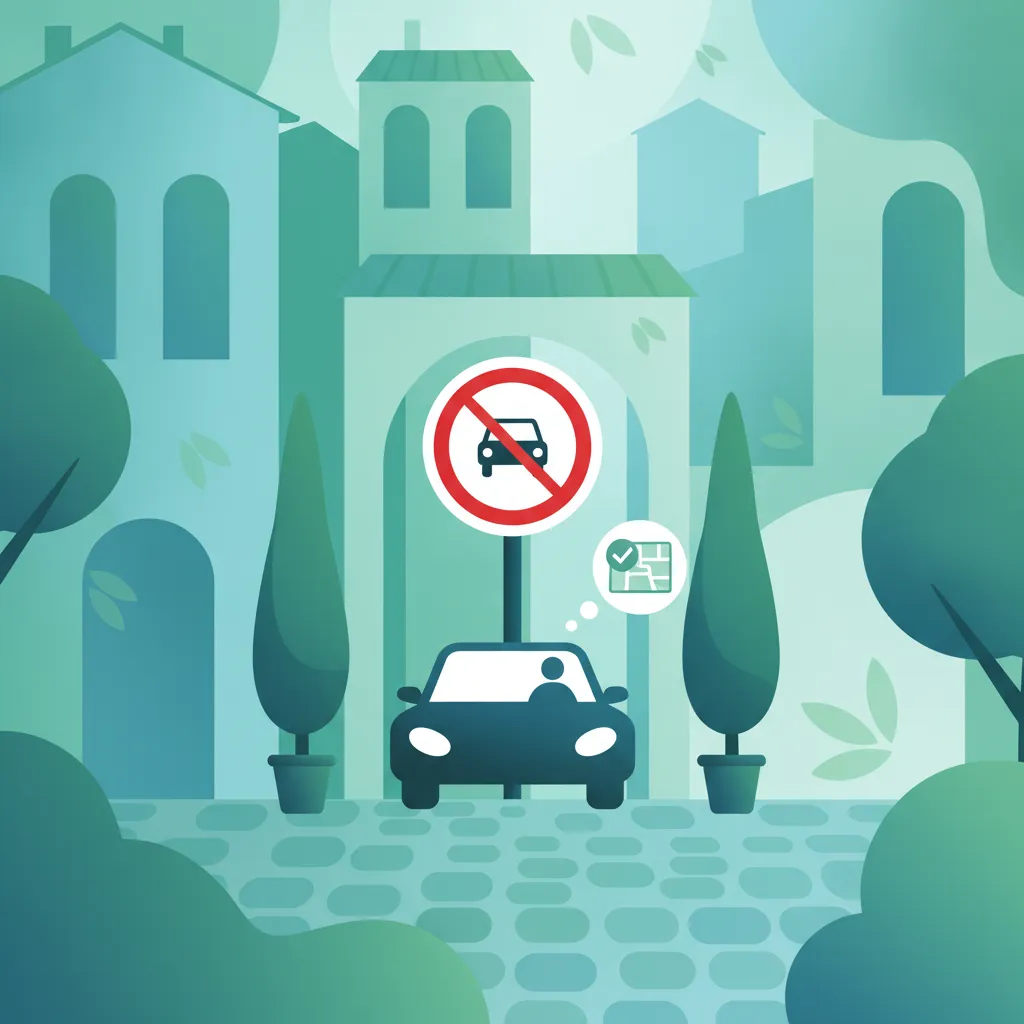
This lesson explains the concept of 'Zone a Traffico Limitato' (ZTL), common in Italian city centers, which restricts vehicle access at certain times. It covers how to identify ZTL boundaries, understand the operating hours, and the procedures for obtaining permits for commercial deliveries. The lesson also touches on environmental zones that may restrict access based on a vehicle's emission standards.

This lesson provides a practical guide to parking regulations in Italian urban areas. It explains the meaning of different colored parking lines (blue for paid, white for free, yellow for reserved), the use of the parking disc (disco orario) for time-limited zones, and how to operate pay-and-display machines. The content also covers how to identify no-parking zones to avoid fines and towing.
Understand the critical Italian traffic laws for school buses. This lesson covers when and how to stop for school buses loading or unloading children, ensuring passenger safety.

This lesson covers the driver's legal responsibility for ensuring the safety of all passengers. It details the mandatory use of seat belts (cinture di sicurezza) for all occupants in both front and rear seats. The content provides a thorough explanation of the laws regarding child restraint systems, covering the different types of car seats required based on a child's age, weight, and height, and how to install them correctly.
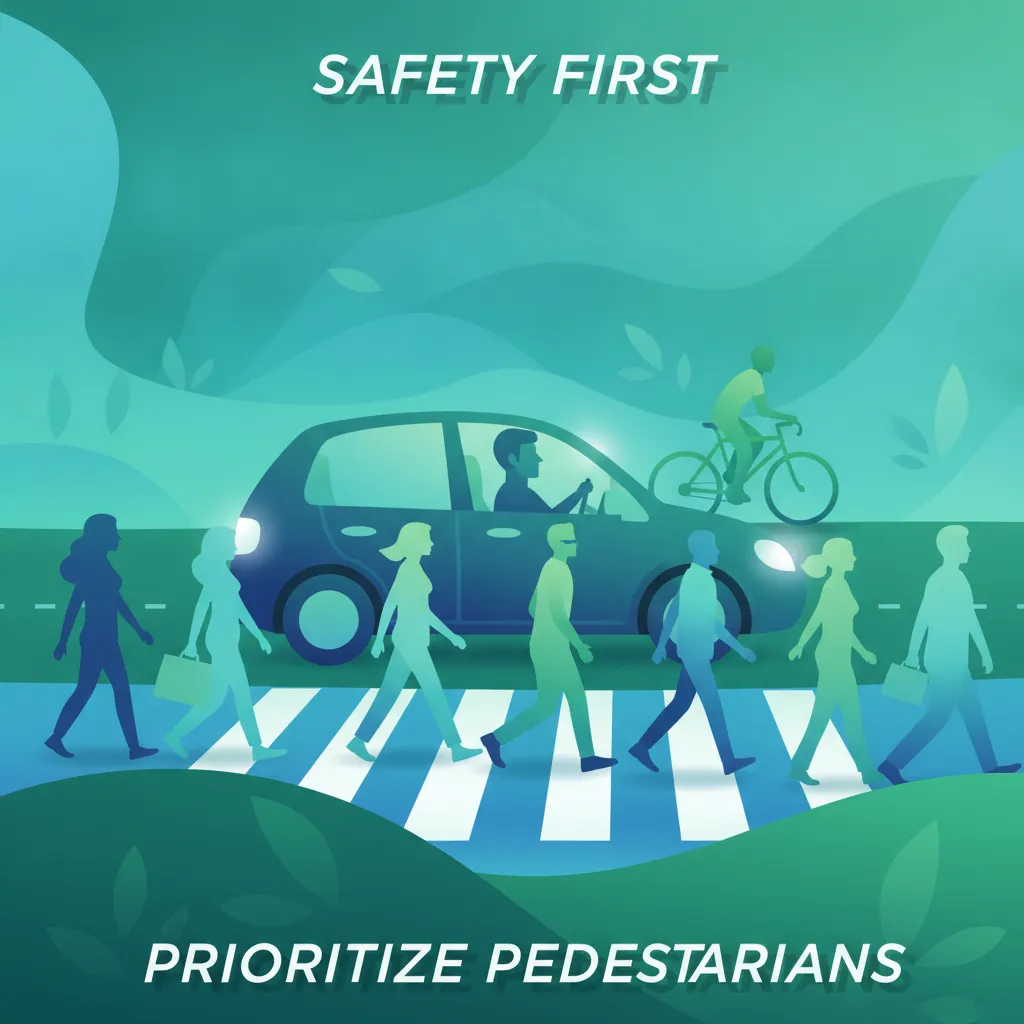
This lesson provides critical guidance on how to safely share the road with vulnerable users, including pedestrians, cyclists, motorcyclists, and children. It highlights the importance of increased awareness in specific areas like school zones and crosswalks. The content teaches techniques for maintaining a safe lateral distance when overtaking, checking blind spots thoroughly, and anticipating the often unpredictable movements of these users.
This lesson clarifies the special priority rules for emergency vehicles and public transport. It explains the legal obligation to safely pull over and clear a path for any vehicle with active sirens and flashing lights. The content also details the absolute right-of-way that trams have in most situations and the requirement to yield to public buses signaling to pull out from a stop.
This lesson is dedicated to fostering awareness and safe interaction with vulnerable road users commonly found in cities. It details the legal priority of pedestrians at crossings and the importance of giving ample space to cyclists. Additionally, it covers the specific hazards associated with tram tracks and the need to be vigilant around public transport vehicles like buses and taxis.

This lesson reinforces the correct procedures for interacting with emergency vehicles that are responding to a call with sirens and lights active. It explains the legal obligation to yield the right-of-way by safely moving to the side of the road and stopping if necessary. The content emphasizes making smooth, predictable movements to create a clear path, allowing emergency responders to proceed without delay.

This lesson provides an in-depth focus on sharing the road with the most vulnerable users. It teaches drivers to be acutely aware of pedestrians at crossings, cyclists filtering through traffic, and motorcyclists who may be in blind spots. The lesson emphasizes the importance of leaving extra space, signaling intentions clearly, and exercising extreme caution at junctions, where the majority of serious incidents occur.
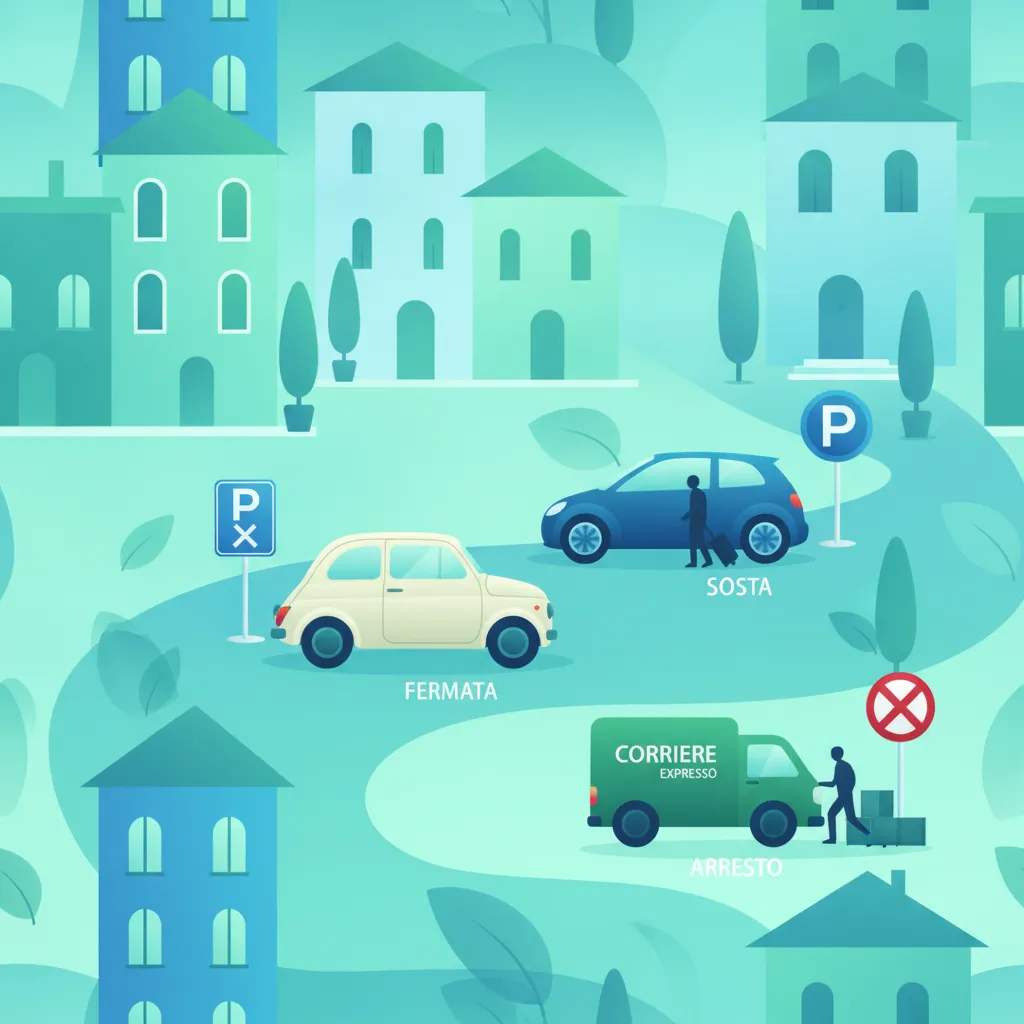
This lesson explains the important legal distinctions between three types of vehicle halts in Italy: 'fermata' (a brief stop for passengers/cargo without the driver leaving), 'sosta' (parking, where the driver may leave), and 'arresto' (a stop due to traffic or signals). Understanding these definitions is essential for knowing where and when it is legal to stop or park your vehicle without causing an obstruction or incurring a fine.
This lesson is dedicated to the vital concept of 'distanza di sicurezza', the safe following distance required to avoid a rear-end collision. It explains how this distance is not fixed but varies with speed and conditions, covering practical methods like the 'two-second rule' to help judge it accurately. Maintaining this space cushion provides the necessary time to react and brake safely if the vehicle ahead stops suddenly.
This lesson provides essential rules and techniques for driving on Italian motorways (autostrade) and major extra-urban roads. It explains how to safely merge onto the motorway from an entry ramp, the strict lane discipline required (drive right, overtake left), and how to exit correctly. The content also covers speed regulations, maintaining a safe following distance at high speed, and procedures for using service areas and handling emergencies.
This lesson addresses the critical responsibility of protecting vulnerable road users, such as pedestrians, cyclists, and motorcyclists, who are most at risk in a collision with a heavy vehicle. It teaches drivers to be hyper-aware in urban settings, to anticipate the unpredictable movements of VRUs, and to provide ample space, especially when turning at junctions. A key focus is on scanning for VRUs in blind spots before moving off or making any maneuver.
Find clear answers to common questions learners have about Interacting with Buses, Trams and School Transport. Learn how the lesson is structured, which driving theory objectives it supports, and how it fits into the overall learning path of units and curriculum progression in Italy. These explanations help you understand key concepts, lesson flow, and exam focused study goals.
In most road situations, trams have absolute priority because they are constrained to rails and cannot maneuver to avoid collisions. However, you must always check for specific signs or traffic lights that may regulate priority at a particular junction.
Yes. When a school bus is stopped and indicators are showing it is loading or unloading passengers, you must exercise extreme caution and be prepared to stop to ensure the safety of students crossing the road.
No, lanes specifically marked for public transport or authorized vehicles are restricted. Entering them can lead to fines and is a common point of confusion in theory questions, so always look for the relevant regulatory road signs.
In urban areas, you should facilitate the bus entering traffic if it is safe to do so. However, you must always observe the bus driver's signal and ensure you have sufficient distance to stop safely if the bus merges in front of you.
Start searching now to pinpoint exactly which Italian driving theory topics, road signs, or traffic rules you need to master. Use our advanced filters to build a custom practice session and ensure you're fully prepared for every aspect of your official driving licence exam.