
This lesson clarifies the precise legal distinctions between fermata, sosta, and arresto on Italian roads. Understanding these terms is vital for complying with the Codice della Strada, helping you avoid fines and navigate urban areas safely during your practical driving and theory exam.
Lesson content overview
Welcome to this essential lesson for your Italian Patente B Theory preparation. Driving in Italy requires a precise understanding of various traffic regulations, and among the most fundamental are the rules governing how and when a vehicle can stop or park. This chapter delves into the critical legal distinctions between three types of vehicle halts: 'Fermata' (a brief stop), 'Sosta' (parking), and 'Arresto' (a mandatory stop).
Misinterpreting these terms can lead to fines, traffic obstructions, or even dangerous situations. By the end of this lesson, you will have a clear grasp of each concept, its associated rules, and how to apply them correctly on Italian roads, ensuring both your safety and compliance with the Codice della Strada (Italian Highway Code).
The Italian Highway Code meticulously defines different types of vehicle halts to ensure the orderly flow of traffic, prevent obstructions, enhance road safety, and manage public space efficiently. Each definition carries specific legal implications regarding where, when, and for how long a vehicle can remain stationary. Understanding these nuances is crucial for every driver in Italy, allowing you to make informed decisions and avoid common traffic infractions related to stopping and parking.
These regulations are designed to:
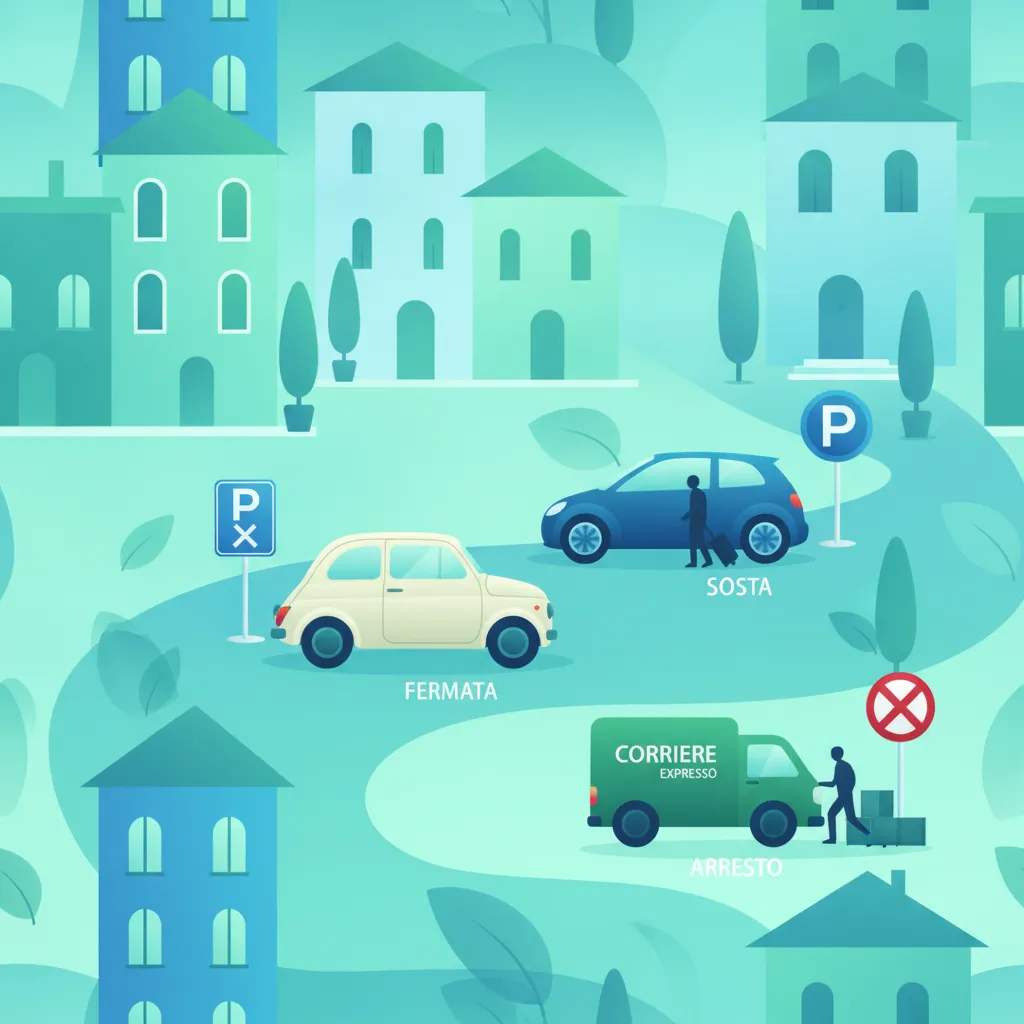
The term Fermata refers to a very specific type of vehicle halt under Italian law. It is defined as a brief stop for the purpose of picking up or dropping off passengers, or for loading or unloading goods. The defining characteristic of a Fermata is that the driver must remain in the vehicle (or at least immediately nearby and able to promptly move the vehicle) and the stop must not extend beyond the time strictly necessary for these operations.
A brief, temporary halt of a vehicle for the purpose of picking up or dropping off passengers or loading/unloading goods, during which the driver remains in or very close to the vehicle, ready to move it immediately.
To qualify as a legal Fermata, several conditions must be met:
Generally, a Fermata is permitted in any area where it does not cause an obstruction or violate specific prohibitions. However, certain areas are explicitly off-limits for Fermata, even if it's brief:
This sign means that you cannot stop at all for any reason (other than an Arresto, which is mandatory). This applies to both a Fermata and a Sosta. If you see this sign, you must keep moving.
Many drivers mistakenly believe that if they remain in the vehicle, they can stop anywhere for a short period. This is a common source of infractions.
Always assess the immediate traffic situation and road signs before performing a Fermata. If there's any doubt about causing an obstruction or violating a sign, it's better to move to a more appropriate location.
Sosta is the Italian legal term for parking. Unlike Fermata, a Sosta implies that the vehicle is left stationary for a longer period, and crucially, the driver is permitted to leave the vehicle. This distinction means Sosta is subject to much stricter rules regarding location, duration, and payment.
The stationary halt of a vehicle beyond the time necessary for a Fermata, during which the driver is permitted to leave the vehicle. It includes any intentional stop that is not an Arresto or a Fermata.
When performing a Sosta, drivers must comply with a range of regulations:
A multitude of rules govern where and how you can perform a Sosta:
Always check for signs and road markings carefully before leaving your vehicle. Ignoring parking restrictions is a very common cause of fines in Italy.
The most common sign prohibiting Sosta is the Divieto di Sosta sign.
This sign (a blue circle with a red border and a single diagonal red line) explicitly forbids parking (Sosta). However, it generally allows a brief Fermata, provided the conditions for Fermata are met (driver present, brief, no obstruction). If both Fermata and Sosta are prohibited, the "Divieto di Fermata" sign (C3a) will be used instead.
In many Italian cities, particularly in central areas, parking may be restricted by time or require payment.
Divieto di Sosta sign with a supplementary panel specifying the allowed duration (e.g., "Max 60 min") and times of validity, or by blue road markings. A parking disc (disco orario) must be displayed, showing the time of your arrival.The term Arresto defines a mandatory stop that is imposed by external circumstances, rather than being a driver's choice to stop or park. These are unavoidable halts required to comply with traffic laws, signals, or the immediate road situation.
A mandatory stop of a vehicle imposed by external causes, such as traffic lights, stop signs, police signals, traffic congestion, or an obstacle in the road.
An Arresto is characterized by its compulsory nature and the reasons behind it:
You will encounter numerous situations requiring an Arresto in daily driving:
STOP sign before the stop line.Even during an Arresto, maintain a safe distance from the vehicle in front, especially at traffic lights. This "safety bubble" allows you to react to unexpected movements or provides space if you need to maneuver.
Failing to perform a mandatory Arresto, or doing so incorrectly, can have severe consequences:
Understanding the precise differences between these three types of halts is paramount for safe and legal driving in Italy. Here's a summary of their key distinctions:
| Feature | Fermata | Sosta | Arresto |
|---|---|---|---|
| Purpose | Pick up/drop off passengers, load/unload goods | Park the vehicle for an extended period | Mandatory halt due to external factors |
| Driver Presence | Driver must remain in/near vehicle, ready to move | Driver may leave the vehicle | Driver must remain in vehicle, ready to move |
| Duration | Strictly limited to necessary time | Can be for longer periods (minutes to hours) | As long as the external cause persists |
| Voluntary? | Yes, driver's choice (within rules) | Yes, driver's choice (within rules) | No, it is compulsory |
| Legal Basis | Specific conditions for brief stops | Designated parking areas, respecting signs/markings | Traffic laws, signals, road conditions, police |
| Example | Briefly stopping at a curb to let a friend out | Parking in a marked blue bay for 30 minutes | Stopping at a red traffic light |
Let's illustrate these concepts with real-world driving situations:
Divieto di Sosta sign: You can quickly stop to drop off a parcel, provided you stay in the car and it doesn't obstruct anyone. This is a legal Fermata. However, if you switch off the engine and walk away, it would become an illegal Sosta.Divieto di Fermata sign: You cannot stop here for any reason other than a mandatory Arresto (e.g., if a police officer orders you to stop). You cannot even drop off a passenger.Violating the rules for Fermata, Sosta, or Arresto can result in various penalties, ranging from administrative fines to more severe consequences like vehicle removal or license points.
Mastering the distinctions between Fermata, Sosta, and Arresto is a cornerstone of responsible driving in Italy. These definitions, though seemingly technical, have practical, everyday implications for your driving behavior and legal compliance.
Always pay close attention to road signs and markings, assess the traffic situation, and be mindful of your duration and purpose for stopping. Your adherence to these rules will contribute significantly to road safety, efficient traffic flow, and ensure a smooth experience during your Italian Patente B Theory and beyond.
This lesson establishes the three fundamental types of vehicle halts under Italian traffic law: Fermata (brief stop with driver present), Sosta (parking with driver permitted to leave), and Arresto (mandatory stop due to external circumstances). Each type carries specific legal requirements regarding driver presence, duration, permitted locations, and signage compliance. Understanding these distinctions is essential for avoiding fines, ensuring road safety, and passing theory exam questions that test knowledge of where and how vehicles may legally stop or park in Italy.
A short set of high-value points that capture the most important learning from this lesson.
Fermata is a brief stop for passenger/cargo exchange where the driver must remain ready to move immediately
Sosta (parking) allows the driver to leave the vehicle but requires compliance with signs, markings, and time/payment rules
Arresto is a mandatory stop imposed by external factors like traffic lights or stop signs, not a driver's choice
The Divieto di Fermata sign (C3a) prohibits both stopping and parking; Divieto di Sosta (C3) only prohibits parking
Driver presence is the key differentiator: required for Fermata, optional for Sosta, and mandatory for Arresto
Explore all units and lessons included in this driving theory course.
Fermata: driver must stay in or near the vehicle, stop limited to time strictly necessary for passenger/cargo exchange
Sosta: driver may leave; blue lines mean paid parking, yellow lines mean reserved spaces, white lines often mean free parking
Parking prohibited within 5 metres of crossings and intersections, on bridges, in tunnels, and within 50 metres of level crossings
At a Divieto di Sosta sign, a brief Fermata may still be permitted if it causes no obstruction
Arresto cannot be refused—the driver must stop when required by signals, police, traffic, or obstacles
Believing a Fermata allows stopping anywhere as long as the driver stays in the car—it must not obstruct traffic or violate signs
Confusing Divieto di Sosta with Divieto di Fermata—the latter prohibits even the briefest stop
Leaving the vehicle unattended during what should be a Fermata, converting it into an illegal Sosta
Assuming parking is allowed simply because no signs are visible—ignoring road markings and proximity rules
Thinking Fermata permits lingering; it must end as soon as passengers exit or loading/unloading completes
Lesson content overview
A short set of high-value points that capture the most important learning from this lesson.
Fermata is a brief stop for passenger/cargo exchange where the driver must remain ready to move immediately
Sosta (parking) allows the driver to leave the vehicle but requires compliance with signs, markings, and time/payment rules
Arresto is a mandatory stop imposed by external factors like traffic lights or stop signs, not a driver's choice
The Divieto di Fermata sign (C3a) prohibits both stopping and parking; Divieto di Sosta (C3) only prohibits parking
Driver presence is the key differentiator: required for Fermata, optional for Sosta, and mandatory for Arresto
Explore all units and lessons included in this driving theory course.
Fermata: driver must stay in or near the vehicle, stop limited to time strictly necessary for passenger/cargo exchange
Sosta: driver may leave; blue lines mean paid parking, yellow lines mean reserved spaces, white lines often mean free parking
Parking prohibited within 5 metres of crossings and intersections, on bridges, in tunnels, and within 50 metres of level crossings
At a Divieto di Sosta sign, a brief Fermata may still be permitted if it causes no obstruction
Arresto cannot be refused—the driver must stop when required by signals, police, traffic, or obstacles
Believing a Fermata allows stopping anywhere as long as the driver stays in the car—it must not obstruct traffic or violate signs
Confusing Divieto di Sosta with Divieto di Fermata—the latter prohibits even the briefest stop
Leaving the vehicle unattended during what should be a Fermata, converting it into an illegal Sosta
Assuming parking is allowed simply because no signs are visible—ignoring road markings and proximity rules
Thinking Fermata permits lingering; it must end as soon as passengers exit or loading/unloading completes
Explore search topics learners often look for when studying Rules for Fermata, Sosta, and Arresto. These topics reflect common questions about road rules, driving situations, safety guidance, and lesson level theory preparation for learners in Italy.
Browse additional driving theory lessons that cover connected traffic rules, road signs, and common driving situations related to this topic. Improve your understanding of how different rules interact across everyday traffic scenarios.
Explore specific regulations for parking and stopping in restricted traffic zones (ZTL), historic centres, and other special urban areas in Italy. Understand how fermata and sosta rules differ in these sensitive locations for your driving theory.
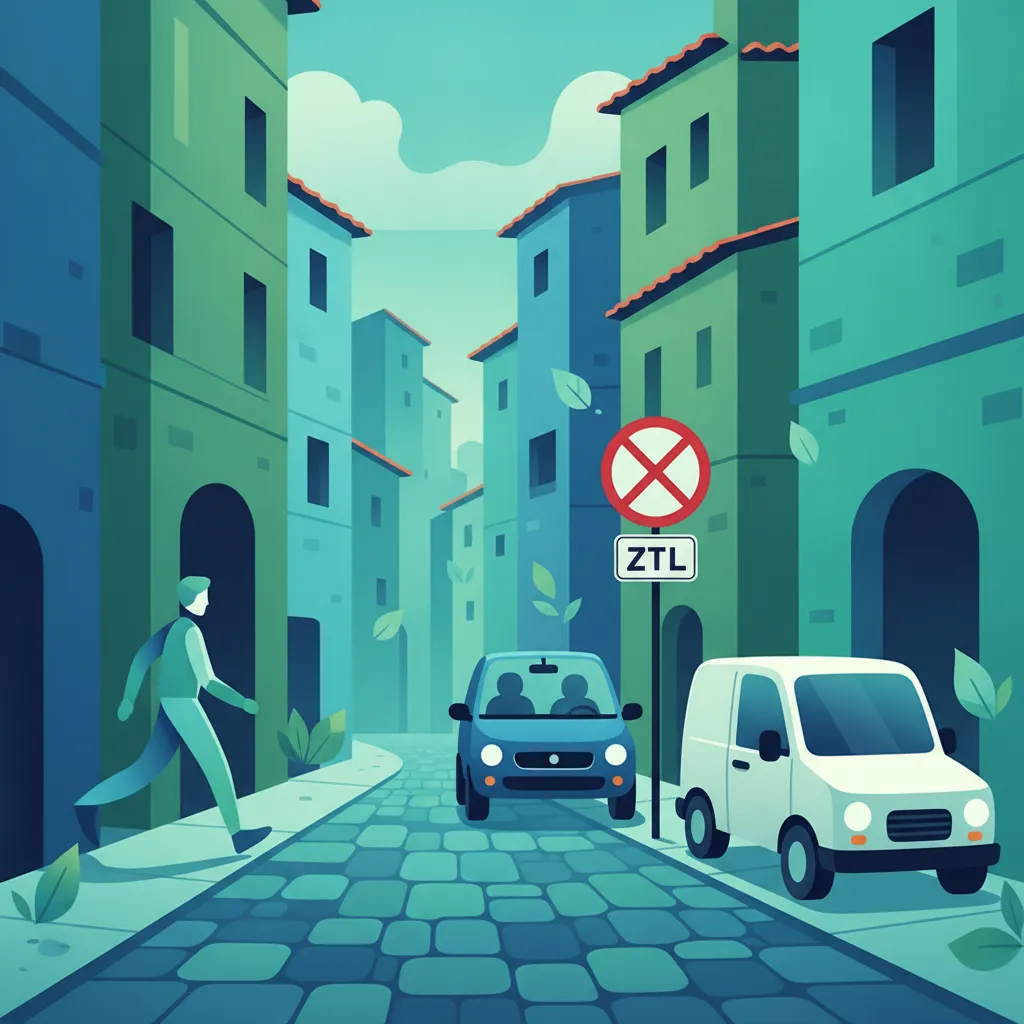
This lesson explains the rules for special urban traffic situations common in Italy. It provides a detailed explanation of Limited Traffic Zones (ZTL), including how to recognize the signage and understand the access restrictions to avoid fines. The content also offers guidance on navigating the narrow and complex streets of historic centers and safely maneuvering around frequently stopping delivery vehicles.
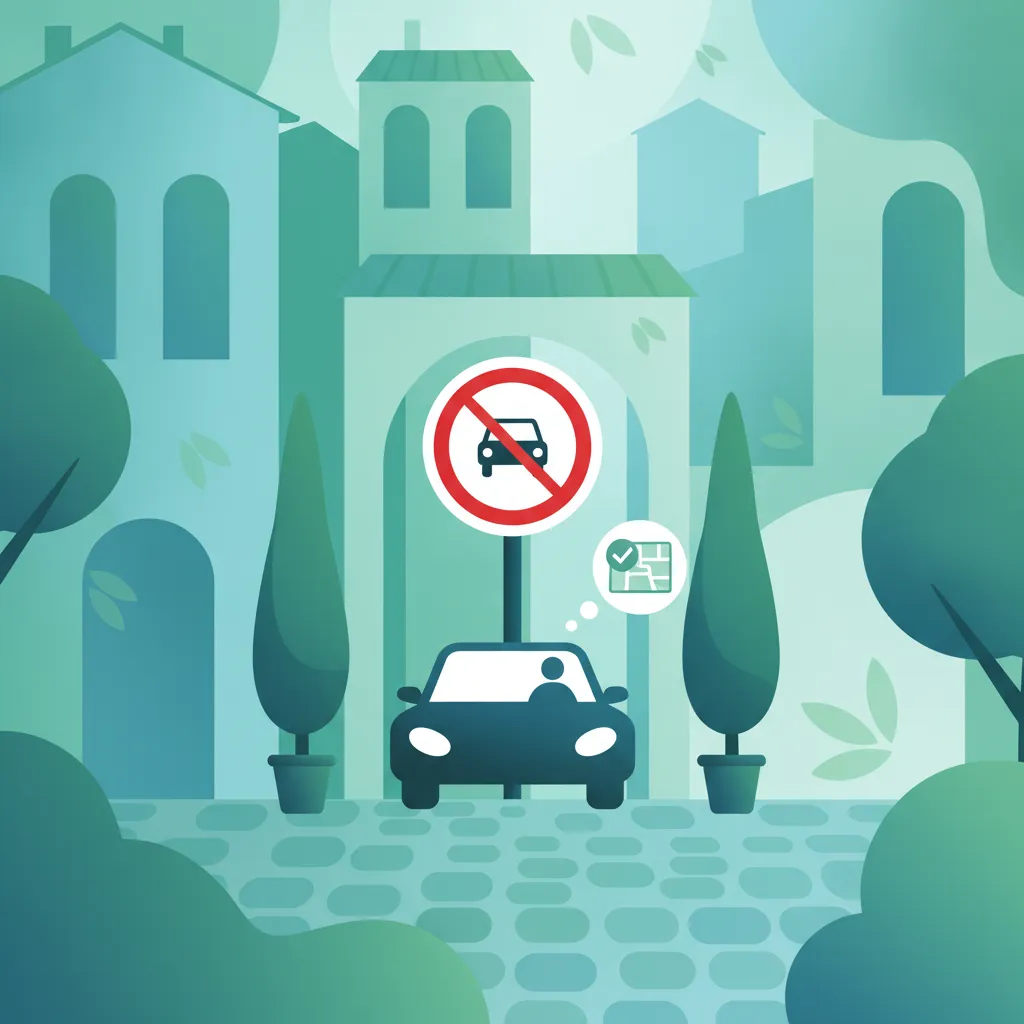
This lesson explains the concept of 'Zone a Traffico Limitato' (ZTL), common in Italian city centers, which restricts vehicle access at certain times. It covers how to identify ZTL boundaries, understand the operating hours, and the procedures for obtaining permits for commercial deliveries. The lesson also touches on environmental zones that may restrict access based on a vehicle's emission standards.

This lesson provides a practical guide to parking regulations in Italian urban areas. It explains the meaning of different colored parking lines (blue for paid, white for free, yellow for reserved), the use of the parking disc (disco orario) for time-limited zones, and how to operate pay-and-display machines. The content also covers how to identify no-parking zones to avoid fines and towing.

This lesson focuses on the principle of 'appropriate speed' in urban environments, which often means driving slower than the legal maximum. It explains how to assess the environment for potential hazards—such as schools, parked cars, and busy intersections—and adjust speed accordingly to allow for adequate reaction time. Maintaining a safe, consistent speed reduces the need for harsh braking and contributes to a safer environment for everyone.

This lesson explains the principles of maintaining proper lane discipline and strategic positioning in an urban context. It covers how to adapt your position within the lane to enhance visibility, avoid road surface hazards, and prepare for turns or lane changes. The content also provides awareness of specific urban features like restricted traffic zones (ZTL) and how to navigate them legally and safely.
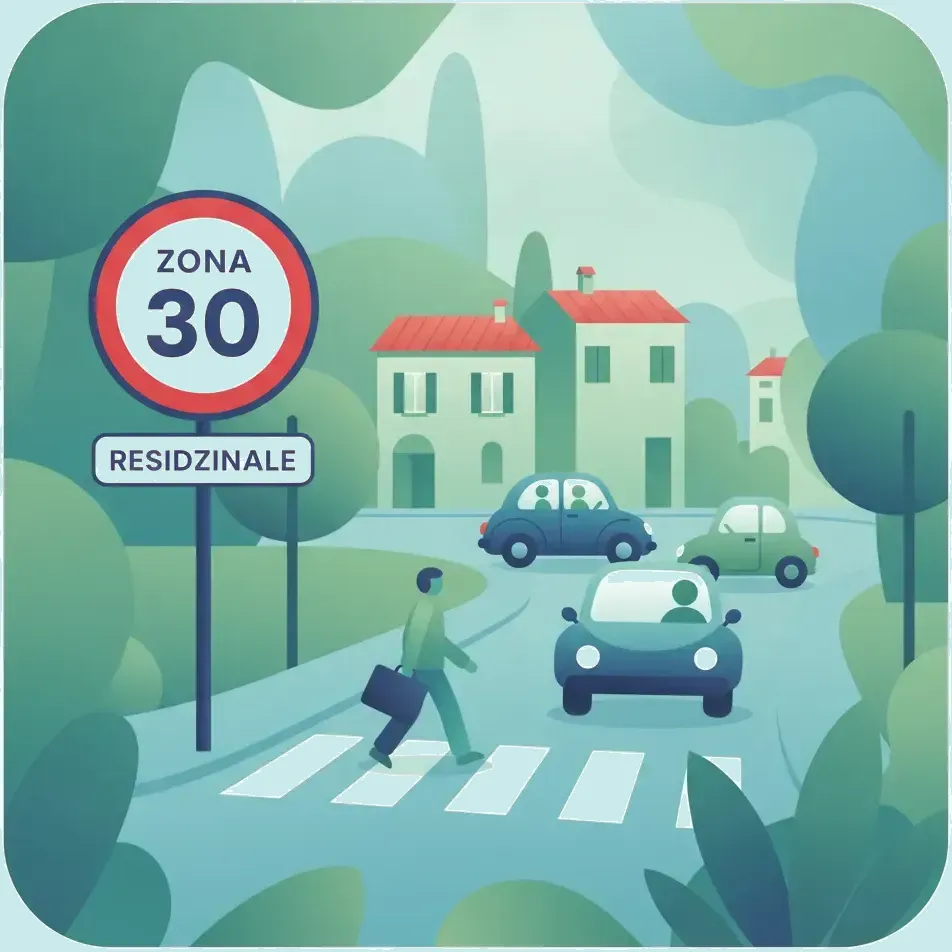
This lesson focuses on the specific signage and regulations for low-speed zones, such as "Zone 30" areas common in Italian towns. You will learn to recognize the signs that indicate reduced speed limits in residential areas, school zones, and other pedestrian-heavy environments. The content also explains various traffic calming measures and the priority rules that apply within these designated zones.

This lesson details the correct procedures for interacting with public transport and school buses. It explains the rules for dedicated bus lanes, the absolute priority of trams, and the legal requirement to yield to buses pulling out from a stop. The content also covers the specific laws requiring drivers to stop when a school bus is loading or unloading passengers, to ensure child safety.
Learn about frequent misunderstandings and errors Italian drivers make regarding fermata, sosta, and arresto. This lesson clarifies typical violations and how to avoid them to ensure compliance with traffic law.
This lesson provides essential rules and techniques for driving on Italian motorways (autostrade) and major extra-urban roads. It explains how to safely merge onto the motorway from an entry ramp, the strict lane discipline required (drive right, overtake left), and how to exit correctly. The content also covers speed regulations, maintaining a safe following distance at high speed, and procedures for using service areas and handling emergencies.

This lesson reinforces the correct procedures for interacting with emergency vehicles that are responding to a call with sirens and lights active. It explains the legal obligation to yield the right-of-way by safely moving to the side of the road and stopping if necessary. The content emphasizes making smooth, predictable movements to create a clear path, allowing emergency responders to proceed without delay.
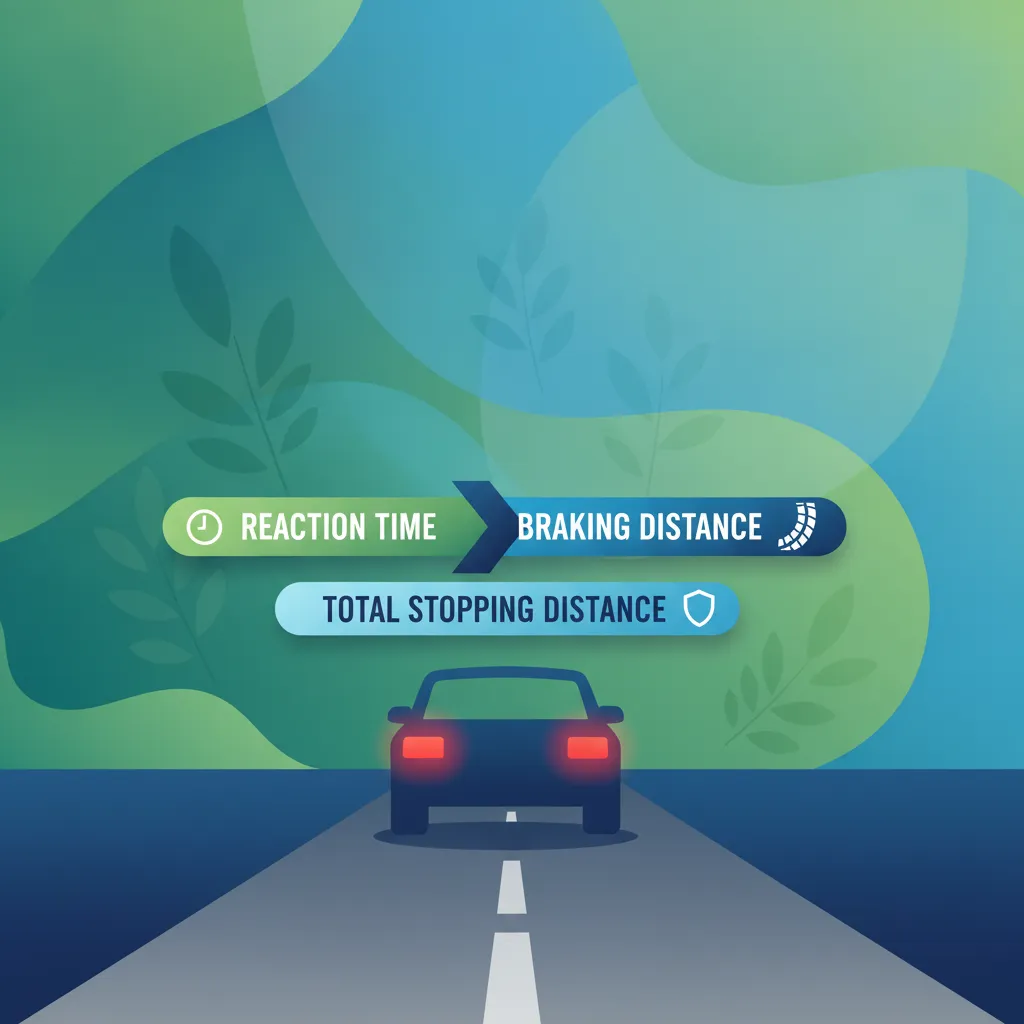
This lesson provides a technical breakdown of the total stopping distance, explaining its two key components: reaction distance and braking distance. It details how factors like driver alertness affect reaction time, while speed, vehicle weight, and road grip influence braking distance. Understanding this relationship is fundamental to managing speed and maintaining a safe distance from other road users.
This lesson focuses on the factors that determine a motorcycle's total stopping distance: perception time, reaction time, and braking distance. It provides a clear understanding of how speed exponentially increases the distance required to come to a complete stop. Learners will be able to apply principles like the two-second rule to maintain a safe and appropriate following distance in various traffic situations.

This lesson provides a step-by-step guide to navigating roundabouts safely and efficiently. It focuses on the critical rule of yielding to traffic already circulating within the roundabout before entering. You will also learn how to select the correct lane based on your intended exit and how to use your indicators to signal your maneuvers clearly.
This lesson details the correct procedures for interacting with public transport and school buses. It explains the rules for dedicated bus lanes, the absolute priority of trams, and the legal requirement to yield to buses pulling out from a stop. The content also covers the specific laws requiring drivers to stop when a school bus is loading or unloading passengers, to ensure child safety.

This lesson details the proper and legal application of a vehicle's horn, lights, and signals as primary communication tools. It explains the specific circumstances for using high beams, low beams, and fog lights to maximize visibility without dazzling other drivers. The content also clarifies the rules for using the horn, turn indicators, and hazard lights to signal intentions, warn of danger, or indicate an emergency situation.
This lesson provides a practical guide to parking regulations in Italian urban areas. It explains the meaning of different colored parking lines (blue for paid, white for free, yellow for reserved), the use of the parking disc (disco orario) for time-limited zones, and how to operate pay-and-display machines. The content also covers how to identify no-parking zones to avoid fines and towing.

This lesson provides comprehensive guidance on the rules and best practices for safe overtaking. It explains how to assess whether it is legal and safe to pass, considering road markings, signs, and the distance of oncoming traffic. The content details the correct procedure, including signaling, accelerating, maintaining a safe distance during the maneuver, and returning to the original lane safely.

This lesson is dedicated to the vital concept of 'distanza di sicurezza', the safe following distance required to avoid a rear-end collision. It explains how this distance is not fixed but varies with speed and conditions, covering practical methods like the 'two-second rule' to help judge it accurately. Maintaining this space cushion provides the necessary time to react and brake safely if the vehicle ahead stops suddenly.
Find clear answers to common questions learners have about Rules for Fermata, Sosta, and Arresto. Learn how the lesson is structured, which driving theory objectives it supports, and how it fits into the overall learning path of units and curriculum progression in Italy. These explanations help you understand key concepts, lesson flow, and exam focused study goals.
A fermata is a temporary stop, usually for loading or unloading passengers, where the driver must remain in the vehicle and be ready to move. Sosta is parking, where the driver leaves the vehicle or stays for a longer period in a designated area.
No, an arresto is an involuntary stop caused by traffic conditions, road signals (like a red light), or emergency situations. It is a mandatory compliance action, not a choice.
No, you must remain in the driving seat or at least be immediately available to move the vehicle. If you leave the vehicle, it legally becomes a sosta, which might be prohibited in that specific spot.
Look for specific regulatory signs with a blue background and red border. A single diagonal red stripe prohibits sosta, while a cross (X) prohibits both sosta and fermata.
Start searching now to pinpoint exactly which Italian driving theory topics, road signs, or traffic rules you need to master. Use our advanced filters to build a custom practice session and ensure you're fully prepared for every aspect of your official driving licence exam.