
Navigate intersections with confidence by understanding all forms of traffic control. This lesson focuses on traffic lights, pedestrian signals, and road markings, crucial elements for safe driving in Poland and for your Category B theory exam.
Lesson content overview
Navigating roads safely and efficiently in Poland requires a thorough understanding of traffic control signals, lights, and pavement indicators. These dynamic elements are critical for managing traffic flow, assigning right-of-way, and preventing collisions at intersections and other conflict points. Unlike static road signs, traffic signals provide time-dependent instructions that adapt to real-time traffic conditions, pedestrian movement, and special situations. Mastering their interpretation is fundamental for all drivers preparing for the Polish Category B theory test and for safe driving on the road.
This comprehensive guide will detail the meaning of each signal, light, and indicator, explaining the legal obligations they impose on drivers, and highlighting common pitfalls to avoid.
Not all traffic control elements carry the same weight. When multiple signals are present at an intersection or along a road segment, drivers must understand which one takes precedence. This is known as the signal hierarchy, which ensures that the most authoritative instruction is followed to prevent confusion and enhance safety.
In Poland, the general hierarchy of traffic control signals, from highest to lowest authority, is as follows:
Drivers must always obey the highest-ranking signal present. For example, a steady red traffic light must be obeyed even if there are pavement markings that might seem to suggest otherwise or if a flashing amber signal is present elsewhere at the same location. This hierarchy is legally enforced under the Regulation of Road Traffic Signs and Signals (Rozporządzenie Ministra Infrastruktury z dnia 19 grudnia 1998 r.), which defines their meanings and drivers' obligations.
Traffic lights are the most common form of dynamic traffic control, using a universal visual language of red, amber, and green to communicate immediate commands. Understanding their precise meaning and sequence is crucial for safe navigation, especially at busy intersections.
A steady red light means you must stop. You are required to bring your vehicle to a complete halt before the stop line, or if there is no stop line, before the crossing itself. You must remain stopped until a green light appears. Proceeding through a steady red light is a serious traffic violation and a significant cause of collisions.
When the red and amber lights appear together, it signals that the traffic light is about to change to green. This phase serves as a preparation cue for drivers. You must remain stopped and should not start moving until the green light is fully illuminated. Starting on the red and amber combination is illegal and can confuse other road users.
A steady green light indicates that you may proceed, provided it is safe to do so. Before moving, always check the intersection for any vehicles or pedestrians who might still be clearing the area, or for emergency vehicles. If turning, you must yield to oncoming traffic and pedestrians unless a specific green arrow signal indicates a protected turn.
A steady amber light (often called yellow) warns that the light is about to change to red. You must stop if you can do so safely before the stop line or entering the intersection. However, if you are so close to the stop line when the amber light appears that stopping safely would require harsh braking or could cause a rear-end collision, you are permitted to proceed cautiously through the intersection. You should never accelerate to "beat" an amber light.
Beyond the standard steady lights, flashing signals provide instructions that require drivers to exercise particular caution or make conditional stops. These are frequently encountered at specific locations like pedestrian crossings or railway level crossings.
A flashing amber light means "proceed with caution." It indicates that the normal traffic light system is not in operation, or it's a specific warning signal. When encountering a flashing amber light, drivers must significantly reduce their speed, be prepared to stop, and yield the right-of-way to any road users already in the intersection or crossing the road. This signal is commonly found at:
A flashing red light is a very strong warning signal that demands a complete stop. It must be treated in the same way as a stop sign. Drivers encountering a flashing red light must stop their vehicle before the signal, and only proceed when it is safe and legally permitted to do so.
Intersections with multiple lanes or complex turning movements often use dedicated arrow signals to manage specific directions of travel. These arrows provide clear instructions for turning left, turning right, or proceeding straight, and they can greatly improve traffic flow and safety by separating conflicting movements.
A green arrow indicates that you may proceed only in the direction the arrow points. This is a "protected turn" signal, meaning that traffic moving in the indicated direction has the right-of-way and opposing traffic or pedestrians should have a red signal.
If you are in a lane designated for a specific turn (e.g., a left-turn lane), you must only follow the direction of the arrow. Attempting to go straight from a left-turn arrow lane, for instance, is a violation.
An amber arrow follows a green arrow and indicates that the protected movement in that direction is about to end. Drivers should prepare to stop if they can do so safely, or clear the intersection if they are already committed to the turn. Similar to a steady amber light, you should not enter the intersection on an amber arrow unless stopping would be unsafe.
A red arrow prohibits movement in the indicated direction. You must not proceed in that direction until a green arrow for your intended movement is displayed. This is particularly important at complex intersections where different turns may have different signal phases.
In Poland, a specific type of green arrow, a green right-turn arrow displayed alongside a main red light (often located separately to the right of the main signal head), permits drivers to turn right even when the main signal for straight-ahead traffic is red. This is a conditional permission:
This special arrow, often accompanied by a small black background, is designed to improve traffic flow where safe to do so. Ignoring the yielding requirement is a serious violation.
Lane control signals are dynamic indicators typically mounted overhead, or sometimes on the ground, that manage the flow of traffic within specific lanes. They are particularly useful on reversible lanes, at road construction sites, or on motorways to manage congestion or incidents.
A red 'X' symbol or a red arrow pointing downwards indicates that the lane is closed to traffic. You must not enter or use this lane. If you are already in a lane that displays a red 'X' or arrow, you must safely and promptly merge into an open lane marked with a green arrow. Ignoring a red lane control signal is a traffic offense.
A green arrow pointing downwards indicates that the lane is open for use. Drivers may proceed in this lane, adhering to any other traffic signals or signs.
A flashing amber arrow often signals a temporary restriction or that the lane's direction is about to change. It usually instructs drivers to merge out of the lane in the direction of the arrow. This is common in reversible lanes before the direction changes, or as a warning approaching a lane closure for roadworks.
Pedestrian signals are dedicated traffic lights designed to regulate when pedestrians can cross the road, ensuring their safety and minimizing conflicts with vehicular traffic. Drivers must be highly aware of these signals, as pedestrians have the right-of-way when their signal is green.
A steady green walking figure (the "green man") indicates that pedestrians are permitted to cross the road. When this signal is displayed, drivers approaching the crossing must stop and yield to pedestrians, even if their vehicle light is green for a turn. Pedestrian safety is paramount.
A flashing green walking figure means that the pedestrian crossing phase is ending. Pedestrians who have already started crossing should continue to clear the intersection quickly. However, new pedestrians must not start crossing during this phase. Drivers should still proceed with caution, ensuring all pedestrians have cleared the crossing before moving.
A steady red standing figure (the "red man") indicates that pedestrians are not permitted to cross the road. During this phase, drivers may proceed through the intersection or turn, provided their vehicle signals allow and it is safe to do so.
Adhering to traffic signal rules is not just about safety; it is a legal obligation under the Polish Road Traffic Code (Ustawa Prawo o ruchu drogowym) and its implementing regulations. Violations can lead to significant penalties, including fines and penalty points.
Here are some key rules and common violations:
The interpretation and safe response to traffic signals can be influenced by various external factors. Drivers must adjust their approach based on the prevailing conditions to maintain safety.
Traffic signals are designed with human perception and behavior in mind to maximize safety and efficiency.
Understanding traffic signals is a cornerstone of safe and compliant driving in Poland. Continuously reinforcing this knowledge through practice and by connecting it with other aspects of traffic law will build a strong foundation for your driving skills.
This lesson covers the complete system of traffic signals, lights, and indicators used in Poland for controlling traffic at intersections and other road locations. It establishes a clear hierarchy where fixed traffic lights carry the highest authority, followed by flashing signals, lane-control signals, and finally pavement markings. Drivers must understand not only the standard steady lights (red, amber, green, and red+amber combinations) but also dedicated arrow signals for protected turns, lane-control signals for managing specific lanes, and pedestrian signals that frequently create yielding obligations for drivers. The lesson also addresses conditional variations based on weather, vehicle type, and road environment, and emphasizes that violating traffic signals carries legal penalties under the Polish Road Traffic Code.
A short set of high-value points that capture the most important learning from this lesson.
Traffic signals follow a strict hierarchy in Poland: fixed lights rank highest, followed by flashing signals, lane-control signals, pavement markings, and finally road signs.
A steady amber light requires you to stop if you can do so safely, but you may proceed if stopping would cause a hazard or rear-end collision.
A flashing amber light means 'proceed with caution' and requires you to yield right-of-way to all traffic and pedestrians already in the intersection.
The dedicated green right-turn arrow allows a right turn on red, but only after a complete stop and yielding to pedestrians and other traffic.
Lane-control signals take precedence over general traffic lights for the specific lane they control.
Explore all units and lessons included in this driving theory course.
Red + Amber together means the light is about to change to green—remain stopped until green appears.
A flashing red light must be treated exactly like a stop sign and requires a full stop before proceeding.
Pedestrian green man (steady) means you must stop and yield to pedestrians crossing; flashing green man means do not start crossing.
Green arrow signals indicate protected turns where opposing traffic and pedestrians should have a red signal.
If traffic lights malfunction completely, treat the intersection as a four-way stop following standard Polish priority rules.
Accelerating through an amber light to 'beat' the red, which creates conflict with cross-traffic and is a violation.
Assuming a flashing amber signal grants full right-of-way without checking for pedestrians or other traffic in the intersection.
Turning right on a red light without the specific green arrow signal, or failing to yield to pedestrians when turning on a green arrow.
Ignoring lane-control signals (red X or red arrow) that prohibit a lane even when the main traffic light shows green.
Making a right turn while pedestrians have a steady green crossing signal, risking serious injury.
Lesson content overview
A short set of high-value points that capture the most important learning from this lesson.
Traffic signals follow a strict hierarchy in Poland: fixed lights rank highest, followed by flashing signals, lane-control signals, pavement markings, and finally road signs.
A steady amber light requires you to stop if you can do so safely, but you may proceed if stopping would cause a hazard or rear-end collision.
A flashing amber light means 'proceed with caution' and requires you to yield right-of-way to all traffic and pedestrians already in the intersection.
The dedicated green right-turn arrow allows a right turn on red, but only after a complete stop and yielding to pedestrians and other traffic.
Lane-control signals take precedence over general traffic lights for the specific lane they control.
Explore all units and lessons included in this driving theory course.
Red + Amber together means the light is about to change to green—remain stopped until green appears.
A flashing red light must be treated exactly like a stop sign and requires a full stop before proceeding.
Pedestrian green man (steady) means you must stop and yield to pedestrians crossing; flashing green man means do not start crossing.
Green arrow signals indicate protected turns where opposing traffic and pedestrians should have a red signal.
If traffic lights malfunction completely, treat the intersection as a four-way stop following standard Polish priority rules.
Accelerating through an amber light to 'beat' the red, which creates conflict with cross-traffic and is a violation.
Assuming a flashing amber signal grants full right-of-way without checking for pedestrians or other traffic in the intersection.
Turning right on a red light without the specific green arrow signal, or failing to yield to pedestrians when turning on a green arrow.
Ignoring lane-control signals (red X or red arrow) that prohibit a lane even when the main traffic light shows green.
Making a right turn while pedestrians have a steady green crossing signal, risking serious injury.
Explore search topics learners often look for when studying Signals, Lights, and Pavement Indicators. These topics reflect common questions about road rules, driving situations, safety guidance, and lesson level theory preparation for learners in Poland.
Browse additional driving theory lessons that cover connected traffic rules, road signs, and common driving situations related to this topic. Improve your understanding of how different rules interact across everyday traffic scenarios.
Explore complex traffic signal sequences, lane control indicators, and pedestrian signals beyond basic meanings. Understand special conditions, hierarchy of signals, and legal requirements for safe navigation in Poland.
This lesson provides a detailed breakdown of traffic light operations in Poland. It explains the sequence of red, amber, and green lights, and the specific rules for turning when a green arrow signal is displayed. The meaning of a flashing amber light and the rules for pedestrian crossings at signalized intersections are also covered.
This lesson addresses advanced scenarios, including multi-lane intersections and interactions with vulnerable road users. It reinforces the legal obligation to give absolute priority to pedestrians at marked crossings (zebra crossings). The content also covers navigating around traffic islands and using dedicated turning lanes in complex urban environments.
This lesson focuses on navigating intersections that are not controlled by traffic signals. It covers the interpretation of the 'Yield' sign (ustąp pierwszeństwa) and the application of the 'priority to the right' rule at junctions of equal roads. Safe decision-making and proper observation techniques are emphasized for these common scenarios.
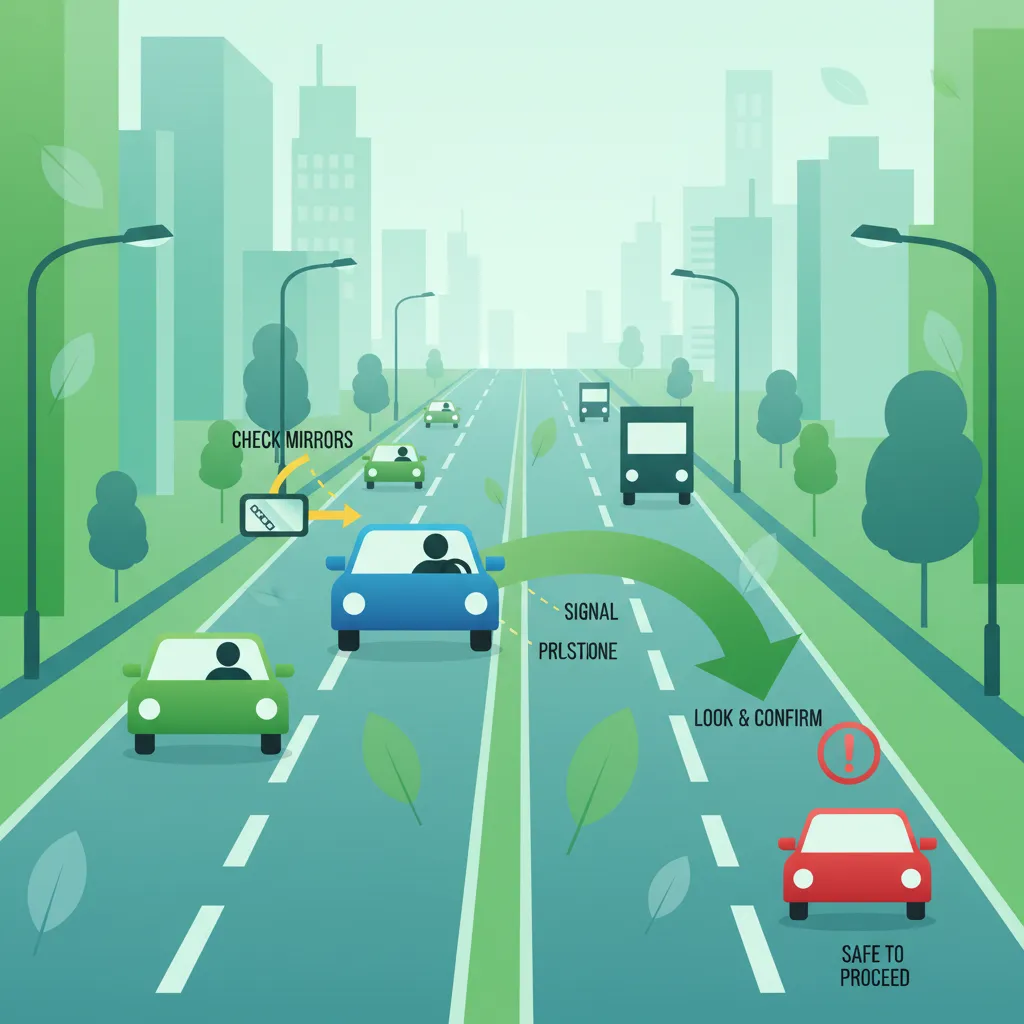
This lesson adapts lane-changing principles for the challenging environment of dense city traffic. It reinforces the critical 'mirror, signal, maneuver' sequence, with a strong focus on checking blind spots immediately before moving. The content advises on judging gaps in traffic and executing the lane change smoothly and decisively.

This lesson focuses on the rules of lane usage for maintaining safe and efficient traffic flow. It covers the meaning of different lane markings, such as solid versus broken lines, and the general principle of keeping to the rightmost lane unless overtaking. Proper lane discipline is crucial for predictability and preventing conflicts on multi-lane roads.

This lesson examines the variety of pavement markings that define lane structures, traffic flow, and special zones on Polish roads. Learners will study solid and broken lines, lane division markings, and the distinct symbols for bicycle lanes, bus lanes, and tram tracks, all of which affect motorcyclist positioning. The lesson also addresses surface texture indicators that signal changing road conditions, enabling riders to maintain correct lane discipline.
This lesson covers a wide range of signs and markings that provide information and guidance to drivers. It explains how to read destination signs, locate services, and interpret road markings like lane lines, stop lines, and pedestrian crossings. This knowledge is essential for navigation, lane discipline, and safe interaction with other road users.
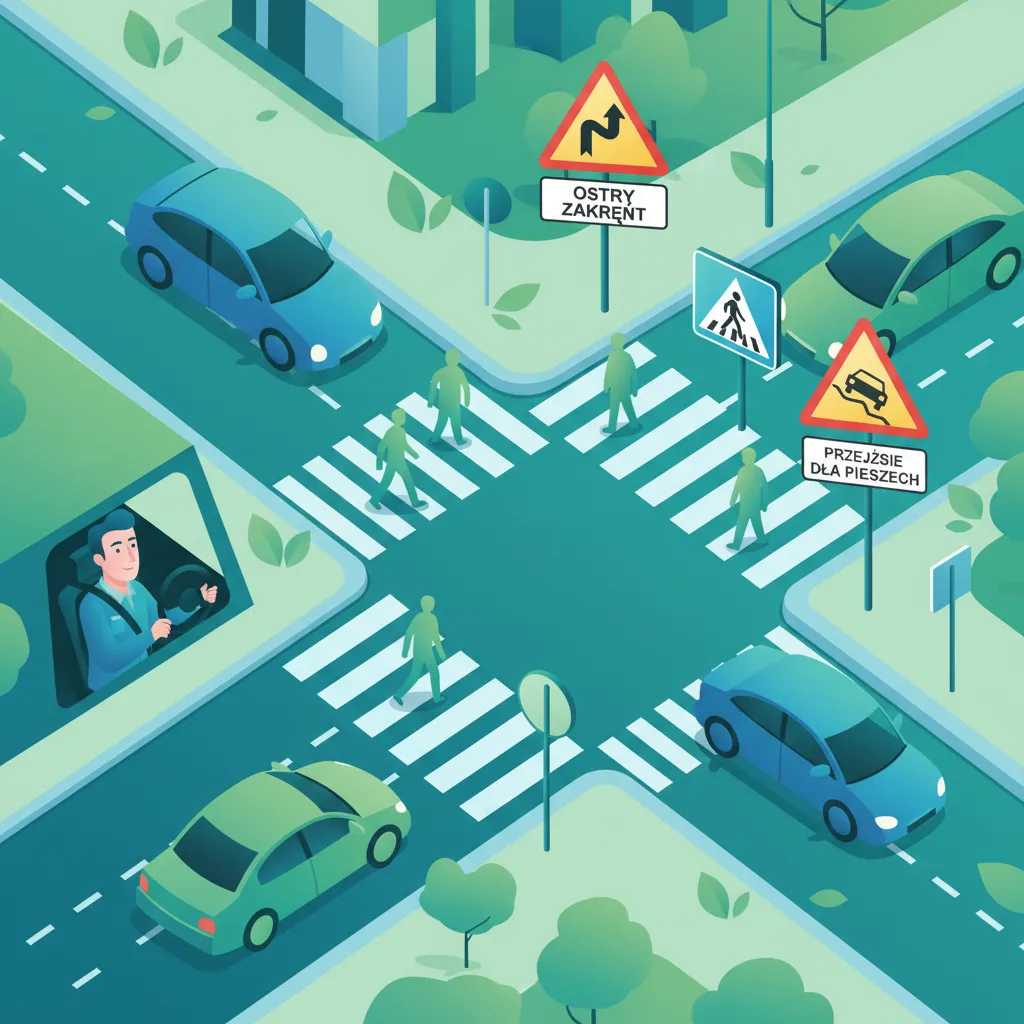
This lesson focuses on triangular warning signs, which are designed to alert drivers to upcoming hazards on the road. It covers the interpretation of various pictograms that indicate dangers like sharp turns, animal crossings, or road construction. Understanding these signs allows a driver to anticipate conditions and adjust their driving proactively.
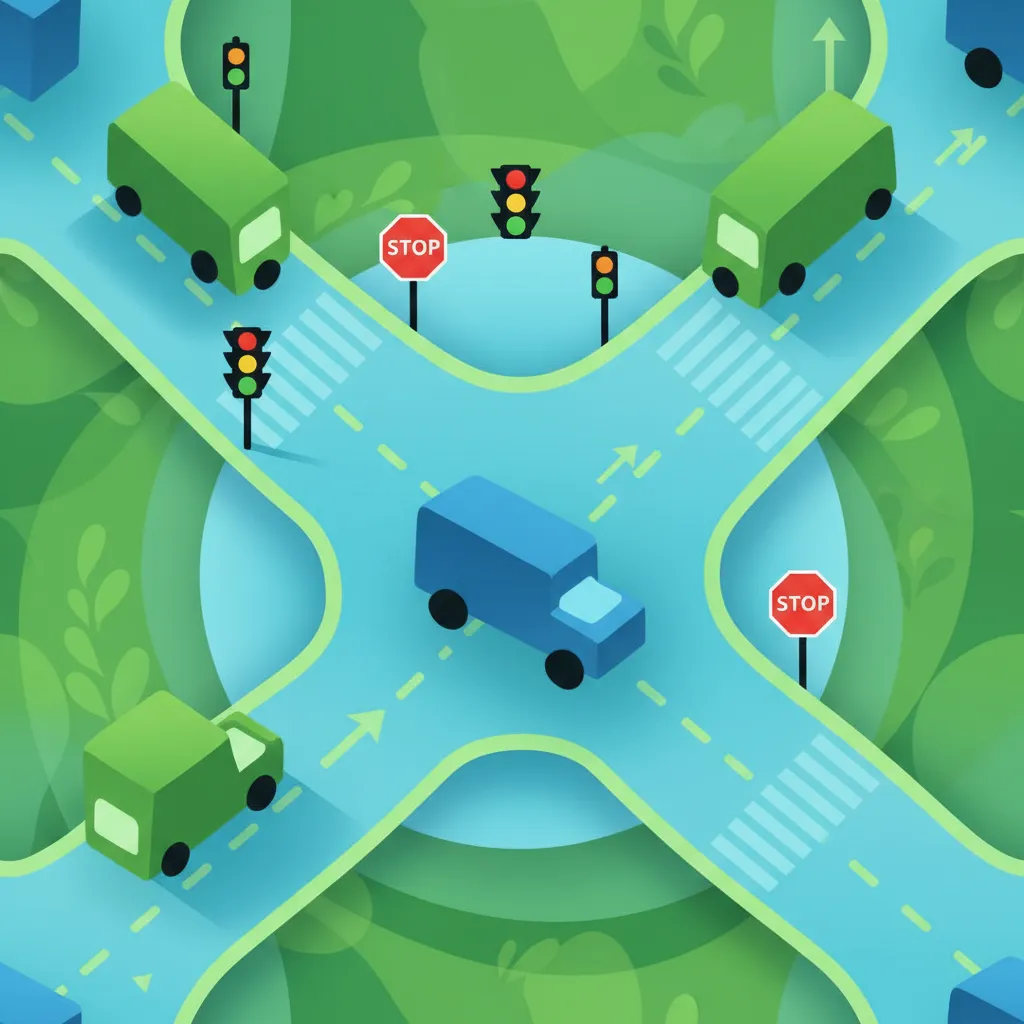
This lesson provides a comprehensive breakdown of the right-of-way rules that govern intersections. It explains the clear directives given by traffic lights, stop signs, and yield signs, and clarifies the procedures at unmarked or uncontrolled intersections, where the 'priority to the right' rule often applies. Learners will understand the legal hierarchy of these rules to make correct, safe, and predictable decisions when navigating through any junction, reducing the risk of conflict with other traffic.
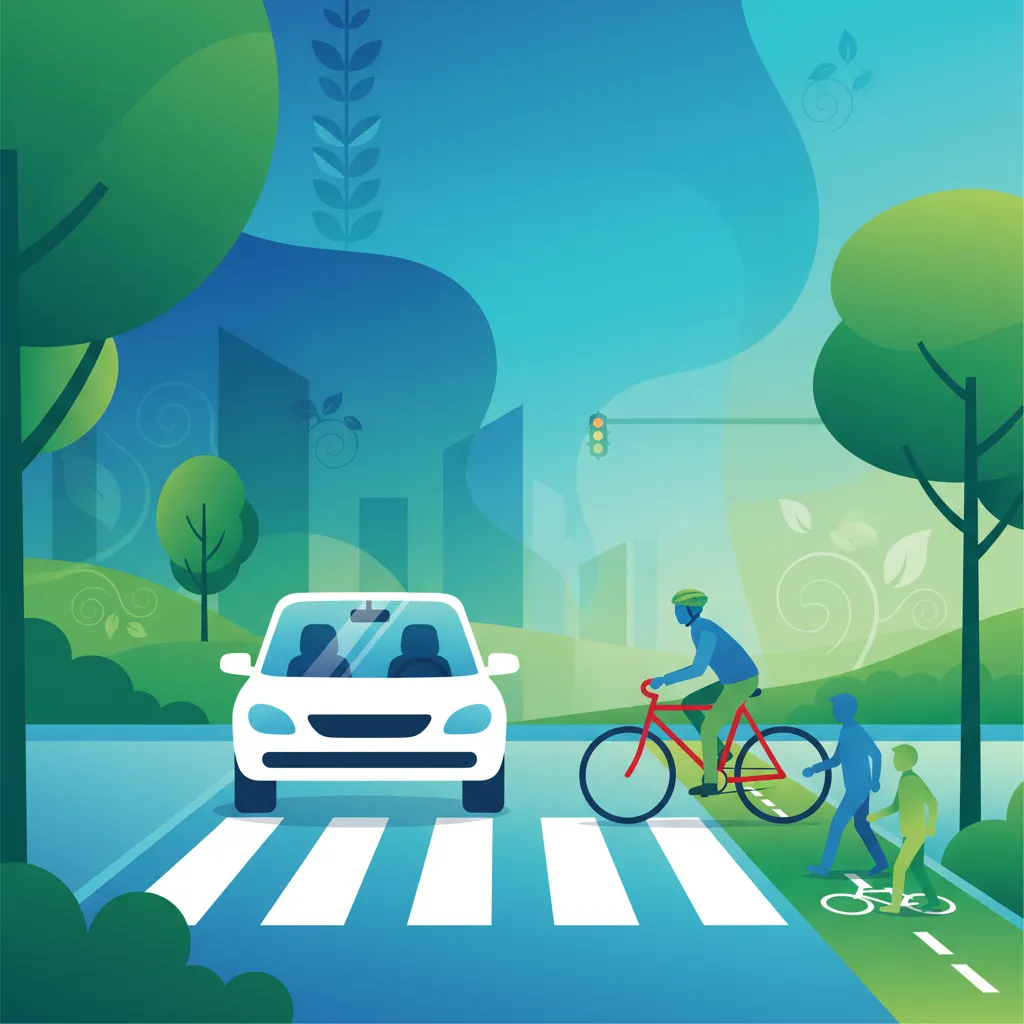
This lesson focuses on safe coexistence with cyclists and pedestrians, who are prevalent in urban areas. It covers the rules for driving alongside dedicated bicycle lanes and the legal requirement to yield to pedestrians at marked crossings. The content stresses the importance of constant awareness, especially when turning at intersections, to prevent conflicts with vulnerable road users.
Understand how traffic lights, lane signals, and pedestrian indicators function in various real-world driving situations. Learn to interpret dynamic signals for safe decision-making at complex intersections and different road types.
This lesson provides a detailed breakdown of traffic light operations in Poland. It explains the sequence of red, amber, and green lights, and the specific rules for turning when a green arrow signal is displayed. The meaning of a flashing amber light and the rules for pedestrian crossings at signalized intersections are also covered.

In this lesson, learners explore riding on rural and countryside roads, where road markings may be sparse and surface conditions varied. The content covers safe overtaking in single-lane sections, interaction with agricultural vehicles and animals, and the handling of gravel or uneven surfaces. Learners will also study the importance of anticipating curves and adjusting speed to light conditions, equipping them with the skills needed for safe countryside travel.
This lesson addresses advanced scenarios, including multi-lane intersections and interactions with vulnerable road users. It reinforces the legal obligation to give absolute priority to pedestrians at marked crossings (zebra crossings). The content also covers navigating around traffic islands and using dedicated turning lanes in complex urban environments.

This lesson explores the unique characteristics of driving on rural roads. It highlights potential hazards such as sharp, unbanked curves, poor road surfaces, and limited visibility due to hills and vegetation. The content teaches drivers to anticipate these conditions and adjust their speed and position to navigate safely.
This lesson focuses on triangular warning signs, which are designed to alert drivers to upcoming hazards on the road. It covers the interpretation of various pictograms that indicate dangers like sharp turns, animal crossings, or road construction. Understanding these signs allows a driver to anticipate conditions and adjust their driving proactively.
This lesson adapts lane-changing principles for the challenging environment of dense city traffic. It reinforces the critical 'mirror, signal, maneuver' sequence, with a strong focus on checking blind spots immediately before moving. The content advises on judging gaps in traffic and executing the lane change smoothly and decisively.

This lesson examines real-world case studies of harvest traffic, where multiple tractors and trailers share limited road space during peak agricultural periods. Learners explore strategies for coordinating speed, maintaining safe distances, and using signaling to communicate intentions. The content also addresses the challenges of field access points and the need for cooperation with other drivers.
This lesson introduces defensive driving principles for rural settings, teaching learners how to continually scan the environment and anticipate potential hazards. It discusses the unique challenges posed by slow-moving agricultural traffic, field entrances, and unpredictable farm equipment maneuvers. The lesson emphasizes proactive decision-making and early brake application to avoid collisions in mixed traffic.
This lesson focuses on safe coexistence with cyclists and pedestrians, who are prevalent in urban areas. It covers the rules for driving alongside dedicated bicycle lanes and the legal requirement to yield to pedestrians at marked crossings. The content stresses the importance of constant awareness, especially when turning at intersections, to prevent conflicts with vulnerable road users.
This lesson focuses on navigating intersections that are not controlled by traffic signals. It covers the interpretation of the 'Yield' sign (ustąp pierwszeństwa) and the application of the 'priority to the right' rule at junctions of equal roads. Safe decision-making and proper observation techniques are emphasized for these common scenarios.
Find clear answers to common questions learners have about Signals, Lights, and Pavement Indicators. Learn how the lesson is structured, which driving theory objectives it supports, and how it fits into the overall learning path of units and curriculum progression in Poland. These explanations help you understand key concepts, lesson flow, and exam focused study goals.
A flashing green traffic light in Poland indicates that the signal is about to turn amber. You should prepare to stop if it is safe to do so, or proceed with caution if you are already within the intersection or too close to stop safely.
Yes, directional arrows modify the general rule. A red light with a green arrow means you may proceed in the direction of the arrow, but you must still yield to oncoming traffic or pedestrians if the arrow is pointing left and crossing against traffic.
Solid white lines generally indicate the edge of the carriageway or separate lanes where changing lanes is discouraged or prohibited. Dashed white lines separate lanes of traffic moving in the same direction and usually permit lane changes when safe.
A green walking person signal means pedestrians have priority to cross the road at that designated crossing. Drivers must stop and wait for pedestrians to finish crossing before proceeding.
Generally, no. In Poland, you must stop for a solid red light. However, specific signs may permit turning right on red if you yield to all other traffic and pedestrians, but this is not the standard rule and depends on local signage.
Build custom practice sessions tailored precisely to your needs. Focus on areas requiring improvement, review specific Polish road signs, or master complex traffic rules to ensure full preparation for your official driving license exam.