
This lesson covers the critical skills required for initiating movement and safely bringing a heavy, loaded truck to a halt. It's the first step in mastering complex driving maneuvers for Category C, building on your understanding of vehicle systems. You'll learn essential techniques to manage inertia, prevent cargo shift, and ensure safety, preparing you for both the Polish theory exam and real-world HGV operation.

Lesson content overview
Driving a heavy goods vehicle (HGV) within the Polish Category C framework demands specialized skills, particularly when initiating movement and bringing the vehicle to a halt. Unlike passenger cars, the immense mass of a fully loaded truck introduces significant challenges related to inertia and momentum. Mastery of these techniques is paramount not only for driver and public safety but also for preventing cargo shift, minimizing wear on critical vehicle components, and ensuring compliance with Polish and EU traffic regulations. This lesson provides an in-depth exploration of the physics, practical applications, and legal considerations involved in safely and efficiently starting and stopping a large commercial vehicle.
The fundamental principles governing the movement of any vehicle are inertia and momentum. For a heavy goods vehicle, these concepts take on critical importance due to the sheer mass involved.
Inertia is a body's natural resistance to changes in its state of motion. A heavy truck, especially when fully loaded, possesses substantially more inertia than a car. This means that considerably more force is required to overcome its state of rest (to start moving) and to overcome its state of motion (to slow down or stop). Ignoring the increased inertia can lead to stalling during acceleration or significantly extended stopping distances during deceleration, both of which pose severe safety risks.
Momentum is directly proportional to both mass and velocity. As a heavy vehicle gains speed, its momentum increases dramatically. This increased momentum translates directly into a greater need for braking force and, consequently, longer stopping distances. Drivers of Category C vehicles must internalize this principle, recognizing that stopping a 40-tonne truck travelling at 80 km/h requires far more time and distance than stopping a light passenger car at the same speed. This awareness is crucial for maintaining safe following distances and anticipating road conditions.
Initiating movement with a heavy load requires a delicate balance of clutch, throttle, and gear selection to overcome inertia smoothly without stressing the drivetrain or shifting cargo.
The clutch's bite point is the precise moment when the clutch plates begin to engage, transmitting engine power to the wheels. For heavy vehicles, finding and maintaining this bite point is an art. Due to the high inertia of a loaded truck, the driver must hold the clutch at the bite point longer than in a lighter vehicle. This allows the engine to develop sufficient torque before full engagement, preventing stalling or a sudden, jerky start that could damage the drivetrain or cause the cargo to shift.
Select the Appropriate Gear: Always start in the lowest practical gear (usually 1st or 2nd) to maximize torque.
Increase Engine Revolutions (RPM): Before releasing the clutch, gently increase engine RPM to a higher level than you would in a car, typically 1200-1500 RPM, depending on the load and gradient. This provides the necessary power to overcome inertia.
Find the Bite Point: Slowly release the clutch pedal until you feel the engine beginning to pull and the vehicle slightly wanting to move.
Hold and Feather: Hold the clutch at this bite point for a moment, allowing the engine to build more torque while simultaneously adding more throttle. This "feathering" action is critical for a smooth start.
Gradual Release: As the vehicle begins to roll smoothly, continue to gradually release the clutch completely while steadily increasing throttle. Avoid releasing the clutch too quickly, which can cause the engine to stall or the vehicle to lurch forward.
Throttle matching involves coordinating engine speed with clutch engagement to ensure a smooth and efficient power transfer. With a heavy load, it's not about applying excessive throttle, but rather precise and controlled application to generate the necessary torque without causing wheel spin or driveline shock.
On slippery surfaces (wet, icy, or loose gravel), moderate your throttle input even more. Excessive throttle will easily cause wheel spin, leading to loss of traction and control, especially during initial acceleration.
Proper throttle matching helps prevent abrupt forces on the vehicle's components and cargo. It also maintains traction, which is crucial for safety and efficient movement, particularly on inclines or low-friction surfaces. The goal is to provide just enough power to get the load moving, increasing it progressively as momentum builds.
Choosing the correct starting gear is fundamental for a smooth and powerful launch, especially for heavy goods vehicles. The optimal gear depends heavily on the vehicle's load, the road gradient, and surface conditions.
Lower gears provide higher torque multiplication, which is essential for overcoming the significant inertia of a heavy load from a standstill. Attempting to start in too high a gear will strain the engine, risk stalling, and accelerate clutch wear. Many heavy trucks have multiple low-range gears (e.g., crawler gears) specifically designed for starting with extreme loads or on steep inclines.
Always assess the situation (load, gradient, surface) before selecting your starting gear. A common mistake is using a gear that is too high, leading to excessive clutch slip, engine lugging, or even stalling and rolling back, particularly on hills.
Stopping a heavy vehicle safely is as critical as starting it. It requires understanding advanced braking techniques to manage momentum, prevent brake fade, and maintain stability.
Engine braking, also known as a compression brake or "Jake brake," is a vital technique for heavy goods vehicle drivers. It involves using the engine's natural resistance to slow the vehicle, significantly reducing the workload on the primary service brakes. This is particularly important on long descents or when anticipating a slowdown, as it helps prevent brake fade.
When descending a hill, choose a gear that would be suitable for ascending that same hill. This ensures the engine provides maximum resistance and helps maintain a controlled speed without over-relying on your service brakes.
To utilize engine braking effectively, drivers must downshift to a lower gear, releasing the accelerator pedal. This increases engine RPM, and the engine's compression acts as a brake. Modern heavy trucks often have integrated engine brake systems that can be activated to augment this effect.
Progressive braking is the cornerstone of safe deceleration for heavy vehicles. Instead of slamming on the brakes, the driver applies the brake pedal gently at first, observing the vehicle's response and the behaviour of the cargo, then progressively increases pressure as the vehicle slows. This technique prevents sudden weight transfer (pitching), which can destabilize the vehicle, shift cargo, or even lead to jackknifing with a trailer.
Early Anticipation: Begin braking well in advance of your intended stopping point, especially with heavy loads.
Initial Gentle Pressure: Apply light pressure to the brake pedal to initiate deceleration and allow brake lights to activate, signalling your intent to traffic behind.
Increase Pressure Gradually: As the vehicle slows, smoothly increase brake pedal pressure to achieve the desired rate of deceleration.
Modulate as Needed: Adjust pressure based on road conditions, load shift, and feedback from the vehicle.
Smooth Release: Just before coming to a complete stop, slightly ease off the brake pressure to prevent a sudden jolt and ensure a comfortable, smooth halt.
This method also helps maintain tire traction and reduces the risk of wheel lock-up, even in vehicles equipped with Anti-lock Braking Systems (ABS).
Brake fade is a dangerous phenomenon where brakes lose their effectiveness due to overheating. This is a significant risk for heavy vehicles, especially on long or steep descents. Managing brake temperature is crucial for consistent and reliable braking performance.
Brake Warm-up: Cold brakes do not perform as efficiently as brakes at their optimal operating temperature. After a vehicle has been stationary for a long time, or at the start of a journey, it can be beneficial to lightly apply the brakes intermittently for short periods to bring them up to temperature.
Fade Prevention: The primary strategy for preventing brake fade is through judicious use of engine braking. By allowing the engine to do most of the work on descents, the service brakes remain cooler and ready for when they are truly needed. If service brakes must be used on a descent, apply them intermittently and firmly for short bursts, rather than a continuous, light application. This allows them to cool between applications.
Never "ride" the brakes on a long descent. Continuous light application causes rapid heat buildup and can quickly lead to dangerous brake fade. Use strong, brief applications followed by periods of release, in conjunction with engine braking.
Proper load distribution is not merely a matter of cargo security; it fundamentally impacts a heavy vehicle's stability, handling, and braking performance. The placement of cargo dictates the vehicle's centre of gravity (CoG).
Polish regulation mandates that cargo must be secured to prevent movement that could affect vehicle stability, including during sudden starts or stops. This rule directly addresses the dynamics of load distribution and its impact on vehicle control.
Operating heavy goods vehicles in Poland requires strict adherence to specific legal frameworks designed to ensure road safety. These regulations directly influence how Category C drivers must approach starting and stopping manoeuvres.
According to the Polish Road Traffic Act (Prawo o ruchu drogowym), specifically § 86-1, cargo must be secured in such a way that it cannot move, shift, or fall off during transport. This includes movement caused by acceleration, deceleration, or cornering. Failure to comply can result in fines and points, and more importantly, poses a serious risk to other road users and the driver. Proper securing prevents dangerous shifts in the vehicle's centre of gravity during braking and acceleration.
Polish traffic law mandates that drivers maintain an adequate distance from the vehicle ahead to stop safely, especially under heavy loads (Regulation of Minimum Distances, Art. 103). Given the increased momentum of HGVs, these distances are significantly longer than for passenger cars. Drivers must constantly calculate and adjust their following distance based on vehicle weight, speed, road conditions, and visibility.
Additionally, heavy trucks are subject to specific speed limits that are often lower than those for passenger cars, particularly in urban areas, residential zones, and on certain motorway sections (Road Traffic Regulation, §§ 87-89). Adhering to these limits is not just a legal obligation but a critical safety measure, as higher speeds dramatically increase kinetic energy, making stopping even more challenging.
In Poland, the use of engine brakes (including exhaust brakes and compression brakes) is generally permitted. However, Art. 71 of the Road Traffic Act stipulates that any vehicle operation, including braking methods, must not endanger other road users. This means that while engine braking is encouraged for its safety benefits and reduced wear on service brakes, it must not be used so aggressively that it causes erratic deceleration, loss of control, or undue alarm to following traffic. Drivers should use engine braking smoothly and in a controlled manner, signalling their intentions where appropriate.
Driving a heavy vehicle is a dynamic task, and starting and stopping techniques must be adapted to a variety of environmental and situational factors.
Understanding common errors is crucial for preventing accidents and ensuring longevity of the vehicle.
Mastering starting and stopping techniques for heavy goods vehicles is a cornerstone of safe and efficient professional driving. It requires a deep understanding of vehicle physics, meticulous control inputs, and constant awareness of environmental and regulatory factors.
Remember these essential points:
By consistently applying these principles, Category C drivers can ensure the safe, efficient, and compliant operation of heavy goods vehicles, contributing to road safety for all.
This lesson teaches essential Category C techniques for controlling heavy goods vehicles, grounded in the physics of inertia and momentum that make HGVs fundamentally different from passenger cars. Effective starting requires finding the clutch bite point, holding it longer while feathering throttle, and selecting the lowest practical gear to generate maximum torque without straining the drivetrain. Safe stopping relies heavily on engine braking to preserve service brakes, combined with smooth, progressive brake application that accounts for the vehicle's significant momentum and prevents cargo movement. Polish regulations mandate proper cargo securement to prevent dangerous shifts during transport, and drivers must adapt techniques for weather conditions, road gradients, and vehicle load states while always maintaining awareness of vulnerable road users around large vehicles.
A short set of high-value points that capture the most important learning from this lesson.
Heavy vehicles have significantly greater inertia than cars, requiring considerably more force to start moving and substantially longer stopping distances to halt safely
Smooth clutch engagement at the bite point combined with proper throttle matching prevents driveline stress, stalling, and dangerous cargo shift during starts
Engine braking is essential for controlling speed on descents and must be used proactively to prevent dangerous brake fade on service brakes
Progressive braking technique maintains vehicle stability and prevents cargo movement by avoiding sudden weight transfer during deceleration
Proper load distribution keeps the vehicle's centre of gravity low and central, directly affecting braking effectiveness, handling, and rollover risk
Explore all units and lessons included in this driving theory course.
According to the Polish Road Traffic Act (Prawo o ruchu drogowym), cargo must be secured to prevent movement during acceleration, braking, and cornering
The bite point is where clutch plates begin engaging and requires holding longer with heavy loads while feathering throttle to develop sufficient torque
On descents, select a gear that would be suitable for climbing the same hill to maximize engine resistance against excessive speed
Cold brakes do not perform optimally; light intermittent applications before heavy braking bring them to effective operating temperature
Never ride the brakes continuously on long descents—use strong, brief applications followed by release periods to prevent dangerous fade
Releasing the clutch too abruptly on hill starts causes vehicle rollback, drivetrain damage, and cargo shift that can lead to collisions
Selecting too high a starting gear for the load or gradient strains the engine, accelerates clutch wear, and risks stalling with rollback on inclines
Over-reliance on service brakes during long descents neglects engine braking and can lead to brake fade and complete loss of braking power
Improper load distribution, particularly rear-heavy loading, creates an unstable centre of gravity causing rear-wheel lock-up and loss of steering control
Driving with unsecured cargo allows dangerous shifting during acceleration or braking, directly impacting vehicle stability and safety
Lesson content overview
A short set of high-value points that capture the most important learning from this lesson.
Heavy vehicles have significantly greater inertia than cars, requiring considerably more force to start moving and substantially longer stopping distances to halt safely
Smooth clutch engagement at the bite point combined with proper throttle matching prevents driveline stress, stalling, and dangerous cargo shift during starts
Engine braking is essential for controlling speed on descents and must be used proactively to prevent dangerous brake fade on service brakes
Progressive braking technique maintains vehicle stability and prevents cargo movement by avoiding sudden weight transfer during deceleration
Proper load distribution keeps the vehicle's centre of gravity low and central, directly affecting braking effectiveness, handling, and rollover risk
Explore all units and lessons included in this driving theory course.
According to the Polish Road Traffic Act (Prawo o ruchu drogowym), cargo must be secured to prevent movement during acceleration, braking, and cornering
The bite point is where clutch plates begin engaging and requires holding longer with heavy loads while feathering throttle to develop sufficient torque
On descents, select a gear that would be suitable for climbing the same hill to maximize engine resistance against excessive speed
Cold brakes do not perform optimally; light intermittent applications before heavy braking bring them to effective operating temperature
Never ride the brakes continuously on long descents—use strong, brief applications followed by release periods to prevent dangerous fade
Releasing the clutch too abruptly on hill starts causes vehicle rollback, drivetrain damage, and cargo shift that can lead to collisions
Selecting too high a starting gear for the load or gradient strains the engine, accelerates clutch wear, and risks stalling with rollback on inclines
Over-reliance on service brakes during long descents neglects engine braking and can lead to brake fade and complete loss of braking power
Improper load distribution, particularly rear-heavy loading, creates an unstable centre of gravity causing rear-wheel lock-up and loss of steering control
Driving with unsecured cargo allows dangerous shifting during acceleration or braking, directly impacting vehicle stability and safety
Explore search topics learners often look for when studying Starting and Stopping with Heavy Loads. These topics reflect common questions about road rules, driving situations, safety guidance, and lesson level theory preparation for learners in Poland.
Browse additional driving theory lessons that cover connected traffic rules, road signs, and common driving situations related to this topic. Improve your understanding of how different rules interact across everyday traffic scenarios.
Understand critical braking methods for Category C vehicles in Poland. Learn about engine braking, progressive application, managing brake fade, and adapting to different road conditions for safe deceleration.

This lesson is dedicated to the critical braking systems of heavy goods vehicles. It provides a detailed explanation of the air brake system, including the compressor, air tanks, and brake chambers, and highlights the safety function of the dual-circuit design. Learners will also differentiate between various types of auxiliary braking systems, such as engine brakes and retarders, and understand their role in managing speed and preventing service brake overheating on steep gradients.
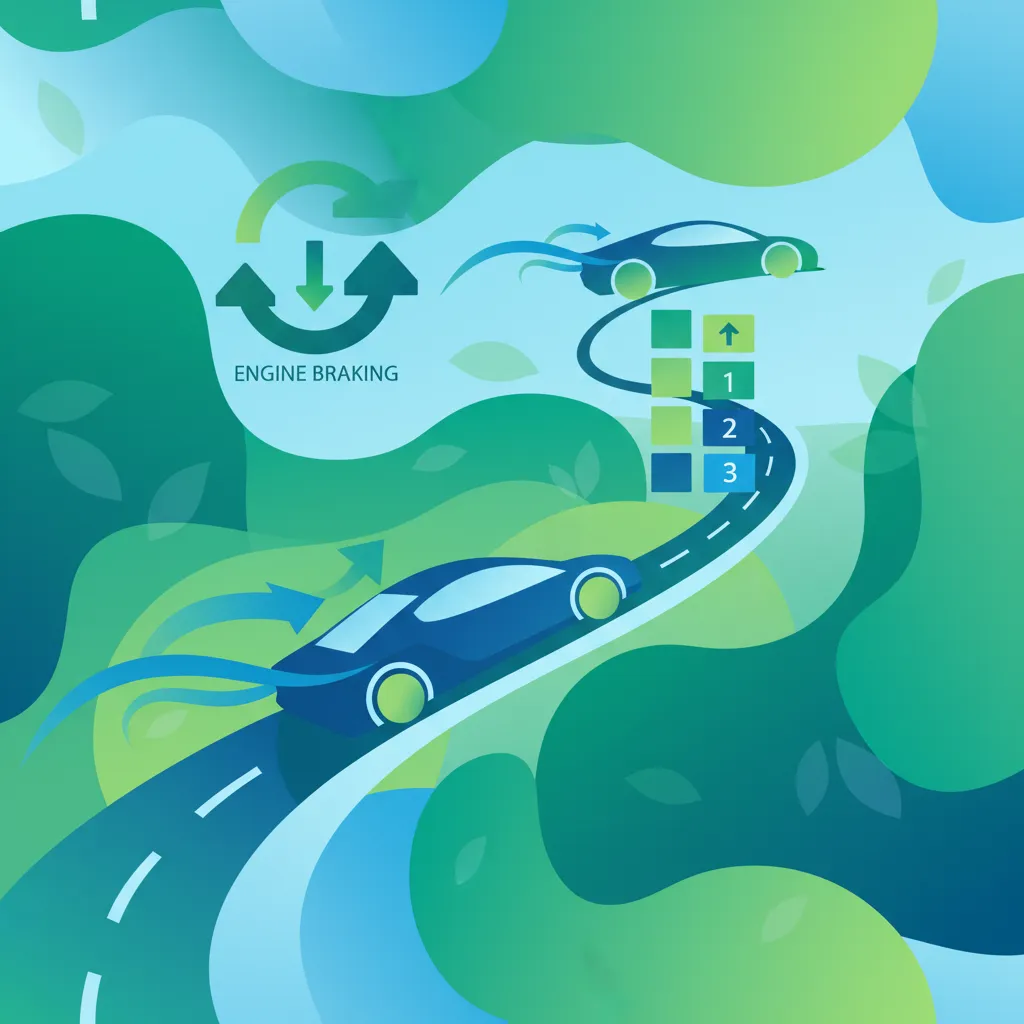
This lesson focuses on optimizing powertrain performance through skilled driving techniques. It teaches learners how to select the correct gears and shift points by understanding the engine's torque curve, which is crucial for both efficient acceleration and fuel economy. Additionally, the content details the proper application of engine braking and retarders to control speed on descents, preserving the service brakes and maintaining vehicle control without excessive fuel use.

This lesson focuses on the critical procedures for executing an emergency stop with an air-braked vehicle. It explains how to apply firm, steady pressure to the brake pedal to achieve maximum braking force without locking the wheels, which could lead to a loss of control. The content also discusses the response time of air brake systems and how to manage the significant forces of deceleration when the vehicle is fully loaded, ensuring the quickest possible stop in a crisis situation.

This lesson covers the braking mechanisms specific to large passenger vehicles, focusing on air brake systems and retarders. Learners will understand the components and operation of service and parking brakes, as well as the function of ABS and ESC. It also addresses strategies for emergency braking and the importance of regular maintenance for optimal performance.

This lesson explores the dynamic relationship between cargo weight and a vehicle's performance. It explains how increased mass raises kinetic energy, significantly lengthening braking distances and requiring earlier, more gradual brake application. Learners will also analyze how a heavy or poorly distributed load alters the vehicle's handling characteristics, particularly during cornering, and understand the necessity of adjusting speed and driving style to compensate for these effects.

This lesson introduces the fundamental principles of the diesel engines that power Category C vehicles. It covers key concepts such as torque, horsepower, fuel injection, and the role of turbocharging in generating power efficiently. Learners will also analyze how the powertrain transfers energy to the wheels and understand the practical application of engine braking as a primary method for controlling vehicle speed, especially on long descents, to reduce wear on service brakes.

This lesson provides a detailed breakdown of vehicle classifications relevant to the Category C licence. It explains the concept of 'dopuszczalna masa całkowita' (permissible total weight) and how it defines a vehicle's category. Learners will identify different truck types, such as rigid vehicles, based on their axle configurations and understand the specific roadworthiness and registration requirements for each class, ensuring correct vehicle operation under the law.

This lesson teaches drivers how to adapt their speed, following distance, and control inputs to safely navigate adverse conditions. It covers the challenges posed by rain, snow, and ice, explaining the loss of traction and the increased risk of skidding or aquaplaning. The content provides specific strategies for driving in fog, which reduces visibility, and strong crosswinds, which can affect the stability of a high-sided vehicle, promoting a proactive and defensive driving mindset.

This lesson breaks down the physics of stopping a vehicle. It defines reaction distance (the distance traveled before applying the brakes) and braking distance (the distance traveled while braking). The content explains how factors like speed, road condition, and tire grip influence the total stopping distance, and introduces proper braking techniques.
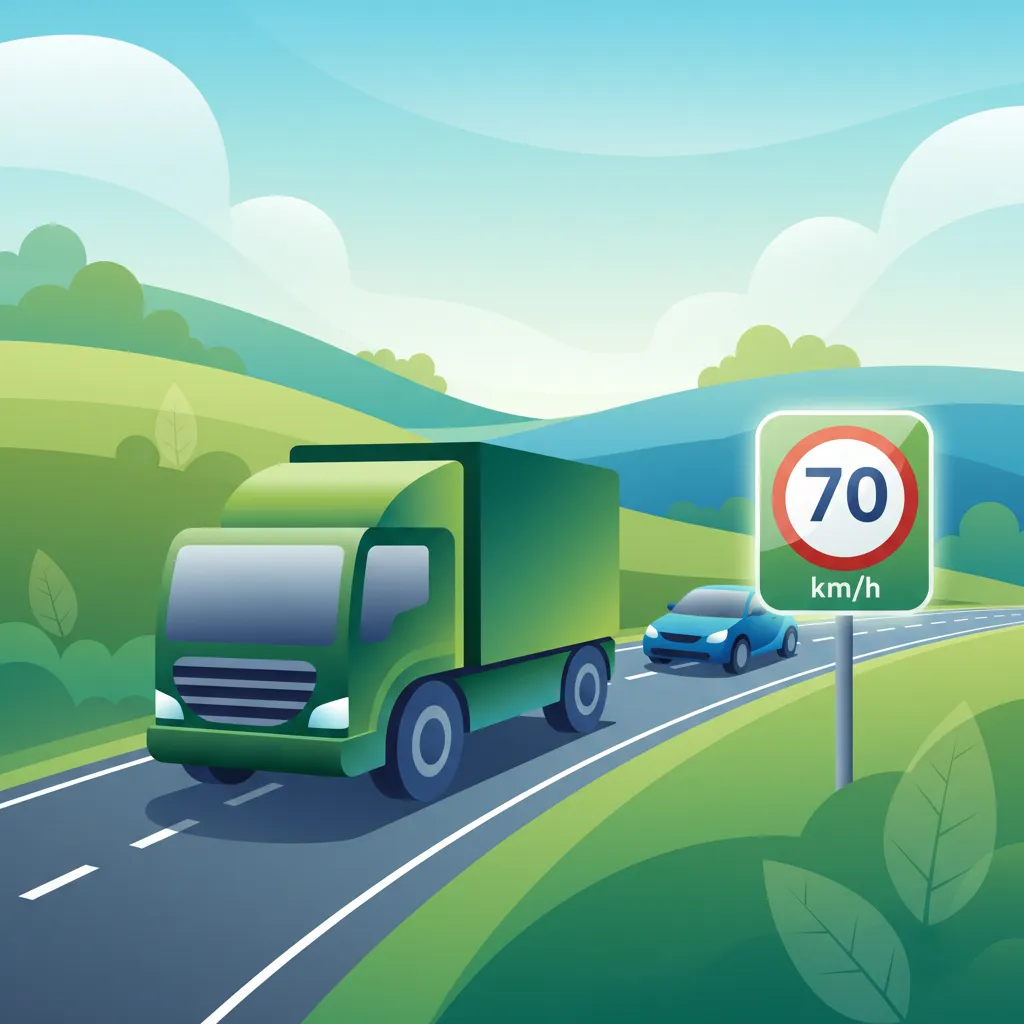
This lesson outlines the statutory speed limits that professional drivers of Category C vehicles must adhere to on Polish roads. It clearly distinguishes the maximum permitted speeds in built-up areas, on single carriageways, and on motorways. The content also explains how to interpret road signs that may indicate temporary or vehicle-specific speed restrictions, ensuring drivers remain compliant with the law and avoid penalties from speed enforcement measures.
Explore the vital link between cargo load, distribution, and vehicle stability for Polish Category C drivers. Learn how centre of gravity affects starting, stopping, and overall road handling.
This lesson explores the dynamic relationship between cargo weight and a vehicle's performance. It explains how increased mass raises kinetic energy, significantly lengthening braking distances and requiring earlier, more gradual brake application. Learners will also analyze how a heavy or poorly distributed load alters the vehicle's handling characteristics, particularly during cornering, and understand the necessity of adjusting speed and driving style to compensate for these effects.
This lesson provides a detailed breakdown of vehicle classifications relevant to the Category C licence. It explains the concept of 'dopuszczalna masa całkowita' (permissible total weight) and how it defines a vehicle's category. Learners will identify different truck types, such as rigid vehicles, based on their axle configurations and understand the specific roadworthiness and registration requirements for each class, ensuring correct vehicle operation under the law.

This lesson focuses on the crucial concept of the center of gravity (CoG) and its direct impact on truck stability. It explains how the height and lateral position of the load's CoG can affect the vehicle's susceptibility to rolling over, especially during cornering or sudden maneuvers. Learners will study principles for positioning and stacking cargo to maintain the lowest possible CoG, thereby enhancing dynamic stability and overall driving safety.

This lesson explores the key components responsible for vehicle stability and control. It compares different suspension technologies, like traditional leaf springs and modern air suspension, and explains their impact on ride quality and load handling. Learners will also study the principles of hydraulic power steering and the importance of correct wheel alignment, as well as understand how different axle configurations affect load distribution and maneuverability.

This lesson delves into the physics of load management, teaching learners how to calculate payloads, locate the center of gravity, and distribute weight to preserve stability. The lesson addresses methods for securing cargo using straps and tie-downs, while also covering the effect of load shift on braking. Proper load planning ensures compliance with legal regulations and mitigates risks associated with trailer sway.
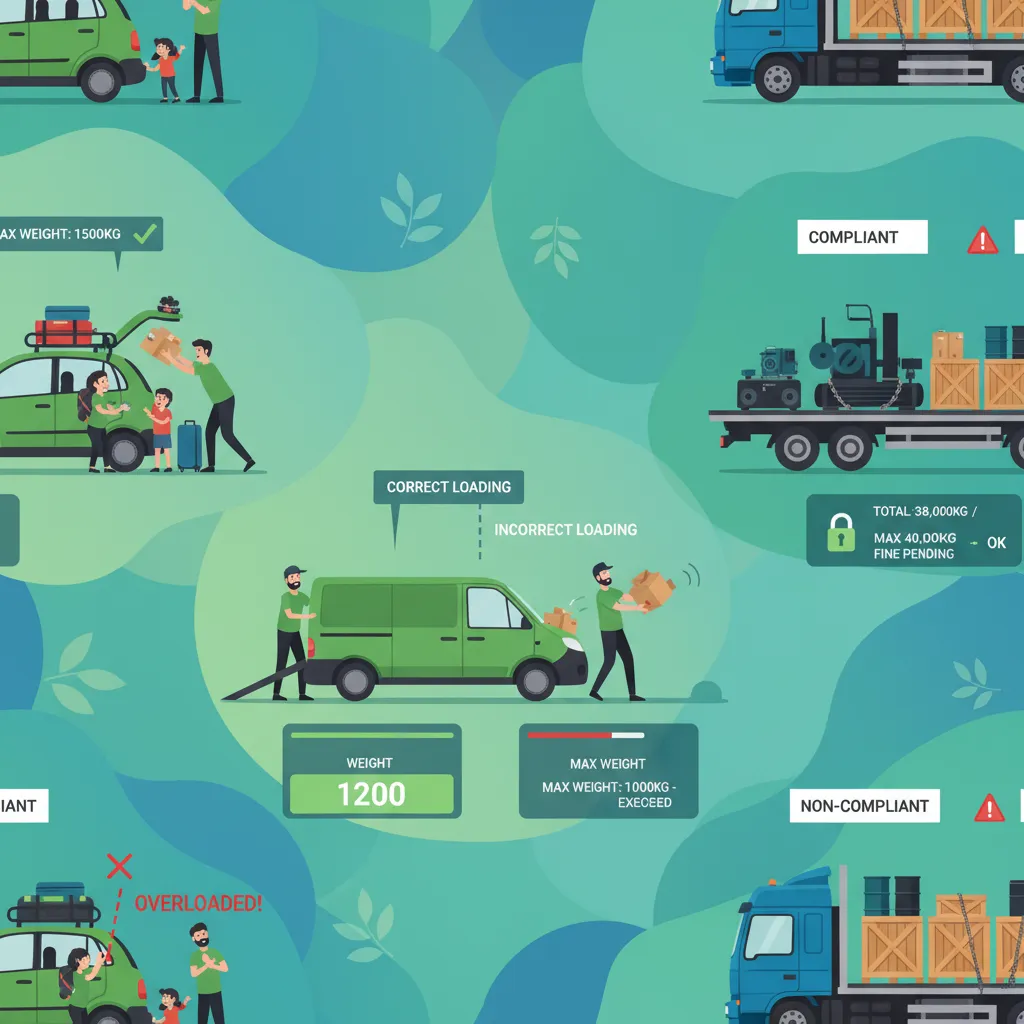
This lesson introduces the legal framework governing vehicle and axle weight limits in Poland and the EU. Learners will understand how to determine a vehicle's maximum permissible payload and interpret official load charts and documentation. The content covers the importance of correct weight distribution to avoid exceeding individual axle limits and explains the serious legal and safety consequences of operating an overloaded vehicle.
This lesson outlines the statutory speed limits that professional drivers of Category C vehicles must adhere to on Polish roads. It clearly distinguishes the maximum permitted speeds in built-up areas, on single carriageways, and on motorways. The content also explains how to interpret road signs that may indicate temporary or vehicle-specific speed restrictions, ensuring drivers remain compliant with the law and avoid penalties from speed enforcement measures.

This lesson teaches the essential skill of calculating a heavy vehicle's total stopping distance. It breaks the calculation into two key parts: the driver's perception-reaction distance and the vehicle's braking distance. Learners will understand how factors such as vehicle mass, speed, road gradient, and the friction coefficient of the road surface dramatically influence the distance required to come to a complete and safe stop, emphasizing the need for large safety margins.

This lesson defines the scope of vehicles permitted under a Category B licence, primarily passenger cars up to 3,500 kg maximum permissible mass. It clarifies the rules on seating capacity and the regulations for towing trailers, distinguishing between a standard B licence and a B+E entitlement. Understanding these classifications ensures drivers operate vehicles legally and safely.
This lesson teaches drivers how to adapt their speed, following distance, and control inputs to safely navigate adverse conditions. It covers the challenges posed by rain, snow, and ice, explaining the loss of traction and the increased risk of skidding or aquaplaning. The content provides specific strategies for driving in fog, which reduces visibility, and strong crosswinds, which can affect the stability of a high-sided vehicle, promoting a proactive and defensive driving mindset.
Find clear answers to common questions learners have about Starting and Stopping with Heavy Loads. Learn how the lesson is structured, which driving theory objectives it supports, and how it fits into the overall learning path of units and curriculum progression in Poland. These explanations help you understand key concepts, lesson flow, and exam focused study goals.
A heavy load significantly increases the inertia the engine must overcome. This requires more precise and often slower clutch engagement with sufficient throttle to prevent stalling, excessive clutch wear, or harsh movements that could destabilize the cargo. Smoothness is key.
The most common mistake is applying brakes too abruptly or too late, failing to account for the truck's greater momentum and longer stopping distance. This can lead to jackknifing, loss of control, or cargo shift, especially on slippery surfaces or downhill gradients. Gradual, progressive braking is essential.
Preventing cargo shift is crucial for safety and legal compliance. A shifting load can alter the vehicle's center of gravity, causing instability, loss of control, or even overturning. It can also damage the cargo or the vehicle itself. Proper load securement and smooth driving techniques are paramount.
Yes, engine braking is a vital technique for Category C vehicles, especially with heavy loads or on descents. It helps slow the vehicle, reduces reliance on service brakes (preventing overheating and fade), and contributes to overall control. It should be used in conjunction with service brakes for optimal stopping power.
Wet or icy roads drastically reduce traction, requiring even more gentle acceleration and braking to prevent wheel spin or skidding. Uphill starts demand more throttle and precise clutch engagement, while downhill stopping requires constant use of engine braking and careful application of service brakes to manage momentum effectively.
Build custom practice sessions tailored precisely to your needs. Focus on areas requiring improvement, review specific Polish road signs, or master complex traffic rules to ensure full preparation for your official driving license exam.