
This lesson will equip you with the essential skills to confidently operate a Category C heavy goods vehicle in challenging Polish urban environments. You'll learn effective strategies for navigating narrow streets, traffic calming measures, and managing frequent stop-and-go situations. Mastering these techniques is crucial for maintaining safety, minimizing disruption, and performing well on your Polish driving theory exam for large vehicles.

Lesson content overview
Operating a heavy goods vehicle (HGV) within the intricate and often congested confines of an urban environment presents a unique set of challenges. This lesson, part of the Polish Category C Heavy Goods Vehicle Theory curriculum, is designed to equip aspiring professional truck drivers with the essential knowledge and decision-making skills needed to navigate city streets safely and efficiently. Mastery of these skills is crucial for minimizing accidents, preventing cargo damage, reducing road user frustration, and ensuring full compliance with Polish traffic law.
Urban settings combine limited maneuvering space, high pedestrian density, frequent traffic controls, and dynamic congestion, demanding a systematic approach to driving. This includes meticulous route planning, precise speed management, and constant vigilance for vulnerable road users. By understanding and applying the principles of anticipatory driving and spatial awareness, drivers can maintain predictable movement and contribute to smoother traffic flow in challenging city conditions.
Navigating Polish cities with a large commercial vehicle requires a specific skill set that goes beyond general driving proficiency. The core idea behind effective urban traffic flow management for HGVs is the systematic application of anticipation, spatial awareness, and strict legal compliance to ensure safe and predictable movement through congested streets. Heavy vehicles, by their nature, have longer stopping distances, greater momentum, and reduced maneuverability compared to passenger cars. These physical realities, combined with specific Polish traffic regulations regarding speed limits, weight restrictions, and urban restricted zones, form the conceptual foundation for safe urban HGV operation.
The risks inherent in urban HGV driving are significant. Limited road width and high pedestrian traffic elevate the risk of collisions. Through proactive route planning, appropriate speed adaptation, and maintaining sufficient safe gaps, drivers can significantly minimize their exposure to hazardous situations. This lesson builds upon foundational knowledge from earlier modules, including vehicle dimensions and turning radii (Lesson 4), braking distances and speed management (Lesson 5), and road signs, restrictions, and priority rules (Lessons 6 & 7.1-7.4). It also lays the groundwork for understanding operational safety, fatigue, and environmental factors in urban driving, which will be explored further in Lesson 8.
Several fundamental principles guide safe and efficient HGV operation in urban environments. Adhering to these principles is not just about compliance; it's about making informed decisions that protect lives, cargo, and infrastructure.
Anticipatory driving involves continuous observation and prediction of traffic conditions far ahead, enabling proactive speed and lane choices. This approach significantly reduces the need for sudden braking, improves overall traffic flow, and provides vulnerable road users with more reaction time. HGV drivers must scan the road well in advance, maintain a safe following distance, and adjust their speed early to respond to unfolding situations.
Effective route planning means selecting travel paths that specifically respect the vehicle's dimensions, weight limits, and any explicit prohibitions for heavy goods vehicles (e.g., no-entry signs for HGVs under a certain weight). This proactive measure helps avoid illegal entry into restricted zones, minimizes the need for dangerous or difficult maneuvers, and saves valuable time. It requires pre-trip inspection of maps, knowledge of local urban restrictions in Poland, and the ability to dynamically re-route if unexpected obstacles arise.
Adjusting speed is crucial, not only to comply with urban limits but also to match traffic density, road conditions, and the vehicle's load. Appropriate speed ensures sufficient stopping distance, respects legal mandates, and reduces wear and tear on brakes. In Polish built-up areas, the general speed limit for HGVs is 50 km/h, but this must often be further reduced in zones with specific speed limit signs, school zones, or during periods of poor visibility.
The maneuvering envelope refers to the calculable space an HGV needs for turning, changing lanes, and overtaking while under load. Recognizing this critical space prevents encroachment onto sidewalks, avoids collisions with other road users, and ensures safe passage. Drivers must consider their vehicle's entire footprint, including trailer swing, before entering narrow streets or initiating lane changes. This may necessitate wider gaps or the selection of alternative routes.
Both legally and ethically, priority must be given to pedestrians, cyclists, and motorcyclists at crossings, intersections, and when they are boarding or deboarding public transport. This principle is vital for reducing severe injuries and fatalities and aligns directly with Polish traffic law (e.g., Articles 28-29 of the Road Traffic Act). HGV drivers must be prepared to yield, slow down, or even stop, especially at marked pedestrian crossings or when interacting with cyclists.
Traffic-calming devices, such as speed bumps, chicanes, and raised crosswalks, are designed to limit vehicle speed and improve safety for pedestrians. HGV drivers must respect these design elements. Polish regulations, such as Article 93 of the Polish Road Traffic Act, may prohibit HGVs over 3.5 tonnes from crossing certain types of speed humps unless specific vehicle dimensions are met. If allowed, HGVs must pass these installations at prescribed low speeds to prevent vehicle damage and maintain control.
Dynamic gap management involves continuously assessing and maintaining safe following distances between the HGV and other traffic. This practice is essential for preventing rear-end collisions, allowing safe lane changes, and supporting smooth traffic flow. It requires knowledge of minimum safe gap distances, which should be considerably longer for HGVs due to their increased mass and braking distances. For instance, a minimum of 4 seconds at 30 km/h is a widely accepted safety benchmark for an unloaded HGV, with longer gaps required when loaded or in adverse conditions.
Drivers must recognize how the weight and distribution of their cargo affect the vehicle's acceleration, braking, and turning characteristics. This awareness prevents loss of control and reduces wear on tires and suspension systems. Speed and braking points must be adjusted proportionally to the load, with a clear understanding that a fully loaded HGV requires significantly longer stopping distances.
Urban environments present a range of specific situations that require tailored approaches from HGV drivers.
The physical characteristics of city streets, including lane width, curb offset, turning radii, and vertical profiles (like speed bumps), fundamentally determine whether an HGV can safely navigate without encroaching onto sidewalks or colliding with opposing traffic.
Polish regulations, such as the Rozporządzenie Ministra Infrastruktury (2023), define the maximum vehicle width (2.55 m) and emphasize the importance of turning radii (e.g., ≥ 12 m for a loaded HGV). A common misunderstanding is assuming a street is passable just because a car can fit, neglecting the extra clearance required for trailer swing and overall vehicle length.
Traffic-calming measures are physical installations and road markings designed to reduce vehicle speed and enhance safety in residential or sensitive areas.
Ignoring signage that indicates "no trucks" or "maximum 3 t" at speed bump zones can lead to fines, vehicle damage, or even loss of control. Drivers must divert to an alternative route if a traffic-calming device is unsuitable for their vehicle.
Frequent acceleration and deceleration cycles, typical of congested urban corridors, are often controlled by traffic lights, pedestrian crossings, or heavy traffic platooning. For HGVs, these dynamics have significant implications:
Drivers must anticipate signal changes, utilize engine braking where appropriate, and avoid unnecessary acceleration. The Polish traffic code mandates that vehicles must not "unnecessarily impede" traffic flow, which includes avoiding abrupt stop-and-go patterns that can create bottlenecks.
Urban environments are shared spaces where pedestrians, cyclists, and motorcyclists frequently interact with vehicles.
Polish law (e.g., Article 30 for pedestrians at crossings, Article 31 for yielding to cyclists when overtaking or turning) obliges drivers to give way. A common mistake is assuming an HGV's size confers right-of-way or misjudging a cyclist's visibility due to large blind spots.
Blind spots are areas around an HGV where the driver's line of sight is obstructed, particularly to the sides and rear. These zones are significantly larger than in passenger cars.
Drivers must utilize all available tools: mirrors, rear-view cameras (if equipped), and crucial head-turn or "shoulder" checks, especially before lane changes or turns. Relying solely on mirrors without physically checking can lead to devastating collisions with smaller, less visible road users. Mandatory rear-view mirrors for all HGVs are a standard requirement in Polish vehicle inspection regulations.
Successful urban HGV operation begins with thorough route planning that complies with legal, physical, and operational constraints.
Drivers must consult up-to-date maps, HGV-specific navigation systems, and local signage before and during their journey. Polish Road Code Annex 4 (Urban Restrictions) details various prohibited zones and mandatory detours. Ignoring temporary construction detours that prohibit HGVs is a common mistake that can lead to fines, safety hazards, and significant delays.
Anticipatory decision-making is the cognitive process of predicting upcoming traffic events and preparing appropriate responses well in advance. This crucial skill for HGV drivers has several components:
This proactive approach reduces the need for sudden braking, maintains smoother traffic flow, and decreases the intensity of braking maneuvers, which is vital for heavy vehicles. Polish Art. 48 of the Road Traffic Act implicitly expects drivers to "anticipate traffic conditions." Reactive driving—only braking when a hazard becomes imminent—significantly increases collision risk for HGVs.
Adherence to specific rules and regulations is not optional but mandatory for HGV drivers operating in Polish urban environments.
Within built-up areas (defined by street lighting or specific signage), Category C HGVs generally may not exceed 50 km/h. This limit may be further reduced by specific signage indicating a lower speed for particular zones or times. This rule is mandatory under Polish Road Traffic Act Art. 45 and is crucial for controlling stopping distance, reducing noise, and minimizing emissions.
Vehicles exceeding 3.5 tonnes or having specific dimensions must not enter zones marked with relevant prohibition signs, such as "zakaz wjazdu ciężarówek" (no truck entry), weight limits, or height limits. These restrictions are mandatory (e.g., Regulation of Traffic Restrictions Annex 2) and serve to protect infrastructure (bridges, tunnels, historical streets) and prevent accidents where HGVs cannot safely pass.
Drivers are legally obliged to yield to pedestrians at marked crossings (zebra crossings) and at unmarked junctions where pedestrian priority is clearly indicated. This is mandated by Articles 28-29 of the Polish Road Traffic Act. The rationale is to protect the most vulnerable road users. Even if an HGV has a green light, if pedestrians are already on or entering the crossing, the driver must stop.
HGVs must not exceed the speed indicated on traffic-calming signs (e.g., 30 km/h over speed humps). Furthermore, Article 93 of the Polish Road Traffic Act specifies that HGVs over 3.5 tonnes are prohibited from crossing speed humps unless the hump meets certain vehicle-specific dimensional requirements to allow safe passage. This prevents loss of control and protects pedestrians.
Before any lane change or turn, drivers must meticulously check all mirrors and perform a shoulder check (head turn) to confirm that the intended path is clear, especially for cyclists or motorcyclists in blind spots. This is a mandatory safety practice, reinforced by general road safety directives and crucial to prevent collisions.
While not always a direct "rule" with a specific article number, drivers are expected not to stop abruptly without cause in a moving traffic stream and to facilitate smooth flow where possible. This is considered good practice and can be enforced via fines for "unnecessary obstruction" if a driver's actions lead to significant traffic disruption. It reduces rear-end collisions and congestion.
Trucks may only stop in designated loading/unloading zones for the purpose of loading or unloading operations and only for the time explicitly indicated on signage or local ordinances. Parking an HGV in such a zone for longer than permitted, or for purposes other than loading/unloading, is a violation that obstructs traffic flow.
Many Polish cities or specific districts within them impose night-time restrictions, prohibiting HGV traffic (often over a certain weight) between specified hours (e.g., 22:00 to 06:00) without a special permit. These local regulations (e.g., Annex 5 of local ordinances) aim to reduce noise and improve safety during quieter hours. Additionally, emerging environmental zones may require HGVs to display a low-emission badge (e.g., Euro 6 or better) to enter. Non-compliance can result in fines under the Polish Environmental Protection Act.
Familiarity with common errors can help drivers avoid them.
Driving conditions are rarely static; adapting to environmental and situational changes is key.
Understanding the direct links between driver actions and their outcomes reinforces safe practices.
Practical application of these principles is best understood through real-world scenarios.
Setting: A 2.5-meter wide one-way street with parked cars on both sides, a 30 km/h speed limit, and moderate traffic flow. The driver needs to turn left at a side street that is only 6 meters wide.
Correct Behavior: The driver slows down to approximately 15 km/h well before the turn. They check all mirrors and blind spots, ensuring no vulnerable road users are in the way. The driver positions the HGV carefully, often swinging slightly to the right first (if safe and permissible) to allow for the trailer's wider turning arc, then executes a wide-angle turn, maintaining ample clearance from parked cars and the curb. They only accelerate once the turn is safely completed and the trailer is clear.
Incorrect Behavior: The driver approaches the turn at 30 km/h, attempts a sharp left turn without checking blind spots, and misjudges the trailer's off-tracking. The trailer's rear-right wheel clips a parked car or mounts the curb, causing damage, potential injury, and significant traffic disruption.
Setting: Early afternoon near a school, with a posted speed limit of 30 km/h. There is a clearly marked zebra crossing with flashing beacons. The traffic light for vehicles has just turned green.
Correct Behavior: Despite the green light, the driver observes children beginning to cross or waiting to cross. Recognizing their legal and ethical priority, the driver safely brings the HGV to a complete stop before the crossing. They only proceed slowly after all pedestrians have completely cleared the crossing and are safely on the opposite pavement.
Incorrect Behavior: The driver, seeing the green light, assumes priority and accelerates through the crossing, despite the presence of pedestrians. This forces the children to hesitate or step back, creating a highly dangerous situation and violating pedestrian right-of-way laws.
Setting: An urban residential street featuring a speed hump marked with a "max 30 km/h" sign. The HGV is fully loaded, weighing 12 tonnes. The driver is currently approaching at 45 km/h.
Correct Behavior: Well in advance of the speed hump, the driver recognizes the sign and their vehicle's loaded condition. They begin to decelerate smoothly, using engine braking and gentle service braking, to reach 30 km/h or less before crossing the hump. They cross the hump smoothly, minimizing bounce, and then gradually regain speed.
Incorrect Behavior: The driver maintains a speed of 45 km/h, ignoring the sign and the vehicle's load. They hit the hump at excessive speed, causing a violent jolt, potentially damaging the vehicle's suspension, shifting the cargo, and leading to a temporary loss of steering control.
Setting: A busy city center arterial road, with traffic moving at around 20 km/h in a congested "stop-and-go" pattern. The HGV driver needs to change from the middle lane to the right lane to exit onto a side street ahead.
Correct Behavior: The driver signals their intention to change lanes early. They identify a safe, large enough gap in the right lane, ensuring it provides at least 5 seconds of following distance from the vehicle ahead. They meticulously check their mirrors and perform a comprehensive shoulder check to confirm no cyclists or other vehicles are in their blind spots. Only when the gap is genuinely safe and clear do they smoothly merge, adjusting their speed to match the flow of the new lane without cutting anyone off.
Incorrect Behavior: The driver, feeling rushed, attempts a quick lane change by signaling late and aiming for a gap that is too small. They fail to perform a thorough blind spot check, nearly cutting off a cyclist or passenger car already present in the right lane, forcing that vehicle to brake abruptly or swerve dangerously.
Setting: Late evening, 22:30, at a designated loading zone outside a shopping center in a residential district. A clear sign indicates "no trucks 22:00-06:00" and a 7-tonne weight limit for the zone. The HGV driver plans to deliver goods at 23:00 with a 10-tonne truck.
Correct Behavior: The driver sees and understands the signage. Recognizing that both the time and weight restrictions apply to their vehicle, they immediately decide to postpone the delivery until after 06:00 the following morning. If an earlier delivery is critical, they would have had to plan an alternative using a smaller, compliant vehicle, or obtained a special permit beforehand.
Incorrect Behavior: The driver ignores or fails to notice the time and weight restriction signs and proceeds to park the 10-tonne HGV in the loading zone at 23:00. This results in a fine for violating local night-time and weight restrictions, contributes to noise pollution in the residential area, and could potentially damage infrastructure not designed for such a heavy vehicle at that time.
A deeper understanding of the underlying principles further enhances safe driving.
Effective urban traffic flow management for Polish Category C HGV drivers is a multifaceted skill that integrates meticulous route planning, precise speed adaptation, proactive anticipatory driving, and strict adherence to legal compliance. These elements are combined to safely and efficiently navigate constrained city streets.
Key legal requirements in Poland include adhering to urban speed limits (typically ≤ 50 km/h), respecting all weight, height, and dimension restrictions, prioritizing vulnerable road users at crossings and junctions, and complying with all traffic-calming installations.
The physical constraints inherent to heavy goods vehicles—such as their large turning radius, extended braking distances, and significant blind spots—dictate specific maneuvering strategies, which are further amplified by the vehicle's load weight and distribution.
Essential safety practices for HGV drivers in urban settings include maintaining larger dynamic gaps in traffic, conducting thorough blind-spot checks before any maneuver, significantly reducing speed well in advance of stops and obstacles, and consistently prioritizing the safety of pedestrians, cyclists, and other vulnerable road users.
Furthermore, drivers must be prepared to make contextual adjustments based on varying conditions such as adverse weather, reduced visibility during nighttime, the vehicle's load condition, and the presence of temporary traffic controls or diversions.
The operational workflow for safe urban HGV driving involves a continuous loop: thorough pre-trip route planning → constant visual scanning of the environment → precise speed and gear selection → diligent blind-spot verification → smooth execution of maneuvers → and continuous post-maneuver assessment.
This lesson reinforces the understanding that proficiency in urban HGV operations is built upon a strong foundation of prerequisite knowledge, including vehicle dynamics, braking principles, road signs, and intersection priority rules. Properly applied, these principles ensure not only smooth traffic flow and legal compliance but also reduce wear and tear on vehicle components, lower fuel consumption, and significantly enhance safety for all road users within Poland's urban landscapes.
This lesson covers the essential skills and legal requirements for Polish Category C HGV drivers navigating urban environments, including navigating narrow streets, traffic-calming measures, and stop-and-go traffic. Key principles include anticipatory driving, meticulous route planning respecting vehicle dimensions and urban restrictions, and strict compliance with speed limits and VRU priority rules. HGV drivers must manage large blind spots through comprehensive mirror checks and shoulder verification, maintain generous dynamic gaps in traffic, and adapt their approach based on load conditions, weather, and visibility. Understanding the cause-and-effect relationships between driver actions (such as excessive speed at humps or omitted blind spot checks) and their safety outcomes is crucial for both passing the theory exam and ensuring safe daily operations.
A short set of high-value points that capture the most important learning from this lesson.
Anticipatory driving is essential for HGVs—continuous scanning ahead and early speed adjustments prevent sudden braking and reduce collision risk with vulnerable road users.
Effective route planning must account for vehicle dimensions, weight limits, and specific Polish urban restrictions to avoid illegal entry and dangerous maneuvers.
HGV drivers must prioritize pedestrians and cyclists at crossings and junctions, yielding even with a green light when VRUs are present.
Dynamic gap management requires minimum 4-second following distances at 30 km/h, extended further when loaded, due to HGV mass and extended braking distances.
Traffic-calming installations may prohibit HGVs over 3.5 tonnes entirely or require reduced speeds well below the general urban limit.
Explore all units and lessons included in this driving theory course.
Polish urban speed limit for Category C HGVs is typically 50 km/h, but must be reduced further for specific zones, school areas, and traffic-calming installations.
Blind spot checks (mirrors plus shoulder/head turn) are mandatory before any lane change or turn—mirrors alone are insufficient for safe HGV operation.
Article 93 of the Polish Road Traffic Act prohibits HGVs over 3.5 tonnes from crossing speed humps unless specific dimensional requirements are met.
Loading/unloading zones permit stopping only for the stated purpose and duration; extended parking or other use violates local ordinances.
Many Polish urban areas impose night-time HGV restrictions, typically 22:00–06:00, requiring special permits for access.
Misjudging trailer swing when turning in narrow streets, allowing the trailer to encroach into opposing lanes or onto sidewalks.
Proceeding through a pedestrian crossing despite pedestrians actively crossing, violating Articles 28–29 of the Polish Road Traffic Act.
Approaching traffic-calming humps at excessive speed (e.g., 45 km/h over a 30 km/h hump), risking loss of control and vehicle damage.
Entering urban restricted zones during prohibited hours without a valid permit, resulting in fines under local noise and traffic ordinances.
Failing to perform shoulder checks before maneuvers, relying solely on mirrors, which can miss cyclists or motorcyclists in blind spots.
Lesson content overview
A short set of high-value points that capture the most important learning from this lesson.
Anticipatory driving is essential for HGVs—continuous scanning ahead and early speed adjustments prevent sudden braking and reduce collision risk with vulnerable road users.
Effective route planning must account for vehicle dimensions, weight limits, and specific Polish urban restrictions to avoid illegal entry and dangerous maneuvers.
HGV drivers must prioritize pedestrians and cyclists at crossings and junctions, yielding even with a green light when VRUs are present.
Dynamic gap management requires minimum 4-second following distances at 30 km/h, extended further when loaded, due to HGV mass and extended braking distances.
Traffic-calming installations may prohibit HGVs over 3.5 tonnes entirely or require reduced speeds well below the general urban limit.
Explore all units and lessons included in this driving theory course.
Polish urban speed limit for Category C HGVs is typically 50 km/h, but must be reduced further for specific zones, school areas, and traffic-calming installations.
Blind spot checks (mirrors plus shoulder/head turn) are mandatory before any lane change or turn—mirrors alone are insufficient for safe HGV operation.
Article 93 of the Polish Road Traffic Act prohibits HGVs over 3.5 tonnes from crossing speed humps unless specific dimensional requirements are met.
Loading/unloading zones permit stopping only for the stated purpose and duration; extended parking or other use violates local ordinances.
Many Polish urban areas impose night-time HGV restrictions, typically 22:00–06:00, requiring special permits for access.
Misjudging trailer swing when turning in narrow streets, allowing the trailer to encroach into opposing lanes or onto sidewalks.
Proceeding through a pedestrian crossing despite pedestrians actively crossing, violating Articles 28–29 of the Polish Road Traffic Act.
Approaching traffic-calming humps at excessive speed (e.g., 45 km/h over a 30 km/h hump), risking loss of control and vehicle damage.
Entering urban restricted zones during prohibited hours without a valid permit, resulting in fines under local noise and traffic ordinances.
Failing to perform shoulder checks before maneuvers, relying solely on mirrors, which can miss cyclists or motorcyclists in blind spots.
Explore search topics learners often look for when studying Managing Traffic Flow in Urban Constrained Environments. These topics reflect common questions about road rules, driving situations, safety guidance, and lesson level theory preparation for learners in Poland.
Browse additional driving theory lessons that cover connected traffic rules, road signs, and common driving situations related to this topic. Improve your understanding of how different rules interact across everyday traffic scenarios.
Learn essential strategies for operating heavy goods vehicles in congested Polish cities. This lesson covers managing narrow streets, anticipating traffic flow, and understanding specific urban restrictions for Category C drivers.

This lesson addresses the increasingly common restrictions on HGV access to urban areas and designated low-emission zones. It explains how to identify these zones through specific signage and understand the criteria for entry, which may be based on the vehicle's emission standard or subject to time-of-day limitations. Learners will become familiar with the necessity of obtaining special permits for city center deliveries and the legal consequences of violating these access regulations.
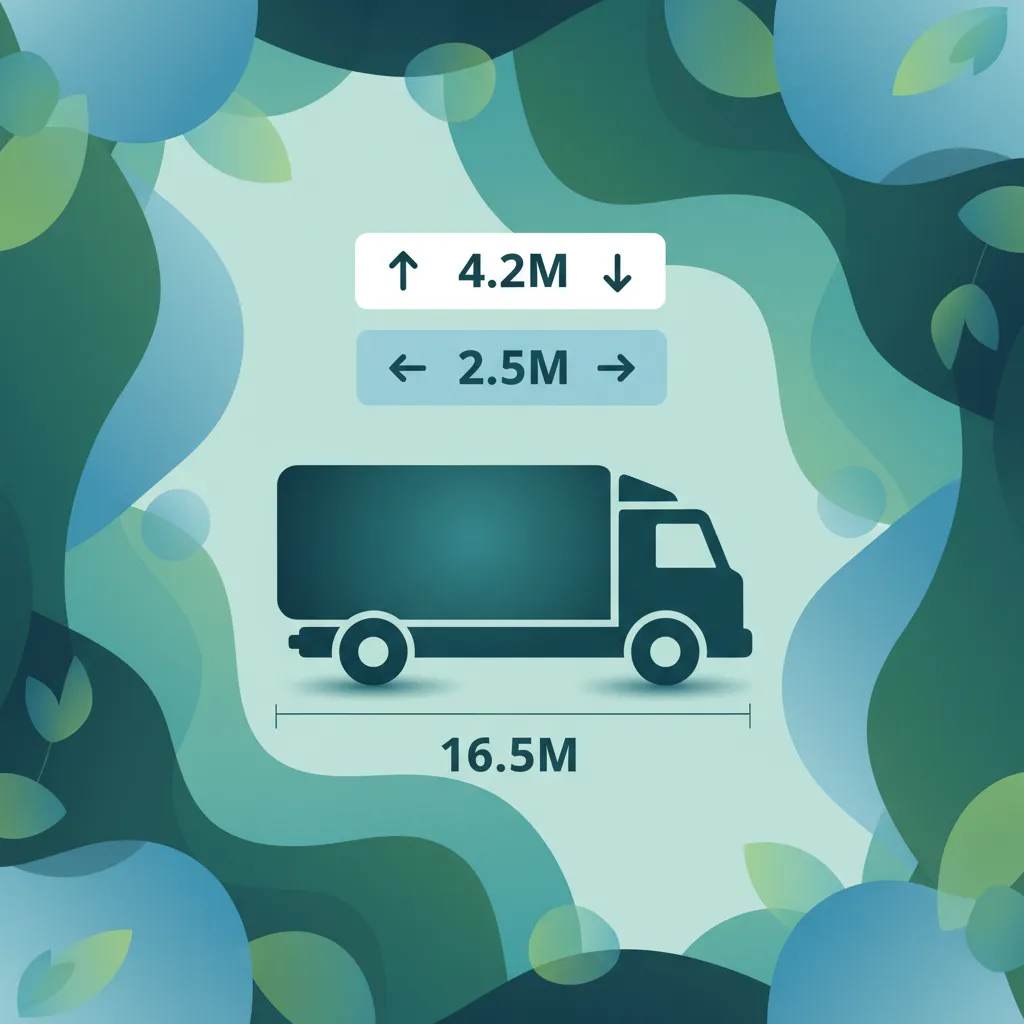
This lesson concentrates on the specific road signs that are of utmost importance to HGV drivers. It details how to interpret signs indicating maximum permissible weight, axle load, vehicle height, and overall length. Understanding these restrictions is crucial for effective route planning to avoid bridges with low clearance, roads with weight limits, or tunnels that cannot accommodate the vehicle's dimensions, thus preventing accidents and infrastructure damage.

This lesson focuses on the unique demands of urban riding within Polish cities, addressing traffic lights, pedestrian zones, one-way streets, and the presence of tram tracks. Learners will study safe lane positioning on narrow roads, blind-spot management, and how to share the road with buses and cyclists. The content also covers strategies for navigating stop-and-go traffic, anticipating signal changes, and maintaining visibility in dense urban environments.
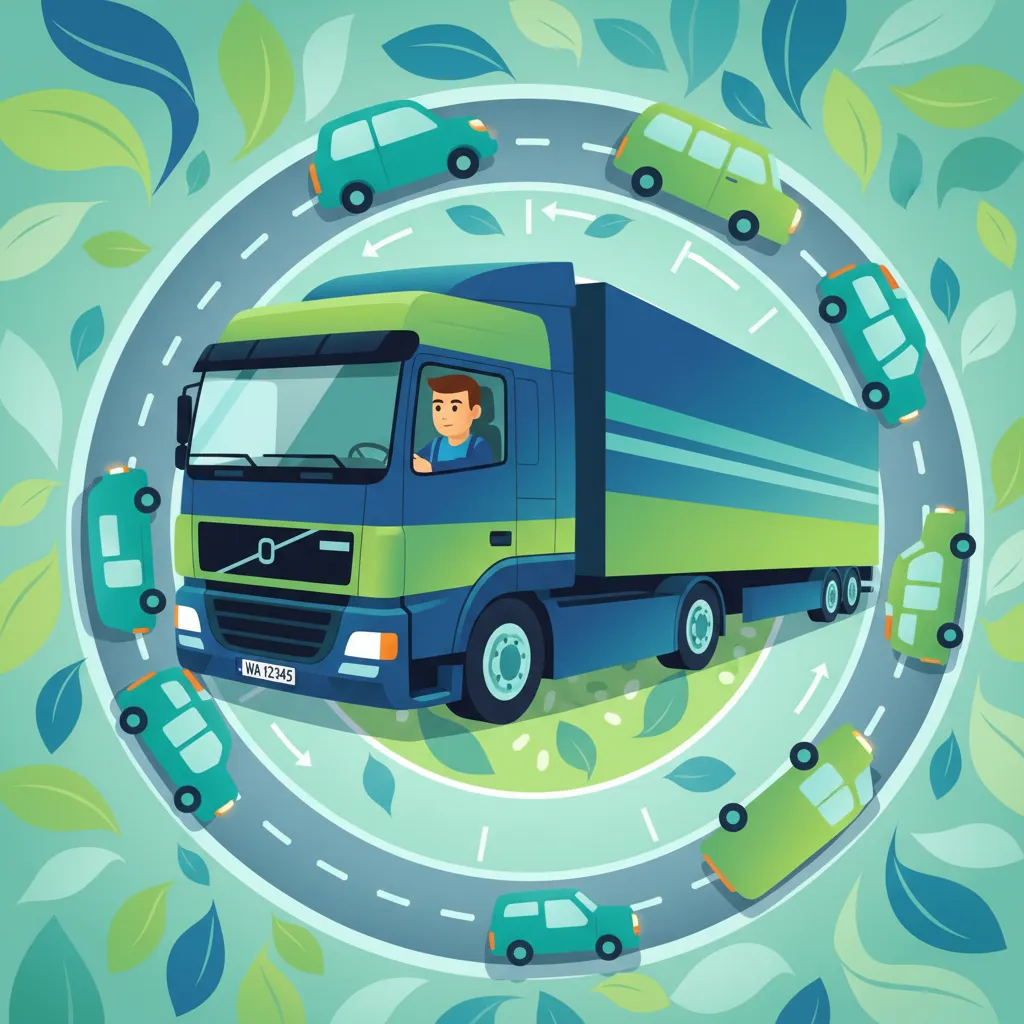
This lesson focuses on the specific challenges HGVs face when navigating roundabouts. It details the correct procedure for approach, including selecting the appropriate lane based on the intended exit and yielding to traffic already circulating. The content emphasizes the need to account for the vehicle's large turning radius and off-tracking to avoid encroaching on adjacent lanes or mounting curbs, ensuring a smooth and safe passage through the roundabout.

This lesson examines real-world case studies of harvest traffic, where multiple tractors and trailers share limited road space during peak agricultural periods. Learners explore strategies for coordinating speed, maintaining safe distances, and using signaling to communicate intentions. The content also addresses the challenges of field access points and the need for cooperation with other drivers.
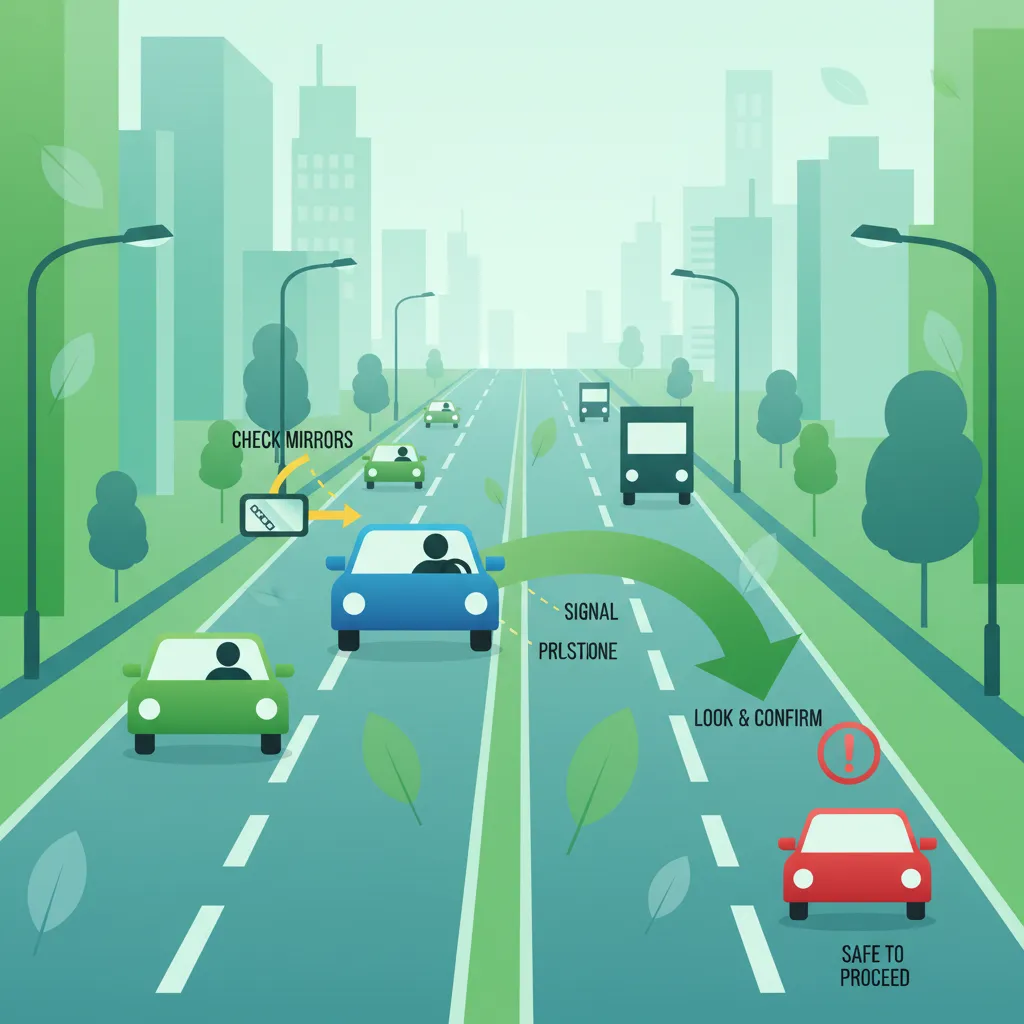
This lesson adapts lane-changing principles for the challenging environment of dense city traffic. It reinforces the critical 'mirror, signal, maneuver' sequence, with a strong focus on checking blind spots immediately before moving. The content advises on judging gaps in traffic and executing the lane change smoothly and decisively.
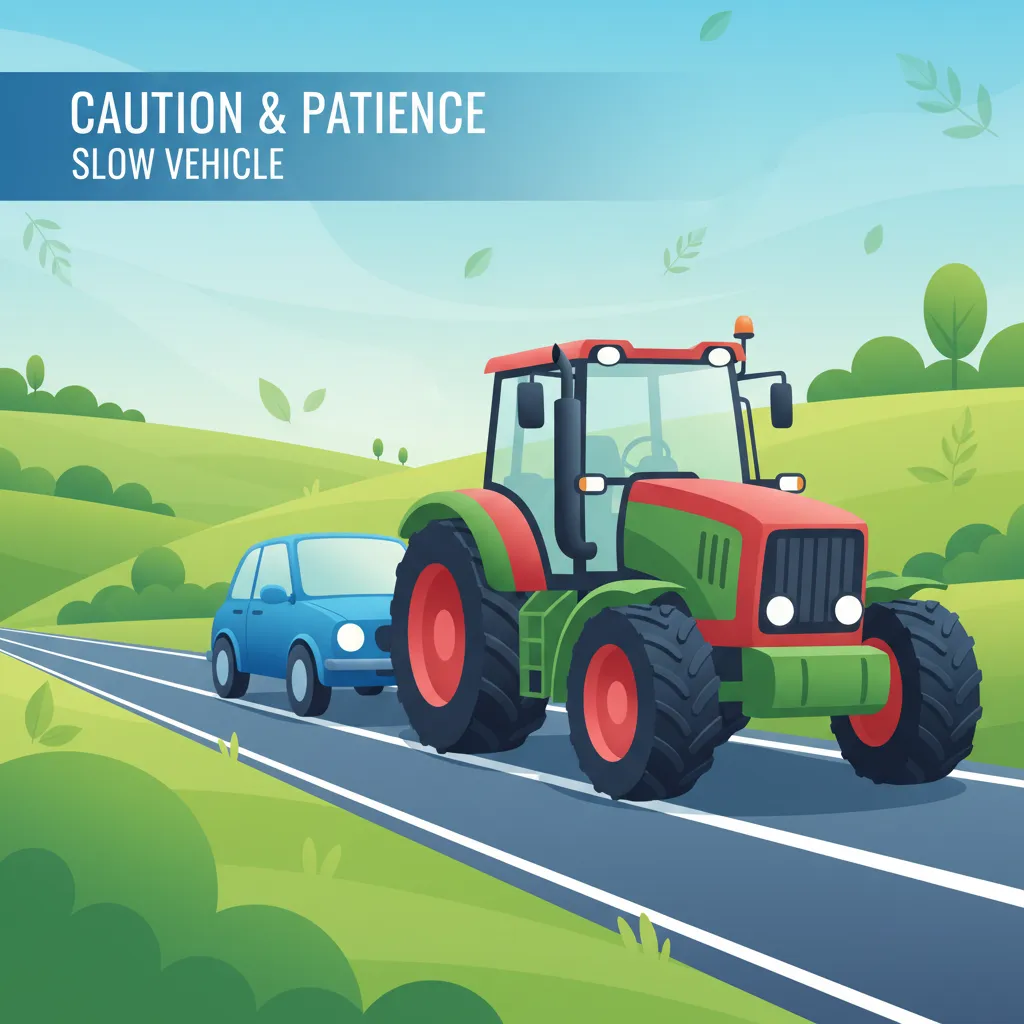
This lesson addresses encounters with slow-moving vehicles, such as tractors, which are common on rural roads. It teaches drivers to be patient, maintain a safe following distance, and only overtake when it is absolutely safe and legal to do so. Recognizing the large size and limited maneuverability of such vehicles is crucial for avoiding accidents.

This lesson provides strategies for safely navigating the numerous intersections typical of urban environments. It reinforces the application of priority rules in situations with limited visibility and high traffic volume. Techniques for making turns in narrow streets and being aware of pedestrians and cyclists at junctions are central to the instruction.
This lesson outlines the statutory speed limits that professional drivers of Category C vehicles must adhere to on Polish roads. It clearly distinguishes the maximum permitted speeds in built-up areas, on single carriageways, and on motorways. The content also explains how to interpret road signs that may indicate temporary or vehicle-specific speed restrictions, ensuring drivers remain compliant with the law and avoid penalties from speed enforcement measures.

This lesson introduces the principles of eco-driving, a set of techniques designed to minimize fuel consumption and emissions. It explains how factors like smooth acceleration, maintaining a steady speed, and anticipating traffic flow can lead to significant fuel savings. Learners will understand the benefits of reducing unnecessary idling, using cruise control effectively on appropriate terrain, and planning routes to avoid congestion, contributing to both economic and environmental sustainability.
Master safe interaction with pedestrians and cyclists in urban Polish traffic. This lesson details critical blind spot awareness and yielding protocols for Category C drivers to prevent accidents.

This lesson highlights the professional driver's heightened responsibility to protect vulnerable road users. It focuses on the significant blind spots around a large truck, particularly during turns in urban areas where pedestrians and cyclists are common. The content teaches strategies for anticipating the unpredictable movements of these users, providing ample space when passing, and using warning signals to communicate intentions clearly, fostering a culture of shared road safety.

In this lesson, learners focus on the identification and management of blind spots that affect motorcyclists, particularly when sharing the road with larger vehicles such as trucks and buses. The content covers the use of side mirrors, head-turn techniques, and optimal rider positioning to minimize blind-spot exposure. Learners will also study the characteristics of blind spots at intersections and during overtaking maneuvers to reduce collision risk.

This lesson addresses the high-risk maneuver of reversing a large truck. It provides systematic techniques for using mirrors and, if available, cameras to monitor the vehicle's path, while strongly emphasizing the importance of managing extensive blind spots. Learners will study procedures for maneuvering within tight spaces like loading docks and yards, including the proper use of a spotter (banksman) to ensure the area is clear and to provide guidance, minimizing the risk of collisions.

In this lesson, learners explore riding on rural and countryside roads, where road markings may be sparse and surface conditions varied. The content covers safe overtaking in single-lane sections, interaction with agricultural vehicles and animals, and the handling of gravel or uneven surfaces. Learners will also study the importance of anticipating curves and adjusting speed to light conditions, equipping them with the skills needed for safe countryside travel.

This lesson explores the unique characteristics of driving on rural roads. It highlights potential hazards such as sharp, unbanked curves, poor road surfaces, and limited visibility due to hills and vegetation. The content teaches drivers to anticipate these conditions and adjust their speed and position to navigate safely.
This lesson introduces hazard perception concepts specific to agricultural vehicles, teaching learners how to identify potential dangers such as unexpected farm equipment or changing road conditions. It outlines a systematic approach to visual scanning, risk evaluation, and timely decision-making to avoid accidents. The lesson provides guidelines for interpreting scenario simulations that mirror real-world rural road hazards.

This lesson provides a comprehensive breakdown of the right-of-way rules that govern intersections. It explains the clear directives given by traffic lights, stop signs, and yield signs, and clarifies the procedures at unmarked or uncontrolled intersections, where the 'priority to the right' rule often applies. Learners will understand the legal hierarchy of these rules to make correct, safe, and predictable decisions when navigating through any junction, reducing the risk of conflict with other traffic.

This lesson introduces defensive driving strategies tailored for bus operation, emphasizing hazard perception and risk management. Learners will study techniques for continuous situational awareness and maintaining safe following distances for adequate reaction time. The content covers emergency maneuvers and interaction with vulnerable road users to reduce accident likelihood.

This lesson teaches drivers how to adapt their speed, following distance, and control inputs to safely navigate adverse conditions. It covers the challenges posed by rain, snow, and ice, explaining the loss of traction and the increased risk of skidding or aquaplaning. The content provides specific strategies for driving in fog, which reduces visibility, and strong crosswinds, which can affect the stability of a high-sided vehicle, promoting a proactive and defensive driving mindset.

This lesson provides practical methods for maintaining a safe buffer zone behind the vehicle in front. It explains the 'two-second rule' as a minimum following distance in good conditions and how to increase it to three or more seconds in adverse weather. This skill is critical for allowing enough time to react and brake safely to avoid rear-end collisions.
Find clear answers to common questions learners have about Managing Traffic Flow in Urban Constrained Environments. Learn how the lesson is structured, which driving theory objectives it supports, and how it fits into the overall learning path of units and curriculum progression in Poland. These explanations help you understand key concepts, lesson flow, and exam focused study goals.
When encountering narrow urban streets in Poland, Category C HGV drivers should prioritize careful speed control, excellent spatial awareness, and anticipation. It's often necessary to slow significantly, use mirrors extensively, and sometimes even stop to allow oncoming traffic to pass, especially if there are parked cars or other obstructions. Planning your route to avoid such streets is always the best strategy for a Category C vehicle.
Polish cities use various traffic calming measures, such as speed bumps, chicanes, and narrowings. For Category C vehicles, approach these slowly and straight, if possible, to minimize discomfort and prevent load shifts. Always check for adequate clearance, especially with chicanes, to avoid striking kerbs or infrastructure. Some areas may have weight restrictions, so always observe signage relevant to HGVs.
In stop-and-go traffic, smooth acceleration and deceleration are key for Category C vehicles to prevent unnecessary wear on the clutch and brakes, and to maintain comfort for the load. Maintain a generous following distance to anticipate stops without harsh braking. Using engine braking where appropriate can also help manage speed and reduce reliance on service brakes for heavy vehicles.
Meticulous route planning is critical for Category C HGV drivers in Polish urban areas. It involves checking for height, weight, and width restrictions, as well as identifying roads with traffic calming that might be difficult for large vehicles. Modern navigation systems with HGV-specific settings can assist, but drivers should always cross-reference with official road signs and local knowledge to ensure a suitable path.
Pedestrian and cyclist safety must be a top priority for Category C drivers in Polish urban environments due to limited visibility and large blind spots. Always be extra vigilant when turning, reversing, or maneuvering in slow-moving traffic. Use mirrors constantly, make eye contact if possible, and assume vulnerable road users may not see your large vehicle. Give them ample space and time.
Build custom practice sessions tailored precisely to your needs. Focus on areas requiring improvement, review specific Polish road signs, or master complex traffic rules to ensure full preparation for your official driving license exam.