
Welcome to the essential lesson on Overtaking and Lane Discipline for Trucks! As part of your Category C preparation, this module focuses on the critical techniques for safely passing other vehicles and changing lanes. Understanding these specific HGV procedures is vital for maintaining smooth traffic flow and ensuring your safety on Polish roads.

Lesson content overview
Driving a heavy goods vehicle (HGV) in Category C requires a distinct approach to overtaking and lane discipline compared to operating a passenger car. The immense size, weight, and unique dynamics of trucks necessitate precise judgment and adherence to specific protocols to ensure safety for all road users. This lesson delves into the critical aspects of executing safe overtaking maneuvers, mastering lane positioning, and understanding the legal framework governing these actions for professional truck drivers in Poland.
Overtaking and maintaining proper lane discipline are fundamental skills for any driver, but they take on heightened importance when operating a heavy goods vehicle. The sheer scale of a truck means that even minor errors can lead to severe consequences. This section introduces the core concepts and underlying principles that guide safe and legal truck operation.
Proper overtaking and lane positioning are paramount for preventing accidents involving large vehicles. HGVs, by their nature, have significantly longer stopping distances, larger and more numerous blind spots, and distinct handling characteristics compared to smaller vehicles. Failing to account for these differences when changing lanes or attempting to pass can endanger not only the truck driver but also every other vehicle on the road. Understanding and applying these safety protocols is a cornerstone of responsible professional driving.
The regulations and best practices for HGV lane discipline and overtaking are rooted in both the immutable laws of physics and the specific mandates of Polish traffic law, primarily the Prawo o Ruchu Drogowym (Road Traffic Act).
Effective overtaking and lane discipline for Category C vehicles are built upon several key principles. Mastering these principles ensures predictable and safe driving, contributing to overall road safety.
Before initiating any overtaking maneuver, a truck driver must perform a thorough assessment of the available longitudinal and lateral space. This involves accurately judging the distance ahead, the length of the vehicle to be overtaken, and the time required for the truck to complete the pass. Given the extended length of an HGV, this assessment must be far more conservative than for a passenger car. Failure to calculate sufficient space can lead to dangerous situations, forcing the truck to brake sharply or cutting off the overtaken vehicle.
A critical element of safe overtaking is maintaining an appropriate speed differential between the overtaking vehicle, the vehicle being passed, and any oncoming traffic. The truck must accelerate sufficiently before entering the overtaking lane to ensure a swift and decisive pass, minimizing the time spent in the adjacent lane. Conversely, once the maneuver is complete, the driver must decelerate smoothly to return to a safe cruising speed without disrupting the flow of traffic. An insufficient speed differential can prolong the overtaking process, increasing exposure to risk.
Trucks have significantly larger blind spots (also known as blind zones) compared to passenger cars. These are areas around the vehicle that are not visible through mirrors alone. Continuous and proactive monitoring of these zones is essential before and during any lane change or overtaking maneuver. Relying solely on mirrors can lead to serious collisions with vehicles, especially smaller cars, motorcycles, or cyclists, that may be hidden in these unseen areas.
Lane discipline encompasses adhering to legal lane usage, respecting lane restrictions, and maintaining proper lane positioning within the traffic stream. For trucks, this often means staying in the rightmost available lane on multi-lane roads unless actively overtaking. Consistent and predictable lane positioning improves traffic flow and significantly reduces the potential for conflicts with other drivers who may be unsure of the truck's intentions.
Merging onto a higher-speed road, such as a motorway or expressway, from an on-ramp requires a specific protocol to ensure seamless integration into the main traffic flow. This involves accelerating to match the speed of existing traffic, signaling intentions well in advance, and carefully selecting a sufficient gap between vehicles to merge without forcing other drivers to brake or swerve. A truck merging too slowly or without proper communication can create hazardous situations.
Off-tracking is a phenomenon where the rear wheels of a truck, particularly those of a trailer, follow a slightly different, tighter path than the front wheels during a turn or curve. This means the trailer can "cut inwards" on a left turn or "swing outwards" on a right turn relative to the tractor. Drivers must anticipate this behaviour and adjust their steering and lane positioning accordingly to prevent the trailer from encroaching into adjacent lanes, hitting curbs, or colliding with roadside obstacles.
Overtaking is one of the most complex maneuvers for an HGV, demanding careful planning, precise execution, and strict adherence to regulations. The type of road dictates specific considerations.
Polish traffic law outlines specific rules for overtaking that are particularly relevant to HGVs:
Assess the Situation: Check mirrors (rear-view and side-view), ensure the overtaking lane is clear for a sufficient distance (consider at least three times the truck's length ahead and behind the vehicle being overtaken). Verify no "no overtaking" signs or road markings are present.
Check Blind Spots: Perform a thorough head check (look over your shoulder) to confirm no smaller vehicles are hidden in your truck's blind spots.
Signal Intention: Activate your left turn signal well in advance (at least 5 seconds when moving above 30 km/h, as per Article 49 of Polish law) to inform other drivers of your intention to change lanes.
Adjust Speed: Accelerate smoothly to create a safe speed differential. You should be able to pass the slower vehicle decisively without excessive speed.
Execute Lane Change: Steer gently and deliberately into the overtaking lane. Avoid sudden movements that could upset the vehicle's balance, especially when loaded.
Complete the Pass: Maintain your speed until you can see the front of the overtaken vehicle clearly in your right-hand side mirror. This ensures adequate clearance before returning to your original lane.
Signal and Return: Activate your right turn signal, check your mirrors and blind spots again, and gently steer back into the rightmost lane.
Resume Safe Speed: Adjust your speed to maintain a safe following distance from vehicles ahead and a consistent flow with traffic.
Never overtake if there is any doubt about the safety, available space, or legality of the maneuver. It is always safer to wait for a clearer opportunity.
Blind spots are invisible areas around any vehicle, but they are dramatically larger and more numerous on heavy goods vehicles. Effective management of these zones is non-negotiable for safe driving.
Lane discipline is about much more than just staying between the lines. It's about respecting road rules, optimizing traffic flow, and signaling intentions clearly.
This sign, B-25, explicitly prohibits overtaking. When encountered, all drivers, especially HGV operators, must comply and refrain from attempting to pass other vehicles.
Changing lanes in an HGV is a multi-step process that demands heightened attention:
When changing lanes, remember the effect of off-tracking. Your trailer will follow a slightly different path, so always aim to leave more lateral space than you think is necessary, especially on curves.
Merging onto motorways or expressways, often referred to as high-speed roads, is a critical maneuver that requires skill and precision, particularly for heavy goods vehicles.
The primary objective when merging is to enter the main traffic flow at a speed that matches or is very close to the speed of the vehicles already on the highway. For trucks, this means utilizing the full length of the on-ramp to accelerate smoothly and decisively. Merging at a significantly lower speed than the main traffic creates a dangerous speed differential, forcing other drivers to brake sharply or swerve, which can lead to chain reactions and collisions. Article 27(1) of Polish law states that vehicles joining a main road must not impede existing traffic.
Identifying an appropriate gap in the main traffic stream is crucial. A truck requires a much larger gap than a passenger car due to its longer length and slower acceleration capabilities. Drivers must look far ahead, assess the speed and density of traffic, and signal their intention to merge early. Once a sufficient gap is identified—one that allows the entire truck and trailer to enter the lane without forcing the preceding or following vehicle to adjust its speed—the maneuver can be executed. It's often safer to merge behind a vehicle if no suitable gap ahead is available, rather than forcing entry.
Off-tracking is a fundamental concept in HGV dynamics that profoundly influences lane discipline and turning. Understanding and compensating for it is vital for safety.
The phenomenon where the rear wheels of a vehicle, especially a trailer, follow a different path from the front wheels during a turn, resulting in the trailer cutting inwards or outwards relative to the tractor.
To counteract off-tracking:
Adhering to specific Polish traffic laws is non-negotiable for Category C drivers. These regulations are designed to enhance safety and efficiency on the roads.
As discussed, Article 26(1) of the Prawo o Ruchu Drogowym generally prohibits overtaking on the right. This applies to all vehicles, including HGVs. The primary overtaking lane in Poland (a right-hand traffic country) is the leftmost lane. Violating this rule creates unpredictable traffic patterns and significantly increases collision risk, especially on multi-lane roads.
Article 48 of the Polish Road Traffic Act explicitly states that vehicles with a permissible total weight exceeding 3.5 tonnes must occupy the rightmost lane on motorways and expressways. The only exception is when actively engaged in an overtaking maneuver. This rule is crucial for maintaining efficient traffic flow, preventing congestion, and reducing frustration among other drivers who may be attempting to travel at higher speeds. Staying in the left lane unnecessarily is a violation and can lead to penalties.
Overtaking is strictly forbidden in several clearly defined situations and locations under Article 28 of Polish law:
B-25: Zakaz wyprzedzania) explicitly prohibit it.Ignoring prohibited overtaking zones is extremely dangerous and carries severe penalties, as it significantly increases the risk of head-on collisions or collisions with vulnerable road users.
While the Polish Road Traffic Act doesn't specify a universal minimum following distance in meters, it mandates maintaining a safe distance. For heavy vehicles, road safety guidelines strongly recommend a minimum safe following distance of 2 seconds in dry conditions, and even greater distances (e.g., 3-4 seconds) on wet, icy, or otherwise hazardous roads. This increased distance is critical to allow for the significantly longer braking distances of trucks.
Understanding common mistakes helps truck drivers proactively avoid them. Violations of HGV-specific rules often lead to dangerous situations and legal penalties.
B-25 signs.
Safe overtaking and lane discipline are not static; they must adapt to changing environmental and operational conditions.
Behind every rule and recommended practice for HGV driving lies a foundation of scientific principles and statistical safety data.
Human peripheral vision is limited, and the massive structure of a truck exacerbates this by creating vast blind spots. This necessitates active head turns and constant mirror scanning. The average human reaction time is approximately 1.5 seconds. When multiplied by vehicle speed, this time translates into a significant distance traveled before a driver can even begin to react to a hazard. For a massive truck, this distance is much longer, emphasizing the need for advanced planning and generous safety margins.
The way cargo is loaded and secured directly affects the truck's centre of gravity and its dynamic stability. A high centre of gravity or a shifting load can make a truck prone to rolling over during sharp turns or sudden lane changes. Proper cargo securing (as covered in previous lessons) is not just about preventing damage to goods; it's a critical safety measure that influences the entire vehicle's handling characteristics during maneuvers.
Drivers, especially those new to Category C vehicles, may underestimate the physical limitations of their trucks or overestimate their own ability to react quickly. This cognitive bias can lead to risky behaviour. Education on the actual capabilities and limitations of large vehicles, combined with practical training, helps to calibrate a driver's judgment and fosters safer habits. Patience and a proactive, defensive mindset are essential.
Applying theoretical knowledge to real-world situations is crucial for developing safe driving instincts.
B-25 "Zakaz wyprzedzania" sign, behind a slow-moving tractor.Mastering overtaking and lane discipline for Category C heavy goods vehicles is not merely about adhering to rules; it is about developing a deep understanding of vehicle dynamics, anticipating potential hazards, and prioritizing safety above all else. By consistently applying the principles of adequate space assessment, speed differential management, vigilant blind spot awareness, strict lane discipline, and careful merging, professional truck drivers can significantly reduce the risk of collisions and contribute to smoother, safer traffic flow. The unique challenges posed by the size and weight of HGVs demand a disciplined, patient, and proactive approach to every maneuver on the road.
This lesson covers the critical skills and legal requirements for safe HGV overtaking and lane discipline in Poland. Key Polish traffic laws include Article 48 mandating right-lane use for trucks over 3.5 tonnes on motorways and Article 26 prohibiting right-side overtaking. Safe overtaking requires thorough space assessment, speed differential management, and mandatory shoulder checks to compensate for the large blind spots inherent to heavy vehicles. The lesson also addresses off-tracking dynamics, proper merging protocols, and adaptation to varying weather and traffic conditions, all essential for passing the Category C theory exam and ensuring road safety.
A short set of high-value points that capture the most important learning from this lesson.
Trucks over 3.5 tonnes must stay in the rightmost lane on Polish motorways unless actively overtaking, as mandated by Article 48 of Prawo o Ruchu Drogowym.
Before any lane change, perform both mirror checks and a physical shoulder check—this is the only way to detect vehicles hidden in an HGV's extensive blind spots.
Overtaking on the right is prohibited under Polish law (Article 26), meaning trucks must use the left lane for passing in this right-hand traffic country.
Off-tracking means trailer wheels follow a tighter path on left turns and a wider path on right turns; drivers must anticipate this and position accordingly.
When merging onto highways, trucks must accelerate to match traffic speed—merging too slowly creates dangerous speed differentials and violates Article 27.
Explore all units and lessons included in this driving theory course.
Maintain at least 2 seconds following distance in dry conditions, increasing to 3–4 seconds on wet or icy roads due to HGVs' longer braking distances.
Activate turn signals for at least 5 seconds before any lane change or merge when traveling above 30 km/h, per Article 49.
Assess overtaking space conservatively—at least three times the truck's length ahead and behind the vehicle being overtaken.
The B-25 sign (Zakaz wyprzedzania) prohibits overtaking by any motor vehicle; these zones must be strictly observed.
Fully loaded trucks require longer acceleration distances and exhibit more pronounced off-tracking than unloaded vehicles.
Relying solely on mirrors without performing a shoulder check, leading to collisions with vehicles in blind spots, especially motorcycles and cyclists.
Attempting to overtake on the right side of another vehicle, which violates Article 26 and creates unpredictable traffic patterns.
Remaining in the left (overtaking) lane after completing a pass instead of returning promptly to the rightmost lane.
Merging onto highways at significantly lower speeds than traffic flow, forcing other drivers to brake sharply.
Underestimating the space required for an HGV to complete an overtake, potentially forcing sharp braking or cutting off the overtaken vehicle.
Lesson content overview
A short set of high-value points that capture the most important learning from this lesson.
Trucks over 3.5 tonnes must stay in the rightmost lane on Polish motorways unless actively overtaking, as mandated by Article 48 of Prawo o Ruchu Drogowym.
Before any lane change, perform both mirror checks and a physical shoulder check—this is the only way to detect vehicles hidden in an HGV's extensive blind spots.
Overtaking on the right is prohibited under Polish law (Article 26), meaning trucks must use the left lane for passing in this right-hand traffic country.
Off-tracking means trailer wheels follow a tighter path on left turns and a wider path on right turns; drivers must anticipate this and position accordingly.
When merging onto highways, trucks must accelerate to match traffic speed—merging too slowly creates dangerous speed differentials and violates Article 27.
Explore all units and lessons included in this driving theory course.
Maintain at least 2 seconds following distance in dry conditions, increasing to 3–4 seconds on wet or icy roads due to HGVs' longer braking distances.
Activate turn signals for at least 5 seconds before any lane change or merge when traveling above 30 km/h, per Article 49.
Assess overtaking space conservatively—at least three times the truck's length ahead and behind the vehicle being overtaken.
The B-25 sign (Zakaz wyprzedzania) prohibits overtaking by any motor vehicle; these zones must be strictly observed.
Fully loaded trucks require longer acceleration distances and exhibit more pronounced off-tracking than unloaded vehicles.
Relying solely on mirrors without performing a shoulder check, leading to collisions with vehicles in blind spots, especially motorcycles and cyclists.
Attempting to overtake on the right side of another vehicle, which violates Article 26 and creates unpredictable traffic patterns.
Remaining in the left (overtaking) lane after completing a pass instead of returning promptly to the rightmost lane.
Merging onto highways at significantly lower speeds than traffic flow, forcing other drivers to brake sharply.
Underestimating the space required for an HGV to complete an overtake, potentially forcing sharp braking or cutting off the overtaken vehicle.
Explore search topics learners often look for when studying Overtaking and Lane Discipline for Trucks. These topics reflect common questions about road rules, driving situations, safety guidance, and lesson level theory preparation for learners in Poland.
Browse additional driving theory lessons that cover connected traffic rules, road signs, and common driving situations related to this topic. Improve your understanding of how different rules interact across everyday traffic scenarios.
Explore complex overtaking situations for Category C vehicles on Polish roads. Understand advanced rules, common hazardous scenarios, and best practices for safe passing and lane changes on various road types, focusing on hazard perception and risk mitigation.
This lesson focuses on the specific challenges HGVs face when navigating roundabouts. It details the correct procedure for approach, including selecting the appropriate lane based on the intended exit and yielding to traffic already circulating. The content emphasizes the need to account for the vehicle's large turning radius and off-tracking to avoid encroaching on adjacent lanes or mounting curbs, ensuring a smooth and safe passage through the roundabout.
This lesson outlines the statutory speed limits that professional drivers of Category C vehicles must adhere to on Polish roads. It clearly distinguishes the maximum permitted speeds in built-up areas, on single carriageways, and on motorways. The content also explains how to interpret road signs that may indicate temporary or vehicle-specific speed restrictions, ensuring drivers remain compliant with the law and avoid penalties from speed enforcement measures.
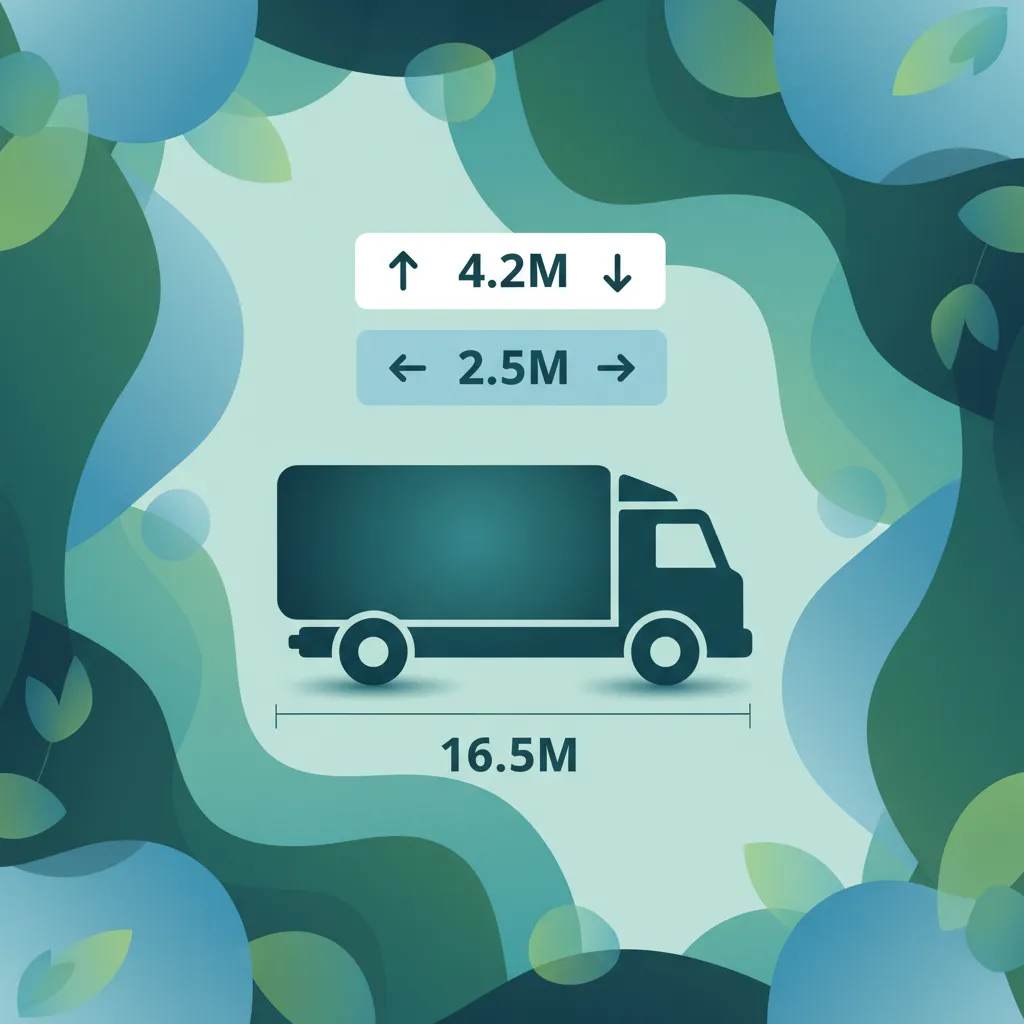
This lesson concentrates on the specific road signs that are of utmost importance to HGV drivers. It details how to interpret signs indicating maximum permissible weight, axle load, vehicle height, and overall length. Understanding these restrictions is crucial for effective route planning to avoid bridges with low clearance, roads with weight limits, or tunnels that cannot accommodate the vehicle's dimensions, thus preventing accidents and infrastructure damage.

This lesson addresses the high-risk maneuver of reversing a large truck. It provides systematic techniques for using mirrors and, if available, cameras to monitor the vehicle's path, while strongly emphasizing the importance of managing extensive blind spots. Learners will study procedures for maneuvering within tight spaces like loading docks and yards, including the proper use of a spotter (banksman) to ensure the area is clear and to provide guidance, minimizing the risk of collisions.

This lesson explains the critical concept of off-tracking, where the rear wheels follow a shorter path than the front wheels during a turn. Learners will understand how to calculate the required space for a turn and position the vehicle correctly before entering a corner to avoid striking curbs, signs, or other vehicles. The content provides practical strategies for safely navigating intersections and roundabouts by anticipating the vehicle's sweep path and maintaining adequate clearance.

This lesson provides a comprehensive breakdown of the right-of-way rules that govern intersections. It explains the clear directives given by traffic lights, stop signs, and yield signs, and clarifies the procedures at unmarked or uncontrolled intersections, where the 'priority to the right' rule often applies. Learners will understand the legal hierarchy of these rules to make correct, safe, and predictable decisions when navigating through any junction, reducing the risk of conflict with other traffic.

This lesson details the critical process of merging onto a high-speed motorway. It explains how to use the full length of the acceleration lane to build up to the speed of the flowing traffic, which is essential for a smooth and safe entry. Learners will study techniques for judging gaps in traffic, signaling intentions clearly, and performing thorough mirror and blind spot checks before executing the merge, ensuring a seamless integration into the highway environment.

This lesson addresses the increasingly common restrictions on HGV access to urban areas and designated low-emission zones. It explains how to identify these zones through specific signage and understand the criteria for entry, which may be based on the vehicle's emission standard or subject to time-of-day limitations. Learners will become familiar with the necessity of obtaining special permits for city center deliveries and the legal consequences of violating these access regulations.

This lesson explains the specialized techniques required for initiating movement and bringing a heavy, loaded truck to a halt. It emphasizes fine clutch and throttle control to overcome inertia without causing driveline stress or cargo shift. Learners will also study methods for smooth, gradual braking that account for the vehicle's significant momentum, ensuring safety, passenger comfort, and the integrity of the cargo while minimizing wear on the braking system.

This lesson details the legal framework for overtaking in Poland. It explains how to interpret road markings, such as solid and double solid lines, and prohibition signs that forbid passing. The content emphasizes the critical need for sufficient sight distance and a clear path before initiating an overtaking maneuver to ensure safety.
Learn to identify and mitigate the significant blind spots inherent in heavy goods vehicles. This lesson covers practical strategies for safe lane changes, turning, and reversing, with a focus on understanding trailer off-tracking and common maneuvering dangers.
This lesson addresses the high-risk maneuver of reversing a large truck. It provides systematic techniques for using mirrors and, if available, cameras to monitor the vehicle's path, while strongly emphasizing the importance of managing extensive blind spots. Learners will study procedures for maneuvering within tight spaces like loading docks and yards, including the proper use of a spotter (banksman) to ensure the area is clear and to provide guidance, minimizing the risk of collisions.
This lesson focuses on the specific challenges HGVs face when navigating roundabouts. It details the correct procedure for approach, including selecting the appropriate lane based on the intended exit and yielding to traffic already circulating. The content emphasizes the need to account for the vehicle's large turning radius and off-tracking to avoid encroaching on adjacent lanes or mounting curbs, ensuring a smooth and safe passage through the roundabout.
This lesson explains the critical concept of off-tracking, where the rear wheels follow a shorter path than the front wheels during a turn. Learners will understand how to calculate the required space for a turn and position the vehicle correctly before entering a corner to avoid striking curbs, signs, or other vehicles. The content provides practical strategies for safely navigating intersections and roundabouts by anticipating the vehicle's sweep path and maintaining adequate clearance.

This lesson highlights the professional driver's heightened responsibility to protect vulnerable road users. It focuses on the significant blind spots around a large truck, particularly during turns in urban areas where pedestrians and cyclists are common. The content teaches strategies for anticipating the unpredictable movements of these users, providing ample space when passing, and using warning signals to communicate intentions clearly, fostering a culture of shared road safety.

This lesson equips drivers with the skills to operate a large vehicle within the challenging confines of an urban environment. It addresses how to navigate narrow streets, deal with traffic calming measures, and manage frequent stop-and-go situations while being vigilant for pedestrians and other road users. The content also emphasizes the importance of meticulous route planning to avoid unsuitable roads and the use of anticipation to maintain smooth progress and minimize disruption in congested areas.

This lesson teaches drivers how to adapt their speed, following distance, and control inputs to safely navigate adverse conditions. It covers the challenges posed by rain, snow, and ice, explaining the loss of traction and the increased risk of skidding or aquaplaning. The content provides specific strategies for driving in fog, which reduces visibility, and strong crosswinds, which can affect the stability of a high-sided vehicle, promoting a proactive and defensive driving mindset.

This lesson focuses on reversing and maneuvering techniques required when operating a tractor with a trailer, particularly in confined farmyards or on narrow rural roads. It outlines the use of mirrors to monitor trailer swing and suggests best practices for using spotters to improve safety. The lesson also covers planning reversal paths and executing wide-angle turns without compromising load stability.

This lesson provides essential knowledge for responding to sudden and dangerous vehicle malfunctions. It outlines step-by-step procedures for handling a catastrophic tire blowout, managing a loss of braking power, and reacting to a shift in cargo that destabilizes the vehicle. The focus is on maintaining as much control as possible, bringing the vehicle to a safe stop away from traffic, and activating hazard warnings to protect the scene and other road users.

This lesson details the professional driver's responsibilities in the event of a collision. It covers the immediate actions required to secure the scene, such as activating hazard lights and placing warning triangles, to prevent further incidents. Learners will understand the correct procedure for contacting emergency services, providing assistance to injured parties if trained, and the legal requirements for documenting and reporting the accident to the authorities and their employer.
This lesson explains the specialized techniques required for initiating movement and bringing a heavy, loaded truck to a halt. It emphasizes fine clutch and throttle control to overcome inertia without causing driveline stress or cargo shift. Learners will also study methods for smooth, gradual braking that account for the vehicle's significant momentum, ensuring safety, passenger comfort, and the integrity of the cargo while minimizing wear on the braking system.
Find clear answers to common questions learners have about Overtaking and Lane Discipline for Trucks. Learn how the lesson is structured, which driving theory objectives it supports, and how it fits into the overall learning path of units and curriculum progression in Poland. These explanations help you understand key concepts, lesson flow, and exam focused study goals.
The primary challenges are the significant blind spots, the longer distance required to overtake safely, and the need for a greater speed differential. You must ensure you have ample space not only to pass but also to return to your lane without cutting off the vehicle you are overtaking. Always check your mirrors and use your indicators well in advance.
Regularly check your mirrors, especially your side mirrors, and use your indicators. For critical situations, a quick head check over your shoulder is essential to see areas not covered by mirrors. Understanding the size and turning radius of your vehicle is key to anticipating where other vehicles might be.
Overtaking is prohibited at railway crossings, near the crest of a hill, on a sharp bend, and at pedestrian crossings. It is also unsafe if you cannot complete the maneuver quickly and without endangering other road users, or if visibility is poor due to weather or other obstructions. Always obey road signs indicating no overtaking.
The Polish Category C theory exam will present scenarios requiring you to identify safe overtaking opportunities, recognize prohibited overtaking zones, and understand the correct procedure for lane changes and merging. Questions often assess your ability to judge distances, speeds, and potential hazards specific to heavy vehicles.
Lane discipline means staying within your designated lane, not weaving unnecessarily, and positioning your vehicle correctly for upcoming maneuvers like turns or exits. For trucks, it also means being aware of your vehicle's width and height, especially in relation to lane markings and overhead structures, and allowing adequate space for other vehicles.
Build custom practice sessions tailored precisely to your needs. Focus on areas requiring improvement, review specific Polish road signs, or master complex traffic rules to ensure full preparation for your official driving license exam.