
This lesson is key to understanding how to navigate multi-lane roads safely and predictably in Poland. We’ll cover the essential rules of lane discipline and how to interpret various lane markings, ensuring you can maintain smooth traffic flow and avoid potential hazards. This knowledge is vital for both your Category B theory exam and confident real-world driving.

Lesson content overview
Mastering lane discipline and understanding the various lane markings is fundamental for all drivers seeking a Polish Category B license. This comprehensive lesson delves into the rules governing lane usage, ensuring safe, predictable, and efficient traffic flow across all road types in Poland. Proper adherence to these principles not only helps prevent conflicts and reduce accident risks but is also crucial for success in the theoretical driving examination.
Lane discipline refers to the systematic and legal use of designated lanes on a roadway. It is a critical component of safe driving, dictating where vehicles should position themselves and how they should interact with other road users. In Poland, the system of painted road markings, coupled with traffic signs, provides clear instructions on permissible lateral movements and lane assignments.
This discipline enhances traffic predictability, significantly reducing potential conflict points, especially during maneuvers such as overtaking, merging, and turning. A solid grasp of these rules is not merely for passing your theory test; it forms the bedrock of responsible and anticipatory driving in real-world scenarios.
Importance for Polish Driving: Correct lane discipline is particularly vital on multi-lane roads, motorways, and complex urban intersections in Poland, where varied traffic speeds and densities demand precise vehicle positioning.
Effective lane discipline is built upon several core principles that guide driver behavior and interaction with the road environment.
| Principle | Definition | Purpose / Rationale | Implications for Drivers |
|---|---|---|---|
| Keep-Right Rule (Zasada utrzymywania prawego pasa) | On multi-lane roads, drivers must generally keep to the rightmost available lane. | Ensures faster traffic has clear lanes for overtaking and maintains orderly flow. | Requires constant awareness of lane availability and proactive return to the right after overtaking. |
| Lane Line Hierarchy | Road markings use distinct line types (solid, broken, double) to communicate permissible lateral movement. | Provides a universal visual language, clarifying when lane changes or overtaking are allowed or prohibited. | Drivers must interpret markings instantly to determine legality of maneuvers. |
| Lane Assignment by Marking Type | Specific markings, such as arrows or dedicated lane designations (e.g., bus lanes, turning lanes), assign exclusive use. | Prevents mixing of traffic types in confined spaces and protects vulnerable road users. | Violating these assignments leads to penalties and heightened collision risk. |
| Continuity of Lane Discipline | Once a lane is chosen, the driver should remain in it until a safe and legal lane change is performed. | Reduces unpredictable weaving and enables other road users to anticipate movements. | Requires drivers to anticipate exits, merges, and upcoming turns well in advance. |
| Consistency with Road Geometry | Lane usage must always respect the road's design, including width, curvature, and sight distance. | Aligns vehicle dynamics with roadway capacity and safety margins. | Influences appropriate speed selection and the timing of any lane-changing maneuvers. |
Road markings are visual signals painted on the road surface that convey essential information to drivers. Understanding their meanings is paramount for safe and legal lane discipline.
A single solid white line (P-1c) is a continuous white line separating lanes of traffic moving in the same direction or marking the edge of the carriageway.
A single broken white line (P-1b) consists of dashed white segments separating lanes of traffic moving in the same direction.
A double solid white line (P-4) consists of two adjacent continuous white lines.
A double broken white line consists of two adjacent dashed lines. While less common than single lines, it generally indicates a specific type of permission.
Lane arrows (P-8a, P-8b, P-8c) are painted symbols on the road surface indicating the allowed direction of travel within a specific lane.
Poland utilizes dedicated lanes to prioritize public transport and protect vulnerable road users.
These lanes are specifically for public transport vehicles and are often marked with a solid white line and specific road signs.
Dedicated lanes for cyclists are often distinctively colored (e.g., red or green) or marked with bicycle symbols.
Lane discipline varies significantly depending on the type of road. Adapting your lane usage to the road environment is crucial for safety and efficiency.
Urban environments are characterized by frequent intersections, traffic lights, and varying traffic densities.
These are high-speed multi-lane roads designed for efficient long-distance travel.
Rural roads can range from narrow single-lane roads to wider two-lane roads.
These are typically lower-speed environments with less complex lane configurations.
Performing a lane change or merging safely requires a systematic approach and adherence to specific conditions.
Before initiating any lane change, a driver must:
Check Mirrors: Glance at your rear-view and side mirrors to assess traffic behind and to your sides.
Signal: Activate your turn indicator for at least 5 seconds before moving.
Head-Check: Turn your head briefly to check your blind spot in the direction of the intended lane change.
Assess Gap: Ensure there is a sufficient, safe gap in the target lane.
Smoothly Steer: Gently steer into the new lane, maintaining your speed or adjusting slightly as needed.
Cancel Signal: Once fully in the new lane, turn off your indicator.
Merging, particularly onto expressways or motorways, requires careful coordination and speed management.
Beyond standard lanes, specific situations call for unique lane discipline.
Lanes designated for turning are clearly marked by directional arrows on the road surface and often by signs.
High-Occupancy Vehicle (HOV) lanes are less common in Poland but may exist in certain urban areas.
During road construction or maintenance, temporary lane markings, often in yellow or orange, may be used.
Lane discipline and the use of markings are strictly regulated by Polish law, primarily by the Road Traffic Act ("Prawo o ruchu drogowym") and the Ministerial Regulation on road signs and markings ("Rozporządzenie Ministra Infrastruktury").
Here are some key legal provisions:
| # | Regulation (Polish law) | Rule Statement | Applicability / Exceptions | Legal Status |
|---|---|---|---|---|
| 1 | Art. 22 § 5 of the Road Traffic Act | Drivers must keep to the rightmost lane of a multi-lane road unless overtaking, turning, or when directed by road signs. | Exempt when the vehicle cannot safely change lanes due to width restrictions or road conditions. | Mandatory |
| 2 | Art. 23 § 4 | Crossing a solid white line (P-1c) is prohibited. | Permitted only in emergencies (e.g., obstacle on the road) after ensuring safety. | Mandatory |
| 3 | Art. 24 § 1 | Crossing a broken white line (P-1b) is allowed if safe. | Not allowed if the maneuver would cause a collision or if other markings indicate restriction. | Mandatory |
| 4 | Art. 23 § 6 | Double solid white lines (P-4) may not be crossed. | Exception: when a lane ends and merging is unavoidable, only after reducing speed and ensuring safety. | Mandatory |
| 5 | Art. 80 § 1 (Regulation on signs and markings) | Lane arrows (P-8a, P-8b, P-8c) must be obeyed; drivers may only travel in the direction indicated. | No exceptions unless a sign indicates an optional direction. | Mandatory |
| 6 | Art. 33 § 2 | Use of bus/tram lanes (D-11, D-12) is prohibited for private vehicles unless signage permits. | Some cities allow occasional use for turning or during off-peak hours, if sign-specified. | Mandatory |
| 7 | Art. 34 § 1 | Use of bike lanes (C-13) by motor vehicles is prohibited. | Only allowed to cross when turning, if sign-allowed and safe. | Mandatory |
| 8 | Art. 53 § 1 | Before any lane change, the driver must signal at least 5 seconds before with the appropriate indicator. | Applies to all road types; no exceptions. | Mandatory |
Disregarding lane discipline and markings is a frequent cause of traffic incidents. Understanding common violations helps reinforce correct behavior.
Safe lane discipline is not static; it must adapt to changing conditions.
Lane discipline and accurate interpretation of road markings are fundamental skills for any driver. They ensure the smooth, safe, and legal flow of traffic, preventing accidents and promoting road harmony.
This lesson covers the fundamental rules of lane discipline and road markings in Poland, essential for both the Category B theory exam and safe real-world driving. The core principle is keeping to the rightmost lane on multi-lane roads unless overtaking, with lane markings—solid, broken, double solid, or arrows—determining when lane changes are legally permitted. Safe lane changes require proper signaling (minimum 5 seconds), mirror checks, blind spot verification, and confirming the target lane is clear before executing the maneuver. Dedicated lanes for buses, trams, and cyclists are generally exclusive and violation carries penalties. Understanding these rules ensures predictable traffic flow and significantly reduces collision risk on multi-lane roads, motorways, and urban environments.
A short set of high-value points that capture the most important learning from this lesson.
On multi-lane roads, drivers must keep to the rightmost lane unless actively overtaking, turning, or directed by road signs (Art. 22 § 5 of the Road Traffic Act)
Solid white lines prohibit lane changes; broken white lines permit them when safe; double solid lines prohibit crossing from either direction
Lane arrows painted on the road surface are mandatory directions—driving straight from a turn-only lane is a traffic violation
Always signal for at least 5 seconds before changing lanes, check mirrors and blind spots, and never cross a solid line except in genuine emergencies
Dedicated bus, tram, and bike lanes are reserved for their designated users; motor vehicles may only enter or cross them when explicitly permitted by signage
Explore all units and lessons included in this driving theory course.
Solid white line (P-1c) = no crossing; Broken white line (P-1b) = crossing permitted if safe; Double solid line (P-4) = absolutely no crossing in either direction
The keep-right rule means return to the rightmost lane immediately after completing an overtaking maneuver
Bus lanes and bike lanes are off-limits to private vehicles unless specific signs permit access—prohibition applies regardless of time of day
When merging onto motorways, use the full acceleration lane to match traffic speed and yield to vehicles already on the main carriageway
Lane changes require signaling (minimum 5 seconds), mirror checks, blind spot head-check, and confirming a clear path before steering over
Believing a solid white line can be crossed in heavy traffic when a gap exists—this is incorrect and illegal
Assuming broken white lines guarantee a safe overtaking opportunity without independently assessing clearance, speed, and other traffic
Entering a bus lane during off-peak hours assuming it's permitted—prohibition is constant unless a sign explicitly allows otherwise
Neglecting to signal before lane changes, depriving other drivers of the reaction time they need to anticipate your movement
Attempting to go straight from a lane marked with a directional arrow, violating mandatory lane assignments at intersections
Lesson content overview
A short set of high-value points that capture the most important learning from this lesson.
On multi-lane roads, drivers must keep to the rightmost lane unless actively overtaking, turning, or directed by road signs (Art. 22 § 5 of the Road Traffic Act)
Solid white lines prohibit lane changes; broken white lines permit them when safe; double solid lines prohibit crossing from either direction
Lane arrows painted on the road surface are mandatory directions—driving straight from a turn-only lane is a traffic violation
Always signal for at least 5 seconds before changing lanes, check mirrors and blind spots, and never cross a solid line except in genuine emergencies
Dedicated bus, tram, and bike lanes are reserved for their designated users; motor vehicles may only enter or cross them when explicitly permitted by signage
Explore all units and lessons included in this driving theory course.
Solid white line (P-1c) = no crossing; Broken white line (P-1b) = crossing permitted if safe; Double solid line (P-4) = absolutely no crossing in either direction
The keep-right rule means return to the rightmost lane immediately after completing an overtaking maneuver
Bus lanes and bike lanes are off-limits to private vehicles unless specific signs permit access—prohibition applies regardless of time of day
When merging onto motorways, use the full acceleration lane to match traffic speed and yield to vehicles already on the main carriageway
Lane changes require signaling (minimum 5 seconds), mirror checks, blind spot head-check, and confirming a clear path before steering over
Believing a solid white line can be crossed in heavy traffic when a gap exists—this is incorrect and illegal
Assuming broken white lines guarantee a safe overtaking opportunity without independently assessing clearance, speed, and other traffic
Entering a bus lane during off-peak hours assuming it's permitted—prohibition is constant unless a sign explicitly allows otherwise
Neglecting to signal before lane changes, depriving other drivers of the reaction time they need to anticipate your movement
Attempting to go straight from a lane marked with a directional arrow, violating mandatory lane assignments at intersections
Explore search topics learners often look for when studying Lane Discipline and Use of Lane Markings. These topics reflect common questions about road rules, driving situations, safety guidance, and lesson level theory preparation for learners in Poland.
Browse additional driving theory lessons that cover connected traffic rules, road signs, and common driving situations related to this topic. Improve your understanding of how different rules interact across everyday traffic scenarios.
Learn the official meanings and legal implications of various road markings in Poland, including solid, broken, and double lines, arrows, and special lane indicators. Essential knowledge for safe driving and passing your theory test.

This lesson examines the variety of pavement markings that define lane structures, traffic flow, and special zones on Polish roads. Learners will study solid and broken lines, lane division markings, and the distinct symbols for bicycle lanes, bus lanes, and tram tracks, all of which affect motorcyclist positioning. The lesson also addresses surface texture indicators that signal changing road conditions, enabling riders to maintain correct lane discipline.
This lesson covers a wide range of signs and markings that provide information and guidance to drivers. It explains how to read destination signs, locate services, and interpret road markings like lane lines, stop lines, and pedestrian crossings. This knowledge is essential for navigation, lane discipline, and safe interaction with other road users.
This lesson focuses on triangular warning signs, which are designed to alert drivers to upcoming hazards on the road. It covers the interpretation of various pictograms that indicate dangers like sharp turns, animal crossings, or road construction. Understanding these signs allows a driver to anticipate conditions and adjust their driving proactively.
This lesson provides a foundational understanding of the Polish road sign system, categorizing signs into three main types: warning, prohibitory/mandatory, and informational. It explains the significance of different shapes and color codes, enabling drivers to quickly interpret their meaning and legal obligation. By mastering the visual language of road signs, learners will be equipped to make correct and safe decisions in any traffic situation they encounter.

This lesson focuses on traffic control signals, primarily traffic lights. It details the meaning of each color in the sequence—red, amber, and green—as well as flashing signals and arrows for specific turns. The content also covers lane control signals and pedestrian signals to ensure safe and compliant navigation through controlled intersections.
This lesson explains the function of circular prohibition signs, which impose legal restrictions on drivers. It details common prohibitions such as speed limits, 'no entry' signs, and restrictions on overtaking or parking. Compliance with these signs is mandatory, and this lesson ensures learners can correctly identify and obey them.

This lesson focuses on blue, circular mandatory signs that direct drivers to perform a specific action. Examples include signs indicating a compulsory direction, a mandatory roundabout, or a minimum speed limit. Unlike advisory signs, these instructions are legally binding and crucial for maintaining orderly traffic flow.
This lesson details the legal framework for overtaking in Poland. It explains how to interpret road markings, such as solid and double solid lines, and prohibition signs that forbid passing. The content emphasizes the critical need for sufficient sight distance and a clear path before initiating an overtaking maneuver to ensure safety.
This lesson provides a detailed breakdown of traffic light operations in Poland. It explains the sequence of red, amber, and green lights, and the specific rules for turning when a green arrow signal is displayed. The meaning of a flashing amber light and the rules for pedestrian crossings at signalized intersections are also covered.

This lesson focuses on informational signs that provide drivers with essential data for navigation and travel planning. Learners will explore signs indicating distances, highway exits, service areas, and speed zone changes, learning how these signs impact route selection and riding strategy. The lesson also addresses the interpretation of direction arrows and road number signs, enabling riders to integrate sign information into effective journey planning and maintain situational awareness.
Understand advanced lane discipline and road marking interpretation for Polish multi-lane roads, expressways, and complex intersections. Learn rules for safe lane changes and positioning to navigate challenging traffic scenarios and enhance road safety.

This lesson provides strategies for safely navigating the numerous intersections typical of urban environments. It reinforces the application of priority rules in situations with limited visibility and high traffic volume. Techniques for making turns in narrow streets and being aware of pedestrians and cyclists at junctions are central to the instruction.
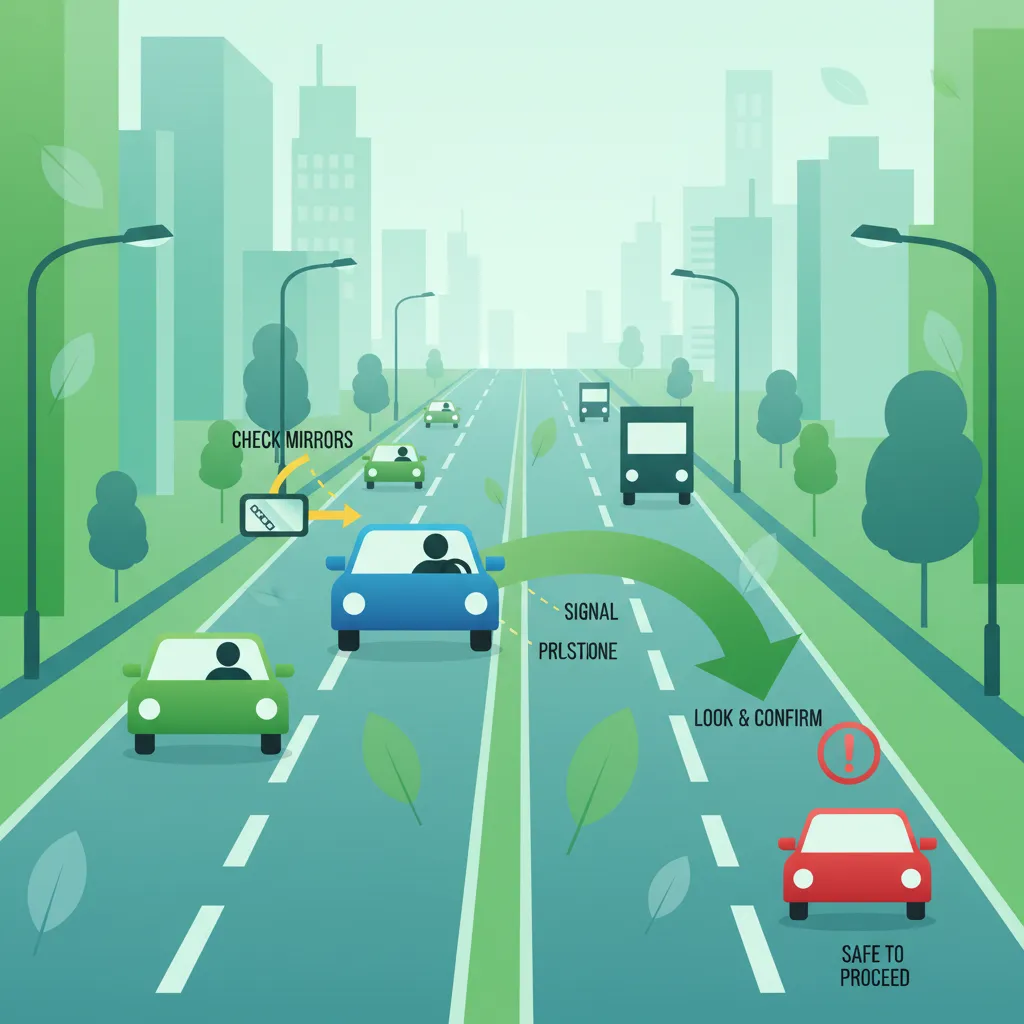
This lesson adapts lane-changing principles for the challenging environment of dense city traffic. It reinforces the critical 'mirror, signal, maneuver' sequence, with a strong focus on checking blind spots immediately before moving. The content advises on judging gaps in traffic and executing the lane change smoothly and decisively.

This lesson addresses advanced scenarios, including multi-lane intersections and interactions with vulnerable road users. It reinforces the legal obligation to give absolute priority to pedestrians at marked crossings (zebra crossings). The content also covers navigating around traffic islands and using dedicated turning lanes in complex urban environments.
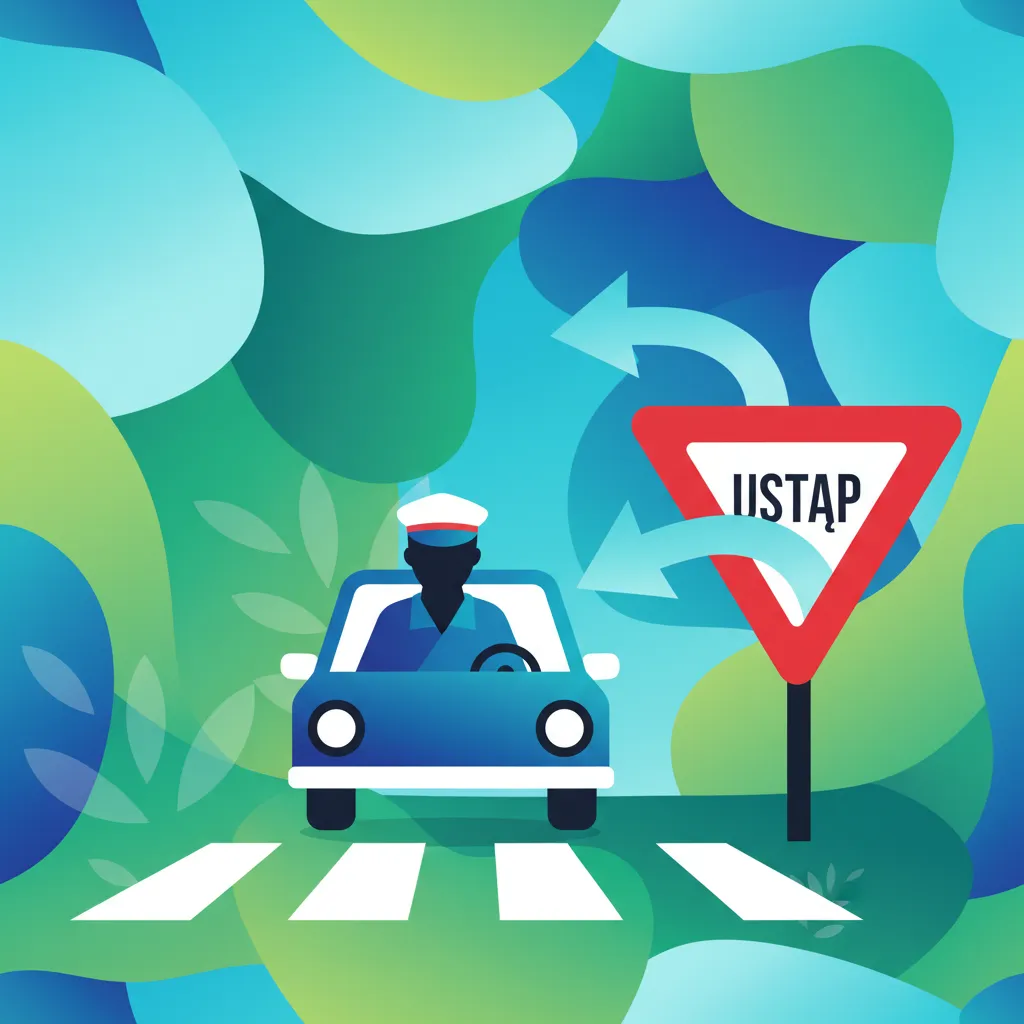
This lesson focuses on navigating intersections that are not controlled by traffic signals. It covers the interpretation of the 'Yield' sign (ustąp pierwszeństwa) and the application of the 'priority to the right' rule at junctions of equal roads. Safe decision-making and proper observation techniques are emphasized for these common scenarios.
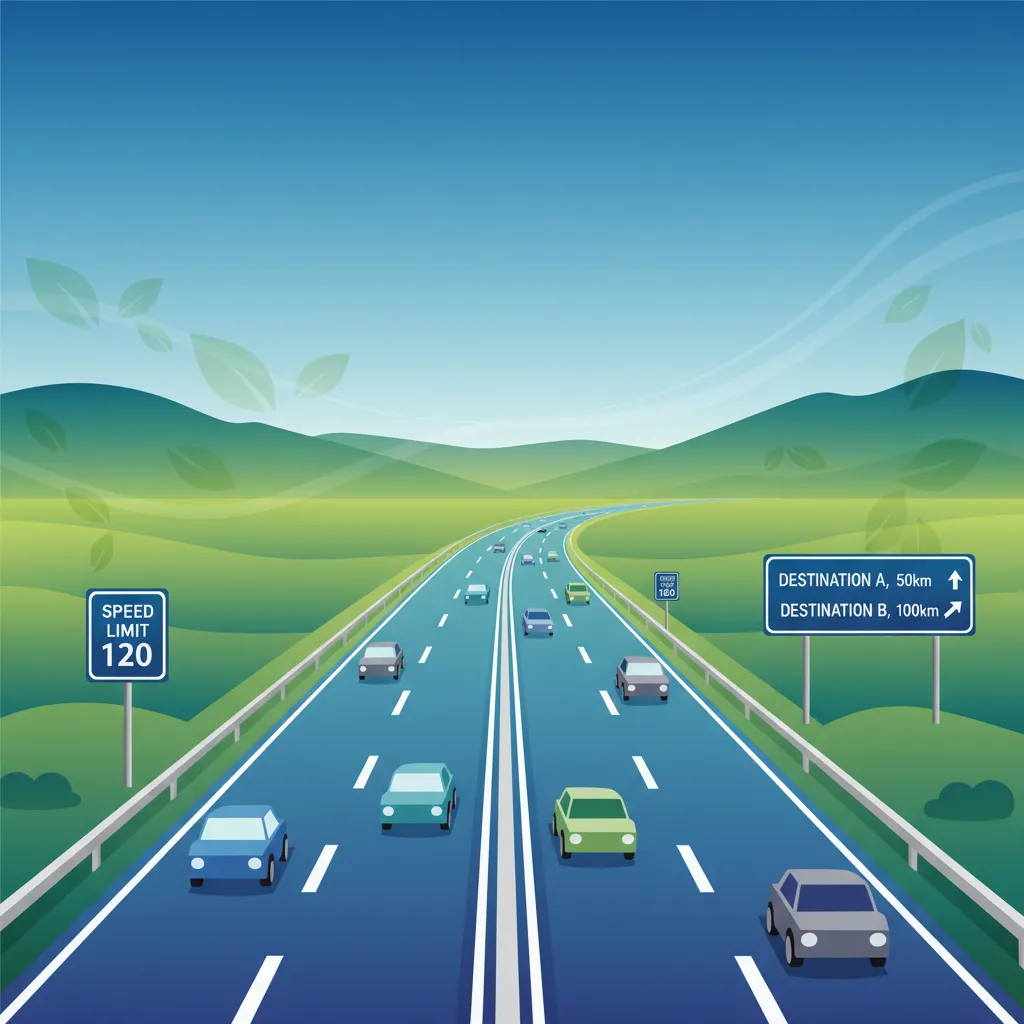
This lesson details the rules and best practices for driving on Poland's fastest roads. It covers the higher speed limits, the strict lane discipline of keeping right except to overtake, and prohibitions on stopping. The aim is to ensure drivers can handle the demands of sustained high-speed travel safely and efficiently.
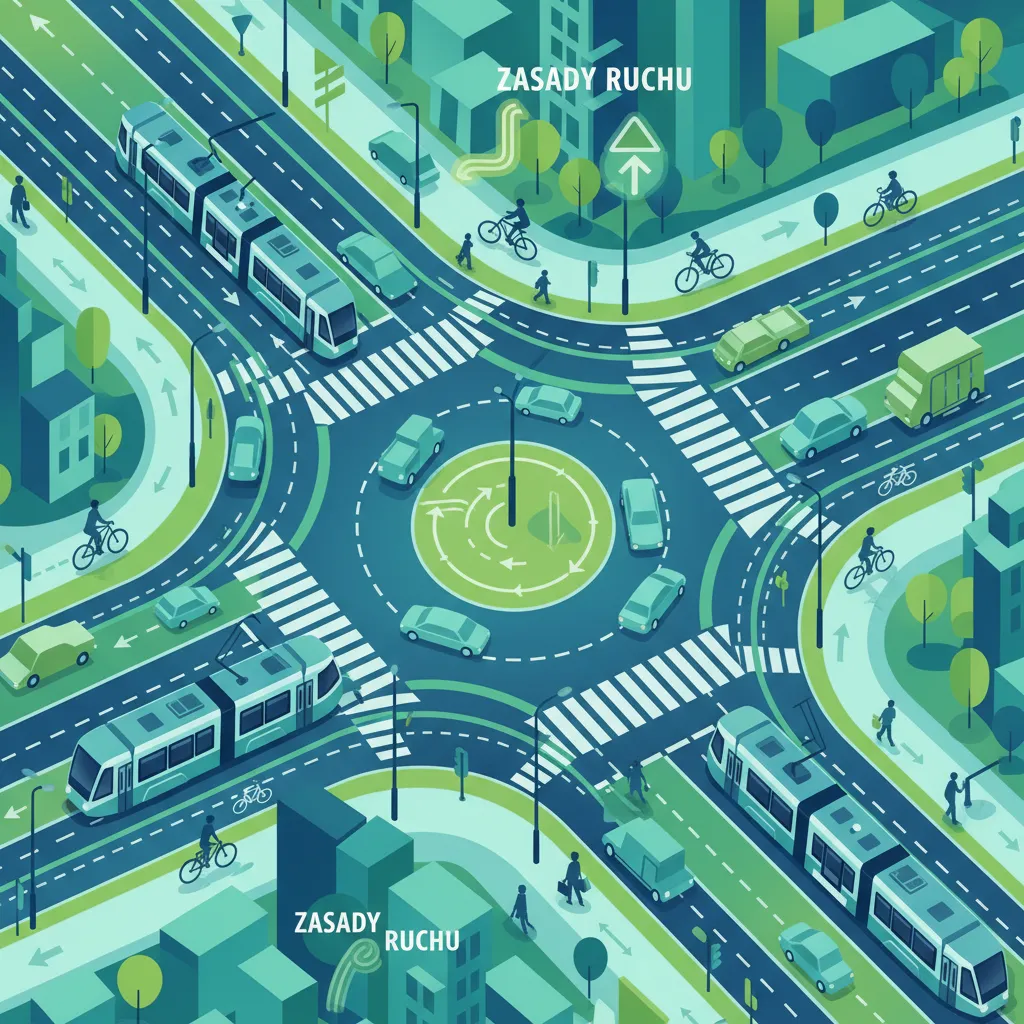
In this lesson, learners investigate complex junctions and intersections found across urban, rural, and highway environments, focusing on multi-lane configurations, traffic light coordination, and roundabout navigation. The content emphasizes priority rules, blind-spot assessment when merging, and safe lane selection for turning maneuvers. Learners will also consider interactions with cyclists and pedestrians, and the importance of adjusting approach speed for safe navigation.
This lesson provides a focused guide on the techniques for entering and exiting high-speed roads. It explains the purpose of acceleration lanes for getting up to speed and deceleration lanes for slowing down safely away from the main traffic flow. Correct observation, signaling, and speed adjustment are emphasized for seamless transitions.
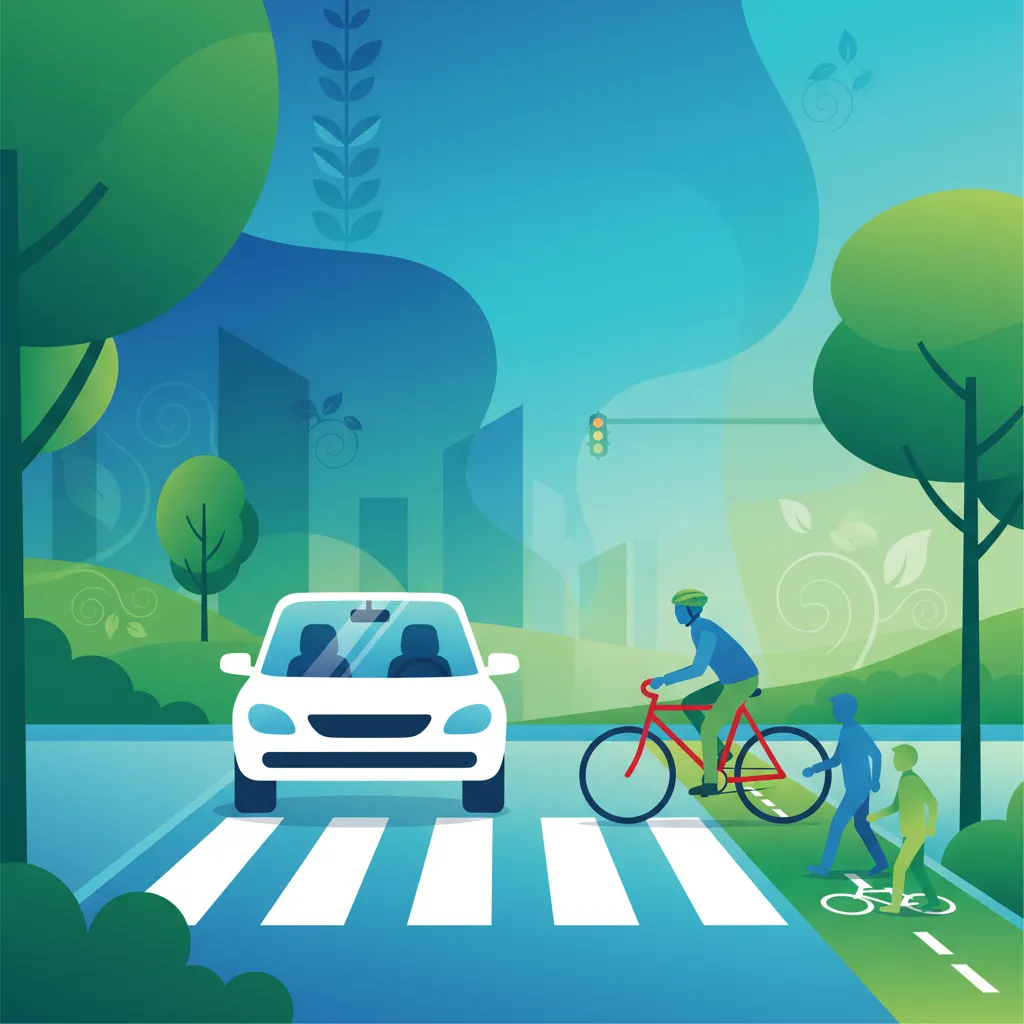
This lesson focuses on safe coexistence with cyclists and pedestrians, who are prevalent in urban areas. It covers the rules for driving alongside dedicated bicycle lanes and the legal requirement to yield to pedestrians at marked crossings. The content stresses the importance of constant awareness, especially when turning at intersections, to prevent conflicts with vulnerable road users.
This lesson explains the specific rules for navigating roundabouts, a common feature on Polish roads. It emphasizes the primary rule of yielding to traffic already circulating within the roundabout before entering. The content also covers correct lane positioning for different exits and the proper use of indicators when exiting.
This lesson focuses on traffic control signals, primarily traffic lights. It details the meaning of each color in the sequence—red, amber, and green—as well as flashing signals and arrows for specific turns. The content also covers lane control signals and pedestrian signals to ensure safe and compliant navigation through controlled intersections.
Find clear answers to common questions learners have about Lane Discipline and Use of Lane Markings. Learn how the lesson is structured, which driving theory objectives it supports, and how it fits into the overall learning path of units and curriculum progression in Poland. These explanations help you understand key concepts, lesson flow, and exam focused study goals.
The main principle of lane discipline in Poland is to generally keep to the rightmost lane. You should only use other lanes for overtaking or when specific road signs or markings indicate otherwise. This ensures predictable traffic flow and reduces the risk of collisions.
You must not cross a solid white line, as it indicates a boundary that should not be crossed. Solid lines are used to separate traffic lanes moving in the same direction or to mark the edge of the carriageway. Crossing a solid line is generally prohibited unless directed by a traffic officer or specific signal.
Broken white lines indicate that lane changes are permitted. You can cross a broken white line to move into an adjacent lane, provided it is safe to do so and does not interfere with other traffic. Always check your mirrors, signal your intentions, and look for a safe gap.
A double white line, whether solid or broken, serves to separate traffic lanes. If both lines are solid, crossing is forbidden. If one is solid and one is broken, you may cross if the broken line is on your side. These lines are often used on high-speed roads to reinforce lane separation and safety.
Yes, on expressways (droga ekspresowa) and motorways (autostrada), lane discipline is particularly important. You must keep to the rightmost lane unless overtaking. Lane changes should be planned well in advance, using mirrors and signals. Entry and exit require using acceleration and deceleration lanes correctly.
Build custom practice sessions tailored precisely to your needs. Focus on areas requiring improvement, review specific Polish road signs, or master complex traffic rules to ensure full preparation for your official driving license exam.