
Navigating Swiss roads during extreme weather or environmental incidents requires knowing which measures are advisory and which are mandatory. This guide prepares you for theoretical exam scenarios involving seasonal alerts like the Ozonalarm, winter smog, and sudden road closures due to heavy snowfall. By mastering these protocols, you will be better equipped to make informed, safe decisions and effectively use resources like viasuisse.
Article content overview
Navigating the Swiss road network requires more than just technical driving skills; it demands a comprehensive understanding of how to respond to environmental and weather-related alerts. In Switzerland, authorities frequently issue guidance or regulations based on air quality, extreme winter conditions, or seasonal weather patterns. For a learner driver, recognizing the difference between advisory measures and mandatory legal restrictions is a critical component of both safe driving and passing the official theory examination.
During the peak of summer, typically in July and August, hot and stagnant weather conditions can cause ground-level ozone concentrations to exceed established safety thresholds. When these levels surpass 180 µg/m³, authorities may trigger an "Ozonalarm." The primary objective of this alert is to reduce nitrogen oxide emissions, which contribute to ozone formation.
Under current Swiss regulations, the speed reduction associated with an Ozonalarm is generally considered a voluntary advisory measure. Drivers are encouraged to reduce their speed on motorways from 120 km/h to 110 km/h. While this is not always a strictly enforced legal mandate with automatic fines, it represents a standard of responsible driving behavior that the Swiss authorities expect from licensed motorists. In some specific cantons, however, temporary mandatory speed limits may be implemented during severe heatwaves, and it is vital to stay informed via local radio or official traffic reports.
Always remember that advisory speed reductions during an Ozonalarm are designed to protect air quality. While they may not always carry a mandatory legal penalty, complying with these measures is a hallmark of a conscientious driver and aligns with the defensive driving principles tested in your theory exam.
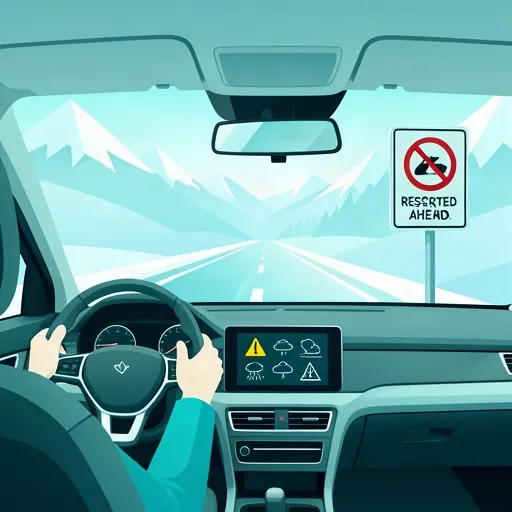
Winter driving in Switzerland presents unique challenges, particularly in mountain regions and the Mittelland. Severe snowfall, often colloquially referred to as "Schneechaos," can lead to rapid deterioration of road conditions. Unlike environmental alerts, road closures due to heavy snow are often mandatory and immediate. Cantonal authorities have the legal power to close roads, including mountain passes, without advance notice to ensure public safety.
When travelling through the Alps, you must pay close attention to warning signs and electronic information displays. If a road is marked as closed, attempting to bypass barriers is not only dangerous but a serious traffic violation. Furthermore, if you encounter an emergency situation, it is imperative to use the correct communication channels. The emergency number 117 connects you to the police, who coordinate road closures and incident management, while the viasuisse service (available at 163 on the radio or online) provides the most current real-time traffic updates.
It is essential for your theoretical preparation to distinguish between actions that are "highly recommended" and those that are "legally required." Advisory measures are proactive steps taken to manage traffic flow and environmental impact, whereas mandatory measures are enforceable rules established by the Federal Roads Office (ASTRA) or cantonal authorities to prevent accidents or manage infrastructure capacity.
| Situation | Type of Measure | Typical Action Required |
|---|---|---|
| Ozonalarm | Voluntary/Advisory | Reduce speed by 10 km/h on motorways |
| Winter Smog | Often Advisory | Reduce travel, use public transport |
| Severe Snowfall | Mandatory | Follow road closure signs and barriers |
| Tunnel Fire | Mandatory | Immediate evacuation via marked exits |
Maintaining safety on Swiss roads depends heavily on your ability to access reliable information. Never rely on guesswork during an weather event. If you are uncertain about the status of a mountain pass or a specific route, check the viasuisse portal before departing. In the event of a breakdown or an emergency during a weather incident, your priority is to secure your vehicle and move to a safe location. If you are on a motorway, use the SOS pillars rather than wandering on the carriageway, and always wear your high-visibility vest.
Swiss weather and environmental alerts require drivers to distinguish between advisory measures and mandatory legal restrictions. The Ozonalarm during summer heatwaves involves voluntary speed reductions to 110 km/h on motorways, while winter conditions like Schneechaos can trigger mandatory road closures enforced by cantonal authorities. Key resources include viasuisse (163) for real-time updates and 117 for police assistance. Understanding which measures are voluntary versus legally binding is essential for both safe driving and theory exam preparation, with ASTRA overseeing national traffic legislation.
A short set of high-value points that capture the most important ideas from this article.
The Ozonalarm triggers when ground-level ozone exceeds 180 µg/m³, typically during July and August heatwaves
Ozonalarm speed reductions from 120 km/h to 110 km/h are generally voluntary advisory measures, not automatic legal mandates
Road closures during severe snowfall are mandatory legal restrictions enforced by cantonal authorities
The viasuisse service (163 on radio, online) provides official real-time traffic updates for all Swiss routes
Emergency number 117 connects you to Swiss police for traffic incidents and road closure coordination
Advisory measures like Ozonalarm are recommendations; mandatory measures like road closures must be obeyed under penalty
ASTRA (Federal Roads Office) is the national authority responsible for motorway management and traffic legislation
During Schneechaos, authorities may close mountain passes without advance notice for safety
Electronic signage on motorways may show adjusted speed limits during adverse conditions
SOS pillars on motorways and high-visibility vests are essential safety equipment during emergencies
Assuming all speed reductions during air quality alerts are legally mandatory with automatic fines
Attempting to bypass road closure barriers during snowfall, which constitutes a serious traffic violation
Relying on outdated or non-official sources for weather and traffic information
Confusing voluntary travel reduction advisories during winter smog with enforceable restrictions
Using general emergency numbers instead of the specific 117 for police and traffic incidents
Article content overview
A short set of high-value points that capture the most important ideas from this article.
The Ozonalarm triggers when ground-level ozone exceeds 180 µg/m³, typically during July and August heatwaves
Ozonalarm speed reductions from 120 km/h to 110 km/h are generally voluntary advisory measures, not automatic legal mandates
Road closures during severe snowfall are mandatory legal restrictions enforced by cantonal authorities
The viasuisse service (163 on radio, online) provides official real-time traffic updates for all Swiss routes
Emergency number 117 connects you to Swiss police for traffic incidents and road closure coordination
Advisory measures like Ozonalarm are recommendations; mandatory measures like road closures must be obeyed under penalty
ASTRA (Federal Roads Office) is the national authority responsible for motorway management and traffic legislation
During Schneechaos, authorities may close mountain passes without advance notice for safety
Electronic signage on motorways may show adjusted speed limits during adverse conditions
SOS pillars on motorways and high-visibility vests are essential safety equipment during emergencies
Assuming all speed reductions during air quality alerts are legally mandatory with automatic fines
Attempting to bypass road closure barriers during snowfall, which constitutes a serious traffic violation
Relying on outdated or non-official sources for weather and traffic information
Confusing voluntary travel reduction advisories during winter smog with enforceable restrictions
Using general emergency numbers instead of the specific 117 for police and traffic incidents
Explore related topics, search based questions, and concepts that learners often look up when studying Swiss Weather and Traffic Alerts. These themes reflect real search intent and help you understand how this topic connects to wider driving theory knowledge in Switzerland.
Find clear and practical answers to common questions learners often have about Swiss Weather and Traffic Alerts. This section helps explain difficult points, remove confusion, and reinforce the key driving theory concepts that matter for learners in Switzerland.
No, the speed reduction during an Ozonalarm is typically a voluntary measure requested by authorities to improve air quality, unless specific cantonal exceptions are in effect.
You must strictly follow all official barriers and signage. Never attempt to drive on a closed road; check real-time updates via viasuisse (163) or local authorities for road status.
For road status information, contact viasuisse at 163. In the event of a dangerous emergency or incident requiring police, dial 117.
Generally, driving restrictions for smog alerts are voluntary, often aimed at reducing the use of high-emission vehicles in specific communes, but you should always check local cantonal regulations.
Continue your learning journey by searching our extensive library of Swiss driving theory articles. Explore additional topics, review specific road rules, or deepen your understanding of official traffic procedures to excel in your exam and drive safely in Switzerland.