
In Switzerland, every driver is required to be fully fit to operate a vehicle, and driving while fatigued is classified as a form of impaired driving. This guide explains how Swiss law, specifically Article 31 SVG, handles fatigue-related accidents and why even brief moments of microsleep can lead to criminal prosecution and license suspension. Whether you are a private driver or a professional HGV operator, understanding your responsibility to remain alert is essential for both your safety and your theory exam preparation.
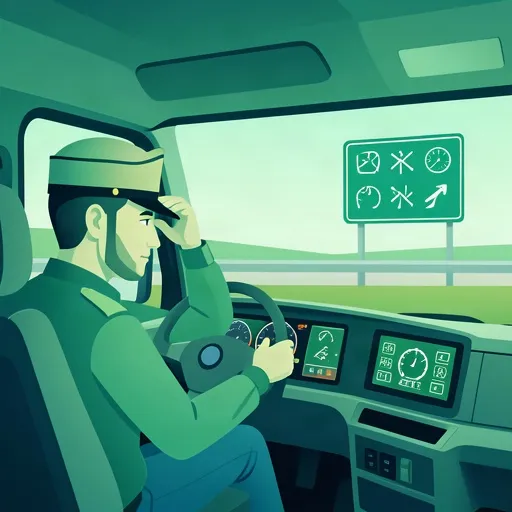
Article content overview
In the Swiss driving theory curriculum, road safety is founded on the principle that every driver is responsible for their fitness to operate a vehicle. Fatigue—often referred to in Swiss legislation as Übermüdung—is not merely a state of being sleepy; it is considered a significant impairment that compromises your ability to react to traffic hazards. Under the Swiss Road Traffic Act (SVG), driving while unfit is a serious regulatory and criminal violation. Whether you are a student preparing for your theory exam or a licensed driver, understanding the implications of fatigue is essential for safe navigation on Swiss roads.
The legal foundation for driver fitness in Switzerland is Article 31 of the Road Traffic Act (SVG). This regulation mandates that a driver must at all times be in a physical and mental state that allows them to master their vehicle. If you choose to drive while significantly fatigued, you are legally classified as fahrunfähig (unfit to drive).
The legal status of a person who is unable to safely control their vehicle due to physical or mental impairment, including severe fatigue, alcohol, drugs, or illness.
If you are involved in a collision caused by fatigue, the legal consequences are severe. Courts in Switzerland consistently rule that fatigue-induced accidents, particularly those involving Sekundenschlaf (microsleep), can lead to license suspension, heavy fines, or even imprisonment. The law expects a driver to recognize the onset of exhaustion and take appropriate action before their driving competence is compromised.
Research by the BFU (Swiss Council for Accident Prevention) identifies Sekundenschlaf—involuntary, brief episodes of sleep lasting one to four seconds—as a primary cause for a significant percentage of serious motorway accidents in Switzerland. Because these episodes are so short, drivers often do not realize they have fallen asleep until it is too late.
These accidents are particularly dangerous because they often occur at high speeds on motorways, where a momentary drift out of the lane can lead to catastrophic head-on or barrier collisions. In the theory exam, you may encounter questions regarding the indicators of fatigue, such as frequent blinking, difficulty maintaining a lane, or "tunnel vision." Recognizing these signs is not just a test requirement; it is a critical skill for accident prevention.
To maintain alertness during long journeys, especially when navigating Switzerland's diverse terrain—including alpine passes and long tunnels—the BFU and TCS recommend proactive rest strategies. Relying on "willpower" is not an effective way to counter biological sleep pressure.
While private car drivers must self-regulate, professional drivers of HGVs and buses are subject to strict legal mandates under the Chauffeurverordnung (ARV 1 and ARV 2). These regulations are designed to prevent fatigue-related accidents by enforcing mandatory rest intervals and daily driving limits, monitored via the tachograph.
| Category | Requirement |
|---|---|
| Max Daily Driving | 9 hours (extendable to 10 hours twice per week) |
| Mandatory Break | 45 minutes after 4.5 hours of driving |
| Daily Rest | Minimum 11 hours within a 24-hour period |
| Weekly Rest | Minimum 45 hours |
Professional drivers must remember that even if they are within their legal driving hours, they are still obligated under the general SVG to stop if they feel physically unfit or overwhelmed by exhaustion.
In the Swiss driving theory exam, you will likely face situational questions about driver fitness. A common trap is to assume that caffeine or loud music provides a long-term solution to tiredness. The official exam perspective emphasizes that the only effective remedy for fatigue is sleep.
Article 31 SVG of the Swiss Road Traffic Act requires every driver to be in a state allowing full vehicle control; driving fatigued makes you legally 'fahrunfähig' (unfit to drive) and can result in license suspension, fines, or imprisonment if you cause a collision. Microsleep (Sekundenschlaf) lasting 1-4 seconds is a documented cause of serious motorway accidents in Switzerland, as drivers often remain unaware until it's too late. Professional drivers face strict ARV regulations including a 9-hour daily driving limit, mandatory 45-minute breaks after 4.5 hours, and 11-hour minimum daily rest periods. The Swiss BFU and theory exam materials emphasize that only actual sleep resolves fatigue; no external stimulants provide a safe alternative. Recognizing early fatigue indicators - such as frequent blinking and lane drift - and stopping at rest areas every two hours for at least 20 minutes is essential for both legal compliance and accident prevention.
A short set of high-value points that capture the most important ideas from this article.
Under Article 31 SVG, driving while fatigued legally classifies you as 'fahrunfähig' (unfit to drive), even without alcohol or drugs
Microsleep (Sekundenschlaf) lasting just 1-4 seconds causes a significant percentage of serious motorway accidents in Switzerland
Professional drivers of HGVs and buses must follow ARV regulations: maximum 9 hours daily driving (10 hours twice weekly), 45-minute breaks after 4.5 hours, and minimum 11 hours daily rest
Signs of fatigue include frequent blinking, difficulty maintaining lane position, and tunnel vision - these require immediate action
The only effective remedy for fatigue is sleep; caffeine and stimulants only mask drowsiness temporarily
Fahrunfähig = legally unfit to drive due to physical or mental impairment, including severe fatigue
Sekundenschlaf (microsleep) = involuntary sleep episodes lasting 1-4 seconds that cause drivers to lose awareness
ARV rules for professional drivers: 9h/10h daily limit, 45min break after 4.5h, 11h daily rest, 45h weekly rest
Take breaks of at least 20 minutes every 2 hours; simply switching drivers is not sufficient rest
Avoid driving between 02:00-05:00 when the body experiences its circadian low
Assuming caffeine, loud music, or fresh air can substitute for actual sleep when tired
Believing that staying within legal driving hours under ARV means you are safe to drive when fatigued
Not recognizing early warning signs of fatigue until microsleep has already occurred
Thinking brief microsleep episodes are harmless because they last only seconds
Stopping at a rest area without actually resting - merely switching drivers does not restore alertness
Article content overview
A short set of high-value points that capture the most important ideas from this article.
Under Article 31 SVG, driving while fatigued legally classifies you as 'fahrunfähig' (unfit to drive), even without alcohol or drugs
Microsleep (Sekundenschlaf) lasting just 1-4 seconds causes a significant percentage of serious motorway accidents in Switzerland
Professional drivers of HGVs and buses must follow ARV regulations: maximum 9 hours daily driving (10 hours twice weekly), 45-minute breaks after 4.5 hours, and minimum 11 hours daily rest
Signs of fatigue include frequent blinking, difficulty maintaining lane position, and tunnel vision - these require immediate action
The only effective remedy for fatigue is sleep; caffeine and stimulants only mask drowsiness temporarily
Fahrunfähig = legally unfit to drive due to physical or mental impairment, including severe fatigue
Sekundenschlaf (microsleep) = involuntary sleep episodes lasting 1-4 seconds that cause drivers to lose awareness
ARV rules for professional drivers: 9h/10h daily limit, 45min break after 4.5h, 11h daily rest, 45h weekly rest
Take breaks of at least 20 minutes every 2 hours; simply switching drivers is not sufficient rest
Avoid driving between 02:00-05:00 when the body experiences its circadian low
Assuming caffeine, loud music, or fresh air can substitute for actual sleep when tired
Believing that staying within legal driving hours under ARV means you are safe to drive when fatigued
Not recognizing early warning signs of fatigue until microsleep has already occurred
Thinking brief microsleep episodes are harmless because they last only seconds
Stopping at a rest area without actually resting - merely switching drivers does not restore alertness
Explore related topics, search based questions, and concepts that learners often look up when studying Fatigue Driving Rules and Consequences. These themes reflect real search intent and help you understand how this topic connects to wider driving theory knowledge in Switzerland.
Find clear and practical answers to common questions learners often have about Fatigue Driving Rules and Consequences. This section helps explain difficult points, remove confusion, and reinforce the key driving theory concepts that matter for learners in Switzerland.
Article 31 of the Swiss Road Traffic Act (SVG) requires that a driver must always be in a condition to control their vehicle. Driving while unfit due to fatigue is considered a violation of this rule, and if an accident occurs, the driver can face criminal prosecution.
Sekundenschlaf is the German term for microsleep, a sudden, involuntary sleep episode lasting 1–4 seconds. It is a major cause of serious motorway accidents in Switzerland and is legally treated as a severe failure to maintain vehicle control.
The bfu recommends taking at least a 20-minute rest break for every two hours of driving. It is also advised to avoid driving during the body's natural low-alertness period, specifically between 02:00 and 05:00.
Professional HGV and bus drivers are subject to the Chauffeurverordnung (ARV), which mandates strict driving, working, and rest periods, such as a 45-minute break after 4.5 hours of driving, monitored via a tachograph.
Continue your learning journey by searching our extensive library of Swiss driving theory articles. Explore additional topics, review specific road rules, or deepen your understanding of official traffic procedures to excel in your exam and drive safely in Switzerland.