
Many foreigners moving to Switzerland mistakenly search for mandatory external learner signage, but Swiss law focuses on documentation rather than visual alerts. This guide explains why no external plate is required for private practice and how the role of the accompanying driver acts as the core safety mechanism. You will gain clarity on vehicle requirements and the legal obligations of the learner during practice drives.
Article content overview
One of the most frequent points of confusion for individuals beginning their journey to obtain a driving license in Switzerland is the question of external signage. Many expatriates and new drivers moving to Switzerland arrive with expectations set by the regulations of their home countries, where the display of a prominent "L" plate—or even specific novice stickers—is a strictly enforced legal requirement for learner drivers. In Switzerland, however, the approach is fundamentally different.
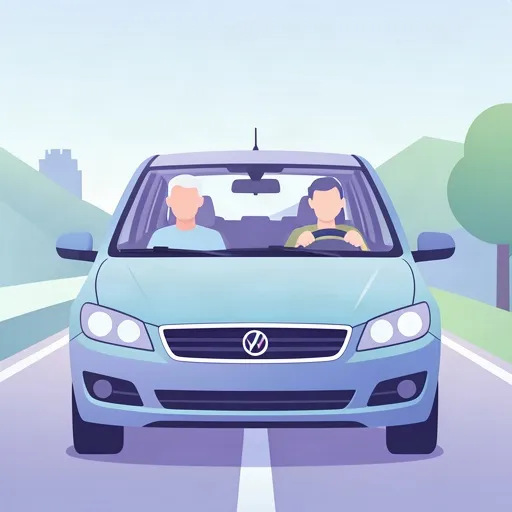
The Swiss road traffic legislation, specifically the Ordinance on the Admission of Persons and Vehicles to Road Traffic (VZV), focuses on the documentation and the capability of the driver and their supervisor rather than external visual alerts. If you are learning to drive in a private car, you are not required to display an external "L" plate, "Student Driver" sign, or any other notification to fellow road users. On Swiss roads, a private car being used for a driving lesson looks identical to any other vehicle.
The cornerstone of the Swiss learner system is the Lernfahrausweis (Learner Permit). Unlike countries that mandate a visual tag to alert others to a learner's potential inexperience, Switzerland relies on the strict legal requirement that the learner permit must be carried at all times during practice sessions. This document verifies that the driver has passed the theory exam and has reached the legal age required for their chosen category.
It is essential to understand that this permit is a personal document. When you are out on the road, you are not announcing your status as a learner; rather, you are operating a vehicle under the mandate of Swiss traffic law. The legal responsibility for safety rests heavily on the Begleiter (accompanying person), who must be able to intervene in the event of a dangerous situation.
While private cars used for learning require no external signage, you will frequently see cars on the road with "Fahrschule" (Driving School) signs or roof boards. This often creates the misconception that such signs are a mandatory part of the learner experience. In reality, these are commercial identifiers. Driving schools use these signs for branding and to inform other road users that the vehicle is equipped with dual-control pedals, allowing the professional driving instructor to maintain control of the vehicle.
For your private practice sessions, you do not need to replicate these signs. In fact, attempting to display an "L" plate on a private vehicle in Switzerland is not standard practice and provides no legal benefit, as other drivers are not trained to react to such signage in the Swiss context.
Since there is no external warning sign for other drivers, the safety mechanism in Switzerland is the presence of a qualified accompanying person. For category B (cars), this person must meet specific criteria defined by the authorities to ensure they can manage the risks of the road.
The accompanying person acts as your "safety system." Because other motorists do not know you are a learner, your supervisor must monitor the traffic flow and provide guidance that allows you to integrate into traffic naturally, rather than relying on the "courtesy" of others due to a learner sign.
Although no signs are needed, you must ensure your vehicle is fully compliant with Swiss road safety standards. Every vehicle used for practice must have valid third-party liability insurance. Furthermore, the learner permit must be presented immediately if you are stopped by the police.
In the context of your theory exam, you may be presented with scenarios regarding the operation of a vehicle. Remember that the absence of a sign does not grant you special status or "extra" priority on the road. You must adhere to the same traffic rules as any other driver. Understanding that you are treated as a standard driver by the law—despite your learner status—is critical for passing questions related to traffic flow and intersection priority.
Swiss learner driver regulations differ significantly from many other countries by focusing on documentation rather than external signage. Private vehicles require no L plates, with safety instead managed through a qualified Begleiter who must be at least 23 years old and hold a Category B license for three years. The Lernfahrausweis serves as the primary legal verification document and must be carried during all practice sessions. Learner drivers are treated identically to full license holders under Swiss traffic law, meaning no special priority or courtesy should be expected from other road users. Understanding this framework is essential for theory exam preparation and safe practice driving in Switzerland.
A short set of high-value points that capture the most important ideas from this article.
Switzerland does not require external 'L' plates on private vehicles; the learner permit system relies on documentation rather than visual indicators.
The Lernfahrausweis is the core legal document that must be carried at all times during practice driving.
Safety on Swiss roads for learner drivers depends entirely on the qualified accompanying person (Begleiter) rather than other road users being warned.
Driving school vehicle signs are commercial identifiers, not legal requirements, and include dual-control features for professional instructors.
Learner drivers in Switzerland must follow identical traffic rules as fully licensed drivers and receive no special priority or treatment.
The accompanying person must be at least 23 years old, hold a full Category B license for at least three years, and not be in their probationary period.
The Lernfahrausweis is a personal document that verifies the holder has passed the theory exam and meets age requirements.
Vehicles used for practice must have valid third-party liability insurance.
Key terminology: Lernfahrausweis (learner permit), Begleiter (accompanying person), VZV (road traffic ordinance), Category B (standard car license).
Digital versions of the learner permit may be accepted under pilot programs, but carrying proof of status remains mandatory.
Assuming that 'L' plates or student driver signs are required on private vehicles, as they are in many other countries.
Believing that other road users will grant special courtesy or priority once they know you are a learner.
Thinking that Fahrschule signs are legally mandated for all learner vehicles rather than commercial branding.
Failing to carry proper identification alongside the learner permit when stopped by police.
Assuming the learner's status grants any relaxation of standard traffic rules or priority at intersections.
Article content overview
A short set of high-value points that capture the most important ideas from this article.
Switzerland does not require external 'L' plates on private vehicles; the learner permit system relies on documentation rather than visual indicators.
The Lernfahrausweis is the core legal document that must be carried at all times during practice driving.
Safety on Swiss roads for learner drivers depends entirely on the qualified accompanying person (Begleiter) rather than other road users being warned.
Driving school vehicle signs are commercial identifiers, not legal requirements, and include dual-control features for professional instructors.
Learner drivers in Switzerland must follow identical traffic rules as fully licensed drivers and receive no special priority or treatment.
The accompanying person must be at least 23 years old, hold a full Category B license for at least three years, and not be in their probationary period.
The Lernfahrausweis is a personal document that verifies the holder has passed the theory exam and meets age requirements.
Vehicles used for practice must have valid third-party liability insurance.
Key terminology: Lernfahrausweis (learner permit), Begleiter (accompanying person), VZV (road traffic ordinance), Category B (standard car license).
Digital versions of the learner permit may be accepted under pilot programs, but carrying proof of status remains mandatory.
Assuming that 'L' plates or student driver signs are required on private vehicles, as they are in many other countries.
Believing that other road users will grant special courtesy or priority once they know you are a learner.
Thinking that Fahrschule signs are legally mandated for all learner vehicles rather than commercial branding.
Failing to carry proper identification alongside the learner permit when stopped by police.
Assuming the learner's status grants any relaxation of standard traffic rules or priority at intersections.
Explore related topics, search based questions, and concepts that learners often look up when studying Swiss Learner Driver Rules. These themes reflect real search intent and help you understand how this topic connects to wider driving theory knowledge in Switzerland.
Find clear and practical answers to common questions learners often have about Swiss Learner Driver Rules. This section helps explain difficult points, remove confusion, and reinforce the key driving theory concepts that matter for learners in Switzerland.
No, private vehicles used for learning to drive in Switzerland do not require an external 'L' plate or any specific learner signage.
In Switzerland, private learner vehicles look identical to any other car on the road. There is no visual external indicator, which is why the role of the accompanying person is so critical for safety.
The learner must carry their valid Learner Permit (Lernfahrausweis) at all times while driving. This document must be presented if requested by the police during a traffic stop.
Yes, commercial driving schools often use vehicles with branding and specific roof signs or boards marked 'Fahrschule', but this is commercial identification rather than a legal requirement for the learner themselves.
Continue your learning journey by searching our extensive library of Swiss driving theory articles. Explore additional topics, review specific road rules, or deepen your understanding of official traffic procedures to excel in your exam and drive safely in Switzerland.