
Understanding the specific Swiss regulations for stationary vehicles is essential for both your driving theory test and everyday road safety. This guide breaks down where you are legally permitted to stop or park, how to interpret various road markings like yellow lines and blue zones, and the procedural requirements for securing your vehicle safely. By familiarizing yourself with these legal requirements, you will be well-prepared to answer complex theory exam questions regarding traffic rules and hazard avoidance.
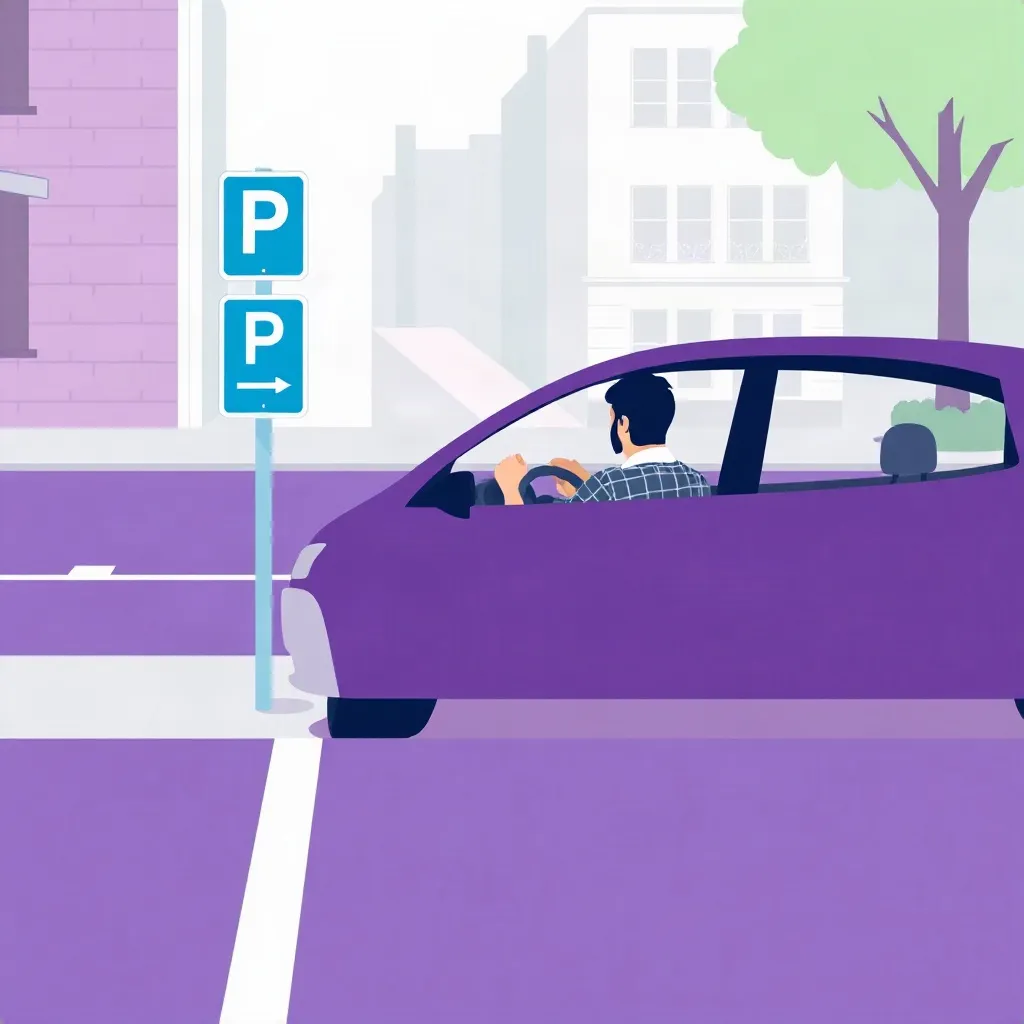
Article content overview
Mastering the distinction between stopping and parking is a fundamental requirement for every student preparing for the Swiss driving theory exam. While these terms are often used interchangeably in casual conversation, the Swiss Road Traffic Act (SVG) and the Ordinance on Road Signs and Signals (SSV) define them with specific legal weight. Understanding these differences is not just a requirement to pass your exam; it is a vital skill that ensures you avoid fines and contribute to the safe, orderly flow of traffic on Swiss roads.
In the context of Swiss traffic law, the action of keeping your vehicle stationary is classified based on intent and duration. To "stop" (halten) refers to bringing a vehicle to a halt voluntarily, typically for a short duration such as letting a passenger in or out or briefly loading goods, provided the driver remains in or near the vehicle and can move it immediately if necessary.
Conversely, "parking" (parkieren) is defined as any stationary position that exceeds the duration of a brief stop or implies that the driver is leaving the vehicle unattended for a period. If you step away from your vehicle, regardless of whether the engine is running or the hazard lights are on, you are legally considered to be parking. This distinction is critical because many locations permit stopping for passengers but strictly prohibit parking.
The voluntary cessation of movement for a short period, typically for the purpose of picking up or dropping off passengers or quick loading, during which the driver remains ready to move the vehicle instantly.
The act of leaving a vehicle stationary for a duration that exceeds a brief stop, or leaving the vehicle unattended. This is subject to strictly regulated zones and time limits.
Swiss traffic law mandates several areas where stopping or parking is absolutely forbidden. Ignorance of these rules often leads to significant fines or even vehicle impoundment. You must never stop or park on pedestrian crossings, near active railway lines, or on bicycle paths. Additionally, parking is prohibited within a certain distance of intersections to ensure visibility for other road users and emergency vehicles.
Beyond these general rules, keep an eye out for specific pavement markings. Yellow lines that are interrupted by crosses or designated "no parking" fields serve as absolute prohibitions. In cities like Zurich or Geneva, you may encounter yellow delivery zones; these are reserved for commercial loading activities, and parking your private vehicle there, even for a few minutes, is a common exam trap.
The Blue Zone is a cornerstone of urban parking in Switzerland. These zones are designed to manage short-term parking in residential or commercial areas. When you park in a Blue Zone, you are required to use an official Swiss parking disc, which must be clearly visible behind the windshield. You set the arrival time to the next half-hour mark following your actual arrival.
It is important to remember that the rules for Blue Zones can vary slightly by municipality, but the core requirement remains: the parking disc is mandatory. Failing to display it, or setting it incorrectly, is a common source of fines for new drivers. Always check local signage for specific time limits, as these often govern how long you are permitted to stay.
Switzerland’s diverse geography means you will frequently encounter inclines. Parking on a slope requires extra care to prevent the vehicle from rolling away. You must always engage the handbrake firmly and, for manual transmission vehicles, select the appropriate gear—usually first gear or reverse, depending on the incline direction.
Furthermore, you are expected to turn your front wheels toward the curb when parking on a downward slope, or away from the curb on an upward slope. This simple maneuver acts as a mechanical safety fail-safe. In your theory exam, you may be tested on the procedural safety steps for leaving a vehicle unattended on steep terrain, reinforcing the importance of these precautions for road safety.
| Situation | Action Required |
|---|---|
| Downhill with curb | Turn wheels toward the curb |
| Uphill with curb | Turn wheels away from the curb |
| No curb (uphill/downhill) | Turn wheels toward the shoulder/side |
The Swiss theory exam often utilizes scenario-based questions to assess your understanding of parking laws. You might be presented with a situation near a bus stop, a tunnel entrance, or a highway merge point. Remember that stopping is inherently dangerous in these high-traffic areas and is strictly prohibited.
Always look for signs indicating "Parking with a parking disc" or "Paid parking" and cross-reference them with the physical road markings, such as white lines (usually paid) or blue lines (disc zones). Pay close attention to exceptions, such as parking permits for residents or designated spots for vehicles with specific automation systems or disabled access, as these override general parking rules.
Always be wary of yellow zig-zag lines. These represent bus stops or public transport stopping areas. You are permitted to stop only to let passengers on or off, provided you do not obstruct public transport vehicles; you are strictly forbidden from parking there.
Swiss traffic law draws a clear legal line between stopping (driver present and ready to move) and parking (vehicle unattended), with many areas permitting the former but forbidding the latter. Blue Zones manage short-term parking through mandatory parking discs showing the next half-hour arrival time, while yellow zig-zag markings at bus stops strictly prohibit parking even for short durations. When parking on Switzerland's frequent inclines, always engage the handbrake and turn wheels toward the curb downhill or away uphill as a mechanical fail-safe. The theory exam frequently tests scenario-based knowledge of these distinctions, so recognizing prohibited zones, understanding disc procedures, and knowing slope-handling rules are essential for both passing the test and avoiding fines.
A short set of high-value points that capture the most important ideas from this article.
In Swiss law, 'stopping' (Halten) requires the driver to remain present and ready to move, while 'parking' (Parkieren) means leaving the vehicle unattended regardless of duration.
Stopping and parking are absolutely prohibited on pedestrian crossings, railway lines, bicycle paths, and within a certain distance of intersections.
Blue Zones require a visible Swiss parking disc set to the next half-hour interval after arrival; time limits vary by municipality.
When parking on slopes, always turn front wheels toward the curb downhill and away from the curb uphill, regardless of whether a curb exists.
Yellow zig-zag road markings indicate public transport stops where you may stop only to let passengers on or off but cannot park.
If you step away from your vehicle for any reason, even briefly, you are legally parking—not stopping.
Yellow delivery zones are reserved for commercial loading; parking a private vehicle there, even momentarily, violates the rules.
The parking disc must show the arrival time clearly from outside the vehicle; incorrect setting is a common fine trigger.
Turn wheels toward the curb on downhill slopes and away from the curb on uphill slopes to prevent rolling.
Bus stop zones (yellow zig-zags) allow stopping for passenger exchange but prohibit any unattended parking.
Assuming that a brief exit from the vehicle (e.g., to pay for parking) does not constitute parking, when in fact it legally does.
Forgetting to display the parking disc in Blue Zones or setting it to the wrong half-hour interval.
Confusing yellow delivery zones with general no-parking areas and failing to recognize their commercial purpose.
Thinking that hazard lights or an engine left running allows parking in areas where parking is otherwise prohibited.
Believing that stopping briefly near a bus stop is permitted for any purpose other than picking up or dropping off passengers.
Article content overview
A short set of high-value points that capture the most important ideas from this article.
In Swiss law, 'stopping' (Halten) requires the driver to remain present and ready to move, while 'parking' (Parkieren) means leaving the vehicle unattended regardless of duration.
Stopping and parking are absolutely prohibited on pedestrian crossings, railway lines, bicycle paths, and within a certain distance of intersections.
Blue Zones require a visible Swiss parking disc set to the next half-hour interval after arrival; time limits vary by municipality.
When parking on slopes, always turn front wheels toward the curb downhill and away from the curb uphill, regardless of whether a curb exists.
Yellow zig-zag road markings indicate public transport stops where you may stop only to let passengers on or off but cannot park.
If you step away from your vehicle for any reason, even briefly, you are legally parking—not stopping.
Yellow delivery zones are reserved for commercial loading; parking a private vehicle there, even momentarily, violates the rules.
The parking disc must show the arrival time clearly from outside the vehicle; incorrect setting is a common fine trigger.
Turn wheels toward the curb on downhill slopes and away from the curb on uphill slopes to prevent rolling.
Bus stop zones (yellow zig-zags) allow stopping for passenger exchange but prohibit any unattended parking.
Assuming that a brief exit from the vehicle (e.g., to pay for parking) does not constitute parking, when in fact it legally does.
Forgetting to display the parking disc in Blue Zones or setting it to the wrong half-hour interval.
Confusing yellow delivery zones with general no-parking areas and failing to recognize their commercial purpose.
Thinking that hazard lights or an engine left running allows parking in areas where parking is otherwise prohibited.
Believing that stopping briefly near a bus stop is permitted for any purpose other than picking up or dropping off passengers.
Explore related topics, search based questions, and concepts that learners often look up when studying Swiss Parking and Stopping Rules. These themes reflect real search intent and help you understand how this topic connects to wider driving theory knowledge in Switzerland.
Find clear and practical answers to common questions learners often have about Swiss Parking and Stopping Rules. This section helps explain difficult points, remove confusion, and reinforce the key driving theory concepts that matter for learners in Switzerland.
According to Swiss law, stopping is a brief, voluntary halt, usually to let passengers in or out or for loading/unloading. Parking is any voluntary stationary status of a vehicle that is not merely for the immediate purpose of boarding or offloading.
No, yellow lines with crosses or diagonal markings indicate a parking prohibition zone, often reserved for deliveries or public transport. Parking here is strictly prohibited, though stopping to load or unload may be permitted if it does not hinder authorized users.
Blue zone spaces require a parking disc displayed clearly on the dashboard. The disc must be set to the next half-hour after your time of arrival, allowing for free parking for a specific limited duration defined by local signage.
When parking on a slope, you must ensure the vehicle is secure by using the handbrake and engaging a gear. Additionally, you should turn the front wheels toward the curb or edge of the road so that the vehicle would roll away from the traffic if the brakes failed.
Continue your learning journey by searching our extensive library of Swiss driving theory articles. Explore additional topics, review specific road rules, or deepen your understanding of official traffic procedures to excel in your exam and drive safely in Switzerland.