
Learn the legal framework behind Article 84 of the Swiss Federal Constitution and why Switzerland prioritizes rail transport for alpine crossings. This guide clarifies the distinction between commercial HGV transit restrictions and standard rules for private car drivers, ensuring you understand how transit management affects your journey on the A2 motorway.
Article content overview
As a learner driver in Switzerland, you will encounter a road network that is among the most efficient and well-managed in the world. However, the unique geography of the Swiss Alps necessitates a sophisticated approach to transport policy, which directly influences your daily driving experience on major routes like the A2 motorway. Understanding the "Alpeninitiative"—a constitutional mandate—is key to comprehending why the Swiss road system operates differently than those of its neighboring countries.
The Swiss Alpine Initiative (Alpeninitiative) is a cornerstone of national transport law. It originated from a popular referendum in 1994, which resulted in the addition of Article 84 to the Swiss Federal Constitution. This constitutional mandate essentially protects the Alpine region by aiming to keep the impact of transit traffic to a minimum.
The core of the initiative prohibits the expansion of transalpine road freight capacity beyond 1994 levels. To comply with this, Switzerland has focused heavily on the "modal shift" policy, which incentivizes the transport of goods via rail rather than road. This is why you will see massive infrastructure projects, such as the Gotthard Base Tunnel, designed specifically to facilitate freight movement through the Alps by train, thereby keeping the A2 motorway safer and more accessible for private car drivers.
A common point of confusion for new drivers is how these transit policies apply to them. It is important to remember that the Alpine Initiative and its related restrictions, such as heavy vehicle charges and night bans, are designed to manage commercial HGV traffic. As a Category B driver, your right to use the A2 motorway remains unaffected by these commercial constraints, provided you follow general traffic regulations.
The official Swiss policy of transferring transalpine freight transport from heavy goods vehicles (HGVs) to railway systems, primarily supported by the ROLA (Rolling Motorway) and the construction of long-base tunnels.
While you might share the road with HGVs, remember that their transit is highly regulated. For instance, heavy vehicles must pay specific distance-related charges (LSVA), whereas private vehicles under 3.5 tonnes must purchase a standard motorway vignette. Confusing these regulatory frameworks can lead to misunderstandings about road usage privileges.
The A2 Gotthard route is the most iconic example of Swiss transit management. Because this route carries significant international traffic, authorities implement "dosing" systems during peak periods. When traffic volumes in the tunnel exceed safety thresholds, authorities may limit the entry of vehicles to ensure smooth flow and prevent dangerous congestion within the tunnel itself.
Always keep a safe distance from heavy vehicles on alpine routes. HGVs may be limited by weight and power on steep gradients, leading to significant speed differentials. Adjust your speed accordingly and avoid tailgating.
When driving through tunnels, your behavior is dictated by specific safety rules designed to mitigate the risks of fire or accidents in confined spaces. Always maintain the prescribed distance, observe lane markings, and be prepared for changing light conditions at the tunnel entrance and exit.
| Vehicle Type | Toll/Usage Requirement | Regulatory Basis |
|---|---|---|
| Passenger Car (< 3.5t) | Motorway Vignette | Standard Road Use |
| Heavy Goods Vehicle (> 3.5t) | LSVA (Heavy Vehicle Charge) | Article 84 Constitution |
| Trailers/Caravans | Separate Vignette Required | Vehicle Classification |
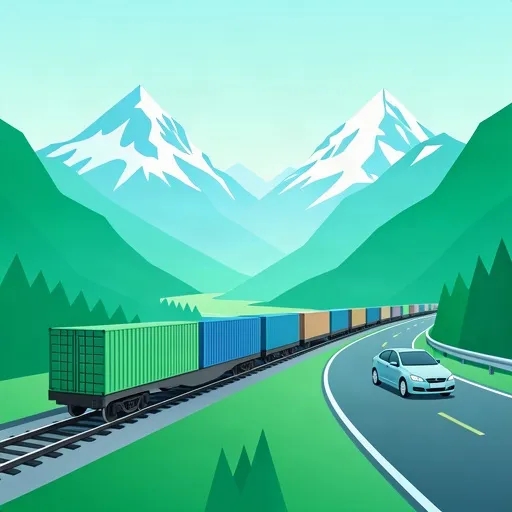
To further reduce road traffic, Switzerland utilizes the ROLA (Rollende Landstrasse), or "rolling motorway." This system allows entire HGV trucks to be loaded onto flatbed rail carriages, effectively turning the train into a mobile section of the motorway. This significantly reduces the number of trucks crossing the Alps by road, which in turn improves the driving environment for private motorists, reducing the frequency of heavy, slow-moving traffic on mountain passes and motorways.
In the context of your theory exam, questions regarding these topics often focus on your knowledge of motorway etiquette, tunnel safety, and understanding the differences between vehicle classes. You are not expected to be an expert in transport logistics, but you must understand how these policies contribute to a safer, more predictable driving environment on Swiss roads.
The Swiss Alpine Initiative, embedded in Article 84 of the Federal Constitution since 1994, protects the Alpine environment by preventing the expansion of transalpine road freight capacity and promoting a modal shift from road to rail. While heavy goods vehicles face strict regulations including LSVA charges and night bans, private car drivers with a Category B license retain full access to routes like the A2 motorway provided they carry a valid vignette and follow standard traffic rules. The Gotthard A2 route employs traffic dosing to manage congestion during peak periods, and infrastructure projects like the Gotthard Base Tunnel and ROLA system support the rail alternative for freight. On alpine routes, drivers must maintain safe distances from HGVs, which may struggle on steep gradients and create significant speed differentials, and observe special tunnel safety protocols including prescribed following distances and lane discipline.
A short set of high-value points that capture the most important ideas from this article.
Article 84 of the Swiss Federal Constitution prohibits expanding transalpine road freight capacity beyond 1994 levels
The modal shift policy transfers freight from heavy goods vehicles to rail using systems like ROLA and the Gotthard Base Tunnel
Private car drivers holding a Category B license are not affected by commercial HGV transit restrictions on routes like the A2
Traffic dosing systems on the Gotthard route limit vehicle entry during peak periods to prevent dangerous tunnel congestion
Passenger vehicles under 3.5 tonnes require a motorway vignette, while HGVs pay the LSVA - these are separate regulatory frameworks
The Alpine Initiative (Alpeninitiative) is a 1994 constitutional mandate limiting transalpine road freight
Modal shift = official policy of transferring freight from road to rail
LSVA (Leistungsabhängige Schwerverkehrsabgabe) is the performance-related heavy vehicle charge for trucks over 3.5 tonnes
ROLA (Rollende Landstrasse) allows entire HGVs to be loaded onto rail carriages for alpine crossings
Category B drivers maintain unrestricted motorway access under standard traffic regulations
Confusing commercial HGV transit restrictions with rules that apply to private passenger vehicles
Assuming all vehicles on the A2 are subject to the same toll requirements - only HGVs pay LSVA
Underestimating the speed differential when following heavy vehicles on steep alpine gradients
Forgetting that traffic dosing applies to all vehicles, not just trucks, when tunnel safety thresholds are reached
Not adjusting driving behavior for changing light conditions at tunnel entrances and exits on alpine routes
Article content overview
A short set of high-value points that capture the most important ideas from this article.
Article 84 of the Swiss Federal Constitution prohibits expanding transalpine road freight capacity beyond 1994 levels
The modal shift policy transfers freight from heavy goods vehicles to rail using systems like ROLA and the Gotthard Base Tunnel
Private car drivers holding a Category B license are not affected by commercial HGV transit restrictions on routes like the A2
Traffic dosing systems on the Gotthard route limit vehicle entry during peak periods to prevent dangerous tunnel congestion
Passenger vehicles under 3.5 tonnes require a motorway vignette, while HGVs pay the LSVA - these are separate regulatory frameworks
The Alpine Initiative (Alpeninitiative) is a 1994 constitutional mandate limiting transalpine road freight
Modal shift = official policy of transferring freight from road to rail
LSVA (Leistungsabhängige Schwerverkehrsabgabe) is the performance-related heavy vehicle charge for trucks over 3.5 tonnes
ROLA (Rollende Landstrasse) allows entire HGVs to be loaded onto rail carriages for alpine crossings
Category B drivers maintain unrestricted motorway access under standard traffic regulations
Confusing commercial HGV transit restrictions with rules that apply to private passenger vehicles
Assuming all vehicles on the A2 are subject to the same toll requirements - only HGVs pay LSVA
Underestimating the speed differential when following heavy vehicles on steep alpine gradients
Forgetting that traffic dosing applies to all vehicles, not just trucks, when tunnel safety thresholds are reached
Not adjusting driving behavior for changing light conditions at tunnel entrances and exits on alpine routes
Explore related topics, search based questions, and concepts that learners often look up when studying Swiss Alpine Initiative and Transit Rules. These themes reflect real search intent and help you understand how this topic connects to wider driving theory knowledge in Switzerland.
Find clear and practical answers to common questions learners often have about Swiss Alpine Initiative and Transit Rules. This section helps explain difficult points, remove confusion, and reinforce the key driving theory concepts that matter for learners in Switzerland.
No, the Alpine Initiative primarily targets the expansion of transalpine road freight capacity. Private vehicle traffic on the A2 remains governed by standard traffic regulations and is not restricted by these specific freight-shift policies.
The ROLA (Rolling Motorway) system allows entire heavy goods vehicles to be loaded onto trains for alpine transit, which supports the constitutional goal of moving freight traffic from the road to the railway network.
No, vehicles with a total weight exceeding 3.5 tonnes are not subject to the standard motorway vignette; instead, they must pay the distance-related heavy vehicle charge (LSVA).
Continue your learning journey by searching our extensive library of Swiss driving theory articles. Explore additional topics, review specific road rules, or deepen your understanding of official traffic procedures to excel in your exam and drive safely in Switzerland.