
Understanding how electrically assisted vehicles integrate into the Swiss traffic system is essential for both daily road safety and your theory examination. This guide breaks down the mandatory requirements for e-bike categories, insurance and licensing needs, and the specific restrictions for e-scooter riders to keep you safe and exam-ready.
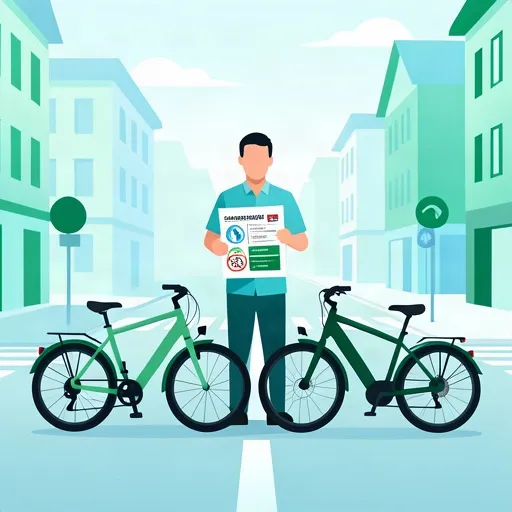
Article content overview
Understanding the integration of electrically assisted vehicles into the Swiss traffic system is essential for your safety and your success in the theory examination. Switzerland distinguishes clearly between various categories of e-bikes and micro-mobility vehicles, each carrying its own set of legal requirements regarding licensing, registration, and permitted road usage. As a driver, you must recognize these vehicles on the road, anticipate their behavior, and understand exactly where they are permitted to travel to avoid dangerous interactions.
Swiss law splits electrically assisted bicycles into two primary categories based on their motor assistance. Distinguishing between these is a common topic in the theory test, as the rules for each are significantly different.
Bicycles with pedal assistance up to 25 km/h. They do not require a registration plate or a driving licence, and they are permitted to use cycle paths and lanes.
Bicycles with pedal assistance up to 45 km/h. These are classified as motor vehicles, requiring a Mofakennzeichen (registration plate), liability insurance, and at least a Category M driving licence. They are generally not permitted on cycle paths unless specifically authorized.
For fast e-bikes, the Mofakennzeichen must be renewed annually. Riders of these high-speed e-bikes are also legally required to wear an approved helmet and must have their headlights switched on even during daylight hours.
E-scooters (often referred to as Elektro-Trottinette) occupy a specific niche in Swiss traffic legislation. Following a rise in accident statistics, federal regulations have become more stringent to ensure the safety of both riders and other road users. These vehicles are treated as motorized micro-vehicles, and their operation is subject to strict rules.
Most importantly, it is strictly forbidden to ride an e-scooter on the pavement (Trottoir) in Switzerland. They must be operated on the road or, if available and safe, on designated cycle paths. Riders must adhere to general traffic signals, and it is a common exam trap to assume that these vehicles have the same rights as pedestrians. If you are a car driver, remember that these vehicles have small wheels and can be unstable on uneven surfaces or tram tracks, which requires you to keep a respectful safety distance when overtaking.
As a future driver, you will frequently encounter cyclists and e-bike riders at junctions and roundabouts. One of the most important concepts to master for your theory exam is the interaction at intersections. Cyclists and e-bike riders often move faster than they appear, particularly those on 45 km/h fast e-bikes.
When turning right at a junction, you must always check your blind spot for cyclists who might be attempting to pass you on the right. Conversely, in specific urban areas, you may encounter signage that allows bicycles and e-bikes to turn right at a red light. If you are driving a car, this rule does not apply to you unless explicit traffic signals indicate otherwise.
To help you organize your study, this table summarizes the key differences between the vehicle types you are most likely to encounter in the theory test.
| Feature | Slow E-Bike | Fast E-Bike | E-Scooter |
|---|---|---|---|
| Max Speed | 25 km/h | 45 km/h | 20 km/h |
| Licence Req. | None | Cat. M | None |
| Plate Req. | No | Yes (Mofa) | Yes |
| Helmet | Recommended | Mandatory | Recommended |
| Cycle Path | Allowed | Generally No | Only if allowed |
Swiss traffic law categorizes electrically assisted vehicles into slow e-bikes (25 km/h, no licence required), fast e-bikes (45 km/h, requiring Category M licence, registration plate, and insurance), and e-scooters (20 km/h, requiring plate but no licence). Fast e-bikes must have headlights on and helmets worn, and are generally excluded from cycle paths. For drivers, the critical skill is recognizing these vehicles at junctions and roundabouts, performing proper blind spot checks, and understanding that fast e-bikes accelerate like mopeds. E-scooters must stay off pavements and follow general traffic signals. This classification system and the driver interaction protocols are key topics for theory exam preparation.
A short set of high-value points that capture the most important ideas from this article.
Switzerland distinguishes between slow e-bikes (up to 25 km/h) and fast e-bikes (up to 45 km/h), each with fundamentally different legal requirements
Fast e-bikes (Speed Pedelecs) are classified as motor vehicles requiring Mofakennzeichen registration, liability insurance, and at minimum a Category M driving licence
E-scooters are strictly prohibited from riding on pavements (Trottoir) and must use roads or designated cycle paths
Drivers must physically check blind spots for cyclists before turning, as fast e-bikes can accelerate at speeds comparable to mopeds
Fast e-bikes are generally not permitted on cycle paths unless explicitly authorized by signage
Slow e-bikes need no licence or registration; fast e-bikes require Category M licence, Mofakennzeichen (yellow plate), and compulsory insurance
Fast e-bike riders must wear an approved helmet and keep headlights on even during daylight hours
E-scooters require a registration plate but no driving licence, with a maximum speed of 20 km/h
Never overtake a cyclist immediately before a junction where you intend to turn right—this is a frequent accident scenario
Some urban intersections allow cyclists and e-bikes to turn right at red lights, but this does not apply to car drivers unless specifically indicated
Assuming e-scooters can be ridden on pavements like pedestrians—riding on the Trottoir is strictly forbidden
Confusing slow and fast e-bike rules, particularly regarding licence and registration requirements
Forgetting that fast e-bikes need their Mofakennzeichen renewed annually
Believing that cyclists always have priority at junctions without checking for specific signage
Relying solely on mirrors when checking for e-bikes before turning—physical head checks are essential
Article content overview
A short set of high-value points that capture the most important ideas from this article.
Switzerland distinguishes between slow e-bikes (up to 25 km/h) and fast e-bikes (up to 45 km/h), each with fundamentally different legal requirements
Fast e-bikes (Speed Pedelecs) are classified as motor vehicles requiring Mofakennzeichen registration, liability insurance, and at minimum a Category M driving licence
E-scooters are strictly prohibited from riding on pavements (Trottoir) and must use roads or designated cycle paths
Drivers must physically check blind spots for cyclists before turning, as fast e-bikes can accelerate at speeds comparable to mopeds
Fast e-bikes are generally not permitted on cycle paths unless explicitly authorized by signage
Slow e-bikes need no licence or registration; fast e-bikes require Category M licence, Mofakennzeichen (yellow plate), and compulsory insurance
Fast e-bike riders must wear an approved helmet and keep headlights on even during daylight hours
E-scooters require a registration plate but no driving licence, with a maximum speed of 20 km/h
Never overtake a cyclist immediately before a junction where you intend to turn right—this is a frequent accident scenario
Some urban intersections allow cyclists and e-bikes to turn right at red lights, but this does not apply to car drivers unless specifically indicated
Assuming e-scooters can be ridden on pavements like pedestrians—riding on the Trottoir is strictly forbidden
Confusing slow and fast e-bike rules, particularly regarding licence and registration requirements
Forgetting that fast e-bikes need their Mofakennzeichen renewed annually
Believing that cyclists always have priority at junctions without checking for specific signage
Relying solely on mirrors when checking for e-bikes before turning—physical head checks are essential
Explore related topics, search based questions, and concepts that learners often look up when studying Swiss E-Bike and E-Scooter Rules. These themes reflect real search intent and help you understand how this topic connects to wider driving theory knowledge in Switzerland.
Find clear and practical answers to common questions learners often have about Swiss E-Bike and E-Scooter Rules. This section helps explain difficult points, remove confusion, and reinforce the key driving theory concepts that matter for learners in Switzerland.
Slow e-bikes provide pedal assistance up to 25 km/h and require no licence or registration plate. Fast e-bikes assist up to 45 km/h, require a category M licence, a registration plate (Mofakennzeichen), and mandatory liability insurance.
No, it is strictly forbidden to ride e-scooters on pavements (trottoirs). They must be used on cycle paths or on the road where allowed.
Yes, for fast e-bikes (up to 45 km/h), a helmet is legally mandatory. For slow e-bikes, a bicycle helmet is strongly recommended for your safety.
E-bikes are subject to general traffic rules. Drivers should be aware that e-bikes, especially fast ones, approach junctions much quicker than traditional bicycles, requiring extra vigilance at intersections and roundabouts.
Continue your learning journey by searching our extensive library of Swiss driving theory articles. Explore additional topics, review specific road rules, or deepen your understanding of official traffic procedures to excel in your exam and drive safely in Switzerland.