
On Swiss motorways, the hard shoulder is strictly reserved for emergencies and breakdown situations and is never permitted as a general driving lane. This guide outlines the legal requirements for keeping the Pannenstreifen clear during congestion, how it functions alongside the emergency corridor (Rettungsgasse), and the potential penalties for unauthorized use. Mastering these rules is essential for both your safety on the road and success in the Swiss driving theory exam.
Article content overview
For every driver on Swiss motorways, understanding the function of the hard shoulder—known in Swiss German as the Pannenstreifen—is a fundamental aspect of road safety and legal compliance. Unlike some neighboring countries where the hard shoulder may be opened to traffic as a temporary driving lane during peak congestion, the Swiss road network maintains a strict, permanent prohibition on using the hard shoulder as a driving lane. Whether you are preparing for your theory exam or driving on the A1, A2, or any other Nationalstrasse, recognizing that this area is reserved strictly for emergencies is vital.
The Pannenstreifen is designed specifically to provide a safe haven for vehicles that have suffered a mechanical breakdown, experienced an emergency, or need to come to a stop due to safety concerns. By keeping this lane clear, the Swiss authorities ensure that emergency services, such as ambulances, police, and fire rescue vehicles, can access the site of an incident quickly. Even when traffic is at a complete standstill, you are legally required to keep the hard shoulder entirely free from your vehicle, regardless of how slow the traffic flow may be.
Driving on the Pannenstreifen to bypass a traffic jam is a serious traffic violation. This action not only risks a fine (Ordnungsbusse) ranging from CHF 100 to CHF 250 but also puts emergency responders and stranded motorists in significant danger. If your actions force an emergency vehicle to slow down or endanger other road users, you may face a formal report to the authorities (Rapport), which could lead to a license suspension.
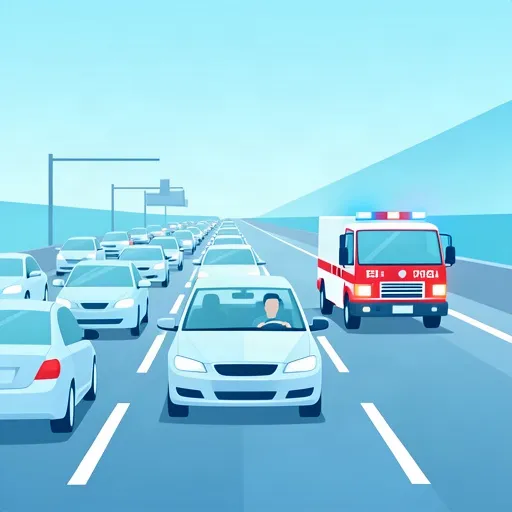
A common point of confusion for learners involves the relationship between the Pannenstreifen and the Rettungsgasse (emergency corridor). While both are designed to facilitate emergency access, they function differently. The Rettungsgasse is the passage created between lanes—specifically between the leftmost and the adjacent lane—when traffic slows down. The Pannenstreifen, conversely, remains the solid, paved strip on the far right of the motorway. You must maintain both; the formation of an emergency corridor does not grant permission to use the hard shoulder for driving.
The official Swiss theory test often features questions regarding motorway conduct to ensure candidates understand the hierarchy of traffic rules. You might encounter questions presenting a scenario of heavy congestion where a driver considers entering the hard shoulder to exit early. Identifying that this is strictly prohibited is key to passing. Traffic management centers in Switzerland monitor motorway sections using advanced camera systems; violations of these rules are documented and carry legal weight, making it essential to internalize these regulations rather than simply memorizing them for the exam.
It is important to remember that Swiss motorway infrastructure is strictly governed by the Signalisationsverordnung (SSV). While temporary, controlled usage of lanes exists in specific managed projects, the Pannenstreifen is inherently part of the safety infrastructure. If you see signs indicating a change in lane usage, you must follow them, but if no specific signage permits driving on the shoulder, you must treat it as a restricted zone. By respecting these boundaries, you contribute to a more efficient and safer motorway environment for everyone.
The Pannenstreifen on Swiss motorways serves exclusively as an emergency and breakdown lane and must never be used for bypassing congestion. Drivers must clearly distinguish it from the Rettungsgasse, which is the corridor formed between traffic lanes for emergency vehicles. When a breakdown occurs, specific procedures must be followed including activating hazard lights and wearing a high-visibility vest. Violations carry tangible consequences including fines ranging from CHF 100 to CHF 250 and potential license suspension through a formal Rapport, making these rules essential knowledge for both safe driving and theory exam success.
A short set of high-value points that capture the most important ideas from this article.
The Pannenstreifen is strictly reserved for breakdowns and emergencies and can never be used as a driving lane, even during heavy traffic congestion
The Rettungsgasse (emergency corridor) is formed between lanes and is completely separate from the hard shoulder—maintaining both is mandatory
Using the hard shoulder to bypass traffic jams is a serious violation that endangers emergency responders and stranded motorists
Specific breakdown procedures include activating hazard lights, wearing a high-visibility vest, and using emergency call pillars if needed
Swiss traffic management centers monitor motorway sections with cameras, and violations are documented with legal consequences
Never drive on the Pannenstreifen regardless of traffic conditions unless you are experiencing a genuine breakdown or emergency
The Rettungsgasse is created between the leftmost and adjacent lanes when traffic slows, while the Pannenstreifen remains on the far right
Emergency vehicles have absolute priority; any action that delays them may result in a formal Rapport and potential license suspension
Fixed fines (Ordnungsbusse) for hard shoulder violations range from CHF 100 to CHF 250
Follow any dynamic lane signage when displayed, but in the absence of such signs, the hard shoulder is always restricted
Assuming the hard shoulder can be used occasionally as a shortcut during very slow traffic
Confusing the Rettungsgasse emergency corridor with the Pannenstreifen and believing that forming one permits driving on the other
Not activating hazard lights immediately when pulling onto the hard shoulder, which is required by law
Exiting the vehicle without wearing a high-visibility vest, which is a safety requirement in Swiss traffic law
Believing that because traffic is completely stopped, the hard shoulder is effectively available for informal lane switching
Article content overview
A short set of high-value points that capture the most important ideas from this article.
The Pannenstreifen is strictly reserved for breakdowns and emergencies and can never be used as a driving lane, even during heavy traffic congestion
The Rettungsgasse (emergency corridor) is formed between lanes and is completely separate from the hard shoulder—maintaining both is mandatory
Using the hard shoulder to bypass traffic jams is a serious violation that endangers emergency responders and stranded motorists
Specific breakdown procedures include activating hazard lights, wearing a high-visibility vest, and using emergency call pillars if needed
Swiss traffic management centers monitor motorway sections with cameras, and violations are documented with legal consequences
Never drive on the Pannenstreifen regardless of traffic conditions unless you are experiencing a genuine breakdown or emergency
The Rettungsgasse is created between the leftmost and adjacent lanes when traffic slows, while the Pannenstreifen remains on the far right
Emergency vehicles have absolute priority; any action that delays them may result in a formal Rapport and potential license suspension
Fixed fines (Ordnungsbusse) for hard shoulder violations range from CHF 100 to CHF 250
Follow any dynamic lane signage when displayed, but in the absence of such signs, the hard shoulder is always restricted
Assuming the hard shoulder can be used occasionally as a shortcut during very slow traffic
Confusing the Rettungsgasse emergency corridor with the Pannenstreifen and believing that forming one permits driving on the other
Not activating hazard lights immediately when pulling onto the hard shoulder, which is required by law
Exiting the vehicle without wearing a high-visibility vest, which is a safety requirement in Swiss traffic law
Believing that because traffic is completely stopped, the hard shoulder is effectively available for informal lane switching
Explore related topics, search based questions, and concepts that learners often look up when studying Swiss Hard Shoulder Rules. These themes reflect real search intent and help you understand how this topic connects to wider driving theory knowledge in Switzerland.
Find clear and practical answers to common questions learners often have about Swiss Hard Shoulder Rules. This section helps explain difficult points, remove confusion, and reinforce the key driving theory concepts that matter for learners in Switzerland.
No. Unlike some other European countries, the hard shoulder in Switzerland is never a designated driving lane, regardless of how heavy the traffic or congestion is.
You must maintain a clear hard shoulder for emergency access and form an emergency corridor (Rettungsgasse) between the leftmost and the adjacent lane to allow vehicles with blue lights to pass through the center.
Unauthorized use of the hard shoulder is considered a traffic violation, punishable by an Ordnungsbusse fine ranging from CHF 100 to CHF 250. If you endanger other road users, the incident may be reported, leading to more severe legal consequences.
Swiss motorway sections are equipped with traffic monitoring systems and cameras that can document unauthorized use of the hard shoulder, allowing authorities to issue fines based on detected violations.
Continue your learning journey by searching our extensive library of Swiss driving theory articles. Explore additional topics, review specific road rules, or deepen your understanding of official traffic procedures to excel in your exam and drive safely in Switzerland.