
Understanding how to correctly navigate a roundabout is a fundamental requirement for every driver in Switzerland. This article explains the legal priority of circulating traffic, the mandatory signalling process for exits, and why specific signage dictates the flow of traffic in your favor. By learning these rules, you will avoid common exam traps and ensure safe, predictable behavior on Swiss roads.
Article content overview
Navigating a roundabout—known as a Kreisverkehr or Kreisel—is a fundamental skill for any driver in Switzerland. While they are designed to improve traffic flow and safety compared to standard intersections, they remain a frequent source of confusion for learners and a common area for questions in the Swiss driving theory exam. Understanding the legal requirements, particularly regarding priority and signalling, is essential for both passing your theory test and ensuring safety on the road.
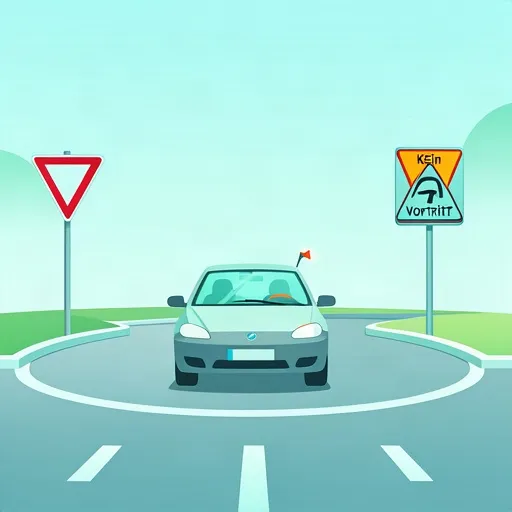
In Switzerland, the core rule for roundabouts is that circulating traffic has priority. This means that if you are approaching a roundabout, you must wait for vehicles already inside the circle to pass before you enter. This flow is almost always regulated by the "Kein Vortritt" (Give Way) sign, which is a mandatory requirement at every entrance to a roundabout in the Swiss road network.
It is a common misconception that roundabouts automatically grant priority to those inside. In reality, the legal priority is dictated by the signage. If a roundabout were to exist without a "Kein Vortritt" sign, the standard Rechtsvortritt (priority to the right) rule would apply. Under that scenario, a vehicle entering the roundabout from the right would have priority over the vehicle already inside. While this is extremely rare in practice, recognizing this legal nuance is a classic target for theory exam questions, as it tests your understanding of foundational Swiss priority rules.
Effective signalling is the key to predictable driving in a roundabout. In Switzerland, you are legally required to signal your intention to leave the roundabout by activating your right turn indicator after you have passed the exit immediately preceding your intended exit. By signalling your right turn in a timely manner, you provide other drivers, cyclists, and pedestrians with clear information about your next move.
Failing to signal when exiting a roundabout is a common traffic violation in Switzerland. Not only does it frustrate other drivers, but it is also a point deduction on your practical driving test and a frequent topic in theory examinations.
It is important to remember that you do not need to signal when entering the roundabout. Furthermore, you should not use your left indicator to signal that you are continuing to follow the circular path. The only exception to these rules involves multi-lane roundabouts, where you must use your turn signals to indicate a change of lanes within the roundabout itself.
Mini-roundabouts, often identified by a flat, white-painted circular island in the center of an intersection, follow the exact same traffic rules as standard, larger roundabouts. While their physical footprint is smaller and they are designed to be navigable by larger vehicles—which may need to drive over the central marking—they still function as a roundabout under the law. You must still yield to traffic entering from the left and signal your exit to the right.
To help you prepare for your exam, refer to this breakdown of essential behaviors when approaching and navigating roundabouts:
| Scenario | Action Required |
|---|---|
| Approaching the roundabout | Reduce speed and observe the "Kein Vortritt" sign. |
| Entering the roundabout | Yield to traffic coming from the left already in the circle. |
| Inside the roundabout | Maintain your lane; do not signal unless changing lanes. |
| Exiting the roundabout | Activate the right indicator after passing the previous exit. |
As you continue your studies, remember that the Swiss traffic system values predictability and clear communication between road users. Whether you are dealing with a standard roundabout or a small urban junction, applying these rules consistently will keep you safe and help you succeed in your theory exam.
Swiss roundabouts are governed by the 'Kein Vortritt' sign, which mandates yielding to circulating traffic rather than granting automatic priority to those already inside. The only required signal is a right indicator activated after passing the exit before your intended exit; no signalling occurs on entry or while following the circular path. A critical legal nuance is that without the 'Kein Vortritt' sign, standard Rechtsvortritt applies, meaning a vehicle entering from the right would have priority over circulating traffic—a common exam trap. Mini-roundabouts function identically to standard roundabouts under Swiss traffic law, despite their smaller physical footprint.
A short set of high-value points that capture the most important ideas from this article.
Circulating traffic always has priority at roundabouts in Switzerland, enforced by the mandatory 'Kein Vortritt' (Give Way) sign at each entrance.
Activate your right indicator only AFTER you have passed the exit immediately before your intended exit—not before entering or while staying in the circle.
No signalling is required when entering a roundabout or while continuing to follow the circular path, unless changing lanes on a multi-lane roundabout.
If a roundabout lacks a 'Kein Vortritt' sign, the standard Rechtsvortritt rule applies—vehicles from the right have priority, which can create unexpected priority conflicts.
Mini-roundabouts (Mini-Kreisel) are legally equivalent to standard roundabouts and follow the exact same priority and signalling rules despite their smaller size.
The German term 'Kreisverkehr' or 'Kreisel' refers to a roundabout in Swiss traffic law.
Signal right only after passing the exit before your intended one—this tells other users you are leaving.
Without a 'Kein Vortritt' sign, Rechtsvortritt takes over: entering traffic from the right gains priority over circulating vehicles.
Failing to signal on exit is a traffic violation in Switzerland and a point deduction on the practical driving test.
Multi-lane roundabouts require additional left/right signals for lane changes within the circle.
Assuming you always have priority inside a roundabout—priority depends entirely on the signage present.
Signalling left to indicate you are continuing around the circle, which is incorrect and misleading to other road users.
Activating the right indicator too early, before passing the exit immediately preceding your intended exit.
Believing mini-roundabouts operate under simplified or different rules—they are treated identically under Swiss law.
Neglecting to check mirrors and blind spots for cyclists or pedestrians before exiting, especially in urban areas.
Article content overview
A short set of high-value points that capture the most important ideas from this article.
Circulating traffic always has priority at roundabouts in Switzerland, enforced by the mandatory 'Kein Vortritt' (Give Way) sign at each entrance.
Activate your right indicator only AFTER you have passed the exit immediately before your intended exit—not before entering or while staying in the circle.
No signalling is required when entering a roundabout or while continuing to follow the circular path, unless changing lanes on a multi-lane roundabout.
If a roundabout lacks a 'Kein Vortritt' sign, the standard Rechtsvortritt rule applies—vehicles from the right have priority, which can create unexpected priority conflicts.
Mini-roundabouts (Mini-Kreisel) are legally equivalent to standard roundabouts and follow the exact same priority and signalling rules despite their smaller size.
The German term 'Kreisverkehr' or 'Kreisel' refers to a roundabout in Swiss traffic law.
Signal right only after passing the exit before your intended one—this tells other users you are leaving.
Without a 'Kein Vortritt' sign, Rechtsvortritt takes over: entering traffic from the right gains priority over circulating vehicles.
Failing to signal on exit is a traffic violation in Switzerland and a point deduction on the practical driving test.
Multi-lane roundabouts require additional left/right signals for lane changes within the circle.
Assuming you always have priority inside a roundabout—priority depends entirely on the signage present.
Signalling left to indicate you are continuing around the circle, which is incorrect and misleading to other road users.
Activating the right indicator too early, before passing the exit immediately preceding your intended exit.
Believing mini-roundabouts operate under simplified or different rules—they are treated identically under Swiss law.
Neglecting to check mirrors and blind spots for cyclists or pedestrians before exiting, especially in urban areas.
Explore related topics, search based questions, and concepts that learners often look up when studying Swiss Roundabout Rules. These themes reflect real search intent and help you understand how this topic connects to wider driving theory knowledge in Switzerland.
Find clear and practical answers to common questions learners often have about Swiss Roundabout Rules. This section helps explain difficult points, remove confusion, and reinforce the key driving theory concepts that matter for learners in Switzerland.
No. In Switzerland, vehicles already circulating within the roundabout have priority. Entering vehicles must yield, which is typically indicated by the 'Kein Vortritt' (give way) sign.
If the 'Kein Vortritt' sign is missing, the standard 'Rechtsvortritt' (priority to the right) rule applies. This means vehicles entering from the right would technically have priority, though this is rare.
You must signal to the right immediately before exiting the roundabout. Indicators are not required when entering or simply navigating within the circle unless you are changing lanes in a multi-lane roundabout.
No, mini-roundabouts are subject to the same priority rules as standard roundabouts. They are simply smaller, and their physical design may allow larger vehicles to drive over the central marking if necessary.
Continue your learning journey by searching our extensive library of Swiss driving theory articles. Explore additional topics, review specific road rules, or deepen your understanding of official traffic procedures to excel in your exam and drive safely in Switzerland.