
Understanding the specific Swiss regulations for vehicle lighting is crucial for both your theory exam and practical driving safety. This article clarifies the distinctions between daytime running lights and dipped headlights, explains the strict legal thresholds for fog light operation, and outlines the correct use of hazard warning lights according to the Traffic Rules Ordinance (VRV). You will learn how to maintain visibility and comply with legal standards to avoid fines and dangerous driving situations.
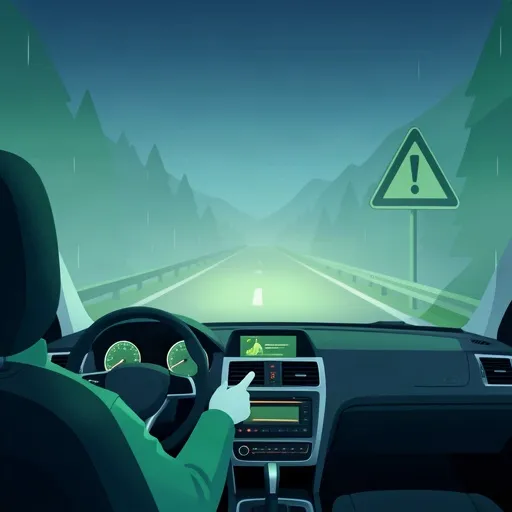
Article content overview
Proper vehicle lighting is not just a safety necessity on Swiss roads; it is a legal requirement governed by the Traffic Rules Ordinance (VRV). For your theory exam, you must distinguish between the various types of lights, understand when they are mandatory, and recognize the specific conditions under which they may—or must—be used. Failing to grasp these distinctions can lead to unsafe driving practices and is a common source of error in exam scenarios.
Since 2014, Switzerland has enforced stricter regulations regarding vehicle visibility. Drivers are required to travel with their lights on at all times outside of built-up areas. This rule applies regardless of the time of day or the season. For modern vehicles, this is typically handled by Daytime Running Lights (DRL/Tagfahrlicht), which are specifically designed to be visible during daylight hours.
If your vehicle is not equipped with automatic DRL, you must manually activate your dipped headlights (Abblendlicht) when driving outside of towns. While the law specifically mandates lights outside of built-up areas, using dipped headlights within towns during the day is permitted and serves as a highly recommended safety measure to ensure other road users, including cyclists and pedestrians, notice your vehicle more quickly.
Vehicles equipped with homologated DRL systems comply with the legal requirement. However, ensure your headlights are kept clean; a layer of dirt or snow can significantly reduce the effectiveness of these systems, potentially leading to a failure to meet visibility requirements.
One of the most frequent topics in the Swiss theory exam involves the correct use of front and rear fog lights. Because these lights are significantly brighter than standard tail lights, they are subject to strict conditions to prevent the dazzling of other drivers.
Front fog lights (Nebelscheinwerfer) may be switched on when visibility is impaired by fog, heavy snowfall, or heavy rain. Their purpose is to illuminate the road surface immediately in front of the vehicle to help you navigate under poor weather conditions.
In contrast, the rear fog light (Nebelschlussleuchte) is governed by a strict 50-meter visibility rule. You may only activate your rear fog light if your visibility is severely restricted to less than 50 meters. Using the rear fog light during light rain or when visibility is not severely impaired is a violation of the law, as it creates an intense glare that obscures the brake lights of your vehicle and blinds the driver behind you.
| Light Type | Usage Condition | Legal Restriction |
|---|---|---|
| Dipped Headlights | Mandatory outside towns; allowed in towns | None |
| Front Fog Lights | Fog, heavy rain, or heavy snow | Only if visibility is significantly impaired |
| Rear Fog Light | Visibility below 50 meters | Strictly prohibited in light rain or normal conditions |
Hazard warning lights (Warnblinker) are intended to warn other road users of an immediate danger or an unexpected situation. According to the Swiss VRV, they should be used when your vehicle has broken down, if you are forced to make an emergency stop, or to warn traffic behind you of a sudden queue or hazard ahead.
A common mistake in both practice tests and real-world driving is using hazard lights as an excuse for improper parking. Using hazard lights while stopping on a sidewalk, in a loading zone, or on a main road to "quickly pick up someone" is strictly prohibited. If you are involved in a breakdown on a motorway, you must ensure that your hazard lights are activated to alert high-speed traffic, and you should take appropriate steps to secure your vehicle.
The requirement that rear fog lights can only be activated when atmospheric conditions (fog, snow, or heavy rain) reduce visibility to a distance of less than 50 meters.
The theory exam often presents situations where you must identify the correct lighting usage based on weather conditions or road types. Pay close attention to questions that involve "heavy rain" versus "light rain," as the legality of using rear fog lights changes entirely between these two states. Always prioritize the safety of other road users; if a light has the potential to dazzle someone, assume it should be turned off unless a specific legal exception applies.
Swiss lighting law requires vehicles to have lights on outside built-up areas at all times, satisfied by DRL or manual dipped headlights. Front fog lights serve to illuminate the road during fog, heavy rain, or heavy snow, while rear fog lights are strictly restricted to visibility under 50 meters to prevent dazzling following drivers. Hazard warning lights serve a specific emergency purpose—warning of breakdowns or sudden hazards—and must never be used as a substitute for proper parking. Understanding these precise conditions and the 50-meter rule is essential for passing the Swiss theory exam and driving legally on Swiss roads.
A short set of high-value points that capture the most important ideas from this article.
Switzerland mandates lights outside built-up areas at all times, regardless of season or time of day
Modern vehicles satisfy this requirement through Daytime Running Lights (DRL), but dipped headlights are the manual fallback
Front fog lights may only be activated during fog, heavy rain, or heavy snow when visibility is significantly impaired
Rear fog lights are strictly limited to visibility below 50 meters to prevent dangerous glare to following drivers
Hazard warning lights are exclusively for emergency breakdowns, emergency stops, or sudden road hazards—not for convenient parking
The 50-meter visibility threshold is the strict legal limit for activating rear fog lights
Light rain or normal conditions do NOT justify using rear fog lights; doing so creates illegal glare
Dipped headlights serve as both mandatory lighting outside towns and permitted daytime safety measure in towns
DRL-equipped vehicles comply with Swiss law, but headlights must remain clean for effective visibility
VRV (Verkehrsregelnverordnung) is the official ordinance governing these lighting requirements
Assuming rear fog lights can be used in light rain or mist—only visibility below 50m permits this
Using hazard lights simply to stop briefly for pickups or deliveries, which is prohibited
Believing daytime running lights alone are sufficient within towns (they are only required outside built-up areas)
Failing to manually switch to dipped headlights when driving an older vehicle without DRL outside towns
Assuming any weather condition warrants fog lights—only fog, heavy rain, or heavy snow qualify
Article content overview
A short set of high-value points that capture the most important ideas from this article.
Switzerland mandates lights outside built-up areas at all times, regardless of season or time of day
Modern vehicles satisfy this requirement through Daytime Running Lights (DRL), but dipped headlights are the manual fallback
Front fog lights may only be activated during fog, heavy rain, or heavy snow when visibility is significantly impaired
Rear fog lights are strictly limited to visibility below 50 meters to prevent dangerous glare to following drivers
Hazard warning lights are exclusively for emergency breakdowns, emergency stops, or sudden road hazards—not for convenient parking
The 50-meter visibility threshold is the strict legal limit for activating rear fog lights
Light rain or normal conditions do NOT justify using rear fog lights; doing so creates illegal glare
Dipped headlights serve as both mandatory lighting outside towns and permitted daytime safety measure in towns
DRL-equipped vehicles comply with Swiss law, but headlights must remain clean for effective visibility
VRV (Verkehrsregelnverordnung) is the official ordinance governing these lighting requirements
Assuming rear fog lights can be used in light rain or mist—only visibility below 50m permits this
Using hazard lights simply to stop briefly for pickups or deliveries, which is prohibited
Believing daytime running lights alone are sufficient within towns (they are only required outside built-up areas)
Failing to manually switch to dipped headlights when driving an older vehicle without DRL outside towns
Assuming any weather condition warrants fog lights—only fog, heavy rain, or heavy snow qualify
Explore related topics, search based questions, and concepts that learners often look up when studying Swiss Vehicle Lighting Rules. These themes reflect real search intent and help you understand how this topic connects to wider driving theory knowledge in Switzerland.
Find clear and practical answers to common questions learners often have about Swiss Vehicle Lighting Rules. This section helps explain difficult points, remove confusion, and reinforce the key driving theory concepts that matter for learners in Switzerland.
Rear fog lights may only be used when visibility is significantly reduced to less than 50 meters due to heavy fog, snow, or intense rain.
DRL systems are sufficient during the day; however, drivers must ensure their vehicle has the required lighting or manually activate dipped headlights when leaving built-up areas if their car does not automatically switch.
No, hazard lights are strictly reserved for emergency situations, such as breakdowns, forced stops, or warning other drivers of a sudden hazard or traffic queue.
Within built-up areas during the day, DRL is sufficient, but using dipped headlights is permitted and can increase your visibility to other road users.
Continue your learning journey by searching our extensive library of Swiss driving theory articles. Explore additional topics, review specific road rules, or deepen your understanding of official traffic procedures to excel in your exam and drive safely in Switzerland.