
This lesson details the critical safety rules for interacting with vulnerable road users such as cyclists and pedestrians on Swiss roads. Building on the core behaviour rules of Unit 2, you will learn how to navigate intersections, bus stops, and cycle lanes safely. These skills are essential for both passing your Category B theory exam and ensuring safety in real-world driving situations.
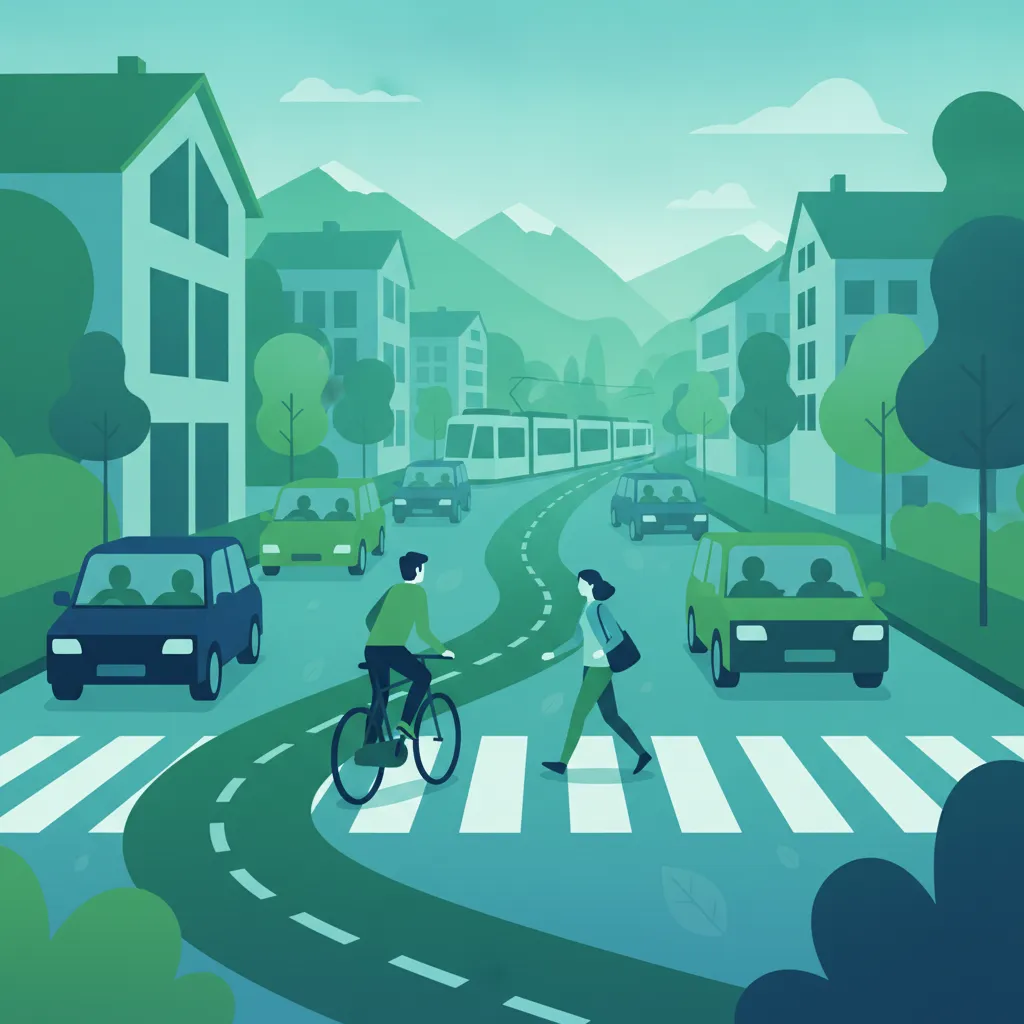
Lesson content overview
Navigating Swiss roads safely requires an in-depth understanding of how to interact with all road users. Among the most critical considerations are cyclists and pedestrians, who are classified as vulnerable road users. This lesson, part of the Comprehensive Swiss Driving Theory Course for Category B License, will equip you with the essential knowledge and legal obligations necessary to prevent accidents and ensure the safety of everyone on the road.
Vulnerable road users, by their nature, have less physical protection in the event of a collision compared to occupants of motor vehicles. This inherent vulnerability demands heightened vigilance, specific yielding protocols, and careful maneuvering from drivers. Mastering these interactions is not only a legal requirement but also a fundamental aspect of defensive driving.
A vulnerable road user is defined as any individual on the road who has a significantly higher risk of injury or fatality in a collision due to limited physical protection. This category primarily includes pedestrians and cyclists, but can also extend to users of wheelchairs, scooters, or other non-motorized mobility devices. Understanding their classification is the first step towards adopting a safer driving mindset.
Cyclists, including those on traditional bicycles and e-bikes, often share road space with motor vehicles. They are exposed to traffic with minimal protection, making them particularly susceptible to severe injuries. Drivers must recognize that cyclists can be less stable, may need to swerve to avoid potholes or debris, and can be harder to spot, especially in adverse conditions or at night.
Pedestrians are the most exposed road users. Whether walking on sidewalks, crossing at designated points, or even briefly on the carriageway, they have no protective shell. This group also includes individuals using mobility devices, such as wheelchairs or electric scooters, who share similar vulnerabilities. Their movements can sometimes be unpredictable, requiring constant anticipation from drivers.
Swiss traffic law (based on the Road Traffic Act and the Road Traffic Ordinance, RVV 1990) establishes clear rules to protect vulnerable road users. These regulations prioritize safety by defining specific rights-of-way and mandating safe driver behavior. Adherence to these laws is paramount for accident prevention and legal compliance.
The concept of a vulnerability hierarchy underlines that those who are less protected and pose less danger to others generally have higher priority. This means drivers of motor vehicles bear a greater responsibility to ensure the safety of pedestrians and cyclists. This principle dictates many of the specific rules regarding yielding and distance.
One of the most critical rules governs pedestrian crossings, particularly zebra crossings. At these clearly marked crossings, pedestrians have the absolute right-of-way when they are already on the crossing or clearly indicate their intention to cross.
Drivers must slow down when approaching a zebra crossing and be prepared to stop. It is mandatory to stop and allow pedestrians to cross safely. Failure to do so is a serious offense with significant legal consequences. Furthermore, drivers must never overtake another vehicle that has stopped at a zebra crossing to allow pedestrians to cross, as this could obscure pedestrians and lead to a collision.
Dedicated infrastructure for cyclists is increasingly common in Switzerland to enhance their safety and promote cycling. As a driver, understanding the proper use of these bicycle lanes is crucial.
These lanes are designed to separate cyclists from motor traffic, creating a safer environment. Motor vehicles are generally prohibited from driving, stopping, or parking in bicycle lanes.
Drivers may only use or cross a bicycle lane under very specific circumstances:
Never drive continuously within a bicycle lane. This obstructs cyclists, forcing them into potentially dangerous situations in mixed traffic, and is a violation of traffic regulations.
When merging into traffic from a road or driveway that intersects with a bicycle lane, you must yield to cyclists already in the lane. Always check your mirrors and blind spots carefully, as cyclists can be difficult to see.
One of the most frequent interactions between drivers and vulnerable road users involves overtaking. Maintaining a minimum safe overtaking distance is not just a recommendation; it is a legal requirement designed to provide sufficient space for safety. This distance accounts for vehicle blind spots, the potential for cyclists to swerve, and the need for adequate reaction time.
When overtaking a cyclist on a straight road, drivers in Switzerland must maintain a minimum lateral clearance of 1.5 metres. This distance is crucial. On curved roads, or in situations with limited visibility, this distance should be increased further to provide an even greater safety margin.
Before overtaking a cyclist, assess the road conditions, visibility, and upcoming hazards. If you cannot guarantee the minimum safe distance, especially on narrow roads, blind corners, or before intersections, you must wait for a safer opportunity.
When overtaking pedestrians, whether they are walking on a sidewalk, a shared path, or, in rare cases, on the carriageway, you must maintain a minimum lateral distance of 1 metre. In situations where visibility is reduced, such as at night or in adverse weather, or if the pedestrian is particularly vulnerable (e.g., a child or elderly person), increase this distance to 1.5 metres.
This rule helps prevent accidental contact with a pedestrian by your vehicle's body or mirrors, and it provides them with enough space to feel safe and react to their environment without feeling pressured.
As previously highlighted, yielding at zebra crossings is a fundamental responsibility for drivers. This rule is designed to protect pedestrians, who are often less visible and slower moving than vehicles.
When approaching a zebra crossing, you must slow down and be prepared to stop. If a pedestrian is already on the crossing, or if they are standing at the edge and clearly indicating an intention to cross (e.g., by looking at you or stepping forward), you must stop your vehicle before the crossing and allow them to proceed. Only when the pedestrian has fully cleared your lane of travel and the crossing is otherwise clear may you proceed.
It is strictly prohibited to overtake another vehicle that has stopped at a zebra crossing. The stopped vehicle may be obscuring a pedestrian who is in the process of crossing or about to cross. Overtaking in such a situation creates an extremely dangerous blind spot and significantly increases the risk of a severe collision. Always wait until the path is clear.
In many urban and residential areas, you will encounter shared zones or mixed traffic areas. These are designated areas where motor vehicles, cyclists, and pedestrians share the same space, often without traditional sidewalks or distinct lanes. Such zones are typically indicated by specific signage, which often includes reduced speed limits.
In shared zones, drivers must significantly reduce their speed, often to 20 or 30 km/h, as indicated by road signs. The primary purpose of these zones is to improve safety and livability by making motor vehicle presence less dominant. This demands a higher level of anticipation and readiness to yield to both pedestrians and cyclists, who may cross the road at any point.
Always anticipate unexpected movements in these areas. Children playing, pedestrians walking in the road, or cyclists weaving through parked cars are common sights. Your driving style must be adaptable and exceptionally cautious.
The core of safe interaction with vulnerable road users lies in visibility and anticipation. As a driver, you have the responsibility to see them, predict their actions, and react safely.
Anticipation means predicting potential hazards before they fully develop.
Defensive driving means always expecting the unexpected, especially around vulnerable road users. Assume they might not see you, or might make a mistake.
Understanding common mistakes can help you actively avoid them and enhance safety for all.
Issue: Too close overtaking. Correct behavior: Always maintain the minimum 1.5 m (cyclists) or 1 m (pedestrians) lateral distance, increasing it on curves or in poor visibility. If space is insufficient, wait.
Issue: Blocking bicycle lanes. Correct behavior: Only use bicycle lanes briefly and safely when turning or accessing property, and only if no cyclists are present.
Issue: Failure to yield at zebra crossings. Correct behavior: Stop completely when pedestrians are on or clearly intending to use a zebra crossing. Wait until they are fully clear.
Issue: Ignoring shared zone speed limits. Correct behavior: Strictly adhere to reduced speed limits in shared zones (e.g., 20 or 30 km/h), as indicated by signage. Drive with extreme caution.
Issue: Abrupt lane changes near cyclists. Correct behavior: Signal well in advance, check blind spots thoroughly, and ensure a generous safe distance before changing lanes when cyclists are nearby.
Issue: Not checking for pedestrians/cyclists at unmarked crossings or driveways. Correct behavior: Slow down at all intersections and driveways, and actively look for vulnerable users who might be crossing, even without a marked crossing. Be prepared to yield.
Driving safely around vulnerable users is not a static set of rules; it requires constant adaptation to changing conditions.
Interacting safely with cyclists and pedestrians is a cornerstone of responsible driving in Switzerland. By understanding their inherent vulnerability and adhering to the specific rules regarding priority, safe overtaking distances, and the correct use of infrastructure like bicycle lanes and zebra crossings, you contribute significantly to road safety. Always prioritize visibility, anticipate potential actions, and adapt your driving behavior to varying conditions. Your heightened awareness and adherence to these principles not only prevent accidents but also foster a more respectful and safe environment for all who share Swiss roads.
This lesson covers the critical safety rules for interacting with cyclists and pedestrians in Switzerland, emphasizing their classification as vulnerable road users who require heightened driver vigilance. Key legal requirements include maintaining at least 1.5 metres when overtaking cyclists and 1 metre when overtaking pedestrians, stopping fully for pedestrians at zebra crossings, and never overtaking stopped vehicles at crossings. Drivers must understand that bicycle lanes are exclusive to cyclists, with only brief exceptions for turning or accessing property. Shared zones require significant speed reductions and constant anticipation of unpredictable movements from all non-motorized road users, reflecting Switzerland's vulnerability hierarchy that places greater responsibility on drivers to protect those with less physical protection.
A short set of high-value points that capture the most important learning from this lesson.
Cyclists and pedestrians are classified as vulnerable road users due to their limited physical protection, requiring drivers to exercise heightened vigilance.
When overtaking cyclists on Swiss roads, you must maintain a minimum lateral clearance of 1.5 metres, increasing this distance on curves or in poor visibility.
At zebra crossings, pedestrians have absolute priority when they are on or clearly indicating intention to cross; drivers must stop completely and never overtake a vehicle that has stopped for pedestrians.
Bicycle lanes are for cyclists only; motor vehicles may only briefly enter them when turning or accessing property, and only after yielding to any cyclists present.
In shared zones (Begegnungszone), pedestrians have priority and speeds are restricted to 20 km/h, demanding constant anticipation of unpredictable movements.
Explore all units and lessons included in this driving theory course.
Cyclist overtaking distance: 1.5 metres minimum; pedestrian overtaking distance: 1 metre minimum.
Never overtake a vehicle that has stopped at a zebra crossing to allow pedestrians to cross.
In mixed traffic zones, reduce speed to 20-30 km/h as indicated by Begegnungszone or Zone 30 signage.
Check blind spots thoroughly before turning, changing lanes, or opening car doors to detect hidden cyclists.
Always anticipate unexpected movements near parked cars, intersections, and areas where children may be present.
Assuming a bicycle lane can be used as a driving lane; vehicles may only briefly cross or enter when turning with no cyclists present.
Failing to stop fully at zebra crossings, instead merely slowing down when pedestrians are waiting to cross.
Not increasing overtaking distance for cyclists on curves or in adverse weather conditions where cyclists may swerve unpredictably.
Forgetting to check mirrors and blind spots for cyclists when exiting a driveway or parking space that intersects a bicycle lane.
Driving at normal speeds in shared zones instead of adapting to the reduced 20-30 km/h limits required in these areas.
Lesson content overview
A short set of high-value points that capture the most important learning from this lesson.
Cyclists and pedestrians are classified as vulnerable road users due to their limited physical protection, requiring drivers to exercise heightened vigilance.
When overtaking cyclists on Swiss roads, you must maintain a minimum lateral clearance of 1.5 metres, increasing this distance on curves or in poor visibility.
At zebra crossings, pedestrians have absolute priority when they are on or clearly indicating intention to cross; drivers must stop completely and never overtake a vehicle that has stopped for pedestrians.
Bicycle lanes are for cyclists only; motor vehicles may only briefly enter them when turning or accessing property, and only after yielding to any cyclists present.
In shared zones (Begegnungszone), pedestrians have priority and speeds are restricted to 20 km/h, demanding constant anticipation of unpredictable movements.
Explore all units and lessons included in this driving theory course.
Cyclist overtaking distance: 1.5 metres minimum; pedestrian overtaking distance: 1 metre minimum.
Never overtake a vehicle that has stopped at a zebra crossing to allow pedestrians to cross.
In mixed traffic zones, reduce speed to 20-30 km/h as indicated by Begegnungszone or Zone 30 signage.
Check blind spots thoroughly before turning, changing lanes, or opening car doors to detect hidden cyclists.
Always anticipate unexpected movements near parked cars, intersections, and areas where children may be present.
Assuming a bicycle lane can be used as a driving lane; vehicles may only briefly cross or enter when turning with no cyclists present.
Failing to stop fully at zebra crossings, instead merely slowing down when pedestrians are waiting to cross.
Not increasing overtaking distance for cyclists on curves or in adverse weather conditions where cyclists may swerve unpredictably.
Forgetting to check mirrors and blind spots for cyclists when exiting a driveway or parking space that intersects a bicycle lane.
Driving at normal speeds in shared zones instead of adapting to the reduced 20-30 km/h limits required in these areas.
Explore search topics learners often look for when studying Vulnerable Road Users: Cyclists and Pedestrians. These topics reflect common questions about road rules, driving situations, safety guidance, and lesson level theory preparation for learners in Switzerland.
Browse additional driving theory lessons that cover connected traffic rules, road signs, and common driving situations related to this topic. Improve your understanding of how different rules interact across everyday traffic scenarios.
Learn the specific regulations for shared zones and mixed traffic areas in Switzerland. This lesson explains how to navigate safely around cyclists and pedestrians in these complex environments, crucial for your Category B theory.
This lesson examines special traffic situations such as railway level crossings and shared zones where different road users coexist. It explains the specific safety procedures required at railway crossings and how to behave in shared zones with mixed traffic. The content also addresses the need to yield to oncoming trains and follow special signage in these unique zones.

This lesson explores pedestrian right-of-way at various crossings, including zebra crossings and pedestrian islands. It emphasizes the need for drivers to reduce speed, anticipate pedestrian movement, and stop safely when required. The content also covers special regulations that apply in school zones, such as reduced speed limits and heightened vigilance.

This lesson focuses on general driving safety in areas with a high concentration of children. It stresses the importance of significantly reducing speed, being prepared for unexpected events, and scanning for children between parked cars. The driver must exhibit maximum vigilance in these high-risk environments at all times.
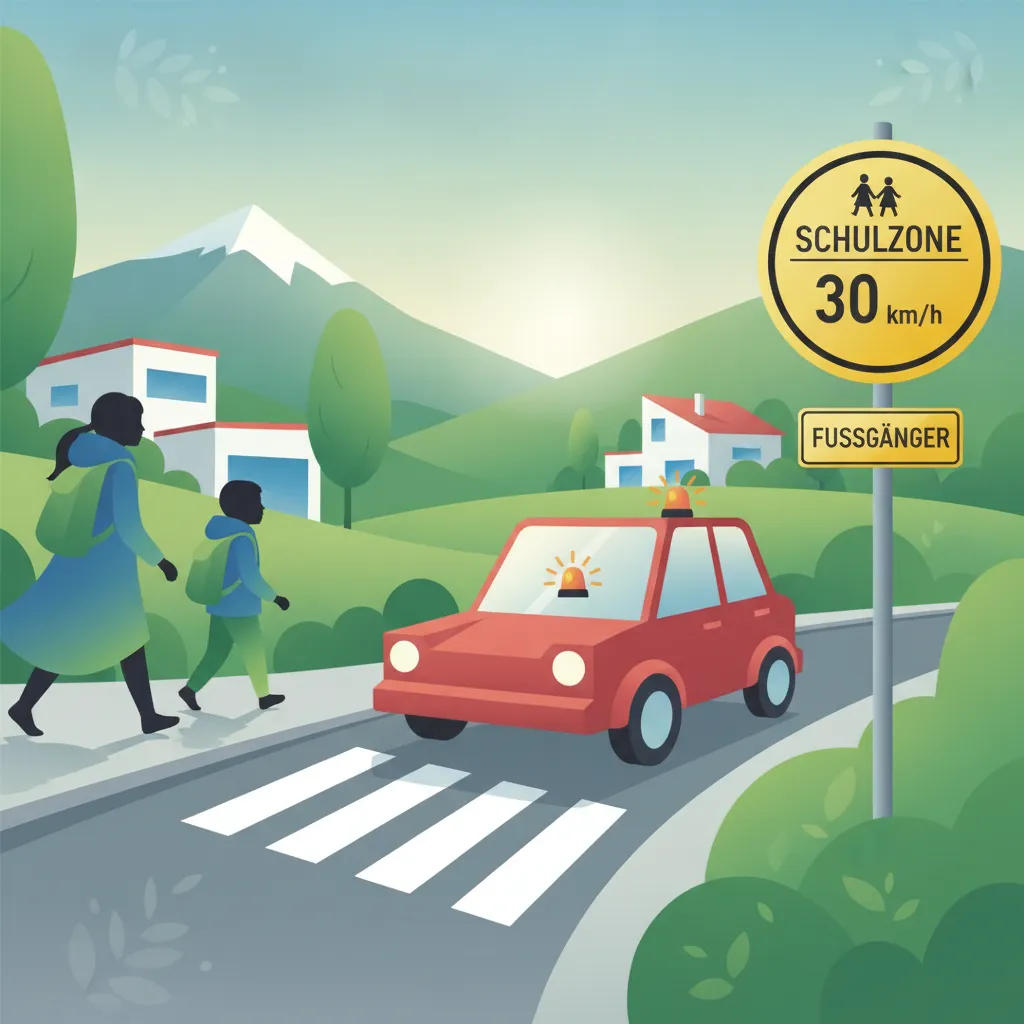
This lesson focuses on school zones, where special speed limits and cautionary measures are required. You will learn to recognize school zone signs, understand reduced speed limits, and be aware of designated child crossing zones. The content also emphasizes the need for heightened vigilance when school buses stop for students to ensure child safety.
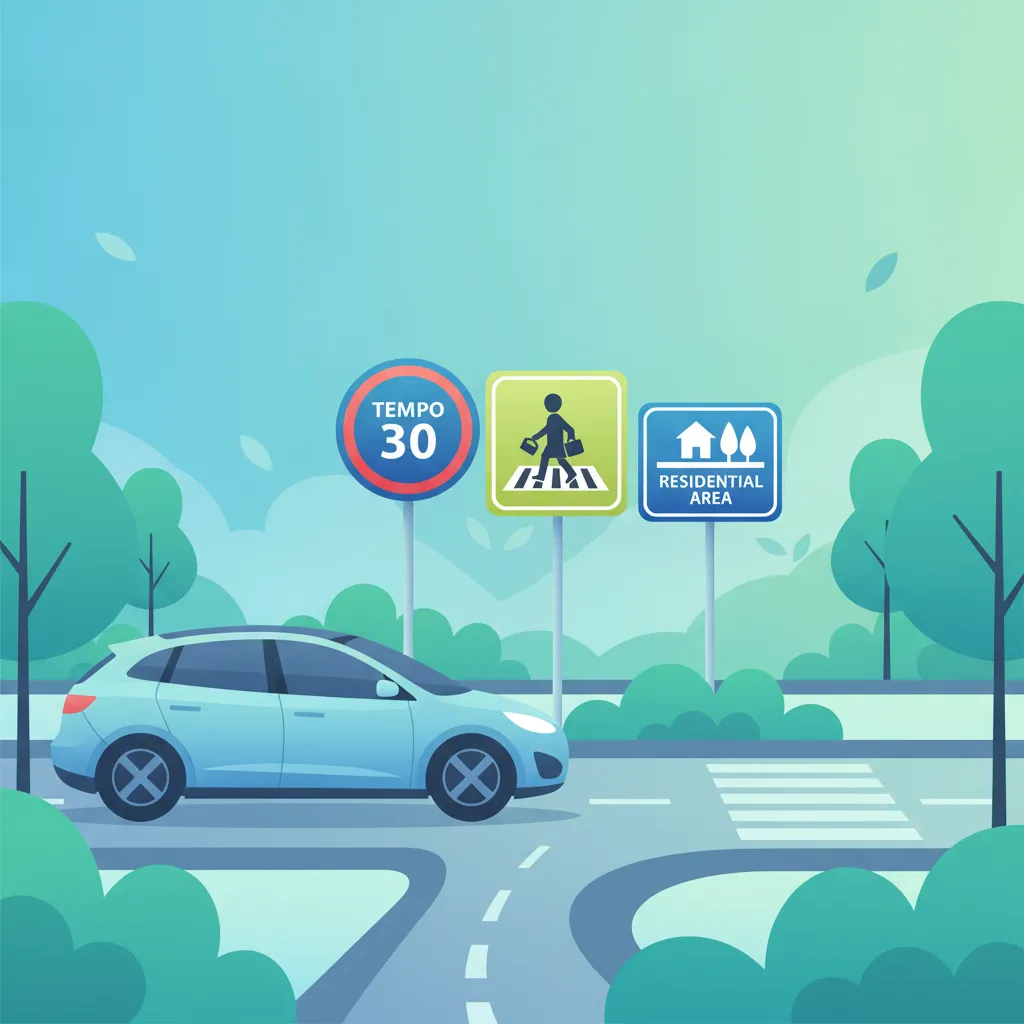
This lesson covers areas with special traffic regulations designed to protect vulnerable road users. Learners will understand the rules and reduced speed limits applicable in Tempo-30 zones, residential areas, and around schools. The content emphasizes the need for heightened awareness and a defensive riding style in these designated zones.

This lesson focuses on the interaction between motor vehicles and cyclists, including e-bikes. You will learn the importance of respecting cyclist priority and maintaining a safe overtaking distance. The content also addresses specific Swiss regulations concerning e-bike speed limits, cyclist lane markings, and appropriate behavior when passing cyclists.
Pedestrians, cyclists, motorcyclists, and e-scooter riders are extremely vulnerable in any interaction with a heavy vehicle. This lesson instills a defensive mindset, teaching drivers to be hyper-aware of VRUs, especially near junctions, crossings, and cycle lanes. It focuses on anticipation and giving VRUs extra space, as they can be unpredictable and are often hidden in blind spots.
Sharing road space with trams presents unique challenges, including different priority rules and physical hazards like tracks. This lesson covers the Swiss regulations regarding tram priority at junctions and stops. It also provides practical advice on crossing tram tracks safely and maintaining awareness of tram movements.

This lesson explores the complexities of riding in busy urban areas with a mix of traffic types. It covers strategies for safely navigating alongside buses, trams, cyclists, and pedestrians. Key topics include respecting designated lanes, anticipating the movements of vulnerable road users, and maintaining heightened situational awareness.
This lesson provides guidance on safely navigating roundabouts and tram lanes, common features in Swiss cities. It covers the rules for yielding, lane positioning within the roundabout, and signaling intentions upon exiting. Special attention is given to the hazards of crossing slippery tram tracks and sharing the road with public transport.
Master the critical rules for overtaking cyclists and yielding to pedestrians at crossings in Switzerland. This lesson covers essential distances and legal obligations to ensure the safety of vulnerable road users and pass your theory exam.
This lesson explores pedestrian right-of-way at various crossings, including zebra crossings and pedestrian islands. It emphasizes the need for drivers to reduce speed, anticipate pedestrian movement, and stop safely when required. The content also covers special regulations that apply in school zones, such as reduced speed limits and heightened vigilance.

This lesson examines the rules governing overtaking, including permitted zones, prohibited areas, and appropriate distances. It outlines the proper execution of overtaking maneuvers, including signaling and checking mirrors and blind spots. The content also discusses specific Swiss regulations, such as overtaking on the right in congested traffic, and the need for caution.
This lesson focuses on the interaction between motor vehicles and cyclists, including e-bikes. You will learn the importance of respecting cyclist priority and maintaining a safe overtaking distance. The content also addresses specific Swiss regulations concerning e-bike speed limits, cyclist lane markings, and appropriate behavior when passing cyclists.
Pedestrians, cyclists, motorcyclists, and e-scooter riders are extremely vulnerable in any interaction with a heavy vehicle. This lesson instills a defensive mindset, teaching drivers to be hyper-aware of VRUs, especially near junctions, crossings, and cycle lanes. It focuses on anticipation and giving VRUs extra space, as they can be unpredictable and are often hidden in blind spots.

This lesson outlines the principles of safe overtaking, emphasizing the importance of accurate judgment of speed and distance. It covers the necessary steps: checking mirrors, signaling, checking blind spots, executing the maneuver smoothly, and returning to the lane safely. The content is tailored to different road environments, from urban streets to rural roads.
This lesson provides guidance on safely navigating roundabouts and tram lanes, common features in Swiss cities. It covers the rules for yielding, lane positioning within the roundabout, and signaling intentions upon exiting. Special attention is given to the hazards of crossing slippery tram tracks and sharing the road with public transport.
This lesson provides guidance on safely negotiating intersections and roundabouts on a motorcycle. It details the correct procedures for approach, lane selection, and yielding according to Swiss traffic regulations. Emphasis is placed on heightened awareness of other vehicles, cyclists, and pedestrians in these complex traffic environments.
This lesson focuses on general driving safety in areas with a high concentration of children. It stresses the importance of significantly reducing speed, being prepared for unexpected events, and scanning for children between parked cars. The driver must exhibit maximum vigilance in these high-risk environments at all times.
Motorway driving requires constant concentration due to high speeds. This lesson emphasizes the importance of staying in the right-hand lane unless overtaking and the specific restrictions on lorry overtaking in Switzerland. It reinforces the need for a following distance of at least four seconds to compensate for the vehicle's long stopping distance and provides guidance on safely merging and exiting.
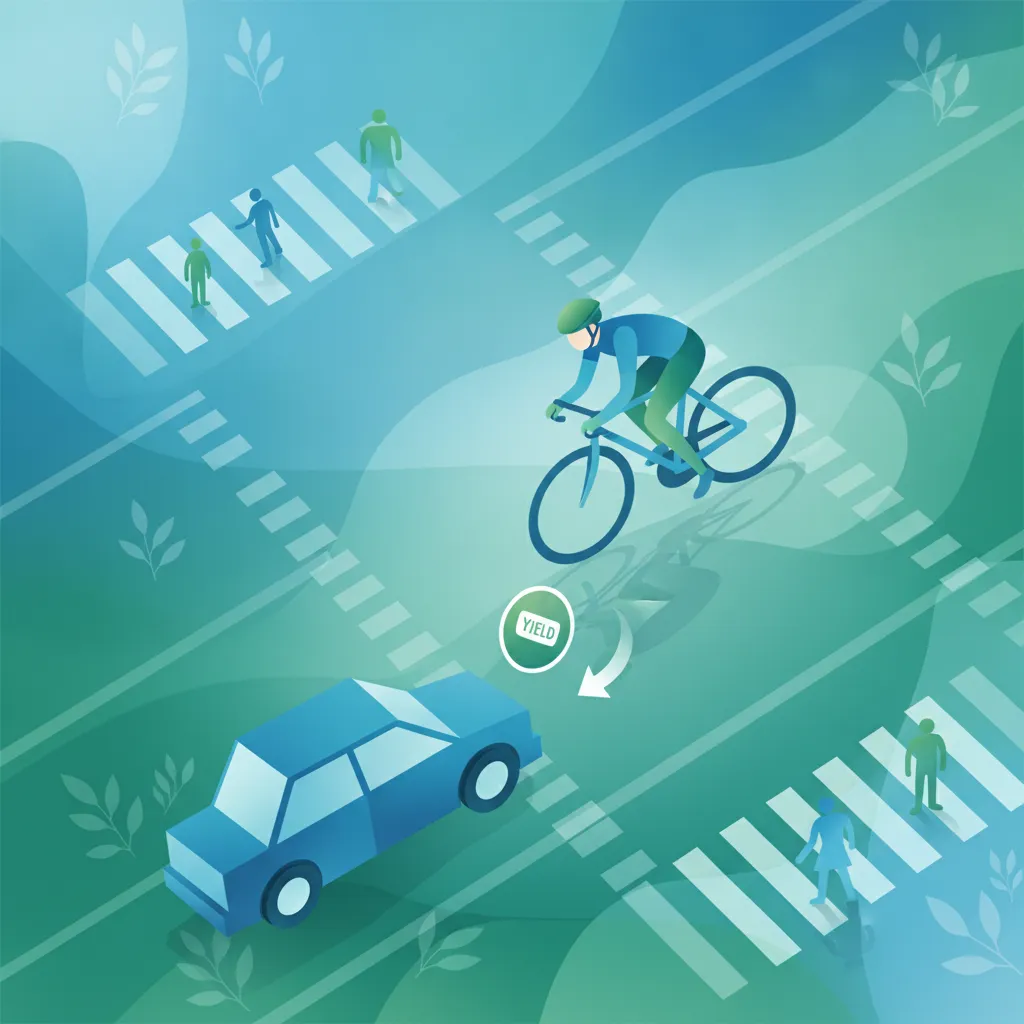
This lesson provides a step-by-step guide to navigating intersections. It reinforces the priority rules, such as 'Rechtsvortritt', and the meaning of yield and stop signs. The content emphasizes the importance of a thorough visual scan on approach and correct positioning to ensure visibility and a safe passage.
Find clear answers to common questions learners have about Vulnerable Road Users: Cyclists and Pedestrians. Learn how the lesson is structured, which driving theory objectives it supports, and how it fits into the overall learning path of units and curriculum progression in Switzerland. These explanations help you understand key concepts, lesson flow, and exam focused study goals.
Yes, in Switzerland, you are legally required to stop and give way if a pedestrian shows a clear intent to cross at a marked zebra crossing. You must slow down early and ensure it is safe before the pedestrian steps onto the road.
While no specific metre distance is fixed in law for every situation, you must maintain a lateral distance that ensures the safety of the cyclist. Generally, providing at least 1.5 metres is considered the standard for safety, especially when travelling at higher speeds.
No, you must never drive in a designated cycle lane unless you are turning or entering a property, and even then, only if you do not impede any cyclists. Cycle lanes are strictly reserved for bicycle traffic.
Cyclists in a roundabout follow the same general priority rules as motor vehicles. However, because they are vulnerable, you must pay extra attention to their positioning and speed, especially when they are exiting or moving across your path.
Pinpoint specific Swiss traffic rules, road signs, or driving situations you need to master. Use the practice search to start a focused revision session now and build confidence for your official driving theory exam.