
This lesson guides you through the essential rules for pedestrian safety and priority in Switzerland. You will learn how to identify, approach, and react to pedestrians at various crossings, ensuring you are fully prepared for the behavioural expectations of the Swiss theory exam.
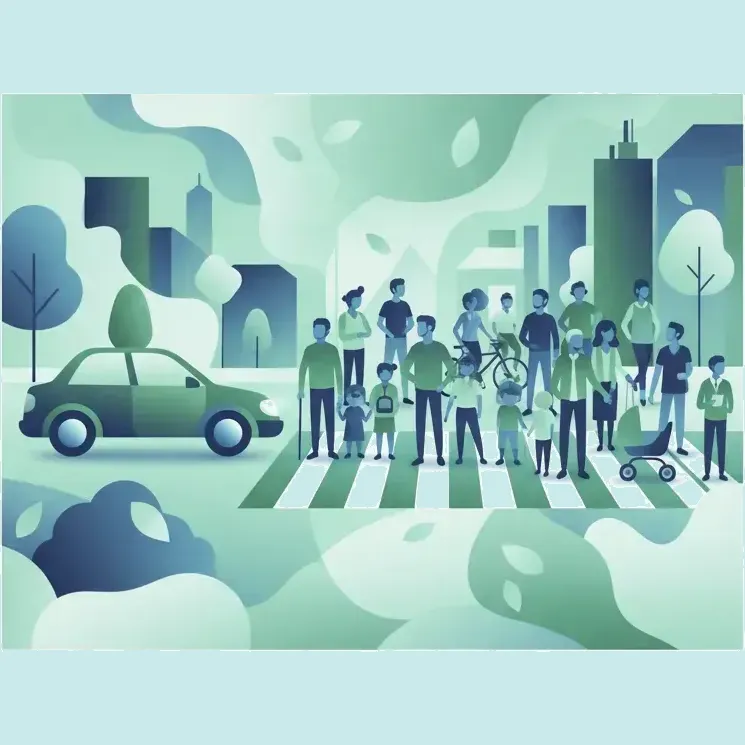
Lesson content overview
Pedestrians are among the most vulnerable road users, making driver awareness and adherence to right-of-way rules paramount for safety on Swiss roads. This lesson, part of your Comprehensive Swiss Driving Theory Course for Category B License, will provide a thorough examination of pedestrian rights, driver obligations at various crossings, the concept of right-of-way, and specialized regulations in areas like school zones. Mastering these rules is not only essential for accident avoidance and legal compliance but also for fostering a safe and respectful traffic environment for everyone.
The interaction between motor vehicles and pedestrians is governed by a fundamental principle: safety priority is given to vulnerable users. Pedestrians, lacking the protection of a vehicle, are at a significantly higher risk of severe injury in the event of a collision. Legal frameworks, such as those in Switzerland, codify this safety priority to promote predictable and consistent behavior, ensuring that those most at risk are adequately protected. Understanding this hierarchy and the specific circumstances under which drivers must yield is a core aspect of defensive driving and responsible road use.
Pedestrian right-of-way refers to the legal priority granted to pedestrians to proceed before other road users. This priority is especially critical at marked crossings and in specific situations at unmarked intersections. Drivers must understand that this is not a suggestion but a legal obligation designed to ensure pedestrian safety.
At designated crossings, pedestrians generally have absolute priority. This means drivers must be prepared to stop and yield, even if under different circumstances they might have the right-of-way. The overarching principle is to protect the most vulnerable.
Zebra crossings, easily identifiable by their alternating white and black stripes perpendicular to the road direction, are designated pedestrian crossing points where pedestrians have immediate right-of-way. These markings are a clear signal to drivers to exercise extreme caution and be ready to stop.
When a pedestrian is on a zebra crossing, or clearly showing intent to cross by stepping onto it or waiting at the curb with the obvious intention to cross, drivers must come to a complete stop. This stop must occur before the stop line, if present, or before entering the zebra-striped area itself. It is a common misconception that drivers only need to yield if pedestrians are entirely on the crossing, or that a green traffic signal somehow overrides pedestrian right-of-way at these non-signalized crossings. This is incorrect. The presence of a pedestrian on or about to step onto a zebra crossing mandates a stop, irrespective of other traffic signals.
Drivers must always stop for pedestrians at zebra crossings, even if no other traffic lights are present or if traffic lights indicate 'go' for vehicles but a pedestrian is actively using the crossing.
Pedestrian islands are raised or painted refuge areas located in the middle of a carriageway, often on multi-lane roads. They allow pedestrians to cross one section of the road, pause safely on the island, and then cross the remaining lanes.
The rule for pedestrian islands is critical: if a pedestrian is already on the island, approaching vehicles must stop before the island, even if their traffic light is green. The pedestrian on the island has priority to cross the remaining section of the road. Drivers sometimes incorrectly assume they can proceed once their traffic light turns green, regardless of pedestrians on the island. This misunderstanding can lead to dangerous situations. Always prioritize the pedestrian's safety and progression across the entire road.
Designated school zones and child safety areas are established to protect children, who often act unpredictably and may not fully understand traffic rules. These zones are typically marked with specific signage and often feature reduced speed limits, commonly 30 km/h in Switzerland.
When entering a school zone, drivers are legally required to reduce their speed to the specified limit and increase their vigilance significantly. Children might dart into the road unexpectedly, cross between parked cars, or be distracted. Compliance with these reduced limits is mandatory and extends beyond just the immediate school grounds, encompassing the entire designated zone. The goal is to provide drivers with ample time to react and stop safely should a child suddenly enter the carriageway.
Effective speed management is a cornerstone of pedestrian safety. It involves adapting your vehicle's speed to the surroundings, especially near pedestrian crossings, school zones, and other areas where pedestrians might be present. This isn't just about adhering to posted speed limits, but about driving at a speed that allows you to stop safely if a pedestrian appears unexpectedly.
Drivers must always reduce speed to a level that allows for a safe stop. In urban areas and near crossings, even if the general speed limit is 50 km/h, reducing your speed to 30 km/h or less when approaching a potential crossing point significantly increases your reaction time and drastically shortens your stopping distance. For instance, halving your speed roughly quarters your stopping distance, which can be the difference between a near-miss and a severe collision.
Additionally, maintaining a minimum safe following distance is crucial. Before a pedestrian crossing, you should leave sufficient space (e.g., approximately 5 meters in urban areas) between your vehicle and the crossing point. This gap allows a pedestrian to step onto the road without being forced to wait awkwardly or feel pressured, and it gives you adequate braking distance if you need to stop suddenly.
Many intersections are equipped with coordinated vehicular and pedestrian traffic signals. These signals use symbols (e.g., a walking person, a standing person) or text ("Walk"/"Don't Walk") to indicate when it is safe for pedestrians to cross.
The rule here is clear: when a pedestrian "Walk" signal is flashing or steady, drivers must stop, even if their vehicular traffic light is green. Pedestrian signals provide exclusive right-of-way during their active phase. A green light for vehicles does not override an active pedestrian "Walk" signal. Ignoring these signals can lead to direct conflicts and severe accidents with pedestrians who rightfully believe they have priority.
Anticipation is a key element of defensive driving, especially when it comes to pedestrians. It involves proactively observing your surroundings to detect potential hazards early and prepare a safe response. Drivers must actively scan for pedestrians, not just directly at crossings, but also along footpaths, at blind spots, and across the road.
This enhanced observation includes continuously checking mirrors, looking for children darting out from between parked cars, and being aware of pedestrians who might be distracted by phones or other devices. Assuming pedestrians will always follow the rules is a dangerous mindset. Instead, drive with the expectation that someone might make an unexpected movement. This proactive scanning allows for smoother traffic flow, reduces the need for abrupt braking, and significantly lowers the risk of a collision. Defensive driving means always being ready for the unexpected.
Swiss traffic law is very clear on pedestrian priority to protect vulnerable road users. Adhering to these regulations is not only about safety but also about legal compliance, as violations carry significant consequences.
Pedestrian Right-of-Way at Zebra Crossings: Drivers must stop before the crossing whenever a pedestrian is on the crossing or is about to step onto it, regardless of traffic light status. This rule ensures pedestrians can cross safely.
Yielding at Pedestrian Islands: If a pedestrian is on a pedestrian island, approaching vehicles must stop before the island, even if the traffic light allows movement. This provides a safe refuge for pedestrians crossing multi-lane roads.
Speed Reduction in School Zones: In designated school zones, the speed limit is typically reduced to 30 km/h. Drivers must comply with this limit and be prepared to stop for children, paying close attention to additional signage such as "School Zone" or flashing lights during school hours.
Stopping at Pedestrian Signals: When a pedestrian “Walk” signal is flashing or steady, drivers must stop, even if the vehicular traffic light shows green. This synchronizes traffic flow with pedestrian crossing periods.
Yielding to Pedestrians at Unmarked Crossings: If a pedestrian has already entered the carriageway at an unmarked crossing, the driver must stop and let them proceed. This prevents accidents where the pedestrian’s right-of-way is evident.
Minimum Safe Following Distance Near Pedestrian Zones: Drivers must keep a minimum distance that allows a safe stop without endangering pedestrians, typically around 5 meters in urban areas. This ensures enough braking distance to avoid collisions.
These rules are mandatory and are strictly enforced. Violations can lead to fines, points on your license, and severe legal consequences in the event of an accident.
Even experienced drivers can make mistakes when interacting with pedestrians. Awareness of these common pitfalls can help you drive more safely and avoid legal repercussions.
Driving safely around pedestrians requires adapting your behavior to various environmental and situational factors.
The regulations surrounding pedestrian safety are rooted in fundamental principles of road safety and human behavior.
Let's look at some real-world examples to solidify your understanding of these rules.
Urban Zebra Crossing in Daylight
Pedestrian Island on a Dual Carriageway
Driving Through a School Zone in Rainy Weather
Traffic Light with Active Pedestrian Signal
Unmarked Crossing Near a Park Entrance
For drivers holding a Swiss Category B license, a comprehensive understanding of pedestrian safety and right-of-way rules is not just theoretical knowledge; it is a vital skill for safe and responsible driving.
This lesson covers the essential Swiss pedestrian safety rules that Category B licence holders must master. Pedestrians have legal priority at zebra crossings, pedestrian islands, and when a 'Walk' signal is active, requiring drivers to stop even with a green light. School zones mandate 30 km/h speed limits and enhanced vigilance due to unpredictable child behavior. Drivers must maintain safe following distances, actively anticipate pedestrian movements at all crossings (marked and unmarked), and adapt behavior for adverse weather and vulnerable users like children and the elderly. These rules are designed to protect the most vulnerable road users and are enforced with significant penalties for violations.
A short set of high-value points that capture the most important learning from this lesson.
Pedestrians have absolute priority at zebra crossings regardless of traffic light status when they are on or stepping onto the crossing
You must stop before a pedestrian island when a pedestrian is on it, even if your traffic light is green
School zones require reducing speed to 30 km/h and heightened vigilance for unpredictable child behavior
A green vehicle traffic light does not override an active pedestrian 'Walk' signal at coordinated intersections
Anticipate pedestrians everywhere, not just at marked crossings, especially in residential areas and near parks
Explore all units and lessons included in this driving theory course.
Zebra crossings: always stop completely before the stop line or crossing when a pedestrian shows intent to cross
Maintain approximately 5 meters distance before crossings in urban areas to allow safe stopping and pedestrian space
At pedestrian islands, treat the pedestrian's presence as mandatory stop regardless of your green light
School zone speed reduction to 30 km/h applies to the entire designated zone, not just near the school building
At unmarked crossings, stop immediately if a pedestrian has already entered the carriageway
Proceeding through a zebra crossing while a pedestrian is still crossing, assuming they will wait or move faster
Ignoring a flashing pedestrian 'Walk' signal because the vehicle traffic light is green
Maintaining speeds above 30 km/h in school zones when no children are immediately visible
Overtaking a vehicle that has stopped for a pedestrian at a crossing or island
Failing to scan for pedestrians between parked cars or at blind spots in residential areas
Lesson content overview
A short set of high-value points that capture the most important learning from this lesson.
Pedestrians have absolute priority at zebra crossings regardless of traffic light status when they are on or stepping onto the crossing
You must stop before a pedestrian island when a pedestrian is on it, even if your traffic light is green
School zones require reducing speed to 30 km/h and heightened vigilance for unpredictable child behavior
A green vehicle traffic light does not override an active pedestrian 'Walk' signal at coordinated intersections
Anticipate pedestrians everywhere, not just at marked crossings, especially in residential areas and near parks
Explore all units and lessons included in this driving theory course.
Zebra crossings: always stop completely before the stop line or crossing when a pedestrian shows intent to cross
Maintain approximately 5 meters distance before crossings in urban areas to allow safe stopping and pedestrian space
At pedestrian islands, treat the pedestrian's presence as mandatory stop regardless of your green light
School zone speed reduction to 30 km/h applies to the entire designated zone, not just near the school building
At unmarked crossings, stop immediately if a pedestrian has already entered the carriageway
Proceeding through a zebra crossing while a pedestrian is still crossing, assuming they will wait or move faster
Ignoring a flashing pedestrian 'Walk' signal because the vehicle traffic light is green
Maintaining speeds above 30 km/h in school zones when no children are immediately visible
Overtaking a vehicle that has stopped for a pedestrian at a crossing or island
Failing to scan for pedestrians between parked cars or at blind spots in residential areas
Explore search topics learners often look for when studying Pedestrian Safety and Right-of-Way Rules. These topics reflect common questions about road rules, driving situations, safety guidance, and lesson level theory preparation for learners in Switzerland.
Browse additional driving theory lessons that cover connected traffic rules, road signs, and common driving situations related to this topic. Improve your understanding of how different rules interact across everyday traffic scenarios.
Learn specific rules and heightened vigilance required in Swiss school zones. Understand how to protect vulnerable road users like children and the elderly at crossings and in traffic, ensuring compliance with Swiss driving law.
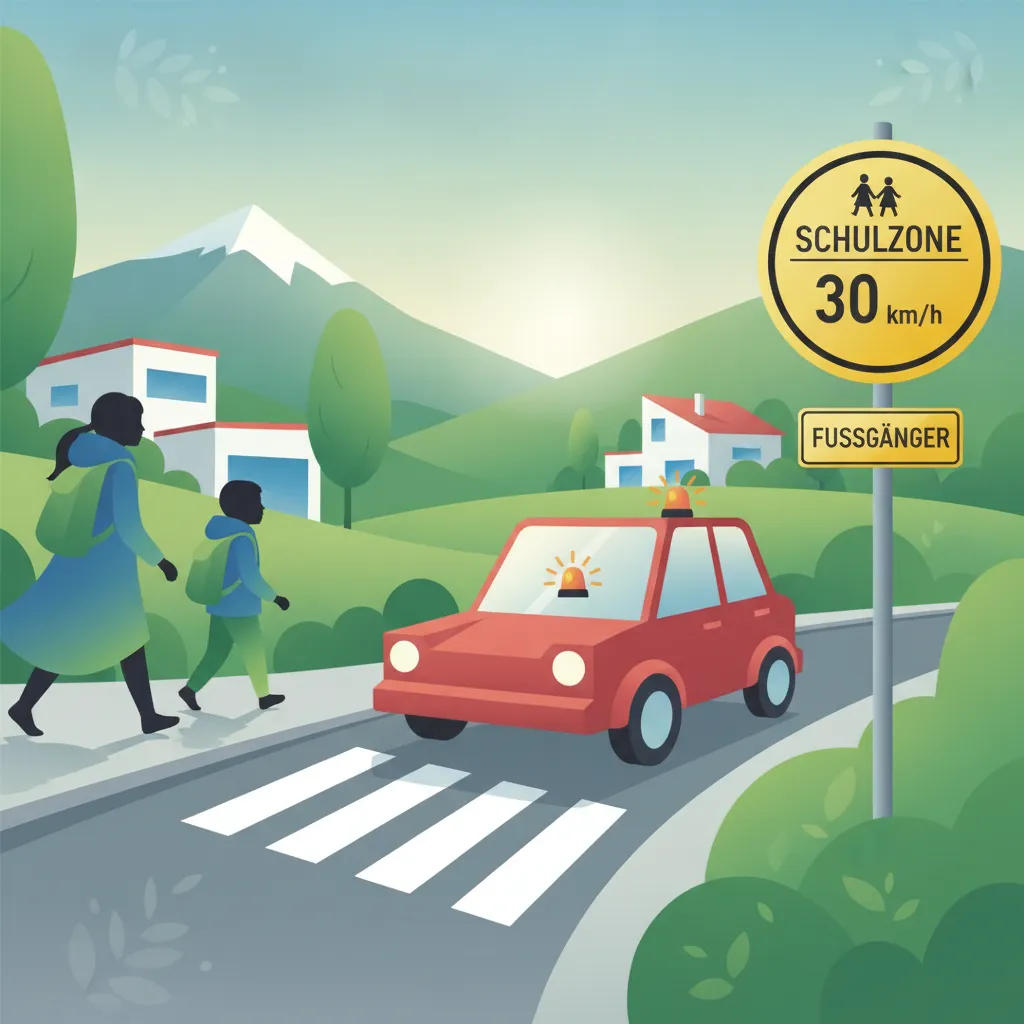
This lesson focuses on school zones, where special speed limits and cautionary measures are required. You will learn to recognize school zone signs, understand reduced speed limits, and be aware of designated child crossing zones. The content also emphasizes the need for heightened vigilance when school buses stop for students to ensure child safety.

This lesson focuses on general driving safety in areas with a high concentration of children. It stresses the importance of significantly reducing speed, being prepared for unexpected events, and scanning for children between parked cars. The driver must exhibit maximum vigilance in these high-risk environments at all times.
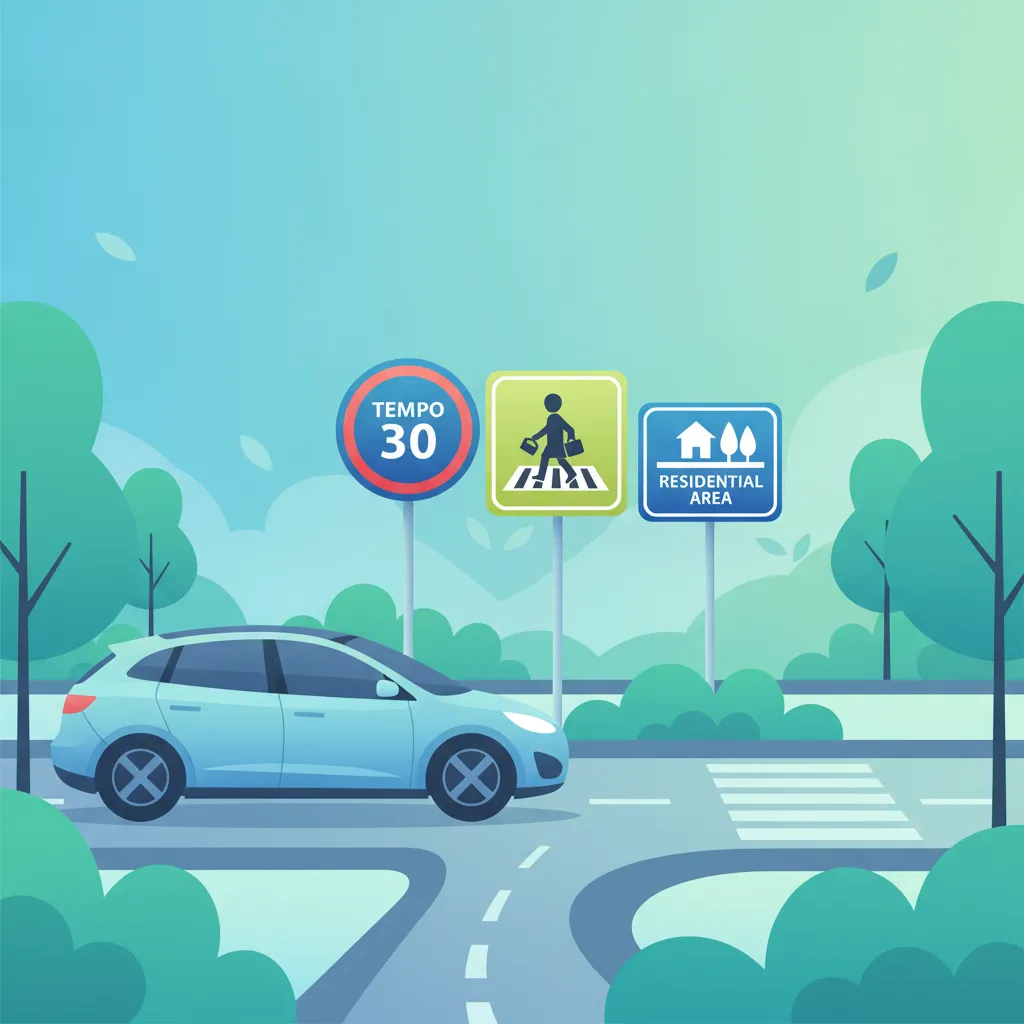
This lesson covers areas with special traffic regulations designed to protect vulnerable road users. Learners will understand the rules and reduced speed limits applicable in Tempo-30 zones, residential areas, and around schools. The content emphasizes the need for heightened awareness and a defensive riding style in these designated zones.
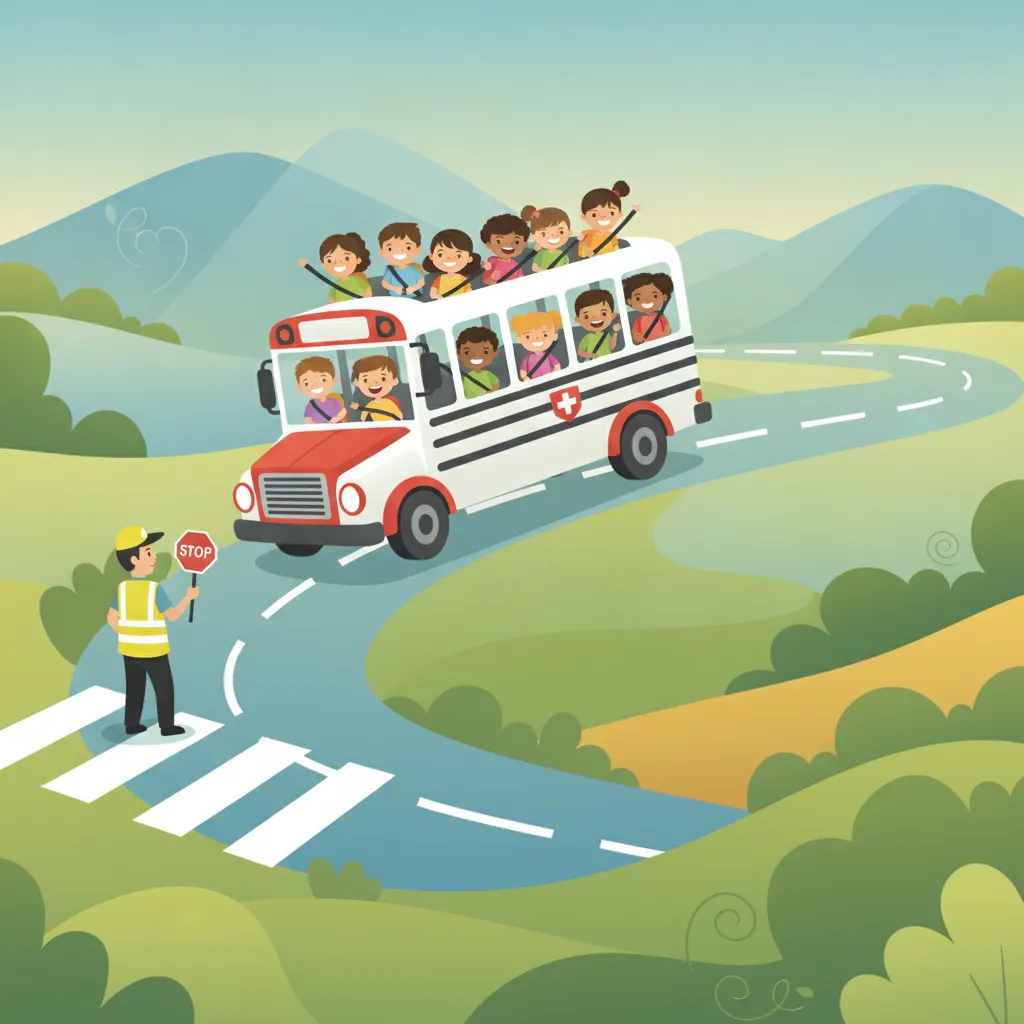
Transporting children carries the highest level of responsibility. This lesson covers the specific legal requirements for school buses in Switzerland, including the use of special signs and warning lights. It details the safe procedures for stopping, boarding, and alighting, and the driver's role in supervising children.
Pedestrians, cyclists, motorcyclists, and e-scooter riders are extremely vulnerable in any interaction with a heavy vehicle. This lesson instills a defensive mindset, teaching drivers to be hyper-aware of VRUs, especially near junctions, crossings, and cycle lanes. It focuses on anticipation and giving VRUs extra space, as they can be unpredictable and are often hidden in blind spots.
This lesson explores the specific considerations for cyclists and pedestrians, who are among the most vulnerable road users. It covers the proper use of bicycle lanes, the minimum safe overtaking distance for cyclists, and the legal requirements for yielding at pedestrian crossings. The content reinforces the need for heightened vigilance around these users.

This lesson trains drivers to look beyond other vehicles and actively search for pedestrians, cyclists, and motorcyclists, especially those who may be distracted or unaware. It covers common behavioral patterns of different VRU groups. The goal is to see potential hazards developing early and create time and space to react safely.
Sharing road space with trams presents unique challenges, including different priority rules and physical hazards like tracks. This lesson covers the Swiss regulations regarding tram priority at junctions and stops. It also provides practical advice on crossing tram tracks safely and maintaining awareness of tram movements.
Master pedestrian right-of-way at various crossings, including zebra crossings and pedestrian islands in Switzerland. Learn when drivers must stop and yield to ensure pedestrian safety according to official traffic regulations.
This lesson details the operation of traffic light systems in Switzerland. It explains the sequence and meaning of red, amber, and green lights, including flashing amber signals. The content also covers specific signals for pedestrians and the priority rules associated with tram signals to ensure safe interaction at controlled intersections.
This lesson explores how traffic lights dictate priority at intersections, superseding general priority rules. It explains the meanings of red, amber, and green signals and the required actions for each. Emphasis is placed on understanding green light right-of-way and the cautionary role of the amber phase for navigating signal-controlled junctions safely.
This lesson focuses on the variety of painted markings on Swiss roads and their legal significance. Learners will understand the difference between solid and broken lines, the rules for stop lines, and their obligations at a zebra crossing (Fußgängerstreifen). Correct interpretation of these markings is essential for proper lane positioning and safe interaction with all road users.
This lesson explores the specific considerations for cyclists and pedestrians, who are among the most vulnerable road users. It covers the proper use of bicycle lanes, the minimum safe overtaking distance for cyclists, and the legal requirements for yielding at pedestrian crossings. The content reinforces the need for heightened vigilance around these users.
This lesson provides a step-by-step guide to navigating intersections. It reinforces the priority rules, such as 'Rechtsvortritt', and the meaning of yield and stop signs. The content emphasizes the importance of a thorough visual scan on approach and correct positioning to ensure visibility and a safe passage.
This lesson delineates the various categories of road users on Swiss roads, highlighting their specific rights and responsibilities. It explains the legal hierarchy that determines priority at intersections and in shared spaces. The content also discusses the unique considerations for vulnerable users, such as children, emphasizing the need for heightened caution.
This lesson examines the concept of Vortritt (priority) and Rechtsvortritt, the right-hand rule used at uncontrolled intersections. It explains how these rules determine which vehicle has the right-of-way and the hierarchy of priority signs. You will learn to apply these rules in typical scenarios like four-way stops and T-intersections without traffic signals.
This lesson examines special traffic situations such as railway level crossings and shared zones where different road users coexist. It explains the specific safety procedures required at railway crossings and how to behave in shared zones with mixed traffic. The content also addresses the need to yield to oncoming trains and follow special signage in these unique zones.
This lesson details the specific priority rules governing Swiss intersections, including the concepts of 'Vortritt' and 'Rechtsvortritt'. It explains how to interpret road signs and markings to determine right-of-way in different situations. A clear understanding of these rules is essential for safe and legal navigation of intersections.
Pedestrians, cyclists, motorcyclists, and e-scooter riders are extremely vulnerable in any interaction with a heavy vehicle. This lesson instills a defensive mindset, teaching drivers to be hyper-aware of VRUs, especially near junctions, crossings, and cycle lanes. It focuses on anticipation and giving VRUs extra space, as they can be unpredictable and are often hidden in blind spots.
Find clear answers to common questions learners have about Pedestrian Safety and Right-of-Way Rules. Learn how the lesson is structured, which driving theory objectives it supports, and how it fits into the overall learning path of units and curriculum progression in Switzerland. These explanations help you understand key concepts, lesson flow, and exam focused study goals.
Yes, if a pedestrian clearly indicates their intention to cross at a zebra crossing, you must stop in good time and allow them to cross safely. Failure to do so is a common cause of failure in the theory exam and a serious traffic violation.
In school zones, you must exercise extreme caution. Children are unpredictable, and you should reduce your speed to a level where you can stop instantly if a child steps into the road.
In a marked shared zone (Begegnungszone), pedestrians have priority and may use the entire road width. However, they should not unnecessarily obstruct traffic, and drivers must drive at walking speed.
The theory exam uses images and video scenarios where you must decide if you have priority or if you must stop. You will be tested on both the legal right-of-way and the defensive driving approach required to keep others safe.
Pinpoint specific Swiss traffic rules, road signs, or driving situations you need to master. Use the practice search to start a focused revision session now and build confidence for your official driving theory exam.