
This lesson guides you through the essential rules for driving in school zones in Switzerland, ensuring you can identify child crossing areas and adjust your behavior safely. It builds upon your understanding of road signs and speed management to help you handle these high-risk areas during your Category B practical and theoretical exam.
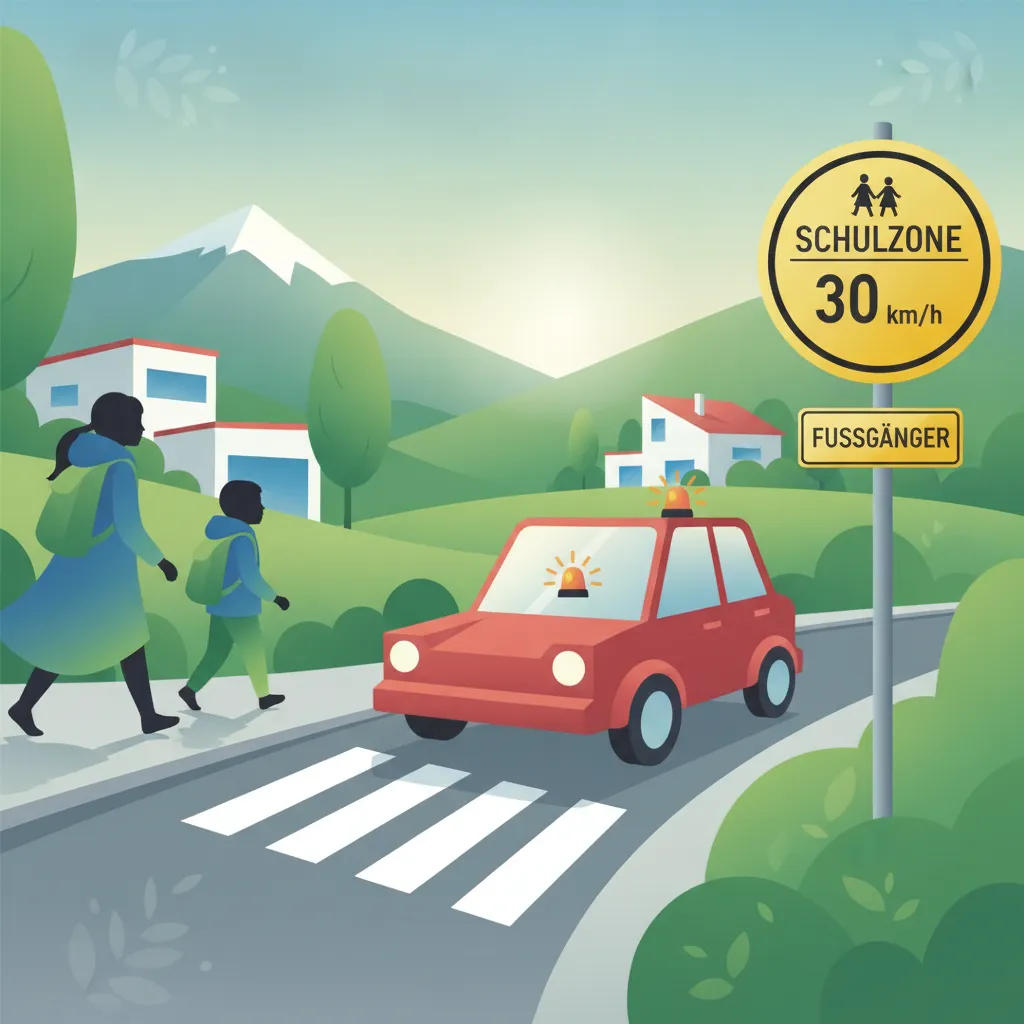
Lesson content overview
Driving through school zones demands heightened vigilance and strict adherence to specific traffic regulations. These areas are designated to protect children, who are among our most vulnerable road users due to their unpredictable behavior and limited awareness of traffic dangers. For drivers aiming for their Swiss Category B license, understanding and applying these rules is not merely about compliance; it's about ensuring the safety and well-being of the youngest members of our communities.
This lesson provides an in-depth look at identifying school zones, understanding reduced speed limits, navigating child crossing points, and responding correctly to school buses. Mastering these principles will not only help you pass your theoretical exam but, more importantly, equip you with the knowledge to drive safely and responsibly in areas frequented by children.
School zones are areas specifically designated to increase driver awareness and enforce safer driving practices around schools and educational institutions. The primary goal is to minimize the risk of accidents involving children, who often exhibit less predictable behavior than adult pedestrians. Children might suddenly dart into the road, be distracted, or misjudge vehicle speeds and distances.
Reduced speed limits and special crossing rules are critical tools in mitigating these risks. They allow drivers more time to react, reduce stopping distances, and decrease the severity of injuries if a collision were to occur. Compliance with these rules is essential for protecting young lives and avoiding significant legal consequences for drivers.
Children, by their very nature, are vulnerable road users. Their smaller stature can make them less visible to drivers, especially near parked cars or in adverse weather conditions. Their developing cognitive abilities mean they may not fully grasp the dangers of traffic, judge speeds accurately, or consistently adhere to traffic rules.
As drivers, we must compensate for these vulnerabilities by adopting a defensive and anticipatory driving style in areas where children are likely to be present. This includes being prepared for unexpected actions and always prioritizing their safety.
Recognizing the specific signage and road markings that denote a school zone is the first step towards safe driving in these areas. Swiss roads employ clear visual cues to alert drivers to the presence of schools and the need for increased caution.
You will encounter various signs indicating the approach or presence of a school zone. These signs are designed to capture your attention and prompt you to adjust your driving behavior.
The 1.18 warning sign, depicting children, is commonly used to alert drivers to areas frequented by children, often near schools, playgrounds, or residential areas. While not explicitly a "school zone" sign by itself, it mandates increased caution and readiness to slow down.
Many Swiss school zones are also indicated by general speed limit signs accompanied by supplementary plates or by signs featuring a silhouette of a school building. These signs might be rectangular, signaling an upcoming zone, or integrated with a speed limit.
Crucially, school zones often feature supplementary signs that provide additional information, most notably the specific reduced speed limit. These plates are typically placed directly below the primary sign.
For instance, a circular 30 km/h or 40 km/h speed limit sign, often white with a red border and black numbers, will be placed beneath a warning sign or a sign indicating a school zone. These supplementary plates transform the general warning into a mandatory speed restriction. Always look for these combinations.
In addition to vertical signs, specific road markings enhance safety in school zones. These can include:
These markings work in conjunction with signage to create a clear visual alert for drivers.
One of the most critical aspects of school zone safety is the enforcement of reduced speed limits. These limits are not suggestions; they are legally binding and designed to provide a crucial safety buffer for children.
Across Switzerland, the typical reduced speed limits in school zones are 30 km/h or 40 km/h. The specific limit will always be clearly indicated by a circular speed limit sign, often with a supplementary plate showing the applicable times.
These reduced limits significantly decrease the kinetic energy of a vehicle, which directly impacts stopping distance and the severity of an impact. At 30 km/h, your stopping distance is dramatically shorter than at 50 km/h, offering vital extra seconds to react to a child's sudden movement.
Driver's Insight: Always assume the reduced speed limit applies unless a supplementary sign explicitly states otherwise or defines specific operational hours. When in doubt, drive slower.
Some school zones implement time-based speed limits, meaning the reduced speed is only enforced during specific hours, typically coinciding with school drop-off and pick-up times. This information is displayed on a supplementary sign below the primary speed limit sign.
For example, a sign might indicate "30 km/h" with a supplementary plate stating "07:00-08:30 h / 16:00-17:30 h". During these specified times, the 30 km/h limit is mandatory. Outside these hours, the normal speed limit for that road section (e.g., 50 km/h in urban areas) applies. It is crucial to pay close attention to these time restrictions to avoid both violations and unnecessary congestion.
Exceeding the speed limit in a school zone carries significant penalties in Switzerland. These can include substantial fines, administrative measures such as license suspension, and penalty points. The exact severity of the penalty will depend on the degree to which the speed limit was exceeded and the specific canton's regulations.
Fines are generally higher in zones with increased risk, such as school zones, reflecting the heightened danger posed to vulnerable road users. Consistent adherence to reduced speed limits is a non-negotiable aspect of responsible driving.
Designated child crossing zones are critical safety features near schools. Drivers have clear and mandatory obligations at these points to ensure children can cross the road safely.
Child crossing zones are typically marked by:
When approaching a zebra crossing or a crossing with an active flashing beacon, your primary obligation is to yield to pedestrians, especially children.
Mandatory Stop: If a child steps onto a zebra crossing or is waiting to cross at a designated child crossing, you must stop your vehicle and allow them to cross safely. Do not proceed until the child has completely cleared your lane and it is safe to do so.
Even if a child is merely approaching a crossing with the clear intent to cross, it is safer to slow down and prepare to stop. Children may not always look for approaching traffic or correctly judge distances. Anticipate their movements and prioritize their safety above all else.
Overtaking other vehicles is strictly prohibited within a school zone, particularly when children are present or a school bus is stopped. The dangers of overtaking in these areas are immense:
Always maintain a safe following distance and be prepared to stop. Patience is paramount in school zones; a few extra seconds of delay are negligible compared to the potential consequences of a collision.
School buses play a vital role in transporting children, and their operations demand specific actions from other drivers to ensure the safety of boarding and alighting students.
When a school bus is stopping to pick up or drop off children, it will typically display specific visual signals:
It is imperative to be observant and recognize these signals promptly.
If you are traveling in the same direction as a school bus that has stopped and is displaying its flashing signals, you must stop your vehicle.
Immediately slow down as soon as you see the bus's warning lights activate.
Stop your vehicle completely behind the bus, maintaining a safe distance.
Remain stopped until the bus's flashing lights are deactivated and the bus either resumes motion or gives a clear signal that it is safe to proceed.
This rule is critical because children may cross in front of or behind the bus, often without looking for other traffic. Stopping ensures that you do not endanger them as they move to and from the bus.
The rules for oncoming traffic (vehicles traveling in the opposite direction) when a school bus stops vary by local regulation and road type. In many Swiss contexts, if there is a physical barrier (like a median strip) between the lanes, oncoming traffic may proceed with caution. However, on a two-lane road without a median, oncoming traffic often must also stop.
Always err on the side of caution. If you are unsure, or if children are visibly crossing, stopping is the safest and most responsible course of action, regardless of your direction of travel. Children's safety takes precedence over maintaining traffic flow.
Drivers must be alert to the bus's signals and the potential for children to cross unexpectedly, even on the opposite side of the road.
Driving safely in school zones extends beyond merely obeying signs and rules. It requires a heightened level of situational awareness, adapting your driving to various conditions and anticipating the unique challenges presented by children.
Adverse weather conditions significantly increase the risk in school zones:
Always adjust your speed and driving style to the prevailing conditions, even if it means driving slower than the posted reduced limit.
Children's behavior around roads is often less predictable than that of adults. They may:
As a driver, you must constantly scan the environment, particularly sidewalks, parked cars, and bus stops, for any signs of children. Be prepared to react instantly to sudden movements. Maintain a wide "safety cushion" around your vehicle, allowing space for children to move unexpectedly.
The type of vehicle you are driving also influences safety in school zones. Heavier vehicles, such as vans, trucks, or vehicles towing trailers, require significantly longer stopping distances compared to standard passenger cars.
For drivers of heavier vehicles, strict adherence to reduced speed limits is even more critical. The consequences of a collision involving a heavy vehicle and a child are often more severe. Maintain an even greater following distance and approach child crossing zones with extreme caution. Your reaction time and stopping capabilities are reduced, making proactive defensive driving essential.
Violating traffic laws in school zones, such as speeding, failing to yield to pedestrians, or illegally passing a stopped school bus, carries severe legal consequences in Switzerland. These are not merely minor infractions but are treated seriously due to the direct threat they pose to child safety.
Penalties typically include:
Understanding these consequences should reinforce the importance of meticulous compliance with all school zone regulations.
Driving safely in school zones is a fundamental responsibility for all drivers. By internalizing and applying the following principles, you contribute directly to the safety of children and the overall well-being of your community.
1.18 warning signs, 30 km/h or 40 km/h speed limit signs with supplementary plates, and "SCHULE" road markings.By consistently applying these practices, you demonstrate responsible driving and ensure safer journeys for everyone, especially our most vulnerable road users.
To solidify your understanding of school zone safety and related traffic rules for your Swiss Category B license, consider exploring these additional resources.
School zones in Switzerland are designated areas near educational institutions where heightened safety measures protect children as vulnerable road users. Drivers must recognize the 1.18 warning sign and look for accompanying 30 or 40 km/h speed limit signs with supplementary plates that specify when restrictions apply, typically during school arrival and departure times. Key obligations include stopping for school buses displaying flashing lights when traveling in the same direction, yielding to children at zebra crossings and flashing beacon zones, and never overtaking in these areas. Drivers should anticipate unpredictable child behavior, adjust speed for weather conditions, and understand that violations carry significant penalties including fines, penalty points, and potential license suspension.
A short set of high-value points that capture the most important learning from this lesson.
School zones in Switzerland are marked by the 1.18 warning sign (depicting children), 30 or 40 km/h speed limit signs with supplementary plates, and road markings like 'SCHULE' or zebra crossings
Reduced speed limits of 30 or 40 km/h apply in school zones, often during specific hours shown on supplementary plates (typically 07:00-08:30 and 16:00-17:30)
You must stop completely for a school bus displaying flashing lights when you are traveling in the same direction, remaining stopped until the lights deactivate
Overtaking is strictly prohibited in school zones, especially when children are present or a school bus has stopped
Children are unpredictable vulnerable road users who may dart into roads or misjudge vehicle speeds, requiring drivers to maintain constant vigilance and a large safety cushion
Explore all units and lessons included in this driving theory course.
The 1.18 triangular warning sign warns of child presence but does not itself set a speed limit; look for supplementary plates for mandatory limits
Time-based speed restrictions are shown on supplementary plates beneath speed limit signs; outside these hours, normal urban limits (50 km/h) apply
When a child steps onto or clearly intends to cross at a zebra crossing or flashing beacon zone, you must stop and wait until they have completely cleared
For oncoming traffic when a school bus stops, rules vary by road type, but always err on the side of caution if children are visibly crossing
Adverse weather (rain, fog, snow, ice) requires driving even slower than posted limits due to reduced visibility and longer stopping distances
Assuming the 1.18 warning sign itself mandates a specific reduced speed limit, when in fact the limit is shown on a separate supplementary plate
Continuing at normal urban speeds outside the stated time windows, not realizing the reduced limit only applies during school hours
Failing to stop for a school bus displaying flashing lights because no stop sign arm is visible, ignoring the light signals alone
Attempting to overtake another vehicle in a school zone, particularly near parked cars where children may suddenly appear
Not reducing speed sufficiently in poor weather conditions within school zones, underestimating increased stopping distances
Lesson content overview
A short set of high-value points that capture the most important learning from this lesson.
School zones in Switzerland are marked by the 1.18 warning sign (depicting children), 30 or 40 km/h speed limit signs with supplementary plates, and road markings like 'SCHULE' or zebra crossings
Reduced speed limits of 30 or 40 km/h apply in school zones, often during specific hours shown on supplementary plates (typically 07:00-08:30 and 16:00-17:30)
You must stop completely for a school bus displaying flashing lights when you are traveling in the same direction, remaining stopped until the lights deactivate
Overtaking is strictly prohibited in school zones, especially when children are present or a school bus has stopped
Children are unpredictable vulnerable road users who may dart into roads or misjudge vehicle speeds, requiring drivers to maintain constant vigilance and a large safety cushion
Explore all units and lessons included in this driving theory course.
The 1.18 triangular warning sign warns of child presence but does not itself set a speed limit; look for supplementary plates for mandatory limits
Time-based speed restrictions are shown on supplementary plates beneath speed limit signs; outside these hours, normal urban limits (50 km/h) apply
When a child steps onto or clearly intends to cross at a zebra crossing or flashing beacon zone, you must stop and wait until they have completely cleared
For oncoming traffic when a school bus stops, rules vary by road type, but always err on the side of caution if children are visibly crossing
Adverse weather (rain, fog, snow, ice) requires driving even slower than posted limits due to reduced visibility and longer stopping distances
Assuming the 1.18 warning sign itself mandates a specific reduced speed limit, when in fact the limit is shown on a separate supplementary plate
Continuing at normal urban speeds outside the stated time windows, not realizing the reduced limit only applies during school hours
Failing to stop for a school bus displaying flashing lights because no stop sign arm is visible, ignoring the light signals alone
Attempting to overtake another vehicle in a school zone, particularly near parked cars where children may suddenly appear
Not reducing speed sufficiently in poor weather conditions within school zones, underestimating increased stopping distances
Explore search topics learners often look for when studying School Zones and Child Safety Rules. These topics reflect common questions about road rules, driving situations, safety guidance, and lesson level theory preparation for learners in Switzerland.
Browse additional driving theory lessons that cover connected traffic rules, road signs, and common driving situations related to this topic. Improve your understanding of how different rules interact across everyday traffic scenarios.
Understand mandatory speed limits, child crossing zone rules, and correct procedures for stopping for school buses in Switzerland. Essential knowledge for Category B drivers to ensure child safety.

This lesson focuses on general driving safety in areas with a high concentration of children. It stresses the importance of significantly reducing speed, being prepared for unexpected events, and scanning for children between parked cars. The driver must exhibit maximum vigilance in these high-risk environments at all times.
Transporting children carries the highest level of responsibility. This lesson covers the specific legal requirements for school buses in Switzerland, including the use of special signs and warning lights. It details the safe procedures for stopping, boarding, and alighting, and the driver's role in supervising children.
This lesson covers areas with special traffic regulations designed to protect vulnerable road users. Learners will understand the rules and reduced speed limits applicable in Tempo-30 zones, residential areas, and around schools. The content emphasizes the need for heightened awareness and a defensive riding style in these designated zones.
This lesson explores pedestrian right-of-way at various crossings, including zebra crossings and pedestrian islands. It emphasizes the need for drivers to reduce speed, anticipate pedestrian movement, and stop safely when required. The content also covers special regulations that apply in school zones, such as reduced speed limits and heightened vigilance.
Motorway driving involves high speeds and requires constant concentration. This lesson covers correct lane discipline, safe procedures for joining and leaving the motorway, and techniques for overtaking other large vehicles. Maintaining appropriate speed and a safe following distance is emphasized throughout.
Bus lanes are a key tool for improving service reliability, but they come with specific rules. This lesson covers how to correctly interpret bus lane signs and markings. It also explains the regulations for entering and leaving the lane to make turns or avoid obstructions, and the priority rules associated with them.
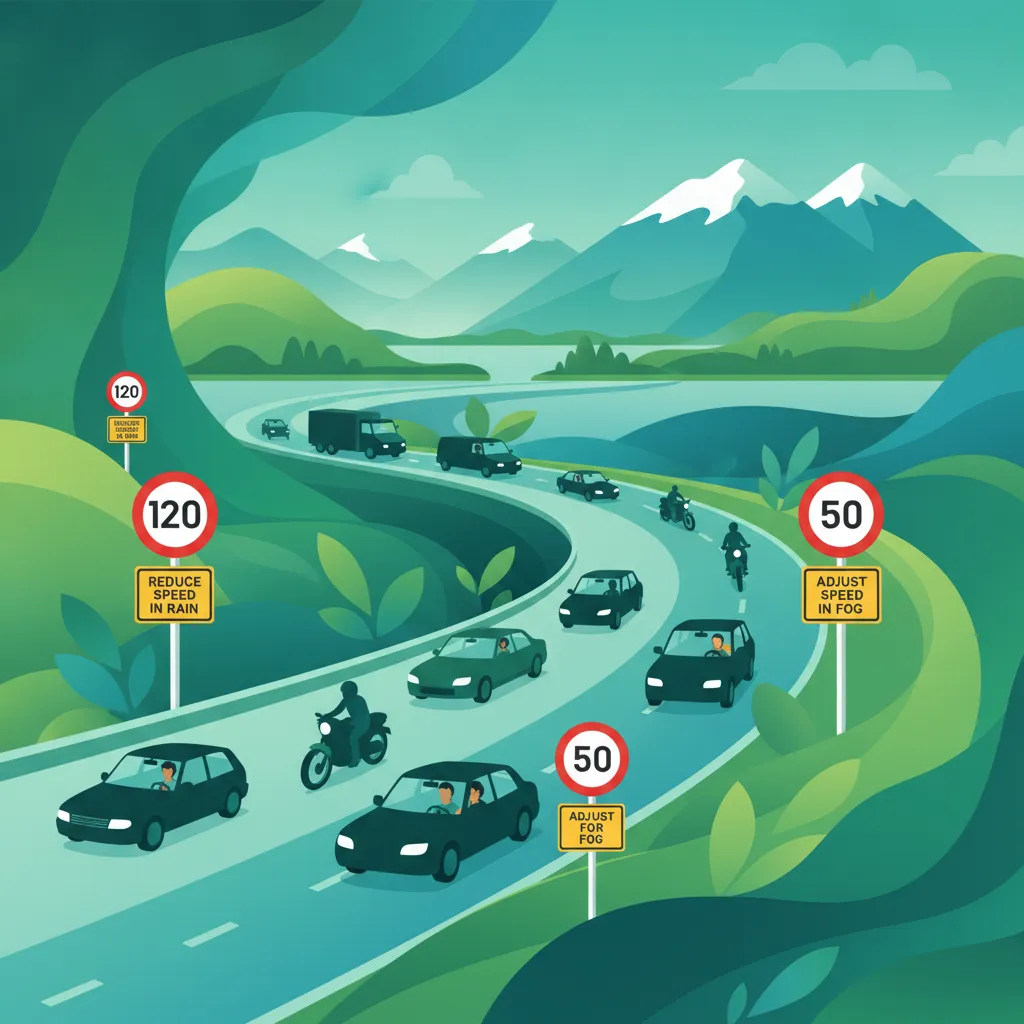
This lesson details the different speed limits applicable in urban, rural, and motorway environments across Switzerland. It explains speed limit signs, temporary restrictions, and how to adapt speed safely based on visibility and road conditions. Understanding these principles helps you comply with legal limits while ensuring an appropriate speed for the circumstances.
The legal speed limit is a maximum, not a target. This lesson teaches the professional driver's approach to speed management, which involves constantly assessing traffic, road, and weather conditions. You will learn to adjust your speed to ensure you can always stop safely within the distance you can see to be clear.
Buses and coaches require significantly more distance to stop than cars. This lesson explains why the 'two-second rule' is insufficient and teaches the appropriate methods for calculating a safe gap in various conditions. Maintaining an adequate safety cushion is one of the most important defensive driving skills.
Motorway driving requires constant concentration due to high speeds. This lesson emphasizes the importance of staying in the right-hand lane unless overtaking and the specific restrictions on lorry overtaking in Switzerland. It reinforces the need for a following distance of at least four seconds to compensate for the vehicle's long stopping distance and provides guidance on safely merging and exiting.
Deepen your understanding of protecting vulnerable road users, focusing on unpredictable child behavior in school zones, cyclist rights, and pedestrian priority on Swiss roads. Crucial for safe driving.

This lesson trains drivers to look beyond other vehicles and actively search for pedestrians, cyclists, and motorcyclists, especially those who may be distracted or unaware. It covers common behavioral patterns of different VRU groups. The goal is to see potential hazards developing early and create time and space to react safely.
This lesson focuses on general driving safety in areas with a high concentration of children. It stresses the importance of significantly reducing speed, being prepared for unexpected events, and scanning for children between parked cars. The driver must exhibit maximum vigilance in these high-risk environments at all times.
Pedestrians, cyclists, motorcyclists, and e-scooter riders are extremely vulnerable in any interaction with a heavy vehicle. This lesson instills a defensive mindset, teaching drivers to be hyper-aware of VRUs, especially near junctions, crossings, and cycle lanes. It focuses on anticipation and giving VRUs extra space, as they can be unpredictable and are often hidden in blind spots.
This lesson explores the specific considerations for cyclists and pedestrians, who are among the most vulnerable road users. It covers the proper use of bicycle lanes, the minimum safe overtaking distance for cyclists, and the legal requirements for yielding at pedestrian crossings. The content reinforces the need for heightened vigilance around these users.
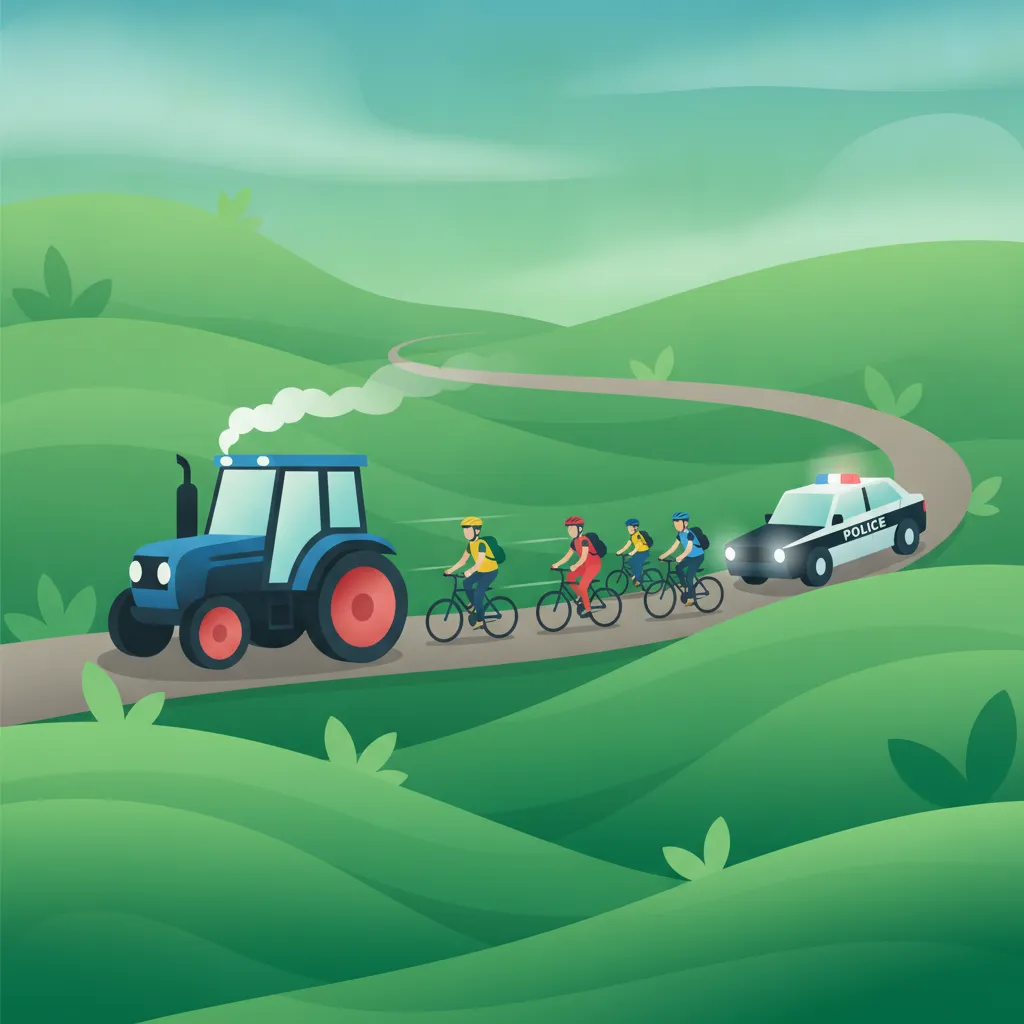
This lesson focuses on strategies for safely interacting with non-standard traffic common on rural roads. It covers how to anticipate the behaviour of slow-moving farm equipment and tourist vehicles, and the legal requirement to yield to emergency services. The importance of patience and safe passing opportunities is stressed.
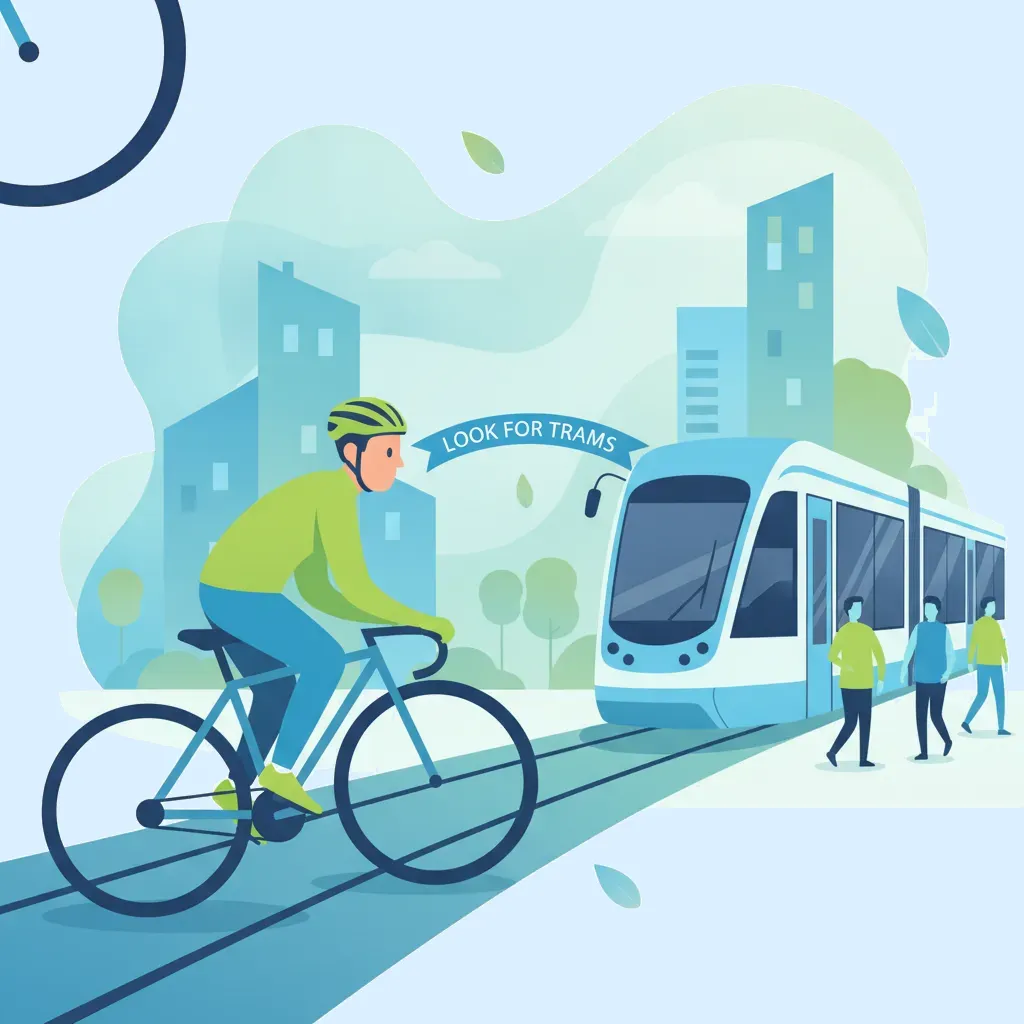
Sharing road space with trams presents unique challenges, including different priority rules and physical hazards like tracks. This lesson covers the Swiss regulations regarding tram priority at junctions and stops. It also provides practical advice on crossing tram tracks safely and maintaining awareness of tram movements.
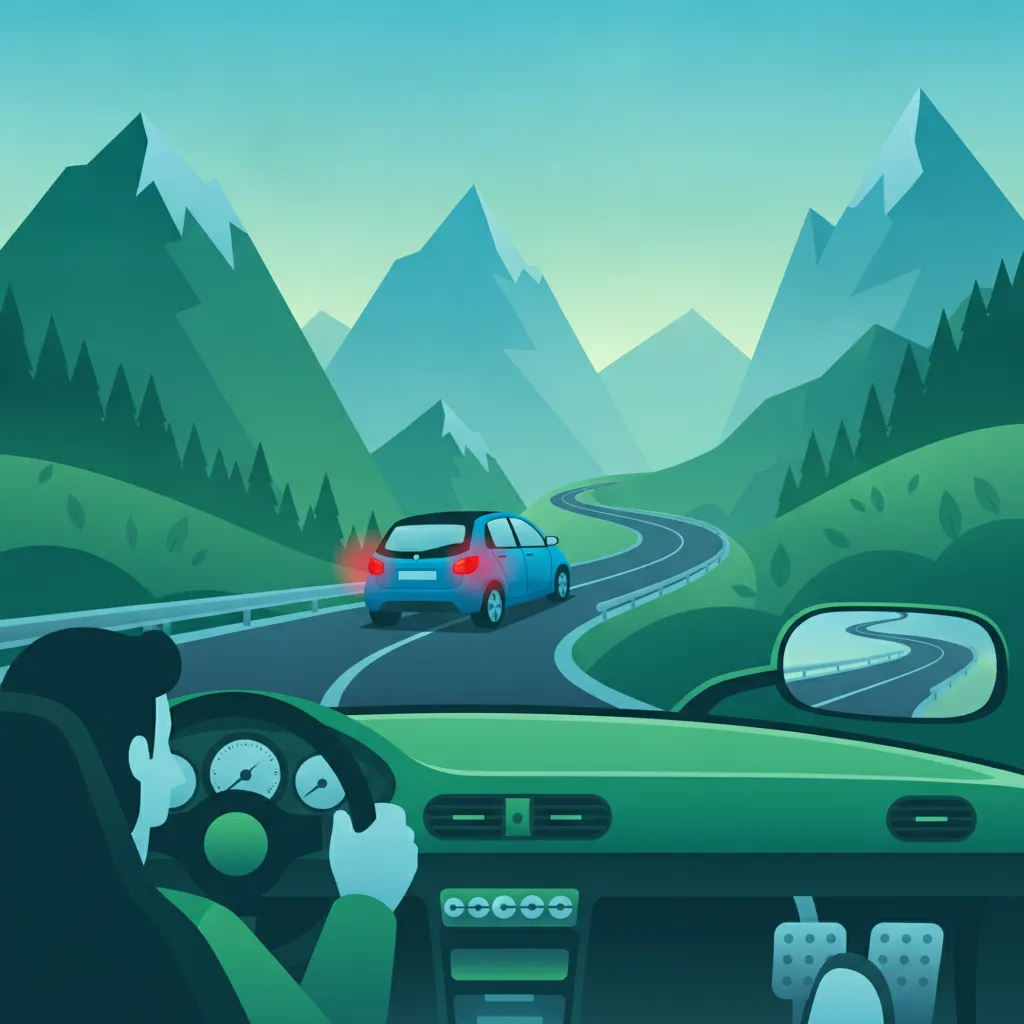
This lesson introduces defensive driving principles, focusing on hazard anticipation, continuous scanning, and proactive positioning. You will learn how to anticipate potential hazards by observing traffic patterns and maintaining situational awareness. Emphasis is placed on proactive speed management to avoid dangerous situations before they arise.
This lesson explores pedestrian right-of-way at various crossings, including zebra crossings and pedestrian islands. It emphasizes the need for drivers to reduce speed, anticipate pedestrian movement, and stop safely when required. The content also covers special regulations that apply in school zones, such as reduced speed limits and heightened vigilance.
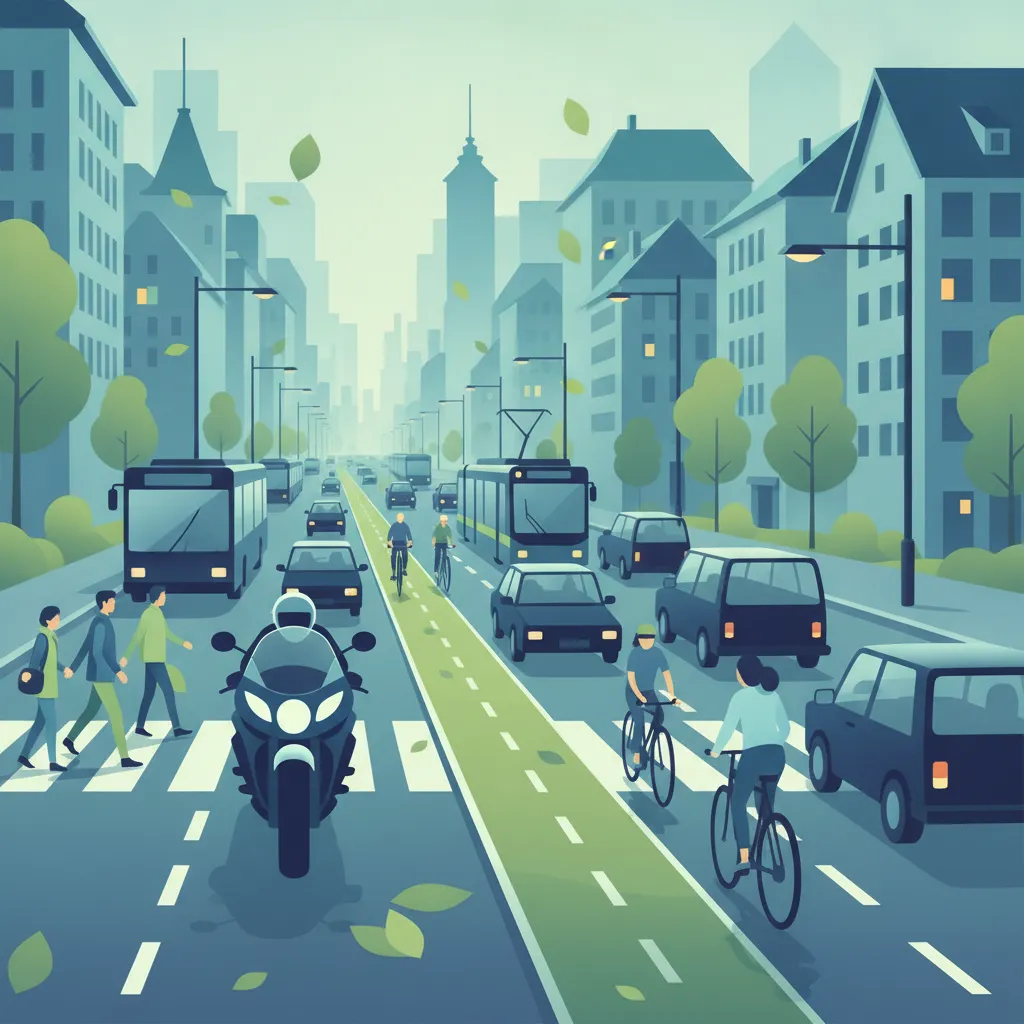
This lesson explores the complexities of riding in busy urban areas with a mix of traffic types. It covers strategies for safely navigating alongside buses, trams, cyclists, and pedestrians. Key topics include respecting designated lanes, anticipating the movements of vulnerable road users, and maintaining heightened situational awareness.
This lesson focuses on safe interaction with large vehicles. It highlights the significant blind spots (or 'no-zones') around trucks and buses and teaches riders how to position themselves to remain visible. The content also provides guidance on overtaking large vehicles safely and anticipating their wide turning radius at intersections.
Find clear answers to common questions learners have about School Zones and Child Safety Rules. Learn how the lesson is structured, which driving theory objectives it supports, and how it fits into the overall learning path of units and curriculum progression in Switzerland. These explanations help you understand key concepts, lesson flow, and exam focused study goals.
While the general speed limit in built-up areas is 50 km/h, school zones are frequently marked with lower limits, often 30 km/h, to increase safety. Always look for specific signs indicating the current limit, as these take precedence.
Yes, if a school bus has its warning lights active or is stationary while students are boarding or alighting, you must exercise extreme caution. You must be prepared to stop if necessary to ensure the safety of children crossing.
This sign serves as a warning of high pedestrian activity. You should slow down, scan the sidewalks and road edges, and be ready to brake immediately if a child attempts to cross.
Drivers must always demonstrate extra care when children are present. While specific priority rules apply at designated crossings, the law requires drivers to be especially vigilant in zones where children are likely to be found, effectively giving them heightened consideration.
Pinpoint specific Swiss traffic rules, road signs, or driving situations you need to master. Use the practice search to start a focused revision session now and build confidence for your official driving theory exam.