
This lesson details the specific priority rules and safety conventions for sharing the road with trams and buses in Switzerland. By mastering these interactions, you will be prepared for complex exam scenarios and improve your safety when driving in busy urban environments.
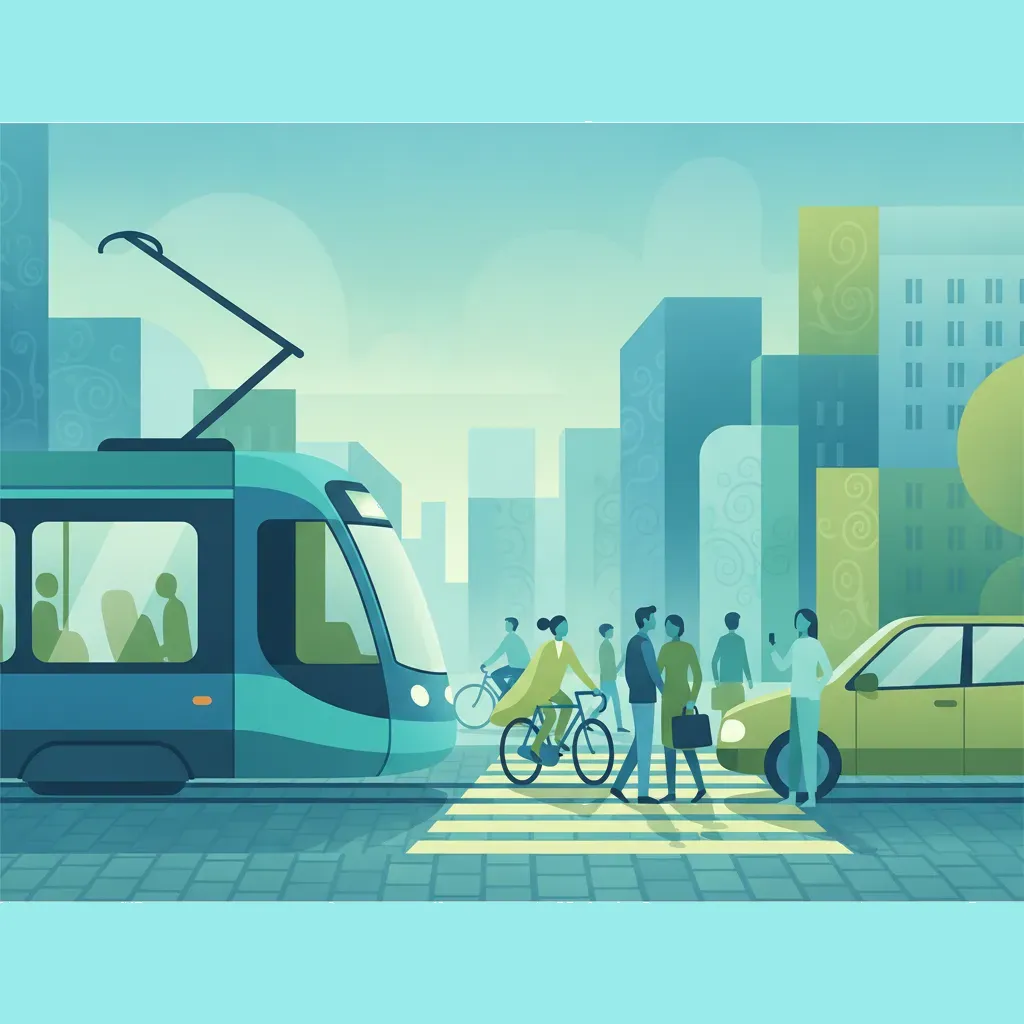
Lesson content overview
Driving in Switzerland requires a comprehensive understanding of traffic rules, especially concerning public transport. Trams and buses are integral to Swiss urban mobility, and special priority rules are in place to ensure their efficient and safe operation. This lesson will detail these crucial regulations, helping you navigate roads with trams and buses confidently and responsibly. Understanding these rules is not only vital for passing your Category B driving theory exam but also for everyday safety and smooth traffic flow.
The prioritization of public transport vehicles, such as trams and buses, is a cornerstone of Swiss traffic management. This approach enhances the reliability and punctuality of public services, making them a more attractive and sustainable alternative to private vehicles. By granting specific rights-of-way, authorities aim to reduce congestion, minimize travel times for public transport, and improve overall urban traffic efficiency. For drivers, this means a heightened awareness and a commitment to yielding when required, directly contributing to the safety of passengers and other road users.
The general principle underlying public transport priority is to facilitate uninterrupted movement for these vehicles, which operate on fixed routes and schedules. This is achieved through three main mechanisms:
Mastering these core principles is essential for safe driving in any Swiss city or town with an active public transport network.
Dedicated public transport lanes are a common feature in many Swiss urban areas, designed to give buses and trams an unobstructed path. Recognizing and respecting these lanes is fundamental to safe and lawful driving.
Public transport lanes are clearly identifiable through a combination of traffic signs and distinctive road markings. A common indicator is a white solid or dashed line on the road, often accompanied by a symbol painted on the lane itself. For buses, this is typically a bus symbol, while tram lanes might feature tram tracks or a specific symbol indicating their use.
These signs clearly designate the lane for exclusive use by public transport. Some lanes might also be marked with specific text, such as "Bus" or "Tram," directly on the road surface.
The primary rule for dedicated public transport lanes is that they are reserved for buses and trams only. As a driver of a private vehicle, you must not drive in these lanes. This restriction helps public transport maintain its schedule and prevents unnecessary delays. Violating this rule can lead to penalties and disrupt public services.
While generally prohibited, there are specific situations where you might be permitted to cross or briefly enter a public transport lane. This is typically allowed when turning right and the lane intersects your turning path. Such permissions are always indicated by specific signage or road markings, often a dashed line leading up to the intersection or a sign explicitly permitting the maneuver. Always look for these explicit indications; without them, the lane remains off-limits. You must also yield to any public transport vehicle already in the lane before crossing.
A frequent misunderstanding among drivers is that public transport lanes are merely "suggested" or can be used during off-peak hours without explicit permission. This is incorrect. Unless a sign explicitly permits otherwise, such as a time-restricted mixed-use lane, these lanes are strictly for public transport at all times. Another error is assuming that you can stop in a dedicated lane to pick up or drop off passengers; this is also prohibited as it obstructs public transport flow.
Trams hold a unique position in Swiss traffic law, particularly at intersections. Their fixed routes and large size necessitate specific priority rules to ensure safety and maintain their schedule.
In Switzerland, trams generally have priority over other road users at intersections, even if there are no explicit "give way" signs or traffic lights for the tram. This is a fundamental rule that drivers must internalize. It means you must be prepared to stop and yield to an approaching tram, regardless of which direction it is coming from, unless signs or road markings clearly indicate that the tram must yield to you.
A critical aspect of tram priority is its interaction with traffic lights. Unlike other vehicles, trams may have the right-of-way even when the traffic light for other vehicles is green. Trams often have their own specific signal lights, which can differ from the signals for general traffic.
Drivers must always be vigilant for approaching trams at intersections, even if their own light is green. If signs or specific tram signals dictate that the tram has priority, you must yield. The only exception is when clear signage specifically instructs the tram to yield to other traffic at that particular intersection. Always check for priority signs before entering an intersection with tram tracks.
When approaching an intersection with tram tracks, your primary responsibility is to check for trams. Even if you have the right-of-way according to standard rules (e.g., green light or right-before-left), you must prepare to yield to a tram.
Observe: Scan the intersection for approaching trams from all directions, including those turning.
Anticipate: Assume a tram has priority unless signs explicitly state otherwise.
Slow Down: Reduce your speed well in advance, giving yourself time to react.
Stop Safely: If a tram is approaching and has priority, stop before the intersection or designated stopping line, allowing the tram to pass unhindered.
Failing to yield to a tram is not only a serious traffic violation but also extremely dangerous due to the tram's size, weight, and limited maneuverability.
Tram tracks can appear in various configurations at intersections. Sometimes they run straight through, other times they curve to allow trams to turn. In all cases, the general principle of tram priority applies. Be particularly cautious where tram tracks converge or cross at complex intersections, as multiple trams might be maneuvering simultaneously. Always ensure the tracks are clear before proceeding, even after a tram has passed, as another might be approaching.
Ensuring the safety of passengers boarding and alighting public transport vehicles is another critical aspect of Swiss traffic law. Drivers must take special precautions when encountering a bus or tram stopped at a designated stop.
When a bus or tram stops at a designated stop to allow passengers to board or alight, it creates a potential hazard for vulnerable pedestrians. As a driver, you must treat the stopped vehicle as an obstacle requiring extreme caution. You are generally required to give way to the stopped public transport vehicle and must not proceed or overtake unless it is safe to do so and the road markings permit. Maintain a safe distance, anticipating that passengers may suddenly appear from behind or in front of the vehicle.
Overtaking a bus or tram that is stopped at a designated stop is subject to strict rules. You must not overtake if it means endangering boarding or alighting passengers. Generally, you should wait until the public transport vehicle has resumed movement or it is absolutely clear that no passengers are at risk and the road markings allow safe passage. This often means waiting behind the vehicle.
Never overtake a stopped bus or tram if there's any doubt about passenger safety. Pedestrians, especially children, may run across the road from behind or in front of the stopped vehicle.
The primary reason for these rules is passenger safety. People getting on or off a bus or tram are often distracted, may have reduced visibility, or might be moving quickly. They are vulnerable road users. Your responsibility is to anticipate their movements and ensure you do not create a dangerous situation. This includes being aware of blind spots, especially if you are driving a larger vehicle, and maintaining a speed that allows you to stop instantly if a passenger steps into the road.
Understanding and adhering to public transport priority rules is not just about courtesy; it is a legal obligation with real consequences for non-compliance. Violations can lead to significant fines, administrative measures (such as warnings or license withdrawal), and, most importantly, serious accidents.
One of the most dangerous violations is failing to yield to a tram at an intersection where it has priority. Given the tram's mass and inability to swerve, a collision can be catastrophic, often resulting in severe injuries or fatalities for those involved, including tram passengers.
Legally, this is considered a serious infringement of traffic rules.
Driving in or obstructing a dedicated public transport lane without permission is also a violation. While perhaps less immediately dangerous than a tram collision, it disrupts public transport schedules, contributes to overall traffic delays, and is subject to fines.
This applies even if you are just briefly stopping or pulling over. Always ensure you are only in such a lane if specific signage permits your maneuver, such as crossing it for a right turn.
Overtaking a bus or tram that is stopped for passengers without maintaining a safe distance or when conditions are unsafe is another serious violation. This action directly endangers pedestrians and can lead to accidents involving vulnerable road users. Penalties for unsafe overtaking can be substantial, reflecting the high risk posed to pedestrians. Drivers must exercise extreme caution and patience in these situations.
Driving safely around public transport requires adjusting your behavior based on various external factors. Environmental conditions and the specific vehicle you are driving can significantly impact visibility and reaction times.
Adverse weather conditions such as rain, fog, or snow can severely reduce visibility, making it harder to spot public transport lanes, priority signs, or an approaching tram. In such conditions, drivers must reduce their speed, increase following distances, and be extra vigilant. Wet or icy roads also increase stopping distances, making it even more crucial to anticipate tram and bus movements well in advance. At night or in low-light conditions, illuminated tram lane markings and signs are particularly important to observe.
The time of day significantly affects public transport activity and overall traffic density. During peak hours, urban centers experience more frequent tram and bus services, higher passenger volumes, and more congested roads. This demands increased awareness from drivers, as the chances of encountering a tram or bus requiring priority are much higher. Conversely, during quieter hours, while traffic may be lighter, you should not become complacent about priority rules.
The type of vehicle you are driving also plays a role in interactions with public transport. Larger vehicles, such as vans or trucks, have more extensive blind spots. This makes it particularly challenging to see pedestrians disembarking from a bus or tram, or even a tram itself, especially when turning. Drivers of larger vehicles must exercise extra caution and use all available mirrors and observation techniques to compensate for blind spots, especially when approaching bus or tram stops or crossing tram tracks.
Driving safely near public transport is about more than just knowing the rules; it's about developing a proactive and defensive mindset.
Always maintain a high level of situational awareness, especially in urban environments. Continuously scan your surroundings for tram tracks, bus stops, and signs indicating public transport priority. Anticipate potential movements of trams and buses and be prepared to react. This means not just looking at traffic lights, but also actively searching for trams and relevant signage.
Drive predictably and avoid sudden maneuvers that might confuse tram or bus drivers, or endanger passengers. Adopt a defensive driving approach by assuming others might make mistakes and always having a contingency plan. When in doubt, err on the side of caution and yield. This reduces the risk of accidents significantly.
By adhering to public transport priority rules, you not only enhance safety but also contribute to the overall efficiency of the traffic system. Unnecessary delays for public transport can ripple through the network, affecting many passengers. Your responsible driving helps keep Swiss cities moving smoothly.
Understanding and respecting public transport priority is a cornerstone of safe and responsible driving in Switzerland. This lesson has covered the critical aspects of dedicated public transport lanes, tram right-of-way at intersections, and safe interactions with stopped buses and trams.
Key takeaways include:
These rules are not merely guidelines but mandatory legal obligations designed to protect vulnerable road users and ensure the efficient operation of Switzerland's public transport system.
This lesson covers the essential Swiss rules for interacting with trams and buses on urban roads. Trams generally have priority at intersections, often overriding normal traffic light signals, and drivers must always be prepared to yield to approaching trams. Dedicated public transport lanes are strictly reserved for buses and trams except when specific signage permits brief entry for turning maneuvers. When public transport vehicles stop to allow passengers to board or alight, drivers must maintain a safe distance and never overtake if there's any risk to pedestrians, especially children. These rules exist to protect vulnerable passengers and ensure the efficiency of Switzerland's public transport system.
A short set of high-value points that capture the most important learning from this lesson.
Trams have priority at intersections in Switzerland and often proceed even when general traffic lights show green for other vehicles
Dedicated public transport lanes are exclusively reserved for buses and trams and must not be used by private vehicles except when explicitly permitted by signage
When a bus or tram stops at a designated stop to board passengers, you must yield and never overtake if passengers are at risk
Always scan for approaching trams at intersections with tracks, even when you have a green light or right-of-way by standard rules
Tram priority can be overridden only by specific signage that explicitly instructs the tram to yield to other traffic
Explore all units and lessons included in this driving theory course.
Public transport lanes are marked with white lines, bus/tram symbols, or dashed lines indicating where turning is permitted
Trams have their own signal lights separate from general traffic signals, which can give them priority independently
Overtaking a stopped bus or tram is prohibited when passengers are boarding or alighting, especially children who may run unpredictably
Larger vehicles have greater blind spots; extra caution is needed when approaching tram tracks or bus stops
Adverse weather reduces visibility of tram tracks, signs, and signals; increase following distances and reduce speed
Assuming public transport lanes can be used during off-peak hours without explicit permission
Proceeding through a green light at an intersection with tram tracks without checking for an approaching tram
Stopping or parking in a dedicated public transport lane to pick up or drop off passengers
Failing to yield to a tram because standard right-before-left rules would normally apply
Not maintaining sufficient distance when passing a stopped bus or tram, risking collision with disembarking passengers
Lesson content overview
A short set of high-value points that capture the most important learning from this lesson.
Trams have priority at intersections in Switzerland and often proceed even when general traffic lights show green for other vehicles
Dedicated public transport lanes are exclusively reserved for buses and trams and must not be used by private vehicles except when explicitly permitted by signage
When a bus or tram stops at a designated stop to board passengers, you must yield and never overtake if passengers are at risk
Always scan for approaching trams at intersections with tracks, even when you have a green light or right-of-way by standard rules
Tram priority can be overridden only by specific signage that explicitly instructs the tram to yield to other traffic
Explore all units and lessons included in this driving theory course.
Public transport lanes are marked with white lines, bus/tram symbols, or dashed lines indicating where turning is permitted
Trams have their own signal lights separate from general traffic signals, which can give them priority independently
Overtaking a stopped bus or tram is prohibited when passengers are boarding or alighting, especially children who may run unpredictably
Larger vehicles have greater blind spots; extra caution is needed when approaching tram tracks or bus stops
Adverse weather reduces visibility of tram tracks, signs, and signals; increase following distances and reduce speed
Assuming public transport lanes can be used during off-peak hours without explicit permission
Proceeding through a green light at an intersection with tram tracks without checking for an approaching tram
Stopping or parking in a dedicated public transport lane to pick up or drop off passengers
Failing to yield to a tram because standard right-before-left rules would normally apply
Not maintaining sufficient distance when passing a stopped bus or tram, risking collision with disembarking passengers
Explore search topics learners often look for when studying Public Transport Priority and Tram Interactions. These topics reflect common questions about road rules, driving situations, safety guidance, and lesson level theory preparation for learners in Switzerland.
Browse additional driving theory lessons that cover connected traffic rules, road signs, and common driving situations related to this topic. Improve your understanding of how different rules interact across everyday traffic scenarios.
Explore advanced and complex situations involving priority rules for trams and buses in Swiss traffic. Understand challenging intersections and less common scenarios to ensure safe interactions and compliance with traffic laws.

This lesson focuses on the rules governing interactions with public transport vehicles like buses and trams. It explains the priority given to these vehicles at stops and the use of dedicated lanes. Additionally, the content covers tram track crossing procedures and correct vehicle positioning near public transport stops to ensure safety.
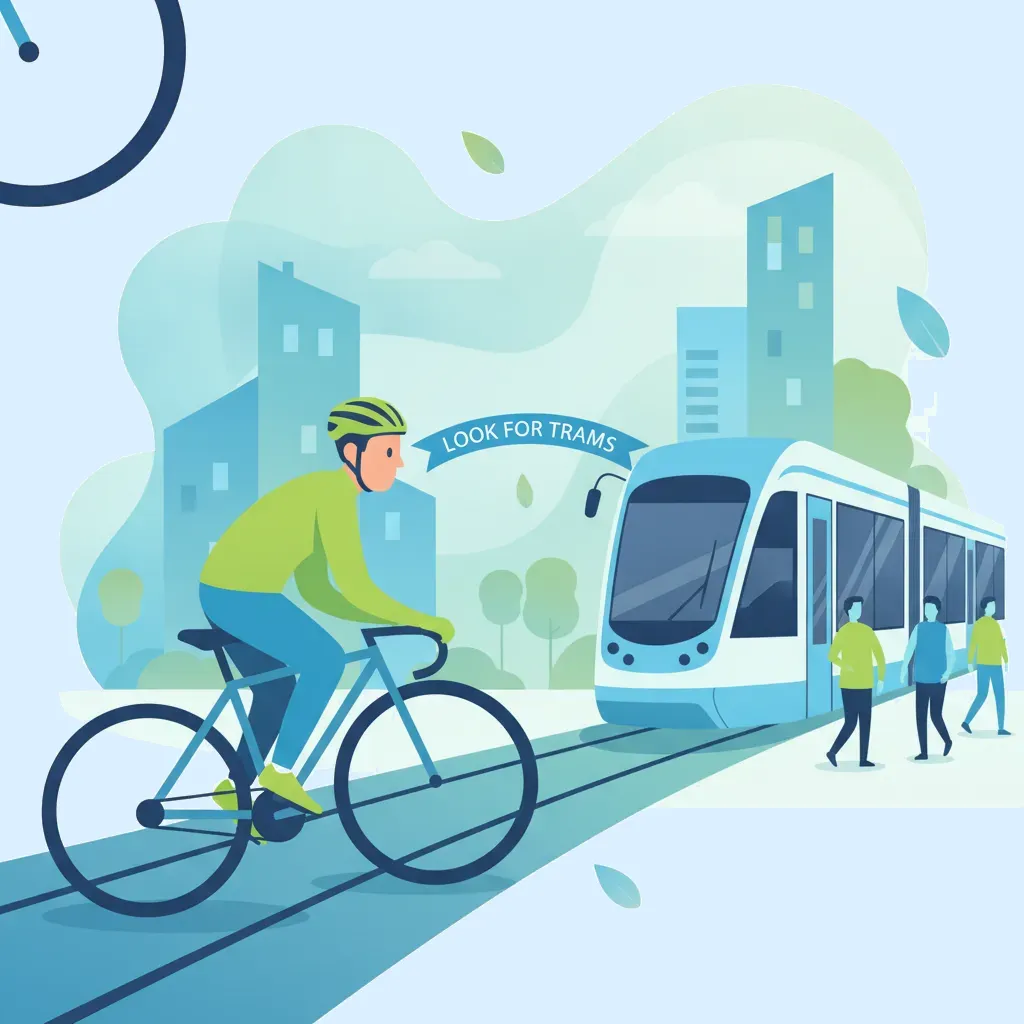
Sharing road space with trams presents unique challenges, including different priority rules and physical hazards like tracks. This lesson covers the Swiss regulations regarding tram priority at junctions and stops. It also provides practical advice on crossing tram tracks safely and maintaining awareness of tram movements.
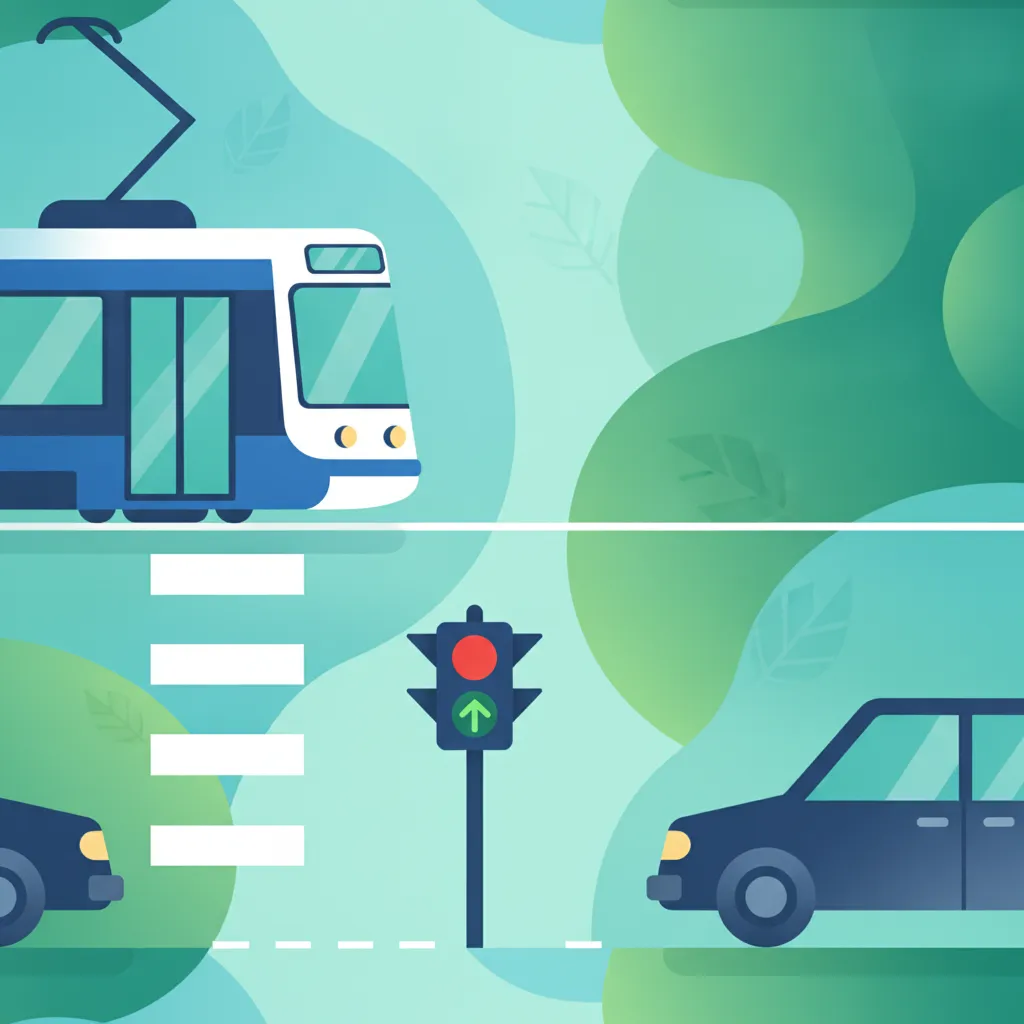
Many Swiss cities use systems that give buses priority at traffic lights to improve punctuality. This lesson explains how these systems detect an approaching bus and alter the signal phasing. You will learn to recognize and correctly respond to the special white light signals that grant this priority.
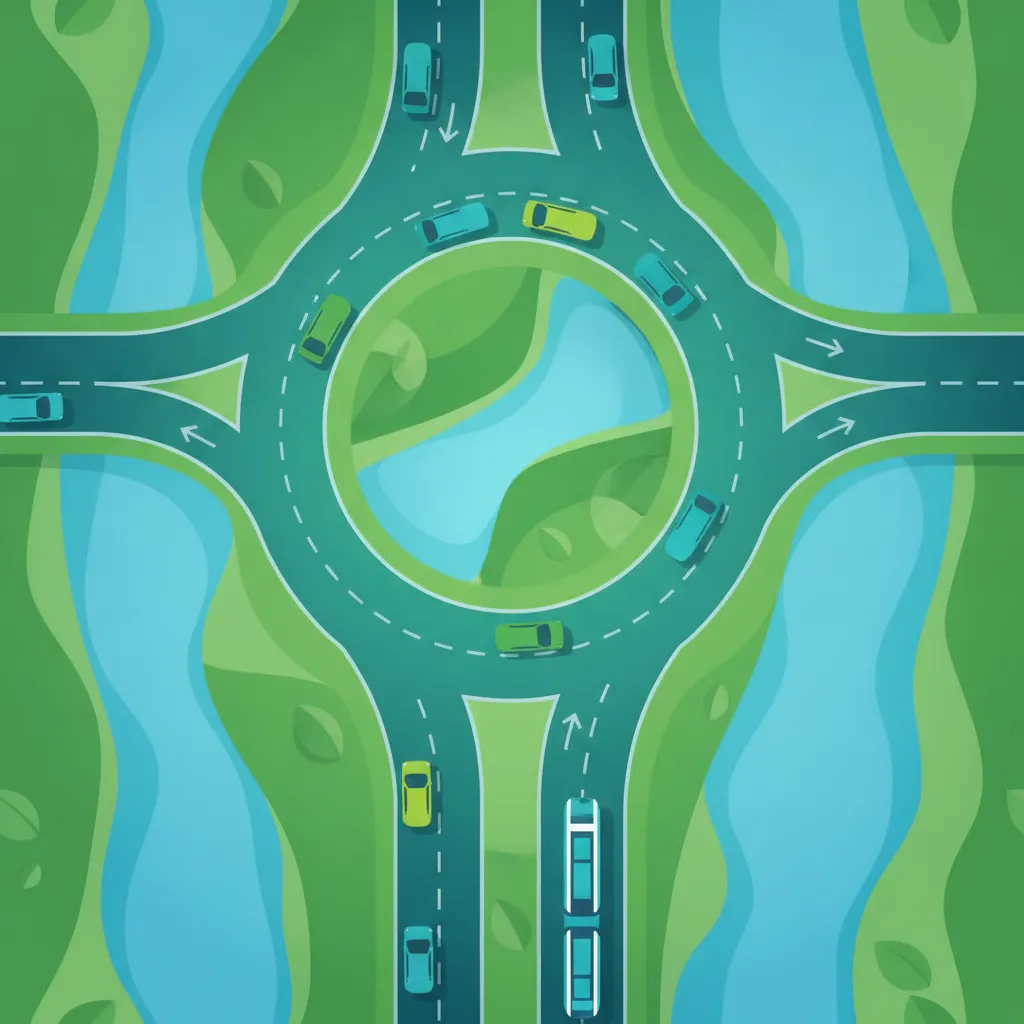
The size of a bus requires careful planning when negotiating complex intersections. This lesson teaches the importance of early lane selection, clear signalling, and comprehensive observation. It provides specific techniques for managing the vehicle's swept path through multi-lane roundabouts and other challenging urban junctions.
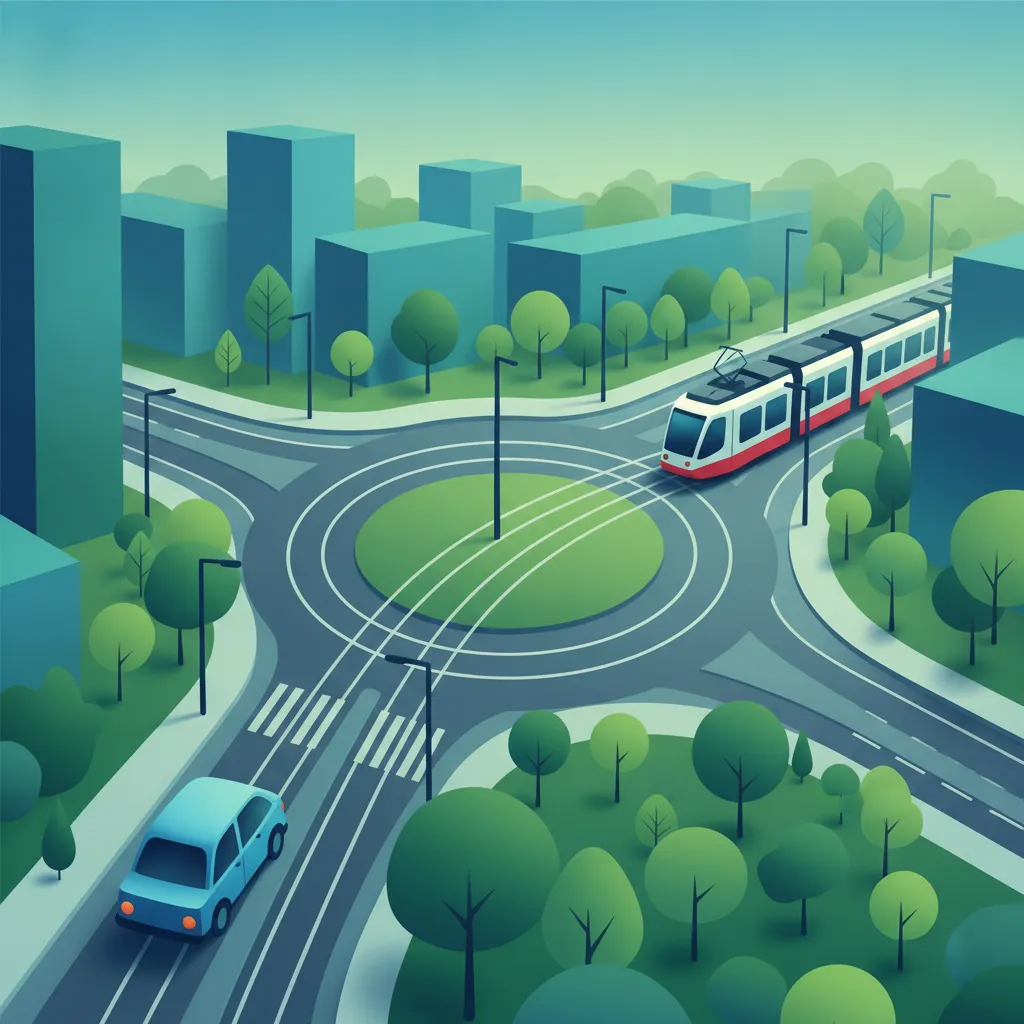
This lesson provides guidance on safely navigating roundabouts and tram lanes, common features in Swiss cities. It covers the rules for yielding, lane positioning within the roundabout, and signaling intentions upon exiting. Special attention is given to the hazards of crossing slippery tram tracks and sharing the road with public transport.
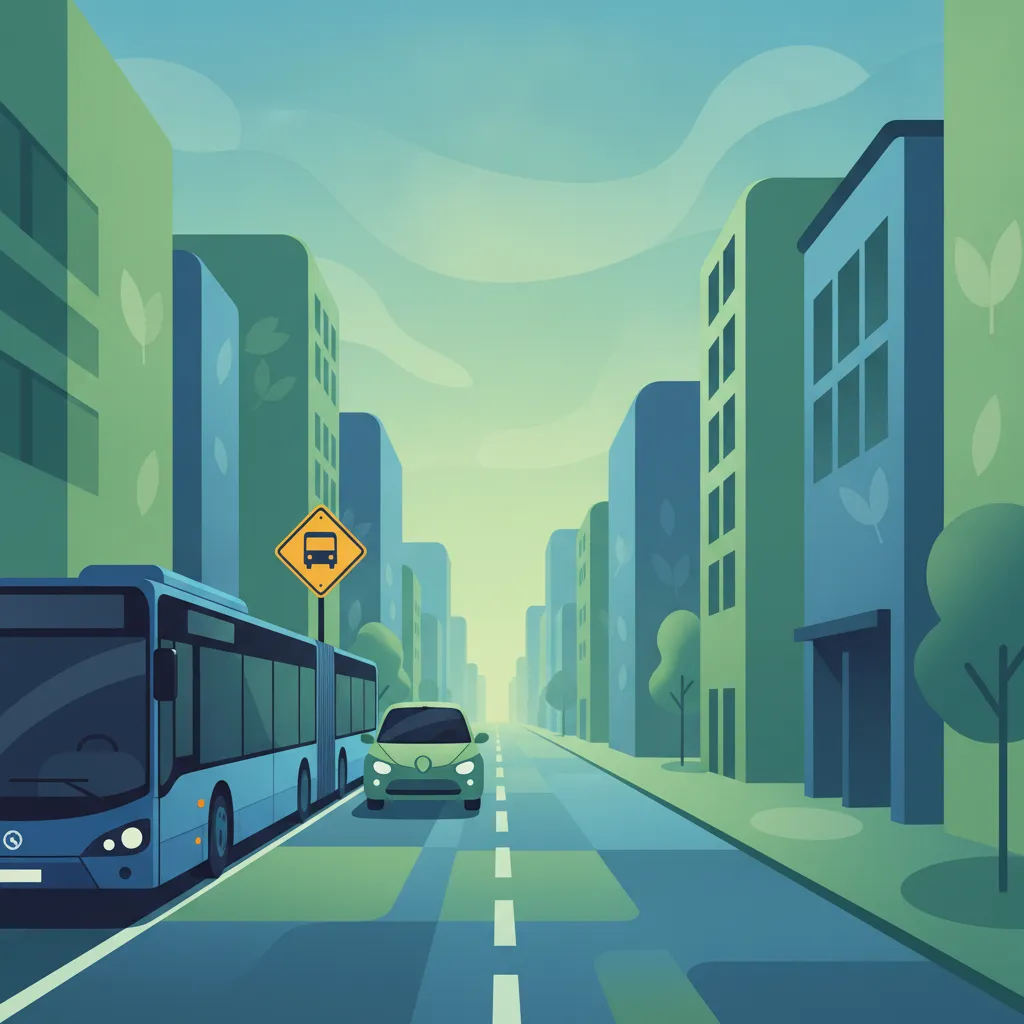
Bus lanes are a key tool for improving service reliability, but they come with specific rules. This lesson covers how to correctly interpret bus lane signs and markings. It also explains the regulations for entering and leaving the lane to make turns or avoid obstructions, and the priority rules associated with them.
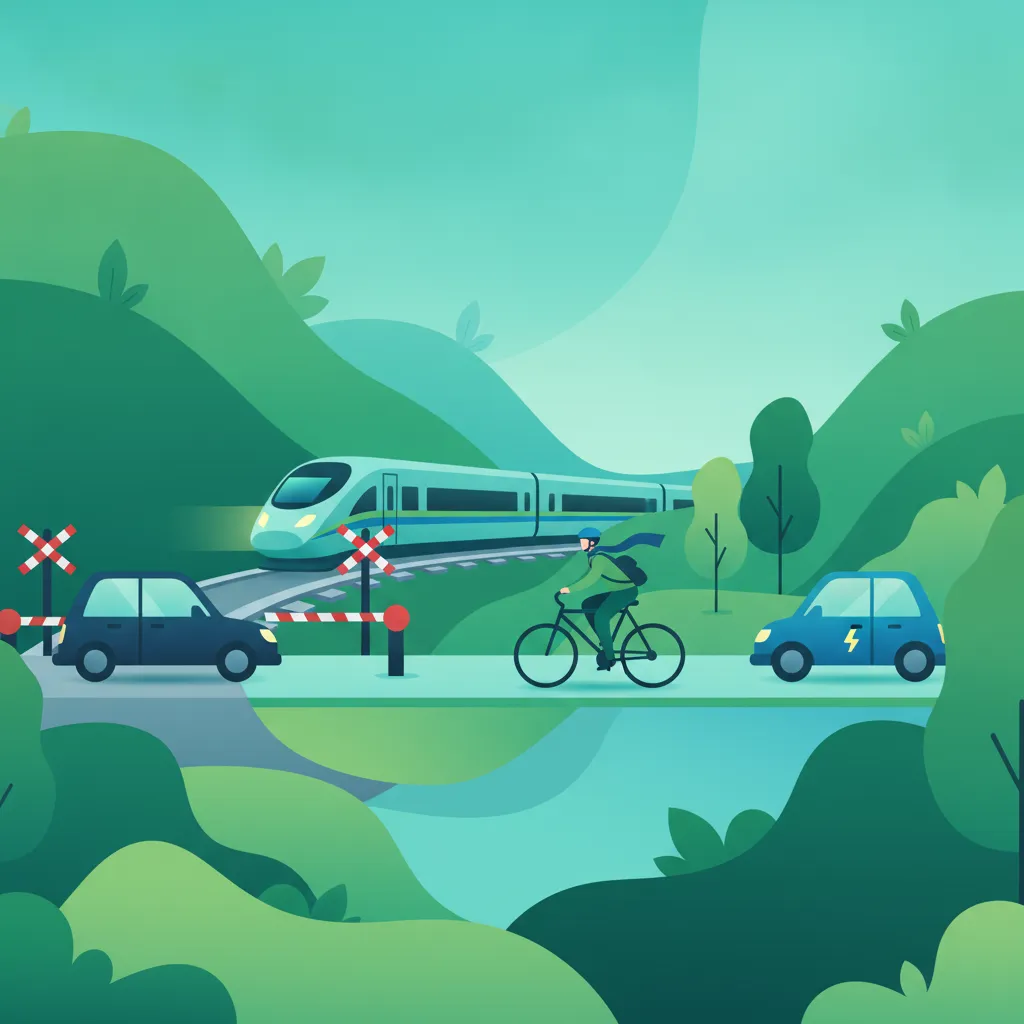
This lesson examines special traffic situations such as railway level crossings and shared zones where different road users coexist. It explains the specific safety procedures required at railway crossings and how to behave in shared zones with mixed traffic. The content also addresses the need to yield to oncoming trains and follow special signage in these unique zones.
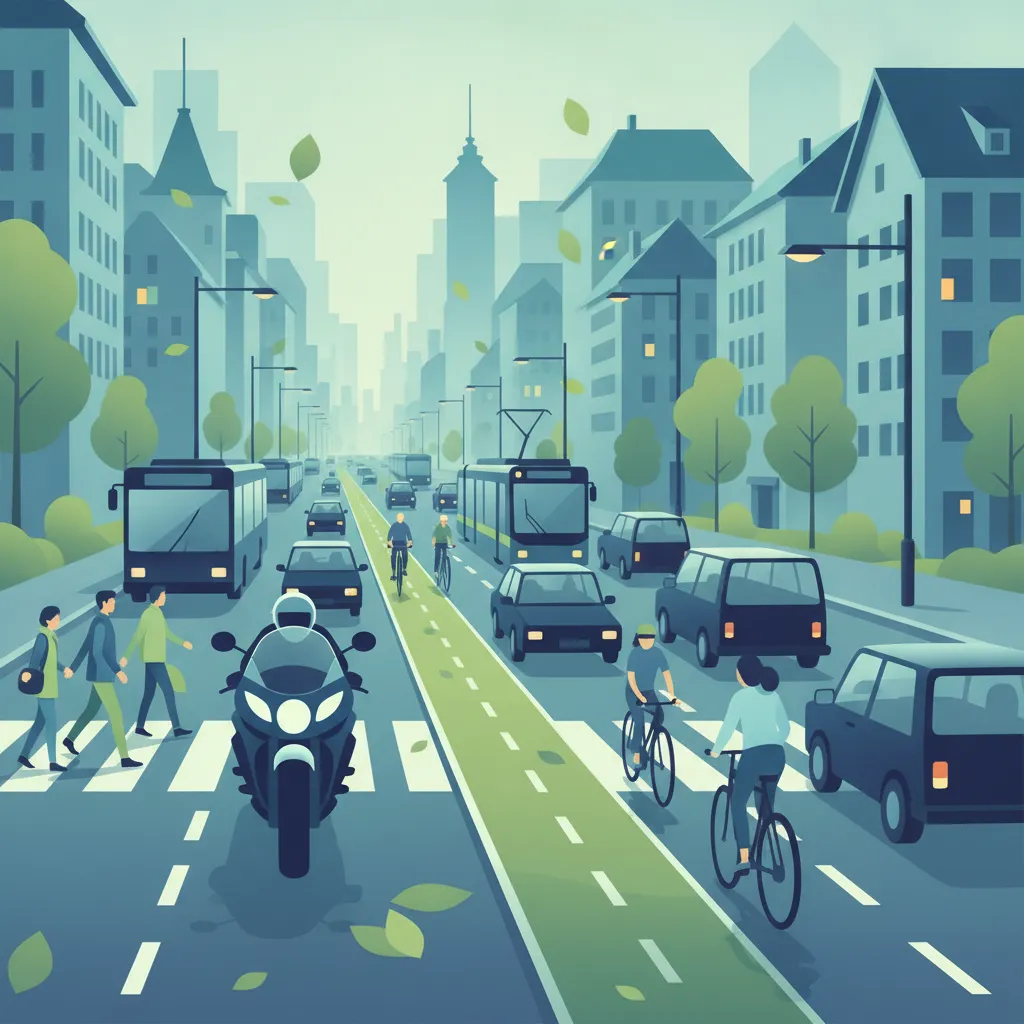
This lesson explores the complexities of riding in busy urban areas with a mix of traffic types. It covers strategies for safely navigating alongside buses, trams, cyclists, and pedestrians. Key topics include respecting designated lanes, anticipating the movements of vulnerable road users, and maintaining heightened situational awareness.

This lesson focuses on general driving safety in areas with a high concentration of children. It stresses the importance of significantly reducing speed, being prepared for unexpected events, and scanning for children between parked cars. The driver must exhibit maximum vigilance in these high-risk environments at all times.
Driving a bus in older parts of a city requires exceptional spatial awareness and precise control. This lesson focuses on assessing clearances, managing front and rear overhang, and negotiating tight turns around parked cars and buildings. A key theme is slow, careful, and deliberate manoeuvring to avoid contact.
Identify and learn to avoid frequent errors and misunderstandings drivers make concerning public transport priority, dedicated lanes, and interactions with trams and buses. Improve your urban driving safety and awareness.
This lesson focuses on the rules governing interactions with public transport vehicles like buses and trams. It explains the priority given to these vehicles at stops and the use of dedicated lanes. Additionally, the content covers tram track crossing procedures and correct vehicle positioning near public transport stops to ensure safety.
Bus lanes are a key tool for improving service reliability, but they come with specific rules. This lesson covers how to correctly interpret bus lane signs and markings. It also explains the regulations for entering and leaving the lane to make turns or avoid obstructions, and the priority rules associated with them.
Sharing road space with trams presents unique challenges, including different priority rules and physical hazards like tracks. This lesson covers the Swiss regulations regarding tram priority at junctions and stops. It also provides practical advice on crossing tram tracks safely and maintaining awareness of tram movements.
This lesson provides guidance on safely navigating roundabouts and tram lanes, common features in Swiss cities. It covers the rules for yielding, lane positioning within the roundabout, and signaling intentions upon exiting. Special attention is given to the hazards of crossing slippery tram tracks and sharing the road with public transport.
This lesson focuses on safe interaction with large vehicles. It highlights the significant blind spots (or 'no-zones') around trucks and buses and teaches riders how to position themselves to remain visible. The content also provides guidance on overtaking large vehicles safely and anticipating their wide turning radius at intersections.
Many Swiss cities use systems that give buses priority at traffic lights to improve punctuality. This lesson explains how these systems detect an approaching bus and alter the signal phasing. You will learn to recognize and correctly respond to the special white light signals that grant this priority.
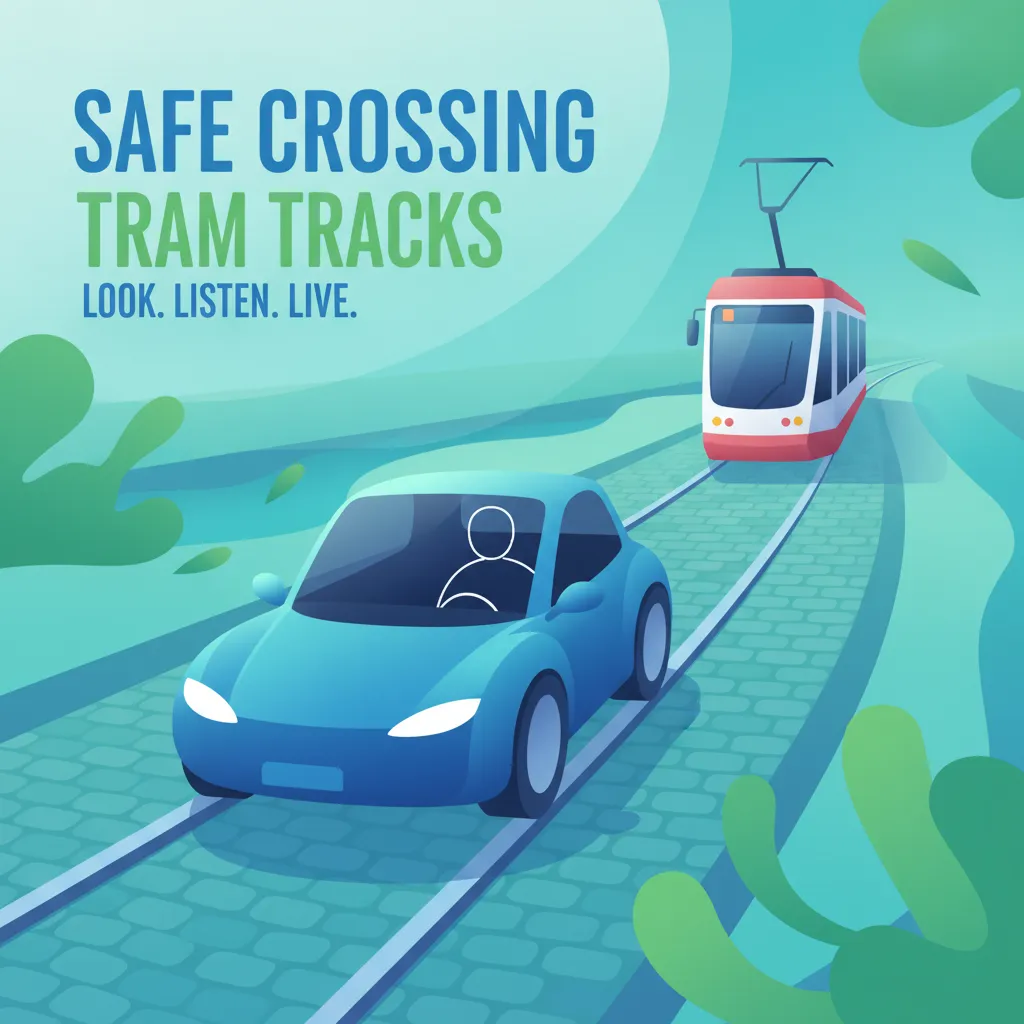
This lesson addresses the unique challenges posed by tram tracks, especially for two-wheeled vehicles. It explains the importance of crossing tracks at as close to a right angle as possible to avoid tyres getting caught, particularly in wet conditions. The lesson also covers the priority rules that often favor trams and how to interpret tram-specific signals.
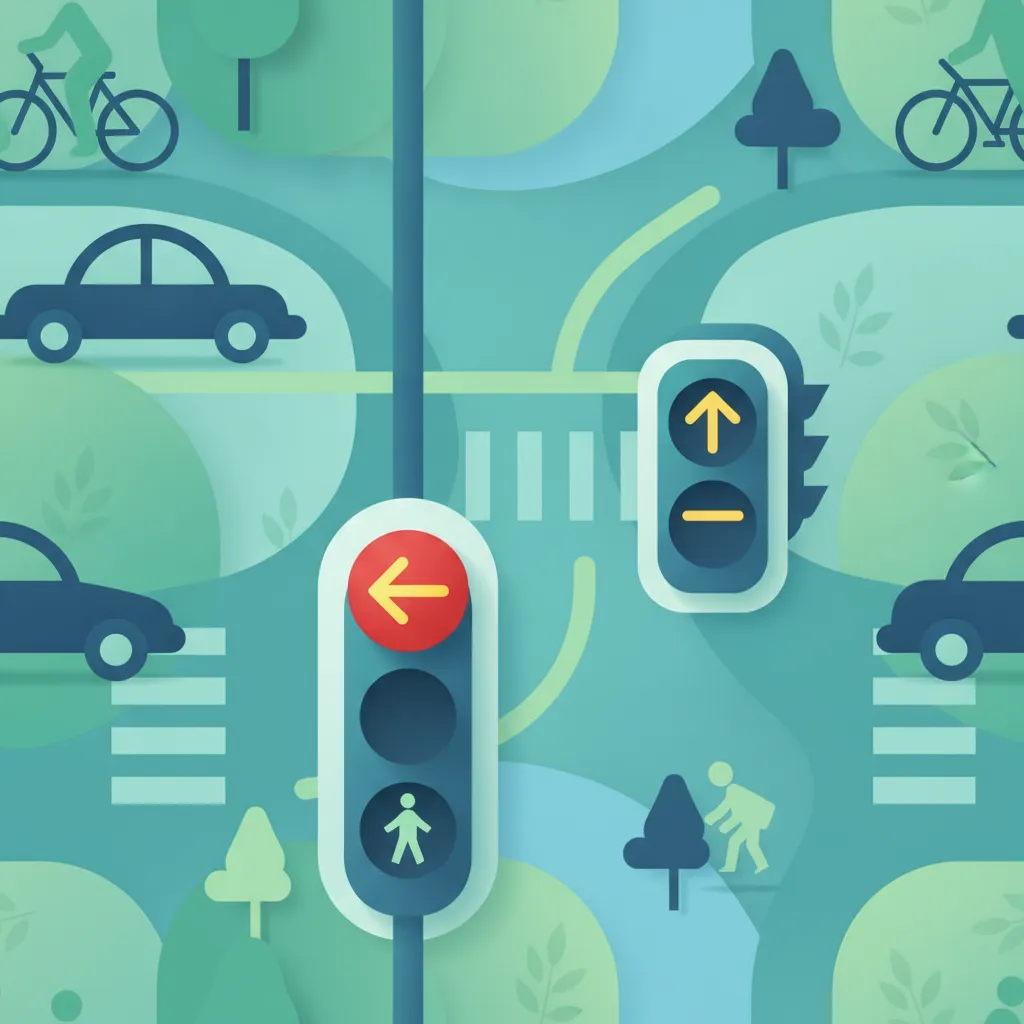
This lesson details the operation of traffic light systems in Switzerland. It explains the sequence and meaning of red, amber, and green lights, including flashing amber signals. The content also covers specific signals for pedestrians and the priority rules associated with tram signals to ensure safe interaction at controlled intersections.
Motorway driving involves high speeds and requires constant concentration. This lesson covers correct lane discipline, safe procedures for joining and leaving the motorway, and techniques for overtaking other large vehicles. Maintaining appropriate speed and a safe following distance is emphasized throughout.
This lesson examines special traffic situations such as railway level crossings and shared zones where different road users coexist. It explains the specific safety procedures required at railway crossings and how to behave in shared zones with mixed traffic. The content also addresses the need to yield to oncoming trains and follow special signage in these unique zones.
Find clear answers to common questions learners have about Public Transport Priority and Tram Interactions. Learn how the lesson is structured, which driving theory objectives it supports, and how it fits into the overall learning path of units and curriculum progression in Switzerland. These explanations help you understand key concepts, lesson flow, and exam focused study goals.
In Switzerland, trams generally have priority over other road users at intersections unless specified otherwise by traffic lights or signs. Always look for tram-specific signals and lane markings to confirm priority.
If a bus is signalling to pull out from a stop in a built-up area, you must allow it to pull away if it is safe to do so. Ensure you maintain a safe distance and only overtake if it is legal and safe to do so.
Generally, bus lanes are reserved for public transport. You may only cross them when necessary to turn, provided you do not obstruct public transport. Check for signs indicating if and when other vehicles are permitted in these lanes.
Approach with caution, observing all signs and signals. Remember that trams cannot change direction easily and have longer braking distances than passenger cars. Always verify the status of traffic lights, as they may have specific phases for trams.
Pinpoint specific Swiss traffic rules, road signs, or driving situations you need to master. Use the practice search to start a focused revision session now and build confidence for your official driving theory exam.