
This lesson explores the critical relationship between load distribution and axle load limits for heavy goods vehicles. By mastering these regulations, you will learn how to maintain vehicle stability, steering precision, and braking performance while meeting strict Swiss legal requirements.

Lesson content overview
Operating heavy goods vehicles, especially in a country like Switzerland with its diverse terrain and stringent safety standards, requires a profound understanding of how weight is distributed across a vehicle's axles. This lesson delves into the concept of axle loads, known in German as Achslast, and the critical importance of proper load distribution for vehicles in the Category C & C1 class. Mastering these principles is not just about legal compliance; it's fundamental for ensuring vehicle stability, maintaining effective steering control, maximizing braking efficiency, and preserving the integrity of road infrastructure.
Improper distribution of cargo can lead to a host of dangerous situations, from unpredictable handling and increased stopping distances to costly damage to road surfaces and potential legal penalties. This chapter will equip you with the knowledge needed to correctly assess and manage axle loads, a vital skill for every professional heavy goods vehicle driver.
The total weight of any vehicle, including its tare weight (unladen mass) and payload, is ultimately transferred to the road surface through its axles. Each axle is designed to bear a specific maximum weight, and exceeding this limit, even if the vehicle's total permissible mass is respected, can have severe consequences. Swiss regulations are particularly strict on these limits to protect both road infrastructure, especially on mountain passes and bridges, and to ensure the inherent safety of the vehicle.
Correct Achslast management directly impacts vehicle stability, steering responsiveness, and the effectiveness of braking systems. When axles are overloaded, tires can wear unevenly or fail entirely, and the vehicle's suspension components can be damaged. Therefore, understanding and adhering to Achslast limits is a cornerstone of safe and legal heavy goods vehicle operation.
Before diving into load distribution, it's crucial to clarify the core terminology related to vehicle masses and loads. These terms form the foundation for all calculations and decisions regarding cargo placement.
The Axle Load (Achslast) is the total weight supported by an individual axle of a vehicle. This includes the weight of the axle assembly itself, the wheels, tires, and all associated suspension components, plus the portion of the vehicle's chassis, engine, cab, and especially the cargo that rests directly or indirectly over that axle. Achslast is typically measured in kilograms (kg) or tonnes (t).
It's important to distinguish between two types of axle loads:
Every axle on a Category C or C1 vehicle has a maximum permissible Achslast, which is legally specified and must never be exceeded, regardless of the total vehicle weight.
The Gross Vehicle Mass (GVM) is the maximum total weight that a single motor vehicle (truck, lorry) is permitted to have when fully loaded. This includes the vehicle's tare weight, its payload (cargo, passengers), and all fluids (fuel, oil, etc.). The GVM is a single overarching limit for the entire vehicle, but it does not dictate how that weight should be distributed among the axles.
For vehicles that tow trailers, the concept of Gross Combination Mass (GCM) becomes relevant. GCM is the maximum total weight of a towing vehicle and its attached trailer(s), including all cargo and passengers, combined. This limit applies specifically to combination vehicles (like those operated with a Category CE license, or Category C with a heavy trailer). It ensures that the entire combination remains within safe and legal operating parameters.
The maximum permissible load that an individual axle of a vehicle may bear, as defined by Swiss regulations and listed on the vehicle identification plate.
The way payload is positioned on a heavy goods vehicle is paramount. Load distribution, also known as payload allocation, is the process of strategically placing cargo to ensure that each axle's load remains within its legal Achslast limits while also maintaining overall vehicle stability and handling characteristics.
Before loading, always consult the vehicle's identification plate to know the exact maximum Achslast for each individual axle, as well as the total GVM. This is your authoritative guide.
Every heavy goods vehicle is fitted with a Vehicle Identification Plate (Zulassungsplakette). This essential plate, typically found on the chassis or inside the door frame, is the authoritative source for the vehicle's key technical specifications, including:
According to Swiss traffic law, the limits specified on this plate are legally binding. Drivers are obligated to ensure that their vehicle, in its current loaded state, operates strictly within these displayed parameters. Ignoring or misinterpreting the data on the Zulassungsplakette is a common mistake that can lead to significant legal and safety issues. It's crucial to check this plate after any vehicle modifications or when operating a new vehicle or combination.
A legally mandated metal plate on a vehicle that lists essential technical data, including maximum permissible axle loads, total permissible mass, and dimensions.
While static load calculations are a good starting point, the reality of driving a heavy goods vehicle involves constant movement and forces that dynamically shift weight. Dynamic load transfer refers to the temporary redistribution of weight among axles that occurs during vehicle maneuvers.
Because dynamic load transfer is an inherent part of vehicle operation, it's vital to incorporate a safety margin into your static load calculations. This means not loading axles precisely up to their maximum permissible Achslast. A common recommendation is to aim for 5-10% below the absolute maximum to allow for these dynamic shifts without risking temporary overload. Failing to account for dynamic load transfer can lead to unexpected handling characteristics, reduced braking performance, and even axle overload penalties, despite a seemingly "correct" static load.
The Center of Gravity (CG) is the theoretical point where the entire weight of the vehicle and its cargo can be considered to act. Its position, both longitudinally (front-to-back) and vertically (height), profoundly affects the vehicle's stability and handling.
When distributing cargo, drivers must not only consider individual axle loads but also how the placement affects the vehicle's overall CG. Heavier items should always be placed as low as possible in the cargo area and as close to the vehicle's longitudinal centerline as practical to maintain a low and central CG.
Swiss road traffic regulations are clear and strictly enforced regarding vehicle masses and dimensions, including axle loads. Adherence to these rules is mandatory for all heavy goods vehicles (Category C, C1, C1E, CE) operating on public roads.
Violations of axle load limits carry significant penalties in Switzerland. These can include:
Do not assume that simply staying under the Gross Vehicle Mass (GVM) is sufficient. You must verify that each individual axle also remains within its specific Achslast limit.
Understanding common mistakes is key to avoiding them. Here are typical violations and the correct approach:
| Violation | Why it's Wrong | Correct Behavior | Consequence |
|---|---|---|---|
| Loading based purely on total payload capacity without considering individual axle limits. | Leads to over-concentration of weight on one or more axles, even if the total vehicle weight is legal. | Always calculate static axle loads for each individual axle and distribute cargo strategically to keep each within its maximum Achslast. | Significant fines, vehicle potentially stopped and unable to proceed, increased risk of accidents due to compromised handling and braking, damage to vehicle components, accelerated road wear. |
| Ignoring dynamic load transfer, especially when placing heavy loads near the rear. | During braking, weight shifts forward, but if the rear is heavily loaded, even a slight shift can put it over the limit temporarily. | Include a safety margin (e.g., 5-10%) in static load calculations for each axle to account for dynamic shifts during driving maneuvers. | Increased risk of rear axle overload during braking, compromising braking efficiency and stability. Can lead to unpredictable handling. |
| Stacking cargo too high, even if within total weight limits. | Significantly raises the vehicle's Center of Gravity (CG), making it unstable and prone to rollover. | Always place the heaviest items as low as possible in the cargo area and secure them properly to prevent shifting. | Greatly increased risk of vehicle rollover, especially on curves, ramps, or uneven terrain. |
| Modifying the vehicle (e.g., adding equipment) without updating official documentation. | The original vehicle identification plate (Zulassungsplakette) becomes inaccurate regarding tare weight, GVM, or axle loads. | Re-register the vehicle after any modifications that affect weight or dimensions and obtain an updated Zulassungsplakette. | Legal penalties for operating a vehicle that does not match its official registration, potential issues with insurance coverage. |
| Overloading a trailer axle while the towing vehicle's axles are under-loaded. | Creates an imbalance, compromising the stability of the entire combination and potentially overloading the trailer's tires and suspension. | Distribute the combined load (towing vehicle + trailer) to balance the weight effectively across all axles in the combination, respecting each individual limit. | Reduced stability of the combination, uneven tire wear, compromised braking performance, potential for jackknifing or snaking. |
The optimal approach to load distribution isn't static; it must adapt to varying operational contexts.
The decisions made regarding axle loads have direct and predictable consequences on vehicle performance, safety, and operational costs:
Here are practical examples demonstrating correct and incorrect load distribution:
Scenario: Loading a Standard Category C Truck A Category C truck has a front axle limit of 8,000 kg and a rear axle limit of 11,500 kg. The driver needs to load 15,000 kg of construction materials. The truck's tare weight is 7,000 kg.
Scenario: Transporting a Heavy Machine on a Semitrailer A driver is transporting a heavy, dense machine on a semitrailer. The semitrailer's tandem axle unit has a limit of 18,000 kg, and the towing vehicle's drive axle (which also bears part of the semitrailer's weight via the fifth wheel) has a limit of 11,500 kg.
Scenario: Driving Downhill on a Mountain Pass with a Full Load A truck is descending a steep Swiss mountain pass with a full load, with its front axle statically loaded at 7,500 kg (limit 8,000 kg) and its rear axle at 11,000 kg (limit 11,500 kg).
To safely and legally operate Category C & C1 goods vehicles in Switzerland, always remember these crucial points regarding axle loads:
By internalizing and applying these principles, you will ensure the safety of yourself and other road users, protect valuable cargo, prolong the life of your vehicle, and contribute to the preservation of Swiss road infrastructure, while remaining fully compliant with the law.
This lesson covers the critical technical requirements for managing axle loads on heavy goods vehicles in Switzerland for Category C/C1 theory. It explains that axle load (Achslast) refers to the weight borne by each individual axle, with strict legal limits specified on the Vehicle Identification Plate (Zulassungsplakette) that must never be exceeded. The lesson emphasizes that proper load distribution is essential for vehicle stability, steering control, and braking efficiency, and that heavy items should be positioned low and centrally to maintain a safe center of gravity. Dynamic load transfer during vehicle maneuvers causes temporary weight shifts, requiring drivers to maintain a safety margin in their calculations. Swiss regulations enforce severe penalties for axle overload violations including fines, operational prohibition, and vehicle impoundment, making compliance a legal obligation for all heavy goods vehicle drivers.
A short set of high-value points that capture the most important learning from this lesson.
Every individual axle has its own legally binding maximum Achslast limit specified on the vehicle identification plate that must never be exceeded
The Vehicle Identification Plate (Zulassungsplakette) is the authoritative legal reference for all axle load limits, GVM, and GCM values
Proper load distribution keeps the vehicle's center of gravity low and centered, which is essential for stability and rollover prevention
Dynamic load transfer during braking, acceleration, and cornering causes temporary weight shifts that can overload axles even when static loads are legal
Staying within the total GVM does not guarantee compliance with individual axle load limits—each must be verified separately
Explore all units and lessons included in this driving theory course.
Distinguish between static axle load (measured when stationary) and dynamic axle load (during vehicle maneuvers like braking or cornering)
GVM limits total vehicle weight while Achslast limits apply to each individual axle—both must be respected independently
Always maintain a 5-10% safety margin on axle load calculations to account for dynamic load transfer during normal driving
Heavier cargo should be positioned as low as possible and distributed evenly to minimize the center of gravity
The Zulassungsplakette lists the specific Achslast limit for each axle and must be consulted before loading
Assuming that staying under the Gross Vehicle Mass (GVM) is sufficient, without checking individual axle loads
Calculating loads based only on static conditions and ignoring the effects of dynamic load transfer during braking or cornering
Stacking cargo too high even when total weight is within limits, which raises the center of gravity and increases rollover risk
Failing to update vehicle registration and the Zulassungsplakette after modifications that affect weight or dimensions
Not accounting for the drawbar weight when towing a trailer, which adds load to the towing vehicle's rear axle via the fifth wheel
Lesson content overview
A short set of high-value points that capture the most important learning from this lesson.
Every individual axle has its own legally binding maximum Achslast limit specified on the vehicle identification plate that must never be exceeded
The Vehicle Identification Plate (Zulassungsplakette) is the authoritative legal reference for all axle load limits, GVM, and GCM values
Proper load distribution keeps the vehicle's center of gravity low and centered, which is essential for stability and rollover prevention
Dynamic load transfer during braking, acceleration, and cornering causes temporary weight shifts that can overload axles even when static loads are legal
Staying within the total GVM does not guarantee compliance with individual axle load limits—each must be verified separately
Explore all units and lessons included in this driving theory course.
Distinguish between static axle load (measured when stationary) and dynamic axle load (during vehicle maneuvers like braking or cornering)
GVM limits total vehicle weight while Achslast limits apply to each individual axle—both must be respected independently
Always maintain a 5-10% safety margin on axle load calculations to account for dynamic load transfer during normal driving
Heavier cargo should be positioned as low as possible and distributed evenly to minimize the center of gravity
The Zulassungsplakette lists the specific Achslast limit for each axle and must be consulted before loading
Assuming that staying under the Gross Vehicle Mass (GVM) is sufficient, without checking individual axle loads
Calculating loads based only on static conditions and ignoring the effects of dynamic load transfer during braking or cornering
Stacking cargo too high even when total weight is within limits, which raises the center of gravity and increases rollover risk
Failing to update vehicle registration and the Zulassungsplakette after modifications that affect weight or dimensions
Not accounting for the drawbar weight when towing a trailer, which adds load to the towing vehicle's rear axle via the fifth wheel
Explore search topics learners often look for when studying Understanding Axle Loads (Achslast) and Their Distribution. These topics reflect common questions about road rules, driving situations, safety guidance, and lesson level theory preparation for learners in Switzerland.
Browse additional driving theory lessons that cover connected traffic rules, road signs, and common driving situations related to this topic. Improve your understanding of how different rules interact across everyday traffic scenarios.
Explore the severe consequences of improper axle load management for Swiss heavy goods vehicles. Understand how incorrect distribution impacts vehicle stability, braking efficiency, tire wear, and road infrastructure integrity, leading to legal penalties.

Overloading is a serious offence with severe safety and legal ramifications. This lesson details how excess weight drastically increases braking distances, puts extreme stress on tyres leading to blowouts, and negatively affects steering and overall stability. Furthermore, it discusses the substantial fines, potential license withdrawal, and driver liability that result from violating Swiss weight regulations.
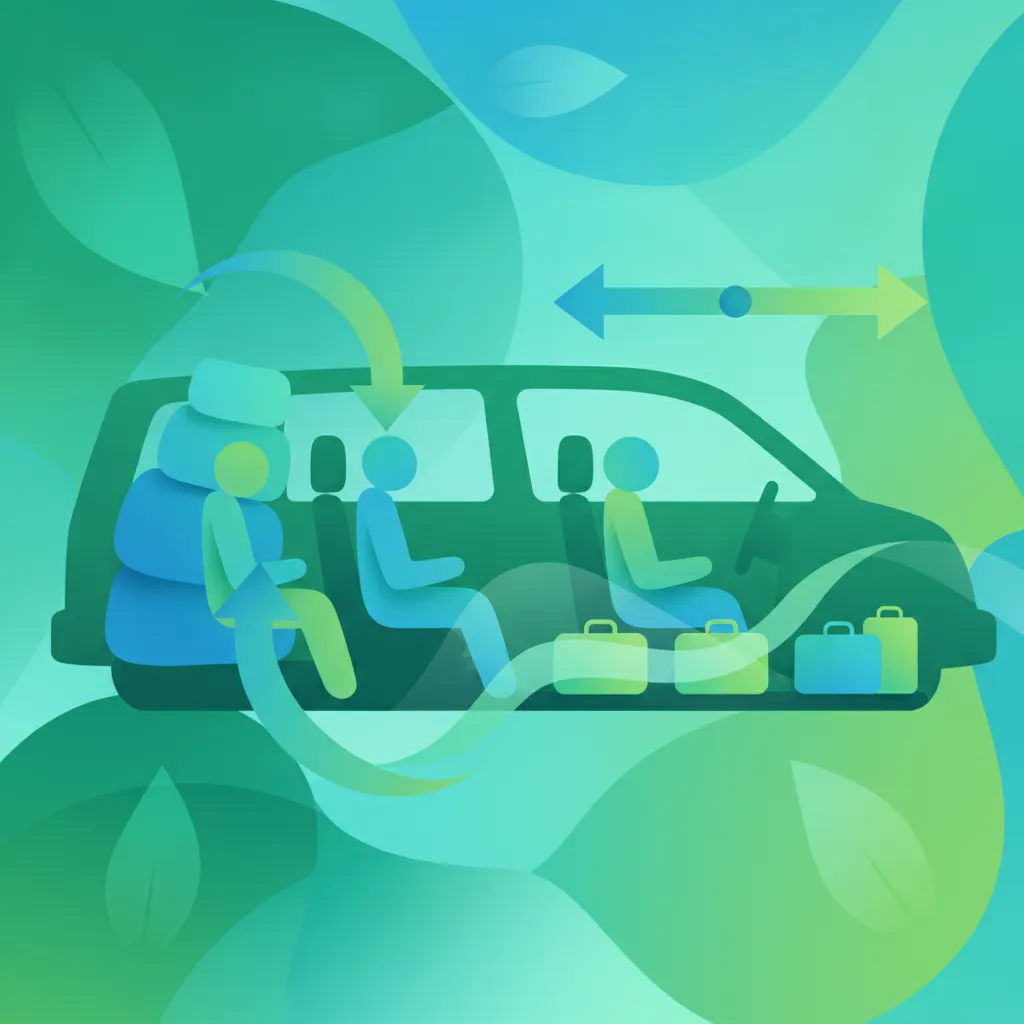
Correct load distribution is essential for safe handling and braking. This lesson explains that loads should be placed as low as possible and distributed evenly to maintain a low centre of gravity and comply with axle weight limits. A high or poorly positioned centre of gravity dramatically increases the risk of rollover, especially when cornering or in an emergency manoeuvre.

Heavy vehicles, especially those with a high centre ofgravity, are susceptible to rolling over. This lesson examines the primary causes, including excessive speed on bends or roundabouts, sudden steering manoeuvres, and the 'sloshing' effect of liquid loads in tankers. It reinforces that maintaining a sensible speed and driving smoothly are the best ways to mitigate this serious risk.
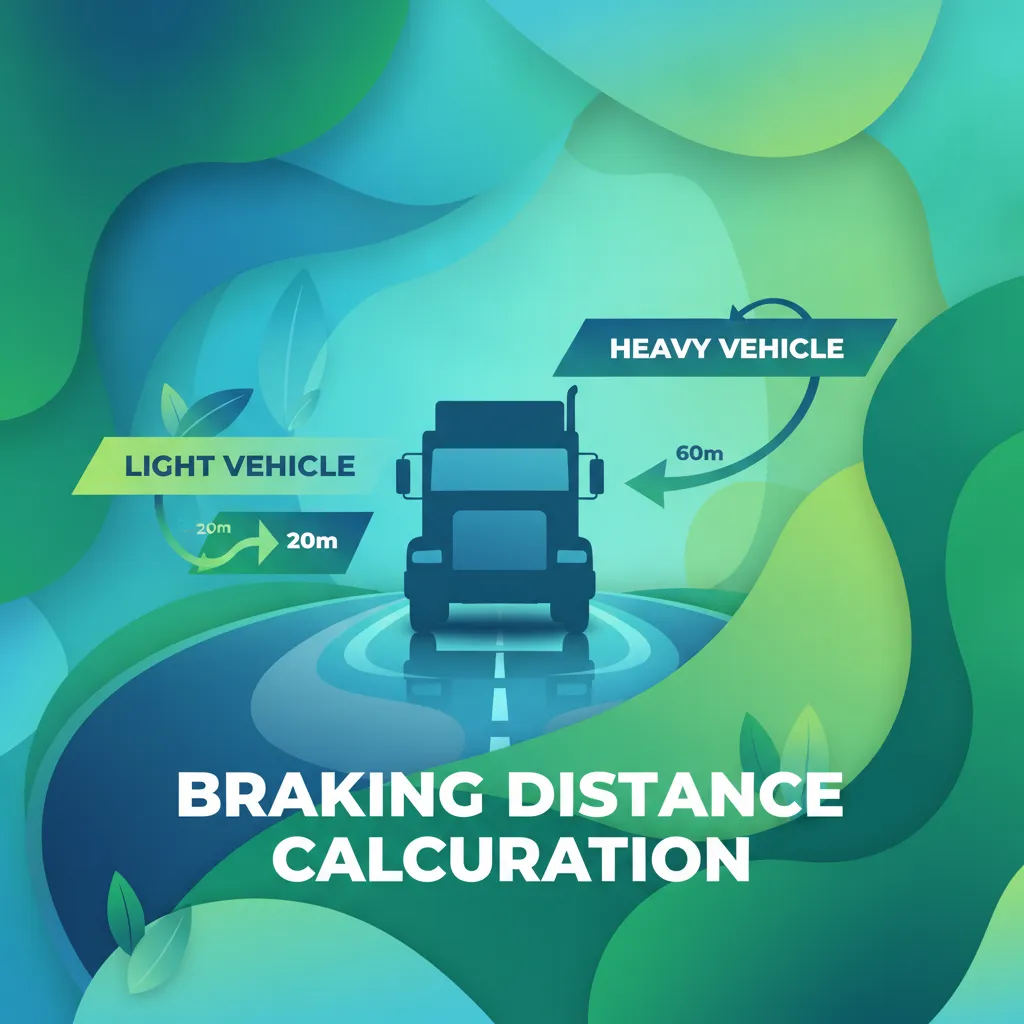
The immense mass of a loaded truck means its braking distance is far greater than that of a car. This lesson breaks down total stopping distance into reaction distance and braking distance, explaining how speed, weight, and road conditions have an exponential effect. It reinforces the necessity of maintaining a significantly larger following distance to ensure enough space to stop safely in an emergency.
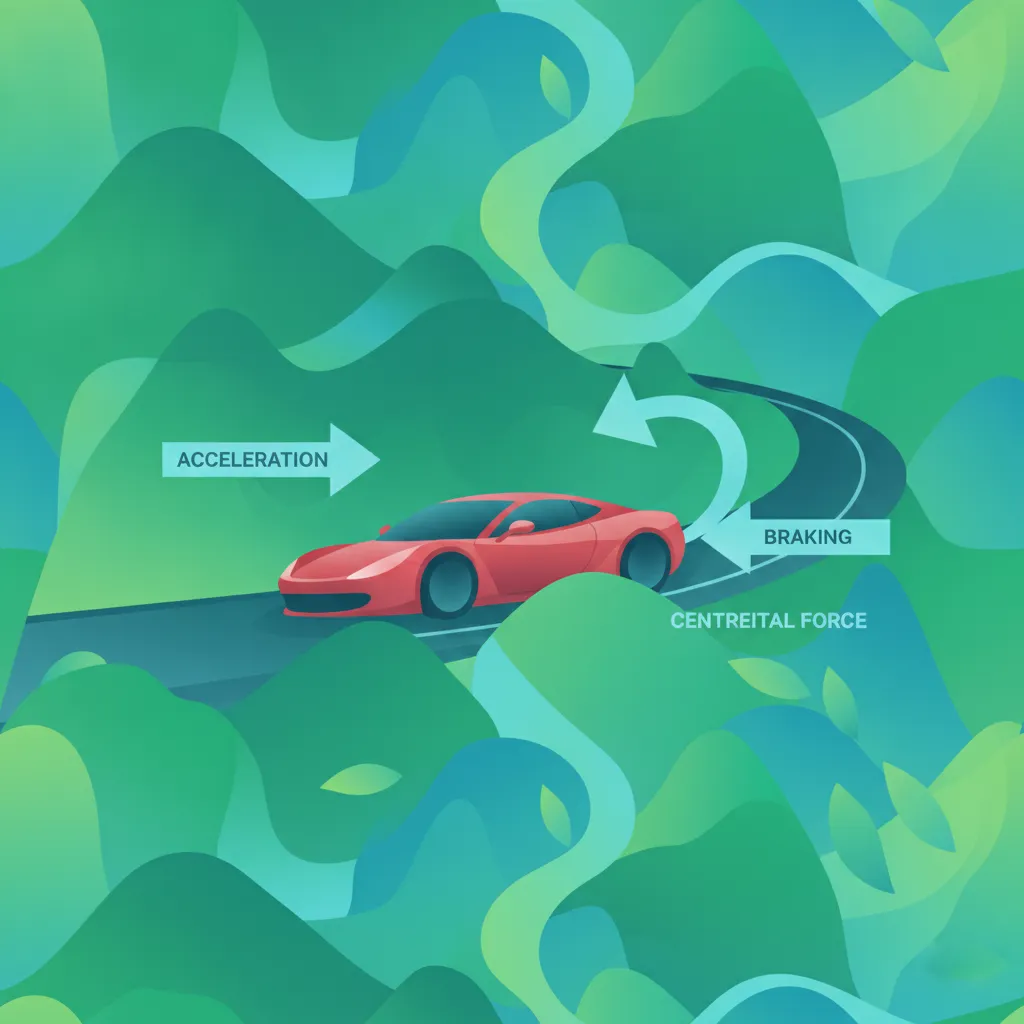
A load is not static; it is subjected to significant forces during transport. This lesson explains how acceleration, braking (deceleration), and cornering create powerful inertial forces that try to move the cargo. Load securing systems must be strong enough to counteract these forces to prevent the load from sliding forward during braking, backward during acceleration, or sideways when turning.

Swiss law strictly regulates the maximum dimensions of commercial vehicles to ensure they can safely navigate the infrastructure. This lesson specifies the standard limits for vehicle height (4.0m), width (2.55m), and length for various lorry and trailer combinations. Adhering to these dimensions is crucial for avoiding collisions with bridges, tunnels, and other structures, and for navigating narrow roads.

Despite the complex mirror systems, large areas around a truck remain hidden from the driver's view. This lesson maps out these significant blind spots: directly in front, behind, and along both sides of the vehicle. It teaches drivers to be constantly aware of these 'no-zones' and to anticipate that smaller vehicles, cyclists, or pedestrians may be hidden within them, especially before changing lanes or turning.

Wet or icy roads drastically reduce tyre grip and can double or triple braking distances. This lesson stresses the importance of significantly reducing overall speed and increasing following distances in such conditions. It advises on using brakes with extreme care to avoid skidding and explains how the vehicle's retarder should be used with caution as it can cause the drive wheels to lock up on slippery surfaces.

This lesson provides a structured guide for managing the scene of a road traffic accident. It covers the internationally recognized priorities: assess for danger, make the scene safe, send for help by calling emergency services (112), and provide first aid to the injured if trained to do so. It also details the legal requirement to stop and exchange information after being involved in a collision.

Losing part of a load on the road creates an immediate and serious hazard for other drivers. This lesson outlines the driver's responsibilities: stop in a safe place, assess the situation from a safe distance, and immediately alert the police. The driver's primary role is to warn other road users and not to attempt to retrieve the load from a live carriageway.
Learn how dynamic load transfer affects axle loads during driving maneuvers like braking and cornering. Understand the importance of safety margins and Swiss regulations for managing these shifting weights in heavy goods vehicles.
A load is not static; it is subjected to significant forces during transport. This lesson explains how acceleration, braking (deceleration), and cornering create powerful inertial forces that try to move the cargo. Load securing systems must be strong enough to counteract these forces to prevent the load from sliding forward during braking, backward during acceleration, or sideways when turning.
The immense mass of a loaded truck means its braking distance is far greater than that of a car. This lesson breaks down total stopping distance into reaction distance and braking distance, explaining how speed, weight, and road conditions have an exponential effect. It reinforces the necessity of maintaining a significantly larger following distance to ensure enough space to stop safely in an emergency.
Heavy vehicles, especially those with a high centre ofgravity, are susceptible to rolling over. This lesson examines the primary causes, including excessive speed on bends or roundabouts, sudden steering manoeuvres, and the 'sloshing' effect of liquid loads in tankers. It reinforces that maintaining a sensible speed and driving smoothly are the best ways to mitigate this serious risk.
Correct load distribution is essential for safe handling and braking. This lesson explains that loads should be placed as low as possible and distributed evenly to maintain a low centre of gravity and comply with axle weight limits. A high or poorly positioned centre of gravity dramatically increases the risk of rollover, especially when cornering or in an emergency manoeuvre.
Overloading is a serious offence with severe safety and legal ramifications. This lesson details how excess weight drastically increases braking distances, puts extreme stress on tyres leading to blowouts, and negatively affects steering and overall stability. Furthermore, it discusses the substantial fines, potential license withdrawal, and driver liability that result from violating Swiss weight regulations.

Driving in the Alps requires a high level of skill and vehicle sympathy. This lesson covers techniques for climbing steep gradients by selecting the correct gear to maintain momentum without straining the engine. It reiterates the critical importance of using low gears and auxiliary brakes for descending, to ensure the service brakes remain cool and effective for the entire descent.

Two critical issues can affect air brake performance. This lesson explains brake lag, the slight delay between pressing the pedal and the brakes applying, and brake fade, a dangerous loss of braking power caused by overheating from prolonged or heavy use. It emphasizes that using endurance brakes and selecting the correct gear on descents are key techniques to prevent brake fade.

Buses have a high centre of gravity, making them susceptible to rollover forces. This lesson explains how factors like passenger load, luggage placement, and speed affect vehicle stability. Understanding these principles is essential for safe cornering, navigating roundabouts, and handling the vehicle in strong crosswinds.
Wet or icy roads drastically reduce tyre grip and can double or triple braking distances. This lesson stresses the importance of significantly reducing overall speed and increasing following distances in such conditions. It advises on using brakes with extreme care to avoid skidding and explains how the vehicle's retarder should be used with caution as it can cause the drive wheels to lock up on slippery surfaces.

When a long vehicle turns, the rear wheels follow a shorter path than the front wheels (swept path), and the rear of the vehicle swings outwards (tail swing). This lesson explains these critical concepts. You will learn how to position the vehicle before a turn to avoid mounting the kerb or striking objects like signs and pedestrians with the rear corner.
Find clear answers to common questions learners have about Understanding Axle Loads (Achslast) and Their Distribution. Learn how the lesson is structured, which driving theory objectives it supports, and how it fits into the overall learning path of units and curriculum progression in Switzerland. These explanations help you understand key concepts, lesson flow, and exam focused study goals.
Exceeding axle load limits compromises steering geometry, braking efficiency, and road safety. It can lead to mechanical failure and is a common cause of bridge and road damage in Switzerland.
You must position the center of gravity of the load as close as possible to the designed load center of the vehicle. Always check axle scales if available and verify the weight against the vehicle identification plate.
Yes, improper weight distribution can lead to instability on curves and steep descents. Correct axle loading is vital to ensure that tires maintain proper grip and the vehicle remains balanced on Swiss mountain routes.
Overloading constitutes a serious traffic offence in Switzerland. You may be forced to unload the excess cargo before proceeding, face substantial fines, and potentially have your driving license and vehicle registration reviewed.
Pinpoint specific Swiss traffic rules, road signs, or driving situations you need to master. Use the practice search to start a focused revision session now and build confidence for your official driving theory exam.