
This lesson introduces the fundamental weight terminology required for operating Category C and C1 goods vehicles in Switzerland. By mastering these definitions, you will build the necessary foundation to interpret vehicle documentation and perform legal load calculations throughout the rest of this unit.
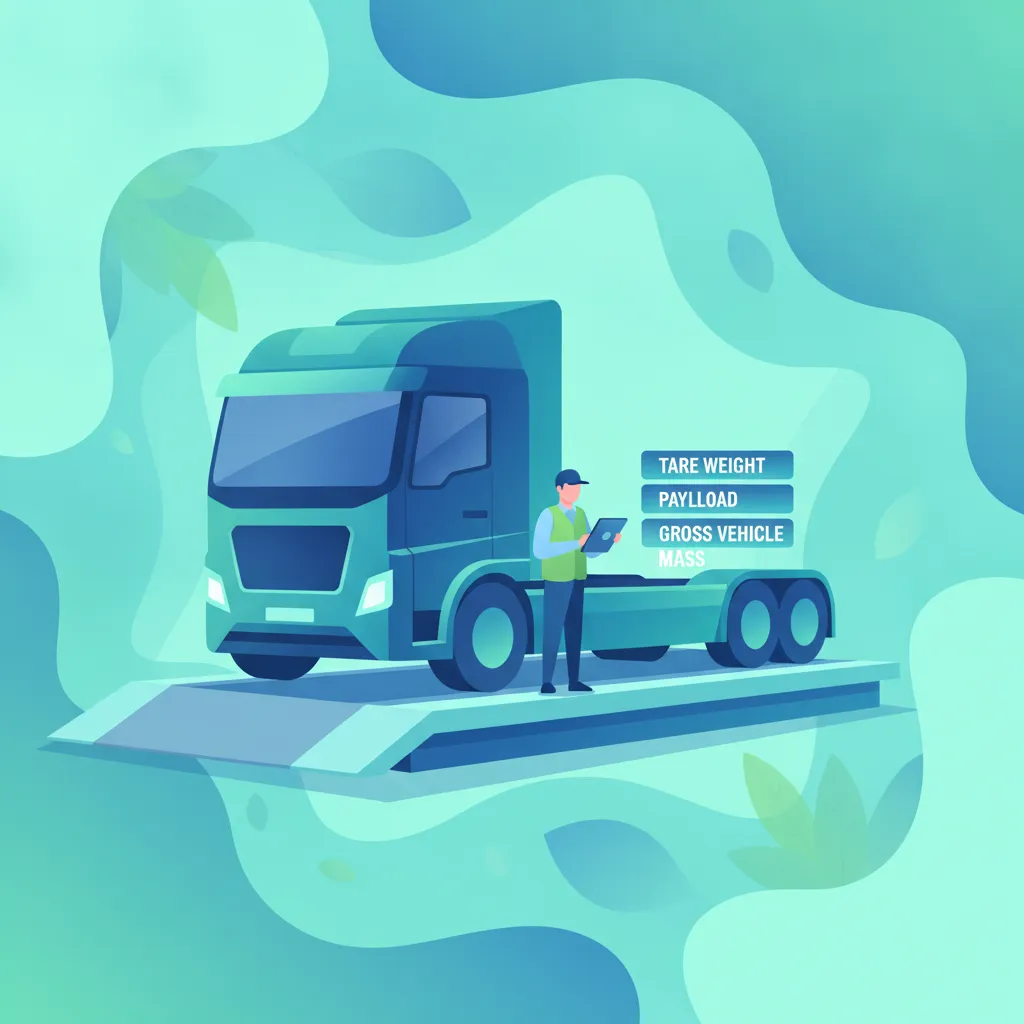
Lesson content overview
Operating heavy goods vehicles (HGVs) safely and legally in Switzerland requires a precise understanding of critical weight-related terminology. This lesson clarifies the essential terms: tare weight (Leergewicht), payload (Nutzlast), and gross vehicle mass (Gesamtgewicht). Mastering these concepts is fundamental for all Category C and C1 drivers, ensuring compliance with Swiss regulations, preventing dangerous overloading, and maintaining road safety.
The operational safety and legality of a heavy goods vehicle are intrinsically linked to its weight. Every truck, van, or combination has specific weight limits set by the manufacturer and by law. These limits are not arbitrary; they are designed to protect road infrastructure, ensure vehicle stability, optimize braking performance, and ultimately safeguard all road users. For professional drivers of Category C and C1 goods vehicles, a deep understanding of these terms is paramount. It forms the basis for proper load planning, risk assessment, and adherence to the Official Swiss Driving Theory Course requirements.
The tare weight (Leergewicht) is a foundational concept in heavy vehicle operations. It represents the weight of the vehicle in its complete, operational, but empty state.
The weight of a vehicle as built by the manufacturer, including all standard equipment, necessary operating fluids (such as fuel, oil, and coolant), and any permanent fixtures. It explicitly excludes any cargo, passengers, or driver.
This weight provides the baseline for all subsequent load calculations. When a vehicle is manufactured, its tare weight is determined and typically recorded. It's the "ready-to-drive" weight without anyone or anything being transported.
The tare weight is crucial for several reasons:
Drivers sometimes misunderstand what is included in the tare weight:
For example, a truck might have a declared tare weight of 5,500 kg. This means the vehicle itself, with its fuel, oil, and other necessary fluids, weighs 5,500 kg before any goods, driver, or crew are added.
Once the tare weight is established, the next critical term for goods vehicle drivers is payload (Nutzlast). This refers to the actual carrying capacity of the vehicle.
The maximum weight of cargo, passengers, and additional equipment (including the driver) that a vehicle is legally permitted to carry, without exceeding its Gross Vehicle Mass (GVM).
In essence, payload is the difference between the vehicle's maximum permissible total weight (GVM) and its empty weight (tare weight).
The relationship is straightforward: Payload = Gross Vehicle Mass (GVM) - Tare Weight
This calculation directly tells you how much additional weight you can legally put into or onto your vehicle. For instance, if a truck has a GVM of 7,500 kg and a tare weight of 5,500 kg, its maximum payload is 2,000 kg. This 2,000 kg must accommodate all cargo, the driver, any passengers, and any loose equipment not accounted for in the tare weight.
The Gross Vehicle Mass (GVM), also known as Gross Vehicle Weight (GVW) or Gesamtgewicht in German, is the ultimate limit for any single vehicle.
The maximum permissible weight of a vehicle when it is fully loaded, including its own tare weight, all cargo, passengers, and the driver. This is the absolute upper limit that the vehicle is legally allowed to weigh on the road.
The GVM is set by the vehicle manufacturer and certified by authorities based on the vehicle's design, structural integrity, axle capacities, braking performance, and tire ratings. It is a critical safety and legal parameter.
For example, if a Category C truck has a GVM of 12,000 kg, its total weight, including everything on board, must never exceed 12,000 kg. Loading it to 12,500 kg, even for a short distance, is a violation with severe potential consequences.
These three terms are inextricably linked, forming the cornerstone of safe and legal heavy vehicle operations. The relationship is a simple mathematical equation:
Gross Vehicle Mass (GVM) = Tare Weight + Payload
Conversely, to find the maximum payload available:
Payload = Gross Vehicle Mass (GVM) - Tare Weight
This formula highlights that any increase in the vehicle's tare weight (e.g., by adding permanent equipment) directly reduces the available payload, assuming the GVM remains constant. Similarly, if a load exceeds the calculated payload, it inevitably pushes the total weight beyond the GVM, leading to an illegal and dangerous situation.
Understanding and applying this relationship before every journey is a fundamental responsibility of a Category C or C1 driver.
In Switzerland, the adherence to vehicle weight limits is strictly enforced by the Road Traffic Act (SVG) and the Ordinance on Heavy Vehicles (LSV). These regulations are designed to maintain road safety, protect infrastructure, and ensure fair competition.
Violation of weight regulations can result in significant fines, penalty points, vehicle detention, and even criminal charges, especially in cases of severe or repeated overloading. Furthermore, an overloaded vehicle may have its insurance coverage invalidated in the event of an accident.
The V4 plate is your primary source of official weight information. It typically displays:
Drivers must know where this plate is located on their vehicle and be able to read and interpret its information accurately. Refer to Section 2.6, "Reading and Interpreting the Vehicle Identification Plate," for more details.
Effective load management is a daily task for professional HGV drivers. It involves meticulous planning and verification to ensure legal and safe transport.
Confirm the vehicle's official Tare Weight (Leergewicht) from the V4 plate.
Note the maximum Gross Vehicle Mass (GVM / Gesamtgewicht) from the V4 plate.
Calculate the available Payload (Nutzlast): GVM – Tare Weight.
Estimate or weigh all cargo to be loaded.
Include the weight of the driver and any passengers.
Add the weight of any non-standard equipment or supplies.
Ensure the total load does not exceed the calculated Payload.
Verify that the overall GVM (Tare Weight + Actual Load) does not exceed the maximum permissible GVM.
Consider load distribution to avoid individual axle overloads.
Overloading is not merely a legal infraction; it poses significant safety risks and has detrimental effects on the vehicle, infrastructure, and other road users.
While the core principles of tare weight, payload, and GVM remain constant, external conditions can amplify the risks associated with improper loading.
By strictly adhering to weight limits and understanding these contextual factors, professional drivers ensure their own safety, the safety of other road users, and the longevity of both their vehicle and public infrastructure.
This lesson establishes the essential weight terminology for Swiss heavy goods vehicle operation: tare weight (Leergewicht) represents the vehicle's empty mass including operating fluids; payload (Nutzlast) is the maximum cargo capacity calculable by subtracting tare from GVM; and Gross Vehicle Mass (GVM/Gesamtgewicht) is the absolute legal maximum total weight that must never be exceeded. These three values are mathematically linked (GVM = Tare + Payload), and all official values are displayed on the vehicle identification plate (V4). Understanding these terms is critical for legal load compliance and safety, as overloading risks braking failure, reduced stability, increased stopping distances, and serious legal penalties under Swiss Road Traffic Act (SVG) regulations.
A short set of high-value points that capture the most important learning from this lesson.
Tare weight (Leergewicht) is the vehicle's empty operational weight including fuel, oil, coolant, and standard equipment, but excluding any cargo, passengers, or driver.
Payload (Nutzlast) is the maximum permissible weight you can add to the vehicle for cargo, passengers, and equipment, calculated as GVM minus tare weight.
Gross Vehicle Mass (GVM/Gesamtgewicht) is the absolute legal maximum total weight that must never be exceeded under any circumstances.
The vehicle identification plate (V4) displays official tare weight, GVM, and axle load limits and must be consulted before every journey.
These three values form a fixed mathematical relationship: GVM equals tare weight plus payload.
Explore all units and lessons included in this driving theory course.
Fuel is included in tare weight, not deducted from payload, so fuel weight does not reduce your cargo capacity.
Driver and passenger weights must be counted as part of the payload, not added on top of it.
GVM cannot be exceeded even slightly; any overload, however small, is illegal and dangerous.
Post-manufacture modifications (like lift gates or heavy equipment) may alter actual tare weight and reduce available payload.
Axle load limits must also be respected; exceeding GVM is not required to violate axle weight regulations.
Assuming fuel weight should be subtracted from payload, when it is already included in the tare weight.
Forgetting to include the driver's own weight when calculating how much cargo can be loaded.
Believing GVM limits are flexible or can be slightly exceeded if the overload seems minor.
Assuming the GVM is the only weight limit to check, ignoring that individual axle loads have separate limits.
Adding heavy aftermarket equipment without updating official documentation, leading to unknowingly reduced payload.
Lesson content overview
A short set of high-value points that capture the most important learning from this lesson.
Tare weight (Leergewicht) is the vehicle's empty operational weight including fuel, oil, coolant, and standard equipment, but excluding any cargo, passengers, or driver.
Payload (Nutzlast) is the maximum permissible weight you can add to the vehicle for cargo, passengers, and equipment, calculated as GVM minus tare weight.
Gross Vehicle Mass (GVM/Gesamtgewicht) is the absolute legal maximum total weight that must never be exceeded under any circumstances.
The vehicle identification plate (V4) displays official tare weight, GVM, and axle load limits and must be consulted before every journey.
These three values form a fixed mathematical relationship: GVM equals tare weight plus payload.
Explore all units and lessons included in this driving theory course.
Fuel is included in tare weight, not deducted from payload, so fuel weight does not reduce your cargo capacity.
Driver and passenger weights must be counted as part of the payload, not added on top of it.
GVM cannot be exceeded even slightly; any overload, however small, is illegal and dangerous.
Post-manufacture modifications (like lift gates or heavy equipment) may alter actual tare weight and reduce available payload.
Axle load limits must also be respected; exceeding GVM is not required to violate axle weight regulations.
Assuming fuel weight should be subtracted from payload, when it is already included in the tare weight.
Forgetting to include the driver's own weight when calculating how much cargo can be loaded.
Believing GVM limits are flexible or can be slightly exceeded if the overload seems minor.
Assuming the GVM is the only weight limit to check, ignoring that individual axle loads have separate limits.
Adding heavy aftermarket equipment without updating official documentation, leading to unknowingly reduced payload.
Explore search topics learners often look for when studying Key Terminology: Tare Weight, Payload, Gross Vehicle Mass. These topics reflect common questions about road rules, driving situations, safety guidance, and lesson level theory preparation for learners in Switzerland.
Browse additional driving theory lessons that cover connected traffic rules, road signs, and common driving situations related to this topic. Improve your understanding of how different rules interact across everyday traffic scenarios.
Clarifies essential weight definitions for Category C and C1 drivers in Switzerland: tare weight (empty vehicle), payload (cargo capacity), and gross vehicle mass (total allowed weight). Essential for legal loading and road safety.
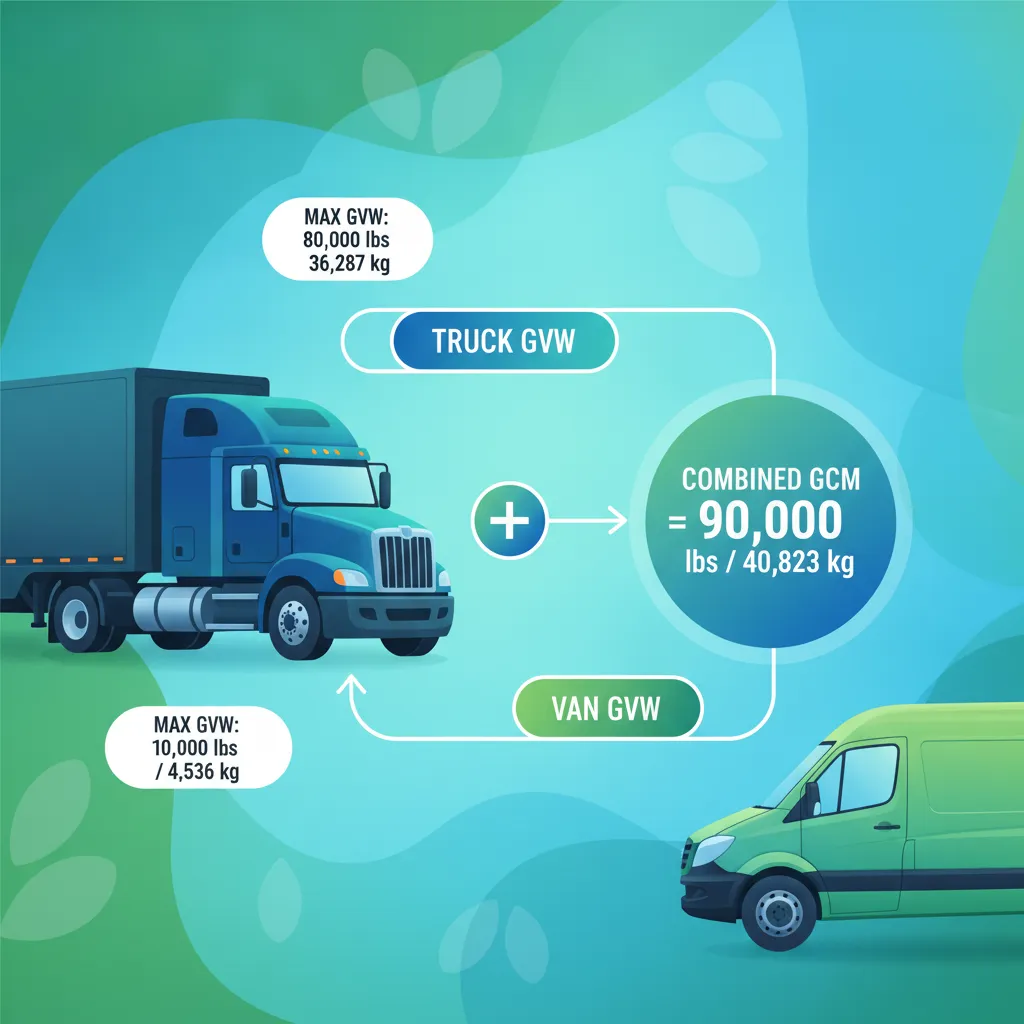
When a lorry tows a trailer, the total weight of the entire combination must not exceed the gross combination mass limit. This lesson explains how to find this value and why it is critical for ensuring the vehicle's engine, transmission, and brakes can safely handle the entire load. Exceeding the GCM compromises braking effectiveness, acceleration, and the ability to climb gradients, creating a significant safety risk.

Overloading is a serious offence with severe safety and legal ramifications. This lesson details how excess weight drastically increases braking distances, puts extreme stress on tyres leading to blowouts, and negatively affects steering and overall stability. Furthermore, it discusses the substantial fines, potential license withdrawal, and driver liability that result from violating Swiss weight regulations.

The manufacturer's identification plate is a critical source of information about a vehicle's technical limits. This lesson teaches drivers where to find this plate and how to interpret the data it contains, including maximum gross vehicle weight, gross combination weight, and maximum axle loads. This information is essential for ensuring that the vehicle is operated legally and within its designed safety parameters.
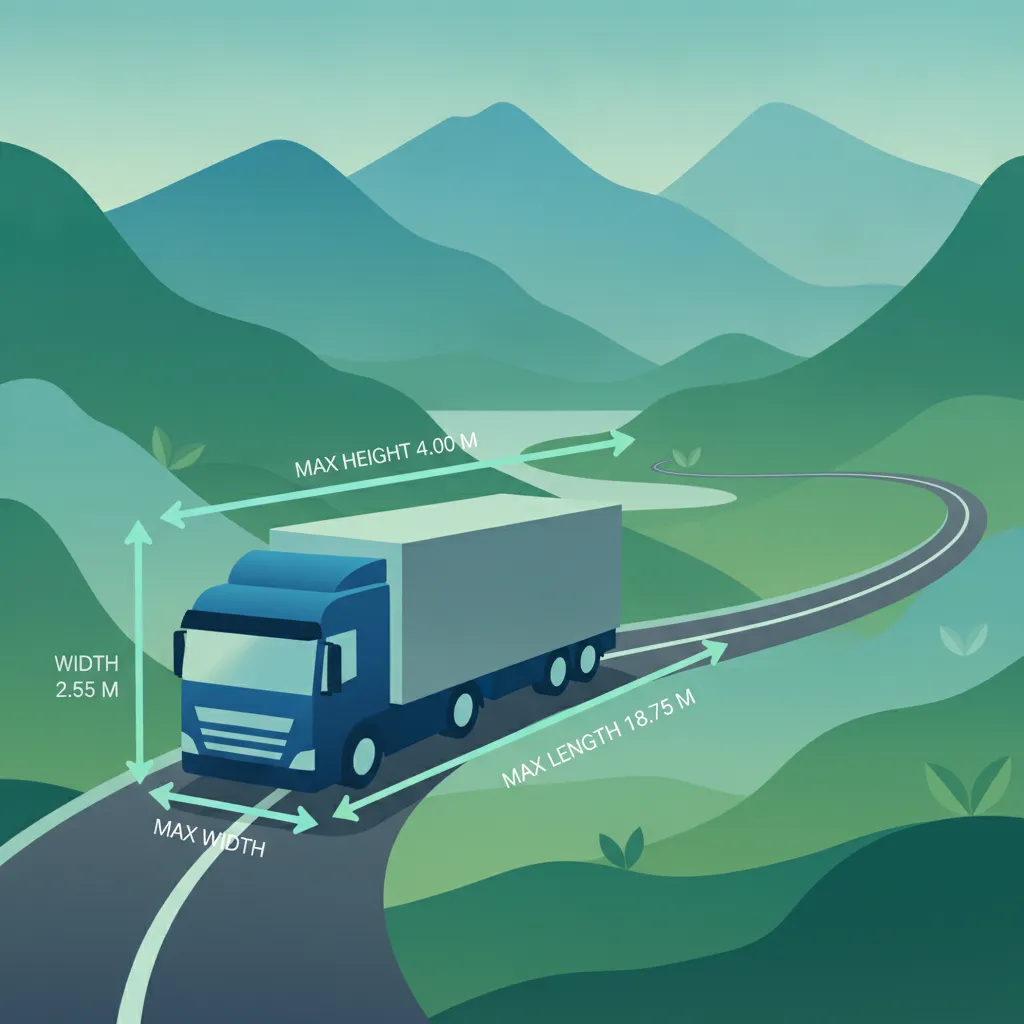
Swiss law strictly regulates the maximum dimensions of commercial vehicles to ensure they can safely navigate the infrastructure. This lesson specifies the standard limits for vehicle height (4.0m), width (2.55m), and length for various lorry and trailer combinations. Adhering to these dimensions is crucial for avoiding collisions with bridges, tunnels, and other structures, and for navigating narrow roads.
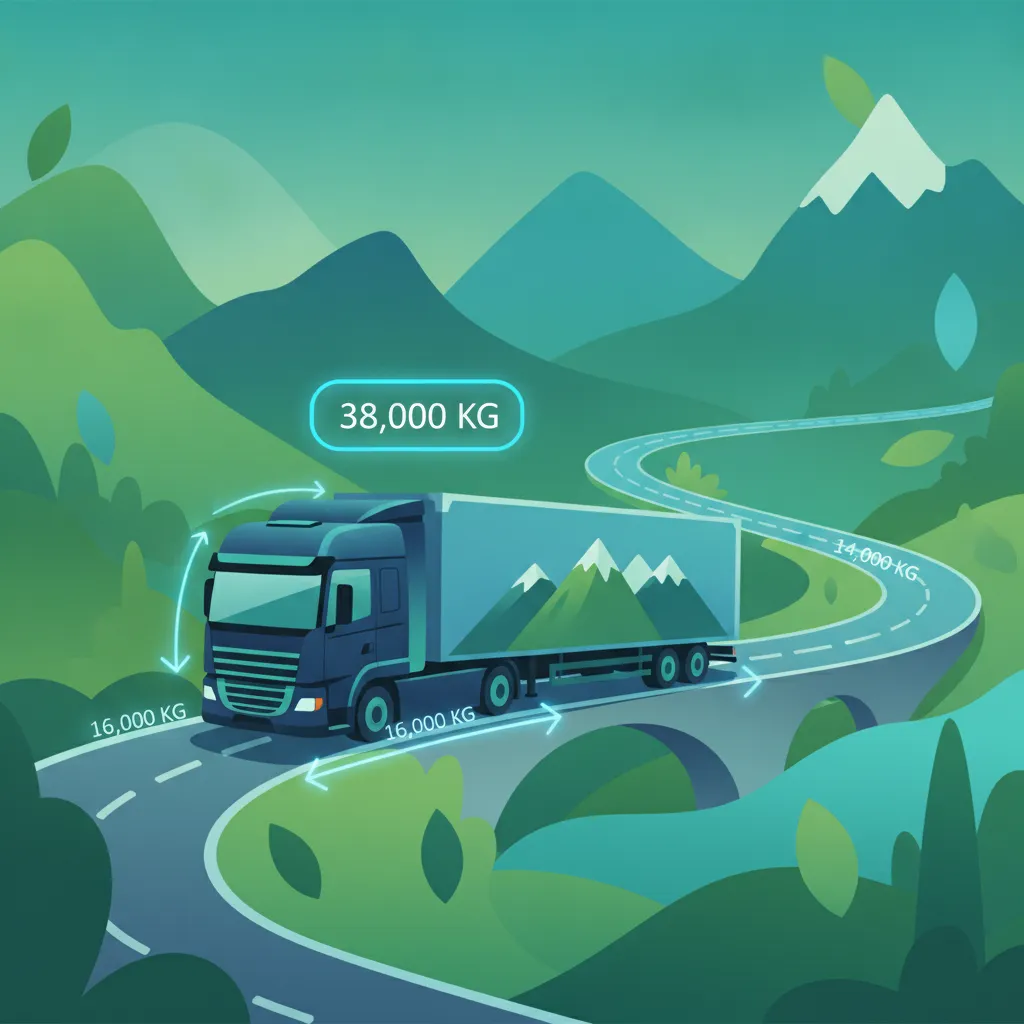
The total weight of a vehicle is supported by its axles, and Swiss regulations set strict limits on the load each axle can bear. This lesson explains how to correctly distribute a load to comply with maximum axle load (Achslast) limits, which is vital for vehicle stability, steering control, and braking efficiency. Incorrect distribution can lead to dangerous handling characteristics and cause significant damage to road surfaces.
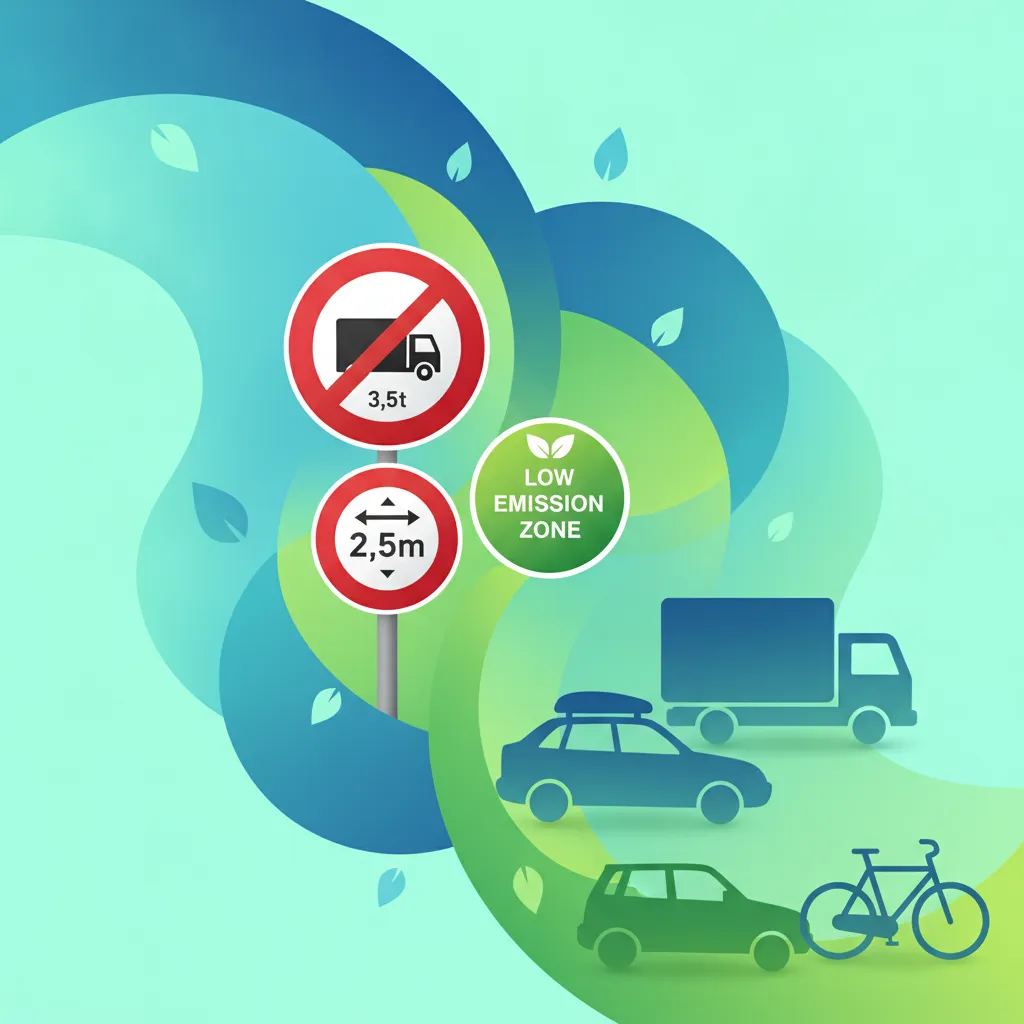
Many urban areas have restrictions to manage traffic and protect infrastructure. This lesson teaches drivers to identify and interpret traffic signs that prohibit access based on gross vehicle weight, axle load, height, or width. It also covers the growing prevalence of environmental or low-emission zones, which may restrict entry for older, more polluting vehicles.

This lesson details the definition of Category B within the Swiss licensing system, focusing on vehicle types, weight capacities, and passenger limits. It clarifies the maximum authorized mass for Category B cars and the specific restrictions on towing trailers. You will learn the legal framework defining which vehicles you may operate and the boundaries of this license category.
Transporting loads that are wider, longer, taller, or heavier than standard regulations allow requires special authorization. This lesson explains the concept of exceptional transport and the legal requirement to obtain a special permit from the relevant cantonal authorities. It highlights that such operations require careful route planning, often mandating specific times of travel and sometimes the use of escort vehicles.
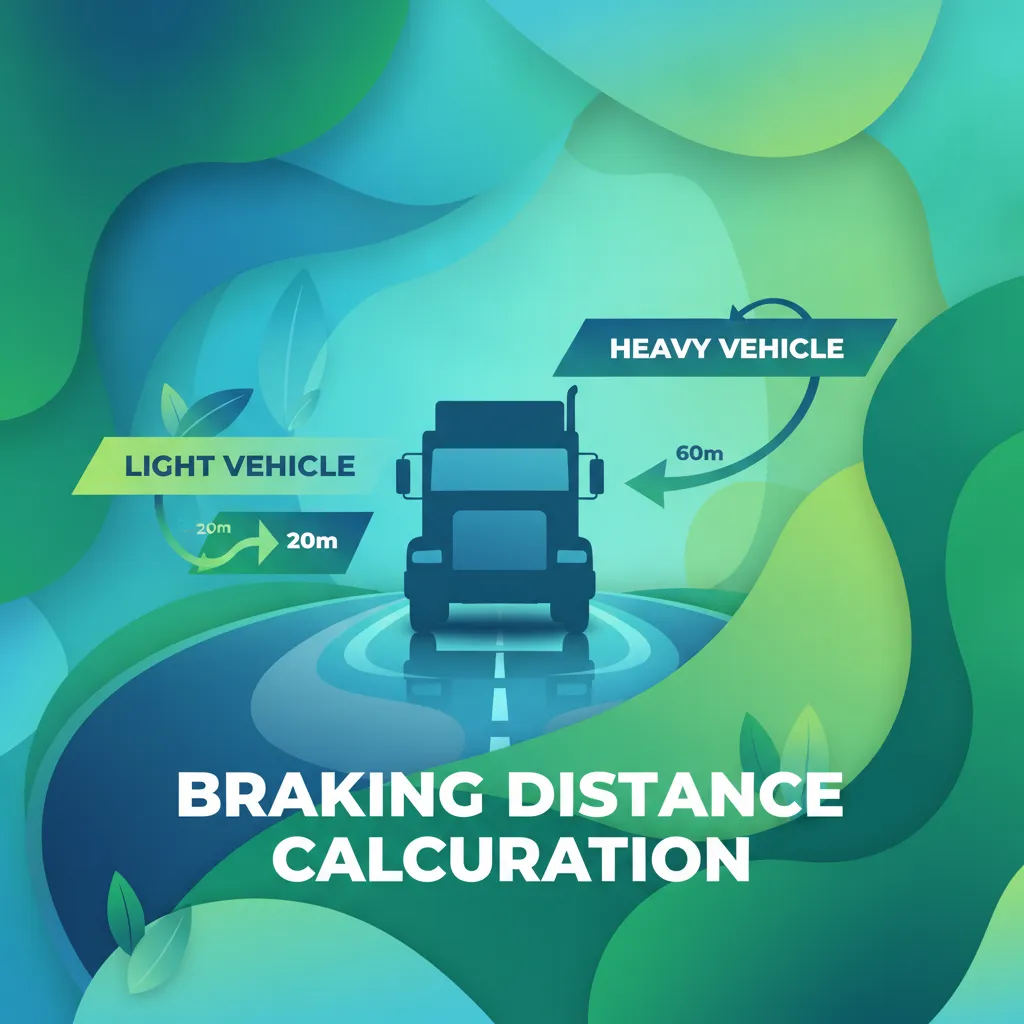
The immense mass of a loaded truck means its braking distance is far greater than that of a car. This lesson breaks down total stopping distance into reaction distance and braking distance, explaining how speed, weight, and road conditions have an exponential effect. It reinforces the necessity of maintaining a significantly larger following distance to ensure enough space to stop safely in an emergency.
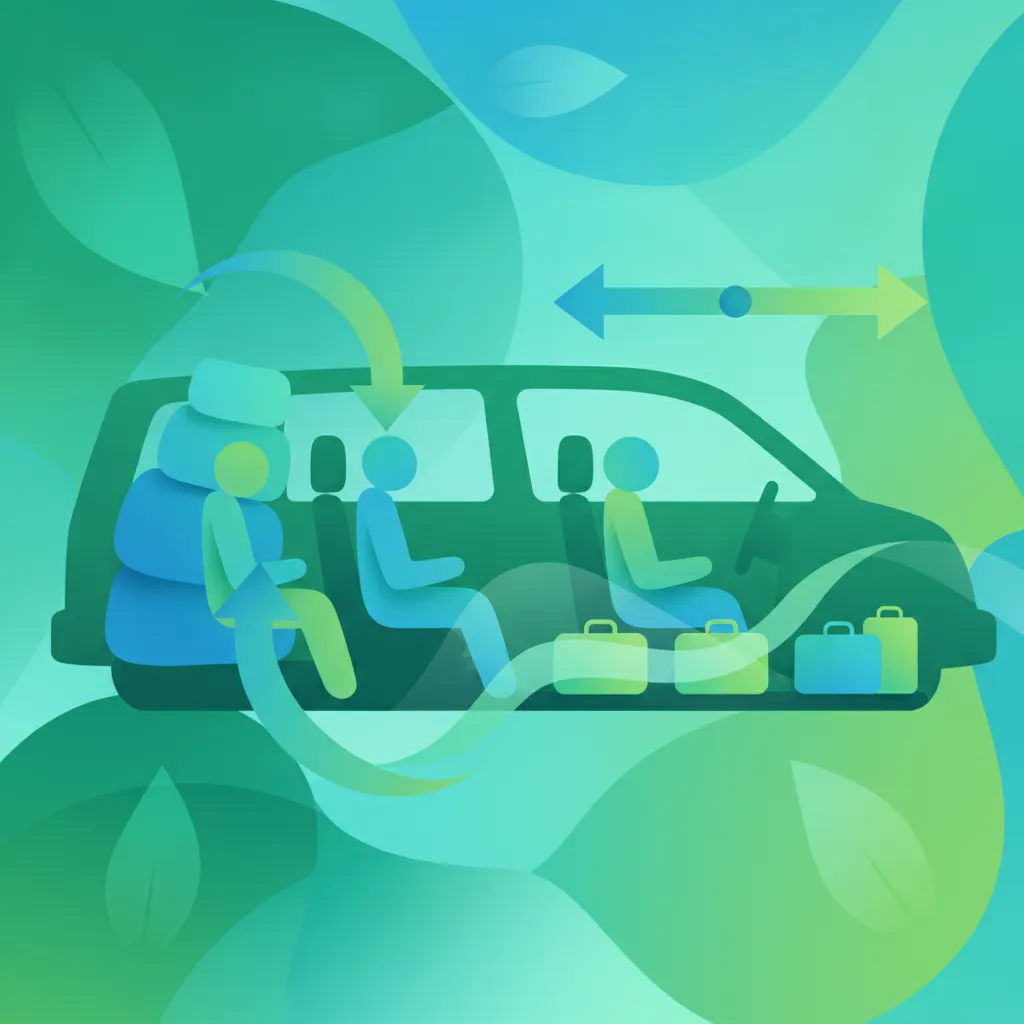
Correct load distribution is essential for safe handling and braking. This lesson explains that loads should be placed as low as possible and distributed evenly to maintain a low centre of gravity and comply with axle weight limits. A high or poorly positioned centre of gravity dramatically increases the risk of rollover, especially when cornering or in an emergency manoeuvre.
Explains the severe legal penalties, safety risks, and infrastructure damage resulting from exceeding tare weight, payload, or gross vehicle mass limits for HGVs in Switzerland. Crucial for compliance and safe operation.
Overloading is a serious offence with severe safety and legal ramifications. This lesson details how excess weight drastically increases braking distances, puts extreme stress on tyres leading to blowouts, and negatively affects steering and overall stability. Furthermore, it discusses the substantial fines, potential license withdrawal, and driver liability that result from violating Swiss weight regulations.
Transporting loads that are wider, longer, taller, or heavier than standard regulations allow requires special authorization. This lesson explains the concept of exceptional transport and the legal requirement to obtain a special permit from the relevant cantonal authorities. It highlights that such operations require careful route planning, often mandating specific times of travel and sometimes the use of escort vehicles.

For professional drivers, traffic violations can have career-altering consequences beyond standard fines. This lesson details the heightened penalties for infringements such as speeding, overloading, insecure loads, and violations of driving time regulations. It outlines the process of warnings, license suspension or withdrawal, and potential criminal liability, emphasizing the importance of strict legal compliance in the transport industry.
Swiss law strictly regulates the maximum dimensions of commercial vehicles to ensure they can safely navigate the infrastructure. This lesson specifies the standard limits for vehicle height (4.0m), width (2.55m), and length for various lorry and trailer combinations. Adhering to these dimensions is crucial for avoiding collisions with bridges, tunnels, and other structures, and for navigating narrow roads.

Operating a heavy goods vehicle involves a significant responsibility for the safety of all road users. This lesson emphasizes the professional driver's enhanced duty of care due to the vehicle's size, mass, and potential impact in a collision. It covers the importance of a professional attitude, constant vigilance, and adherence to all traffic regulations to prevent incidents and maintain a high standard of road safety.

Losing part of a load on the road creates an immediate and serious hazard for other drivers. This lesson outlines the driver's responsibilities: stop in a safe place, assess the situation from a safe distance, and immediately alert the police. The driver's primary role is to warn other road users and not to attempt to retrieve the load from a live carriageway.

Unlike cars, heavy vehicles cannot travel on every road. This lesson stresses the importance of using HGV-specific satellite navigation systems or carefully checking maps to plan routes that avoid low bridges, weak bridges, and roads with weight or width restrictions. Proper planning saves time, fuel, and prevents dangerous situations or costly damage.
This lesson provides a structured guide for managing the scene of a road traffic accident. It covers the internationally recognized priorities: assess for danger, make the scene safe, send for help by calling emergency services (112), and provide first aid to the injured if trained to do so. It also details the legal requirement to stop and exchange information after being involved in a collision.

While others may have loaded the vehicle, the driver holds the final legal responsibility for the security of the load once on the public highway. This lesson clarifies this crucial point of law, explaining that the driver must inspect the load and its securing arrangements before departure and re-check them during the journey. The consequences of a load shifting or falling can be catastrophic and result in severe legal penalties for the driver.
Find clear answers to common questions learners have about Key Terminology: Tare Weight, Payload, Gross Vehicle Mass. Learn how the lesson is structured, which driving theory objectives it supports, and how it fits into the overall learning path of units and curriculum progression in Switzerland. These explanations help you understand key concepts, lesson flow, and exam focused study goals.
Tare weight is the empty weight of the vehicle including standard equipment, whereas gross vehicle mass is the maximum permissible total weight of the vehicle when fully loaded.
The payload is calculated by subtracting the tare weight from the gross vehicle mass. You must ensure that the actual cargo weight never exceeds this calculated figure to remain legal.
In Swiss vehicle documentation, the tare weight typically includes a standard allowance for the driver (usually 75kg) and fuel, but you should always check the specific registration document for exact details.
The theory exam tests your knowledge of these terms to ensure you understand how to operate a vehicle safely and legally. Miscalculating these weights can lead to serious safety hazards on the road.
Pinpoint specific Swiss traffic rules, road signs, or driving situations you need to master. Use the practice search to start a focused revision session now and build confidence for your official driving theory exam.