
This lesson teaches you how to locate and interpret the manufacturer's identification plate on a heavy goods vehicle. Understanding these technical specifications is a fundamental legal requirement for every Category C and C1 driver to ensure the vehicle is operated within safe, designed parameters.

Lesson content overview
The Vehicle Identification Plate (V.I.P.) is a vital document permanently affixed to every heavy goods vehicle. For drivers operating vehicles in categories C and C1, understanding this plate is not merely a technical detail; it is a fundamental requirement for ensuring safety, maintaining legal compliance, and optimizing vehicle performance. This comprehensive lesson for the Official Swiss Driving Theory Course for Category C & C1 Goods Vehicles will guide you through locating, interpreting, and applying the critical information found on the V.I.P.
The V.I.P. serves as the manufacturer's definitive statement of a vehicle's engineered limits. These limits, including maximum permissible masses and axle loads, are derived from extensive testing and design calculations to ensure the vehicle's structural integrity, braking efficiency, and overall stability under various operating conditions. Adhering to these specifications is paramount. Ignorance of these values can lead to severe consequences, ranging from vehicle damage and reduced safety to significant legal penalties and increased operational costs.
The Vehicle Identification Plate, often simply referred to as the V.I.P. or manufacturer's plate, is a robust metal or durable plastic label. It is stamped, etched, or printed with essential technical data that defines the vehicle's design capabilities and limitations. This information is legally binding and is crucial for safe and legal operation, particularly when carrying loads or towing trailers. The plate provides a snapshot of the vehicle's technical characteristics as certified by the manufacturer.
The primary purpose of the V.I.P. is to communicate the maximum permissible weights and loads for the vehicle. This includes its maximum gross vehicle mass when operating alone, the maximum gross combination mass when towing a trailer, and the maximum load that each individual axle can bear. It also often includes other relevant details such as tire specifications. This comprehensive data allows drivers, law enforcement, and vehicle inspectors to quickly ascertain if a vehicle is being operated within its designed parameters.
The exact location of the Vehicle Identification Plate can vary between manufacturers and vehicle models, but it is always placed in an easily accessible and visible position for inspection. On most Category C and C1 heavy goods vehicles, you can typically find the V.I.P. in one of the following locations:
Regardless of its precise placement, the V.I.P. must be securely affixed, legible, and free from any damage or obstructions that would prevent it from being easily read. Regularly checking its condition is part of routine vehicle maintenance.
The V.I.P. is the ultimate authority for understanding your vehicle's weight capacities. Two of the most critical figures on the plate are the Maximum Gross Vehicle Mass (MGV) and the Maximum Gross Combination Mass (MGC). Correctly interpreting these values is essential for preventing dangerous and illegal overloading.
The Maximum Gross Vehicle Mass (MGV), also often referred to as Gross Vehicle Weight Rating (GVWR) or technically permissible maximum laden mass, represents the absolute highest total mass that the vehicle is allowed to have when operating independently, without a trailer. This total mass includes the vehicle's tare weight, its payload, the driver, any passengers, and all fluids such as fuel, oil, and coolant.
The mass of an empty vehicle, including all standard equipment, necessary fluids (oil, coolant), and a full fuel tank, but without any payload, driver, or passengers.
The MGV is a critical limit for the structural integrity of the vehicle's chassis, its suspension system, and its braking capability. Exceeding this limit places undue stress on components, significantly increases stopping distances, and compromises steering and handling, making the vehicle unsafe to operate.
When you are driving a goods vehicle without a trailer, the MGV is the primary mass limit you must adhere to. It directly dictates how much payload you can legally carry. Understanding your vehicle's MGV allows you to calculate the maximum permissible weight of your cargo.
To determine the maximum permissible payload, you must subtract the vehicle's current operational weight (tare weight + fuel + driver + passengers + any permanent optional equipment) from its MGV. This calculation needs to be precise.
Identify the MGV: Locate the Maximum Gross Vehicle Mass on the V.I.P. (e.g., 24,000 kg or 24 t).
Determine the Vehicle's Current Operating Weight:
Tare Weight: Often found on the vehicle's registration document or estimated from manufacturer specifications (e.g., 12,000 kg).
Fuel Weight: Account for the weight of fuel. Diesel is approximately 0.83 kg per litre. A 500-litre tank holds about 415 kg of fuel.
Driver/Passenger Weight: Standard estimates include 75-80 kg for the driver. Add for any additional crew.
Optional Equipment Weight: Include any fixed equipment like cranes, tail lifts, or special toolboxes that were not part of the original tare weight calculation.
Cargo Securing Equipment: The weight of chains, straps, nets, and dunnage also contributes to the total vehicle mass.
Subtract: Current Operating Weight (Tare + Fuel + Driver + Passengers + Optional Equipment + Cargo Securing) from the MGV to find your remaining payload capacity.
Always perform this calculation carefully before loading. Even small omissions, such as the weight of a full fuel tank or additional passengers, can lead to an unexpected overload.
The Maximum Gross Combination Mass (MGC), also known as Gross Combination Weight Rating (GCWR), is the highest total mass allowed for the entire combination of the towing vehicle and its attached trailer(s), including all payloads, drivers, passengers, and fluids. This limit is crucial when operating an articulated vehicle or a truck and trailer combination.
The MGC ensures that the entire vehicle combination, especially its braking system and structural components, can safely handle the combined weight under all operating conditions. It's a comprehensive safety limit that prevents overloading of the entire road train.
The MGC stated on the V.I.P. typically differentiates between combinations with braked and unbraked trailers.
Always verify the MGC specifically for a braked or unbraked trailer, depending on your setup. Operating an unbraked trailer over its designated limit is extremely dangerous and strictly illegal.
When planning to tow a trailer, you must ensure that the sum of the towing vehicle's actual GVW and the trailer's actual GVW does not exceed the MGC stated on the V.I.P. of the towing vehicle. This requires checking both the towing vehicle's capabilities and the trailer's own maximum permissible mass.
Example: If your truck's V.I.P. states an MGC of 38,000 kg (38 t) and your truck's actual GVW (with its cargo, driver, and fuel) is 22,000 kg (22 t), then the maximum permissible GVW for the trailer you can tow is 38,000 kg - 22,000 kg = 16,000 kg (16 t). You must also verify that the trailer itself is rated to carry this much weight.
Beyond the total vehicle and combination masses, the V.I.P. also specifies Axle Load Limits (Achslast). These are the maximum permissible loads that can be exerted on each individual axle or axle group (such as a tandem axle) of the vehicle. These limits are just as critical as the overall mass limits, as an overloaded axle can have severe safety and legal implications, even if the total vehicle weight is within the MGV.
The V.I.P. will list specific limits for each axle or axle group. Typically, this includes:
Respecting axle load limits is fundamentally about load distribution. It is not enough to simply ensure that your total payload fits within the MGV; the payload must be carefully positioned within the cargo area so that no single axle or axle group is overloaded. Improper load distribution can lead to:
Axle loads are not static; they change constantly during vehicle operation due to dynamic load shift. This phenomenon is caused by inertia and gravity:
Drivers must consider these dynamic shifts when loading cargo. A load that appears perfectly distributed when the vehicle is stationary on level ground might cause an axle overload during braking, acceleration, or when driving on steep mountain passes.
The Vehicle Identification Plate also typically provides crucial information about the vehicle's tires, or references the necessary documentation where this information can be found. This includes the required tire dimensions, the minimum load index, and recommended inflation pressures. These specifications are directly linked to the vehicle's axle load limits and overall safety.
The Tire Load Index is a numerical code on the tire sidewall that indicates the maximum load (in kilograms or pounds) that a single tire can safely carry at its maximum inflation pressure. It is imperative that the tires fitted to your vehicle meet or exceed the load index specified by the manufacturer for the corresponding axle. Using tires with an insufficient load index is dangerous and illegal, as they are not designed to support the vehicle's potential axle loads.
Inflation Pressure is equally vital. The V.I.P. or associated documentation will provide recommended tire inflation pressures for various loading conditions. Correct tire pressure ensures optimal contact between the tire and the road surface, efficient fuel consumption, even tire wear, and crucially, the tire's ability to support its maximum load. Underinflated tires can overheat, suffer structural damage, and are prone to blowouts, while overinflated tires can reduce grip and prematurely wear out the tire's center tread.
Regularly check and maintain correct tire inflation pressures according to the manufacturer's recommendations. This simple action significantly enhances safety, reduces operational costs, and prevents tire failures.
Accurate calculation of your vehicle's current Gross Vehicle Weight (GVW) and Gross Combination Weight (GCW) is a fundamental skill for every professional driver. These calculations are your primary tool for ensuring compliance with the limits stated on the V.I.P. before every journey.
To calculate the GVW, you must sum all masses that contribute to the vehicle's total weight:
The actual total weight of a vehicle at any given time, including its tare weight, fuel, driver, passengers, and all payload. This must not exceed the MGV.
The actual total weight of a vehicle and its attached trailer(s), including all their respective loads, fuel, and occupants. This must not exceed the MGC.
Before embarking on any trip, especially with a significant load or a trailer, follow these steps:
For particularly complex loads or when uncertainty exists, utilizing a public weighbridge is the safest and most legally sound way to verify both GVW and individual axle loads.
In Switzerland, adherence to the limits stipulated on the Vehicle Identification Plate is enshrined in law. Drivers of Category C and C1 goods vehicles are held strictly responsible for ensuring their vehicles comply with these regulations at all times.
Rule 1 – Mandatory Display and Legibility: The Vehicle Identification Plate must be permanently affixed to the vehicle and remain clearly legible at all times. Any damage, corrosion, or obstruction that prevents easy reading of the plate is a violation.
Rule 2 – Weight Limit Observance: The driver must never exceed the Maximum Gross Vehicle Mass (MGV), Maximum Gross Combination Mass (MGC), or any individual axle load (Achslast) indicated on the V.I.P.
Rule 4 – Special Permits: If the nature of the load necessitates exceeding the standard MGV, MGC, or individual axle load limits stipulated on the V.I.P., a special permit must be obtained from the relevant authorities before the journey commences.
Despite clear guidelines, drivers frequently make errors in interpreting the V.I.P. or calculating loads, leading to inadvertent but illegal overloading. Recognizing these common pitfalls is crucial for prevention.
Dynamic load shift is a frequent cause of axle overloading that drivers might not immediately recognize:
To avoid dynamic overload, always secure cargo meticulously to prevent movement. For steep gradients, consider adjusting load distribution slightly rearward to mitigate the forward shift during descents and ensure the front axle remains within limits.
The fixed limits on the V.I.P. must be applied flexibly, considering the specific conditions and configurations of your journey.
Driving on steep mountain passes introduces significant dynamic load shifts. On ascents, the effective load on the rear axle(s) increases, while on descents, the front axle(s) bear a greater proportion of the vehicle's weight.
When loading for routes with significant gradients, aim for a slightly more rearward load distribution if possible, particularly if the front axle is frequently close to its limit, to counteract the forward load shift during descents.
This strategic loading helps ensure that even under the influence of gravity, neither the front nor the rear axle exceeds its maximum permissible load. It also improves stability and prevents excessive wear on specific components.
Urban environments, characterized by frequent stop-and-go traffic, present their own challenges. Constant acceleration and deceleration lead to repeated dynamic load shifts. While these shifts might be less extreme than on mountain roads, their repetitive nature can still contribute to component wear and, if loads are close to limits, intermittent axle overloading.
Ensure cargo is always tightly secured to prevent constant movement and banging, which can not only damage the cargo and vehicle but also exacerbate dynamic load changes.
Many heavy goods vehicles are fitted with specialized equipment such as cranes, tail lifts, concrete mixers, or refrigeration units. The weight of this equipment is substantial and directly reduces the vehicle's available payload capacity.
Always factor in the full weight of any permanently installed or temporary special equipment when calculating the current GVW and permissible payload. This information may be on an auxiliary plate or in the vehicle's documentation.
When new equipment is installed, the vehicle's tare weight effectively increases, and consequently, its maximum payload decreases. It's crucial to obtain updated weight information or perform a weighbridge check after any significant modifications.
Mastering the information on the Vehicle Identification Plate is an indispensable skill for every driver in the Official Swiss Driving Theory Course for Category C & C1 Goods Vehicles. It is the cornerstone of safe, legal, and efficient operation of heavy goods vehicles.
By consistently applying these principles, you will ensure the safety of yourself, other road users, and your valuable cargo, while also protecting your vehicle from damage and avoiding costly legal penalties.
The Vehicle Identification Plate (V.I.P.) provides legally binding technical limits every Category C and C1 driver must understand and respect. The key figures are Maximum Gross Vehicle Mass (MGV) for solo operations, Maximum Gross Combination Mass (MGC) for vehicle-trailer combinations, and individual axle load limits (Achslast) for each axle or axle group. Calculating permissible payload requires subtracting tare weight, fuel, driver, passengers, and all equipment from the MGV—not just estimating cargo weight. Swiss law holds drivers strictly responsible for compliance, making pre-trip weight verification and proper load distribution essential to avoid fines, vehicle damage, and dangerous safety compromises.
A short set of high-value points that capture the most important learning from this lesson.
The V.I.P. is the manufacturer's authoritative statement of a vehicle's designed limits including MGV, MGC, and individual axle loads (Achslast)
Maximum payload is calculated by subtracting all operational weights (tare, fuel, driver, passengers, equipment) from the MGV
Axle load limits are just as critical as total mass limits; an overloaded axle can be dangerous even if overall GVW is compliant
Dynamic load shifts during braking, acceleration, and gradients constantly redistribute weight across axles, requiring careful initial load positioning
Exceeding any V.I.P. limit—whether MGV, MGC, or axle loads—is a serious offence under Swiss road traffic law with significant penalties
Explore all units and lessons included in this driving theory course.
MGV (Maximum Gross Vehicle Mass) = highest total mass when driving alone; MGC (Maximum Gross Combination Mass) = highest total mass including trailer
A braked trailer allows a higher MGC than an unbraked trailer because braking effort is distributed across both vehicles
Tare weight includes the vehicle with full fluids but no payload, driver, or passengers; always check registration documents for exact figures
For GVW, account for fuel weight (diesel ≈ 0.83 kg/litre), driver (~75-80 kg), and all cargo securing equipment like straps and chains
If planned loads exceed V.I.P. limits, a special permit must be obtained before the journey—not after
Forgetting that a full fuel tank can add several hundred kilograms, pushing the vehicle over MGV without accounting for cargo weight
Assuming cargo appears evenly distributed so axle loads must be fine, without verifying that too much weight isn't over one axle group
Misinterpreting the MGC by simply adding the truck's MGV to the trailer's maximum permissible mass, rather than using the lower MGC on the V.I.P
Neglecting to include the weight of permanent or removable equipment (cranes, tail lifts, toolboxes) when calculating current GVW
Not considering dynamic load shifts when loading for mountain routes—weight shifts rearward on climbs and forward on descents
Lesson content overview
A short set of high-value points that capture the most important learning from this lesson.
The V.I.P. is the manufacturer's authoritative statement of a vehicle's designed limits including MGV, MGC, and individual axle loads (Achslast)
Maximum payload is calculated by subtracting all operational weights (tare, fuel, driver, passengers, equipment) from the MGV
Axle load limits are just as critical as total mass limits; an overloaded axle can be dangerous even if overall GVW is compliant
Dynamic load shifts during braking, acceleration, and gradients constantly redistribute weight across axles, requiring careful initial load positioning
Exceeding any V.I.P. limit—whether MGV, MGC, or axle loads—is a serious offence under Swiss road traffic law with significant penalties
Explore all units and lessons included in this driving theory course.
MGV (Maximum Gross Vehicle Mass) = highest total mass when driving alone; MGC (Maximum Gross Combination Mass) = highest total mass including trailer
A braked trailer allows a higher MGC than an unbraked trailer because braking effort is distributed across both vehicles
Tare weight includes the vehicle with full fluids but no payload, driver, or passengers; always check registration documents for exact figures
For GVW, account for fuel weight (diesel ≈ 0.83 kg/litre), driver (~75-80 kg), and all cargo securing equipment like straps and chains
If planned loads exceed V.I.P. limits, a special permit must be obtained before the journey—not after
Forgetting that a full fuel tank can add several hundred kilograms, pushing the vehicle over MGV without accounting for cargo weight
Assuming cargo appears evenly distributed so axle loads must be fine, without verifying that too much weight isn't over one axle group
Misinterpreting the MGC by simply adding the truck's MGV to the trailer's maximum permissible mass, rather than using the lower MGC on the V.I.P
Neglecting to include the weight of permanent or removable equipment (cranes, tail lifts, toolboxes) when calculating current GVW
Not considering dynamic load shifts when loading for mountain routes—weight shifts rearward on climbs and forward on descents
Explore search topics learners often look for when studying Reading and Interpreting the Vehicle Identification Plate. These topics reflect common questions about road rules, driving situations, safety guidance, and lesson level theory preparation for learners in Switzerland.
Browse additional driving theory lessons that cover connected traffic rules, road signs, and common driving situations related to this topic. Improve your understanding of how different rules interact across everyday traffic scenarios.
Explore how cargo placement impacts vehicle stability and axle loads. Essential theory for Swiss C and C1 drivers to prevent dynamic overload and ensure safe driving.
Correct load distribution is essential for safe handling and braking. This lesson explains that loads should be placed as low as possible and distributed evenly to maintain a low centre of gravity and comply with axle weight limits. A high or poorly positioned centre of gravity dramatically increases the risk of rollover, especially when cornering or in an emergency manoeuvre.

Heavy vehicles, especially those with a high centre ofgravity, are susceptible to rolling over. This lesson examines the primary causes, including excessive speed on bends or roundabouts, sudden steering manoeuvres, and the 'sloshing' effect of liquid loads in tankers. It reinforces that maintaining a sensible speed and driving smoothly are the best ways to mitigate this serious risk.

The total weight of a vehicle is supported by its axles, and Swiss regulations set strict limits on the load each axle can bear. This lesson explains how to correctly distribute a load to comply with maximum axle load (Achslast) limits, which is vital for vehicle stability, steering control, and braking efficiency. Incorrect distribution can lead to dangerous handling characteristics and cause significant damage to road surfaces.

The suspension system connects the vehicle's axles to its frame, supporting the massive weight and absorbing shocks from the road surface. This lesson describes the two common types: traditional leaf springs and modern air suspension. It explains how a well-maintained suspension is crucial for vehicle stability, proper handling, braking effectiveness, and preventing damage to the load and the vehicle itself.
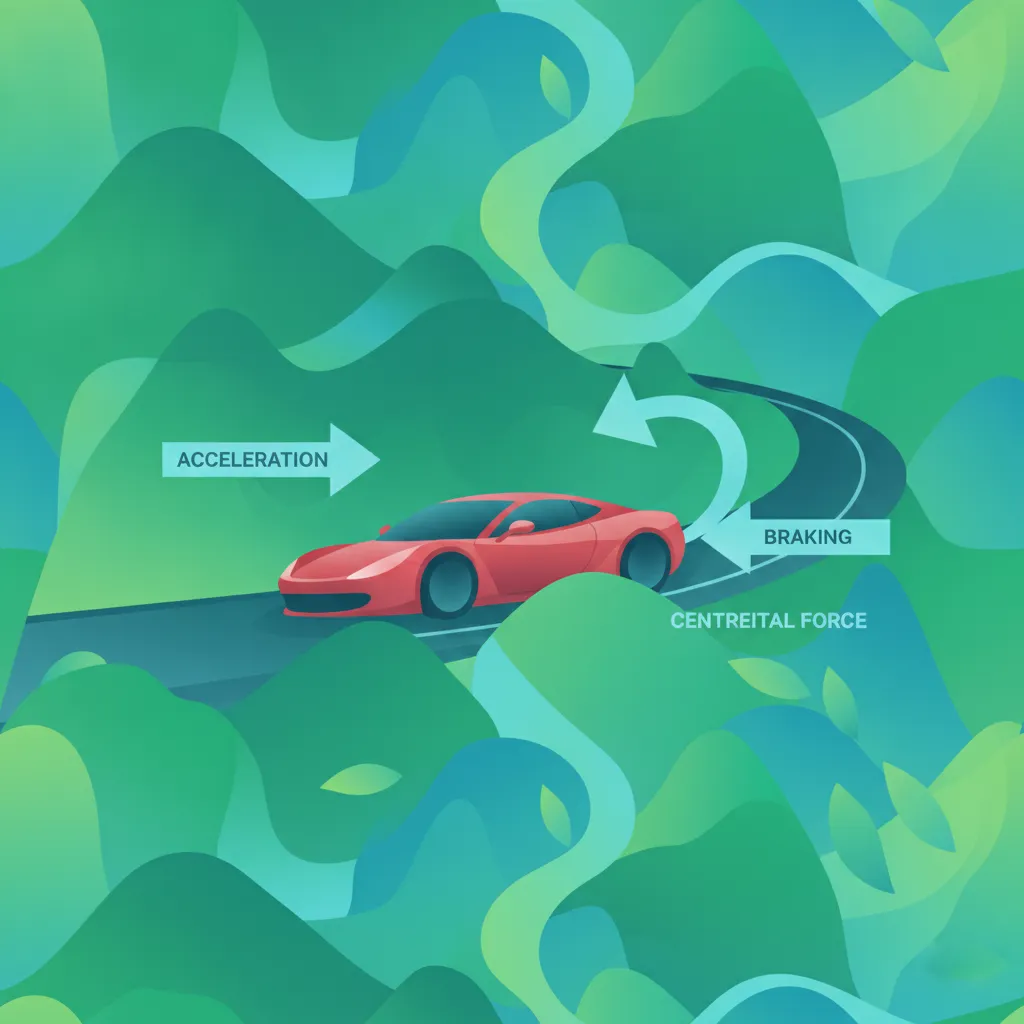
A load is not static; it is subjected to significant forces during transport. This lesson explains how acceleration, braking (deceleration), and cornering create powerful inertial forces that try to move the cargo. Load securing systems must be strong enough to counteract these forces to prevent the load from sliding forward during braking, backward during acceleration, or sideways when turning.

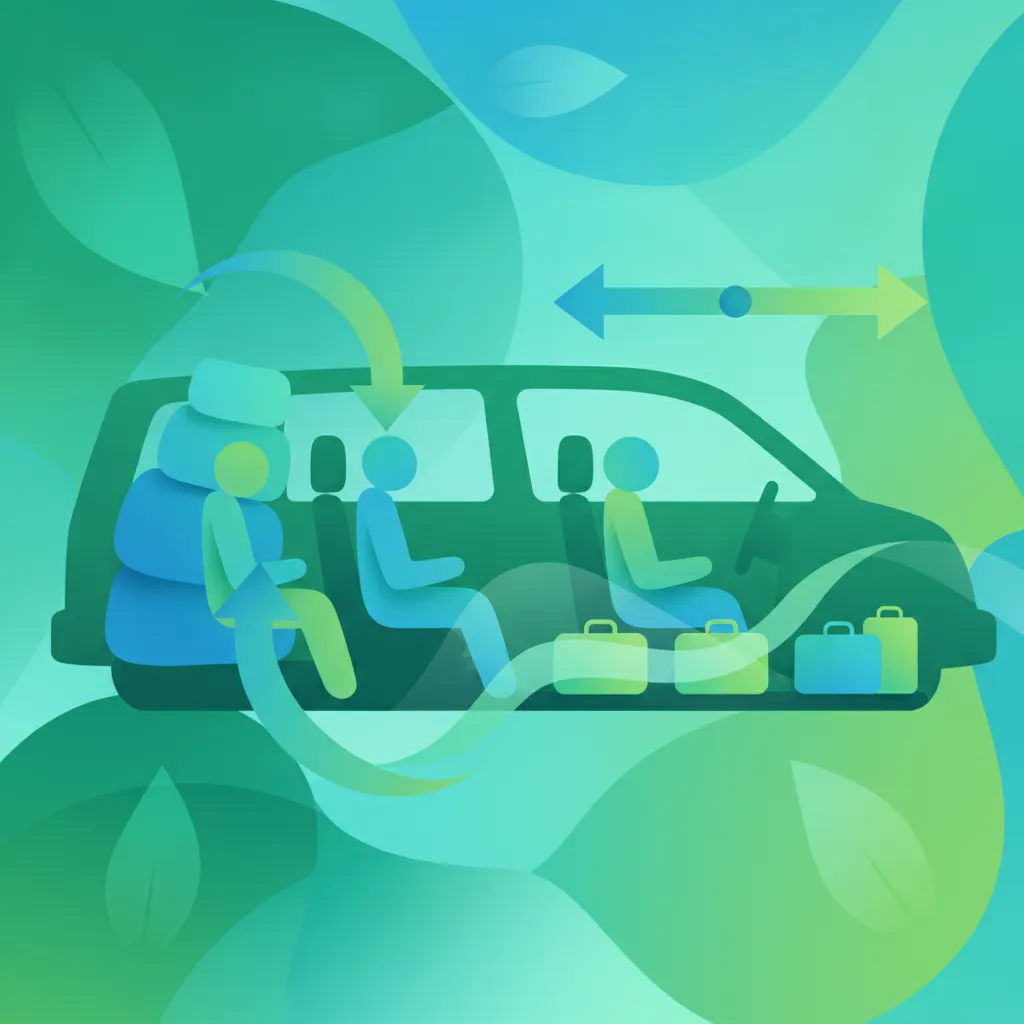
Buses have a high centre of gravity, making them susceptible to rollover forces. This lesson explains how factors like passenger load, luggage placement, and speed affect vehicle stability. Understanding these principles is essential for safe cornering, navigating roundabouts, and handling the vehicle in strong crosswinds.

Overloading is a serious offence with severe safety and legal ramifications. This lesson details how excess weight drastically increases braking distances, puts extreme stress on tyres leading to blowouts, and negatively affects steering and overall stability. Furthermore, it discusses the substantial fines, potential license withdrawal, and driver liability that result from violating Swiss weight regulations.
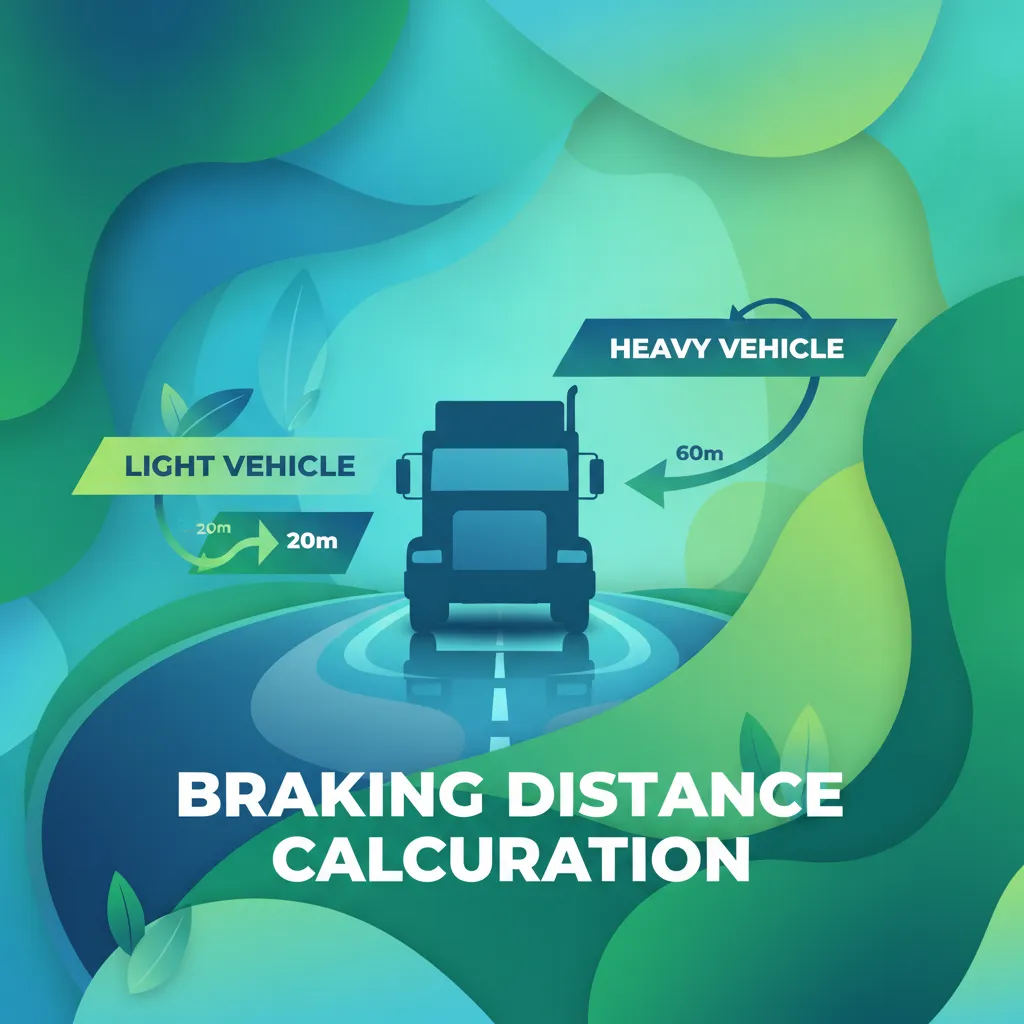
The immense mass of a loaded truck means its braking distance is far greater than that of a car. This lesson breaks down total stopping distance into reaction distance and braking distance, explaining how speed, weight, and road conditions have an exponential effect. It reinforces the necessity of maintaining a significantly larger following distance to ensure enough space to stop safely in an emergency.

While others may have loaded the vehicle, the driver holds the final legal responsibility for the security of the load once on the public highway. This lesson clarifies this crucial point of law, explaining that the driver must inspect the load and its securing arrangements before departure and re-check them during the journey. The consequences of a load shifting or falling can be catastrophic and result in severe legal penalties for the driver.

Losing part of a load on the road creates an immediate and serious hazard for other drivers. This lesson outlines the driver's responsibilities: stop in a safe place, assess the situation from a safe distance, and immediately alert the police. The driver's primary role is to warn other road users and not to attempt to retrieve the load from a live carriageway.
Master the critical mass limits (MGV, MGC, Achslast) from the vehicle identification plate. Learn how Swiss regulations apply to heavy goods vehicles for safe and legal operation.

When a lorry tows a trailer, the total weight of the entire combination must not exceed the gross combination mass limit. This lesson explains how to find this value and why it is critical for ensuring the vehicle's engine, transmission, and brakes can safely handle the entire load. Exceeding the GCM compromises braking effectiveness, acceleration, and the ability to climb gradients, creating a significant safety risk.
The total weight of a vehicle is supported by its axles, and Swiss regulations set strict limits on the load each axle can bear. This lesson explains how to correctly distribute a load to comply with maximum axle load (Achslast) limits, which is vital for vehicle stability, steering control, and braking efficiency. Incorrect distribution can lead to dangerous handling characteristics and cause significant damage to road surfaces.

This lesson clarifies the essential terminology related to vehicle weight. It defines tare weight (Leergewicht) as the vehicle's empty weight, payload (Nutzlast) as the maximum permissible load it can carry, and gross vehicle mass (Gesamtgewicht) as the total combined weight. Correctly understanding these terms is fundamental for calculating loads and avoiding illegal overloading.

This lesson provides a clear definition of the Swiss heavy goods vehicle license categories. It details the weight limits and vehicle configurations for Category C (lorries over 3.5t) and C1 (lorries from 3.5t to 7.5t). Furthermore, it explains how categories CE and C1E grant the entitlement to tow heavy trailers, forming articulated vehicles or road trains, which is crucial for professional transport operations.

This lesson details the definition of Category B within the Swiss licensing system, focusing on vehicle types, weight capacities, and passenger limits. It clarifies the maximum authorized mass for Category B cars and the specific restrictions on towing trailers. You will learn the legal framework defining which vehicles you may operate and the boundaries of this license category.

Swiss law strictly regulates the maximum dimensions of commercial vehicles to ensure they can safely navigate the infrastructure. This lesson specifies the standard limits for vehicle height (4.0m), width (2.55m), and length for various lorry and trailer combinations. Adhering to these dimensions is crucial for avoiding collisions with bridges, tunnels, and other structures, and for navigating narrow roads.
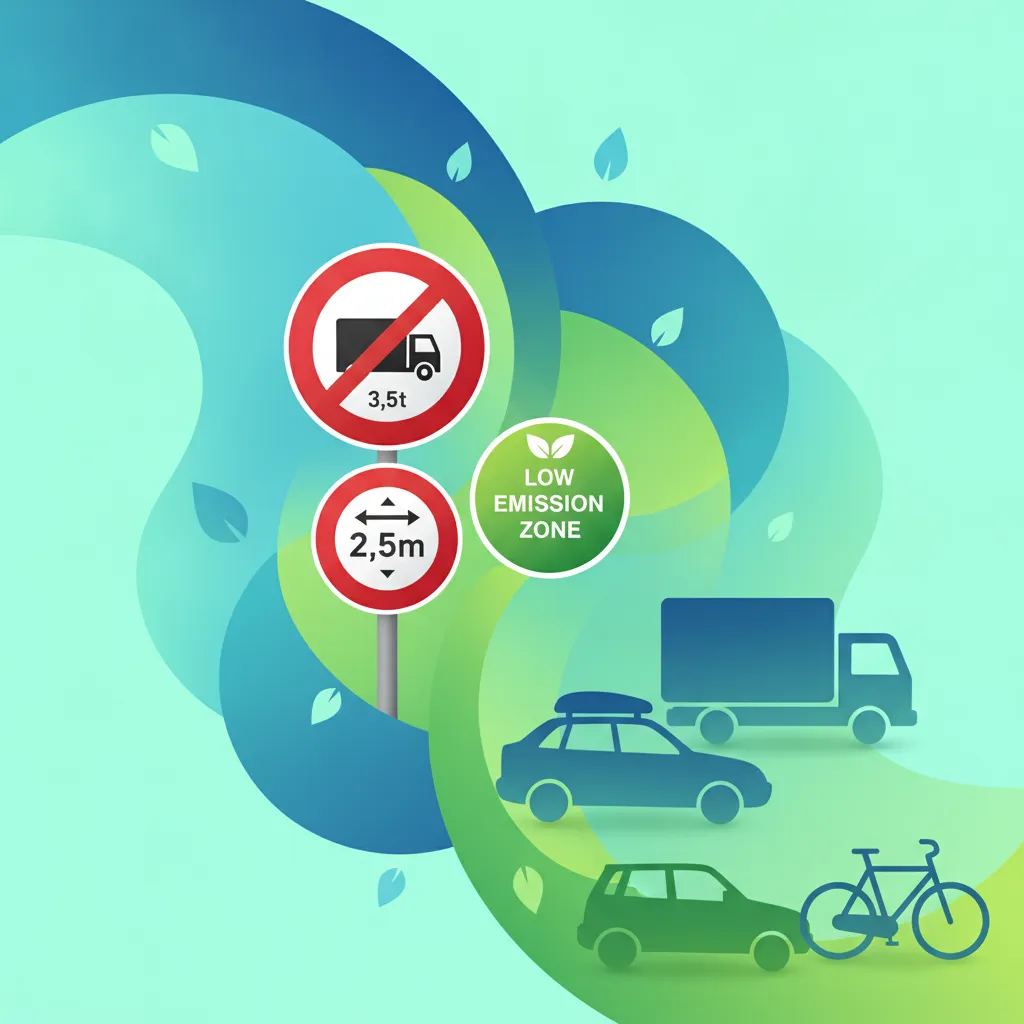
Many urban areas have restrictions to manage traffic and protect infrastructure. This lesson teaches drivers to identify and interpret traffic signs that prohibit access based on gross vehicle weight, axle load, height, or width. It also covers the growing prevalence of environmental or low-emission zones, which may restrict entry for older, more polluting vehicles.
Overloading is a serious offence with severe safety and legal ramifications. This lesson details how excess weight drastically increases braking distances, puts extreme stress on tyres leading to blowouts, and negatively affects steering and overall stability. Furthermore, it discusses the substantial fines, potential license withdrawal, and driver liability that result from violating Swiss weight regulations.
Correct load distribution is essential for safe handling and braking. This lesson explains that loads should be placed as low as possible and distributed evenly to maintain a low centre of gravity and comply with axle weight limits. A high or poorly positioned centre of gravity dramatically increases the risk of rollover, especially when cornering or in an emergency manoeuvre.

This lesson outlines the mandatory documentation required during any professional transport journey in Switzerland. Drivers must be able to present the vehicle registration document ('Fahrzeugausweis'), their valid driving license, and the OACP qualification card upon request. It also touches upon transport-specific documents like consignment notes, which are crucial for legal compliance during roadside inspections by authorities.
Find clear answers to common questions learners have about Reading and Interpreting the Vehicle Identification Plate. Learn how the lesson is structured, which driving theory objectives it supports, and how it fits into the overall learning path of units and curriculum progression in Switzerland. These explanations help you understand key concepts, lesson flow, and exam focused study goals.
On most heavy goods vehicles, it is found in the cab, often near the door frame, or on the chassis frame itself. Always ensure it is clearly legible during your daily walk-around check.
The GVM refers to the maximum weight of the vehicle itself when loaded, whereas the GCM includes the combined weight of the vehicle and any attached trailer or semitrailer. Both must be respected to stay legal.
Overloading affects braking efficiency, handling, and steering stability, while also increasing road wear. It is a serious offense that can lead to heavy fines, license points, or immediate prohibition of further travel.
While you don't need to recalculate every detail, you must ensure you are familiar with your vehicle's limits before every trip, especially when carrying different loads, to ensure you operate safely within legal bounds.
Pinpoint specific Swiss traffic rules, road signs, or driving situations you need to master. Use the practice search to start a focused revision session now and build confidence for your official driving theory exam.