
This lesson provides essential knowledge on the physical forces that cause jackknifing and trailer swing in heavy vehicle combinations. It is a critical component of your training for category C and CE licenses, helping you master the stability requirements needed for the German theory examination.

Lesson content overview
Driving heavy vehicles, especially those towing trailers or operating as articulated combinations, demands a profound understanding of unique dynamic behaviors. Phenomena like jackknifing and trailer swing pose significant risks, potentially leading to loss of control, severe accidents, and widespread disruption. This lesson delves into the causes, preventive measures, and essential techniques for safely maneuvering heavy vehicles and trailers, particularly during critical situations such as braking and downhill descents. Mastery of these concepts is crucial for maintaining vehicle stability, ensuring safety for the driver, cargo, and all other road users, and is a core requirement for obtaining your German heavy vehicle driving license in categories C1, C1E, C, and CE.
Jackknifing is a critical and dangerous instability that can occur in articulated vehicles, such as a truck and trailer combination. It is characterized by the trailer swinging violently forward and inward, forming a sharp 'V' shape with the towing vehicle. This scenario typically results in the trailer moving sideways or even ahead of the tractor unit, leading to an almost complete loss of steering control and braking effectiveness.
The primary causes of jackknifing are often a combination of factors, but sudden or excessive braking by the towing vehicle is the most common trigger. When the tractor unit's wheels lock up or decelerate much faster than the trailer's wheels, the trailer's momentum continues to push it forward. If the trailer's wheels do not brake as effectively, or if the trailer is significantly lighter than the tractor unit, it can rapidly swing out of alignment. Improper load distribution, especially an unsuitably light or improperly secured load in the trailer, can exacerbate this effect, making the trailer more prone to skidding or losing traction. Furthermore, excessive speed, particularly on slippery surfaces or during emergency braking, significantly increases the risk, as there is less time for controlled correction.
A jackknife incident has severe implications. The immediate risk is the complete loss of control over the entire vehicle combination, making it impossible to steer or stop effectively. This leads to extended stopping distances and an inability to avoid obstacles, drastically increasing the likelihood of collisions with other vehicles, road barriers, or even pedestrians. The sudden, violent movement can cause catastrophic damage to both the vehicle combination and anything in its path. Beyond the immediate physical dangers, such incidents often result in significant delays, road closures, and costly recovery operations, underscoring the importance of prevention.
Preventing jackknifing relies heavily on anticipatory driving and a deep understanding of vehicle dynamics. The paramount rule is to avoid sudden and hard braking, especially when cornering or on slippery surfaces. Drivers should apply brakes gradually and smoothly, allowing the entire combination to decelerate uniformly. Utilizing modern braking systems like Anti-lock Braking Systems (ABS) can help prevent wheel lock-up, maintaining steering control during braking. Proper load distribution is also vital; ensuring the trailer's load is evenly spread and securely fastened helps maintain its stability and prevents it from 'pushing' the tractor unit during deceleration. Maintaining appropriate speeds, particularly when driving downhill or in adverse weather conditions, provides more reaction time and reduces the forces that can lead to jackknifing.
Trailer swing, distinct from jackknifing but equally hazardous, refers to the lateral oscillation or side-to-side movement of the trailer relative to the towing vehicle. While often less dramatic than a full jackknife, uncontrolled trailer swing can still lead to loss of control, lane departure, and collisions.
Trailer swing typically manifests as a rhythmic or irregular swaying motion. It occurs when external forces or driver inputs cause the trailer to move out of alignment with the towing vehicle, and this movement is then amplified by the vehicle's dynamics. This can be likened to a pendulum effect, where the trailer acts as the pendulum, swinging from its pivot point (the coupling).
Several factors can induce or exacerbate trailer swing. High speed is a primary culprit, as aerodynamic forces and minor road imperfections become more pronounced, easily initiating oscillations. Strong crosswinds can exert significant force on the large surface area of a heavy vehicle and trailer, pushing the trailer sideways. Improper tire pressure on the trailer, or uneven wear, can reduce traction and stability, making it more susceptible to swaying. Overly steep or sudden turns, and rapid lane changes, can also upset the trailer's equilibrium. Lastly, an improperly secured or unevenly distributed load within the trailer can shift during maneuvers, altering the center of gravity and causing instability.
The main risk of uncontrolled trailer swing is the potential for the trailer to drift into adjacent lanes, posing a direct threat to other vehicles. This can lead to side-swipe collisions, or force other drivers to take evasive action, potentially causing further incidents. In severe cases, trailer swing can escalate into a jackknife, or cause the entire combination to overturn, especially on curves or embankments. The unpredictable nature of trailer swing also makes it difficult for the driver to maintain a consistent trajectory, leading to increased fatigue and stress.
To minimize trailer swing, drivers must prioritize smooth and controlled driving inputs. Maintaining recommended speeds for heavy vehicle combinations, especially in windy conditions or on winding roads, is essential. Avoid sudden steering inputs, instead opting for gentle and gradual adjustments. Before commencing a journey, ensure all trailer tires are correctly inflated and in good condition. During loading, meticulously distribute the cargo evenly and secure it firmly to prevent any shifts that could destabilize the trailer. When encountering strong crosswinds, reduce speed and maintain a firm grip on the steering wheel, anticipating potential lateral forces.
Effective braking is fundamental to safety when operating heavy vehicles, particularly those with trailers. Unlike passenger cars, the sheer mass and articulation of heavy vehicle combinations introduce complexities that demand specific, controlled braking techniques to prevent jackknifing and maintain stability.
The most critical principle for heavy vehicle braking is to apply pressure gradually and smoothly. Sudden, heavy braking can overload the system, cause wheels to lock, and initiate instability. Instead, drivers should anticipate braking needs well in advance, allowing for a gentle, progressive application of the service brake pedal. This distributes braking forces more evenly across all axles and components of the vehicle combination, reducing the likelihood of the trailer pushing the towing vehicle out of alignment.
Engine braking is an indispensable technique for heavy vehicle drivers, especially on long or steep downhill descents. Rather than relying solely on the service brakes, which can overheat and lose effectiveness (known as brake fade), engine braking uses the engine's compression resistance to slow the vehicle. This is achieved by downshifting to a lower gear, which increases engine RPMs and resistance. Engine braking helps maintain a controlled speed without continuously using the friction brakes, thus preserving their effectiveness for when they are truly needed for stopping or significant speed reduction.
When descending a long or steep gradient, select a gear that would allow the vehicle to climb the same gradient without excessive strain. This typically provides sufficient engine braking to control your speed.
Modern heavy vehicles are almost universally equipped with Anti-lock Braking Systems (ABS). ABS prevents wheels from locking up during hard braking by rapidly modulating brake pressure to individual wheels. This is crucial for articulated vehicles as it helps maintain traction and steering control, significantly reducing the risk of jackknifing. While ABS is a powerful safety feature, drivers should not use it as an excuse for reckless driving. It works best when combined with smooth, anticipatory braking techniques.
Descending steep hills or mountain passes with a heavy vehicle and trailer presents unique challenges, primarily due to the increased gravitational forces acting on the vehicle's mass. Effective downhill control is paramount to prevent runaway situations, brake fade, and loss of stability.
The cornerstone of safe downhill control is selecting the appropriate gear before beginning the descent. A general rule of thumb for heavy vehicles is to choose a gear that would be suitable for ascending the same incline. This allows the engine to provide maximum resistance (engine braking) and control the vehicle's speed without excessive reliance on the service brakes. Using too high a gear will allow the vehicle to accelerate freely, requiring constant service brake application.
One of the most dangerous practices on descents is "riding the brakes" – continuous, light application of the service brakes. This causes the brake components (drums, discs, pads) to overheat rapidly, reducing their friction capabilities and leading to brake fade. When brake fade occurs, the driver must press the brake pedal harder and harder to achieve the same deceleration, until eventually, the brakes may become entirely ineffective. Instead, use the service brakes intermittently, applying firm pressure for short bursts to reduce speed, then releasing them fully to allow them to cool.
Continuous braking on long descents is extremely dangerous. It leads to brake fade, where your brakes lose effectiveness, potentially resulting in a complete loss of braking ability.
Beyond gear selection and braking technique, overall speed management is vital. Always enter a descent at a controlled, safe speed. If the gradient is particularly steep or long, it may be necessary to pull over and check brakes and tires periodically during very long descents. Pay close attention to road signs indicating steep grades and recommended speeds for heavy vehicles.
Reversing a heavy vehicle with an attached trailer is one of the most challenging maneuvers a driver can undertake. It requires exceptional spatial awareness, precision, and patience. Improper reversing techniques are a common cause of minor and major collisions.
One of the fundamental difficulties in reversing with a trailer is the counter-intuitive steering. To make the rear of the trailer move to the left, the steering wheel of the towing vehicle must initially be turned to the right. Conversely, to move the trailer to the right, the steering wheel is turned left. This "reverse steering" principle requires significant practice and coordination. Small, gentle steering adjustments are key; over-steering can cause the trailer to quickly turn too sharply, leading to a jackknife.
Effective use of mirrors is critical. All available mirrors (side mirrors, wide-angle mirrors, convex mirrors) must be constantly monitored to track the position of both the tractor unit and the trailer. However, mirrors alone are insufficient. Heavy vehicles, especially with trailers, have extensive blind spots – areas not visible directly or via mirrors. Before and during any reversing maneuver, the driver must physically check blind spots, looking around the vehicle and trailer for any obstacles, pedestrians, or other vehicles.
Always remember the principle of "small corrections, frequently observed." Over-steering can quickly put the trailer out of control during reversing.
For complex reversing maneuvers, or in environments with limited visibility or high traffic (e.g., loading docks, construction sites), using a spotter (Einweiser) is highly recommended, and often mandatory. A spotter can provide real-time guidance, call out obstacles, and ensure the path is clear. Clear communication between the driver and spotter, using agreed-upon hand signals or two-way radios, is essential for safe execution. The spotter should always position themselves where they are clearly visible to the driver and out of the vehicle's potential path.
Plan Your Route: Before starting, visualize the entire maneuver. Identify obstacles, desired final position, and potential escape routes.
Check Surroundings: Exit the vehicle and walk around the entire combination and the intended reversing area. Look for low-lying objects, overhead obstructions, pedestrians, and other vehicles.
Position for Start: Line up the vehicle and trailer as straight as possible with the target, minimizing the initial angle.
Use a Spotter (If Possible): If available, position your spotter in a safe, visible location and establish clear communication signals.
Slow and Steady: Engage reverse gear and move extremely slowly, barely allowing the vehicle to creep.
Monitor All Mirrors: Constantly check both side mirrors. Pay attention to the gap between the trailer and the towing vehicle, and the trailer's rear corners.
Small Steering Inputs: Make very small, precise adjustments to the steering wheel. Remember the counter-steering principle.
Correct Early: If the trailer starts to go off course, stop immediately, pull forward slightly to straighten, and then resume reversing. It's easier to correct a small deviation than a large one.
Watch for Jackknifing: Be extremely vigilant for signs of the trailer beginning to jackknife. If this occurs, stop, pull forward to straighten, and restart.
Communicate with Spotter: Maintain continuous communication if a spotter is present. Stop immediately if you lose sight of them or if they signal a stop.
The way cargo is loaded and secured within a trailer profoundly impacts the entire vehicle combination's stability and susceptibility to dynamic instabilities like jackknifing and trailer swing. Proper load distribution is not merely about staying within legal weight limits but also about managing the vehicle's center of gravity.
The center of gravity (CoG) of a heavy vehicle combination shifts depending on the load. If the CoG is too high, the vehicle becomes top-heavy and more prone to rolling over, especially in turns or during sudden maneuvers. If the load is concentrated too far to the rear of the trailer, it reduces the weight on the towing vehicle's drive axles, affecting traction and braking. Conversely, too much weight concentrated at the front of the trailer (over the fifth wheel or coupling) can overload the towing vehicle's rear axle.
The ideal scenario is to distribute the cargo as evenly as possible over the trailer's axles, keeping the CoG low and centered. This ensures that each axle bears an appropriate load, optimizing tire contact with the road and maximizing braking efficiency. Even distribution prevents excessive weight transfer during acceleration, braking, and cornering, which are critical factors in maintaining stability. Always check the manufacturer's recommendations and legal axle load limits for your specific vehicle and trailer combination.
Beyond distribution, the actual securing of the load is equally vital. Unsecured cargo can shift during transit, especially during sudden braking or evasive maneuvers. A shifting load can instantly change the vehicle's center of gravity, causing unexpected instability, inducing trailer swing, or even leading to a jackknife. Various securing methods, such as lashing, blocking, and bracing, must be employed according to the type of cargo and legal requirements (e.g., DIN EN 12195 for load securing in Germany).
Appropriate speed management is arguably the single most critical factor in preventing jackknifing and trailer swing. Heavy vehicles, by their nature, require longer stopping distances and react differently to steering and braking inputs compared to smaller vehicles.
Heavy vehicles, especially when loaded or towing trailers, have significantly increased inertia. This means they require more force and distance to change speed or direction. Drivers must always adjust their speed not just to the posted limits, but also to the specific characteristics of their vehicle, its current load, and the trailer it is pulling. An overloaded or poorly distributed load necessitates a further reduction in speed.
Entering curves at excessive speed is a common cause of trailer swing and, in severe cases, rollovers. The centrifugal forces generated in a curve act to push the vehicle outwards. With a trailer, this force can cause the trailer to swing wide or even lift its inner wheels. Always reduce speed significantly before entering a curve, and maintain a steady, appropriate speed throughout the turn, accelerating gently only as you exit.
Strong crosswinds can exert immense pressure on the large side surfaces of a truck and trailer, potentially pushing the entire combination sideways or inducing severe trailer swing. Drivers must reduce speed and maintain extra vigilance in windy conditions. Similarly, wet, icy, or snowy roads drastically reduce tire traction, increasing stopping distances and making the vehicle far more susceptible to skidding, jackknifing, or trailer swing. In such conditions, speeds must be reduced considerably, and all maneuvers must be exceptionally gentle and anticipatory.
Adherence to national and European regulations is paramount for all professional heavy vehicle drivers. In Germany, specific rules govern speed, braking, and maneuvering to ensure the safety of heavy goods vehicles (HGVs) and other road users.
German traffic law (Straßenverkehrs-Ordnung - StVO) mandates that drivers must always adjust their speed to suit the road, traffic, visibility, and weather conditions, as well as the characteristics of their vehicle and load. This is particularly critical for heavy vehicles and combinations. Failing to adjust speed sufficiently, especially on downhill sections or in adverse conditions, is a serious violation that can lead to severe penalties and, more importantly, dangerous incidents.
The StVO implicitly requires drivers to operate their vehicles in a manner that avoids endangering others. Sudden braking, harsh acceleration, or abrupt steering changes, especially with a trailer, are considered reckless due to the high risk of jackknifing or trailer swing. Drivers are legally obliged to maintain sufficient distance to allow for gradual braking and smooth maneuvers.
Throughout their journey, and especially during any maneuver (lane changes, turns, reversing), heavy vehicle drivers are legally required to make continuous and thorough use of all available mirrors and to check blind spots. This ensures complete awareness of the trailer's position, potential obstacles, and other road users, preventing collisions.
Familiarize yourself with the specific speed limits for heavy vehicles in Germany, which often differ from passenger cars, especially on rural roads and Autobahnen in certain lanes.
Even experienced drivers can fall victim to common errors in heavy vehicle handling, leading to dangerous situations. Recognizing these pitfalls is the first step toward prevention.
As discussed, continuously applying the service brakes on long descents leads to brake fade, a critical reduction in braking power. This is a common and highly dangerous mistake that drivers must actively avoid by utilizing engine braking and intermittent service brake applications.
An instinctive reaction in an emergency, sudden heavy braking is often the direct cause of jackknifing, particularly when the trailer is unladen or lightly loaded. Drivers must learn to react calmly and apply brakes progressively, even in emergencies.
Misjudging the safe speed for a curve, especially with a heavy, articulated vehicle, can easily induce severe trailer swing or even a rollover. The forces exerted on the trailer are amplified by speed and the angle of the turn.
Failing to constantly monitor mirrors and check blind spots during routine driving, and especially during maneuvers, means operating with incomplete information. This significantly increases the risk of side-swipes, cutting off other vehicles, or hitting unseen obstacles.
Loading cargo unevenly or without proper securing is a silent hazard. The vehicle might feel stable initially, but a sudden turn or brake application can cause the load to shift, throwing the entire combination off balance and leading to unpredictable handling.
Driving a heavy vehicle in rain, strong winds, ice, or snow requires a fundamental change in driving style. Ignoring these conditions and maintaining normal speeds is a common mistake that severely compromises traction, braking, and vehicle stability.
Safe heavy vehicle operation is highly contextual. A skilled driver continuously assesses prevailing conditions and adapts their driving behavior accordingly.
When maneuvering heavy vehicles, especially in urban areas or during reversing, extra caution is needed around pedestrians and cyclists. Their smaller size makes them harder to spot, and sudden, uncontrolled movements from a heavy vehicle, such as trailer swing, can endanger them severely. Always assume they might be in a blind spot.
Operating heavy vehicles and trailers requires a specialized skill set that goes beyond basic driving. The potential for jackknifing and trailer swing represents a significant hazard, but with the right knowledge, techniques, and attentiveness, these risks can be effectively mitigated. Understanding the physics behind these phenomena – the inertia of the trailer, the impact of weight distribution, and the effects of braking forces – empowers drivers to make informed decisions.
The core principles for safe operation revolve around anticipatory driving, smooth and controlled inputs, and constant situational awareness. Always manage your speed proactively, particularly before curves or descents. Master the art of gradual braking and effective engine braking to preserve your service brakes. Distribute and secure your cargo meticulously, as a stable load is the foundation of a stable vehicle. Finally, consistently use your mirrors, actively check blind spots, and employ spotters for complex maneuvers to ensure you have a complete picture of your surroundings. By integrating these practices, professional heavy vehicle drivers contribute significantly to road safety and the efficient transport of goods across Germany and beyond.
Explore all units and lessons included in this driving theory course.
Lesson content overview
Explore all units and lessons included in this driving theory course.
Explore search topics learners often look for when studying Jackknifing, Trailer Swing and Safe Maneuvering. These topics reflect common questions about road rules, driving situations, safety guidance, and lesson level theory preparation for learners in Germany.
Browse additional driving theory lessons that cover connected traffic rules, road signs, and common driving situations related to this topic. Improve your understanding of how different rules interact across everyday traffic scenarios.
Explore the principles of articulation dynamics and vehicle stability for heavy vehicles, focusing on how factors like speed, load, and braking affect off-tracking. Learn essential theory for safe maneuvering and preventing dangerous situations like jackknifing.

This lesson explains the dynamics of articulation between the tractor and trailer, focusing on the pivot point and its effect on the turning radius. It covers the phenomenon of off-tracking, where the trailer wheels follow a tighter path than the towing vehicle. The content also addresses the risks associated with trailer swing-out during cornering.

This lesson examines the concepts of turning radius and swept path, explaining how a heavy vehicle's size influences the space required for a turn. It highlights the importance of maintaining proper lane positioning to accommodate the vehicle's dimensions. The content provides guidance on planning maneuvers and accounting for off-tracking during cornering.

This lesson focuses on vehicle stability and the risks of rollover, particularly for vehicles with a high centre of gravity. It discusses how load placement, speed, and cornering affect rollover risk. The content outlines countermeasures such as speed reduction, load lowering, and the use of anti-roll devices.

This lesson examines the risks associated with load shifting during braking and cornering maneuvers. It explains how inertia and weight transfer can cause cargo to move, potentially leading to instability or loss of control. The content emphasizes the importance of proper load securing to mitigate these risks and maintain vehicle stability.

This lesson provides specialized instruction for drivers of D1E and DE category vehicles, which involve towing a trailer. It covers the physics of vehicle combinations, including the effects of the articulation point on turning and reversing. Learners will understand principles of split braking systems, proper load distribution to prevent trailer sway, and the additional safety checks required before operating such a combination.
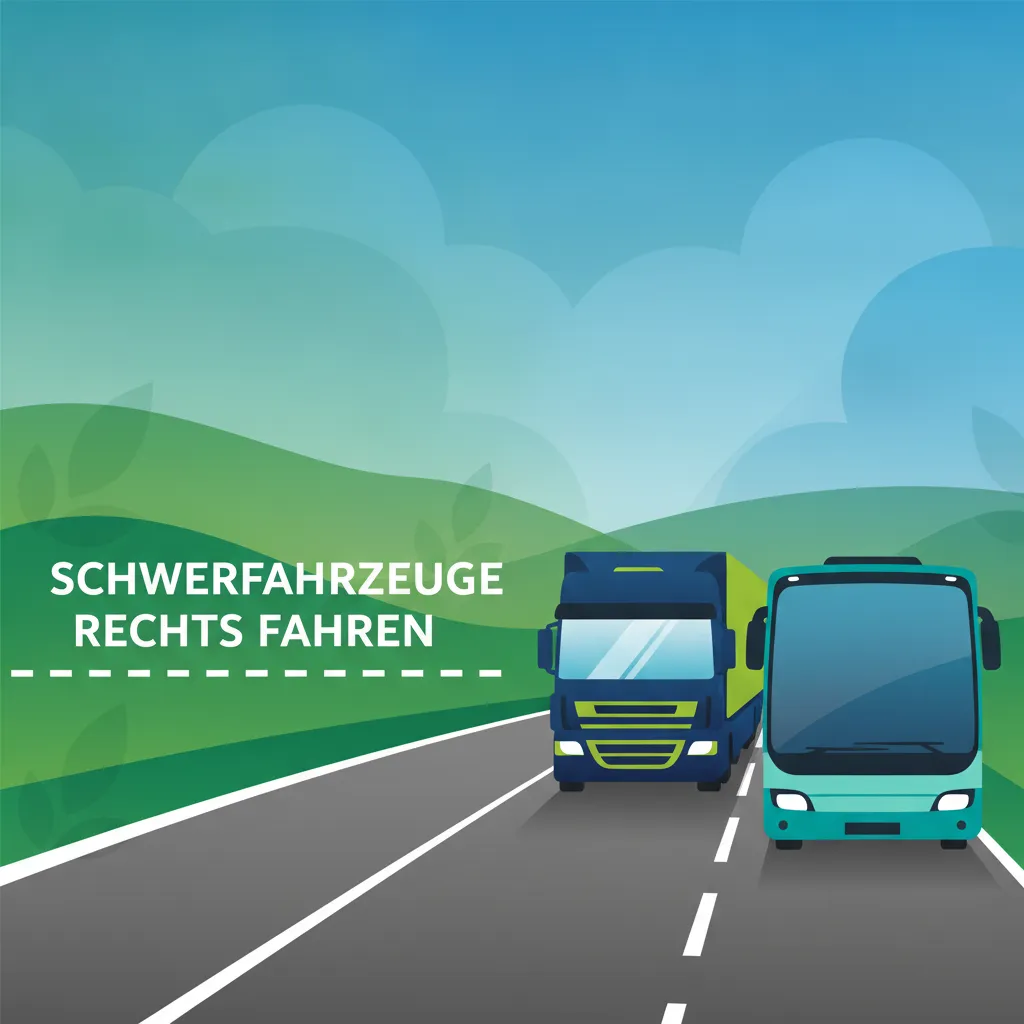
This lesson explains the specific regulations for operating heavy vehicles on Autobahnen, including speed limits, lane discipline, and overtaking rules. It discusses the use of dedicated truck lanes and the importance of maintaining appropriate following distances. The content also covers procedures for merging and exiting high-speed roads safely.

This lesson focuses on the critical relationship between load distribution, the center of gravity, and vehicle stability. It explains how the placement of passengers and luggage can raise the center of gravity, increasing the risk of rollover during turns or sudden maneuvers. Learners will understand how to manage loading within legal weight limits to maintain optimal handling, braking performance, and overall safety.

This lesson covers safe reversing techniques for both rigid trucks and articulated combinations, emphasizing the use of mirrors and cameras. It discusses the risks of jackknifing during reversal and the importance of speed control and safety checks. The content outlines best practices for planning a safe reversing path, potentially with a guide person.
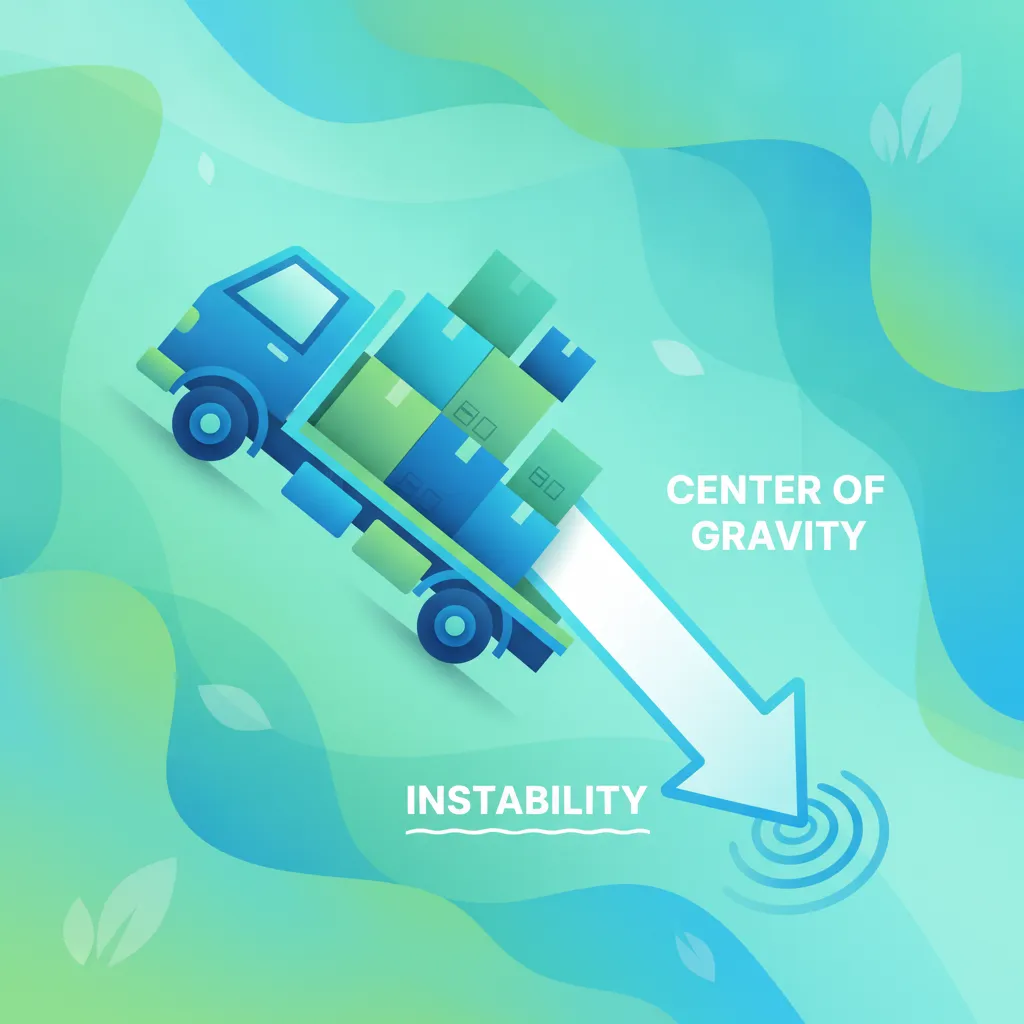
This lesson introduces the principles of load distribution and the impact of the centre of gravity on vehicle stability. It explains how cargo placement influences axle loads and the overall balance of the vehicle. The content emphasizes the importance of maintaining a low centre of gravity to reduce rollover risk.

This lesson teaches the fundamental techniques for safely turning a large passenger vehicle. It explains the concepts of turning radius, swept path, and off-tracking, where the rear wheels follow a tighter path than the front wheels. Learners will understand how to position the vehicle correctly before a turn and manage their speed to navigate corners without encroaching on other lanes or hitting curbs.
Understand the critical importance of safe reversing and managing blind spots when driving heavy vehicles. This lesson provides theoretical guidance on techniques to ensure safety during low-speed maneuvers and while navigating complex environments.

This lesson focuses on the blind spot zones specific to trucks and vehicle combinations, explaining where these zones are located. It covers the use of blind spot mirrors and other aids to enhance driver awareness during lane changes and turns. The content stresses the importance of maintaining safe distances from vulnerable road users.
This lesson covers safe reversing techniques for both rigid trucks and articulated combinations, emphasizing the use of mirrors and cameras. It discusses the risks of jackknifing during reversal and the importance of speed control and safety checks. The content outlines best practices for planning a safe reversing path, potentially with a guide person.

This lesson focuses on the high-risk maneuver of reversing, emphasizing the importance of all-around observation due to limited visibility. It teaches techniques for controlling the vehicle at very low speeds and using mirrors and direct observation to manage large blind spots behind the car. The priority is to ensure the path is clear of pedestrians and obstacles at all times.

This lesson addresses the challenges of maneuvering heavy vehicles in confined spaces such as loading bays and narrow streets. It provides strategies for planning the maneuver, accounting for vehicle dimensions, turning radius, and blind spots. The content emphasizes slow, controlled movements and the need for high situational awareness.

This lesson covers the high-risk maneuver of reversing a large passenger vehicle. It details a systematic approach that includes using all available aids like mirrors, cameras, and audible alarms. The lesson stresses the need for slow, controlled movements, constant scanning of the surroundings, and conducting thorough clearance checks to prevent collisions with objects or people behind the vehicle, advocating for a spotter whenever possible.

This lesson teaches the proper adjustment of all required mirrors to maximize the field of vision and minimize blind spots. It discusses the limitations of indirect vision and the importance of aligning mirrors based on the driver's seating position. The content also outlines the typical blind zones for heavy vehicles and strategies to mitigate them.
This lesson explains the specific regulations for operating heavy vehicles on Autobahnen, including speed limits, lane discipline, and overtaking rules. It discusses the use of dedicated truck lanes and the importance of maintaining appropriate following distances. The content also covers procedures for merging and exiting high-speed roads safely.
This lesson covers safe interaction with special vehicles. It details the challenges of driving near large trucks (LKW), including their extensive blind spots, longer stopping distances, and the effects of wind turbulence when overtaking them. A critical part of the lesson is explaining the correct procedure for reacting to emergency vehicles by creating an emergency corridor ('Rettungsgasse') on multi-lane roads.
This lesson examines the concepts of turning radius and swept path, explaining how a heavy vehicle's size influences the space required for a turn. It highlights the importance of maintaining proper lane positioning to accommodate the vehicle's dimensions. The content provides guidance on planning maneuvers and accounting for off-tracking during cornering.

This lesson provides a comprehensive guide to identifying and managing the significant blind spots around a large passenger vehicle. It covers the correct adjustment and use of all mirrors, supplemented by camera systems, to gain maximum visibility. The importance of performing physical checks ('shoulder checks') before turning or changing lanes is emphasized to detect smaller road users like cyclists and pedestrians who may be hidden from view.
Find clear answers to common questions learners have about Jackknifing, Trailer Swing and Safe Maneuvering. Learn how the lesson is structured, which driving theory objectives it supports, and how it fits into the overall learning path of units and curriculum progression in Germany. These explanations help you understand key concepts, lesson flow, and exam focused study goals.
Jackknifing typically occurs when the trailer wheels lose grip or push the towing vehicle, causing the angle between the two to exceed a safe limit. This is often triggered by sudden braking or aggressive steering on slippery surfaces.
Off-tracking happens because the rear wheels of a trailer follow a tighter path than the front wheels of the towing vehicle. You must monitor your swept path constantly to ensure the trailer does not hit obstacles or sidewalk users during turns.
Yes, the German theory exam often features scenarios where you must identify the safest speed and steering inputs to prevent swaying, especially when driving on motorways or during wind-heavy conditions.
Effective reversing depends on meticulous mirror adjustment and the use of camera systems where available. You must understand how to orient your vehicle to maximize your field of vision and always utilize a spotter if visibility is compromised.
Begin your targeted revision now. Use our practice search to quickly find specific German driving theory questions. Filter by StVO rules, road signs, or hazard perception to create your focused study plan. Master challenging areas and prepare confidently for your theoretical driving test.