
Logo
Italian Driving Theory Courses

Lesson 3 of the Vehicle Construction, Controls, Safety Checks and Roadworthiness unit

Italian Goods Vehicle Theory (C): Tyres, Suspension, and Wheel Fastenings

This lesson focuses on the critical mechanical safety components of heavy goods vehicles. You will learn to perform rigorous inspections of tyres, suspension systems, and wheel fastenings, ensuring your vehicle remains roadworthy under the requirements of the Codice della Strada.
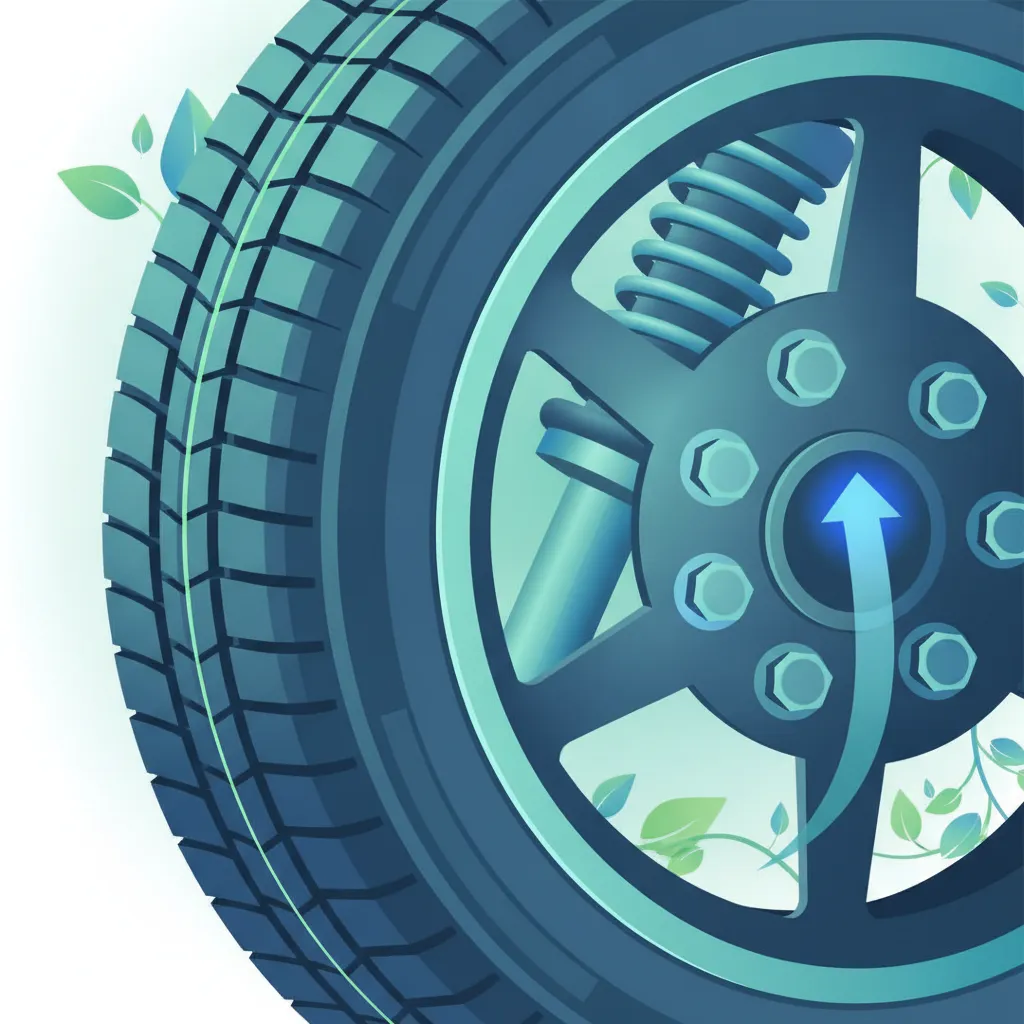
vehicle safetytyre maintenanceC licence theoryheavy vehicle inspectionmechanical safety
Italian Goods Vehicle Theory (C): Tyres, Suspension, and Wheel Fastenings

Lesson content overview

Italian Goods Vehicle Theory (C)

Tyres, Suspension, and Wheel Fastenings: Essential Safety for Heavy Goods Vehicles

Driving heavy goods vehicles safely and efficiently requires a deep understanding of their critical mechanical components. Among the most vital systems are the tyres, suspension, and wheel fastenings. These three interconnected elements form a functional triad that directly influences a vehicle's stability, handling, braking performance, and overall roadworthiness. Failure in any of these areas can lead to severe consequences, including loss of control, tyre blowouts, or even wheel detachment, posing significant risks to the driver and other road users.

This comprehensive lesson, vital for the Italian Goods Vehicle License Theory Course, will provide an exhaustive examination of these components. We will delve into their definitions, practical significance, associated legal requirements under the Italian Codice della Strada, and essential inspection protocols. Maintaining these systems in optimal condition is not merely a matter of good practice; it is a mandatory legal obligation for all professional drivers operating heavy goods vehicles.

Understanding Heavy Vehicle Tyres: Your Vehicle's Contact with the Road

Tyres are the sole point of contact between your heavy goods vehicle and the road surface. They are elastic rubber components designed to support the vehicle's immense loads, generate traction for acceleration and braking, and absorb minor road irregularities. Their condition directly impacts steering, stability, and fuel efficiency.

Tyre Fundamentals and Types for Heavy Goods Vehicles

Heavy goods vehicles typically use pneumatic (air-filled) tyres. These are engineered to withstand extreme pressures and loads. Understanding their fundamental characteristics is crucial for safety and compliance.

Radial vs. Diagonal (Cross-Ply) Tyres

Modern heavy goods vehicles almost exclusively use radial tyres. Radial tyres have ply cords running perpendicular to the direction of travel, with a separate belt layer under the tread. This construction offers greater flexibility in the sidewall and a stiffer tread, leading to:

  • Better road contact.
  • Lower rolling resistance, which improves fuel efficiency.
  • Less heat buildup, reducing the risk of blowouts.
  • Longer tread life.

In contrast, diagonal (cross-ply) tyres have ply cords running diagonally across the tyre, overlapping in a criss-cross pattern. While simpler in construction, they are less common on heavy goods vehicles due to their higher rolling resistance and heat generation.

Seasonal Tyre Types

Different weather conditions necessitate specific tyre designs to ensure optimal grip and safety:

  • Summer Tyres: Designed for temperatures above 7°C, these have a harder rubber compound and a tread pattern optimized for dry and wet roads, providing excellent grip and braking performance in warmer conditions.
  • Winter Tyres: Mandatory in certain Italian regions during specific periods, winter tyres feature a softer rubber compound that remains flexible in temperatures below 7°C. Their distinctive tread patterns, with numerous sipes (small cuts), are designed to channel snow and slush effectively and provide enhanced grip on icy or snow-covered surfaces.
  • All-Season Tyres: These aim to offer a compromise between summer and winter performance. While convenient, their performance is generally not as optimized as dedicated seasonal tyres in extreme conditions. For heavy goods vehicles, it's often safer and legally required to use dedicated seasonal tyres when conditions demand.

Tyre Markings: Load Index and Speed Rating

Every tyre sidewall contains critical information, including the load index and speed rating.

Definition

Load Index

A numeric code on the tyre sidewall indicating the maximum load capacity a tyre can support at its maximum inflation pressure.
This value must be equal to or greater than the maximum load that the axle can bear. For heavy goods vehicles, selecting tyres with an appropriate load index is paramount to prevent overloading, which can lead to tyre failure.
Definition

Speed Rating

A letter code on the tyre sidewall indicating the maximum speed at which a tyre can safely operate when properly inflated and under load.
The tyre's speed rating must match or exceed the maximum design speed of the vehicle. Exceeding this speed can lead to excessive heat buildup and tyre disintegration.

Tyre Pressure and Inflation Rules

Maintaining correct tyre inflation is non-negotiable for the safe operation of any heavy goods vehicle. Tyre pressure must match the manufacturer's specifications for the specific load and operational speed. These specifications are typically found in the vehicle's manual or on a sticker inside the cab.

Checking Tyre Pressure Accurately

  1. Check When Cold: Tyre pressure should always be checked when the tyres are cold. This means the vehicle must have been stationary for at least three hours, or driven for less than a few kilometres at low speed. Driving heats the tyres, causing the air inside to expand and giving an artificially high reading.

  2. Use a Calibrated Gauge: Always use a reliable, calibrated pressure gauge. Many modern heavy goods vehicles have integrated tyre pressure monitoring systems (TPMS), but manual verification is still recommended.

  3. Check All Tyres: Every tyre on the vehicle, including any spare tyres, must be checked. Remember that dual wheel assemblies require both inner and outer tyres to be checked individually.

Implications of Incorrect Tyre Pressure:

  • Under-inflation: Reduces the tyre's load-bearing capacity, increases rolling resistance, causes excessive sidewall flexing and heat buildup, leading to premature wear on the outer edges of the tread, reduced fuel efficiency, and a significant risk of sudden tyre blowout.
  • Over-inflation: Reduces the tyre's contact patch with the road, leading to reduced grip, increased wear in the centre of the tread, a harsher ride, and makes the tyre more susceptible to damage from road hazards.

Tread Depth Requirements and Inspections

The tread depth of a tyre is a crucial safety factor, particularly in wet conditions. The tread pattern is designed to evacuate water from beneath the tyre, preventing hydroplaning (aquaplaning), where the tyre loses contact with the road surface and rides on a layer of water.

Under the Italian Codice della Strada:

  • For summer tyres, the legal minimum tread depth is 1.6 millimetres across the central three-quarters of the tyre's width and around its entire circumference.
  • For winter tyres, the legal minimum tread depth is generally 3 millimetres in Italy to ensure adequate grip on snow and ice.

    Note

    Always verify the specific legal tread depth values for winter tyres in the latest Italian Codice della Strada, as regional regulations or specific vehicle types might have variations.

Drivers must regularly check tread depth using a tread depth gauge. Tyre manufacturers also incorporate tread wear indicators (TWIs) – small bars moulded into the main grooves that become flush with the tread surface when the depth reaches the legal minimum.

Recognizing Tyre Damage and Wear Patterns

Beyond tread depth and pressure, a thorough visual inspection of tyres is essential for identifying damage.

  • Sidewall Damage: Look for cuts, cracks, bulges, or separation, which indicate structural weakness and a high risk of failure.
  • Punctures and Embedded Objects: Check for nails, screws, or other debris lodged in the tread.
  • Uneven Wear:
    • Wear on both outer edges: Often indicates under-inflation.
    • Wear in the centre: Often indicates over-inflation.
    • Wear on one side (inner or outer): Can point to wheel alignment issues or problems with the suspension components.
    • Cupping or scalloping: Irregular wear patterns that often suggest worn or faulty suspension components, such as shock absorbers.

Any significant damage or abnormal wear pattern requires immediate attention from a qualified technician.

Heavy Vehicle Suspension Systems: Stability and Load Management

The suspension system of a heavy goods vehicle plays a vital role in maintaining tyre contact with the road, absorbing shocks from uneven surfaces, and stabilizing the vehicle during dynamic manoeuvres like braking and cornering. It connects the vehicle body to its wheels, allowing relative motion while managing loads and ensuring ride comfort.

Role and Components of Suspension

The primary function of the suspension is to:

  • Support the vehicle's weight: Distributing the load evenly across the axles.
  • Absorb road shocks: Cushioning the impact of bumps and potholes, improving ride comfort and reducing stress on the vehicle's structure and cargo.
  • Maintain tyre-road contact: Ensuring maximum grip for steering, braking, and acceleration, especially over uneven surfaces.
  • Control vehicle movement: Limiting body roll, pitch, and squat during cornering, braking, and acceleration.

Key components of heavy vehicle suspension systems include:

  • Springs: These absorb and store energy from road impacts. Common types for heavy goods vehicles are:
    • Leaf Springs: Consisting of multiple layers of metal plates (leaves) bound together, these are robust and commonly found on the rear axles of trucks due to their high load-carrying capacity and durability.
    • Coil Springs: Helical springs often used on front axles or in conjunction with air suspension for better comfort and handling.
    • Air Springs (Air Bags): In air suspension systems, these replace traditional springs with flexible rubber bellows filled with compressed air. Air suspension offers superior ride comfort, allows for load levelling (maintaining consistent ride height regardless of load), and can be adjusted for different road conditions.
  • Dampers (Shock Absorbers): These hydraulic or gas-charged devices control the rate of spring movement and dissipate the energy absorbed by the springs. Without dampers, the vehicle would continue to bounce excessively after hitting a bump, leading to instability.

Suspension Configurations and Load Transfer

Heavy goods vehicles often utilize dependent suspension systems, especially on drive axles, where wheels on the same axle are connected and move together. Some modern trucks may feature independent suspension on the front axles for improved steering precision and ride comfort.

The suspension system constantly manages load transfer – the distribution of vertical forces between wheels during acceleration, braking, cornering, and when encountering road irregularities. A well-designed and maintained suspension ensures that tyre contact with the road remains consistent, which is crucial for safety.

Inspecting Suspension for Roadworthiness

Regular inspection of suspension components is critical for roadworthiness and safety. Drivers should look for:

  • Cracks or Damage: Inspect leaf springs for cracks, especially near mounting points, or bent/broken leaves. Check coil springs for fractures.
  • Leaks: Examine shock absorbers and air springs for fluid leaks or air leaks, which indicate a loss of damping or load-carrying capacity.
  • Corrosion: Significant rust or corrosion on any suspension component can compromise its structural integrity.
  • Loose or Damaged Bushings/Mounts: Worn rubber bushings or loose mounting bolts can lead to excessive play, clunking noises, and unstable handling.
  • Uneven Ride Height: If one side of the vehicle appears lower than the other when unloaded, it could indicate a damaged spring or air bag.

A cracked leaf spring, for example, can drastically reduce an axle's load-bearing ability, cause uneven tyre wear, and compromise vehicle stability, especially when fully loaded or during braking.

Securing Wheels: Fastenings and Bearings

Even the most robust tyres and sophisticated suspension systems are useless if the wheels are not securely attached to the vehicle. Wheel fastenings and wheel bearings are critical components that ensure the wheels remain firmly in place and rotate smoothly.

Wheel Fastenings: Nuts, Bolts, and Torque

Wheel fastenings (commonly referred to as lug nuts or wheel nuts) are the nuts or bolts that secure the wheel hub to the vehicle axle. Their primary function is to provide a strong, consistent clamping force that prevents the wheel from loosening or detaching under the immense dynamic loads and vibrations experienced during operation.

The Importance of Correct Torque

Torque refers to the rotational force applied to tighten the wheel nuts, typically measured in Newton-metres (Nm). Applying the correct, manufacturer-specified torque is paramount:

  • Under-torqued nuts: Will not provide sufficient clamping force, allowing the wheel to vibrate, wobble, and potentially detach. This is an extremely dangerous situation, especially at speed.
  • Over-torqued nuts: Can stretch or damage the wheel studs, strip the threads, or even deform the wheel hub, making future removal difficult and compromising the integrity of the fastening system.

Proper Wheel Nut Tightening Procedure

  1. Clean Contact Surfaces: Ensure all mating surfaces (wheel hub, wheel, lug nuts) are clean and free from dirt, rust, or debris. Never use grease or oil on wheel studs or nuts unless explicitly specified by the manufacturer, as this can lead to over-torquing.

  2. Initial Tightening: Hand-tighten all wheel nuts until they are snug.

  3. Star Pattern (Cross-Pattern): For wheels with multiple fasteners (e.g., 6 or more), always tighten the nuts in a star pattern (or cross-pattern) to ensure even clamping force across the wheel. This prevents stress concentrations and ensures the wheel seats correctly.

  4. Use a Calibrated Torque Wrench: Apply the manufacturer-specified torque using a calibrated torque wrench. Do not rely on impact wrenches for final tightening, as they can easily over-torque nuts.

  5. Re-torque Check: It is highly recommended to re-torque wheel nuts after a short period of operation (e.g., 50-100 km) after any wheel removal or tyre change. This ensures that the nuts have not loosened due to initial settling or thermal expansion/contraction.

Inspecting Wheel Fastenings for Integrity

During pre-drive inspections, drivers must visually inspect wheel fastenings:

  • Missing or Loose Nuts: Check for any missing lug nuts or signs of loosening (e.g., polished metal around the nut hole or displaced wheel nut indicators).
  • Damaged Threads: Look for any signs of damaged threads on the studs or nuts.
  • Corrosion: Heavy corrosion can seize nuts or weaken the material.
  • Cracked Wheel Studs: Inspect for cracks, especially around the base of the studs.
  • Wheel Nut Indicators: Many heavy vehicles use bright plastic indicators on the wheel nuts. If an indicator has moved, it signals that the nut may have loosened, requiring immediate re-torquing.

Wheel Bearings: Function and Maintenance

Wheel bearings are critical components that allow the wheel hub to rotate freely and smoothly around the axle while supporting both the radial (vertical) and axial (sideways) loads of the vehicle.

Practical Meaning and Inspection

Healthy wheel bearings are essential to prevent friction, heat buildup, and eventual wheel seizure. Damaged bearings can cause:

  • Abnormal Noise: A grinding, humming, or roaring noise that changes with vehicle speed or when turning.
  • Excessive Play: When the wheel is lifted off the ground, gripping it at the 12 and 6 o'clock positions and rocking it should reveal minimal to no play. Excessive movement indicates worn bearings.
  • Overheating: Bearings can become dangerously hot, which might be detectable by touch (caution: can be extremely hot) or by a distinct burning smell.

Regular inspection and timely replacement of worn wheel bearings are crucial to prevent catastrophic failure, which could lead to a wheel detaching or seizing during operation. While bearing wear often occurs gradually, the high loads carried by heavy vehicles can accelerate this process.

Italian Regulations: Codice della Strada Compliance

The Italian Codice della Strada (Road Code) outlines strict regulations governing the condition and maintenance of tyres, suspension, and wheel fastenings for all vehicles, especially heavy goods vehicles. Compliance is mandatory and rigorously enforced to ensure road safety.

  • Condition: All tyres must be in good condition, free from cuts, bulges, cracks, or other structural damage that could compromise their integrity.
  • Inflation: Tyres must be correctly inflated to the pressure specified by the manufacturer for the specific load.
  • Tread Depth:
    • For summer tyres, the minimum legal tread depth is 1.6 mm.
    • For winter tyres, the minimum legal tread depth is 3 mm.
  • Matching Specifications: Tyre sidewall markings, including the load index and speed rating, must match the vehicle's certified specifications and be appropriate for the maximum permissible axle loads.

Mandatory Checks for Suspension and Wheel Security

  • Wheel Fastenings: Wheel nuts and bolts must be securely fastened to the manufacturer's specified torque (often provided in Nm). This must be verified, especially after tyre replacement or wheel removal.
  • Suspension Components: All suspension components (springs, dampers, linkages, bushings) must be free from damage, excessive wear, corrosion, and leaks. They must function correctly to maintain tyre contact and vehicle stability.
  • Axle Loads: The load on each axle must never exceed the vehicle’s certified maximum axle load. Overloading an axle directly overstresses its tyres and suspension components.

Consequences of Non-Compliance

Failure to comply with these regulations can lead to significant penalties, including fines, vehicle immobilisation, and even legal proceedings in case of an accident attributable to faulty components. More importantly, non-compliance puts lives at risk.

Common Safety Violations and Best Practices

Professional drivers must be vigilant in identifying and correcting potential issues related to tyres, suspension, and wheel fastenings. Here are common violations and the correct behaviors:

  1. Tyre Under-Inflation:

    • Why wrong: Leads to increased rolling resistance, overheating, and premature wear on the outer tyre edges. Increases the risk of a dangerous blowout, reduces fuel efficiency, and compromises handling.
    • Correct behavior: Check tyre pressure when tyres are cold using a calibrated gauge and inflate to the recommended manufacturer's value for the specific load.
    • Consequence: Reduced fuel efficiency, higher tyre wear, increased blowout risk, potential loss of control.
  2. Insufficient Tread Depth (especially winter tyres):

    • Why wrong: Severely compromises water evacuation and grip, leading to hydroplaning on wet roads or loss of traction on snowy/icy surfaces.
    • Correct behavior: Regularly check tread depth with a gauge. Replace tyres once tread depth falls below the legal minimum (1.6 mm for summer, 3 mm for winter in Italy).
    • Consequence: Loss of control, extended braking distances, severe accidents.
  3. Incorrect Torque on Wheel Nuts:

    • Why wrong: Leads to uneven clamping forces, causing the wheel to wobble, vibrate, and eventually loosen or detach.
    • Correct behavior: Always use a calibrated torque wrench to apply the manufacturer-specified torque in a star pattern after any wheel removal. Re-check torque after a short drive.
    • Consequence: Catastrophic wheel detachment at speed, severe accident, extensive damage.
  4. Using Over-Load Rated Tyres (Load Index lower than required):

    • Why wrong: The tyre's structure is overloaded beyond its design limits, leading to excessive heat generation, internal damage, and a high risk of blowout.
    • Correct behavior: Ensure the tyre's load index meets or exceeds the maximum certified axle load for the vehicle.
    • Consequence: Tyre failure, blowout, vehicle instability.
  5. Operating with Damaged Suspension Components:

    • Why wrong: Reduces the vehicle's load-bearing capacity, compromises tyre contact with the road, and leads to unstable handling. Increases stress on other components like tyres and wheel bearings.
    • Correct behavior: Conduct thorough visual inspections for cracks, corrosion, leaks, or excessive wear on springs, dampers, and linkages. Replace damaged parts immediately.
    • Consequence: Unstable handling, uneven tyre wear, increased accident risk, potential for further mechanical failure.
  6. Neglecting Wheel Bearing Inspection:

    • Why wrong: Worn wheel bearings can cause excessive play, abnormal noise, and significant heat buildup, eventually leading to wheel seizure or detachment.
    • Correct behavior: Include checks for excessive play, noise, and unusual heat in routine maintenance and pre-drive inspections. Replace faulty bearings promptly.
    • Consequence: Wheel seizure, loss of braking, dangerous accidents.

Operational Contexts and Conditional Variations

The importance of well-maintained tyres, suspension, and wheel fastenings is amplified by various operational conditions.

Weather Conditions

  • Wet Conditions: Adequate tread depth and correct tyre pressure are paramount to prevent hydroplaning and ensure effective braking. Secure wheel fastenings are critical as vibrations and dynamic loads are intensified.
  • Snow and Ice: In addition to the legal requirement for winter tyres with at least 3 mm tread depth, proper suspension function ensures the tyres maintain contact on slippery, uneven surfaces. Wheel nuts should be checked frequently, as severe temperature fluctuations can affect torque.

Road Type

  • Motorways (Autostrade): Higher speeds place immense stress on tyre integrity. Correct inflation and securely torqued wheel fastenings are absolutely critical to prevent overheating, blowouts, or wheel detachment.
  • Urban Roads: Frequent braking and turning manoeuvres demand optimal tyre grip. Worn tyres or faulty suspension can significantly increase stopping distances and reduce manoeuvrability in dense traffic.
  • Mountain Roads: Steep gradients and sharp turns place high lateral and vertical loads on the suspension and tyres. Damaged components can lead to instability and loss of control.

Vehicle State

  • Fully Loaded: When carrying maximum permissible cargo, the increased axle loads make correct tyre load index, inflation pressure, and suspension integrity even more crucial. Overloaded tyres are highly susceptible to failure.
  • Trailer Coupling (CE, C1E): Both the towing vehicle and the trailer must have all wheel nuts correctly torqued and tyres in optimal condition. A tyre blowout or wheel detachment on a trailer can severely impact the stability and control of the entire combination.

Vulnerable Road Users

Optimal tyre grip and a stable suspension directly translate to shorter braking distances. In environments with pedestrians, cyclists, or motorcyclists, this reduced stopping distance is crucial for avoiding collisions and ensuring the safety of vulnerable road users.

Interconnectedness and Safety Logic

The three systems—tyres, suspension, and wheel fastenings—are deeply interconnected, forming a chain of dependencies where the failure of one can compromise the others.

  • Proper Tyre Inflation ensures an optimal contact patch with the road, leading to reduced wear, consistent handling, and extended tyre life. Conversely, Deflated Tyres cause increased sidewall flex, dangerous overheating, potential blowouts, and reduced fuel efficiency.
  • Adequate Tread Depth effectively channels water away, significantly reducing the risk of hydroplaning. Insufficient Tread Depth allows water to build up under the tyre, leading to a dangerous loss of traction.
  • Correct Wheel Fastening Torque creates a uniform clamping force, ensuring the wheel remains attached even under dynamic loads and vibrations. Under-torqued Wheel Nuts lead to wheel loosening, potential vibration, and ultimately, catastrophic wheel detachment.
  • Healthy Suspension ensures even tyre wear by distributing vertical loads efficiently and maintains stable handling and effective load transfer. Damaged Suspension components cause uneven tyre wear, reduce handling precision, and increase stress on both tyres and wheel bearings.

This lesson integrates with other critical areas of your Italian Goods Vehicle License Theory Course:

  • Lesson 2: Heavy-Vehicle Dimensions, Masses, Axle Loads and Operating Limits: Understanding gross vehicle weight (GVW) and individual axle loads is fundamental for selecting tyres with the correct load index and ensuring the suspension is not overloaded.
  • Lesson 5: Pre-Drive Inspection Checklist: The routine pre-drive inspection involves systematic checks of tyre pressure, tread depth, visual inspection of suspension components, and verification of wheel fastening security.
  • Lesson 4: Heavy-Vehicle Braking Systems: The effectiveness of any braking system relies heavily on the tyre's ability to grip the road, which is directly influenced by its condition and the stability provided by the suspension.
  • Lesson 6: Trailers, Semitrailers, Coupling: The principles of tyre integrity, suspension health, and secure wheel fastenings apply equally to trailers and semi-trailers, which are integral parts of a heavy vehicle combination.

Essential Vocabulary for Professional Drivers

Real-World Driving Scenarios

These scenarios illustrate the practical application of the concepts discussed in this lesson.

  1. Scenario: Long-Haul Motorway Journey with a C-Class Truck

    • Description: A professional driver is preparing a fully loaded C-class truck for a long journey across Italy's motorways. The cargo is heavy, bringing the vehicle close to its Gross Vehicle Weight (GVW).
    • Relevant Concepts: Tyre load index, correct inflation pressure (checked cold), wheel fastening torque, speed rating.
    • Correct Behavior: Before departure, the driver meticulously checks the cold tyre pressure on all tyres, ensuring they match the manufacturer's specifications for a fully loaded vehicle. They confirm that the tyre load index and speed rating are appropriate for the vehicle's weight and intended motorway speeds. A visual inspection of wheel nuts for any signs of loosening (using indicators if fitted) is also performed.
    • Incorrect Behavior: The driver relies on a quick visual check, assuming the tyres are okay. They neglect to check the pressure or re-torque the wheel nuts after a recent tyre change. During the journey, under-inflated tyres generate excessive heat due to constant flexing under heavy load, leading to a sudden blowout at high speed. This results in loss of control and a dangerous incident.
  2. Scenario: Operating a C1E Vehicle in Snowy Mountain Passes

    • Description: A C1E vehicle, towing a trailer, must navigate a mountain pass in Northern Italy during winter. The roads are snow-covered and potentially icy.
    • Relevant Concepts: Winter tyre tread depth, suspension condition, wheel fastening security in cold temperatures, axle load distribution for the combination.
    • Correct Behavior: The driver ensures both the towing vehicle and the trailer are fitted with winter tyres that have a minimum tread depth of 3 mm. They perform a detailed pre-drive inspection, specifically checking suspension components for any cracks or leaks that could compromise stability on uneven terrain. Wheel nuts on both vehicle and trailer are verified for correct torque, considering potential loosening from temperature changes.
    • Incorrect Behavior: The driver uses all-season tyres with worn tread, barely meeting the 1.6 mm summer minimum, or overlooks a hairline crack in a leaf spring on the trailer. While navigating a snowy bend, the insufficient tyre grip leads to a skid, and the compromised suspension exacerbates the loss of control, causing the trailer to jackknife.
  3. Scenario: Routine Pre-Drive Inspection before a Regional Delivery Shift

    • Description: A driver is conducting their mandatory pre-drive inspection on a C1 truck before starting a series of regional deliveries through urban and rural areas.
    • Relevant Concepts: Visual tyre inspection (sidewall, tread), wheel bearing play check, suspension visual inspection, general roadworthiness.
    • Correct Behavior: The driver systematically inspects each tyre for cuts, bulges, and measures the tread depth with a gauge. They visually check all visible suspension components for damage, corrosion, or leaks. They also physically check for excessive play in the wheel bearings by attempting to rock the wheel while it's slightly off the ground, and listen for any abnormal noises or feel for unusual heat at the wheel hubs.
    • Incorrect Behavior: The driver performs a superficial walk-around, only glancing at the tyres. They miss a significant bulge on a tyre sidewall caused by impact damage and don't notice the early signs of a worn wheel bearing (slight play and faint humming). Later in the day, the tyre fails, or the bearing overheats and seizes, causing a breakdown and significant delay.
  4. Scenario: Loading a CE Trailer at a Busy Warehouse

    • Description: After a tyre change on a CE trailer, the driver is preparing to load heavy cargo at a warehouse before heading onto the motorway.
    • Relevant Concepts: Axle load distribution, correct wheel fastening torque, re-torque procedure.
    • Correct Behavior: The driver ensures that after the new tyre was mounted, all wheel nuts were tightened to the manufacturer's specified torque using a calibrated torque wrench, following a star pattern. Before loading, they perform a crucial re-torque check to ensure no nuts have loosened from initial settling. The load is then distributed evenly to avoid exceeding any axle's load limit.
    • Incorrect Behavior: The driver assumes the workshop tightened the wheel nuts sufficiently and doesn't verify the torque. They also neglect the re-torque check. During the journey, the wheel nuts gradually loosen due to vibrations and dynamic loads, causing the wheel to become unstable and eventually detach from the trailer, creating a severe road hazard for following traffic.

Final Concept Summary

The integrity of tyres, suspension, and wheel fastenings is foundational to the safe operation of any heavy goods vehicle. For professional drivers in Italy, understanding and adhering to the regulations outlined in the Codice della Strada is not just a legal requirement but a paramount safety responsibility.

Key takeaways include:

  • Tyre Requirements: Always ensure tyres have the correct load index and speed rating for the vehicle and its load. Maintain correct inflation pressure (checked cold) and meet the minimum legal tread depth (1.6 mm for summer, 3 mm for winter). Regularly inspect for any physical damage like cuts or bulges.
  • Suspension Integrity: The suspension system—comprising springs, dampers, and linkages—must be free from cracks, corrosion, and leaks. It is crucial for maintaining tyre contact, managing load distribution, and ensuring vehicle stability.
  • Wheel Fastenings: Wheel nuts must be tightened to the manufacturer’s precise torque specification using a calibrated torque wrench and a star pattern. Regular inspection for loose or damaged fastenings is essential.
  • Wheel Bearings: These components facilitate smooth wheel rotation and must be inspected for play, noise, or overheating to prevent seizure or detachment.
  • Legal Obligations: Strict compliance with Italian traffic laws regarding these components is mandatory.
  • Inspection Protocol: Drivers must conduct thorough pre-drive checks of all these components before each journey, paying particular attention after loading cargo or changing tyres.
  • Contextual Adjustments: Always adapt tyre type, pressure, and inspection frequency based on prevailing weather conditions, road type, and vehicle load.

By rigorously maintaining these critical systems and performing diligent inspections, heavy goods vehicle drivers can ensure optimal grip, handling, and braking performance, significantly reducing the risk of catastrophic failures and contributing to safer roads for everyone.

Learn more with these articles

Check out these practice sets

Lesson recap

Quick summary before you move on

Fast revision

This lesson covers the critical inspection and maintenance of tyres, suspension systems, and wheel fastenings for heavy goods vehicles. Tyres must have correct load index and speed ratings, proper inflation checked when cold, and minimum legal tread depth of 1.6 mm for summer tyres and 3 mm for winter tyres. Suspension systems—including leaf springs, coil springs, air springs, and shock absorbers—must be inspected for cracks, leaks, and corrosion to maintain tyre contact and vehicle stability. Wheel fastenings require precise torque application using a calibrated torque wrench in a star pattern, with mandatory re-torque checks after wheel removal. These three interconnected systems form a safety chain where failure in one area can compromise the others, making systematic pre-drive inspections essential under Italian Codice della Strada requirements.


Core takeaways

Main ideas from this lesson

A short set of high-value points that capture the most important learning from this lesson.

Tyres are the sole contact point between vehicle and road; their condition directly affects steering, stability, and braking performance.

Tyre load index and speed rating must match or exceed vehicle specifications to prevent catastrophic failure.

Tyre pressure must be checked when cold using a calibrated gauge; both under-inflation and over-inflation create serious safety hazards.

Wheel nuts must be tightened in a star pattern to the manufacturer-specified torque to ensure even clamping force and prevent wheel detachment.

Suspension components including springs, dampers, and linkages must be free from cracks, corrosion, and leaks to maintain vehicle stability.

Remember this

Details worth keeping in mind

Point 1

Summer tyres require minimum 1.6 mm tread depth; winter tyres require minimum 3 mm tread depth under Italian law.

Point 2

Check tyre pressure when tyres are cold (stationary for at least 3 hours) for accurate readings.

Point 3

Use a calibrated torque wrench for wheel nuts never rely solely on impact wrenches.

Point 4

Re-torque wheel nuts after 50-100 km following any wheel removal or tyre change.

Point 5

Suspension damage causes uneven tyre wear, reduced handling, and increased stress on other components.

Watch for this

Frequent learner mistakes

Assuming tyre pressure is correct without checking because tyres look fine; visual inspection alone is insufficient.

Using winter tyres with tread depth between 1.6 mm and 3 mm thinking the 1.6 mm minimum applies year-round.

Tightening wheel nuts in sequence rather than a star pattern, causing uneven clamping and wheel wobble.

Failing to re-torque wheel nuts after a tyre change, assuming initial tightening is permanent.

Overlooking suspension damage during quick inspections; hairline cracks and minor leaks can compromise safety.

Search topics related to Tyres, Suspension, and Wheel Fastenings

Explore search topics learners often look for when studying Tyres, Suspension, and Wheel Fastenings. These topics reflect common questions about road rules, driving situations, safety guidance, and lesson level theory preparation for learners in Italy.

heavy vehicle tyre inspection requirements ItalyC licence theory exam suspension checkschecking wheel fastenings on heavy goods vehiclesItalian driving theory tyre tread depth for HGVshow to perform pre-drive inspection for CE licencesafety requirements for heavy vehicle wheels and tyresprofessional driving theory tyre maintenance

Related driving theory lessons for Tyres, Suspension, and Wheel Fastenings

Browse additional driving theory lessons that cover connected traffic rules, road signs, and common driving situations related to this topic. Improve your understanding of how different rules interact across everyday traffic scenarios.

Heavy Vehicle Tyres Suspension and Wheel Fastenings Explained

Explore the detailed mechanics of heavy vehicle tyres, advanced suspension systems, and the critical importance of wheel fastenings. Understand the engineering behind these components for professional driving theory in Italy.
heavy vehicletyre mechanicssuspension systemswheel fasteningsdriving theoryvehicle components
Tyres, Pressure, Tread, and Load Index lesson image

Tyres, Pressure, Tread, and Load Index

This lesson offers comprehensive knowledge on motorcycle tyres, covering how to interpret specifications like size, load index, and speed rating. It emphasizes the critical relationship between correct tyre pressure, handling, and grip on various road surfaces. Learners will acquire the skills to perform regular tread inspections and recognize the criteria for timely tyre replacement to ensure safety.

Italian Motorcycle Theory AMotorcycle Construction, Controls, Equipment and Safety Checks
View lesson
Tyres, Pressure, and Tread Depth lesson image

Tyres, Pressure, and Tread Depth

This lesson emphasizes the critical role of tyres in vehicle safety, as they are the only point of contact with the road. It details how to check for correct tyre pressure, measure tread depth to ensure it is above the legal minimum, and identify uneven wear patterns. The content explains how proper tyre maintenance is essential for optimal grip, braking, and preventing aquaplaning.

Italian Driving Theory BVehicle Technology, Safety Systems, Tyres, Lights and Roadworthiness
View lesson
Lights, Reflectors, and Side Guards lesson image

Lights, Reflectors, and Side Guards

This lesson covers the complete set of lighting, reflective equipment, and protective guards mandated for heavy vehicles. It explains the function of each light, from headlights to side markers, and the importance of keeping them clean and operational to ensure the vehicle is visible to others. The lesson also details the legal requirements and safety purpose of side guards and rear underrun protection, which are designed to protect vulnerable road users in a collision.

Italian Goods Vehicle Theory (C)Vehicle Construction, Controls, Safety Checks and Roadworthiness
View lesson
Motorway Rules for Heavy Vehicles lesson image

Motorway Rules for Heavy Vehicles

This lesson focuses on the specific regulations and techniques for operating a heavy vehicle on high-speed motorways. It covers mandatory lane discipline for trucks, the rules governing overtaking other heavy vehicles, and the specific speed limits that apply. Best practices for merging onto and exiting the motorway, maintaining safe following distances, and using the hard shoulder only in genuine emergencies are also detailed.
Italian Goods Vehicle Theory (C)Rural Roads, Mountain Roads, Motorways, Tunnels, Weather and Long-Distance Risks
View lesson
Axle Load Distribution and Limits lesson image

Axle Load Distribution and Limits

This lesson details the legal restrictions on the weight that can be supported by a single axle or a group of axles. It explains the importance of distributing the load correctly across the vehicle's length to prevent exceeding these limits, which can cause significant road damage and compromise vehicle safety. Learners will understand the relationship between load placement, axle pressure, and overall stability, particularly during braking and cornering.
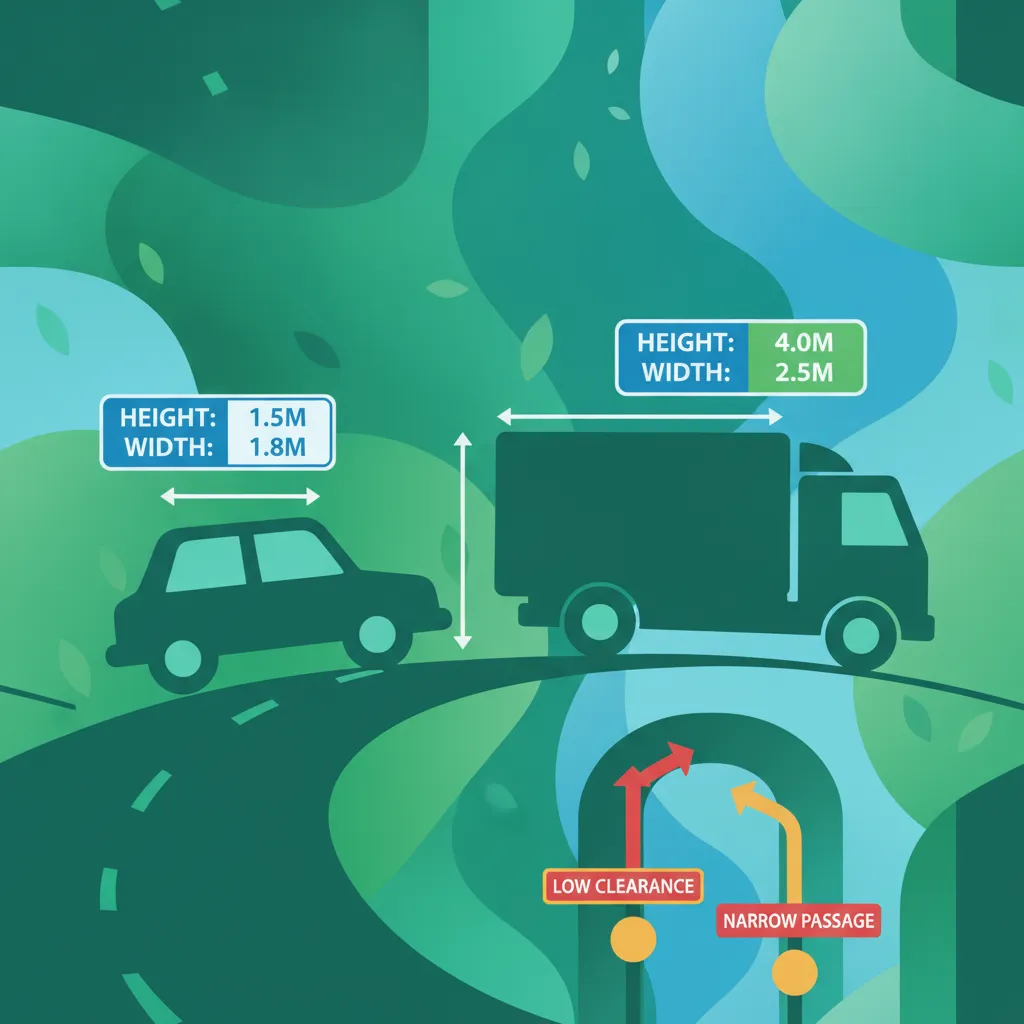
Italian Goods Vehicle Theory (C)Heavy-Vehicle Dimensions, Masses, Axle Loads and Operating Limits
View lesson
Vehicle Dimensions and Restrictions lesson image

Vehicle Dimensions and Restrictions

This lesson focuses on the specific dimensional limits that heavy goods vehicles must adhere to on Italian roads, as stipulated by the Codice della Strada. It covers the maximum permissible length, width, and height, explaining how these restrictions impact navigation through tunnels, under bridges, and within urban environments. Learners will also understand the conditions under which special permits for exceptional or oversized transport are required.

Italian Goods Vehicle Theory (C)Heavy-Vehicle Dimensions, Masses, Axle Loads and Operating Limits
View lesson
Brake Lag, Fade, and Overheating lesson image

Brake Lag, Fade, and Overheating

This lesson covers three critical risks associated with heavy vehicle braking systems. It explains 'brake lag' in air brake systems, the delay between pedal application and brake activation, and 'brake fade', the loss of braking efficiency due to overheating. Learners will be taught to recognize the warning signs and, more importantly, to use correct driving techniques, such as utilizing endurance brakes, to prevent these potentially catastrophic failures.

Italian Goods Vehicle Theory (C)Heavy-Vehicle Braking Systems, Speed, Distance and Downhill Control
View lesson
Weather Impacts: Fog, Rain, Snow, Ice, and Wind lesson image

Weather Impacts: Fog, Rain, Snow, Ice, and Wind

This lesson provides essential guidance on how to adjust driving techniques for a range of hazardous weather conditions. It covers reducing speed and increasing following distances in rain to prevent aquaplaning, using lights correctly in fog, and understanding the vehicle's reduced traction on snow and ice. It also explains how to anticipate and counteract the effects of strong crosswinds on high-sided vehicles.

Italian Goods Vehicle Theory (C)Rural Roads, Mountain Roads, Motorways, Tunnels, Weather and Long-Distance Risks
View lesson
Integration with General Traffic Rules lesson image

Integration with General Traffic Rules

This lesson bridges the gap between general traffic laws and their specific application to heavy goods vehicles. It examines how rules regarding speed limits, lane discipline, overtaking, and priority are modified or have special considerations for trucks due to their size, weight, and reduced maneuverability. Drivers will learn to correctly interpret road signs and signals within the context of operating a large vehicle, ensuring safe and compliant integration with other traffic.

Italian Goods Vehicle Theory (C)C1, C1E, C and CE Scope, Responsibilities and Professional Context
View lesson
Engine Brake, Retarder, and Exhaust Braking lesson image

Engine Brake, Retarder, and Exhaust Braking

This lesson focuses on auxiliary or 'endurance' braking systems designed to manage vehicle speed on long downgrades, reducing the risk of service brake overheating. It explains the operating principles of engine brakes (compression release brakes), hydrodynamic retarders, and exhaust brakes. Learners will understand when and how to use these powerful tools to maintain a safe, controlled speed and preserve the service brakes for when they are most needed.

Italian Goods Vehicle Theory (C)Heavy-Vehicle Braking Systems, Speed, Distance and Downhill Control
View lesson

Consequences of Poor Vehicle Safety Inspections

Understand the legal and safety consequences of failing to properly inspect tyres, suspension, and wheel fastenings. Learn about common violations and real-world risks in professional Italian driving theory.

vehicle safetylegal consequencesinspection failurestyre defectssuspension issuesdriving regulations
Tyres, Pressure, and Tread Depth lesson image

Tyres, Pressure, and Tread Depth

This lesson emphasizes the critical role of tyres in vehicle safety, as they are the only point of contact with the road. It details how to check for correct tyre pressure, measure tread depth to ensure it is above the legal minimum, and identify uneven wear patterns. The content explains how proper tyre maintenance is essential for optimal grip, braking, and preventing aquaplaning.
Italian Driving Theory BVehicle Technology, Safety Systems, Tyres, Lights and Roadworthiness
View lesson
Maintenance, Service Intervals, and Roadworthiness lesson image

Maintenance, Service Intervals, and Roadworthiness

This lesson explains the difference between daily checks and long-term scheduled maintenance. It covers the legal requirement for periodic technical inspections ('revisione') to certify a vehicle's roadworthiness and the importance of adhering to manufacturer-recommended service intervals. Learners will understand their crucial role in reporting any mechanical defects promptly to ensure issues are rectified, maintaining the vehicle's safety and reliability over its service life.

Italian Goods Vehicle Theory (C)Vehicle Construction, Controls, Safety Checks and Roadworthiness
View lesson
Load Loss, Spillage, and Accident Scenarios lesson image

Load Loss, Spillage, and Accident Scenarios

This lesson prepares drivers for incidents beyond a simple breakdown, such as losing part of the load onto the roadway or dealing with a spillage. It outlines the immediate priorities: ensuring personal safety, warning other traffic of the hazard, and notifying the authorities. The lesson also covers the fundamental principles of managing an accident scene, including protecting the area, assessing for casualties, and providing essential information to emergency services.
Italian Goods Vehicle Theory (C)Fatigue, Legal Consequences, Breakdowns, Fire, Load Incidents and Emergencies
View lesson
Traction Management on Various Road Surfaces lesson image

Traction Management on Various Road Surfaces

This lesson focuses on how to adapt riding techniques to maintain traction on compromised surfaces. It identifies common hazards such as wet leaves, manhole covers, gravel, and painted lines that can reduce the tyre's grip. Learners will understand how to use smooth and gentle throttle, brake, and steering inputs to prevent traction loss and maintain control in these challenging situations.

Italian Motorcycle Theory ABalance, Steering, Cornering, Traction and Road Position
View lesson
Sagoma Limite and Overloading Consequences lesson image

Sagoma Limite and Overloading Consequences

This lesson defines 'sagoma limite', which refers to the maximum outline or silhouette a vehicle and its load can occupy. It then explores the serious repercussions of overloading, which include substantial legal fines, increased stress on vehicle components like brakes and suspension, and dangerously compromised handling and stability. Learners will understand that overloading is not just a legal issue but a critical safety hazard for the driver and all other road users.

Italian Goods Vehicle Theory (C)Heavy-Vehicle Dimensions, Masses, Axle Loads and Operating Limits
View lesson
Tyres, Pressure, Tread, and Load Index lesson image

Tyres, Pressure, Tread, and Load Index

This lesson offers comprehensive knowledge on motorcycle tyres, covering how to interpret specifications like size, load index, and speed rating. It emphasizes the critical relationship between correct tyre pressure, handling, and grip on various road surfaces. Learners will acquire the skills to perform regular tread inspections and recognize the criteria for timely tyre replacement to ensure safety.

Italian Motorcycle Theory AMotorcycle Construction, Controls, Equipment and Safety Checks
View lesson
Interactions with Pedestrians, Cyclists, and Two-Wheelers lesson image

Interactions with Pedestrians, Cyclists, and Two-Wheelers

This lesson provides an in-depth focus on sharing the road with the most vulnerable users. It teaches drivers to be acutely aware of pedestrians at crossings, cyclists filtering through traffic, and motorcyclists who may be in blind spots. The lesson emphasizes the importance of leaving extra space, signaling intentions clearly, and exercising extreme caution at junctions, where the majority of serious incidents occur.

Italian Goods Vehicle Theory (C)Urban Deliveries, Vulnerable Road Users and Restricted Environments
View lesson
Brake Lag, Fade, and Overheating lesson image

Brake Lag, Fade, and Overheating

This lesson covers three critical risks associated with heavy vehicle braking systems. It explains 'brake lag' in air brake systems, the delay between pedal application and brake activation, and 'brake fade', the loss of braking efficiency due to overheating. Learners will be taught to recognize the warning signs and, more importantly, to use correct driving techniques, such as utilizing endurance brakes, to prevent these potentially catastrophic failures.

Italian Goods Vehicle Theory (C)Heavy-Vehicle Braking Systems, Speed, Distance and Downhill Control
View lesson
Safe Following Distances and Grip Management lesson image

Safe Following Distances and Grip Management

This lesson teaches riders how to maintain a safe following distance using the two-second rule, which accounts for reaction time and braking distance. It covers grip management, explaining how tire condition and road surfaces like wet asphalt affect traction. Mastering these concepts is essential for anticipating hazards and preventing rear-end collisions.

Italian Driving Theory AMSpeed, Braking, Following Distance and Vehicle Control
View lesson
Axle Load Distribution and Limits lesson image

Axle Load Distribution and Limits

This lesson details the legal restrictions on the weight that can be supported by a single axle or a group of axles. It explains the importance of distributing the load correctly across the vehicle's length to prevent exceeding these limits, which can cause significant road damage and compromise vehicle safety. Learners will understand the relationship between load placement, axle pressure, and overall stability, particularly during braking and cornering.

Italian Goods Vehicle Theory (C)Heavy-Vehicle Dimensions, Masses, Axle Loads and Operating Limits
View lesson

Frequently asked questions about Tyres, Suspension, and Wheel Fastenings

Find clear answers to common questions learners have about Tyres, Suspension, and Wheel Fastenings. Learn how the lesson is structured, which driving theory objectives it supports, and how it fits into the overall learning path of units and curriculum progression in Italy. These explanations help you understand key concepts, lesson flow, and exam focused study goals.

How often should I check the wheel fastenings on my heavy vehicle?

You should check wheel fastenings as part of your mandatory pre-drive inspection and whenever the vehicle has undergone a wheel change or maintenance. Ensure all nuts are tight and show no signs of rust streaks or looseness.

What is the legal minimum tread depth for heavy vehicles in Italy?

For vehicles in categories C and CE, the tyre tread must be at least 1.6 mm deep across the entire contact surface. However, for safety reasons in wet or snowy conditions, it is strongly advised to maintain a greater depth.

Why is proper suspension maintenance critical for heavy loads?

The suspension system ensures the vehicle remains stable during cornering and braking. If it is faulty, the vehicle's center of gravity may shift unpredictably, significantly increasing the risk of rollovers or loss of control, especially when fully loaded.

Can I continue driving if I see a minor cut in the tyre sidewall?

No. Any damage to the sidewall of a commercial vehicle tyre is considered a critical safety defect. The internal structure of the tyre is compromised, which can lead to a sudden blowout at highway speeds.

Ready to Find Your Next Targeted Italian Driving Theory Practice Set?

Start searching now to pinpoint exactly which Italian driving theory topics, road signs, or traffic rules you need to master. Use our advanced filters to build a custom practice session and ensure you're fully prepared for every aspect of your official driving licence exam.

Search Practice Theory Sets

Continue your Italian driving theory learning journey

Italian road signsItalian article topicsSearch Italian road signsItalian driving theory homeItalian road sign categoriesItalian driving theory topicsSearch Italian theory articlesItalian driving theory coursesItalian Driving Theory B courseItalian driving theory articlesItalian driving theory practiceItalian practice set categoriesItalian Driving Theory AM courseItalian Motorcycle Theory A courseItalian driving licence proceduresSearch Italian driving theory practiceItalian driving theory terminology A–ZItalian Goods Vehicle Theory (C) courseItalian driving theory terms and glossaryRoad Users, Core Behaviour Rules and Safe Communication unit in Italian Driving Theory BObservation, Visibility, Positioning and Communication unit in Italian Driving Theory AMPatente AM, Vehicle Types and First-Rider Responsibility unit in Italian Driving Theory AMItalian Signs, Signals, Road Markings and Priority Rules unit in Italian Driving Theory AMPatente B, Training, Examination and Driver Responsibility unit in Italian Driving Theory BMotorcycle Construction, Controls, Equipment and Safety Checks unit in Italian Motorcycle Theory AA1, A2 and A Licence Scope, Progression and Rider Responsibility unit in Italian Motorcycle Theory APre-Drive Inspection Checklist lesson in Vehicle Construction, Controls, Safety Checks and RoadworthinessHeavy-Vehicle Dimensions, Masses, Axle Loads and Operating Limits unit in Italian Goods Vehicle Theory (C)Helmet, Protective Clothing, Visibility, Observation and Communication unit in Italian Motorcycle Theory AC1, C1E, C and CE Scope, Responsibilities and Professional Context unit in Italian Goods Vehicle Theory (C)Steering Mechanisms and Controls lesson in Vehicle Construction, Controls, Safety Checks and RoadworthinessLights, Reflectors, and Side Guards lesson in Vehicle Construction, Controls, Safety Checks and RoadworthinessStructural Elements and Chassis Design lesson in Vehicle Construction, Controls, Safety Checks and RoadworthinessTyres, Suspension, and Wheel Fastenings lesson in Vehicle Construction, Controls, Safety Checks and RoadworthinessMaintenance, Service Intervals, and Roadworthiness lesson in Vehicle Construction, Controls, Safety Checks and Roadworthiness