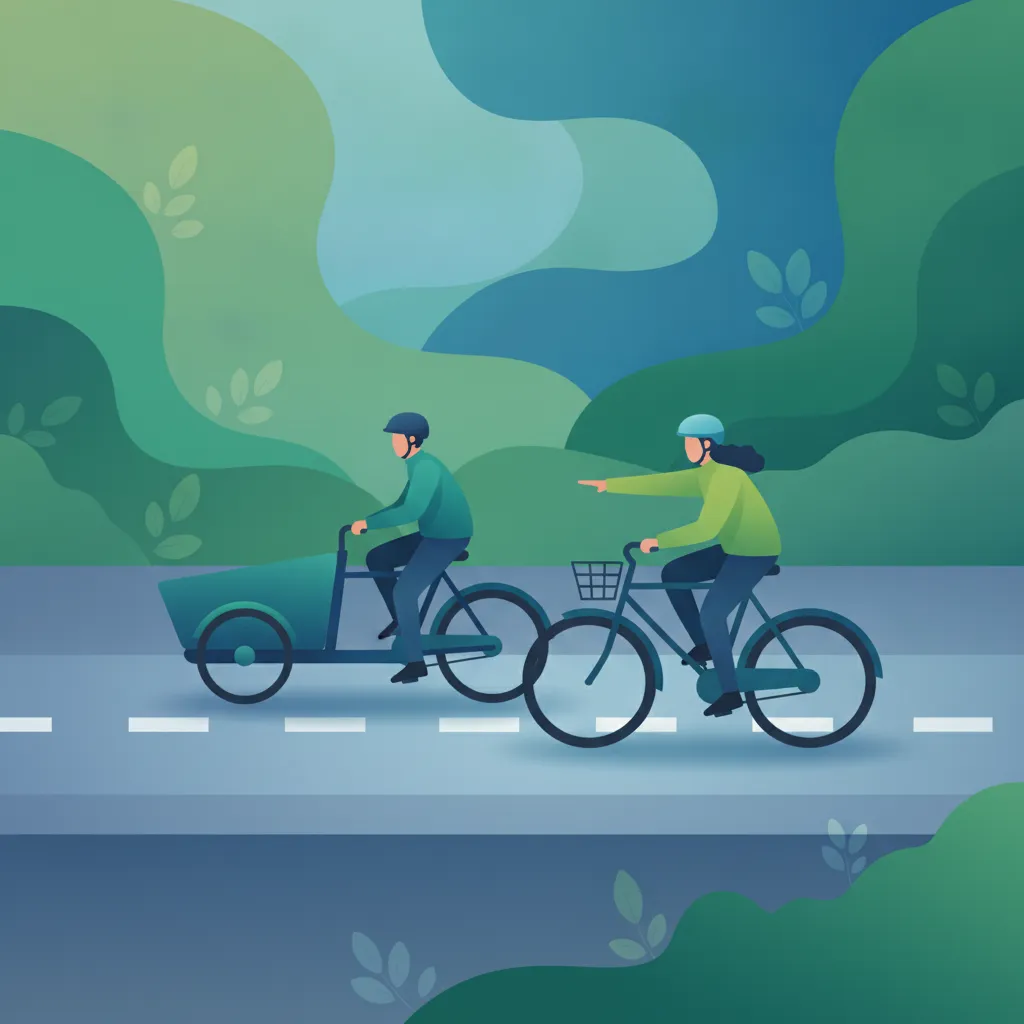
This lesson focuses on the essential skills for safely navigating Danish roads alongside cyclists and cargo bikes. As a stor knallert rider, you must understand how to share road space, respect cycle lanes, and anticipate the behavior of vulnerable road users to pass your Category AM theory exam.
Lesson content overview
Navigating the roads of Denmark as a Category AM (stor knallert) rider requires a keen understanding of how to safely interact with other road users, especially cyclists and cargo bikes. These vulnerable road users are a common sight in both urban and rural areas, making effective and respectful interaction not just a courtesy, but a critical safety skill. This lesson outlines the essential principles, rules, and practical considerations for coexisting safely with bicycles and cargo bikes, helping you prevent accidents and ensure a smooth flow of traffic for everyone.
Cyclists are among the most vulnerable road users due to their lack of protective enclosure and smaller profile compared to motor vehicles. As a rider of a stor knallert, it is your responsibility to anticipate their movements and ensure their safety. This often means providing extra space and exercising greater caution, especially in complex traffic situations.
Cyclists operate without the protection of a vehicle chassis, airbags, or seatbelts, meaning any collision can result in severe injuries. Their smaller size can also make them harder to spot, particularly in blind spots, in adverse weather, or during nighttime. Furthermore, bicycles can be less stable than motor vehicles, and cyclists may need to swerve to avoid potholes, debris, or sudden gusts of wind, making predictable movement crucial for safe interaction.
Drivers must always be aware of the inherent fragility of cyclists. Anticipate that cyclists may react slower to sudden changes in traffic or may not always be aware of your presence. A proactive approach to scanning the road and signaling your intentions well in advance is paramount to preventing dangerous situations. This heightened awareness forms the bedrock of safe interaction.
Cargo bikes, known as lastbilcykler in Danish, are a common sight, particularly in urban environments. These vehicles are designed for utility, allowing individuals to transport groceries, packages, or even several children. While they are still bicycles, their dimensions and handling characteristics differ significantly from standard bikes.
A cargo bike is typically wider and longer than a conventional bicycle, which impacts its maneuverability and the space it occupies on the road. They are also often heavier, especially when loaded, meaning they may accelerate slower and require longer braking distances. When interacting with cargo bikes, you must adjust your perception of their size and speed, providing even more space and anticipating slightly different behavior than with a standard cyclist. Underestimating their width is a common mistake that can lead to unsafe overtaking.
Overtaking cyclists is one of the most common interactions stor knallert riders will have. Performing this maneuver safely requires adherence to specific distance rules and careful judgment of road conditions. Failure to do so can put cyclists at significant risk.
When overtaking a cyclist or a cargo bike, it is legally required and vitally important to maintain a minimum safe lateral distance. This distance allows for potential instability from the cyclist, unexpected obstacles in their path, or sudden movements, preventing a collision. The standard minimum distance is at least 1.5 meters when riding in intra-urban areas at speeds up to 50 km/h.
This 1.5-meter gap is a baseline; in many situations, more space may be necessary. For instance, if you are traveling at higher speeds, the required safety buffer naturally increases. Always evaluate the specific situation, including road conditions, weather, and the cyclist's behavior, before committing to an overtaking maneuver. If you cannot maintain this minimum safe distance, you must not overtake and wait for a safer opportunity.
The context of your overtaking maneuver significantly influences how you should approach it. On narrow roads without dedicated cycle lanes, you may need to wait for a clearer section of road or even for traffic from the opposite direction to clear before it is safe to overtake. Never squeeze past a cyclist if it means compromising the minimum safe distance or forcing them into oncoming traffic or obstacles.
When traveling at speeds higher than 50 km/h, the minimum safe overtaking distance must be proportionally increased. For example, if you are on an open road where the speed limit is 80 km/h, a 1.5-meter gap would be insufficient. The increased speed reduces your reaction time and increases the severity of any potential impact, necessitating a larger buffer. Always ensure you have a clear view ahead and behind, and that there is sufficient space for your stor knallert to move into the adjacent lane or road space without endangering anyone.
Intersections are high-risk areas where many collisions between motor vehicles and cyclists occur. Special attention must be paid to cyclists when performing turns, as priority rules often favor them.
One of the most critical rules when interacting with cyclists at intersections concerns right turns. When you intend to turn right, you must yield to any cyclists who are proceeding straight through the intersection. This rule is designed to prevent collisions where a driver turns right into the path of an unseen or unheeded cyclist.
Before initiating a right turn, check your mirrors and your right blind spot thoroughly for cyclists. Cyclists traveling straight often have the right-of-way, even if they are in a cycle lane adjacent to your turning lane. Always assume a cyclist might be present and check multiple times. Wait until all straight-through cyclists have cleared the intersection before you begin your turn. This ensures their safety and your compliance with traffic laws.
While right turns pose a specific risk to cyclists, left turns also require careful attention. When a cyclist intends to turn left, they may position themselves differently than a motor vehicle. Some cyclists will move to the far left of the lane (or even to the center of the intersection in some designs) to make their turn, similar to how a car would. Others might perform a "box turn" where they proceed straight through the intersection, stop, and then turn left from the new direction.
As a stor knallert rider, you must be aware of these potential behaviors. When you see a cyclist signaling a left turn, anticipate their positioning. Give them ample space to maneuver, whether they are moving to the center of the lane or preparing for a box turn. Your predictability and awareness of their intentions will help prevent conflicts. Always signal your own intentions clearly and early to avoid surprising any nearby cyclists.
Cycle lanes are a fundamental part of Danish road infrastructure, providing dedicated space for cyclists and enhancing their safety. Understanding how to interact with these lanes and the cyclists using them is crucial for all road users.
Cycle lanes are clearly marked and intended primarily for the use of cyclists and cargo bikes. As a stor knallert rider, you are generally prohibited from driving in a dedicated cycle lane. This rule ensures the safety of cyclists by providing them with an unhindered path, free from the faster and larger motor vehicle traffic.
However, there are specific exceptions. You may be permitted to enter a cycle lane for a short distance when making a right turn, if indicated by road markings or signs, or to access a parking spot or property entrance. When entering a cycle lane for these permitted reasons, you must always yield to any cyclists already present in the lane. Exercise extreme caution, check for cyclists from all angles, and only enter the lane when it is completely safe to do so. Never use a cycle lane as a shortcut or for extended travel.
Despite the widespread availability of cycle lanes, there are situations where cyclists, including cargo bikes, are permitted or even required to use the main roadway alongside motor traffic. This can occur on roads where no dedicated cycle lane exists, or when a cycle lane is obstructed (e.g., by parked vehicles, roadworks, or debris). In such instances, cyclists are legitimate road users and must be treated with the same respect and adherence to traffic laws as any other vehicle.
When a cyclist is using the main roadway, you must adapt your driving behavior. Maintain a safe following distance, and when overtaking, ensure you still provide the minimum safe lateral distance of 1.5 meters or more. Be patient and wait for a safe opportunity to pass. Do not pressure cyclists to move faster or closer to the side of the road, as this can be dangerous for them. Understanding that cyclists have the right to use the road when cycle lanes are absent or obstructed is key to harmonious traffic flow.
Even experienced riders can make mistakes, but being aware of common errors and understanding how conditions affect safety can significantly reduce risks. Proactive and adaptive riding is essential when interacting with cyclists.
Several recurring scenarios lead to conflicts between motor vehicles and cyclists. Being mindful of these can help you avoid them:
By actively focusing on these common pitfalls, you can significantly enhance your safety and that of cyclists.
Driving conditions can drastically alter the safety requirements for interacting with cyclists.
Always adjust your riding to match the prevailing conditions, prioritizing the safety of vulnerable road users like cyclists and cargo bikes.
The rules governing interactions with cyclists are not arbitrary; they are enshrined in Danish traffic law (Færdselsloven) and are designed to protect the most vulnerable. Understanding the legal basis reinforces the importance of these practices.
The Danish traffic code, Færdselsloven, explicitly outlines responsibilities for motor vehicle operators when sharing the road with cyclists. Key legal requirements include:
Adhering to these laws is not just about avoiding fines; it's about upholding a traffic system designed for safety and coexistence.
The overarching principle behind safe interaction with cyclists is predictability. As a stor knallert rider, you must always signal your intentions clearly and well in advance, whether you are turning, changing lanes, or stopping. Sudden, unexpected maneuvers are a major cause of accidents involving cyclists, who may not have the reaction time or stability to respond safely.
Attentiveness is equally crucial. Continuously scan the road, check your mirrors frequently, and perform head checks before any significant maneuver. Never assume that the road ahead or beside you is clear of cyclists. By riding predictably and attentively, you create a safer environment for everyone on the road, minimizing the risk of conflicts and ensuring that all road users can reach their destinations safely.
Safe interaction with cyclists and cargo bikes is essential for Danish stor knallert riders due to Denmark's extensive cycle traffic. The key legal requirements include maintaining a minimum 1.5-meter lateral distance when overtaking at urban speeds, yielding to straight-through cyclists when turning right, and restricting cycle lane use to permitted maneuvers only. Cyclists and cargo bikes have the right to use main roadways when cycle lanes are absent or obstructed. Adjusting for weather conditions, cyclist density, and the unique handling characteristics of cargo bikes—with their greater width and slower acceleration—is crucial for preventing accidents and passing the Category AM theory test.
A short set of high-value points that capture the most important learning from this lesson.
Cyclists are highly vulnerable road users lacking protective enclosures, requiring extra space and heightened awareness from stor knallert riders.
Cargo bikes (lastbilcykler) are wider, heavier, and slower to accelerate than standard bicycles, requiring adjusted overtaking behavior.
Maintain a minimum lateral distance of at least 1.5 meters when overtaking cyclists in intra-urban areas at speeds up to 50 km/h, increasing proportionally at higher speeds.
Always yield to cyclists proceeding straight through when turning right at intersections, performing thorough blind spot checks before initiating the turn.
Stor knallert riders may only enter cycle lanes for permitted maneuvers such as right turns or accessing property, and must always yield to cyclists present.
Explore all units and lessons included in this driving theory course.
The 1.5-meter minimum overtaking distance applies at speeds up to 50 km/h; it must be proportionally increased at higher speeds.
Right turns require yielding to straight-through cyclists before proceeding, even if they are in an adjacent cycle lane.
Cyclists may use the main roadway when cycle lanes are obstructed or absent, and must be treated as legitimate road users.
Cargo bikes require more space and patience due to their width, slower acceleration, and longer braking distances.
Always perform shoulder checks in addition to mirror checks, as cyclists easily disappear into blind spots.
Returning to the lane too quickly after overtaking, leaving insufficient space for the cyclist.
Failing to perform a proper shoulder check before turning, relying solely on mirrors to check blind spots.
Underestimating the width of cargo bikes and providing inadequate overtaking clearance.
Assuming a cyclist will yield or move aside rather than verifying their intentions at intersections.
Using a cycle lane as a shortcut or for extended travel instead of only entering for permitted maneuvers like turning.
Lesson content overview
A short set of high-value points that capture the most important learning from this lesson.
Cyclists are highly vulnerable road users lacking protective enclosures, requiring extra space and heightened awareness from stor knallert riders.
Cargo bikes (lastbilcykler) are wider, heavier, and slower to accelerate than standard bicycles, requiring adjusted overtaking behavior.
Maintain a minimum lateral distance of at least 1.5 meters when overtaking cyclists in intra-urban areas at speeds up to 50 km/h, increasing proportionally at higher speeds.
Always yield to cyclists proceeding straight through when turning right at intersections, performing thorough blind spot checks before initiating the turn.
Stor knallert riders may only enter cycle lanes for permitted maneuvers such as right turns or accessing property, and must always yield to cyclists present.
Explore all units and lessons included in this driving theory course.
The 1.5-meter minimum overtaking distance applies at speeds up to 50 km/h; it must be proportionally increased at higher speeds.
Right turns require yielding to straight-through cyclists before proceeding, even if they are in an adjacent cycle lane.
Cyclists may use the main roadway when cycle lanes are obstructed or absent, and must be treated as legitimate road users.
Cargo bikes require more space and patience due to their width, slower acceleration, and longer braking distances.
Always perform shoulder checks in addition to mirror checks, as cyclists easily disappear into blind spots.
Returning to the lane too quickly after overtaking, leaving insufficient space for the cyclist.
Failing to perform a proper shoulder check before turning, relying solely on mirrors to check blind spots.
Underestimating the width of cargo bikes and providing inadequate overtaking clearance.
Assuming a cyclist will yield or move aside rather than verifying their intentions at intersections.
Using a cycle lane as a shortcut or for extended travel instead of only entering for permitted maneuvers like turning.
Explore search topics learners often look for when studying Interacting with Cycle Traffic and Cargo Bikes. These topics reflect common questions about road rules, driving situations, safety guidance, and lesson level theory preparation for learners in Denmark.
Browse additional driving theory lessons that cover connected traffic rules, road signs, and common driving situations related to this topic. Improve your understanding of how different rules interact across everyday traffic scenarios.
Understand the specific Danish traffic laws and regulations for sharing the road with cyclists and cargo bikes. Learn about priority rules, safe overtaking distances, and legal responsibilities to ensure road safety for vulnerable users.
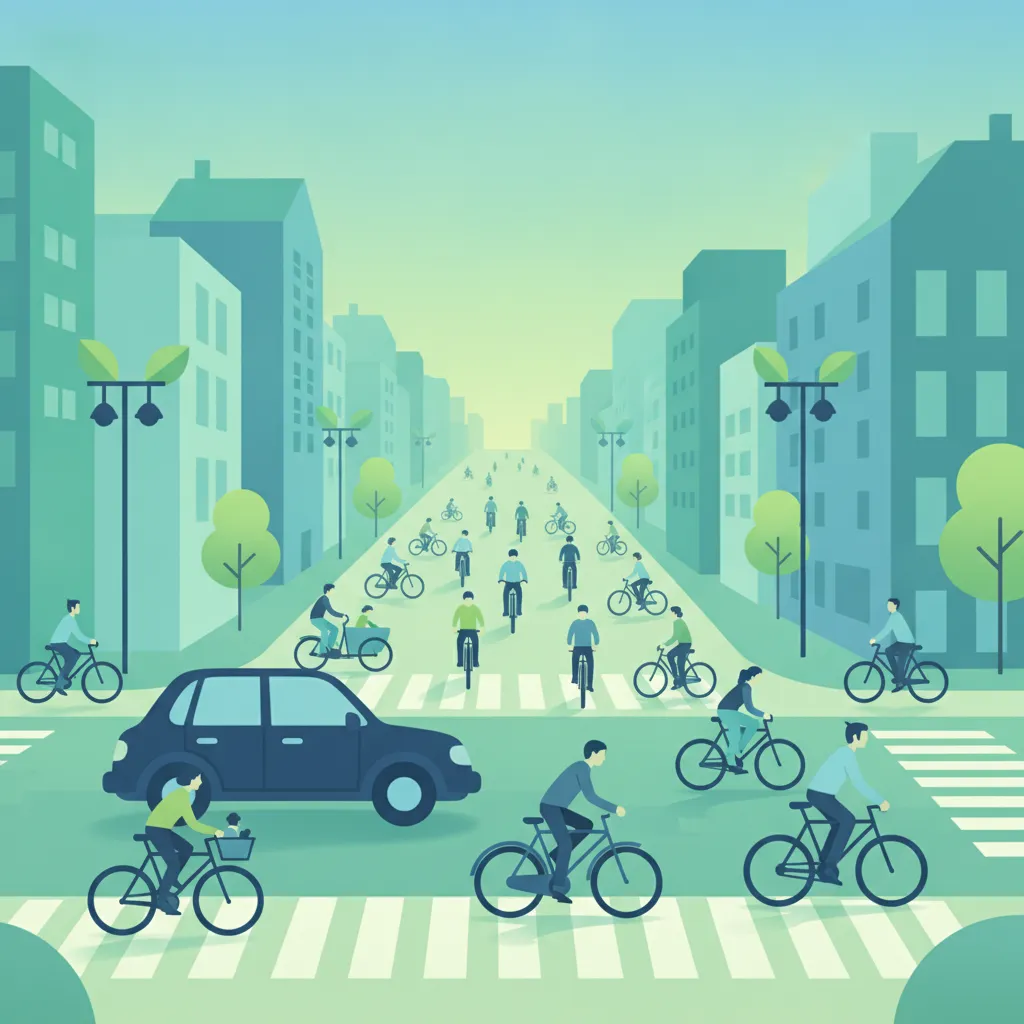
This lesson provides critical guidance for driving in environments with heavy cycle traffic, typical of Danish cities. It focuses on identifying and yielding to cyclists in dedicated bike lanes, especially when turning right across their path. The content emphasizes advanced observation skills to detect cyclists in blind spots and the importance of giving adequate space.

This lesson focuses on the safe integration of cyclists and pedestrians within the traffic system, a key feature of Danish roads. It covers the specific rights and common behaviors of cyclists, including those on e-bikes and cargo bikes, and explains procedures for yielding to pedestrians. The content emphasizes maintaining safe distances and heightened awareness to prevent accidents and promote harmonious road sharing.
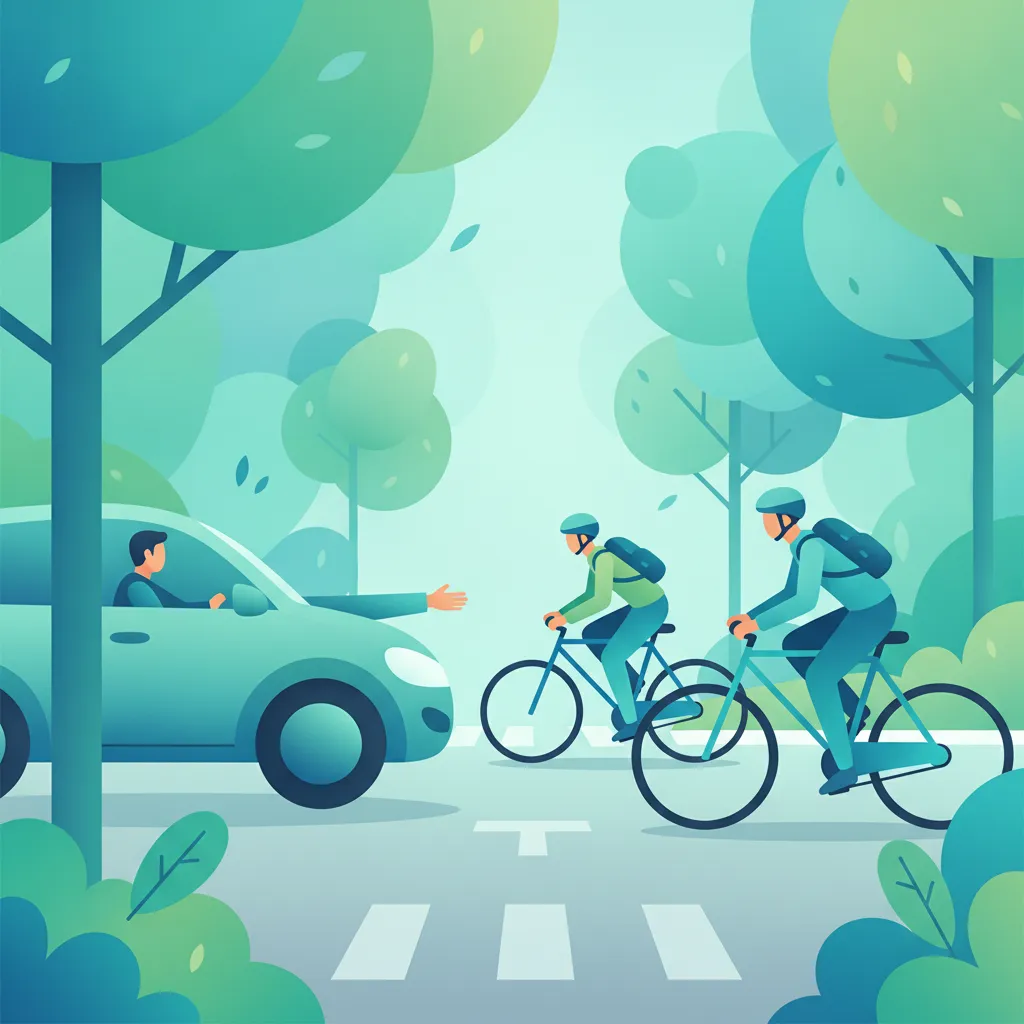
This lesson provides in-depth guidance on safely interacting with cyclists and e-bike riders, a daily reality in Danish cities. It explains how to provide adequate space when overtaking, how to anticipate their movements at intersections, and how to respect their right-of-way in designated lanes. Understanding these dynamics is essential for preventing common accidents and ensuring a safe urban driving experience for everyone.
This lesson provides detailed guidance on navigating pedestrian crossings (fodgængerfelter) and areas with high cyclist traffic. It clarifies your legal obligation to stop for pedestrians at zebra crossings and the proper speed to approach these zones. A central theme is understanding the rights of vulnerable road users and how to yield safely to them in accordance with Danish traffic law.
This lesson focuses on safe interactions with Denmark's large population of cyclists and other vulnerable road users. It covers the rules for passing cyclists, yielding at pedestrian crossings, and the specific hazard of turning across a bike lane. Developing heightened awareness for these interactions is critical for urban riding.

This lesson explores non-verbal communication techniques for safer road sharing. It discusses the importance of making eye contact with other drivers and pedestrians to confirm they have seen you. The content also explains the appropriate and legal use of the horn to alert others of your presence.
This lesson emphasizes the professional driver's heightened responsibility to protect vulnerable road users. It revisits Danish regulations concerning cyclist priority, particularly during right turns, and details the correct procedures for maintaining safe overtaking distances. The content focuses on developing advanced situational awareness, using mirrors and cameras effectively, and anticipating the behavior of pedestrians and cyclists in urban environments.

This lesson addresses the unique challenges of driving in tourist-heavy urban centers alongside cyclists. It teaches drivers to anticipate the behavior of individuals who may be distracted or unfamiliar with local traffic rules. The content provides strategies for communicating intentions clearly and navigating safely around large groups, luggage, and cyclists.
This lesson provides practical guidance for navigating the challenges of urban deliveries. It details Danish regulations for using loading zones, including time restrictions and parking rules, and offers strategies for effective route planning in dense traffic. The content emphasizes awareness of pedestrian-heavy areas and the importance of maneuvering with caution to ensure public safety during delivery operations.
This lesson details the function and meaning of traffic light signals in Denmark. It covers the standard red, amber, and green sequences, as well as special signals like flashing amber lights and green arrows for turning. The content also explains signals specific to cyclists and pedestrians that moped riders must observe at intersections.
Find clear answers to common questions learners have about Interacting with Cycle Traffic and Cargo Bikes. Learn how the lesson is structured, which driving theory objectives it supports, and how it fits into the overall learning path of units and curriculum progression in Denmark. These explanations help you understand key concepts, lesson flow, and exam focused study goals.
No, as a stor knallert rider, you are generally required to use the main road, not the cycle path. You must respect cycle lanes as dedicated spaces for cyclists and cargo bikes.
You must always check your right blind spot for cyclists or cargo bikes before turning. Since cyclists often travel faster than expected, this check is critical to avoid collisions.
While the traffic rules are similar, cargo bikes are wider and often slower to accelerate. You should maintain a larger safety buffer when overtaking them.
The exam often uses images of intersections where you must decide if it is safe to turn or overtake. You will be tested on your ability to spot cyclists hidden in blind spots.
Use our powerful search tool to pinpoint specific Danish driving theory topics, road signs, or traffic situations you need to review. Start exploring relevant practice sets now to reinforce your knowledge and build confidence for your upcoming driving licence exam.