
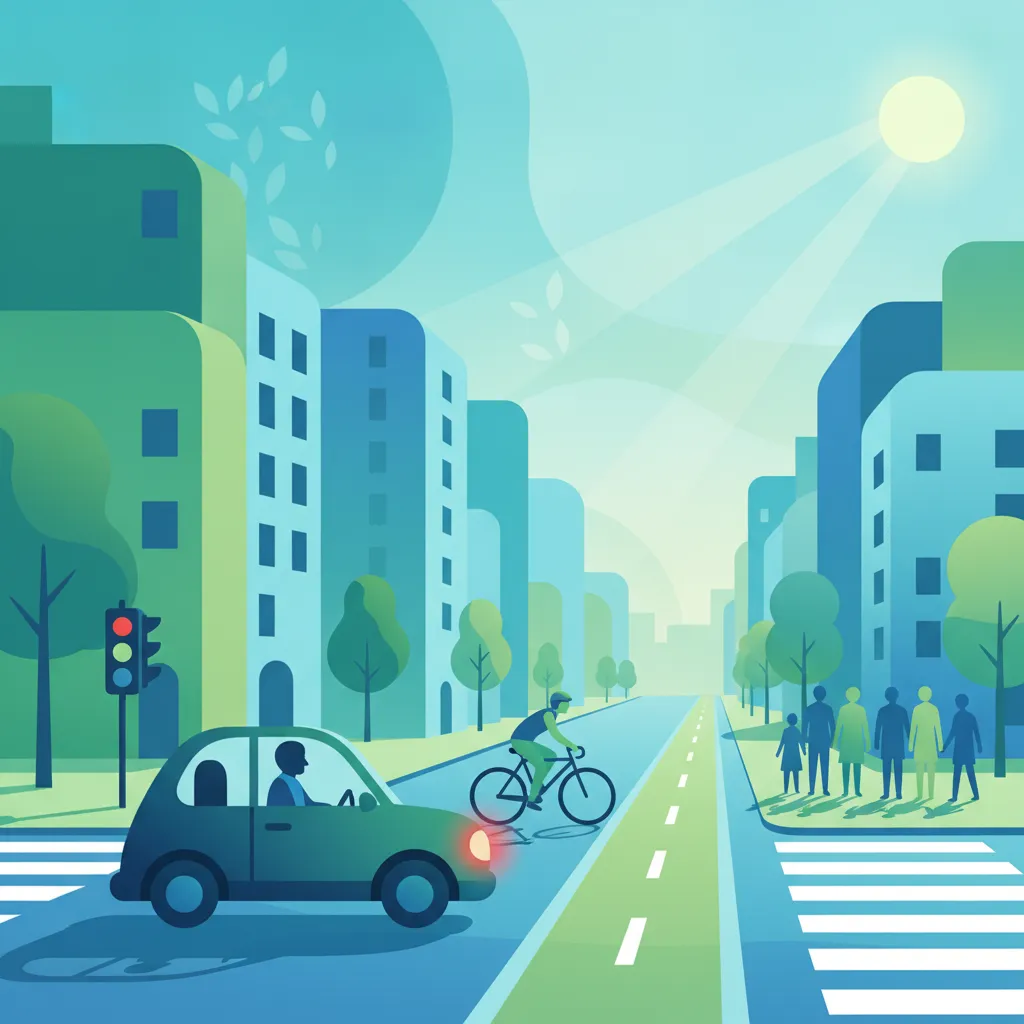
This lesson focuses on the essential skills required for safely sharing Danish roads with vulnerable road users. You will learn the legal requirements and best practices for interacting with cyclists, e-bikes, and pedestrians in various traffic environments.
Lesson content overview
The Danish road system is renowned for its emphasis on harmonious road sharing, particularly concerning vulnerable road users such as cyclists and pedestrians. As a driver preparing for the Danish Category B driving license, understanding and adhering to the principles outlined in this lesson is crucial. This comprehensive guide will equip you with the knowledge needed to safely integrate into this cooperative traffic environment, fostering mutual respect and preventing accidents.
Danish traffic culture is built upon a fundamental principle: "the road belongs to everyone." This philosophy dictates that all road users, regardless of their mode of transport, share a collective responsibility to interact safely and considerately. Drivers of motor vehicles, in particular, are expected to demonstrate heightened awareness and respect towards those with less physical protection, recognizing their inherent vulnerability.
This core tenet transcends mere legal compliance; it promotes a proactive mindset of cooperation and empathy. It means anticipating the actions of others, providing ample space, and being prepared to yield when necessary, even if strictly speaking, the law might grant you priority in a different context. This approach significantly contributes to reducing conflict and enhancing overall road safety. Embracing this principle is not just about passing a theory test; it's about becoming a responsible and integrated member of the Danish traffic landscape.
Cyclists and pedestrians, often referred to as vulnerable road users, have significantly less protection than occupants of motor vehicles. In the event of a collision, they are at a much higher risk of serious injury or fatality. Therefore, motor vehicle drivers bear a greater responsibility to exercise caution and diligence when interacting with them. This recognition of vulnerability is the logical basis for many of the specific rules and recommendations regarding safe distances, priority, and speed management discussed in this lesson. By prioritizing their safety, we protect lives and contribute to a safer, more pleasant environment for everyone.
Cyclists are an integral and highly visible part of the Danish traffic system. Understanding their legal position, common behaviors, and specific vehicle types is essential for safe interaction. The law grants cyclists the same rights and obligations as motor vehicle participants, with certain allowances for their mode of transport.
Cyclists are expected to obey all traffic signals, follow right-of-way rules, and adhere to lane markings. However, drivers must recognize that cyclists may use the entire carriageway if a designated bike lane is not present or is impassable. Their presence on the main road should not be seen as an impediment but as a normal part of the traffic flow. Drivers must always be prepared to share the road, providing sufficient space and time for cyclists to navigate safely.
Traditional bicycles are common and found on dedicated cycle paths, bike lanes, or the road. Electric bikes (e-bikes) are becoming increasingly popular and function similarly to traditional bicycles but include a motor that assists pedaling. While e-bikes can achieve higher speeds with less effort from the rider, they are generally subject to the same traffic rules as regular bicycles. Drivers should be aware that e-bike users might accelerate quicker or maintain higher speeds than expected from a traditional cyclist. This calls for increased vigilance, especially when judging distances and closing speeds.
Cargo bikes are bicycles specifically designed to transport goods or multiple passengers, often children. These bikes are significantly wider and longer than standard bicycles and can be considerably heavier, especially when loaded. Their larger dimensions mean they require more space on the road, particularly when turning or navigating narrower sections.
Drivers must adjust their speed and give extra lateral clearance when passing cargo bikes. It's crucial not to underestimate their width or the space they might need to maintain balance or avoid obstacles. Multi-occupant bikes, such as tandem bikes or cycle rickshaws, also fall into this category, demanding similar caution due to their extended length and potentially unique handling characteristics. There are no specific minimum speed requirements for these bikes, and they often travel slower than other traffic, necessitating patience from drivers.
Cyclists utilize various parts of the road infrastructure depending on what is available and designated. This includes:
Drivers must constantly observe the road for these different modes of cyclist presence and adapt their driving accordingly. A common mistake is not giving cyclists enough space, especially when they are positioned on the main carriageway.
Pedestrians represent the most vulnerable group of road users and are afforded the highest priority in many traffic situations in Denmark. Drivers have a clear legal and ethical obligation to ensure their safety, especially at designated crossing points.
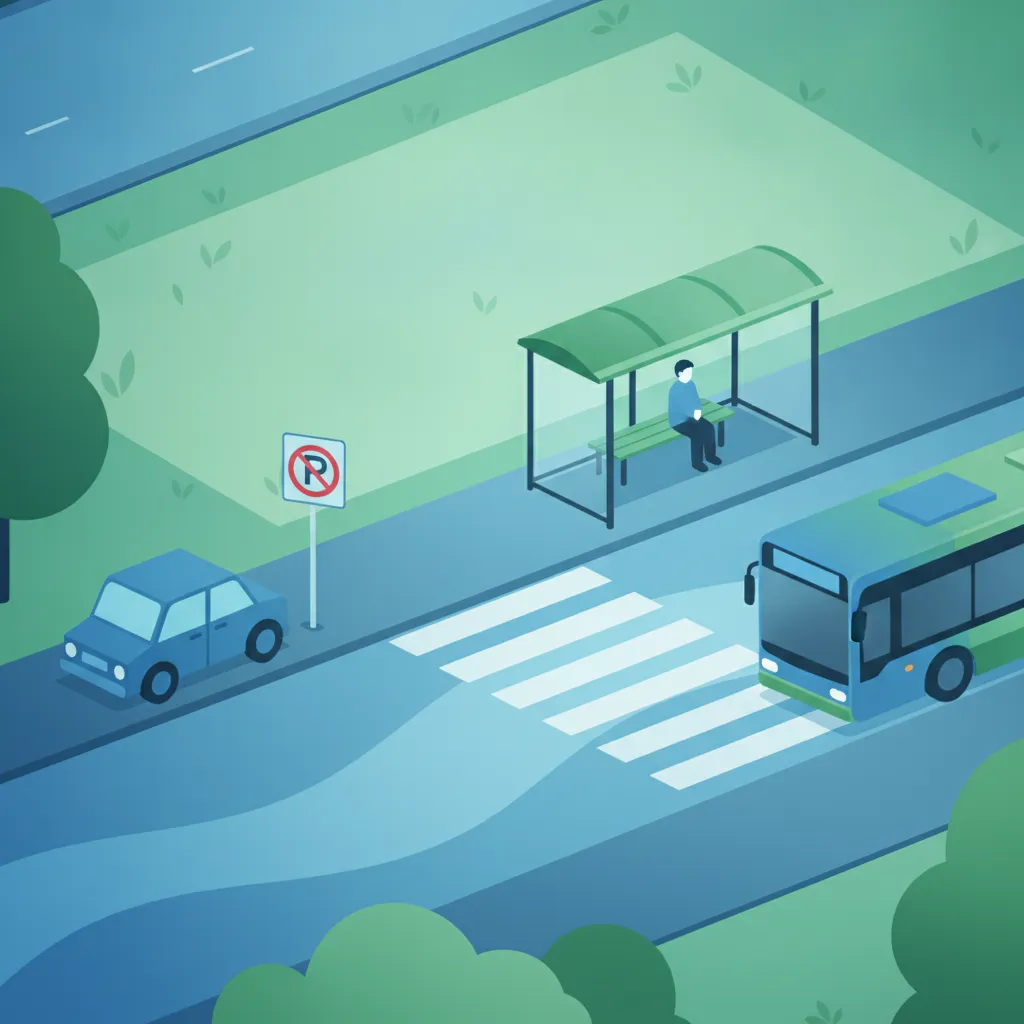
A marked pedestrian crossing with distinctive white stripes across the roadway, indicating that pedestrians have priority.
At a zebra crossing (fodgængerfelt), drivers must stop for pedestrians who are either entering or are already on the crossing. This rule applies regardless of whether there are traffic signals present. It is a mandatory requirement to ensure pedestrian safety and is strictly enforced. Drivers should not only look directly at the crossing but also scan the pavement leading up to it, anticipating pedestrians who might be about to cross. Failing to stop for a pedestrian at a zebra crossing is a serious violation.
At intersections controlled by traffic signals, pedestrians have their own dedicated signals. When the pedestrian signal is green, indicating they have the right-of-way, drivers must yield to them. This means stopping before the crossing line and allowing pedestrians to cross completely and safely before proceeding, even if the vehicle signal turns green. Drivers must not attempt to "squeeze through" or rush pedestrians. Always ensure the crossing is clear before moving forward.
In areas designated as pedestrian zones or shared spaces, drivers must exercise extreme caution. Speed limits are often very low (e.g., 30 km/h or less), and pedestrians may be present on the roadway. In such environments, drivers should reduce their speed significantly, be prepared to stop at any moment, and give pedestrians ample space. The expectation is that motor vehicles are guests in these areas, and pedestrians have primary use.
Overtaking cyclists and pedestrians safely is a critical skill for Category B drivers in Denmark. It requires careful judgment of distance, speed, and environmental conditions to prevent collisions and ensure the safety of vulnerable road users.
When overtaking a cyclist in urban areas, drivers must maintain a minimum lateral clearance of at least 1.5 meters. This distance accounts for the cyclist's potential sway, the need for them to avoid road debris or potholes, and the air turbulence created by a passing vehicle, which can destabilize a cyclist. In rural areas or at higher speeds, an even greater distance should be considered to ensure maximum safety.
When unsure if you have sufficient space to overtake safely, it is always better to wait for a clear, wide section of the road. Patience saves lives.
Before initiating an overtaking maneuver, drivers must adjust their speed appropriately. This often means slowing down to match the cyclist's speed before increasing it to pass quickly and smoothly, but never excessively. Throughout the maneuver, continuous observation is crucial. Check for oncoming traffic, potential obstacles for the cyclist, and any changes in the cyclist's direction or behavior. Signal your intention to overtake early to make your actions predictable to the cyclist and other road users.
Due to their wider dimensions and potentially higher speeds (in the case of e-bikes), specific considerations apply:
Intersections are complex environments where paths frequently cross, making them high-risk areas for collisions involving vulnerable road users. Exceptional vigilance and understanding of right-of-way rules are paramount.
Cyclists may make both right and left turns, often from dedicated bike lanes or, if none exist, from the main carriageway.
At complex junctions with multiple lanes or turning movements, pedestrians may cross at various points. Always be vigilant for pedestrians attempting to cross, even if they don't appear to have a dedicated signal or marked crossing. Their presence often requires drivers to yield, especially when making turns. Do not assume a pedestrian has seen your vehicle or will wait for you.
Effective observation skills are critical at intersections. Drivers should perform a thorough "head check" or "shoulder check" (looking over your shoulder) for cyclists and pedestrians, particularly before turning. Mirrors alone are insufficient to detect all vulnerable road users, especially those in blind spots. Scan the entire intersection, including sidewalks and bike lanes, before proceeding.
Speed management is not just about adhering to posted limits; it's about adjusting your speed to the prevailing conditions, especially when vulnerable road users are present. Reducing your speed in mixed traffic environments significantly enhances safety for everyone.
Urban centers and residential zones are inherently areas of high cyclist and pedestrian activity. Posted speed limits (e.g., 50 km/h or 30 km/h) are maximums, not targets. Drivers should consistently drive below the maximum limit if the presence of pedestrians, cyclists, parked cars, or other hazards warrants it. Lower speeds provide more time to react, reduce braking distances, and lessen the severity of potential collisions.
Maintaining a safe distance and reducing speed are the two most effective strategies for preventing accidents with vulnerable road users.
When driving alongside or crossing shared paths and cycle tracks, drivers must be extra cautious. Cyclists and pedestrians may enter the roadway unexpectedly. Reducing speed allows you to react promptly if someone steps or rides into your path. Be especially mindful when entering or exiting driveways or side streets that cross a cycle path.
Various environmental factors necessitate further speed reduction:
Adhering to specific Danish road regulations is fundamental to safely sharing the road with cyclists and pedestrians. These rules are legally binding and designed to protect the most vulnerable.
Pedestrians are granted priority in several situations to ensure their safety:
Drivers often make predictable mistakes when interacting with vulnerable road users. Recognizing these common errors is the first step toward adopting safer driving habits.
To mitigate these risks and enhance overall road safety, adopt these defensive driving practices:
Safe road sharing is not a static concept; it adapts to varying conditions. Environmental factors and the state of your vehicle can significantly influence the level of caution required when interacting with cyclists and pedestrians.
The type and load of your vehicle also play a role:
Always drive with the assumption that vulnerable road users might behave unexpectedly. A child might dart into the road, a pedestrian might be distracted by a phone, or a cyclist might suddenly swerve. This proactive approach to awareness, combined with reduced speed and increased distance, provides you with the necessary reaction time to prevent incidents. Do not rely solely on others to adhere to rules; drive defensively.
The regulations and recommendations for sharing the road with cyclists and pedestrians are not arbitrary; they are deeply rooted in principles of safety, physics, and human behavior. Understanding the "why" behind the rules reinforces their importance.
Understanding theory is one thing; applying it in real-world scenarios is another. Here are some common situations where your knowledge of road sharing principles will be put to the test.
Urban Street Overtaking: You are driving on a residential street with parked cars on your right. Ahead, a cyclist is riding steadily in the lane. There is no oncoming traffic.
Pedestrian Crossing at Signal: You are approaching a busy city intersection. Your traffic light turns green, but the pedestrian signal for the crossing directly ahead of you is also green, with several pedestrians already crossing.
Cargo Bike on Shared Path Interaction: You are driving slowly down a narrow street that has a marked shared path running alongside it. You see a cargo bike approaching from behind you on this shared path, appearing to move faster than you anticipated.
This lesson covers the essential Danish rules for safely sharing roads with cyclists and pedestrians, emphasizing that vulnerable road users have significant legal protections. Cyclists possess equal road rights to motor vehicles and may use the carriageway without dedicated infrastructure, while pedestrians have absolute priority at zebra crossings and signalized crossings. Key safety requirements include maintaining at least 1.5 meters lateral clearance when overtaking cyclists and performing thorough head checks before turning. Drivers must recognize that cargo bikes and e-bikes have distinct handling characteristics requiring extra space and vigilance, and that reduced speed is the most effective strategy for preventing accidents with vulnerable road users in mixed traffic environments.
A short set of high-value points that capture the most important learning from this lesson.
The 'road belongs to everyone' principle requires drivers to demonstrate heightened awareness and be prepared to yield even when not legally obligated to do so.
Cyclists have the same rights and obligations as motor vehicles and may use the main carriageway when dedicated cycling infrastructure is unavailable.
Drivers must maintain a minimum lateral clearance of 1.5 meters when overtaking cyclists in urban areas to account for their instability and air turbulence from passing vehicles.
Pedestrians have absolute priority at zebra crossings regardless of other traffic conditions and must be allowed to cross completely before proceeding.
Continuous observation including head checks over shoulders is essential because mirrors alone cannot detect cyclists and pedestrians in blind spots.
Explore all units and lessons included in this driving theory course.
At zebra crossings (fodgængerfelt), drivers must always stop for pedestrians entering or already on the crossing—this is a mandatory requirement.
Cargo bikes are significantly wider and heavier than standard bicycles, requiring extra lateral clearance and patience when passing.
When a pedestrian signal is green at a signalized intersection, drivers must wait until pedestrians have fully crossed before proceeding, even if turning.
E-bikes can achieve higher speeds than traditional bicycles with less effort from the rider, requiring increased vigilance when judging distances.
Adverse weather conditions (rain, fog, low light) significantly increase danger for vulnerable road users and require reduced speeds and increased following distances.
Passing a cyclist with insufficient lateral clearance (less than 1.5 meters), which increases the risk of side-swipe collisions or forcing the cyclist into obstacles.
Failing to stop for pedestrians at zebra crossings, either by not noticing them or misjudging their intention to cross.
Neglecting to check blind spots and mirrors for cyclists before turning right or left, leading to serious collisions with cyclists proceeding straight.
Proceeding through a green light when pedestrians are still crossing, especially when turning, because pedestrians have exclusive right-of-way during their green phase.
Maintaining high speeds in urban areas, residential streets, or near shared paths where cyclists and pedestrians are likely to be present.
Lesson content overview
A short set of high-value points that capture the most important learning from this lesson.
The 'road belongs to everyone' principle requires drivers to demonstrate heightened awareness and be prepared to yield even when not legally obligated to do so.
Cyclists have the same rights and obligations as motor vehicles and may use the main carriageway when dedicated cycling infrastructure is unavailable.
Drivers must maintain a minimum lateral clearance of 1.5 meters when overtaking cyclists in urban areas to account for their instability and air turbulence from passing vehicles.
Pedestrians have absolute priority at zebra crossings regardless of other traffic conditions and must be allowed to cross completely before proceeding.
Continuous observation including head checks over shoulders is essential because mirrors alone cannot detect cyclists and pedestrians in blind spots.
Explore all units and lessons included in this driving theory course.
At zebra crossings (fodgængerfelt), drivers must always stop for pedestrians entering or already on the crossing—this is a mandatory requirement.
Cargo bikes are significantly wider and heavier than standard bicycles, requiring extra lateral clearance and patience when passing.
When a pedestrian signal is green at a signalized intersection, drivers must wait until pedestrians have fully crossed before proceeding, even if turning.
E-bikes can achieve higher speeds than traditional bicycles with less effort from the rider, requiring increased vigilance when judging distances.
Adverse weather conditions (rain, fog, low light) significantly increase danger for vulnerable road users and require reduced speeds and increased following distances.
Passing a cyclist with insufficient lateral clearance (less than 1.5 meters), which increases the risk of side-swipe collisions or forcing the cyclist into obstacles.
Failing to stop for pedestrians at zebra crossings, either by not noticing them or misjudging their intention to cross.
Neglecting to check blind spots and mirrors for cyclists before turning right or left, leading to serious collisions with cyclists proceeding straight.
Proceeding through a green light when pedestrians are still crossing, especially when turning, because pedestrians have exclusive right-of-way during their green phase.
Maintaining high speeds in urban areas, residential streets, or near shared paths where cyclists and pedestrians are likely to be present.
Explore search topics learners often look for when studying Road Sharing with Cyclists and Pedestrians. These topics reflect common questions about road rules, driving situations, safety guidance, and lesson level theory preparation for learners in Denmark.
Browse additional driving theory lessons that cover connected traffic rules, road signs, and common driving situations related to this topic. Improve your understanding of how different rules interact across everyday traffic scenarios.
Explore advanced scenarios and specific rules for sharing the road with cyclists and pedestrians in Denmark. Understand nuanced priority situations and defensive driving techniques for complex urban environments and intersections. Essential for Category B theory.
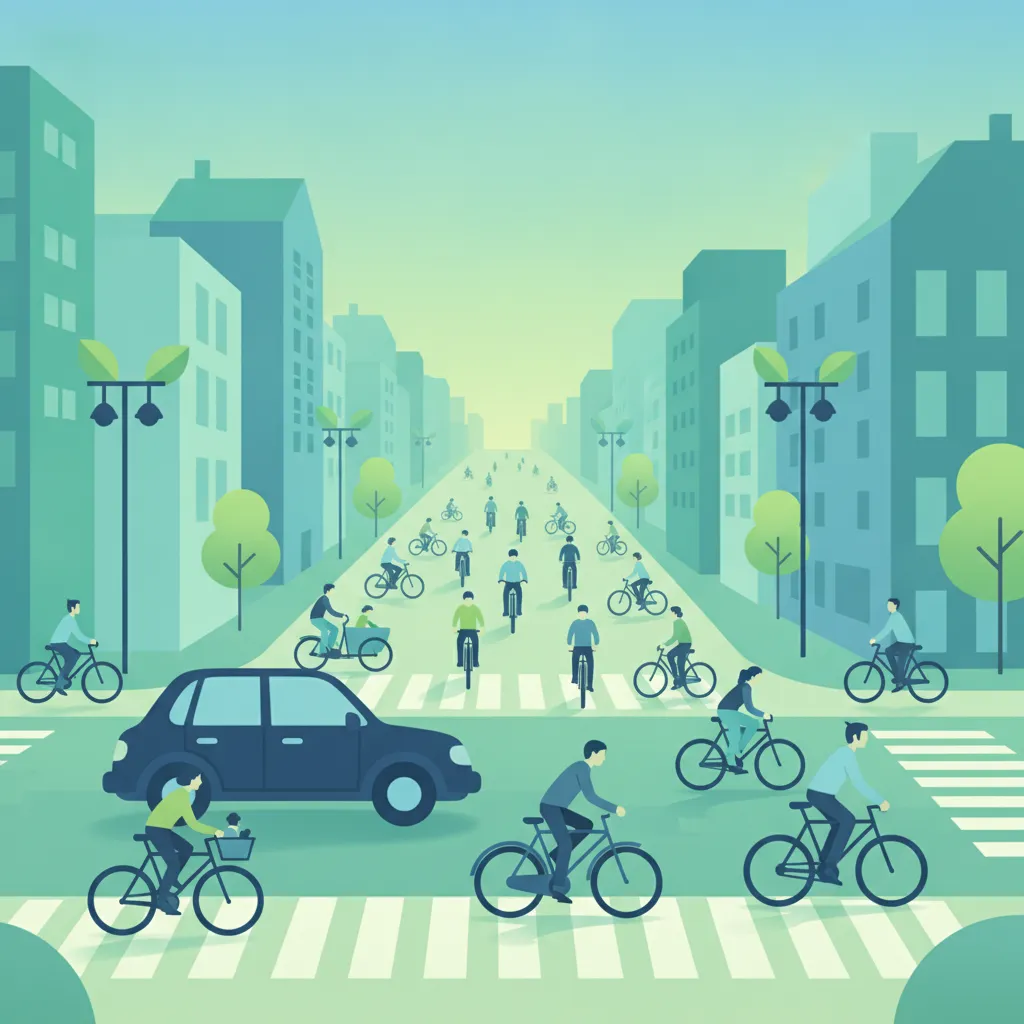
This lesson provides critical guidance for driving in environments with heavy cycle traffic, typical of Danish cities. It focuses on identifying and yielding to cyclists in dedicated bike lanes, especially when turning right across their path. The content emphasizes advanced observation skills to detect cyclists in blind spots and the importance of giving adequate space.

This lesson addresses the unique challenges of driving in tourist-heavy urban centers alongside cyclists. It teaches drivers to anticipate the behavior of individuals who may be distracted or unfamiliar with local traffic rules. The content provides strategies for communicating intentions clearly and navigating safely around large groups, luggage, and cyclists.
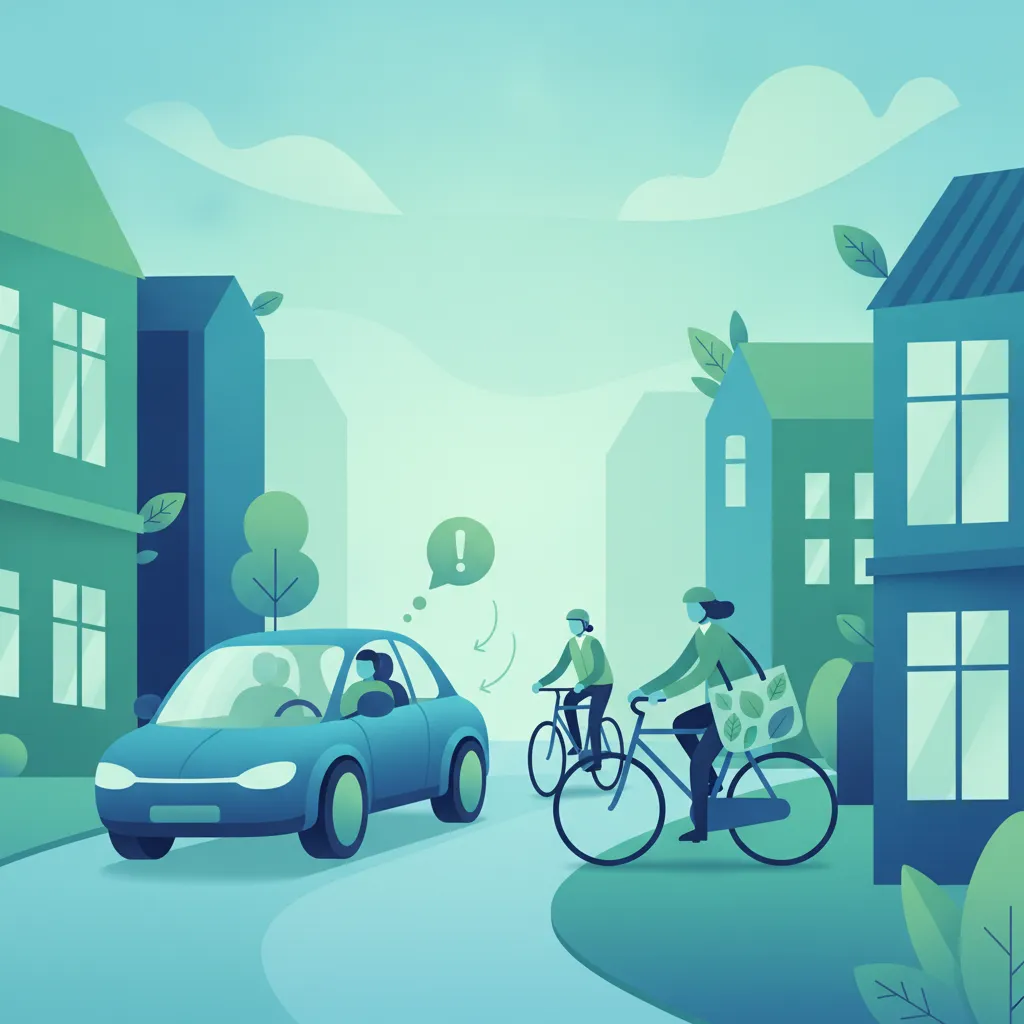
This lesson focuses on safe interactions with Denmark's large population of cyclists and other vulnerable road users. It covers the rules for passing cyclists, yielding at pedestrian crossings, and the specific hazard of turning across a bike lane. Developing heightened awareness for these interactions is critical for urban riding.
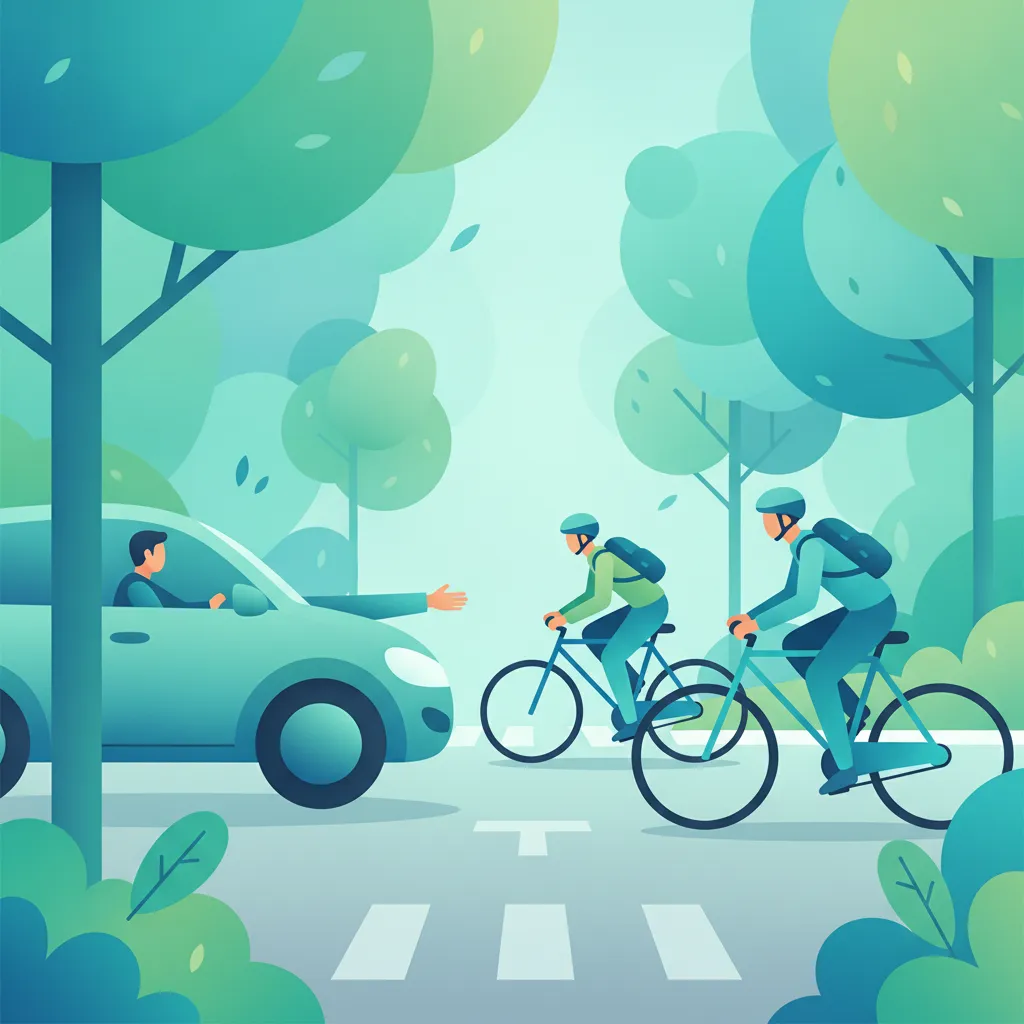
This lesson provides in-depth guidance on safely interacting with cyclists and e-bike riders, a daily reality in Danish cities. It explains how to provide adequate space when overtaking, how to anticipate their movements at intersections, and how to respect their right-of-way in designated lanes. Understanding these dynamics is essential for preventing common accidents and ensuring a safe urban driving experience for everyone.
This lesson emphasizes the professional driver's heightened responsibility to protect vulnerable road users. It revisits Danish regulations concerning cyclist priority, particularly during right turns, and details the correct procedures for maintaining safe overtaking distances. The content focuses on developing advanced situational awareness, using mirrors and cameras effectively, and anticipating the behavior of pedestrians and cyclists in urban environments.
This lesson introduces cooperative driving as a fundamental element of road safety in Denmark. It highlights the social responsibility of drivers to act predictably, anticipate the actions of others, and maintain courteous interactions with all road users. By fostering mutual respect and cooperation, you will learn how to reduce the potential for conflict and enhance overall traffic safety.

This lesson covers the core principles of defensive driving in an urban context. It teaches drivers how to anticipate the actions of other road users, maintain safe following distances in dense traffic, and navigate complex intersections with multiple signals. The content emphasizes heightened awareness of pedestrians, cyclists, and unexpected events common in Danish city environments.

This lesson addresses the critical skill of safely coexisting with cyclists and cargo bikes, which are prevalent in Denmark. It explains how to maintain a safe distance, overtake properly, and be vigilant for cyclists, especially when turning right. Understanding the infrastructure of cycle lanes and predicting cyclist behavior is a key focus.
This lesson reinforces the driver's responsibility to protect pedestrians, particularly in busy urban areas and near schools. It details the procedures for approaching pedestrian crossings, the legal requirement to reduce speed significantly in marked school zones, and how to anticipate the unpredictable actions of pedestrians. The content covers traffic calming measures and the legal rights of pedestrians in various settings.
This lesson provides detailed guidance on navigating pedestrian crossings (fodgængerfelter) and areas with high cyclist traffic. It clarifies your legal obligation to stop for pedestrians at zebra crossings and the proper speed to approach these zones. A central theme is understanding the rights of vulnerable road users and how to yield safely to them in accordance with Danish traffic law.
Learn to identify and avoid common errors drivers make when interacting with cyclists and pedestrians in Denmark. This lesson focuses on critical blind spots, misunderstanding priority rules, and improper overtaking, crucial for Category B theory.
This lesson focuses on safe interactions with Denmark's large population of cyclists and other vulnerable road users. It covers the rules for passing cyclists, yielding at pedestrian crossings, and the specific hazard of turning across a bike lane. Developing heightened awareness for these interactions is critical for urban riding.
This lesson provides critical guidance for driving in environments with heavy cycle traffic, typical of Danish cities. It focuses on identifying and yielding to cyclists in dedicated bike lanes, especially when turning right across their path. The content emphasizes advanced observation skills to detect cyclists in blind spots and the importance of giving adequate space.
This lesson emphasizes the professional driver's heightened responsibility to protect vulnerable road users. It revisits Danish regulations concerning cyclist priority, particularly during right turns, and details the correct procedures for maintaining safe overtaking distances. The content focuses on developing advanced situational awareness, using mirrors and cameras effectively, and anticipating the behavior of pedestrians and cyclists in urban environments.
This lesson provides in-depth guidance on safely interacting with cyclists and e-bike riders, a daily reality in Danish cities. It explains how to provide adequate space when overtaking, how to anticipate their movements at intersections, and how to respect their right-of-way in designated lanes. Understanding these dynamics is essential for preventing common accidents and ensuring a safe urban driving experience for everyone.
This lesson provides detailed guidance on navigating pedestrian crossings (fodgængerfelter) and areas with high cyclist traffic. It clarifies your legal obligation to stop for pedestrians at zebra crossings and the proper speed to approach these zones. A central theme is understanding the rights of vulnerable road users and how to yield safely to them in accordance with Danish traffic law.
This lesson reinforces the driver's responsibility to protect pedestrians, particularly in busy urban areas and near schools. It details the procedures for approaching pedestrian crossings, the legal requirement to reduce speed significantly in marked school zones, and how to anticipate the unpredictable actions of pedestrians. The content covers traffic calming measures and the legal rights of pedestrians in various settings.
This lesson addresses the critical skill of safely coexisting with cyclists and cargo bikes, which are prevalent in Denmark. It explains how to maintain a safe distance, overtake properly, and be vigilant for cyclists, especially when turning right. Understanding the infrastructure of cycle lanes and predicting cyclist behavior is a key focus.
This lesson addresses the unique challenges of driving in tourist-heavy urban centers alongside cyclists. It teaches drivers to anticipate the behavior of individuals who may be distracted or unfamiliar with local traffic rules. The content provides strategies for communicating intentions clearly and navigating safely around large groups, luggage, and cyclists.

This lesson explores non-verbal communication techniques for safer road sharing. It discusses the importance of making eye contact with other drivers and pedestrians to confirm they have seen you. The content also explains the appropriate and legal use of the horn to alert others of your presence.
This lesson focuses on identifying and mitigating common hazards in built-up areas. It covers the risks associated with pedestrians emerging from behind buses or parked cars, and the danger of suddenly opening car doors. Learners will understand the importance of reducing speed and increasing observation in these high-risk environments.
Find clear answers to common questions learners have about Road Sharing with Cyclists and Pedestrians. Learn how the lesson is structured, which driving theory objectives it supports, and how it fits into the overall learning path of units and curriculum progression in Denmark. These explanations help you understand key concepts, lesson flow, and exam focused study goals.
You must yield to cyclists when they are on a designated cycle path or lane and you are turning across their path. Always remember to perform a blind spot check before turning.
You must stop and yield to any pedestrian who is on, or clearly about to step onto, a pedestrian crossing. Never overtake another vehicle that has stopped at a crossing.
Yes, for the purposes of right-of-way and road usage, e-bikes are generally treated like bicycles, meaning they have the same protections and responsibilities as traditional cyclists.
You should maintain a safe lateral distance. In narrow conditions, wait until it is safe to provide ample room, ensuring you do not force the cyclist to swerve or stop.
Use our powerful search tool to pinpoint specific Danish driving theory topics, road signs, or traffic situations you need to review. Start exploring relevant practice sets now to reinforce your knowledge and build confidence for your upcoming driving licence exam.