
This lesson focuses on the critical skills required to navigate dense urban areas with high volumes of cycle traffic while driving a Category D vehicle. You will learn to anticipate cyclist behavior, manage extensive blind spots, and apply correct priority rules to ensure passenger safety and traffic flow. This knowledge is essential for both your theory exam and daily professional operation on Danish roads.

Lesson content overview
Operating a passenger transport vehicle in Denmark's urban environments requires exceptional awareness and skill, particularly when navigating areas with a high volume of bicycle traffic. This lesson, part of your Danish Category D Licence Theory preparation, focuses on the critical techniques and legal obligations for safely interacting with cyclists. Understanding and correctly applying these principles is vital to prevent accidents, ensure passenger safety, and comply with Danish traffic law.
Danish cities are renowned for their extensive cycling infrastructure and a culture where bicycles are a primary mode of transport. As a professional driver, you will frequently encounter dedicated bike lanes (Cykelbane) and cyclists, often in close proximity to your vehicle. The emphasis here is on anticipatory driving, precise observation, and strict adherence to yielding obligations, especially during right-turn maneuvers that cross cycle paths.
Denmark's urban planning prioritizes cycling, leading to a sophisticated network of bike lanes and paths. These dedicated facilities allow cyclists to travel efficiently and safely, often parallel to vehicle lanes. As a driver of a large passenger vehicle, you must recognize these bike lanes as integral parts of the road network, which cyclists have a full right to use.
Dedicated bike lanes, often marked by specific signage and road surface markings or even physical separation, are not merely extensions of the pavement. They are active traffic lanes for cyclists. Your driving strategy must account for the continuous presence of cyclists in these lanes, integrating their movements into your overall hazard perception and decision-making process. This proactive approach is fundamental to avoiding conflicts and ensuring safety for all road users.
To effectively and safely share the road with cyclists, particularly in high-traffic urban settings, professional drivers must adhere to several core principles. These principles form the foundation of responsible driving and are especially pertinent for large vehicles like buses, which have significant blind spots and require more space for maneuvers.
The most fundamental principle when interacting with cyclists in bike lanes is the yielding obligation. When you intend to turn right across a dedicated bike lane, you must give the right-of-way to cyclists who are proceeding straight in that lane. This is known as Påkørselsforbud – a prohibition against driving into a path that would impede or endanger another road user with priority.
The purpose of this rule is paramount: to protect vulnerable road users. Cyclists are often less visible and have less protection than vehicle occupants. Ensuring they can pass unimpeded is a legal requirement and a critical safety measure. This principle necessitates a complete stop or a significant reduction in speed to allow cyclists to pass safely before you execute your turn.
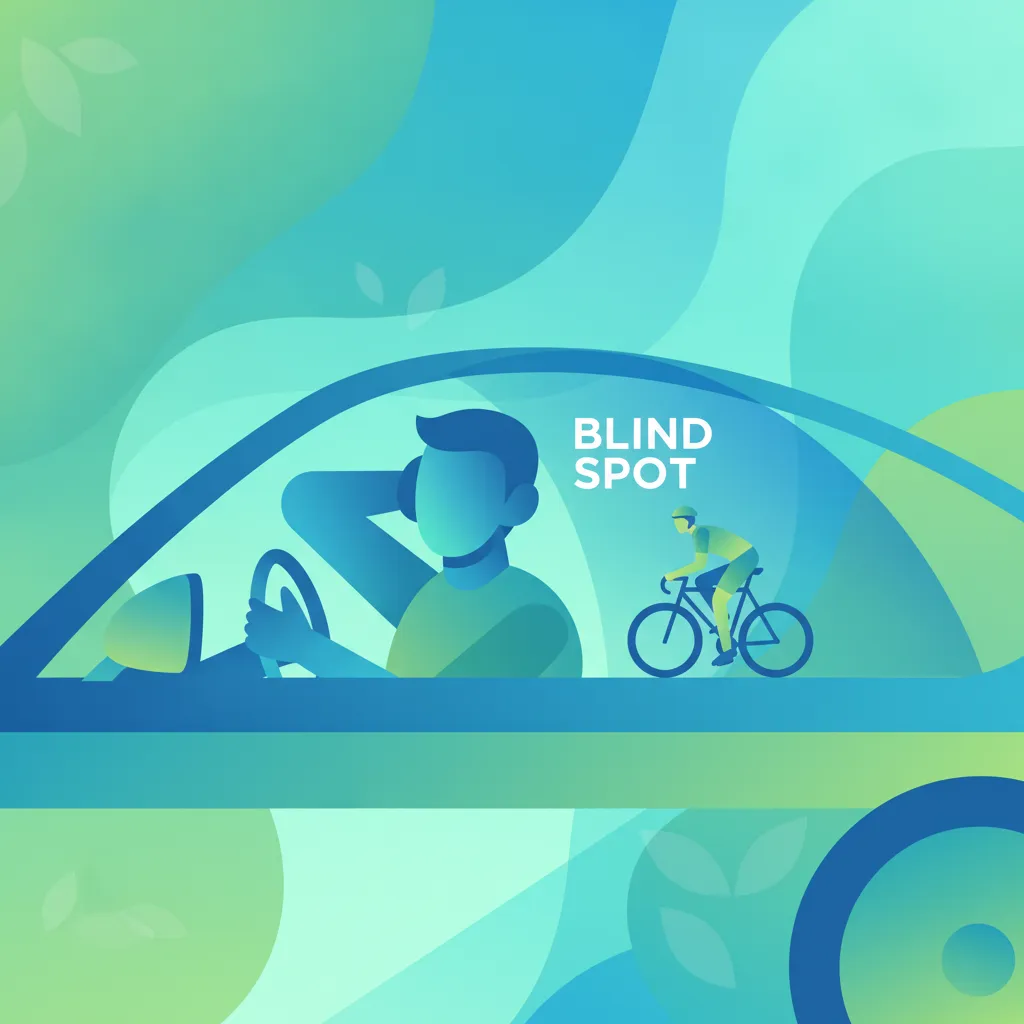
Large passenger vehicles inherently have extensive blind spots, areas around the vehicle that are not visible through mirrors or direct line of sight. These blind spots (Blindvinkel) pose a significant risk, particularly for cyclists who can easily become hidden.
Developing acute spatial awareness means recognizing the limits of your vision and actively compensating for them. Over-reliance on mirrors is a common mistake; a comprehensive check requires physically turning your head to scan the areas obscured by your vehicle's structure. This is especially crucial for detecting cyclists in the right-side blind spot before a right turn.
The physical dimensions and turning radius of a bus are considerably larger than those of a car. When executing a right turn, there is a significant risk of the vehicle's rear or side encroaching into the adjacent bike lane, even if the front appears clear. Understanding your vehicle’s turning characteristics is essential to prevent unintended obstruction or danger to cyclists.
Proper positioning before and during a turn, combined with an awareness of the vehicle's swept path, will prevent you from drifting into or blocking the bike lane. This ensures that cyclists have ample space and are not forced to swerve or brake sharply to avoid your vehicle.
Executing a right turn is one of the most common maneuvers where interactions with cyclists become critical. In Danish urban environments, right turns frequently involve crossing a dedicated bike lane. Mastering this maneuver safely requires a systematic approach.
A right turn across a bike lane can occur at various points, including signalized and non-signalized intersections, or when moving from a bus lane to another traffic lane or street. In all these scenarios, the underlying principle of yielding to cyclists proceeding straight remains constant.
Drivers often misunderstand that a separate bike lane implies cyclists will yield or somehow be aware of the vehicle's turn intention. However, the legal obligation is on the driver to ensure the bike lane is clear before crossing it. Cyclists may be in your blind spot, or their speed might be underestimated, leading to hazardous situations if proper checks are not performed.
Before initiating any right turn that crosses a bike lane, your observation sequence must be thorough and deliberate.
Check Your Rear-view Mirrors: Begin by checking your right-side rear-view mirror to identify any cyclists approaching from behind.
Signal Your Intention: Activate your right-turn indicator well in advance to communicate your intentions to all road users, including cyclists.
Conduct a Head Check (Blind Spot Scan): This is the most crucial step. Physically turn your head and look over your right shoulder. This direct visual check is vital to see cyclists who may be in your right-side blind spot (Blindvinkel) or close to the curb, areas your mirrors cannot cover. This area is sometimes referred to as the 'organizational pole' or 'hedge' because it's the area directly behind the vehicle's structure where a cyclist can be hidden.
Scan Forward and Intersection: Simultaneously, continue to monitor the traffic situation ahead, including any traffic signals or road markings, and ensure the intersection itself is clear.
Verify the Bike Lane is Clear: Only when you have confirmed that the bike lane is completely clear of cyclists proceeding straight should you begin your turn. If a cyclist is present, you must wait.
Effective lane positioning helps facilitate a safe right turn and reduces the risk to cyclists. Approach the turn from the rightmost part of your designated lane, without encroaching on the bike lane itself. This positioning signals your intention to turn right and creates a clearer visual path for you to observe the bike lane.
Avoid hugging the curb too tightly or swinging wide without checking the bike lane, as this can trap cyclists or create a collision hazard. Your approach should be smooth and controlled, allowing ample time for observation and yielding.
The rules governing interaction with cyclists in Denmark are enshrined in the Road Traffic Act (Færdselsloven). Adherence to these regulations is not just about safety; it is a legal requirement with significant implications for professional drivers.
This is the cornerstone of safe interaction.
Rule Statement: Drivers must yield the right-of-way to cyclists in a bike lane who are proceeding straight when the driver intends to turn right across that lane. This applies universally, regardless of traffic signals.
This rule protects vulnerable road users and minimizes collision risks. Failure to yield can result in legal penalties, including fines and potential license points, and more importantly, can lead to serious injuries or fatalities for cyclists. Always assume cyclists have the right to proceed straight in their lane unless a clear signal or road marking indicates otherwise.
Rule Statement: Vehicles must not occupy or block a bike lane unless absolutely necessary for a maneuver, such as preparing for a turn, and only after ensuring it is safe to do so.
This means you should not drift into a bike lane prematurely while approaching a turn. The bike lane is a dedicated space for cyclists, and obstructing it forces them to swerve, potentially into vehicle traffic or other hazards. Proper lane positioning and careful control of your vehicle's path are essential to keep the bike lane clear until you are ready to cross it safely.
Rule Statement: Before initiating a right turn across a bike lane, drivers must perform a physical head check (looking over the shoulder) to ensure the right-side blind spot is clear of cyclists.
This rule is mandatory as part of safe driving standards for professional drivers. Mirrors alone are insufficient. The physical head check provides a complete visual assessment that mirrors cannot, preventing unseen collisions. This is a critical habit to develop and maintain, particularly given the size and blind spots of a passenger transport vehicle.
Safe interaction with cyclists requires constant adaptation to changing conditions. Visibility, light, road type, and the presence of other vulnerable users all influence the risk profile of a right turn.
Reduced visibility, whether due to heavy rain, fog, or low sun glare, significantly increases the challenge of detecting cyclists.
At night, cyclists can be much harder to spot, even with lights and reflectors.
The specific context of the road also matters.
Be especially cautious when you observe children or elderly individuals cycling.
Even experienced drivers can make mistakes when interacting with cyclists. Awareness of common pitfalls helps in developing safer driving habits.
Beyond adhering to specific rules, adopting a proactive and defensive driving mindset is crucial for safe interaction with cyclists.
By mastering these concepts, consistently applying safe driving practices, and understanding the specific demands of Danish urban traffic, professional drivers can significantly enhance safety for all road users, particularly the vulnerable cyclists who are an integral part of Denmark's transport system. This contributes not only to your professional competence but also to the overall safety and efficiency of public transport operations.
This lesson covers the essential skills for Category D drivers to safely navigate Denmark's high-cycling urban environments. The core principle is Påkørselsforbud—the mandatory yielding obligation to cyclists proceeding straight in bike lanes when turning right. Drivers must master a systematic observation sequence combining mirror checks with mandatory physical head checks to eliminate blind spots. The lesson addresses conditional variations including reduced visibility scenarios, different intersection types, and vulnerable cyclist groups. Legal obligations under Færdselsloven are emphasized alongside defensive driving strategies that protect cyclists while ensuring safe passenger transport operations.
A short set of high-value points that capture the most important learning from this lesson.
The yielding obligation (Påkørselsforbud) means you must always give right-of-way to cyclists proceeding straight in a bike lane when turning right across it.
Physical head checks are mandatory because mirrors alone cannot reveal cyclists hidden in your right-side blind spot (Blindvinkel).
A green traffic light does not override your legal duty to yield to cyclists in bike lanes when turning right.
Maintain strict lane discipline—never drift into the bike lane during your approach to a turn.
Reduced visibility from rain, fog, or sun glare significantly increases cyclist detection difficulty and requires slower, more deliberate observation.
Explore all units and lessons included in this driving theory course.
The correct right-turn observation sequence: mirrors → signal → head check (shoulder scan) → scan intersection → verify bike lane clear before turning.
Cyclists in dedicated bike lanes (Cykelbane) have full right-of-way and the driver bears full yielding responsibility.
Mirrors alone are insufficient; a physical head turn over the right shoulder is legally mandated before crossing a bike lane.
Always approach turns slowly and assume cyclists may be present even when you cannot immediately see them.
Bus lane (Busbane) operations require awareness of adjacent bike lane cyclists when pulling out or turning.
Turning right before a cyclist has fully cleared the bike lane, leading to direct collisions or forcing emergency braking.
Drifting into the bike lane during the approach phase instead of maintaining lane discipline until the actual turn.
Relying exclusively on mirrors to check for cyclists without performing a physical shoulder check.
Underestimating cyclist speed or proximity, assuming they are slower or further away than they actually are.
Proceeding with a green light assuming the path is clear, ignoring the continuing yielding obligation to cyclists in bike lanes.
Lesson content overview
A short set of high-value points that capture the most important learning from this lesson.
The yielding obligation (Påkørselsforbud) means you must always give right-of-way to cyclists proceeding straight in a bike lane when turning right across it.
Physical head checks are mandatory because mirrors alone cannot reveal cyclists hidden in your right-side blind spot (Blindvinkel).
A green traffic light does not override your legal duty to yield to cyclists in bike lanes when turning right.
Maintain strict lane discipline—never drift into the bike lane during your approach to a turn.
Reduced visibility from rain, fog, or sun glare significantly increases cyclist detection difficulty and requires slower, more deliberate observation.
Explore all units and lessons included in this driving theory course.
The correct right-turn observation sequence: mirrors → signal → head check (shoulder scan) → scan intersection → verify bike lane clear before turning.
Cyclists in dedicated bike lanes (Cykelbane) have full right-of-way and the driver bears full yielding responsibility.
Mirrors alone are insufficient; a physical head turn over the right shoulder is legally mandated before crossing a bike lane.
Always approach turns slowly and assume cyclists may be present even when you cannot immediately see them.
Bus lane (Busbane) operations require awareness of adjacent bike lane cyclists when pulling out or turning.
Turning right before a cyclist has fully cleared the bike lane, leading to direct collisions or forcing emergency braking.
Drifting into the bike lane during the approach phase instead of maintaining lane discipline until the actual turn.
Relying exclusively on mirrors to check for cyclists without performing a physical shoulder check.
Underestimating cyclist speed or proximity, assuming they are slower or further away than they actually are.
Proceeding with a green light assuming the path is clear, ignoring the continuing yielding obligation to cyclists in bike lanes.
Explore search topics learners often look for when studying Safe Interaction with High Volumes of Cycle Traffic. These topics reflect common questions about road rules, driving situations, safety guidance, and lesson level theory preparation for learners in Denmark.
Browse additional driving theory lessons that cover connected traffic rules, road signs, and common driving situations related to this topic. Improve your understanding of how different rules interact across everyday traffic scenarios.
Explore complex scenarios and specific legal obligations for passenger transport drivers interacting with high volumes of cyclists in Denmark. Understand advanced priority rules and risk mitigation strategies for urban driving.

This lesson addresses the unique challenges of driving in tourist-heavy urban centers alongside cyclists. It teaches drivers to anticipate the behavior of individuals who may be distracted or unfamiliar with local traffic rules. The content provides strategies for communicating intentions clearly and navigating safely around large groups, luggage, and cyclists.

This lesson emphasizes the professional driver's heightened responsibility to protect vulnerable road users. It revisits Danish regulations concerning cyclist priority, particularly during right turns, and details the correct procedures for maintaining safe overtaking distances. The content focuses on developing advanced situational awareness, using mirrors and cameras effectively, and anticipating the behavior of pedestrians and cyclists in urban environments.

This lesson focuses on safe interactions with Denmark's large population of cyclists and other vulnerable road users. It covers the rules for passing cyclists, yielding at pedestrian crossings, and the specific hazard of turning across a bike lane. Developing heightened awareness for these interactions is critical for urban riding.

This lesson provides in-depth guidance on safely interacting with cyclists and e-bike riders, a daily reality in Danish cities. It explains how to provide adequate space when overtaking, how to anticipate their movements at intersections, and how to respect their right-of-way in designated lanes. Understanding these dynamics is essential for preventing common accidents and ensuring a safe urban driving experience for everyone.

This lesson addresses the critical skill of safely coexisting with cyclists and cargo bikes, which are prevalent in Denmark. It explains how to maintain a safe distance, overtake properly, and be vigilant for cyclists, especially when turning right. Understanding the infrastructure of cycle lanes and predicting cyclist behavior is a key focus.

This lesson provides detailed guidance on navigating pedestrian crossings (fodgængerfelter) and areas with high cyclist traffic. It clarifies your legal obligation to stop for pedestrians at zebra crossings and the proper speed to approach these zones. A central theme is understanding the rights of vulnerable road users and how to yield safely to them in accordance with Danish traffic law.

This lesson focuses on the safe integration of cyclists and pedestrians within the traffic system, a key feature of Danish roads. It covers the specific rights and common behaviors of cyclists, including those on e-bikes and cargo bikes, and explains procedures for yielding to pedestrians. The content emphasizes maintaining safe distances and heightened awareness to prevent accidents and promote harmonious road sharing.

This lesson covers the core principles of defensive driving in an urban context. It teaches drivers how to anticipate the actions of other road users, maintain safe following distances in dense traffic, and navigate complex intersections with multiple signals. The content emphasizes heightened awareness of pedestrians, cyclists, and unexpected events common in Danish city environments.

This lesson provides critical instruction on executing right turns safely, a high-risk maneuver for heavy vehicles in urban settings. It places strong emphasis on Danish traffic laws concerning cyclist priority and teaches drivers how to position their vehicle to account for off-tracking. The content focuses on defensive driving techniques, such as scanning for cyclists and making intentions clear, to prevent right-turn collisions.

This lesson explores non-verbal communication techniques for safer road sharing. It discusses the importance of making eye contact with other drivers and pedestrians to confirm they have seen you. The content also explains the appropriate and legal use of the horn to alert others of your presence.
Learn critical techniques for identifying and compensating for blind spots in large passenger vehicles to ensure the safety of cyclists. Covers mandatory checks and hazard perception for urban and rural Danish roads.

This lesson provides an in-depth look at the blind spots of other vehicles and how to manage them. It teaches riders to recognize the large 'no-zones' around trucks and buses where they cannot be seen. Strategies include avoiding lingering in these areas and positioning the motorcycle for maximum visibility.
This lesson provides an in-depth analysis of the size and location of blind spots around a typical passenger bus. It teaches systematic scanning patterns that incorporate all mirrors, cameras, and direct head checks to maintain situational awareness. The content highlights high-risk areas where cyclists, pedestrians, or small vehicles can become hidden from view, especially during turns.
This lesson emphasizes the professional driver's heightened responsibility to protect vulnerable road users. It revisits Danish regulations concerning cyclist priority, particularly during right turns, and details the correct procedures for maintaining safe overtaking distances. The content focuses on developing advanced situational awareness, using mirrors and cameras effectively, and anticipating the behavior of pedestrians and cyclists in urban environments.
This lesson provides critical instruction on executing right turns safely, a high-risk maneuver for heavy vehicles in urban settings. It places strong emphasis on Danish traffic laws concerning cyclist priority and teaches drivers how to position their vehicle to account for off-tracking. The content focuses on defensive driving techniques, such as scanning for cyclists and making intentions clear, to prevent right-turn collisions.

This lesson maps out the extensive blind spots, or 'no-zones,' that exist around a tractor-trailer combination, particularly to the sides and rear. It teaches the proper techniques for adjusting all mirrors to minimize these areas and explains how modern camera systems provide critical visibility. Understanding and compensating for these blind spots is a fundamental skill for preventing collisions, especially during lane changes and turns.
This lesson addresses the unique challenges of driving in tourist-heavy urban centers alongside cyclists. It teaches drivers to anticipate the behavior of individuals who may be distracted or unfamiliar with local traffic rules. The content provides strategies for communicating intentions clearly and navigating safely around large groups, luggage, and cyclists.
This lesson covers the core principles of defensive driving in an urban context. It teaches drivers how to anticipate the actions of other road users, maintain safe following distances in dense traffic, and navigate complex intersections with multiple signals. The content emphasizes heightened awareness of pedestrians, cyclists, and unexpected events common in Danish city environments.

This lesson addresses the specific skills required to navigate around public transport and heavy goods vehicles safely. You will learn the rules for bus lanes, recognize when buses have priority at stops, and understand the unique challenges posed by large vehicles, such as wider turning circles and larger blind spots. The material also provides clear protocols for overtaking these vehicles while maintaining adequate safety margins.

This lesson explains the relationship between a bus's dimensions—length, width, and height—and its maneuverability. It covers key concepts such as turning radius, rear overhang, and swept path, which are critical for navigating turns and tight spaces safely. Learners will also understand how these physical characteristics create significant blind spots that require specific observation techniques to manage.
This lesson provides in-depth guidance on safely interacting with cyclists and e-bike riders, a daily reality in Danish cities. It explains how to provide adequate space when overtaking, how to anticipate their movements at intersections, and how to respect their right-of-way in designated lanes. Understanding these dynamics is essential for preventing common accidents and ensuring a safe urban driving experience for everyone.
Find clear answers to common questions learners have about Safe Interaction with High Volumes of Cycle Traffic. Learn how the lesson is structured, which driving theory objectives it supports, and how it fits into the overall learning path of units and curriculum progression in Denmark. These explanations help you understand key concepts, lesson flow, and exam focused study goals.
In Denmark, cyclists often maintain their speed in dedicated lanes when a bus turns right. Because of the bus's length and size, cyclists can easily disappear into deep blind spots near the rear wheels, making it critical to perform a final shoulder and mirror check before beginning the maneuver.
Generally, if a cyclist is moving straight ahead in a designated bike lane, they have priority over a vehicle turning across their path. Always signal early and ensure the way is clear of cyclists before initiating a turn in urban areas.
Before pulling away, check all mirrors and cameras specifically for approaching cyclists. Cyclists may be overtaking the stationary bus on the right, so it is vital to be aware of their position at all times to prevent 'side-swiping' incidents.
A frequent mistake is failing to account for the 'off-tracking' of a long bus, which can bring the rear wheels closer to the bike lane than expected. Candidates must practice consistent scanning to ensure they do not accidentally obstruct or endanger cyclists during tight turns.
Use our powerful search tool to pinpoint specific Danish driving theory topics, road signs, or traffic situations you need to review. Start exploring relevant practice sets now to reinforce your knowledge and build confidence for your upcoming driving licence exam.