
In Belgium, emergency vehicles on an urgent mission, identified by their flashing blue lights and special sirens, always have priority. All other road users are legally obliged to immediately clear the road and, if necessary, stop. This ensures that police, ambulances, and fire services can reach incidents without delay, but requires drivers to respond calmly and predictably without causing further hazards.
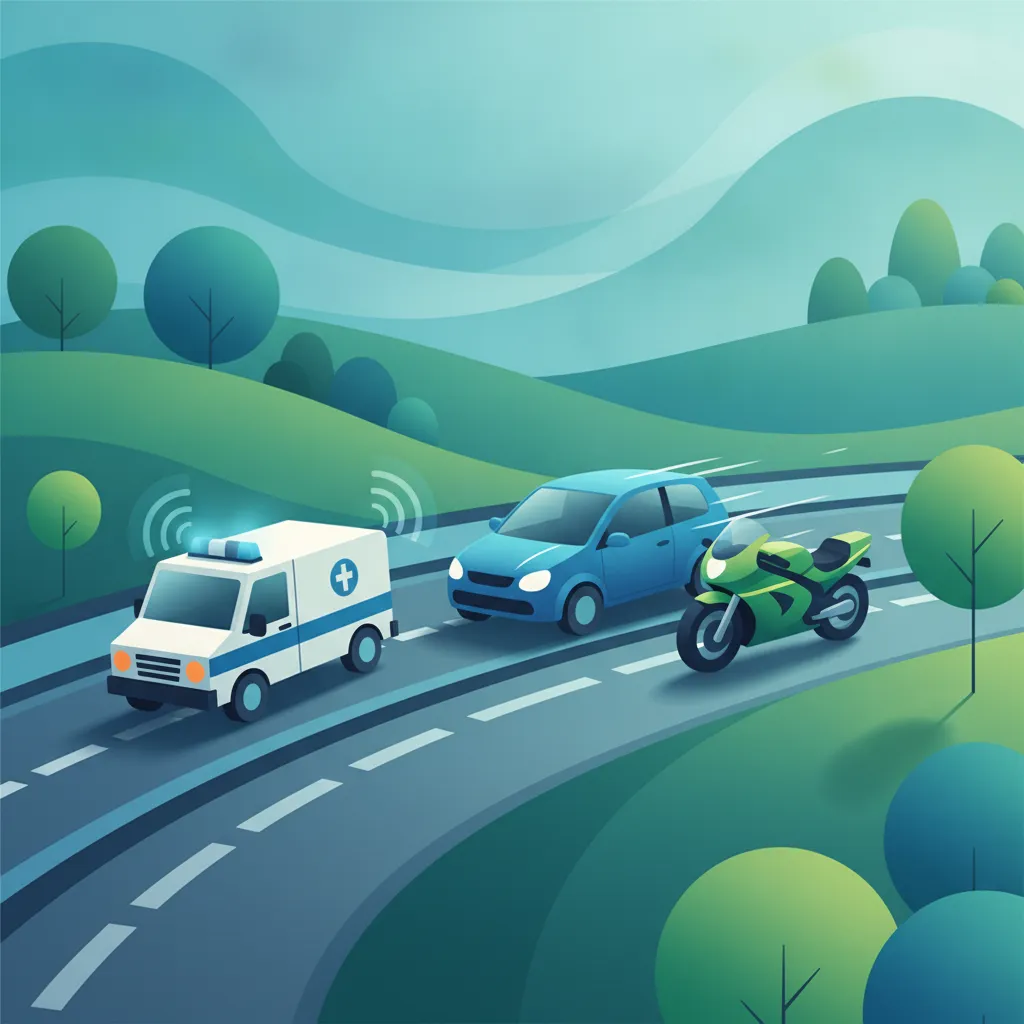
Theory topic content overview
Read the full theory topic guide for Emergency Vehicle Priority with structured, easy-to-scan content built for learners in Belgium. This detailed section explains the exact rule, meaning, traffic context, comparison points, and exam logic behind this Belgian driving theory topic so you can study faster, understand the concept more clearly, and avoid common interpretation mistakes on the theory test.
In Belgium, emergency vehicle priority rules dictate that all other road users must give immediate and safe passage to designated "priority vehicles" that are performing an urgent mission. This means creating a clear path for them to proceed without delay, ensuring they can reach emergencies quickly.
The core concept is to prioritise the safe and swift movement of emergency services like police, ambulances, and fire services. Understanding these rules is not only crucial for your Belgian driving theory exam but, more importantly, for ensuring public safety on the roads.
Misunderstanding or failing to react correctly to an emergency vehicle can have severe consequences, ranging from delaying critical aid to causing dangerous traffic situations or even a new accident. For your driving theory test, questions on emergency vehicle priority in Belgium are common, often focusing on the specific conditions under which priority must be given and how to react safely.
The goal is to facilitate their mission urgente (urgent mission) or dringende opdracht quickly and without creating further hazards. This collective responsibility helps save lives and minimizes property damage.
When an emergency vehicle approaches with its specific signals, your immediate and calm response is vital. Here's how to proceed in Belgian traffic:
According to the Belgian Road Code (Code de la route / Wegcode), a vehicle only has priority and is on an urgent mission when it uses both of the following signals simultaneously:
If only the blue flashing lights are active without the siren, the vehicle does not automatically have priority over other road users, though it may still be on a duty that requires caution from others. The obligation to give way only applies when both signals are active.
Upon hearing the siren or seeing the flashing blue lights:
One of the most critical scenarios involves intersections:
On Belgian motorways (autoroutes / autosnelwegen):
This is a key area for your Belgian driving theory exam. The rules are very specific:
A common misconception is that flashing blue lights alone grant priority. This is incorrect in Belgium for an urgent mission. As noted, both the flashing blue lights AND the special siren must be active for the vehicle to have priority over other road users. This allows drivers sufficient time to hear and react.
The priority status is tied to the vehicle performing an urgent mission. If an emergency vehicle is simply driving with blue lights (e.g., for visibility at a scene, or on a non-urgent transport), but without the siren, it is not on an "urgent mission" and does not have automatic priority over general traffic. Drivers should still exercise caution but are not legally obliged to clear the road as they would for a full priority response.
The Belgian Road Code specifies which vehicles are considered priority vehicles. These generally include:
These vehicles must be equipped with the necessary blue flashing lights and special sirens conforming to technical regulations.
Belgian learners often make these mistakes regarding emergency vehicle priority:
Consider these common situations:
Failing to give way to an emergency vehicle on an urgent mission using both signals is considered a serious traffic offense in Belgium, specifically an infraction de 3ème degré (third-degree offence). This reflects the high importance placed on ensuring unimpeded passage for emergency services.
Your responsibility as a driver is to:
By understanding and correctly applying the emergency vehicle priority rules in Belgium, you contribute significantly to road safety and demonstrate a responsible attitude towards fellow road users and emergency responders.
In Belgium, emergency vehicles only have priority when both flashing blue lights and a special siren are simultaneously active for an urgent mission. When both signals are present, all drivers must immediately and safely clear the road by moving to the side or stopping, overriding normal traffic signals and right-of-way rules. On motorways, drivers must form an emergency lane between lanes to allow emergency vehicles passage through congestion. The key distinction for the theory exam is that blue lights alone do NOT create priority; the special siren must also be active. Drivers should remain calm, check surroundings before moving, and never follow closely behind an emergency vehicle once it has passed.
A short set of high-value points that capture the most important ideas from this theory explanation.
Emergency vehicles in Belgium only have priority when BOTH flashing blue lights AND the special siren are simultaneously active for an urgent mission.
When both signals are present, you must safely clear the road by moving to the side or stopping, even if you have a green light or are already in an intersection.
On multi-lane roads and motorways, form an emergency lane by moving left in the left lane and right in the right lane to allow emergency vehicles through.
Stay calm when reacting: check mirrors and blind spots before making any move to ensure your actions do not create new hazards.
Emergency vehicles may proceed through red lights only at moderate speed and without endangering other road users.
The 'both signals' rule: priority obligation requires BOTH blue lights AND special siren active simultaneously.
Blue lights alone without the siren do NOT grant priority for an urgent mission in Belgium.
If only one signal is active, exercise caution but you are not legally obliged to clear the road as you would for a full priority response.
After the emergency vehicle passes, do not follow too closely or use the cleared path for your own progress.
Priority vehicles include police, ambulances, fire services, and certain utility services when performing urgent duties.
Assuming flashing blue lights alone grant priority, forgetting that the special siren must also be active.
Making sudden or panicked maneuvers like sharp braking or swerving without checking mirrors and blind spots.
Blocking an intersection or entering one when an emergency vehicle with both signals is approaching, even with a green light.
Stopping unsafely in a position where your own vehicle becomes a hazard to pedestrians or other traffic.
Not hearing the siren due to distractions like loud music, and therefore failing to react in time.
Start with a short, direct summary of Emergency Vehicle Priority before reading the full explanation below.
When an emergency vehicle in Belgium approaches with both flashing blue lights and a special siren, all other road users must immediately give way. This means safely moving to the side of the road or stopping to create a clear path. This rule applies even at red lights or intersections, provided the emergency vehicle proceeds with caution and without danger. The obligation is only when *both* signals are active for an urgent mission.
Review the most important terms, rule signals, and traffic concepts linked to Emergency Vehicle Priority.
Explore related theory topic pages connected to Emergency Vehicle Priority and continue with the next useful rule explanation.
See the common search queries learners use when trying to understand Emergency Vehicle Priority in Belgium.

Start your comprehensive preparation for the Belgian driving licence theory exam. Dive into our expertly curated topics, master the road rules and concepts, and build the confidence you need to pass your test and drive safely on Belgian roads. Begin mastering theory today.
Explore Belgian Theory TopicsTheory topic content overview
A short set of high-value points that capture the most important ideas from this theory explanation.
Emergency vehicles in Belgium only have priority when BOTH flashing blue lights AND the special siren are simultaneously active for an urgent mission.
When both signals are present, you must safely clear the road by moving to the side or stopping, even if you have a green light or are already in an intersection.
On multi-lane roads and motorways, form an emergency lane by moving left in the left lane and right in the right lane to allow emergency vehicles through.
Stay calm when reacting: check mirrors and blind spots before making any move to ensure your actions do not create new hazards.
Emergency vehicles may proceed through red lights only at moderate speed and without endangering other road users.
The 'both signals' rule: priority obligation requires BOTH blue lights AND special siren active simultaneously.
Blue lights alone without the siren do NOT grant priority for an urgent mission in Belgium.
If only one signal is active, exercise caution but you are not legally obliged to clear the road as you would for a full priority response.
After the emergency vehicle passes, do not follow too closely or use the cleared path for your own progress.
Priority vehicles include police, ambulances, fire services, and certain utility services when performing urgent duties.
Assuming flashing blue lights alone grant priority, forgetting that the special siren must also be active.
Making sudden or panicked maneuvers like sharp braking or swerving without checking mirrors and blind spots.
Blocking an intersection or entering one when an emergency vehicle with both signals is approaching, even with a green light.
Stopping unsafely in a position where your own vehicle becomes a hazard to pedestrians or other traffic.
Not hearing the siren due to distractions like loud music, and therefore failing to react in time.
Start with a short, direct summary of Emergency Vehicle Priority before reading the full explanation below.
When an emergency vehicle in Belgium approaches with both flashing blue lights and a special siren, all other road users must immediately give way. This means safely moving to the side of the road or stopping to create a clear path. This rule applies even at red lights or intersections, provided the emergency vehicle proceeds with caution and without danger. The obligation is only when *both* signals are active for an urgent mission.
Review the most important terms, rule signals, and traffic concepts linked to Emergency Vehicle Priority.
Explore related theory topic pages connected to Emergency Vehicle Priority and continue with the next useful rule explanation.
See the common search queries learners use when trying to understand Emergency Vehicle Priority in Belgium.
Start your comprehensive preparation for the Belgian driving licence theory exam. Dive into our expertly curated topics, master the road rules and concepts, and build the confidence you need to pass your test and drive safely on Belgian roads. Begin mastering theory today.
Explore Belgian Theory TopicsUse this exam-focused revision tip to understand how Emergency Vehicle Priority is likely to appear in theory questions for learners in Belgium. This section helps you identify the most testable part of the rule, avoid common traps, and remember the concept more effectively during Belgian driving theory exam preparation.
The Belgian theory exam often tests your understanding of when and how to give way to emergency vehicles. Remember, they only have priority when *both* blue flashing lights AND the special siren are active for an urgent mission. Watch out for questions that mention only one of these signals.
Read direct answers to the most common learner questions about Emergency Vehicle Priority in Belgium. This FAQ focuses on rule confusion, practical meaning, comparison with similar concepts, and the exact uncertainties that appear most often in Belgian driving theory revision and exam preparation.
In Belgium, an emergency vehicle is equipped with one or more flashing blue lights and a special audible warning device. These are often referred to as "prioritaire voertuigen" or "véhicules prioritaires".
You must give priority immediately when an emergency vehicle is performing an urgent mission, signaled by *both* its flashing blue lights and special audible siren.
Safely move to the right side of the road, or left on a multi-lane road, to create a clear path. If necessary, slow down or stop completely, ensuring you don't block intersections or create new dangers.
Yes, if they are on an urgent mission and using their special siren, emergency vehicles may proceed through a red light at moderate speed, provided it does not create danger for other road users.
No, according to Belgian law, the special audible siren must also be in use for the vehicle to claim full priority and for other road users to be obliged to give way.
Failing to yield to an emergency vehicle using both required signals for an urgent mission is considered a serious traffic offense in Belgium, classified as a 3rd-degree infraction.
Intersections, roundabouts, and busy urban areas often require extra caution. Always check your mirrors and avoid sudden braking or steering to ensure the emergency vehicle has space.
Ready to focus your Belgian driving theory revision? Utilize our powerful search tool to pinpoint exact topics, road signs, or difficulty levels. Engage with practice questions that directly address your learning needs and solidify your understanding of Belgian traffic laws for your upcoming exam.