
Pedestrian priority defines specific situations where drivers must give way to people on foot. In Belgium, protecting vulnerable road users like pedestrians is a fundamental principle of the traffic code. This page explains the key scenarios where pedestrians have the right of way, from marked crossings to turning situations, ensuring you drive safely and responsibly.
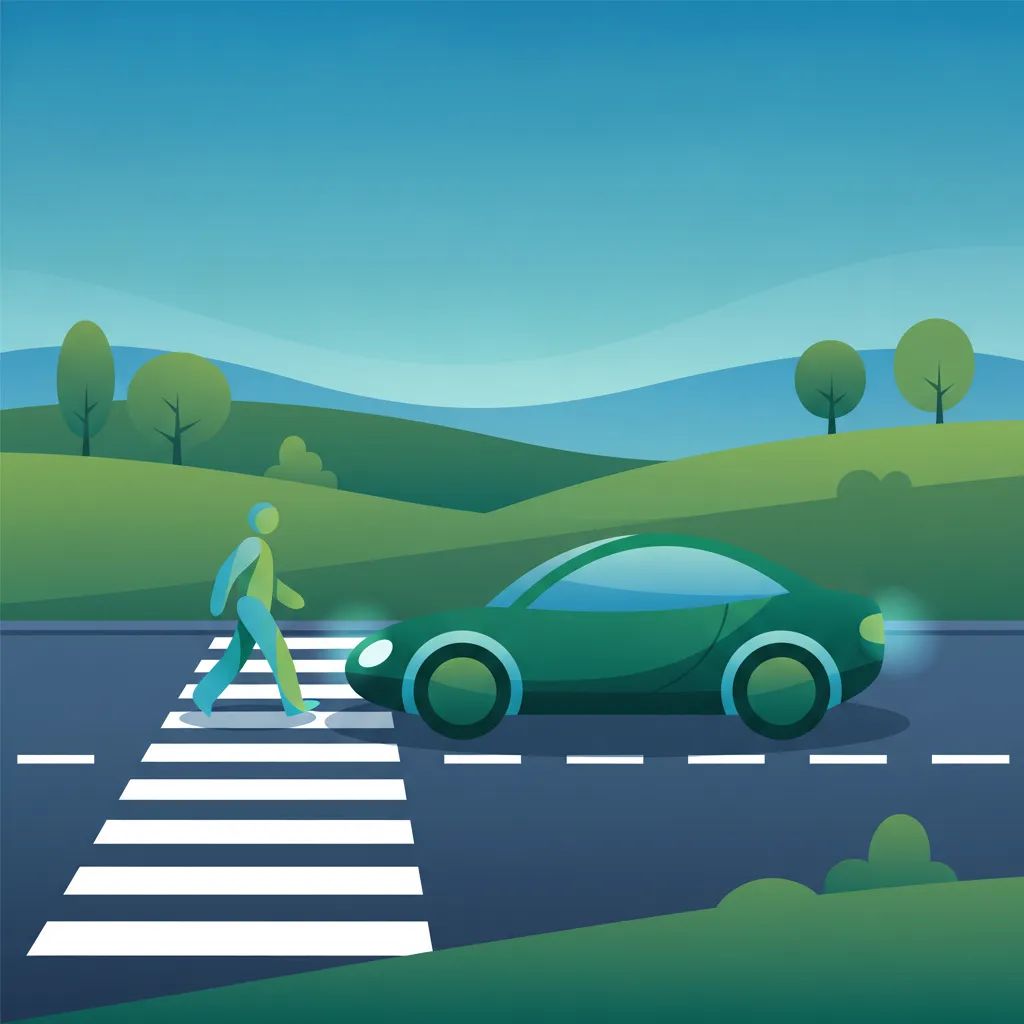
Theory topic content overview
Read the full theory topic guide for Belgian Pedestrian Priority with structured, easy-to-scan content built for learners in Belgium. This detailed section explains the exact rule, meaning, traffic context, comparison points, and exam logic behind this Belgian driving theory topic so you can study faster, understand the concept more clearly, and avoid common interpretation mistakes on the theory test.
Pedestrian priority defines specific situations where drivers are legally obliged to give way to people on foot. In Belgium, safeguarding vulnerable road users, including pedestrians, is a cornerstone of the Wegcode (Dutch) / Code de la route (French), and a fundamental principle for safe driving. Understanding these rules is not just vital for road safety but also a frequently tested area in the Belgian driving theory exam.
Pedestrians, lacking the protection of a vehicle, are highly vulnerable in traffic. Any collision can result in serious injury or fatality. For drivers, mastering pedestrian priority rules is crucial because:
Belgian traffic law outlines clear situations where drivers must grant priority to pedestrians.
These are clearly identified by white stripes on the road (sign F11a and F11b).
This is a critical and often misunderstood rule in Belgian traffic law.
These zones (sign F103 or F103a) are primarily for pedestrians.
Many learners and drivers make mistakes regarding pedestrian priority due to nuanced rules or assumptions.
Let's look at common Belgian situations:
Always remember that pedestrians are the most vulnerable link in the traffic chain. In Belgium, the general duty of caution (Artikel 7) is a pervasive principle that complements specific priority rules. When in doubt, err on the side of caution. Anticipate, scan constantly for pedestrians, especially at crossings and intersections, and be ready to stop. Your active vigilance and respect for pedestrian priority are fundamental to passing your theory exam and, more importantly, to ensuring safety on Belgian roads.
Belgian traffic law gives pedestrians explicit priority at marked zebra crossings (F11) and whenever a vehicle turns into a road where a pedestrian is already crossing. The general duty of caution under Article 7 of the Road Code supplements these rules, requiring drivers to protect vulnerable road users in all situations. Key prohibitions include overtaking vehicles at crossings and failing to yield to pedestrians with priority. Exam scenarios frequently test turning situations and the distinction between marked versus unmarked crossings, so learners should memorize these rules and practice identifying priority situations quickly.
A short set of high-value points that capture the most important ideas from this theory explanation.
Pedestrians have priority at marked zebra crossings (signs F11a/F11b) when they are on the crossing or clearly about to step onto it
When turning at any intersection, drivers must yield to pedestrians already crossing the road they are entering, regardless of markings
Pedestrian zones (signs F103/F103a) require drivers to yield to all pedestrians and proceed only at walking pace
Article 7 of the Belgian Road Code establishes a general duty of caution that applies even in situations not covered by specific priority rules
It is strictly prohibited to overtake a vehicle that has stopped or slowed for pedestrians at a marked crossing
Marked zebra crossings (F11) grant pedestrians priority when on or about to step onto the crossing
Turning vehicles must always stop for pedestrians already crossing the road being entered
Pedestrian priority at unmarked points only applies when turning AND the pedestrian has already started crossing
The general duty of caution (Artikel 7/Article 7) means drivers must always protect vulnerable road users even without explicit priority rules
Never overtake a vehicle stopped at a pedestrian crossing because your view of the crossing is obstructed
Believing pedestrians never have priority at unmarked crossings, when in fact they do when a vehicle is turning and they have already started crossing
Assuming pedestrians will always wait for vehicles or that they have seen your vehicle approaching
Overtaking another vehicle at a zebra crossing because you cannot see whether pedestrians are crossing
Turning at an intersection without first checking for pedestrians already crossing the road you are entering
Underestimating the scope of the general duty of caution, thinking it only applies where explicit priority rules exist
Start with a short, direct summary of Belgian Pedestrian Priority before reading the full explanation below.
In Belgium, pedestrians generally have priority at marked pedestrian crossings (zebra crossings), when already on the roadway at uncontrolled intersections, and often when a vehicle is turning and the pedestrian is crossing the road the vehicle is entering. Drivers must always be prepared to stop and ensure safe passage for vulnerable road users, adhering to the general duty of caution outlined in the Belgian Road Code (Wegcode/Code de la route).
Review the most important terms, rule signals, and traffic concepts linked to Belgian Pedestrian Priority.
Explore related theory topic pages connected to Belgian Pedestrian Priority and continue with the next useful rule explanation.
See the common search queries learners use when trying to understand Belgian Pedestrian Priority in Belgium.

Start your comprehensive preparation for the Belgian driving licence theory exam. Dive into our expertly curated topics, master the road rules and concepts, and build the confidence you need to pass your test and drive safely on Belgian roads. Begin mastering theory today.
Explore Belgian Theory TopicsTheory topic content overview
A short set of high-value points that capture the most important ideas from this theory explanation.
Pedestrians have priority at marked zebra crossings (signs F11a/F11b) when they are on the crossing or clearly about to step onto it
When turning at any intersection, drivers must yield to pedestrians already crossing the road they are entering, regardless of markings
Pedestrian zones (signs F103/F103a) require drivers to yield to all pedestrians and proceed only at walking pace
Article 7 of the Belgian Road Code establishes a general duty of caution that applies even in situations not covered by specific priority rules
It is strictly prohibited to overtake a vehicle that has stopped or slowed for pedestrians at a marked crossing
Marked zebra crossings (F11) grant pedestrians priority when on or about to step onto the crossing
Turning vehicles must always stop for pedestrians already crossing the road being entered
Pedestrian priority at unmarked points only applies when turning AND the pedestrian has already started crossing
The general duty of caution (Artikel 7/Article 7) means drivers must always protect vulnerable road users even without explicit priority rules
Never overtake a vehicle stopped at a pedestrian crossing because your view of the crossing is obstructed
Believing pedestrians never have priority at unmarked crossings, when in fact they do when a vehicle is turning and they have already started crossing
Assuming pedestrians will always wait for vehicles or that they have seen your vehicle approaching
Overtaking another vehicle at a zebra crossing because you cannot see whether pedestrians are crossing
Turning at an intersection without first checking for pedestrians already crossing the road you are entering
Underestimating the scope of the general duty of caution, thinking it only applies where explicit priority rules exist
Start with a short, direct summary of Belgian Pedestrian Priority before reading the full explanation below.
In Belgium, pedestrians generally have priority at marked pedestrian crossings (zebra crossings), when already on the roadway at uncontrolled intersections, and often when a vehicle is turning and the pedestrian is crossing the road the vehicle is entering. Drivers must always be prepared to stop and ensure safe passage for vulnerable road users, adhering to the general duty of caution outlined in the Belgian Road Code (Wegcode/Code de la route).
Review the most important terms, rule signals, and traffic concepts linked to Belgian Pedestrian Priority.
Explore related theory topic pages connected to Belgian Pedestrian Priority and continue with the next useful rule explanation.
See the common search queries learners use when trying to understand Belgian Pedestrian Priority in Belgium.
Start your comprehensive preparation for the Belgian driving licence theory exam. Dive into our expertly curated topics, master the road rules and concepts, and build the confidence you need to pass your test and drive safely on Belgian roads. Begin mastering theory today.
Explore Belgian Theory TopicsUse this exam-focused revision tip to understand how Belgian Pedestrian Priority is likely to appear in theory questions for learners in Belgium. This section helps you identify the most testable part of the rule, avoid common traps, and remember the concept more effectively during Belgian driving theory exam preparation.
In the Belgian theory exam, pay close attention to scenarios involving turning vehicles and pedestrians, and always remember the 'general duty of caution'. Do not assume pedestrians will wait for you, especially at marked crossings or when they have already started crossing at an intersection. Look for visual cues indicating intent to cross.
Read direct answers to the most common learner questions about Belgian Pedestrian Priority in Belgium. This FAQ focuses on rule confusion, practical meaning, comparison with similar concepts, and the exact uncertainties that appear most often in Belgian driving theory revision and exam preparation.
At a marked pedestrian crossing (zebra crossing), drivers must yield priority to pedestrians who are on the crossing or are clearly intending to step onto it. You must slow down and stop if necessary to allow them to cross safely.
Yes, when a driver turns into a road, they must yield priority to pedestrians who are already crossing or about to cross that road, even if there isn't a marked pedestrian crossing.
Beyond specific priority rules, the Belgian Road Code (Wegcode/Code de la route) includes a general duty of caution. This means drivers must always be vigilant, anticipate pedestrian movements, and adjust their driving to prevent any danger, especially towards vulnerable road users.
No, pedestrians do not automatically have priority everywhere. However, drivers must still exercise extreme caution and are forbidden from endangering pedestrians. At uncontrolled intersections, pedestrians who have already begun crossing the roadway generally have priority over approaching vehicles.
Pedestrian zones (voetgangerszones/zones piétonnes) are areas primarily reserved for pedestrians. While certain vehicles may be allowed access (e.g., for delivery), they must adapt their speed to that of pedestrians and yield priority to all pedestrians and playing children.
You must react immediately and safely to prevent an accident. Brake, sound your horn if necessary, and try to avoid collision. Always assume pedestrians might not be paying full attention, especially children.
Ready to focus your Belgian driving theory revision? Utilize our powerful search tool to pinpoint exact topics, road signs, or difficulty levels. Engage with practice questions that directly address your learning needs and solidify your understanding of Belgian traffic laws for your upcoming exam.