
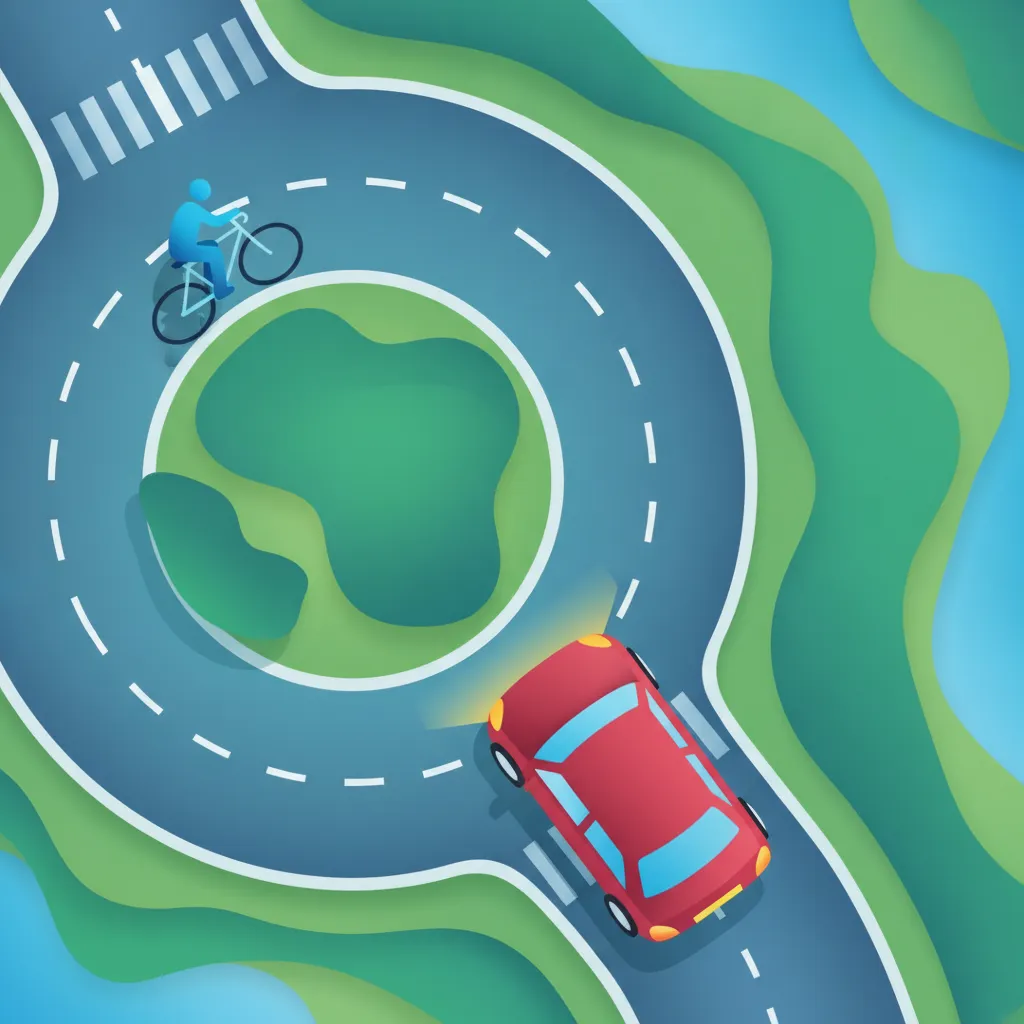
Roundabouts are designed to improve traffic flow and safety at intersections, but they operate under specific priority rules in Belgium. Generally, vehicles already circulating inside a roundabout have priority over those entering. However, a key Belgian rule states that motorized vehicles inside the roundabout must yield to cyclists and speed pedelecs who are also circulating. This page clarifies how to approach, enter, circulate, and exit a Belgian roundabout correctly.
Theory topic content overview
Read the full theory topic guide for Belgian Roundabout Priority with structured, easy-to-scan content built for learners in Belgium. This detailed section explains the exact rule, meaning, traffic context, comparison points, and exam logic behind this Belgian driving theory topic so you can study faster, understand the concept more clearly, and avoid common interpretation mistakes on the theory test.
Roundabouts, or rond-points (French) / rotondes (Dutch), are circular intersections designed to improve traffic flow and reduce the severity of collisions compared to traditional junctions. However, navigating them safely and correctly in Belgium requires a precise understanding of the country's specific priority rules, especially concerning vulnerable road users.
This page clarifies the Belgian road code's stipulations for entering, circulating within, and exiting roundabouts, focusing on the critical exceptions that often feature in the Belgian driving theory test.
Mastering Belgian roundabout priority is vital for several reasons:
Code de la route (Wegcode), and non-compliance can result in penalties.In Belgium, the fundamental principle for standard roundabouts is clear: drivers entering a roundabout must yield priority to all vehicles already circulating within it.
This rule overrides the general "priority from the right" that applies at unmarked intersections. Instead, roundabouts are typically indicated by specific road signs:
Drivers approaching a roundabout must slow down, observe traffic, and only enter when it is safe to do so without forcing circulating vehicles to brake or swerve.
This is the most critical distinction in Belgian roundabout rules and a common point of confusion for learners:
Motorized vehicles already circulating inside a Belgian roundabout must yield priority to cyclists and speed pedelec riders who are also circulating within the roundabout.
This rule often catches drivers unaware because it reverses the general principle of yielding to circulating traffic for a specific category of road user. The intention is to protect vulnerable road users, who are at higher risk in roundabout collisions.
Key points for this exception:
conducteurs de cycles et de speedpedelecs / bestuurders van rijwielen en speedpedelecs).Code de la route suggests the rightmost lane on approach and during circulation to ease exit.Always approach Belgian roundabouts with caution and a heightened awareness of all road users. Remember the primary rule to yield to circulating traffic, but critically, internalize and always apply the special rule: motorized vehicles inside the roundabout must yield to cyclists and speed pedelec riders also circulating. Plan your entry and exit, choose your lane appropriately, and signal clearly when exiting. Your vigilance ensures safety and compliance with the Code de la route on Belgian roads.
Belgian roundabouts operate under specific priority rules distinct from standard intersections, where vehicles entering must yield to all circulating traffic. A critical exception requires motorized vehicles already inside to yield to cyclists and speed pedelec riders for safety. Lane discipline is essential on multi-lane roundabouts: position in the appropriate lane before entering based on your intended exit, and remember that signaling is only required when exiting. Always check mirrors and blind spots for vulnerable road users, particularly cyclists who have priority inside the roundabout.
A short set of high-value points that capture the most important ideas from this theory explanation.
In Belgium, vehicles entering a roundabout must yield to ALL traffic already circulating inside, regardless of direction
Motorized vehicles already inside a Belgian roundabout must yield priority to cyclists and speed pedelec riders who are also circulating within it
Do NOT use your indicator when entering a standard Belgian roundabout; signal only when exiting after passing the exit before yours
Lane discipline on multi-lane roundabouts: use the right lane for first/second exits, left lane for third exit or beyond
The general 'priority from the right' rule does not apply at roundabouts in Belgium
Cyclist and speed pedelec priority exception: motorized vehicles inside yield to cyclists inside
Roundabouts override priority from the right with their own specific yield-to-circulating-traffic regime
Indicators are used only for exiting, not for entering a standard roundabout
B1 give-way sign and shark teeth road markings indicate yield obligation at entries
Changing lanes inside a multi-lane roundabout requires yielding to vehicles in your target lane
Forgetting that cyclists and speed pedelecs inside the roundabout have priority over motorized vehicles also inside
Using indicators upon entry to the roundabout instead of waiting until ready to exit
Entering without properly yielding to vehicles already circulating, including cyclists
Choosing the wrong lane on multi-lane roundabouts and having to cut across lanes to exit
Failing to check blind spots when moving to the outer lane or exiting, risking collision with cyclists or motorcyclists
Start with a short, direct summary of Belgian Roundabout Priority before reading the full explanation below.
In Belgium, the primary rule is that drivers entering a roundabout must yield priority to all vehicles already circulating within it. However, a critical exception is for cyclists and speed pedelec riders: motorized vehicles already inside the roundabout must yield to them. Always signal when exiting, and pay attention to lane markings for proper positioning, especially on multi-lane roundabouts.
Review the most important terms, rule signals, and traffic concepts linked to Belgian Roundabout Priority.
Explore related theory topic pages connected to Belgian Roundabout Priority and continue with the next useful rule explanation.
See the common search queries learners use when trying to understand Belgian Roundabout Priority in Belgium.

Start your comprehensive preparation for the Belgian driving licence theory exam. Dive into our expertly curated topics, master the road rules and concepts, and build the confidence you need to pass your test and drive safely on Belgian roads. Begin mastering theory today.
Explore Belgian Theory TopicsTheory topic content overview
A short set of high-value points that capture the most important ideas from this theory explanation.
In Belgium, vehicles entering a roundabout must yield to ALL traffic already circulating inside, regardless of direction
Motorized vehicles already inside a Belgian roundabout must yield priority to cyclists and speed pedelec riders who are also circulating within it
Do NOT use your indicator when entering a standard Belgian roundabout; signal only when exiting after passing the exit before yours
Lane discipline on multi-lane roundabouts: use the right lane for first/second exits, left lane for third exit or beyond
The general 'priority from the right' rule does not apply at roundabouts in Belgium
Cyclist and speed pedelec priority exception: motorized vehicles inside yield to cyclists inside
Roundabouts override priority from the right with their own specific yield-to-circulating-traffic regime
Indicators are used only for exiting, not for entering a standard roundabout
B1 give-way sign and shark teeth road markings indicate yield obligation at entries
Changing lanes inside a multi-lane roundabout requires yielding to vehicles in your target lane
Forgetting that cyclists and speed pedelecs inside the roundabout have priority over motorized vehicles also inside
Using indicators upon entry to the roundabout instead of waiting until ready to exit
Entering without properly yielding to vehicles already circulating, including cyclists
Choosing the wrong lane on multi-lane roundabouts and having to cut across lanes to exit
Failing to check blind spots when moving to the outer lane or exiting, risking collision with cyclists or motorcyclists
Start with a short, direct summary of Belgian Roundabout Priority before reading the full explanation below.
In Belgium, the primary rule is that drivers entering a roundabout must yield priority to all vehicles already circulating within it. However, a critical exception is for cyclists and speed pedelec riders: motorized vehicles already inside the roundabout must yield to them. Always signal when exiting, and pay attention to lane markings for proper positioning, especially on multi-lane roundabouts.
Review the most important terms, rule signals, and traffic concepts linked to Belgian Roundabout Priority.
Explore related theory topic pages connected to Belgian Roundabout Priority and continue with the next useful rule explanation.
See the common search queries learners use when trying to understand Belgian Roundabout Priority in Belgium.
Start your comprehensive preparation for the Belgian driving licence theory exam. Dive into our expertly curated topics, master the road rules and concepts, and build the confidence you need to pass your test and drive safely on Belgian roads. Begin mastering theory today.
Explore Belgian Theory TopicsUse this exam-focused revision tip to understand how Belgian Roundabout Priority is likely to appear in theory questions for learners in Belgium. This section helps you identify the most testable part of the rule, avoid common traps, and remember the concept more effectively during Belgian driving theory exam preparation.
A common trap in the Belgian theory test involves roundabout scenarios with cyclists. Always remember that motorized vehicles *inside* the roundabout must yield to cyclists and speed pedelecs who are also inside. Do not apply the general priority from the right rule to vehicles entering a standard roundabout.
Read direct answers to the most common learner questions about Belgian Roundabout Priority in Belgium. This FAQ focuses on rule confusion, practical meaning, comparison with similar concepts, and the exact uncertainties that appear most often in Belgian driving theory revision and exam preparation.
When entering a roundabout in Belgium, you must yield priority to all vehicles already circulating within the roundabout. This is typically indicated by 'give way' signs (B1) or 'stop' signs (B5) at the entrance.
Yes, this is a crucial Belgian specific. Motorized vehicles already circulating within a roundabout must yield priority to cyclists and speed pedelec riders who are also circulating.
In Belgium, you are only required to use your indicators when exiting a roundabout. You do not need to signal when entering, unless a lane change is required immediately upon entry.
If you are taking the first exit, you should position yourself in the rightmost lane upon approach and within the roundabout. If you are taking a later exit, you may use other lanes, but you must move to the rightmost lane before your intended exit and yield to any vehicles in the lane you are entering.
No, roundabouts in Belgium are not considered normal intersections for the purpose of general priority rules (like priority from the right). They have their own specific set of rules, prioritizing circulating traffic over entering traffic.
Once inside, you are not strictly obliged to keep as far right as possible if there are multiple lanes. Drivers can choose their position, but must change lanes safely, yielding to vehicles in the target lane, and move to the rightmost lane before exiting.
Ready to focus your Belgian driving theory revision? Utilize our powerful search tool to pinpoint exact topics, road signs, or difficulty levels. Engage with practice questions that directly address your learning needs and solidify your understanding of Belgian traffic laws for your upcoming exam.