
This lesson explores the essential braking components of heavy goods vehicles, including service, parking, and auxiliary brakes. You will learn how these systems function within the pneumatic framework to maintain safety and compliance during professional operation.

Lesson content overview
Operating a heavy goods vehicle (HGV) safely requires a deep understanding of its sophisticated braking systems. Unlike passenger cars, lorries and other heavy vehicles rely on a combination of different braking mechanisms, primarily pneumatic (air) systems, to manage their immense mass and kinetic energy. This lesson delves into the primary components and functionalities of these essential systems, distinguishing between the service brake, parking brake, and various auxiliary brakes like retarders.
Understanding how each system works, its components, and its operational principles is not only crucial for safe driving but also for correct system operation, proper maintenance, and compliance with the stringent Danish braking regulations for the C-category licence. Mastery of these concepts is foundational for effectively managing stopping distances, especially under varying load conditions and diverse road situations.
Heavy vehicles utilize a complex interplay of braking systems designed to safely control speed and bring the vehicle to a complete stop under all conditions. These systems are typically divided into three main categories: the service brake, the parking brake, and auxiliary brakes. Each has a distinct purpose and operational method, but they all work together to ensure vehicle safety and regulatory compliance.
The fundamental principle behind most heavy vehicle brakes is pneumatics, meaning they operate using compressed air. This requires a dedicated air pressure management system to supply and regulate the necessary air for brake activation. A thorough understanding of each component's role and how these systems interact is paramount for any professional driver.
The service brake system is the primary means for controlling a heavy vehicle's speed and bringing it to a stop during normal driving operations. It is the system activated by the foot pedal and is designed to provide sufficient braking force under all load conditions, from an empty vehicle to one fully loaded to its maximum permissible mass.
The service brake system comprises several critical components that work in unison to convert air pressure into mechanical stopping force at each wheel.
The operation of the service brake system in heavy vehicles relies on compressed air. When the driver presses the brake pedal, the foot valve opens, releasing compressed air from the vehicle's air tanks into the brake lines. This air travels to the brake chambers at each wheel.
Inside the brake chamber, the incoming air pressure pushes against a diaphragm, which then extends a pushrod. The pushrod, via the slack adjuster, rotates a cam (in drum brakes) or activates a caliper mechanism (in disc brakes). This action forces the brake shoes against the drum or the brake pads against the disc, creating friction that slows the rotation of the wheels and, consequently, the vehicle. Releasing the brake pedal vents the air from the chambers, releasing the braking force.
The service brake system is paramount for road safety. It must be designed and maintained to be capable of stopping the vehicle safely and effectively under all conditions, including variations in load and adverse weather. Danish regulations, in line with European standards, mandate specific performance criteria for service brakes, including minimum deceleration rates and stopping distances under various load scenarios.
Proper use involves smooth, controlled application to avoid sudden deceleration, which can destabilize the vehicle or its load. Drivers must never rely solely on auxiliary brakes for primary stopping tasks, especially at traffic signals or in emergency situations, as this can lead to brake fade of the service brakes. Regular pre-trip inspections of brake components for wear, damage, or air leaks are a critical part of a professional driver's responsibilities.
The parking brake system is designed to hold a heavy vehicle stationary when it is parked, preventing unintended movement, especially on inclines. Unlike the service brake, which is typically foot-operated, the parking brake is usually activated by a hand-operated control valve within the cab.
The parking brake system often utilizes spring brakes, also known as spring brake chambers, which are a specialized type of brake chamber.
When the parking brake is released, compressed air is sent to the spring brake chambers, which compresses the powerful spring, holding it in a "released" position. This allows the wheels to turn freely.
When the parking brake is engaged (by pulling the control valve), air pressure is vented from the spring brake chambers. Without air pressure to hold it back, the strong spring expands, mechanically applying the brakes (via the slack adjuster and cam/caliper) at the wheels. This is a failsafe mechanism: if air pressure is lost, the parking brake automatically applies.
Danish regulations require that the parking brake system must be capable of holding the vehicle stationary on a specified incline. This ensures that a heavy vehicle, even when fully loaded, will not roll away unintentionally when parked on a slope.
Drivers must always ensure the parking brake is fully engaged when parking, especially on uneven terrain or inclines. Furthermore, it's crucial to perform a visual check and listen for any tell-tale sounds of brake drag before moving off, confirming the parking brake has completely disengaged.
Auxiliary brakes, often referred to as retarders or engine brakes, are supplementary systems designed to assist the service brakes in reducing speed, particularly on long descents, without using the service brake's friction components. Their primary purpose is to maintain speed control, reduce wear on the service brakes, and prevent brake fade. They are not intended as substitutes for the service brake for bringing the vehicle to a complete stop or in emergency situations.
Heavy vehicles employ several types of auxiliary braking systems, each operating on a different principle:
Exhaust Brakes:
Compression-Release Engine Brakes (e.g., Jacobs Brake or "Jake Brake"):
Hydraulic Retarders:
Electric Retarders:
The primary function of auxiliary brakes is to slow the vehicle without activating the friction components of the service brake system. This offers several key benefits:
Auxiliary brakes are an invaluable tool for heavy vehicle drivers, but their correct application is crucial. They should be used proactively, especially before entering descents, to maintain a safe and controlled speed. Many systems offer multiple levels of retardation, allowing the driver to select the appropriate braking force for the situation.
However, it is critical to remember that auxiliary brakes do not replace the service brake for stopping at signals, traffic, or in emergencies. They may also be less effective at very low speeds or when the engine RPM is low. Over-reliance on auxiliary brakes for situations requiring a full stop can lead to insufficient braking force when the service brakes are finally applied. Always use the service brake to bring the vehicle to a complete stop.
The entire pneumatic braking system in a heavy vehicle depends critically on a reliable supply of compressed air at the correct pressure. Air pressure management is the process of generating, storing, distributing, and regulating this compressed air to ensure optimal brake function and safety.
Several components work together to manage the air pressure within the braking system:
Maintaining the correct air pressure is paramount for brake system integrity and performance. The compressor continually works to keep the air tanks within the optimal operating range, typically between 8 and 10 bar. The governor ensures that the compressor operates efficiently, starting and stopping as needed.
Safety valves are a crucial backup. Should the governor malfunction and fail to stop the compressor at the cut-out pressure, the safety valve will open and vent excess air, preventing dangerous over-pressurization of the system.
Heavy vehicles are equipped with visual and/or audible low-air pressure warnings that activate if the air pressure in the tanks falls below a safe operating threshold. This threshold is typically around 5.5 bar (80 psi).
Immediately reduce speed and drive carefully.
Identify a safe place to stop the vehicle without causing obstruction or danger.
Stop the vehicle completely and engage the parking brake.
Allow the compressor to build up air pressure. Do not proceed until pressure is within the safe operating range.
If pressure does not build up, or continues to drop, there is a serious malfunction. The vehicle must not be driven and requires immediate professional inspection and repair.
Regular checks of air pressure gauges and understanding the function of the air system are essential for safe heavy vehicle operation.
Effective braking in a heavy vehicle is not about using one system in isolation but understanding how to integrate the service, parking, and auxiliary brakes for optimal performance and safety.
Modern heavy vehicle braking systems are sophisticated. They often feature Electronic Braking Systems (EBS) or Anti-lock Braking Systems (ABS), which can intelligently distribute braking pressure across axles and even between the tractor unit and trailer. This ensures balanced braking, prevents wheel lock-up, and maintains stability, especially under emergency braking or adverse conditions.
While auxiliary brakes supplement the service brakes, they do not replace them. Drivers must coordinate their use, typically engaging auxiliary brakes for sustained speed reduction (e.g., downhill) and reserving service brakes for final stopping, low-speed maneuvers, or emergency braking.
The way a driver uses the brakes must adapt to various factors:
Drivers of heavy vehicles have a profound responsibility to ensure their braking systems are in top condition. Neglecting brake maintenance or misusing the systems can have severe consequences.
Common Issues and Driver Errors:
Compliance with Danish Road Traffic Act (Færdselsloven) and related regulations (RVV) concerning heavy vehicle braking systems is mandatory for Category C license holders. These regulations aim to ensure the highest safety standards for large commercial vehicles on public roads.
Understanding these regulations is not just about avoiding fines; it is about upholding the professional responsibility to ensure safety for all road users.
The robust braking systems of heavy vehicles are a testament to engineering designed for safety under extreme conditions. As a heavy vehicle driver, your ability to operate these systems correctly is paramount.
Mastering the distinct functions of each brake type, understanding the principles of air pressure, recognizing legal requirements, and applying proper braking techniques under various conditions are the cornerstones of safe and compliant heavy vehicle operation. Vigilance, routine checks, and appropriate responses to system warnings are crucial for maintaining system integrity and preventing accidents.
This lesson covers the three main braking systems in heavy vehicles: service brakes (pneumatic foot-operated primary stopping system), parking brakes (spring-loaded failsafe mechanism), and auxiliary brakes (retarders and engine brakes for speed control on descents). Understanding air pressure management—compressor, air dryer, tanks, governor, and safety valves—is essential for system integrity. The service brake converts compressed air through brake chambers and slack adjusters to activate friction components at each wheel, while parking brakes use springs that apply brakes when air is vented. Auxiliary brakes supplement service brakes for sustained deceleration but never replace them for stopping. Danish regulations require functional brake systems, specific parking brake hold capacity on inclines, and immediate response to low-pressure warnings.
A short set of high-value points that capture the most important learning from this lesson.
Heavy vehicles use pneumatic (air) braking systems, requiring a dedicated air pressure management system to supply and regulate compressed air for brake activation.
The service brake is the primary stopping system operated by foot pedal, converting air pressure into mechanical force at each wheel through brake chambers and slack adjusters.
Parking brakes use spring brake technology that automatically applies brakes when air pressure is vented, making them a failsafe mechanism.
Auxiliary brakes (retarders, engine brakes) assist speed control on descents but do not replace service brakes for stopping.
Air pressure management includes compressor, air dryer, tanks, governor, and safety valves, with low-pressure warnings requiring immediate driver response.
Explore all units and lessons included in this driving theory course.
Service brakes convert compressed air into mechanical force via brake chambers, slack adjusters, and friction surfaces (drums/discs with pads/shoes).
Spring brake chambers hold the parking brake released using air pressure; venting air allows a powerful spring to mechanically apply the brakes.
Auxiliary brakes include exhaust brakes, compression-release engine brakes (Jake Brake), hydraulic retarders, and electric retarders, each using different resistance principles.
The governor controls compressor cut-in and cut-out pressures; safety valves vent excess pressure if the governor fails.
Low air pressure warnings (typically below 5.5 bar/80 psi) require immediate safe stopping and must never be ignored.
Forgetting to release the parking brake before driving, causing component damage, excessive heat, and tyre wear.
Over-reliance on auxiliary brakes for stopping at signals or in emergencies instead of using service brakes for final deceleration.
Ignoring low air pressure warnings, which can lead to reduced braking force or automatic spring brake application.
Driving with low air pressure without building up adequate pressure first, risking brake failure.
Not performing pre-trip inspections for brake wear, air leaks, or abnormal brake behaviour.
Lesson content overview
A short set of high-value points that capture the most important learning from this lesson.
Heavy vehicles use pneumatic (air) braking systems, requiring a dedicated air pressure management system to supply and regulate compressed air for brake activation.
The service brake is the primary stopping system operated by foot pedal, converting air pressure into mechanical force at each wheel through brake chambers and slack adjusters.
Parking brakes use spring brake technology that automatically applies brakes when air pressure is vented, making them a failsafe mechanism.
Auxiliary brakes (retarders, engine brakes) assist speed control on descents but do not replace service brakes for stopping.
Air pressure management includes compressor, air dryer, tanks, governor, and safety valves, with low-pressure warnings requiring immediate driver response.
Explore all units and lessons included in this driving theory course.
Service brakes convert compressed air into mechanical force via brake chambers, slack adjusters, and friction surfaces (drums/discs with pads/shoes).
Spring brake chambers hold the parking brake released using air pressure; venting air allows a powerful spring to mechanically apply the brakes.
Auxiliary brakes include exhaust brakes, compression-release engine brakes (Jake Brake), hydraulic retarders, and electric retarders, each using different resistance principles.
The governor controls compressor cut-in and cut-out pressures; safety valves vent excess pressure if the governor fails.
Low air pressure warnings (typically below 5.5 bar/80 psi) require immediate safe stopping and must never be ignored.
Forgetting to release the parking brake before driving, causing component damage, excessive heat, and tyre wear.
Over-reliance on auxiliary brakes for stopping at signals or in emergencies instead of using service brakes for final deceleration.
Ignoring low air pressure warnings, which can lead to reduced braking force or automatic spring brake application.
Driving with low air pressure without building up adequate pressure first, risking brake failure.
Not performing pre-trip inspections for brake wear, air leaks, or abnormal brake behaviour.
Explore search topics learners often look for when studying Brake System Components and Function. These topics reflect common questions about road rules, driving situations, safety guidance, and lesson level theory preparation for learners in Denmark.
Browse additional driving theory lessons that cover connected traffic rules, road signs, and common driving situations related to this topic. Improve your understanding of how different rules interact across everyday traffic scenarios.
Understand the distinct functions and operational principles of service, parking, and auxiliary braking systems in heavy vehicles. Essential for safe operation and compliance with Danish traffic law for C category drivers.

This lesson teaches the proper application of auxiliary speed control devices, such as retarders and engine brakes. It focuses on their use for maintaining a safe, controlled speed on long downhill gradients, which helps prevent service brake overheating and fade. The content also covers Danish regulations related to these systems and their benefits for reducing brake wear and improving overall safety.

This lesson focuses on the critical task of managing the air pressure within a pneumatic brake system. It details the function of key components such as the air compressor, air tanks, and regulators, explaining how to interpret air pressure gauges correctly. Learners will understand the purpose of safety devices that provide warnings in case of pressure loss, which is vital for preventing brake failure.
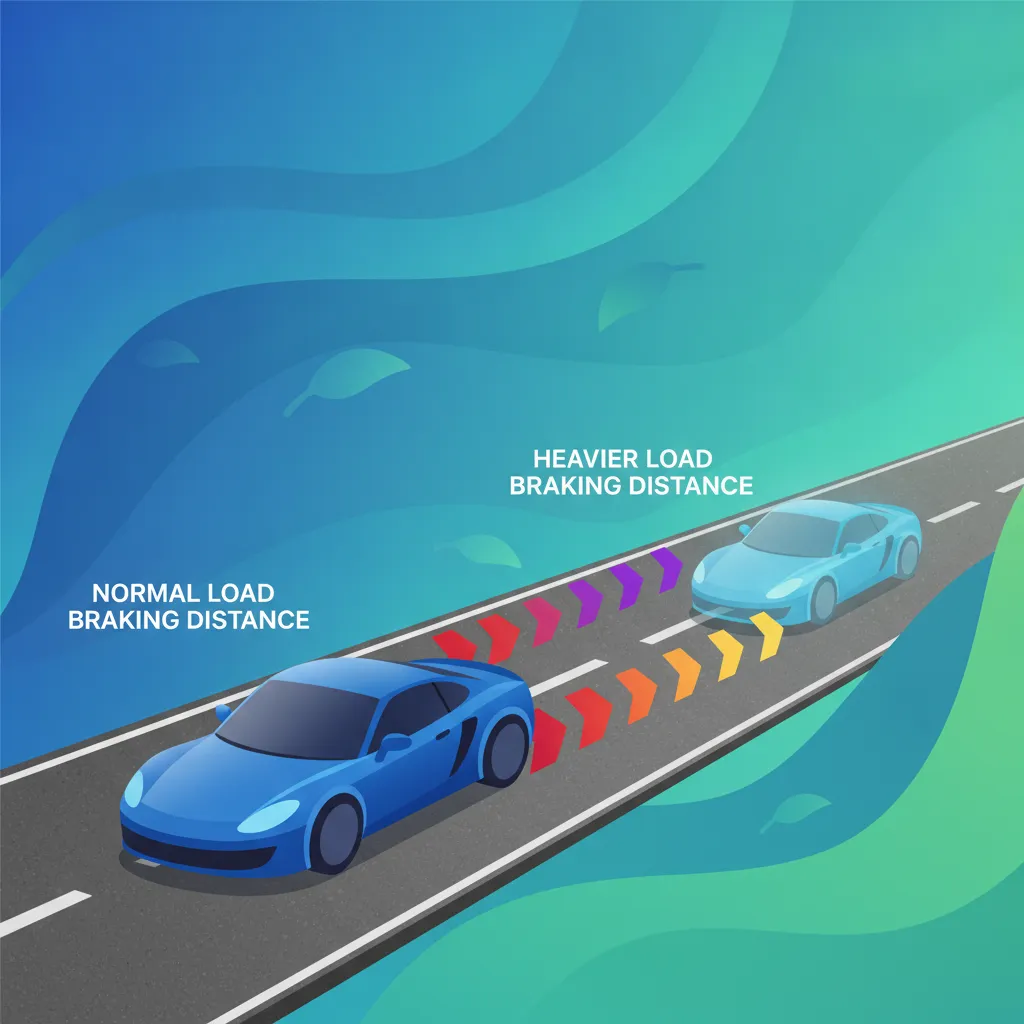
This lesson explores the direct relationship between a vehicle's mass, its speed, and the distance required to stop. It explains how increased load significantly lengthens the braking distance and details how road conditions like gradient and surface friction further affect this calculation. Learners will understand the importance of anticipating stops and maintaining a greater following distance to ensure safety.

Beyond basic checks, this lesson covers the inspection of critical vehicle systems like brakes, steering, and suspension to ensure they are functioning correctly. It also details the importance of properly adjusted mirrors and the use of modern camera systems for monitoring blind spots and enhancing situational awareness. Understanding these systems is vital for safe maneuvering, compliance with Danish regulations, and overall vehicle roadworthiness.

Proper axle load distribution is crucial for the safety and legality of heavy vehicle operations. This lesson explains how axle pressure is defined and regulated, highlighting the importance of distributing weight correctly across all axles. It covers how imbalanced loads can negatively affect braking performance, steering control, and overall vehicle stability, while also explaining the Danish regulations for maximum axle loads.
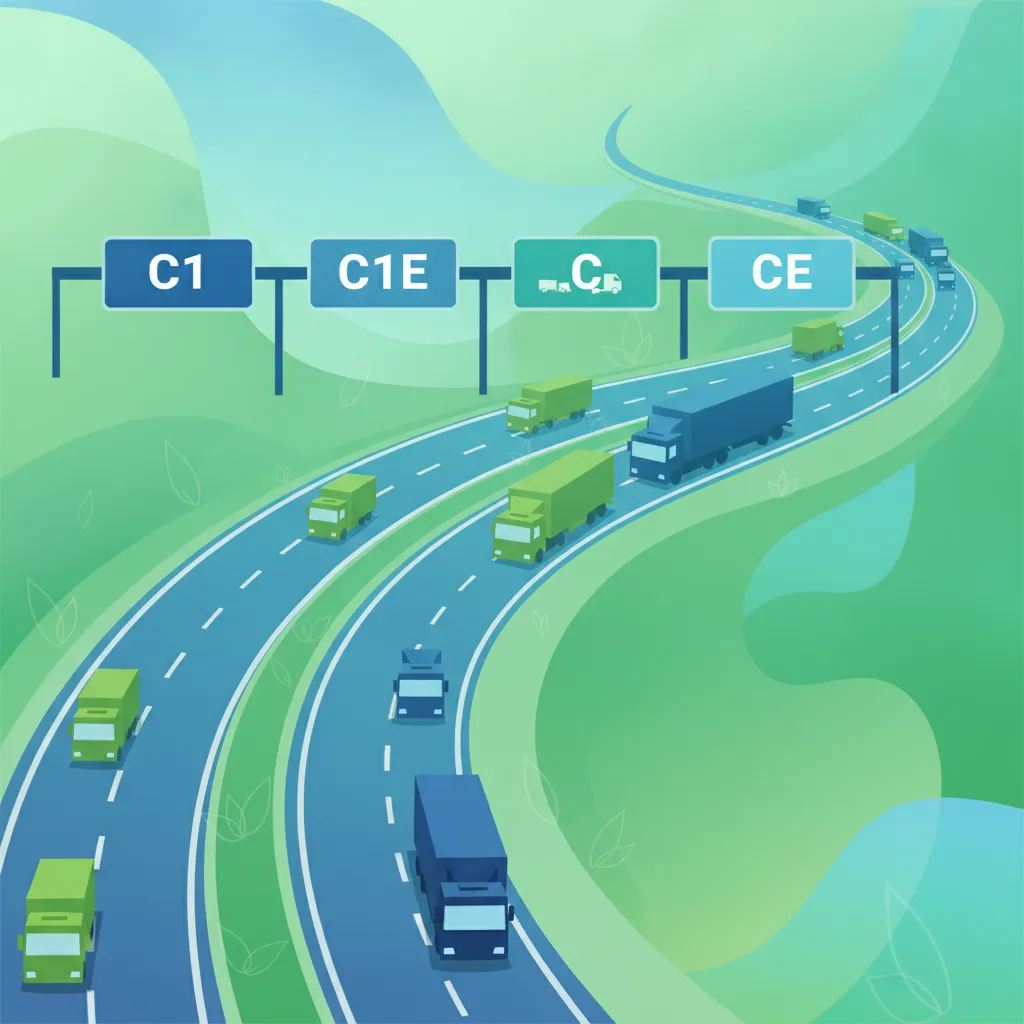
This lesson provides a detailed breakdown of the Danish C-category licenses, explaining the specific vehicle types and combinations allowed under each classification. It clarifies the legal definitions of mass limits for C1 and C vehicles, and how the addition of trailers creates the C1E and CE categories. The content focuses on the operational implications of these distinctions, helping you identify the correct license for different professional driving roles.
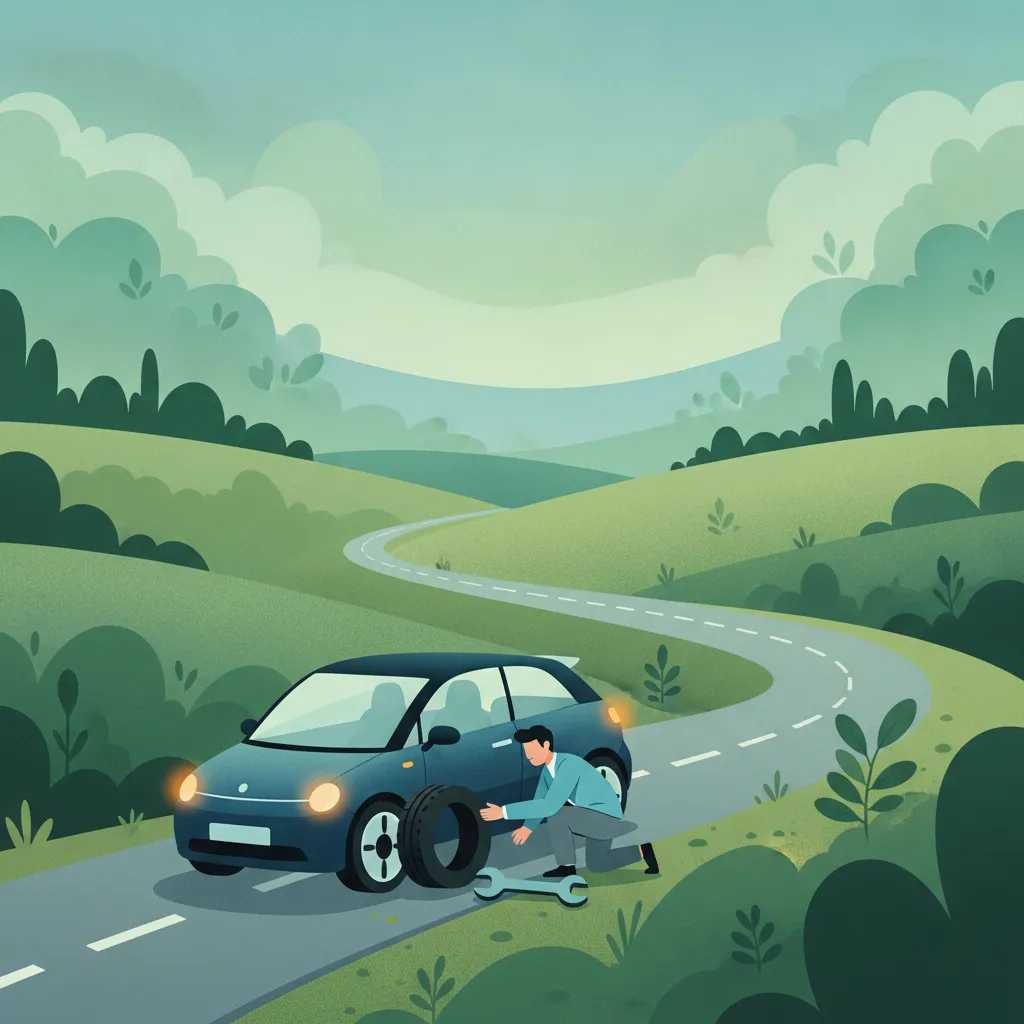
This lesson provides a clear, safety-oriented protocol for handling a vehicle breakdown or tyre failure. It covers how to safely maneuver the vehicle to the roadside, the correct use of hazard lights and warning triangles to alert other traffic, and procedures for contacting assistance. Adhering to these steps, as required by Danish law, is critical for protecting yourself and other road users from further incident.
Learn the core components and pneumatic principles of heavy vehicle air brake systems. Covers compressor function, air reservoirs, and vital safety devices for maintaining braking power in Danish C category vehicles.
This lesson focuses on the critical task of managing the air pressure within a pneumatic brake system. It details the function of key components such as the air compressor, air tanks, and regulators, explaining how to interpret air pressure gauges correctly. Learners will understand the purpose of safety devices that provide warnings in case of pressure loss, which is vital for preventing brake failure.
This lesson teaches the proper application of auxiliary speed control devices, such as retarders and engine brakes. It focuses on their use for maintaining a safe, controlled speed on long downhill gradients, which helps prevent service brake overheating and fade. The content also covers Danish regulations related to these systems and their benefits for reducing brake wear and improving overall safety.
Beyond basic checks, this lesson covers the inspection of critical vehicle systems like brakes, steering, and suspension to ensure they are functioning correctly. It also details the importance of properly adjusted mirrors and the use of modern camera systems for monitoring blind spots and enhancing situational awareness. Understanding these systems is vital for safe maneuvering, compliance with Danish regulations, and overall vehicle roadworthiness.
This lesson explores the direct relationship between a vehicle's mass, its speed, and the distance required to stop. It explains how increased load significantly lengthens the braking distance and details how road conditions like gradient and surface friction further affect this calculation. Learners will understand the importance of anticipating stops and maintaining a greater following distance to ensure safety.
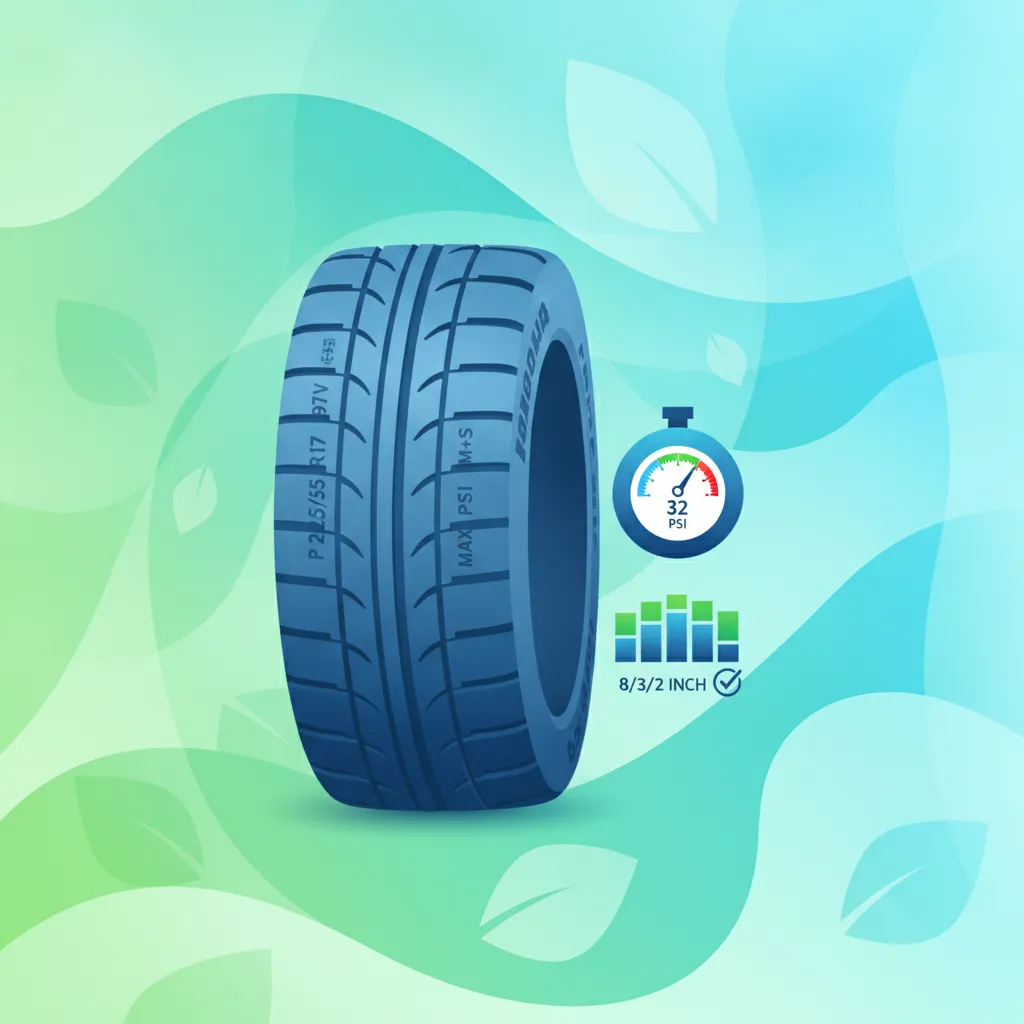
This lesson provides essential knowledge on tyre maintenance, a critical aspect of heavy vehicle safety and efficiency. It covers how to check for correct tyre pressure, assess wear patterns, and understand technical specifications like load and speed ratings. Learners will become familiar with the legal requirements for tread depth in Denmark and recognize how heavy loads impact tyre condition and overall vehicle performance.
Proper axle load distribution is crucial for the safety and legality of heavy vehicle operations. This lesson explains how axle pressure is defined and regulated, highlighting the importance of distributing weight correctly across all axles. It covers how imbalanced loads can negatively affect braking performance, steering control, and overall vehicle stability, while also explaining the Danish regulations for maximum axle loads.

Properly functioning lighting and signaling systems are fundamental for safe communication on the road. This lesson details the purpose and correct use of all exterior lights, including headlights, brake lights, turn signals, and hazard lights, according to Danish law. It emphasizes the driver's responsibility to ensure these systems are clean and operational to maintain visibility and clearly signal maneuvers to other road users.

This lesson prepares drivers for the unique operational environment of ports and large industrial sites. It explains the specific traffic rules, signage, and safety protocols that govern these areas, which often differ from public roads. Learners will understand how to safely navigate around loading docks, container yards, and other industrial traffic to ensure efficient and incident-free operations.
This lesson provides a clear, safety-oriented protocol for handling a vehicle breakdown or tyre failure. It covers how to safely maneuver the vehicle to the roadside, the correct use of hazard lights and warning triangles to alert other traffic, and procedures for contacting assistance. Adhering to these steps, as required by Danish law, is critical for protecting yourself and other road users from further incident.
Find clear answers to common questions learners have about Brake System Components and Function. Learn how the lesson is structured, which driving theory objectives it supports, and how it fits into the overall learning path of units and curriculum progression in Denmark. These explanations help you understand key concepts, lesson flow, and exam focused study goals.
An auxiliary brake, such as a retarder or engine brake, is designed to control vehicle speed on long downhill stretches without using the main service brakes. This helps prevent brake fade caused by overheating the service brake linings.
While they often share components within the air system, they serve different functions. The service brake is for slowing the vehicle during normal driving, while the parking brake is a dedicated mechanism designed to keep a stationary vehicle from rolling.
Heavy vehicles rely on a pneumatic system to activate brakes. If air pressure is too low, the brakes may not function effectively or may automatically lock, which is why monitoring the air pressure gauge is a critical part of the pre-trip check.
Brake fade occurs when the braking system overheats from excessive use, causing a significant reduction in stopping power. This is a common hazard in heavy vehicles that can be mitigated by proper use of auxiliary braking systems.
Use our powerful search tool to pinpoint specific Danish driving theory topics, road signs, or traffic situations you need to review. Start exploring relevant practice sets now to reinforce your knowledge and build confidence for your upcoming driving licence exam.