
This lesson explores the technical and practical use of auxiliary speed control systems, including retarders and engine brakes, specifically for Category C heavy vehicles in Denmark. Understanding these tools is crucial for maintaining vehicle control on steep gradients and preventing service brake fade during long descents.

Lesson content overview
Operating a heavy goods vehicle in Denmark, especially with a Category C license, demands a profound understanding of its advanced systems. Beyond the conventional service brakes, modern lorries are equipped with sophisticated auxiliary speed control devices like retarders and engine brakes. These systems are crucial for maintaining safety, preventing brake wear, and ensuring controlled descents, particularly on long downhill gradients. This lesson, part of your Complete Danish Heavy Vehicle Theory Course for Category C License, will delve into the proper application, regulatory requirements, and numerous benefits of these indispensable tools.
For heavy vehicles, managing speed, especially during descents, presents unique challenges. The sheer mass of a loaded lorry generates significant kinetic energy, which must be dissipated to control speed. Relying solely on the vehicle's primary service brakes (friction brakes) on extended downgrades can lead to severe overheating. This overheating causes a dangerous phenomenon known as brake fade, where the braking effectiveness diminishes significantly or is lost entirely, posing a severe risk of accident.
Auxiliary speed control devices offer an essential alternative, providing additional braking force without engaging the service brakes directly. By doing so, they protect the service brakes from excessive heat buildup, maintain their optimal performance for emergency situations, and dramatically extend their lifespan. Understanding and correctly applying these systems is fundamental for safe and efficient heavy-vehicle operation.
A retarder is an auxiliary braking device designed specifically for heavy vehicles to provide continuous braking force over prolonged periods, independent of the service brakes. Its primary purpose is to dissipate kinetic energy as heat within a dedicated component, thereby preventing the service brakes from overheating, especially on long, steep descents.
Retarders primarily come in two main types:
Friction retarders operate much like a conventional brake, using pads or shoes to create friction against a rotating drum or disc. However, they are designed as a separate, heavy-duty unit built to withstand and dissipate continuous heat. While less common than hydraulic types in modern heavy vehicles, they offer a straightforward braking mechanism. The main advantage is their consistent braking performance across a wide range of speeds.
Hydraulic retarders are the most prevalent type in contemporary heavy vehicles. They utilize fluid dynamics to create resistance. Inside the retarder, a rotor (connected to the vehicle's drivetrain, often the gearbox output shaft or propeller shaft) spins within a stator. When activated, fluid (typically oil) is injected into the retarder's housing, creating viscous drag between the rotor and stator. This drag resists the rotation of the drivetrain, thus slowing the vehicle. The kinetic energy is converted into heat within the fluid, which is then cooled by the vehicle's engine cooling system or a dedicated heat exchanger. Hydraulic retarders offer smooth, powerful, and continuously variable braking, making them ideal for long descents.
Effective use of a retarder requires anticipation and proper technique:
Anticipate the Descent: Before entering a long or steep downhill gradient, assess the grade and determine the safe speed you wish to maintain.
Engage Before the Descent: Activate the retarder before the vehicle gains excessive speed. Many retarders have multiple stages of braking power, often controlled by a stalk on the steering column or a foot pedal. Select an appropriate stage to achieve the desired speed.
Maintain Controlled Speed: Use the retarder to hold the vehicle at a safe, constant speed throughout the descent. If the vehicle starts to accelerate despite the retarder, briefly and firmly apply the service brakes to bring the speed back down, then release them and allow the retarder to resume control. This "snub braking" technique keeps service brakes cool.
Adjust as Needed: Road conditions, vehicle load, and the steepness of the gradient may require adjusting the retarder's intensity or supplementing with occasional service brake applications.
Always remember to engage your retarder before speed builds up. Reacting to excessive speed by only using service brakes on a long descent is a common and dangerous mistake that can lead to brake fade.
Engine brakes, often referred to as compression release brakes or "Jake brakes" (after the Jacobs Vehicle Systems company that pioneered them), are another vital auxiliary speed control device. These systems use the engine itself to generate braking force, further reducing the reliance on service brakes.
The most common type of engine brake in heavy diesel vehicles is the compression release brake. Typically, during the compression stroke of an engine, air is compressed in the cylinder, absorbing energy. In a standard engine, this compressed air then pushes the piston back down, returning much of that energy. A compression release brake, however, modifies the engine's valve timing. At the top of the compression stroke, it briefly opens the exhaust valves, releasing the compressed air to the atmosphere. This action effectively prevents the engine from returning the energy it absorbed during compression, thus turning the engine into an air compressor that resists the vehicle's forward motion and provides significant braking power.
An exhaust brake is a simpler form of engine braking. It works by restricting the flow of exhaust gases out of the engine, typically by closing a valve in the exhaust pipe. This restriction creates back pressure in the exhaust manifold, which increases the resistance the engine must overcome to complete its exhaust stroke. This added resistance helps to slow the vehicle. While generally less powerful than compression release brakes, exhaust brakes are effective, especially at higher engine RPMs, and are often used in conjunction with them or as a primary engine braking system in lighter heavy-duty vehicles.
Engine brakes are particularly effective at higher engine revolutions per minute (RPM), as the braking force is directly related to the amount of air being compressed and released. They are best used on long downgrades to maintain a safe, controlled speed.
However, their use comes with specific considerations, especially regarding noise:
Engine brakes, particularly compression release types, can be quite noisy. Due to noise restrictions, their use may be prohibited or restricted in urban, residential, or noise-sensitive areas. Always be aware of local regulations and signage.
In Danish heavy vehicle operation, drivers must be mindful of manufacturer guidelines and specific regulations that might limit engine brake use above certain speeds (e.g., typically 50-60 km/h) or in designated quiet zones. When in doubt, prioritize using the retarder or service brakes if the engine brake creates excessive noise or is restricted.
The correct and consistent use of auxiliary speed control devices is not merely a matter of best practice; it is mandated by law in Denmark for heavy vehicle operators. These regulations are in place to ensure maximum road safety and prevent incidents caused by runaway vehicles or overheated brakes.
The Danish Road Traffic Act (Færdselsloven) explicitly requires drivers of heavy vehicles to use auxiliary braking systems on extended descents. This is to prevent the overheating of primary service brakes and subsequent brake fade. Failure to comply can result in fines and significant safety hazards.
A dangerous reduction in a vehicle's braking effectiveness, typically caused by excessive heat build-up in the service brakes due to prolonged or heavy use, leading to diminished friction and stopping power.
While the use of auxiliary braking is mandatory, specific restrictions apply, particularly to engine brakes:
Regular maintenance and functionality checks of both retarder and engine brake systems are legally required for heavy vehicles in Denmark. During periodic technical inspections (syn), these systems are checked to ensure they are in proper working order. Drivers must also include a check of these systems in their daily pre-trip inspections, confirming their proper engagement and response. A malfunctioning auxiliary braking system compromises safety and is considered a serious defect.
Even with knowledge of the systems, drivers can make mistakes that compromise safety or accelerate wear. Avoiding these pitfalls is crucial for professional heavy vehicle operation.
The most common and dangerous mistake is neglecting to use auxiliary braking and instead relying solely on the service brakes on long descents. This leads to:
Best Practice: Always engage auxiliary braking before the descent begins. If additional braking is needed, use short, firm applications of the service brakes ("snub braking") to reduce speed, then release them, allowing the auxiliary system to resume control and the service brakes to cool.
Auxiliary braking performance can be affected by environmental factors.
The weight of the load significantly influences the kinetic energy of the vehicle and, consequently, the demands on the braking systems.
The correct application of auxiliary speed control devices is a cornerstone of safe and efficient heavy vehicle operation. It offers several critical benefits:
Integrating the knowledge of vehicle mass, load distribution, and road conditions with the skillful use of retarders and engine brakes is what defines a competent Category C license holder in Denmark. Mastering these systems is not just about passing an exam; it's about making every journey safer and more efficient.
This lesson covers the essential auxiliary braking systems for heavy Category C vehicles: retarders (hydraulic and friction types) and engine brakes (compression release/Jake brakes and exhaust brakes). Retarders provide continuous braking force by dissipating kinetic energy as heat in a dedicated component, while engine brakes use the engine's compression or exhaust back pressure to slow the vehicle. Both systems protect service brakes from overheating and brake fade on long downhill gradients. Danish regulations mandate the use of these systems on extended descents and impose noise restrictions on engine brakes in urban areas. Safe operation requires engaging auxiliary braking before descents, using snub braking technique when supplemental service braking is needed, and adjusting strategy based on vehicle load and road conditions.
A short set of high-value points that capture the most important learning from this lesson.
Retarders and engine brakes are auxiliary braking systems that protect service brakes from overheating on long descents
Hydraulic retarders use fluid dynamics (viscous drag between rotor and stator) to create continuous braking force
Compression release engine brakes open exhaust valves at top of compression stroke to release compressed air, converting the engine into an air compressor
Always engage auxiliary braking before entering a descent to prevent speed buildup and brake fade
Danish law requires heavy vehicle drivers to use auxiliary braking on extended downhills to prevent service brake overheating
Explore all units and lessons included in this driving theory course.
Engine brakes generate braking power proportional to engine RPM; they are most effective at higher revolutions
Hydraulic retarders are the most common type in modern heavy vehicles and offer smooth, continuously variable braking
Compression release brakes (Jake brakes) can be very noisy and may be prohibited in urban and residential areas due to noise restrictions
Snub braking technique: apply service brakes briefly to reduce speed on descents, then release to allow cooling while auxiliary systems maintain control
Most manufacturers recommend not using engine brakes above 50-60 km/h or in designated quiet zones
Relying solely on service brakes during long descents, leading to brake fade and potentially complete brake failure
Waiting until excessive speed builds up before engaging auxiliary braking instead of engaging proactively
Using compression release engine brakes in urban or noise-sensitive areas where they are restricted by local regulations
Failing to adjust braking strategy for weather conditions; aggressive engine braking on slippery surfaces can cause traction loss
Not accounting for load weight when using auxiliary braking; heavier loads require earlier and more aggressive engagement
Lesson content overview
A short set of high-value points that capture the most important learning from this lesson.
Retarders and engine brakes are auxiliary braking systems that protect service brakes from overheating on long descents
Hydraulic retarders use fluid dynamics (viscous drag between rotor and stator) to create continuous braking force
Compression release engine brakes open exhaust valves at top of compression stroke to release compressed air, converting the engine into an air compressor
Always engage auxiliary braking before entering a descent to prevent speed buildup and brake fade
Danish law requires heavy vehicle drivers to use auxiliary braking on extended downhills to prevent service brake overheating
Explore all units and lessons included in this driving theory course.
Engine brakes generate braking power proportional to engine RPM; they are most effective at higher revolutions
Hydraulic retarders are the most common type in modern heavy vehicles and offer smooth, continuously variable braking
Compression release brakes (Jake brakes) can be very noisy and may be prohibited in urban and residential areas due to noise restrictions
Snub braking technique: apply service brakes briefly to reduce speed on descents, then release to allow cooling while auxiliary systems maintain control
Most manufacturers recommend not using engine brakes above 50-60 km/h or in designated quiet zones
Relying solely on service brakes during long descents, leading to brake fade and potentially complete brake failure
Waiting until excessive speed builds up before engaging auxiliary braking instead of engaging proactively
Using compression release engine brakes in urban or noise-sensitive areas where they are restricted by local regulations
Failing to adjust braking strategy for weather conditions; aggressive engine braking on slippery surfaces can cause traction loss
Not accounting for load weight when using auxiliary braking; heavier loads require earlier and more aggressive engagement
Explore search topics learners often look for when studying Speed Control, Retarder, and Engine Braking. These topics reflect common questions about road rules, driving situations, safety guidance, and lesson level theory preparation for learners in Denmark.
Browse additional driving theory lessons that cover connected traffic rules, road signs, and common driving situations related to this topic. Improve your understanding of how different rules interact across everyday traffic scenarios.
Explore the theory behind retarders and engine brakes for Danish Category C drivers. Understand how these systems prevent brake fade on descents and comply with Danish road traffic regulations for heavy vehicles.

This lesson introduces the primary components of heavy vehicle braking systems, distinguishing between service, parking, and auxiliary brakes like retarders. It explains the mechanical and pneumatic principles behind how these systems operate to safely slow and stop a large vehicle. Understanding the function of each component is essential for proper use, maintenance, and compliance with Danish braking regulations.
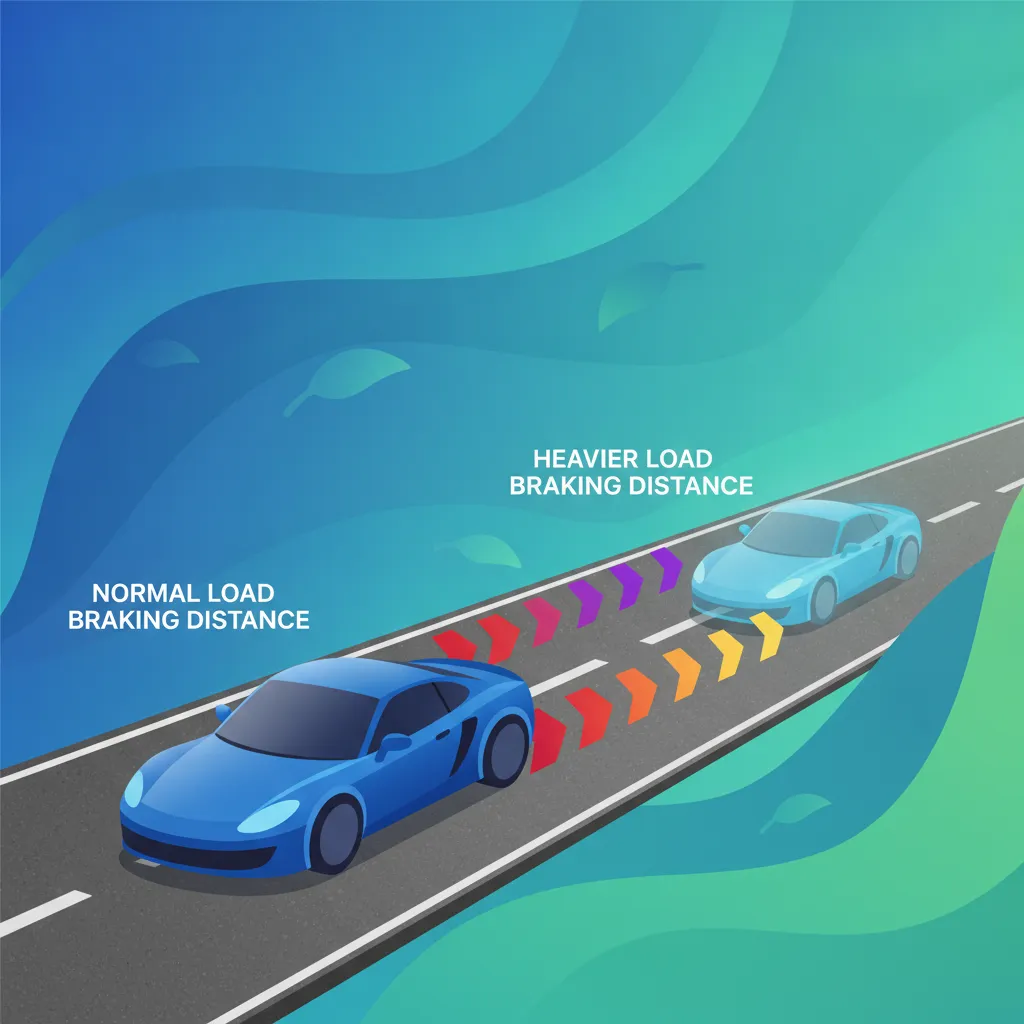
This lesson explores the direct relationship between a vehicle's mass, its speed, and the distance required to stop. It explains how increased load significantly lengthens the braking distance and details how road conditions like gradient and surface friction further affect this calculation. Learners will understand the importance of anticipating stops and maintaining a greater following distance to ensure safety.

This lesson details the principles of smooth acceleration and braking, which are essential for passenger safety and comfort. It explains how to apply gradual and consistent pressure to the accelerator and brake pedals to prevent jerking motions that could cause passengers to lose their balance. The content also covers anticipation skills needed to manage speed effectively in varying Danish traffic and road conditions.

This lesson focuses on the critical task of managing the air pressure within a pneumatic brake system. It details the function of key components such as the air compressor, air tanks, and regulators, explaining how to interpret air pressure gauges correctly. Learners will understand the purpose of safety devices that provide warnings in case of pressure loss, which is vital for preventing brake failure.

This lesson explains the components of total stopping distance: reaction distance and braking distance. It provides instruction on how to use both front and rear brakes effectively for a controlled and efficient stop. The content also highlights how factors like speed, road condition, and tyre quality influence how quickly you can stop.

Beyond basic checks, this lesson covers the inspection of critical vehicle systems like brakes, steering, and suspension to ensure they are functioning correctly. It also details the importance of properly adjusted mirrors and the use of modern camera systems for monitoring blind spots and enhancing situational awareness. Understanding these systems is vital for safe maneuvering, compliance with Danish regulations, and overall vehicle roadworthiness.
This lesson focuses on the challenges of braking in adverse conditions like rain or on icy patches. It teaches riders to increase their following distance and apply brakes smoothly and gently to prevent traction loss. The role of ABS in these scenarios and strategies for maintaining control are also explained.

Reversing a tractor-trailer combination requires skill and a clear understanding of vehicle dynamics. This lesson breaks down the technique, explaining how to use steering inputs to guide the trailer accurately while monitoring its position through mirrors and cameras. It emphasizes the importance of a slow, controlled speed and planning the entire maneuver before starting to ensure safety and precision.

This lesson addresses the causes and prevention of trailer sway and jack-knifing, two critical loss-of-control events. It explains how factors like improper braking, high speeds, crosswinds, and poor load distribution can trigger these dangerous situations. Learners will study avoidance strategies, including proper speed management and smooth steering inputs, as well as corrective actions to regain control if sway begins.

This lesson addresses the combined challenges of navigating narrow rural roads and driving in adverse weather. It explains how to adapt speed and braking techniques for conditions like heavy rain, fog, or ice, which are common on rural routes. The content also integrates these factors into route planning, teaching drivers how to select the safest and most appropriate path while avoiding local weight or height restrictions.
Learn about the legal requirements and regulations in Denmark for using auxiliary braking systems like retarders and engine brakes on heavy vehicles. Understand speed and noise restrictions to ensure compliance and safety.
This lesson introduces the primary components of heavy vehicle braking systems, distinguishing between service, parking, and auxiliary brakes like retarders. It explains the mechanical and pneumatic principles behind how these systems operate to safely slow and stop a large vehicle. Understanding the function of each component is essential for proper use, maintenance, and compliance with Danish braking regulations.

Properly functioning lighting and signaling systems are fundamental for safe communication on the road. This lesson details the purpose and correct use of all exterior lights, including headlights, brake lights, turn signals, and hazard lights, according to Danish law. It emphasizes the driver's responsibility to ensure these systems are clean and operational to maintain visibility and clearly signal maneuvers to other road users.
This lesson explores the direct relationship between a vehicle's mass, its speed, and the distance required to stop. It explains how increased load significantly lengthens the braking distance and details how road conditions like gradient and surface friction further affect this calculation. Learners will understand the importance of anticipating stops and maintaining a greater following distance to ensure safety.
This lesson focuses on the critical task of managing the air pressure within a pneumatic brake system. It details the function of key components such as the air compressor, air tanks, and regulators, explaining how to interpret air pressure gauges correctly. Learners will understand the purpose of safety devices that provide warnings in case of pressure loss, which is vital for preventing brake failure.

This lesson focuses on the rules and best practices for operating heavy vehicles on motorways and interchanges. It details Danish regulations regarding lane usage and speed limits for lorries, and explains safe techniques for merging into and exiting high-speed traffic. Maintaining a safe and appropriate following distance to allow for longer stopping distances is a key focus of the content.

This lesson focuses on the legal dimensional limits—length, width, and height—for heavy goods vehicles and their interaction with road infrastructure. It explains Danish regulations and the importance of planning routes to avoid constraints such as low bridges, narrow tunnels, and weight-restricted roads. Learners will understand how to interpret road signs indicating these limits and the procedures for obtaining permits for oversized loads.

Proper axle load distribution is crucial for the safety and legality of heavy vehicle operations. This lesson explains how axle pressure is defined and regulated, highlighting the importance of distributing weight correctly across all axles. It covers how imbalanced loads can negatively affect braking performance, steering control, and overall vehicle stability, while also explaining the Danish regulations for maximum axle loads.
Beyond basic checks, this lesson covers the inspection of critical vehicle systems like brakes, steering, and suspension to ensure they are functioning correctly. It also details the importance of properly adjusted mirrors and the use of modern camera systems for monitoring blind spots and enhancing situational awareness. Understanding these systems is vital for safe maneuvering, compliance with Danish regulations, and overall vehicle roadworthiness.
This lesson addresses the combined challenges of navigating narrow rural roads and driving in adverse weather. It explains how to adapt speed and braking techniques for conditions like heavy rain, fog, or ice, which are common on rural routes. The content also integrates these factors into route planning, teaching drivers how to select the safest and most appropriate path while avoiding local weight or height restrictions.

This lesson addresses the specific skills required to navigate around public transport and heavy goods vehicles safely. You will learn the rules for bus lanes, recognize when buses have priority at stops, and understand the unique challenges posed by large vehicles, such as wider turning circles and larger blind spots. The material also provides clear protocols for overtaking these vehicles while maintaining adequate safety margins.
Find clear answers to common questions learners have about Speed Control, Retarder, and Engine Braking. Learn how the lesson is structured, which driving theory objectives it supports, and how it fits into the overall learning path of units and curriculum progression in Denmark. These explanations help you understand key concepts, lesson flow, and exam focused study goals.
Using the service brake continuously on long gradients leads to heat buildup, which can cause 'brake fade' where the friction material loses effectiveness. A retarder or engine brake dissipates this energy through the drivetrain or exhaust system, keeping the main brakes cool and ready for emergency stops.
While engine brakes are highly effective, they can be noisy in urban areas and are sometimes prohibited in specific noise-sensitive zones. Always be aware of local regulations, though their primary use for safety on gradients is standard professional practice.
Yes, heavier loads require more aggressive and earlier use of auxiliary braking to maintain a constant speed. You must adjust your braking strategy based on your current total weight to ensure you do not exceed safe speeds on descent.
Theory exam questions often focus on the complementary nature of these systems. You are expected to know that the retarder is for speed maintenance and the service brake is the primary safety system for slowing or stopping the vehicle.
Use our powerful search tool to pinpoint specific Danish driving theory topics, road signs, or traffic situations you need to review. Start exploring relevant practice sets now to reinforce your knowledge and build confidence for your upcoming driving licence exam.