
This lesson provides the foundation for your Category AM journey by defining the legal status and technical characteristics of a stor knallert. You will learn the precise distinctions that set this category apart from other two-wheeled vehicles in Denmark. Understanding these rules is the critical first step toward passing your theory test and riding safely on public roads.
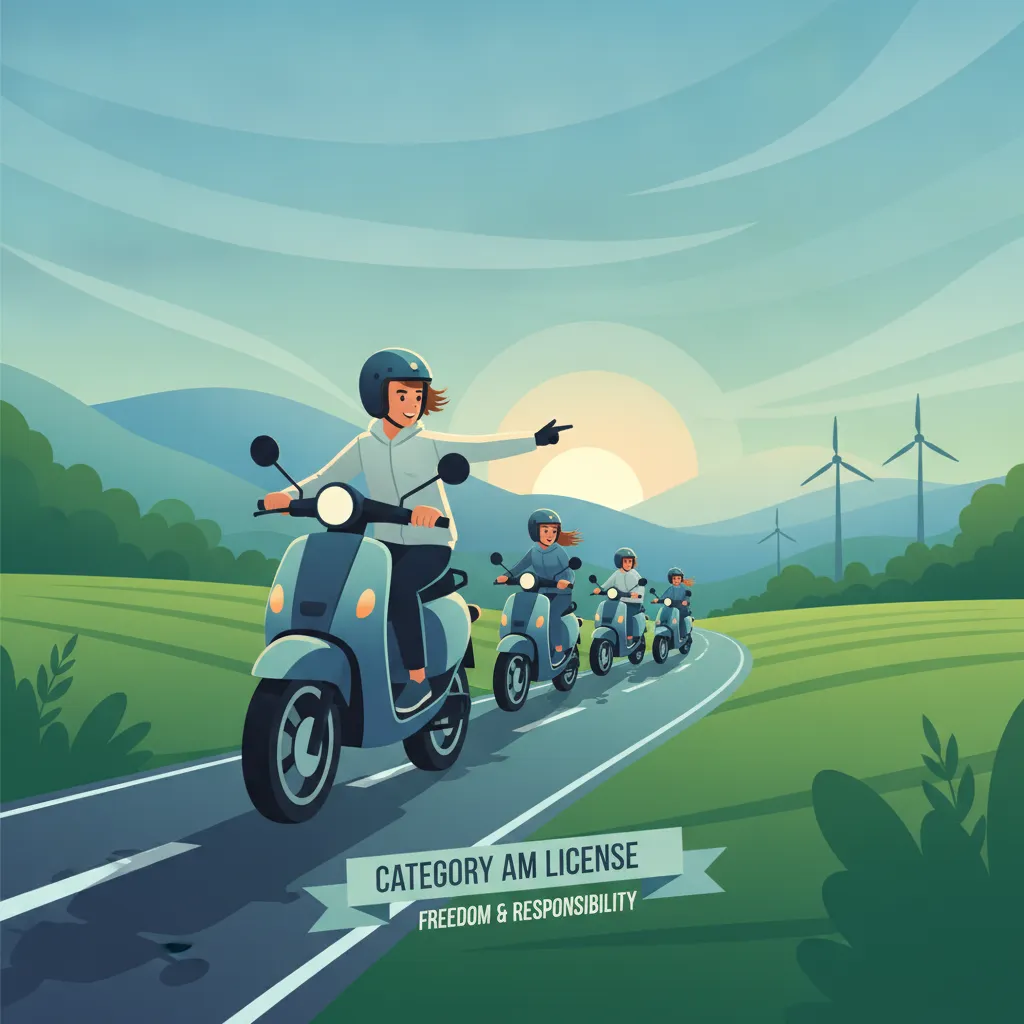
Lesson content overview
Welcome to the Official Danish Driving Theory Course for Category AM (Stor Knallert). This initial lesson is designed to equip you with a fundamental understanding of the "stor knallert" (large moped) within the Danish traffic legal framework. Knowing the precise definition and characteristics of this vehicle category is the essential first step towards becoming a responsible and lawful rider, ensuring you comply with all regulations and prepare effectively for your Category AM theory test.
This comprehensive guide will detail the technical specifications that define a stor knallert, distinguish it from other vehicle types like the "lille knallert" (small moped), and clarify the requirements for obtaining a Category AM licence in Denmark. By grasping these core concepts, you will build a solid foundation for understanding subsequent lessons covering specific traffic laws, rider responsibilities, and safe riding techniques.
In Denmark, all vehicles are meticulously classified to ensure appropriate licensing, road usage, and safety standards. The stor knallert falls under a specific legal category, requiring riders to hold a dedicated licence and adhere to particular rules. This classification is not arbitrary; it's designed to align vehicle capabilities with the rider’s experience and maturity, significantly reducing accident risks, especially among younger riders.
A "stor knallert" is legally defined by a precise set of technical specifications that determine its classification. Understanding these parameters is crucial, as they dictate not only the licence required to operate the vehicle but also where and how it can be ridden.
A two-wheeled motorized vehicle with an engine displacement of not more than 50 cm³, a maximum continuous rated power of 4 kW, and a maximum design speed of 45 km/h.
This definition establishes the stor knallert as a vehicle with specific performance limits. It’s important to note that these vehicles are generally faster and more powerful than their "lille knallert" counterparts, demanding different handling skills and a more comprehensive understanding of traffic dynamics. Legally, a stor knallert must be registered, possess a valid licence disc, and its operator must hold a Category AM driving licence.
The distinction between a stor knallert and other vehicle categories, particularly the lille knallert, is paramount. Confusing these classifications can lead to serious legal consequences and safety hazards.
Knowing these differences ensures that you select the correct vehicle for your licence and abide by the relevant traffic laws, preventing common misunderstandings, such as assuming a standard car licence (Category B) is sufficient to ride a stor knallert (it is not).
The Danish legal framework meticulously defines vehicles based on technical specifications to ensure public safety and proper regulation. For stor knallerter, three primary technical parameters dictate their classification: engine displacement, maximum continuous rated power, and maximum design speed. Each parameter serves a specific purpose in controlling vehicle performance and aligning it with rider capabilities.
Engine displacement, often referred to as engine size, is a fundamental characteristic of any motorized vehicle. It directly relates to the engine's potential to produce power and, consequently, speed and acceleration.
The total volume swept by all pistons inside an engine's cylinders, typically measured in cubic centimeters (cm³).
For a vehicle to be classified as a stor knallert in Denmark, its engine displacement must not exceed 50 cm³. This limit is crucial because a larger displacement generally translates to more power. By setting this ceiling, authorities aim to prevent overly powerful mopeds from being operated by inexperienced or younger riders, who might struggle to control such vehicles safely. For example, a moped with a 49 cm³ engine perfectly fits the stor knallert classification in terms of displacement, whereas a 60 cm³ engine would automatically disqualify it from this category, regardless of its speed capabilities.
While engine displacement indicates potential power, the "maximum continuous rated power" specifies the sustained power output an engine can deliver. This parameter is particularly important as it influences the vehicle's acceleration capabilities and overall performance under load.
The highest average power an engine can produce over a sustained period, measured in kilowatts (kW).
For a stor knallert, the maximum continuous rated power must not exceed 4 kW. This limit acts as a further control on the vehicle's performance, preventing excessive acceleration that might be challenging for less experienced riders to manage, especially in busy traffic or emergency situations. A stor knallert with a rated power of 3.5 kW would comply with this rule, but one boasting 5 kW would not, pushing it into a different vehicle category with stricter licensing requirements. It is important not to confuse peak power (a momentary burst) with continuous rated power, which is the sustained output relevant for classification.
Perhaps the most critical defining characteristic for a stor knallert is its maximum design speed. This is the top speed the vehicle is engineered to reach, regardless of how a rider might attempt to operate it.
The highest speed the vehicle is designed to reach under normal operating conditions, measured in kilometers per hour (km/h).
A stor knallert's maximum design speed must not exceed 45 km/h. This limit is fundamental to its classification and has significant implications for road usage and rider safety. It ensures that the vehicle's speed is compatible with the typical skill level and reaction times of its intended riders, who are often younger and less experienced than car drivers or motorcyclists. Vehicles capable of exceeding 45 km/h are immediately reclassified and require a different, higher licence category.
It is a common misunderstanding to assume that a rider can safely exceed the design speed. The design speed is a legal ceiling; any attempt to operate the vehicle faster, whether through modifications or riding techniques, constitutes a legal violation and a significant safety risk. Many stor knallerter are equipped with speed-limiting devices to ensure they remain within this design speed, even if their engine could theoretically achieve higher speeds.
Operating a stor knallert in Denmark is not simply a matter of purchasing the vehicle; it requires specific legal authorisation. The Category AM licence is the gateway to legally riding a stor knallert, ensuring that all riders possess the necessary theoretical knowledge and practical skills.
The Category AM licence is the official Danish driving licence endorsement that specifically permits the holder to operate a stor knallert. This licence is distinct from other categories, such as the standard car licence (Category B) or motorcycle licences.
The Danish driving licence category that allows the holder to operate a stor knallert, requiring a passed theory test.
To obtain a Category AM licence, prospective riders must typically meet a minimum age requirement. While this age can be subject to legislative changes, it is generally 15 years old in Denmark. This age limit is put in place to ensure that riders have attained a certain level of maturity and cognitive ability to handle the complexities of traffic safely. The process usually involves completing a driving school course, which includes both theoretical instruction and practical training, culminating in a mandatory theory test. Passing this test demonstrates a rider's understanding of Danish traffic laws, road signs, and specific rules pertaining to stor knallerter.
Always verify the current minimum age and specific requirements for obtaining a Category AM licence with official Danish traffic authorities or your driving school, as regulations can change.
Several common misunderstandings can lead riders into legal trouble if not addressed. It is vital to clarify these points:
Beyond merely defining what a stor knallert is, Danish law prescribes a clear set of rules and regulations governing their use. These rules are non-negotiable and are designed to ensure safety for riders and other road users. Compliance is not optional; it is a mandatory part of operating a stor knallert legally and responsibly.
The initial and perhaps most fundamental rule is that every motorized two-wheeled vehicle must be classified based on its technical specifications (engine displacement, power, and design speed). This classification then determines its legal status and the rules that apply to it.
Once classified as a stor knallert, the vehicle must be registered with the Danish Motor Vehicle Agency (Motorstyrelsen). Upon registration, a licence disc is issued, which must be displayed on the vehicle. This process ensures that the vehicle meets safety and environmental standards and allows authorities to identify the vehicle and its owner. Without proper registration and a visible licence disc, the vehicle is not legally allowed on public roads.
The rationale behind mandatory classification and registration is multi-faceted: it ensures appropriate licensing, enables effective enforcement of traffic laws, and facilitates insurance frameworks, all contributing to enhanced overall road safety.
Strict adherence to the technical limitations of a stor knallert is crucial. These limits are not merely for classification; they are active rules that must be respected during the vehicle's entire lifespan and operation.
These rules are legally mandatory and are strictly enforced by Danish authorities. They underscore the principle that vehicle capabilities must be matched with rider experience and legal privileges to maintain safety on public roads.
Disregarding the regulations for stor knallerter carries significant legal consequences. Ignorance of the law is not an excuse, and violations can range from substantial fines to licence suspension or even vehicle confiscation. Understanding these risks is part of responsible riding.
Operating a stor knallert outside of the legal framework can lead to various penalties:
Engine modifications are a common, yet dangerous and illegal, practice that significantly alters the legal status of a stor knallert. Any modification that increases:
will result in the vehicle being reclassified as a light motorcycle or a motorcycle.
Modifying a stor knallert to enhance its speed or power makes it legally a different vehicle category. If you operate such a modified vehicle with only a Category AM licence, you are effectively riding an unlicensed motorcycle. This carries far more severe penalties, including substantial fines, immediate licence suspension (for future licence categories as well), and potential criminal charges. Furthermore, insurance policies for a stor knallert become invalid for a modified vehicle, leaving you uninsured in case of an accident.
This strict stance against modifications underscores the Danish authorities' commitment to road safety, particularly concerning young and often inexperienced moped riders.
While the technical definitions and legal requirements form the bedrock of stor knallert operation, practical safety on the road involves adapting your riding to various conditions. Being a responsible rider means understanding how external factors influence your vehicle's performance and your ability to control it.
Your stor knallert's maximum design speed of 45 km/h is an absolute limit under ideal conditions. However, ideal conditions are not always present, and riders must adjust their speed and riding style accordingly.
Stor knallerter, despite being motorized, are considered vulnerable road users alongside cyclists and pedestrians. Your interaction with other traffic participants requires heightened awareness and caution.
Understanding the specific vocabulary used in Danish traffic regulations is key to navigating the rules for stor knallerter.
Applying theoretical knowledge to practical situations is essential for safe riding. Here are two common scenarios illustrating correct and incorrect behavior for stor knallert riders.
Urban Setting, Clear Weather:
Rural Road, Moderate Rain:
The detailed classification and stringent rules surrounding stor knallerter are not arbitrary bureaucratic hurdles. They are rooted in fundamental principles of road safety and legal accountability.
Understanding the core definitions and regulations for a stor knallert is the crucial first step in your journey as a responsible rider in Denmark.
This foundational knowledge forms the basis for all subsequent lessons in this Official Danish Driving Theory Course for Category AM (Stor Knallert). Mastering these definitions will prepare you to understand your responsibilities and navigate Danish roads safely and legally.
This lesson establishes the legal framework for Danish Category AM stor knallerter, defining them as two-wheeled motorized vehicles with strict technical limits: engine displacement no greater than 50 cm³, maximum continuous rated power no greater than 4 kW, and maximum design speed of 45 km/h. The lesson distinguishes stor knallerter from lille knallerter (limited to 30 km/h) and clarifies that a dedicated Category AM licence—typically obtainable at age 15 after passing a theory test—is required, as a standard car licence does not suffice. Riders must register their vehicle with Motorstyrelsen and display a licence disc, while modifications that exceed any technical limit will reclassify the vehicle as a light motorcycle requiring a different licence. Safe operation requires adapting speed to weather, road conditions, and posted speed limits, while avoiding motorways where minimum speeds exceed 45 km/h.
A short set of high-value points that capture the most important learning from this lesson.
A stor knallert is legally defined by three simultaneous limits: engine displacement up to 50 cm³, maximum continuous rated power up to 4 kW, and maximum design speed of 45 km/h
A Category AM licence is mandatory to operate a stor knallert; a standard Category B car licence does not authorize riding a stor knallert
The key distinction from a lille knallert is speed: stor knallerter reach up to 45 km/h while lille knallerter are limited to 30 km/h
All stor knallerter must be registered with Motorstyrelsen and display a valid licence disc to be legally operated on public roads
Modifying a stor knallert to exceed any of its three technical limits reclassifies it as a light motorcycle, voiding the Category AM licence requirement
Explore all units and lessons included in this driving theory course.
Maximum design speed of 45 km/h is a legal ceiling; posted road speed limits can be lower and must always be obeyed
The minimum age for a Category AM licence is typically 15 years, but verify current requirements with official Danish authorities
Engine modifications that push displacement above 50 cm³, power above 4 kW, or speed above 45 km/h reclassify the vehicle and invalidate Category AM coverage
Stor knallerter are prohibited from motorways (motorveje) and roads where minimum speed limits exceed 45 km/h
A stor knallert's speed-limiting device is a mandatory legal requirement to maintain classification compliance
Assuming a Category B driving licence automatically covers stor knallert operation—it does not
Believing the 45 km/h design speed is a target to reach rather than an absolute maximum that should only be approached under ideal conditions
Confusing peak engine power with maximum continuous rated power; only the sustained output matters for classification
Attempting to ride at design speed during adverse weather (rain, ice, wind) without reducing speed for safety
Operating an unregistered stor knallert or one without a displayed licence disc, which is illegal regardless of licence status
Lesson content overview
A short set of high-value points that capture the most important learning from this lesson.
A stor knallert is legally defined by three simultaneous limits: engine displacement up to 50 cm³, maximum continuous rated power up to 4 kW, and maximum design speed of 45 km/h
A Category AM licence is mandatory to operate a stor knallert; a standard Category B car licence does not authorize riding a stor knallert
The key distinction from a lille knallert is speed: stor knallerter reach up to 45 km/h while lille knallerter are limited to 30 km/h
All stor knallerter must be registered with Motorstyrelsen and display a valid licence disc to be legally operated on public roads
Modifying a stor knallert to exceed any of its three technical limits reclassifies it as a light motorcycle, voiding the Category AM licence requirement
Explore all units and lessons included in this driving theory course.
Maximum design speed of 45 km/h is a legal ceiling; posted road speed limits can be lower and must always be obeyed
The minimum age for a Category AM licence is typically 15 years, but verify current requirements with official Danish authorities
Engine modifications that push displacement above 50 cm³, power above 4 kW, or speed above 45 km/h reclassify the vehicle and invalidate Category AM coverage
Stor knallerter are prohibited from motorways (motorveje) and roads where minimum speed limits exceed 45 km/h
A stor knallert's speed-limiting device is a mandatory legal requirement to maintain classification compliance
Assuming a Category B driving licence automatically covers stor knallert operation—it does not
Believing the 45 km/h design speed is a target to reach rather than an absolute maximum that should only be approached under ideal conditions
Confusing peak engine power with maximum continuous rated power; only the sustained output matters for classification
Attempting to ride at design speed during adverse weather (rain, ice, wind) without reducing speed for safety
Operating an unregistered stor knallert or one without a displayed licence disc, which is illegal regardless of licence status
Explore search topics learners often look for when studying Category AM and Stor Knallert Overview. These topics reflect common questions about road rules, driving situations, safety guidance, and lesson level theory preparation for learners in Denmark.
Browse additional driving theory lessons that cover connected traffic rules, road signs, and common driving situations related to this topic. Improve your understanding of how different rules interact across everyday traffic scenarios.
Understand the precise legal definitions, classification rules, and registration requirements for stor knallerter in Denmark. Covers engine specifications, speed limits, and licence obligations under Danish traffic law for Category AM riders.

This lesson outlines the administrative and legal steps for acquiring a Category AM licence in Denmark. It details the requirements for the theory and practical tests, the process for vehicle registration, and the necessity of valid insurance. Learners will understand the complete legal framework and documentation needed to become a licensed stor knallert rider.

This lesson focuses on the core safety duties of a stor knallert rider. It explains the legal requirement for wearing a helmet and the benefits of other protective gear. The content also covers essential pre-ride checks, including brakes, tyres, and lights, to ensure the vehicle is in safe operating condition.
This lesson details the function and meaning of traffic light signals in Denmark. It covers the standard red, amber, and green sequences, as well as special signals like flashing amber lights and green arrows for turning. The content also explains signals specific to cyclists and pedestrians that moped riders must observe at intersections.
This lesson highlights the rider's responsibility for ensuring their vehicle is in a safe, roadworthy condition. It provides a systematic guide to pre-ride checks, including inspecting tyres for correct pressure and wear, testing brakes, and verifying all lights work. Regular maintenance is presented as a critical component of overall rider safety.
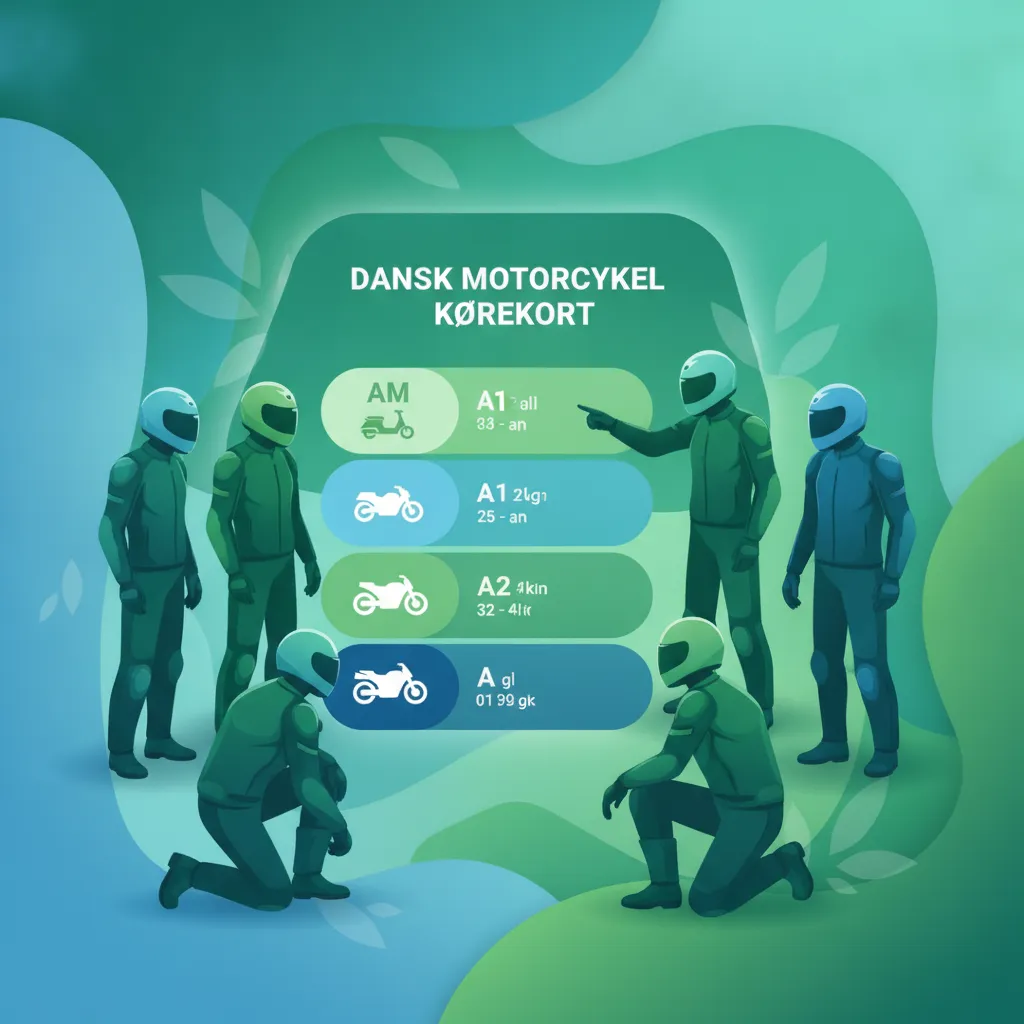
This lesson details the structure of the Danish motorcycle licensing system, covering categories A1, A2, and A. It outlines the specific age limits, engine displacement restrictions, and power-to-weight ratios for each category. Understanding these requirements provides a clear pathway for progressive skill development and legal operation.

This lesson introduces the primary categories of Danish road signs and their legal implications. It covers regulatory signs that dictate mandatory actions or prohibitions, and warning signs that indicate upcoming hazards. Correct interpretation of these signs is fundamental for lawful and safe riding on Danish roads.

This lesson provides an overview of the Danish legal system as it applies to motorcyclists. It details the consequences of traffic violations, including fines, penalty points, and potential licence suspension. Learners will also understand their legal responsibilities concerning insurance coverage and procedures to follow in the event of a collision.
This lesson outlines the legal responsibilities of a rider involved in a traffic accident. It explains the legal duty to stop, render aid, and report the incident to the police and insurance providers. The content covers the concepts of liability and the potential legal consequences following an accident.
This lesson provides a comparative analysis between a stor knallert and other road users like bicycles, e-bikes, and cars. It examines the differences in speed, maneuverability, and visibility, which create unique challenges for moped riders. Understanding these distinctions is key to anticipating interactions and positioning oneself safely in mixed traffic.
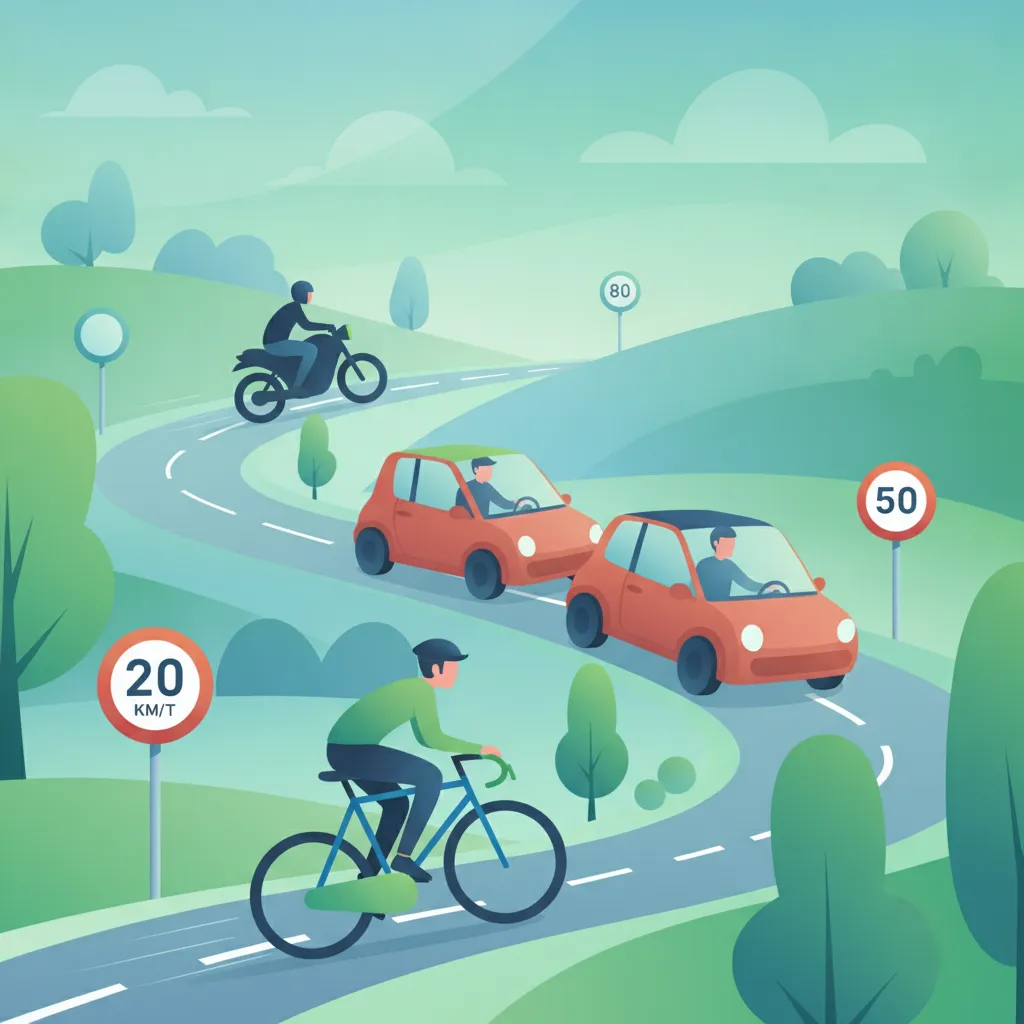
This lesson details the specific speed limits applicable to stor knallert riders in various Danish environments, including urban zones and rural roads. It emphasizes the concept of 'appropriate speed,' which requires adjusting speed based on weather, visibility, and traffic density. The content explains how to manage speed to ensure safety and legal compliance.
Learn about common legal infractions, penalties, and risks associated with operating a stor knallert in Denmark. Focuses on the consequences of vehicle modifications and non-compliance with Danish traffic regulations.
This lesson identifies common high-risk behaviors, including riding while impaired by alcohol, drugs, or fatigue. It details the strict legal limits in Denmark and the severe penalties for violations. The dangers of distraction, particularly from mobile phones, are also explained as a significant cause of accidents.
This lesson provides a clear overview of the penalties associated with breaking traffic laws as a motorcyclist. It details the Danish penalty point system ('klip i kørekortet') and the conditions that can lead to fines or licence revocation. Understanding these consequences reinforces the importance of lawful riding.
This lesson focuses on the core safety duties of a stor knallert rider. It explains the legal requirement for wearing a helmet and the benefits of other protective gear. The content also covers essential pre-ride checks, including brakes, tyres, and lights, to ensure the vehicle is in safe operating condition.
This lesson outlines the legal responsibilities of a rider involved in a traffic accident. It explains the legal duty to stop, render aid, and report the incident to the police and insurance providers. The content covers the concepts of liability and the potential legal consequences following an accident.
This lesson provides an overview of the Danish legal system as it applies to motorcyclists. It details the consequences of traffic violations, including fines, penalty points, and potential licence suspension. Learners will also understand their legal responsibilities concerning insurance coverage and procedures to follow in the event of a collision.
This lesson highlights the rider's responsibility for ensuring their vehicle is in a safe, roadworthy condition. It provides a systematic guide to pre-ride checks, including inspecting tyres for correct pressure and wear, testing brakes, and verifying all lights work. Regular maintenance is presented as a critical component of overall rider safety.

This lesson provides a step-by-step guide for managing a vehicle breakdown safely. It instructs the rider on moving the vehicle to a safe location, making it visible to other traffic using hazard lights, and personal safety while waiting for assistance. The importance of staying away from active traffic lanes is a key point.
This lesson details the specific speed limits applicable to stor knallert riders in various Danish environments, including urban zones and rural roads. It emphasizes the concept of 'appropriate speed,' which requires adjusting speed based on weather, visibility, and traffic density. The content explains how to manage speed to ensure safety and legal compliance.
This lesson outlines the administrative and legal steps for acquiring a Category AM licence in Denmark. It details the requirements for the theory and practical tests, the process for vehicle registration, and the necessity of valid insurance. Learners will understand the complete legal framework and documentation needed to become a licensed stor knallert rider.
This lesson details the function and meaning of traffic light signals in Denmark. It covers the standard red, amber, and green sequences, as well as special signals like flashing amber lights and green arrows for turning. The content also explains signals specific to cyclists and pedestrians that moped riders must observe at intersections.
Find clear answers to common questions learners have about Category AM and Stor Knallert Overview. Learn how the lesson is structured, which driving theory objectives it supports, and how it fits into the overall learning path of units and curriculum progression in Denmark. These explanations help you understand key concepts, lesson flow, and exam focused study goals.
The primary difference lies in the maximum speed and engine power. A lille knallert is legally restricted to 30 km/h, while a stor knallert (Category AM) can travel at higher speeds, typically up to 45 km/h, and requires a specific driving licence.
Yes, to obtain a Category AM licence in Denmark, you are required to complete a specific course and pass both a theory test and a practical riding test, ensuring you understand the rules for operating a motor-driven vehicle on the road.
In Denmark, a standard Category B car licence automatically includes the right to ride a Category AM vehicle (stor knallert). However, you must still follow all traffic laws pertaining to two-wheeled vehicles.
Use our powerful search tool to pinpoint specific Danish driving theory topics, road signs, or traffic situations you need to review. Start exploring relevant practice sets now to reinforce your knowledge and build confidence for your upcoming driving licence exam.