
This lesson details the legal pathway to obtaining your Category AM licence for a stor knallert in Denmark. You will learn about the official requirements for testing, registration, and the responsibilities you hold as a new rider on Danish roads.
Lesson content overview
Navigating the administrative and legal requirements to obtain a driving licence can seem complex. This lesson provides a comprehensive guide to acquiring a Category AM licence for a stor knallert in Denmark. Understanding these regulations is not just a formality; it ensures you are fully compliant with Danish law, are properly prepared for safe road use, and can operate your vehicle without legal repercussions. This chapter details the eligibility criteria, the specifics of the theory and practical tests, the necessity of vehicle registration, and the crucial requirement of valid insurance. By the end of this lesson, you will have a clear understanding of the complete legal framework and documentation needed to become a licensed stor knallert rider in Denmark.
The Category AM licence in Denmark specifically permits the operation of a "stor knallert." This term, translating to "large moped" or "motorized scooter," refers to vehicles with an engine size of up to 50 cc and a maximum design speed of 45 km/h. This licence is distinct from other vehicle categories and is essential for anyone wishing to ride such a vehicle legally on public roads in Denmark.
A stor knallert is a two-wheeled motorized vehicle designed for individual transport, often used for commuting or short-distance travel. While it shares characteristics with motorcycles, its lower speed and engine capacity place it in a separate legal category with specific licensing requirements. It is crucial to distinguish a stor knallert from a "lille knallert" (small moped), which has different speed limits and licensing rules.
A driving licence category in Denmark that permits the operation of a stor knallert, defined as a motorized two-wheeled vehicle with an engine capacity of up to 50 cc and a maximum design speed of 45 km/h.
The purpose of the Category AM licence is to ensure that riders possess the fundamental knowledge of traffic laws, road signs, and safe riding techniques necessary to operate a stor knallert responsibly. Operating any motorized vehicle on public roads carries inherent risks, and the licensing process is designed to mitigate these risks by verifying a rider's competence and adherence to safety standards. Without this specific licence, operating a stor knallert is illegal and carries significant penalties.
Before embarking on the journey to obtain your Category AM licence, it is essential to meet several fundamental legal eligibility criteria. These requirements are in place to ensure that all candidates are legally permitted and physically capable of riding a stor knallert safely.
The primary eligibility requirement is age. To apply for a Category AM licence in Denmark, you must be at least 16 years old. This age requirement is mandated by the Danish Road Traffic Act (Færdselsloven) and is strictly enforced. It is based on the rationale that individuals at this age possess a sufficient level of maturity and cognitive development to understand and adhere to complex traffic rules and to assess risks effectively. Applying before your 16th birthday will result in your application being rejected.
Candidates must also provide proof of identity and legal residency in Denmark. This typically involves presenting a valid passport or other official photo identification, along with documentation that confirms your Danish address, such as a recent utility bill. For non-Danish residents, proof of legal stay and residence status in Denmark is mandatory to be eligible for the licence application process. These checks ensure that only individuals with a legitimate connection to Denmark and verifiable identities can obtain a Danish driving licence.
In certain circumstances, a medical fitness certificate may be required. While not universally applicable to all Category AM applicants, individuals with specific medical conditions or those under a certain age might need a doctor's statement confirming their physical and mental ability to operate a stor knallert safely. This step is a critical safeguard to ensure that health conditions do not compromise road safety. It's advisable to check with the Danish Road Safety Authority (Færdselsstyrelsen) or your driving school for the most current and specific requirements based on your individual circumstances.
The theory test is a critical component of the Category AM licence acquisition process. It serves as the initial gateway, ensuring that all prospective riders possess a foundational understanding of Danish traffic laws, road signs, and safe riding principles before they are allowed to take to the road in a practical setting.
The Danish theory test for Category AM is a comprehensive written examination. It typically consists of multiple-choice questions, often accompanied by visual scenarios or images, designed to assess your knowledge across various domains. Key areas covered include:
The theory test is designed to be challenging, requiring thorough preparation. You must answer a significant percentage of questions correctly to pass, demonstrating a solid grasp of the material.
The primary purpose of the theory test is to confirm that you have absorbed and understood the theoretical knowledge essential for safe and legal participation in traffic. It ensures that you are aware of your responsibilities and the rules governing road use before you are placed in a practical riding environment.
Familiarize yourself with the exact format and content distribution of the official Danish AM theory test. Many driving schools offer practice tests that simulate the real examination, which can be invaluable for preparation.
Upon successfully passing the theory test, your result is typically valid for a specific period, usually one year. This means you must complete and pass your practical test within this timeframe. If you fail to do so, you will be required to retake and pass the theory test again before you can proceed with the practical examination. This validity period ensures that your theoretical knowledge remains current and fresh when you take the practical test.
Effective preparation is key to passing the theory test. This typically involves:
Successfully passing the theory test is a prerequisite for advancing to the practical driving test. This hands-on examination evaluates your ability to operate a stor knallert safely and competently in various real-world traffic conditions. It is where your theoretical knowledge is put into practice.
The practical test for the Category AM licence is structured to assess a range of riding skills and adherence to traffic rules. It typically includes:
Controlled Manoeuvres: This segment takes place in a controlled environment, often a designated test area. You will be required to demonstrate proficiency in basic vehicle handling. Examples include:
Road Riding Evaluation: The majority of the practical test involves riding on actual public roads, typically accompanied by an authorized examiner. During this phase, you will be assessed on:
A crucial aspect of the practical test is the vehicle itself. The stor knallert used for the test must meet specific criteria:
Attempting the practical test with an unregistered, unroadworthy, or uninsured vehicle will result in immediate cancellation of the test, and you will lose your booking fee. Always double-check your vehicle's status before your test date.
Before a stor knallert can legally be used on public roads in Denmark, including for your practical driving test, it must be officially registered. This process ensures the vehicle is identifiable for taxation, insurance, and law enforcement purposes, and confirms it meets Danish safety and environmental standards.
Vehicle registration is a fundamental legal requirement in Denmark for all motorized vehicles intended for road use. It serves several vital functions:
Registering a stor knallert typically involves a series of steps with the Danish Motor Vehicle Register (Motorstyrelsen):
Proof of Ownership: You must provide documentation proving you are the legal owner of the stor knallert. This usually includes the original purchase receipt or a bill of sale, especially for new vehicles.
Vehicle Inspection (if applicable): While new vehicles generally do not require an immediate inspection, older or imported vehicles might. The inspection ensures the vehicle meets Danish technical and environmental standards.
Payment of Fees: You will need to pay registration fees and potentially other taxes associated with vehicle ownership. The exact amount can vary.
Submission of Documentation: All required documents are submitted to Motorstyrelsen, either online or at a physical registration office.
Receiving Licence Plates: Once the registration is processed and approved, you will be issued official Danish licence plates for your stor knallert. These plates must be affixed to the vehicle before it can be used on public roads.
It is advisable to consult the official Motorstyrelsen website or a reputable vehicle dealer for the most up-to-date information on exact fees and documentation requirements, as these can be subject to change.
You cannot legally use a stor knallert on public roads, nor can you take your practical driving test, if the vehicle is not correctly registered and displaying valid licence plates.
One of the most critical legal obligations for any stor knallert owner in Denmark is obtaining valid insurance. This isn't just a recommendation; it's a mandatory requirement designed to protect all road users.
The minimum legal requirement for any motorized vehicle used on public roads in Denmark is third-party liability insurance (ansvarsforsikring). This type of insurance specifically covers damages or injuries that you, as the rider, might cause to other people, their vehicles, or their property in an accident. It does not cover damage to your own stor knallert or your own injuries.
The primary purpose of this mandatory insurance is to ensure that victims of accidents caused by stor knallert riders are financially compensated, preventing them from bearing the burden of medical bills, vehicle repairs, or other costs. Without this protection, an accident could lead to severe financial hardship for the responsible rider.
You must have valid third-party liability insurance in effect whenever you operate your stor knallert on public roads. This includes when you take your practical driving test. The examiner will require you to present proof of insurance (typically an insurance certificate or card) before the test can commence. Failure to provide this documentation will lead to the cancellation of your test appointment.
It is also crucial to ensure that your insurance coverage remains continuously valid. Riding an uninsured stor knallert is a serious offense that can lead to substantial fines, impoundment of the vehicle, and personal liability for all damages caused in an accident.
While third-party liability is the legal minimum, many stor knallert owners choose to purchase additional types of insurance for broader protection. These can include:
While these additional coverages are not legally required, they offer peace of mind and financial security for the rider and their vehicle.
Obtaining your Category AM licence involves a structured process that ensures all legal and practical requirements are met. Following these steps systematically will streamline your journey to becoming a licensed stor knallert rider.
Verify Eligibility: Ensure you meet the minimum age of 16, have valid Danish residency, and are medically fit (providing a medical certificate if required).
Enroll in a Driving School: While not always strictly mandatory for all aspects, enrolling in a driving school specialized in stor knallerter is highly recommended. They provide structured theory lessons and practical training, and often assist with booking tests.
Prepare for the Theory Test: Study Danish traffic laws, road signs, and stor knallert-specific regulations. Utilize official materials and practice tests.
Book and Pass the Theory Test: Once prepared, book your theory test at an authorized testing center. You must pass this examination before you can proceed to the practical test.
Acquire a Stor Knallert (or arrange for one): If you don't already own one, you'll need access to a compliant stor knallert for your practical training and the test. This might involve purchasing one or using a school's vehicle.
Register the Stor Knallert: Ensure the stor knallert is legally registered with the Danish Motor Vehicle Register (Motorstyrelsen) and has valid licence plates.
Obtain Mandatory Insurance: Secure at least third-party liability insurance for the stor knallert. This insurance must be active for the practical test and all future road use.
Undertake Practical Training: Complete the necessary practical riding lessons, focusing on manoeuvres, road positioning, hazard perception, and adherence to traffic rules.
Book and Pass the Practical Test: Once your driving instructor deems you ready, book your practical test. Ensure you bring all required documentation (ID, insurance, registration papers) on the test day.
Receive Your Category AM Licence: Upon successfully passing the practical test, you will be issued your Category AM driving licence, officially permitting you to ride a stor knallert on Danish public roads.
Understanding the legal framework also means being aware of potential pitfalls. Several common mistakes can delay your licence acquisition or lead to serious legal consequences.
While the core legal framework for a Category AM licence remains consistent, certain conditional factors and contextual variations can influence the process or your responsibilities.
While weather conditions like rain, fog, or strong winds do not alter the legal requirements for your licence, they can affect the practical test itself.
The stor knallert used for your practical test, and subsequently for all public road use, must always be in a roadworthy condition.
While most applicants will not need a medical certificate, specific medical conditions can influence the licensing process.
As mentioned earlier, non-Danish residents must provide comprehensive proof of their legal stay and address in Denmark to be eligible to apply for a Category AM licence. This ensures that the Danish licensing system is used by legitimate residents. The exact documentation can vary depending on your nationality and visa status, so it's crucial to verify the latest requirements with relevant Danish authorities.
The various elements of the Category AM legal framework are not isolated; they form a cohesive system designed to produce competent, safe, and legally compliant riders. Understanding these cause-and-effect relationships highlights the logical flow of the licensing process.
This interconnectedness underscores that obtaining your Category AM licence is a holistic process, requiring both mental preparedness and practical proficiency, all within a clear legal structure.
The Category AM licence in Denmark authorises the operation of a stor knallert, a large moped with maximum speed of 45 km/h and 50 cc engine, and requires candidates to be at least 16 years old with valid Danish residency. The licensing process follows a strict sequence: first pass a written theory test covering traffic signs, priority rules, speed limits, and safety equipment; then complete a practical test that assesses controlled manoeuvres and real-road riding competence. Before the practical test, candidates must ensure their stor knallert is registered with Motorstyrelsen and covered by mandatory third-party liability insurance. Common pitfalls include using unregistered or uninsured vehicles, failing to bring required documentation, and misunderstanding that third-party insurance does not cover the rider's own damages.
A short set of high-value points that capture the most important learning from this lesson.
You must be at least 16 years old to apply for a Category AM licence in Denmark, as mandated by the Danish Road Traffic Act (Færdselsloven)
A stor knallert is legally defined as a two-wheeled motorized vehicle with engine capacity up to 50 cc and maximum speed of 45 km/h
You must pass the theory test before being eligible to take the practical test, and theory test results remain valid for approximately one year
Third-party liability insurance is mandatory and must be active whenever the stor knallert is used on public roads
The practical test includes both controlled manoeuvres (slalom, emergency stop, slow riding, figure-eight) and real-road evaluation
Explore all units and lessons included in this driving theory course.
The practical test vehicle must be registered with Motorstyrelsen, roadworthy, and insured before the test can proceed
You must bring valid proof of identity, residence documentation, and insurance to both theory and practical tests
Third-party liability insurance covers damages you cause to others but does NOT cover damage to your own vehicle or injuries
The theory test must be passed before the practical test — this sequence cannot be reversed
Non-Danish residents need proof of legal stay and residence in Denmark to be eligible for the licence application
Attempting the practical test with an unregistered vehicle results in immediate test cancellation and forfeited fees
Failing to present proof of insurance cancels the practical test and constitutes a serious road traffic offense if riding uninsured
Taking tests in the wrong order (practical before theory) invalidates the attempt and wastes booking fees
Applying for the licence before turning 16 results in automatic rejection of the application
Forgetting to bring valid identification to test day causes postponement or cancellation of both theory and practical examinations
Lesson content overview
A short set of high-value points that capture the most important learning from this lesson.
You must be at least 16 years old to apply for a Category AM licence in Denmark, as mandated by the Danish Road Traffic Act (Færdselsloven)
A stor knallert is legally defined as a two-wheeled motorized vehicle with engine capacity up to 50 cc and maximum speed of 45 km/h
You must pass the theory test before being eligible to take the practical test, and theory test results remain valid for approximately one year
Third-party liability insurance is mandatory and must be active whenever the stor knallert is used on public roads
The practical test includes both controlled manoeuvres (slalom, emergency stop, slow riding, figure-eight) and real-road evaluation
Explore all units and lessons included in this driving theory course.
The practical test vehicle must be registered with Motorstyrelsen, roadworthy, and insured before the test can proceed
You must bring valid proof of identity, residence documentation, and insurance to both theory and practical tests
Third-party liability insurance covers damages you cause to others but does NOT cover damage to your own vehicle or injuries
The theory test must be passed before the practical test — this sequence cannot be reversed
Non-Danish residents need proof of legal stay and residence in Denmark to be eligible for the licence application
Attempting the practical test with an unregistered vehicle results in immediate test cancellation and forfeited fees
Failing to present proof of insurance cancels the practical test and constitutes a serious road traffic offense if riding uninsured
Taking tests in the wrong order (practical before theory) invalidates the attempt and wastes booking fees
Applying for the licence before turning 16 results in automatic rejection of the application
Forgetting to bring valid identification to test day causes postponement or cancellation of both theory and practical examinations
Explore search topics learners often look for when studying Legal Framework and Licence Requirements. These topics reflect common questions about road rules, driving situations, safety guidance, and lesson level theory preparation for learners in Denmark.
Browse additional driving theory lessons that cover connected traffic rules, road signs, and common driving situations related to this topic. Improve your understanding of how different rules interact across everyday traffic scenarios.
Understand the essential vehicle registration process for a stor knallert in Denmark. This lesson details the legal documentation and administrative steps required to ensure your vehicle is compliant for road use and the AM licence test.
This lesson defines the Danish license Category AM and the specific characteristics of a stor knallert. It covers the legal parameters for engine size and maximum speed that distinguish it from a lille knallert and other vehicles. Understanding these classifications is the first step in learning the specific rules and responsibilities that apply to stor knallert riders.

This lesson details the function and meaning of traffic light signals in Denmark. It covers the standard red, amber, and green sequences, as well as special signals like flashing amber lights and green arrows for turning. The content also explains signals specific to cyclists and pedestrians that moped riders must observe at intersections.
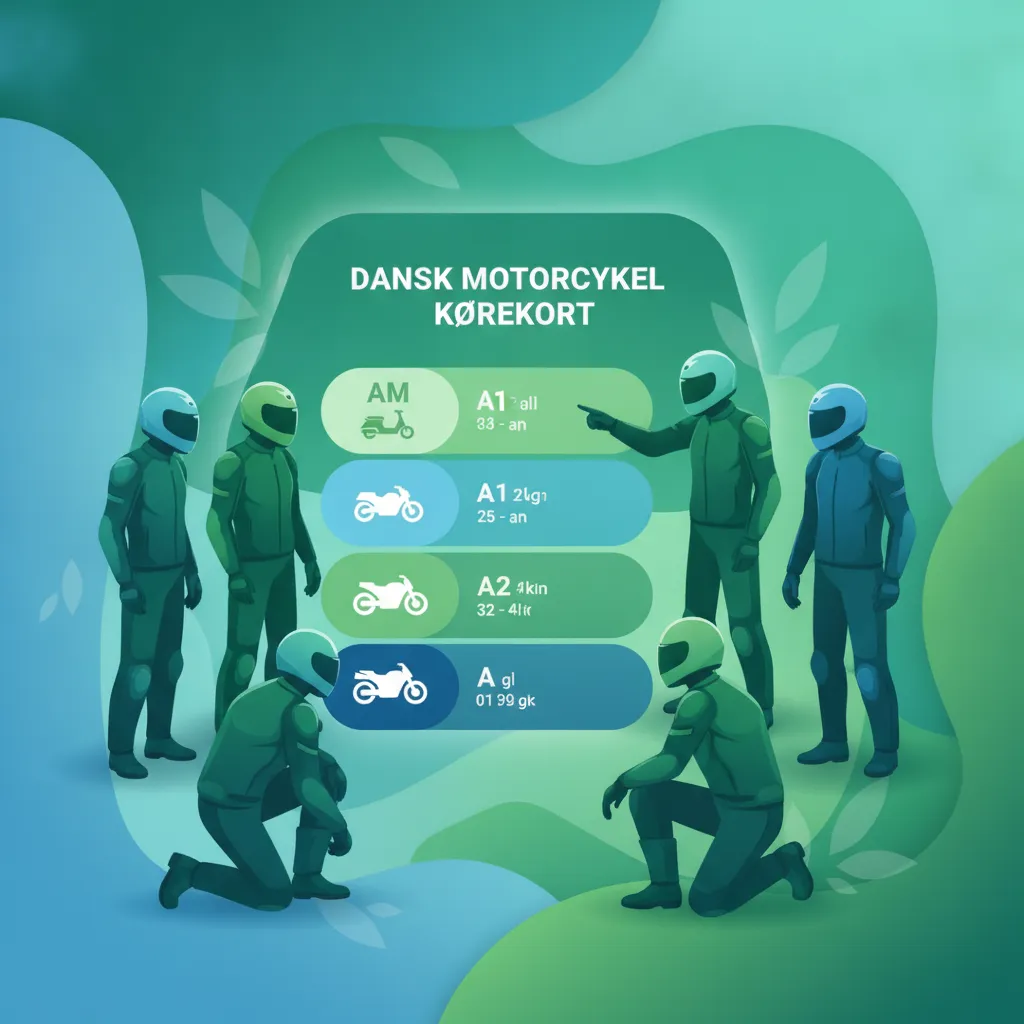
This lesson details the structure of the Danish motorcycle licensing system, covering categories A1, A2, and A. It outlines the specific age limits, engine displacement restrictions, and power-to-weight ratios for each category. Understanding these requirements provides a clear pathway for progressive skill development and legal operation.
This lesson focuses on the core safety duties of a stor knallert rider. It explains the legal requirement for wearing a helmet and the benefits of other protective gear. The content also covers essential pre-ride checks, including brakes, tyres, and lights, to ensure the vehicle is in safe operating condition.

This lesson introduces the primary categories of Danish road signs and their legal implications. It covers regulatory signs that dictate mandatory actions or prohibitions, and warning signs that indicate upcoming hazards. Correct interpretation of these signs is fundamental for lawful and safe riding on Danish roads.
This lesson highlights the rider's responsibility for ensuring their vehicle is in a safe, roadworthy condition. It provides a systematic guide to pre-ride checks, including inspecting tyres for correct pressure and wear, testing brakes, and verifying all lights work. Regular maintenance is presented as a critical component of overall rider safety.
This lesson details the official procedure for registering as a learner driver, including the age requirements to begin supervised driving. It specifies the legal qualifications and responsibilities of the accompanying supervising driver, ensuring all practice sessions are compliant and safe. You will also learn about the role of the provisional license and the necessary documentation that must be maintained throughout your training period.
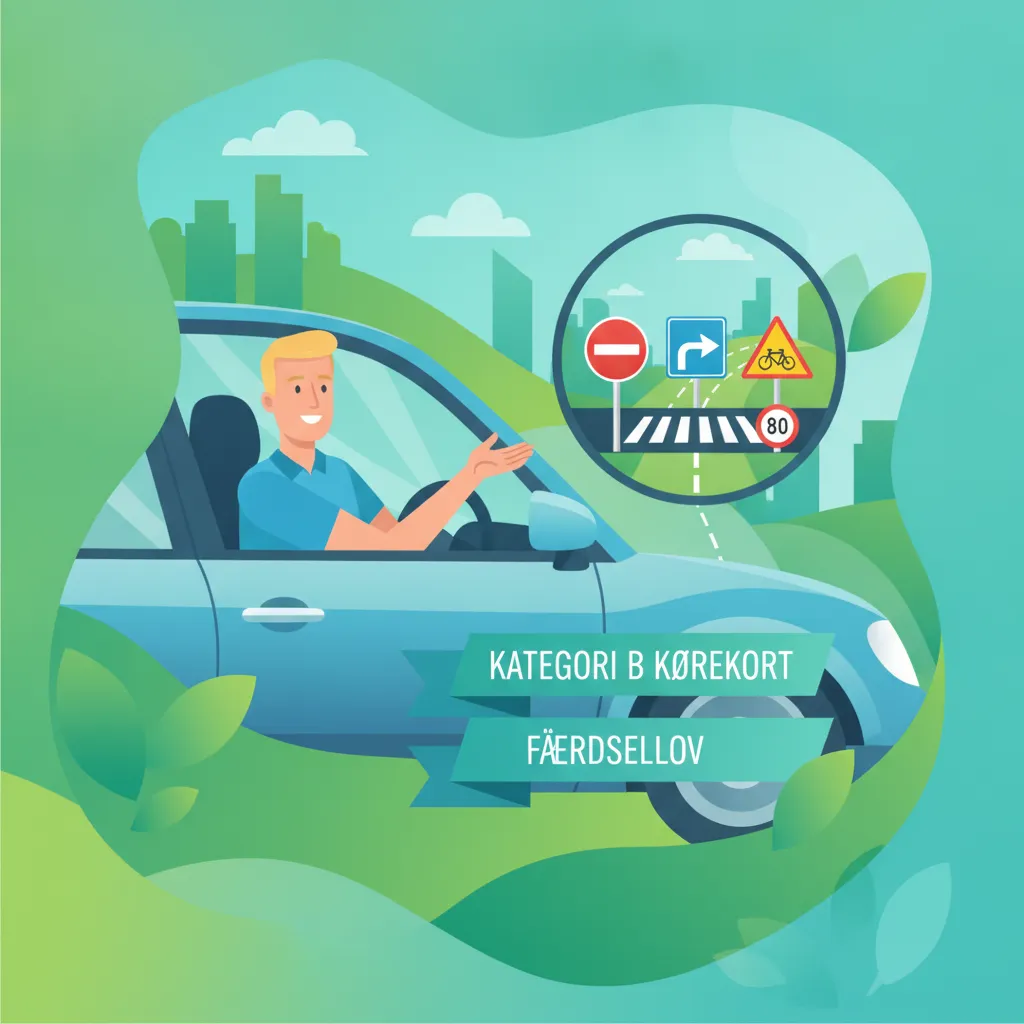
This lesson provides a detailed explanation of the Category B license, specifying which vehicles you are permitted to drive. It covers crucial limitations such as maximum authorised mass, passenger capacity, and the regulations for towing a trailer. Furthermore, it clarifies the legal distinctions between holding a license for an automatic versus a manual transmission vehicle, grounding your knowledge in official Danish legislation.
This lesson provides a detailed breakdown of the Danish licence categories for passenger transport. It explains the differences between D1, D1E, D, and DE licences based on passenger capacity, vehicle size, and permitted combinations. The content clarifies the legal definitions and professional qualifications necessary for obtaining each licence, ensuring drivers operate within the correct regulatory framework.
This lesson details the legal framework governing the acquisition of a C-category driving license in Denmark. It covers the essential requirements, including medical fitness standards, the structure of the theoretical examination, and the scope of mandatory practical training. Furthermore, it explains the ongoing legal obligations of a license holder, such as renewal procedures and continuous compliance with evolving traffic laws and regulations.
Learn about the mandatory third-party liability insurance for Category AM licences in Denmark. This lesson covers essential insurance details and the requirements for passing the practical driving test for stor knallert riders.
This lesson outlines the legal responsibilities of a rider involved in a traffic accident. It explains the legal duty to stop, render aid, and report the incident to the police and insurance providers. The content covers the concepts of liability and the potential legal consequences following an accident.
This lesson covers the immediate actions to take at the scene of an accident. It explains how and when to call the Danish emergency number 112, and what information to provide to the operator. The content also includes the principles of securing an accident scene to prevent further incidents and basic first aid concepts.
This lesson defines the Danish license Category AM and the specific characteristics of a stor knallert. It covers the legal parameters for engine size and maximum speed that distinguish it from a lille knallert and other vehicles. Understanding these classifications is the first step in learning the specific rules and responsibilities that apply to stor knallert riders.
This lesson focuses on the core safety duties of a stor knallert rider. It explains the legal requirement for wearing a helmet and the benefits of other protective gear. The content also covers essential pre-ride checks, including brakes, tyres, and lights, to ensure the vehicle is in safe operating condition.
This lesson details the legal consequences for professional drivers who commit traffic infractions. It explains the Danish system of fines and penalty points for various offenses, from speeding to load security violations, and outlines the conditions that can lead to license suspension. The content underscores the professional and legal obligation to uphold traffic law at all times to maintain a clean driving record.
This lesson provides a clear overview of the penalties associated with breaking traffic laws as a motorcyclist. It details the Danish penalty point system ('klip i kørekortet') and the conditions that can lead to fines or licence revocation. Understanding these consequences reinforces the importance of lawful riding.
This lesson identifies common high-risk behaviors, including riding while impaired by alcohol, drugs, or fatigue. It details the strict legal limits in Denmark and the severe penalties for violations. The dangers of distraction, particularly from mobile phones, are also explained as a significant cause of accidents.
This lesson provides an overview of the Danish legal system as it applies to motorcyclists. It details the consequences of traffic violations, including fines, penalty points, and potential licence suspension. Learners will also understand their legal responsibilities concerning insurance coverage and procedures to follow in the event of a collision.
This lesson highlights the rider's responsibility for ensuring their vehicle is in a safe, roadworthy condition. It provides a systematic guide to pre-ride checks, including inspecting tyres for correct pressure and wear, testing brakes, and verifying all lights work. Regular maintenance is presented as a critical component of overall rider safety.
Find clear answers to common questions learners have about Legal Framework and Licence Requirements. Learn how the lesson is structured, which driving theory objectives it supports, and how it fits into the overall learning path of units and curriculum progression in Denmark. These explanations help you understand key concepts, lesson flow, and exam focused study goals.
In Denmark, you must be at least 18 years old to obtain a Category AM licence for a stor knallert. Always check the latest official regulations as age limits can sometimes be updated by the Danish Road Safety Agency.
Yes, it is a legal requirement in Denmark to have mandatory liability insurance (ansvarsforsikring) for your stor knallert before you can legally ride it on public roads.
No, while some principles of traffic law are universal, the Category AM theory test specifically focuses on the rules, hazards, and responsibilities pertinent to riding a stor knallert.
Yes, a stor knallert must be registered and display a valid number plate to be legally operated on the Danish road network.
Use our powerful search tool to pinpoint specific Danish driving theory topics, road signs, or traffic situations you need to review. Start exploring relevant practice sets now to reinforce your knowledge and build confidence for your upcoming driving licence exam.