
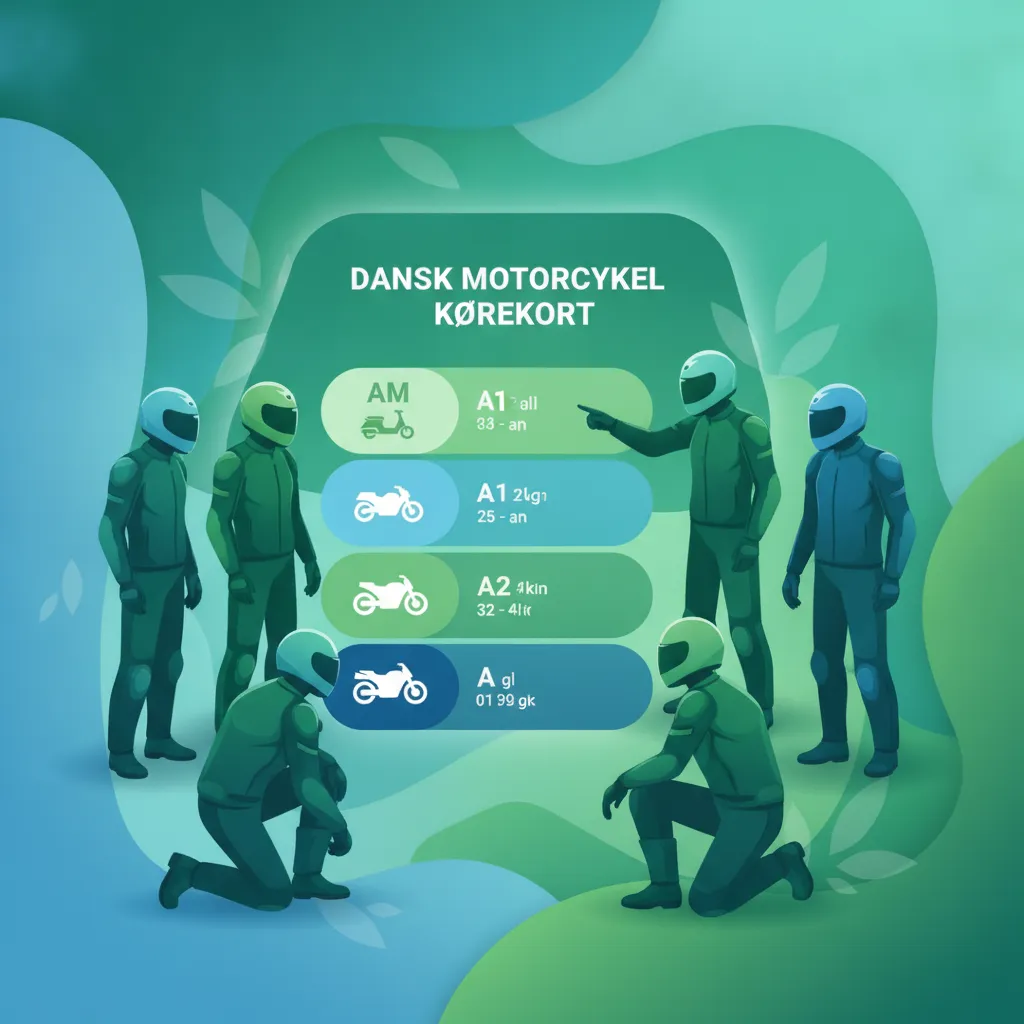
This lesson provides a comprehensive overview of the Danish motorcycle licensing system, detailing the specific requirements for A1, A2, and A categories. You will learn the legal frameworks regarding age limits, engine displacement, and power-to-weight ratios essential for identifying your path to riding in Denmark. Understanding these categories is the first step toward mastering your rider responsibilities and preparing for the official theory test.
Lesson content overview
The Danish motorcycle licensing system is meticulously structured to ensure riders gain experience and skill progressively, enhancing road safety across all categories. This system is designed to gradually introduce riders to increasingly powerful motorcycles, minimizing risks associated with inexperience. It directly aligns with broader EU directives, adapting them to meet Denmark's specific traffic safety objectives. For anyone preparing for their Danish Motorcycle Theory exam, a thorough understanding of these licence categories—A1, A2, and A—is fundamental to riding legally and safely.
This lesson provides a detailed overview of the requirements for each motorcycle licence category, including specific age limits, engine displacement restrictions, and critical power-to-weight ratios. By grasping these distinctions, aspiring motorcyclists can navigate the progression path effectively and responsibly.
The foundation of the Danish motorcycle licensing system rests upon several core principles aimed at fostering responsible and skilled riders. These principles guide the entire learning and assessment process, from initial training to the award of the full A licence.
The system employs a progressive licensing model, meaning riders do not immediately gain access to the most powerful motorcycles. Instead, they obtain licences in a staged manner, allowing them to accumulate practical experience and develop advanced riding skills on lower-powered machines before transitioning to more capable ones. This gradual exposure is crucial for building competence and confidence while simultaneously reducing accident risks, especially for new riders.
Minimum age requirements are a central component of the Danish licensing framework. These age thresholds are established to ensure that riders possess a sufficient level of maturity, judgment, and cognitive development necessary to handle the complexities and inherent risks of motorcycling. For each licence category, the age requirement reflects the increasing demands placed on the rider.
Each motorcycle licence category comes with specific engine displacement (measured in cubic centimeters, cm³) and power output (measured in kilowatts, kW or horsepower, hp) limits. These technical specifications directly control the performance capabilities of the motorcycles that can be legally operated. These restrictions ensure that riders are matched with motorcycles appropriate for their current skill and experience level, preventing beginners from handling machines that are too powerful to manage safely.
For intermediate licence categories, the power-to-weight ratio is a crucial metric. This ratio, expressed as kilowatts per kilogram (kW/kg), assesses the motorcycle's power relative to its mass. It acts as an additional safety measure, preventing riders from operating motorcycles that, while potentially within a raw power limit, might be excessively lightweight and therefore too agile or challenging for their experience level. A lower power-to-weight ratio generally indicates a more manageable motorcycle.
The A1 licence serves as the initial gateway into the world of motorcycling in Denmark, designed for young and novice riders. It introduces them to the basics of motorcycle operation in a controlled and safe environment.
To qualify for an A1 licence, individuals must be a minimum of 16 years old. This category is specifically for light motorcycles. The engine displacement is strictly limited to a maximum of 125 cubic centimeters (cm³). Furthermore, the maximum power output allowed for an A1 motorcycle is 11 kW (approximately 15 horsepower). There is no specific power-to-weight ratio restriction for A1, as the power and displacement limits inherently define the performance characteristics of these lighter machines.
A1 motorcycles are highly suitable for urban commuting, short-distance travel, and gaining foundational riding experience. Their smaller size and lower power make them more manageable in traffic and easier to learn on. Riders holding an A1 licence must always adhere to general traffic laws, including speed limits, and are legally required to wear a helmet and appropriate protective gear. These rules are non-negotiable and are enforced to protect the rider.
Even with an A1 licence, understanding the specific risks associated with motorcycles, as covered in "Motorcycle Specific Risks and Vulnerability," is crucial for safe riding.
The A1 licence is often the first step in a rider's journey towards operating more powerful motorcycles. After gaining experience with an A1 licence, riders can progress to the A2 category once they meet the subsequent age and training requirements. This progression embodies the core principle of gradual exposure and skill development inherent in the Danish system.
The A2 licence represents the intermediate stage in Denmark's progressive licensing system, allowing riders access to more powerful motorcycles while still maintaining safety limits.
For the A2 licence, the maximum permissible power output of the motorcycle is 35 kW (approximately 48 horsepower). Crucially, the motorcycle's power-to-weight ratio must not exceed 0.2 kW per kilogram (0.2 kW/kg). This ratio is vital because it prevents riders from simply de-restricting a very light, high-performance motorcycle to meet the 35 kW limit, ensuring the bike remains manageable. There is no specific engine displacement limit for A2 motorcycles, as long as they comply with the power output and power-to-weight ratio criteria.
The minimum age requirement for an A2 licence is 18 years old. To obtain an A2 licence, riders must either have held an A1 licence for a specified period and undergo additional training, or they can pursue a direct A2 training program from scratch. The A2 licence serves as a mandatory stepping stone for those aspiring to achieve the full, unrestricted A licence.
A frequent misunderstanding is believing that an A2 licence permits riding any motorcycle above A1 specifications. However, the strict 35 kW power limit and the 0.2 kW/kg power-to-weight ratio are paramount. Riders must ensure their motorcycle's specifications rigorously adhere to these restrictions, even if the bike's original factory power was much higher and has been professionally restricted. Failing to comply can lead to significant legal penalties.
Riding a motorcycle that exceeds your licence category's power or power-to-weight limits is a serious offense in Denmark and can result in hefty fines, penalty points, and even licence revocation.
The A licence is the ultimate goal for many motorcyclists, granting full, unrestricted access to all types of motorcycles without any power, engine displacement, or power-to-weight ratio limitations.
To obtain a full A licence, riders must typically be a minimum of 20 years old, provided they have held an A2 licence for at least two years. This prerequisite period ensures that riders accumulate substantial on-road experience before being granted the privilege of operating unrestricted motorcycles. For those who did not follow the progressive A1 to A2 path, a direct route to an A licence is generally available for riders aged 24 years or older. This direct route still requires comprehensive training and passing the relevant tests.
Achieving an A licence is not merely a matter of age or time; it requires demonstrating a high level of skill and competence. Riders must complete advanced training specifically designed for high-performance motorcycles and pass a rigorous practical examination. This ensures they are proficient in handling the increased power, acceleration, and braking capabilities of unrestricted machines. The training focuses on advanced riding techniques, hazard perception, and responsible operation of powerful bikes.
Hold an A2 licence for a minimum of two years.
Be at least 20 years old (or 24 for a direct path without prior A2 experience).
Complete advanced practical training for high-performance motorcycles.
Pass a comprehensive practical examination demonstrating proficiency with unrestricted motorcycles.
With an A licence, riders gain the freedom to operate any motorcycle, from lightweight urban bikes to powerful touring machines and high-performance sport bikes. This freedom comes with increased responsibility. Riders must exhibit exceptional adherence to all traffic laws, maintaining constant awareness of the road and surrounding conditions, particularly given the higher speeds and increased risks associated with more powerful motorcycles. Continuous education and advanced riding courses are highly recommended to maintain and enhance skills.
Adhering to the regulations governing Danish motorcycle licences is not just about avoiding penalties; it's fundamental to promoting safety for all road users. The system includes specific requirements for training, examinations, and the legal consequences of non-compliance.
For each licence category (A1, A2, and A), candidates must complete a specific number of theoretical and practical training hours with an approved driving school. This structured curriculum ensures that riders acquire the necessary knowledge and skills before taking their official examinations. Passing both a theoretical test and a practical riding test is mandatory for obtaining each licence category. These tests assess understanding of traffic laws, hazard perception, and the ability to safely operate a motorcycle within the specific category's parameters.
A system where riders obtain licences in stages, gaining access to more powerful vehicles as they demonstrate increased competence and experience over time.
Violating the terms of your motorcycle licence in Denmark carries significant legal consequences. These can range from substantial fines and penalty points on your licence to the temporary or permanent revocation of your driving privileges. For example, riding a motorcycle that exceeds the power or engine displacement limits of your current licence category is treated as operating a vehicle without the proper endorsement, a serious offense. Such violations underscore the importance of understanding and respecting the precise limitations of each licence type.
Always verify the specific power and weight details of any motorcycle you intend to ride against your licence category to avoid unintentional violations. Consult official vehicle registration documents or a trusted mechanic if unsure.
While your licence category dictates the type of motorcycle you can ride, other contextual factors significantly influence how you should ride, regardless of your licence tier.
Adverse weather conditions such as rain, snow, strong winds, or ice drastically reduce traction and visibility, increasing the risk for all riders. Higher-powered motorcycles, often accessible with an A or advanced A2 licence, require even greater caution and skill in these conditions due to their enhanced performance capabilities. Riders must always adjust their speed, braking, and steering techniques to suit the prevailing weather and road surface conditions, regardless of their motorcycle's power.
Carrying a passenger or heavy luggage alters a motorcycle's weight distribution, handling characteristics, and effective power-to-weight ratio. For A2 riders, adding significant weight might push the motorcycle's effective power-to-weight ratio beyond the legal 0.2 kW/kg limit, even if the bike itself is within the 35 kW power restriction. All riders, especially those on less powerful A1 or restricted A2 bikes, must account for the reduced acceleration and increased braking distances when carrying extra load.
Motorcyclists, regardless of their licence category or the power of their machine, must always demonstrate heightened awareness and caution around vulnerable road users such as pedestrians and cyclists. The potential for severe injury in a collision is significantly higher for these groups. Understanding and respecting the specific risks involved, as discussed in "Motorcycle Specific Risks and Vulnerability," is a critical responsibility for all riders on Danish roads.
The tiered structure of Danish motorcycle licences is a carefully considered approach to road safety. By linking rider experience and maturity with the performance capabilities of motorcycles, the system actively contributes to reducing accident rates and promoting responsible riding habits.
Power Restrictions on lower-tier licences serve to reduce acceleration capabilities, providing novice riders with more time to react to unexpected situations and develop their road awareness without the added complexity of managing excessive speed. This controlled learning environment is crucial for building fundamental skills.
The Progressive Licensing model itself is a structured pathway for skill development. It ensures that riders gain practical experience incrementally, gradually becoming accustomed to greater power and performance before being exposed to unrestricted motorcycles. This systematic approach fosters competence and reduces the likelihood of accidents caused by inexperience.
Finally, Age Limits are set to align with the psychological and cognitive development stages of individuals. These thresholds aim to ensure that riders possess sufficient judgment, risk perception, and emotional maturity to handle the demands of motorcycling safely, especially as they progress to more powerful machines. Collectively, these elements work in concert to create a safer environment for motorcyclists and other road users in Denmark.
Understanding the Danish motorcycle licensing framework, with its distinct A1, A2, and A categories, is the first critical step for any aspiring motorcyclist. This system is designed not to restrict but to empower riders by ensuring they develop skills safely and progressively. By adhering to age, power, engine displacement, and power-to-weight ratio requirements, riders can confidently and legally enjoy the roads. Always remember that responsible riding extends beyond merely holding the correct licence; it encompasses continuous learning, adherence to traffic laws, and a deep understanding of your motorcycle's capabilities and limitations.
The Danish motorcycle licensing system uses three progressive categories designed to build rider experience safely: A1 (age 16+, 125 cm³, 11 kW), A2 (age 18+, 35 kW, 0.2 kW/kg ratio), and A (age 20+ with A2 experience or 24+ direct, unrestricted). Each category imposes specific technical limits on engine displacement, power output, and power-to-weight ratio to match motorcycle capability to rider maturity. The A2 power-to-weight restriction is particularly important as it prevents riders from using de-restricted lightweight bikes that would otherwise meet the 35 kW limit. Understanding these precise requirements is essential for legal operation and for passing Danish theory test questions about licence category restrictions.
A short set of high-value points that capture the most important learning from this lesson.
Denmark uses a progressive licensing system with three motorcycle categories: A1 (entry), A2 (intermediate), and A (full unrestricted)
A1 licence permits motorcycles up to 125 cm³ and 11 kW for riders aged 16 and above
A2 licence allows motorcycles up to 35 kW with a maximum power-to-weight ratio of 0.2 kW/kg, minimum age 18
Full A licence requires age 20 with two years A2 experience, or age 24 for direct access, with no power restrictions
Power-to-weight ratio restrictions prevent riders from circumventing limits with lightweight high-performance bikes
Explore all units and lessons included in this driving theory course.
A1: 16 years old, 125 cm³ max, 11 kW max - no power-to-weight ratio rule applies
A2: 18 years old, 35 kW max, 0.2 kW/kg power-to-weight ratio max - no engine displacement limit
A licence: 20 years with A2 held 2 years, OR 24 years for direct route - completely unrestricted
A2 power-to-weight ratio prevents de-restricted light bikes from meeting the 35 kW limit
Riding a motorcycle exceeding your licence category limits is a serious offense with legal consequences
Confusing A2 restrictions by thinking only the 35 kW power limit matters, ignoring the mandatory 0.2 kW/kg power-to-weight ratio
Believing an A2 licence allows any motorcycle above A1 specifications rather than understanding the strict dual limits
Assuming a lightweight high-performance bike can be restricted to 35 kW for A2 use without checking the power-to-weight ratio compliance
Forgetting that carrying passengers or heavy luggage can push an A2 bike beyond the legal power-to-weight ratio limit
Not verifying a motorcycle's specifications against licence requirements before riding, risking unintentional violations
Lesson content overview
A short set of high-value points that capture the most important learning from this lesson.
Denmark uses a progressive licensing system with three motorcycle categories: A1 (entry), A2 (intermediate), and A (full unrestricted)
A1 licence permits motorcycles up to 125 cm³ and 11 kW for riders aged 16 and above
A2 licence allows motorcycles up to 35 kW with a maximum power-to-weight ratio of 0.2 kW/kg, minimum age 18
Full A licence requires age 20 with two years A2 experience, or age 24 for direct access, with no power restrictions
Power-to-weight ratio restrictions prevent riders from circumventing limits with lightweight high-performance bikes
Explore all units and lessons included in this driving theory course.
A1: 16 years old, 125 cm³ max, 11 kW max - no power-to-weight ratio rule applies
A2: 18 years old, 35 kW max, 0.2 kW/kg power-to-weight ratio max - no engine displacement limit
A licence: 20 years with A2 held 2 years, OR 24 years for direct route - completely unrestricted
A2 power-to-weight ratio prevents de-restricted light bikes from meeting the 35 kW limit
Riding a motorcycle exceeding your licence category limits is a serious offense with legal consequences
Confusing A2 restrictions by thinking only the 35 kW power limit matters, ignoring the mandatory 0.2 kW/kg power-to-weight ratio
Believing an A2 licence allows any motorcycle above A1 specifications rather than understanding the strict dual limits
Assuming a lightweight high-performance bike can be restricted to 35 kW for A2 use without checking the power-to-weight ratio compliance
Forgetting that carrying passengers or heavy luggage can push an A2 bike beyond the legal power-to-weight ratio limit
Not verifying a motorcycle's specifications against licence requirements before riding, risking unintentional violations
Explore search topics learners often look for when studying Overview of Danish Motorcycle Licences. These topics reflect common questions about road rules, driving situations, safety guidance, and lesson level theory preparation for learners in Denmark.
Browse additional driving theory lessons that cover connected traffic rules, road signs, and common driving situations related to this topic. Improve your understanding of how different rules interact across everyday traffic scenarios.
Understand the structured pathway for Danish motorcycle licences: A1, A2, and A. Learn about the age, engine, and power restrictions for each category and how they ensure rider development and safety on Danish roads.
This lesson provides a detailed explanation of the Category B license, specifying which vehicles you are permitted to drive. It covers crucial limitations such as maximum authorised mass, passenger capacity, and the regulations for towing a trailer. Furthermore, it clarifies the legal distinctions between holding a license for an automatic versus a manual transmission vehicle, grounding your knowledge in official Danish legislation.

This lesson outlines the administrative and legal steps for acquiring a Category AM licence in Denmark. It details the requirements for the theory and practical tests, the process for vehicle registration, and the necessity of valid insurance. Learners will understand the complete legal framework and documentation needed to become a licensed stor knallert rider.
This lesson provides a detailed breakdown of the Danish licence categories for passenger transport. It explains the differences between D1, D1E, D, and DE licences based on passenger capacity, vehicle size, and permitted combinations. The content clarifies the legal definitions and professional qualifications necessary for obtaining each licence, ensuring drivers operate within the correct regulatory framework.

This lesson provides an overview of the Danish legal system as it applies to motorcyclists. It details the consequences of traffic violations, including fines, penalty points, and potential licence suspension. Learners will also understand their legal responsibilities concerning insurance coverage and procedures to follow in the event of a collision.
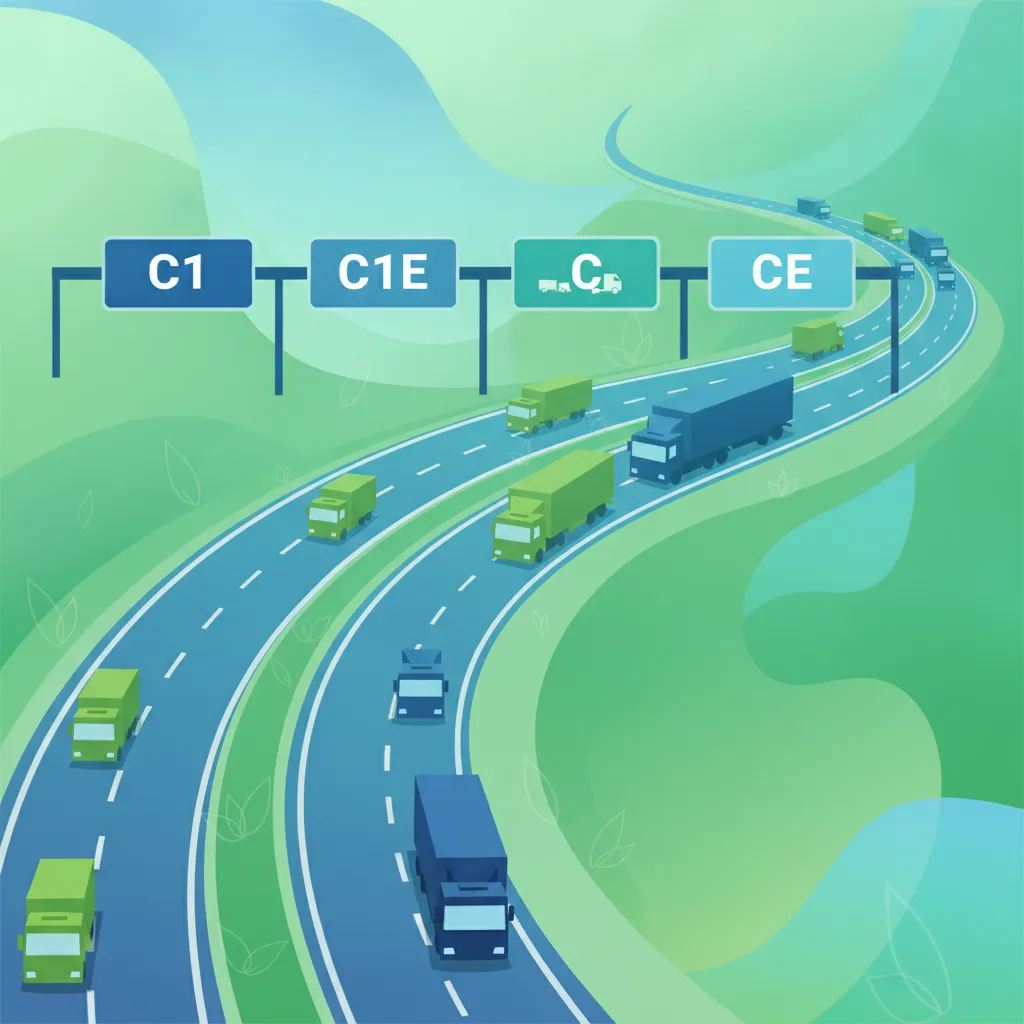
This lesson provides a detailed breakdown of the Danish C-category licenses, explaining the specific vehicle types and combinations allowed under each classification. It clarifies the legal definitions of mass limits for C1 and C vehicles, and how the addition of trailers creates the C1E and CE categories. The content focuses on the operational implications of these distinctions, helping you identify the correct license for different professional driving roles.

This lesson details the legal framework governing the acquisition of a C-category driving license in Denmark. It covers the essential requirements, including medical fitness standards, the structure of the theoretical examination, and the scope of mandatory practical training. Furthermore, it explains the ongoing legal obligations of a license holder, such as renewal procedures and continuous compliance with evolving traffic laws and regulations.
This lesson defines the Danish license Category AM and the specific characteristics of a stor knallert. It covers the legal parameters for engine size and maximum speed that distinguish it from a lille knallert and other vehicles. Understanding these classifications is the first step in learning the specific rules and responsibilities that apply to stor knallert riders.
This lesson provides a clear overview of the penalties associated with breaking traffic laws as a motorcyclist. It details the Danish penalty point system ('klip i kørekortet') and the conditions that can lead to fines or licence revocation. Understanding these consequences reinforces the importance of lawful riding.
This lesson provides a guide to motorway riding, a high-speed and demanding environment. It details the process for using acceleration lanes to merge smoothly, maintaining proper lane discipline, and preparing for exits well in advance. Key safety principles like the two-second rule are reinforced for this context.
This lesson details the systematic pre-ride inspection process that all motorcyclists must perform. It covers critical safety checks, including verifying correct tyre pressure, assessing brake pad wear, and ensuring all lights are functional. Regular completion of these checks is essential for preventing mechanical failures and ensuring rider safety.
Get specific details on each Danish motorcycle licence category: A1, A2, and A. This covers exact engine displacement, maximum power, and power-to-weight ratio rules crucial for your Danish theory exam.
This lesson provides an overview of the Danish legal system as it applies to motorcyclists. It details the consequences of traffic violations, including fines, penalty points, and potential licence suspension. Learners will also understand their legal responsibilities concerning insurance coverage and procedures to follow in the event of a collision.
This lesson outlines the administrative and legal steps for acquiring a Category AM licence in Denmark. It details the requirements for the theory and practical tests, the process for vehicle registration, and the necessity of valid insurance. Learners will understand the complete legal framework and documentation needed to become a licensed stor knallert rider.
This lesson details the systematic pre-ride inspection process that all motorcyclists must perform. It covers critical safety checks, including verifying correct tyre pressure, assessing brake pad wear, and ensuring all lights are functional. Regular completion of these checks is essential for preventing mechanical failures and ensuring rider safety.
This lesson provides a detailed explanation of the Category B license, specifying which vehicles you are permitted to drive. It covers crucial limitations such as maximum authorised mass, passenger capacity, and the regulations for towing a trailer. Furthermore, it clarifies the legal distinctions between holding a license for an automatic versus a manual transmission vehicle, grounding your knowledge in official Danish legislation.
This lesson provides a clear overview of the penalties associated with breaking traffic laws as a motorcyclist. It details the Danish penalty point system ('klip i kørekortet') and the conditions that can lead to fines or licence revocation. Understanding these consequences reinforces the importance of lawful riding.
This lesson defines the fundamental responsibilities of a motorcyclist, which extend beyond simple rule-following. It emphasizes the duty of care required to operate safely, including practicing defensive riding techniques and proactively identifying potential hazards. The content focuses on the importance of maintaining visibility and communicating intentions clearly to ensure safe interactions in traffic.
This lesson provides a detailed breakdown of the Danish licence categories for passenger transport. It explains the differences between D1, D1E, D, and DE licences based on passenger capacity, vehicle size, and permitted combinations. The content clarifies the legal definitions and professional qualifications necessary for obtaining each licence, ensuring drivers operate within the correct regulatory framework.
This lesson provides a guide to motorway riding, a high-speed and demanding environment. It details the process for using acceleration lanes to merge smoothly, maintaining proper lane discipline, and preparing for exits well in advance. Key safety principles like the two-second rule are reinforced for this context.
This lesson introduces the essential controls required to operate a motorcycle, such as the throttle, clutch lever, and brake controls. It explains the purpose and correct use of each function for smooth and safe maneuvering. Learners will also understand the importance of proper ergonomics and riding posture for effective control.

This lesson breaks down the critical skill of overtaking into a safe, repeatable process. It covers how to judge the time and space needed, check for oncoming traffic, and execute the maneuver decisively. The importance of signaling and returning to the lane safely is also emphasized.
Find clear answers to common questions learners have about Overview of Danish Motorcycle Licences. Learn how the lesson is structured, which driving theory objectives it supports, and how it fits into the overall learning path of units and curriculum progression in Denmark. These explanations help you understand key concepts, lesson flow, and exam focused study goals.
The primary difference lies in the engine power and power-to-weight ratio. A1 is for light motorcycles up to 125cc and 11kW, while A2 allows for more powerful bikes up to 35kW, provided the power-to-weight ratio does not exceed 0.2 kW/kg.
In Denmark, you generally need to hold your A2 licence for at least two years and complete a practical test or specific training requirements to upgrade to a full A category motorcycle licence.
Yes, the theory test may include questions about licence restrictions to ensure you understand which vehicles you are legally allowed to operate based on your specific licence class.
Yes, traffic legislation is very strict. Operating a motorcycle that exceeds the power limits for your specific licence category can result in heavy fines, licence suspension, and insurance invalidation in the event of an accident.
Use our powerful search tool to pinpoint specific Danish driving theory topics, road signs, or traffic situations you need to review. Start exploring relevant practice sets now to reinforce your knowledge and build confidence for your upcoming driving licence exam.