
This lesson details the legal consequences of traffic violations in Denmark to help you ride responsibly and avoid penalties. Understanding how the Danish 'klip i kørekortet' system and license revocation work is essential for every motorcycle rider. This knowledge ensures you recognize the gravity of traffic offences, which is a core component of your A1, A2, and A theory exam.
Lesson content overview
Riding a motorcycle in Denmark offers freedom and exhilaration, but it comes with significant legal responsibilities. Adhering to Danish traffic laws is not merely a formality; it is crucial for your safety, the safety of others, and for maintaining your riding privileges. This lesson provides a comprehensive overview of the legal implications and penalties associated with traffic violations for motorcyclists in Denmark.
Understanding these consequences, from monetary fines to the Danish penalty point system known as ‘klip i kørekortet’, reinforces the importance of lawful and responsible riding. We will explore how these penalties are applied, what specific actions lead to them, and the severe implications of repeated or serious infractions, including the suspension or revocation of your motorcycle license. This knowledge is an essential part of your Danish Motorcycle Theory education, helping you make informed decisions on the road.
The 'klip i kørekortet' system, or penalty point system, is a fundamental component of Danish traffic law designed to monitor and sanction drivers who repeatedly commit traffic violations. It serves as a structured method to identify and address unsafe driving behavior, ultimately aiming to improve road safety across Denmark. For motorcyclists, understanding how this system works is paramount to protecting their driving privilege.
Under the Danish system, specific traffic offenses result in penalty points, known as 'klip', being added to a rider's driving record. These points accumulate over a three-year period. Reaching a certain threshold of points within this timeframe triggers a mandatory license suspension. The system acts as an early warning for riders, indicating that their driving habits require improvement before more severe consequences arise.
Different types of traffic violations carry different numbers of penalty points, reflecting the severity and risk associated with the offense. Minor infractions typically result in fewer points, while serious offenses can lead to a significant number of points or even immediate suspension. For instance, common violations like riding without a helmet, using a mobile phone, or minor speeding infractions will add points to your record.
It's crucial to remember that points accumulate quickly. Even seemingly minor infractions, if repeated, can lead to serious consequences.
The primary consequence of accumulating too many penalty points is the temporary suspension of your motorcycle license. In Denmark, if you receive three penalty points within a three-year period, your license will be suspended. The duration of the suspension varies based on the total number of points and whether it is your first suspension. After a suspension period, you will typically need to pass a new theory and practical driving test to regain your license.
Beyond the penalty point system, monetary fines are another direct and immediate consequence of traffic violations. These financial penalties are imposed for a wide range of offenses, acting as a deterrent against unlawful behavior on Danish roads. Fines are an integral part of enforcing traffic regulations and encouraging compliance.
Monetary fines in Denmark can be categorized into fixed fines and variable fines. Fixed fines are set amounts for specific, generally less severe infractions, such as certain parking violations or minor equipment faults. Variable fines, on the other hand, are often scaled based on the severity of the offense, such as exceeding the speed limit by a significant margin, where the fine amount increases with the degree of transgression. The purpose of these fines is twofold: to punish offenders and to generate revenue that can be reinvested into road safety initiatives.
Motorcyclists are subject to the same general fines as other road users, with additional specific penalties for violations unique to motorcycle riding. For example, failing to wear a helmet, which is mandatory for both rider and passenger, will result in a fine in addition to penalty points. Similarly, offenses like riding without proper lighting or reflective gear at night, or failing to ensure your motorcycle meets safety standards, will incur financial penalties.
Failing to pay fines can lead to increased penalties, including collection agency involvement, court summons, or even imprisonment in extreme cases. Always address fines promptly.
One of the most severe consequences of traffic violations is the temporary suspension or permanent revocation of your motorcycle license. These measures are taken when a rider demonstrates a repeated disregard for traffic laws or commits extremely serious offenses, posing a significant risk to public safety.
License suspension means that your right to drive is temporarily removed. This occurs when you accumulate three penalty points within a three-year period, as discussed earlier. Suspension periods can vary, typically ranging from a few months for a first offense to longer durations for repeat offenders. During this period, it is illegal for you to operate any motor vehicle. To regain your license after a suspension, you will generally be required to pass a new theory and practical driving test.
License revocation is the permanent loss of your driving privileges. This is reserved for the most serious offenses, such as repeated instances of driving under the influence of alcohol or drugs, or dangerous driving that results in severe injury or death. After a revocation, you must typically wait for a specific period (often several years) before you can even apply for a new license. Reinstatement will always require passing both a new theory and a new practical driving test, demonstrating that you have fully re-learned and understood traffic regulations and safe riding practices.
Complete Suspension Period: For suspensions, wait until the stipulated period has passed. For revocations, wait until the re-application period is over.
Retake Theory Test: Study Danish traffic law thoroughly and pass the official theory examination.
Retake Practical Riding Test: Demonstrate your riding skills and adherence to traffic rules in a practical test.
Apply for New License: Once both tests are passed, you can apply for a new motorcycle license.
Certain severe violations can lead to immediate license suspension or even revocation without the need to accumulate penalty points. These include:
As a participant in Danish traffic, every motorcyclist bears significant legal responsibility for their actions. This responsibility extends beyond merely avoiding penalties; it encompasses a fundamental obligation to ensure safety, uphold traffic laws, and be accountable for any transgressions. Understanding this principle is the bedrock of safe and lawful riding.
The Danish Road Traffic Act, known as Færdselsloven, is the primary legal document governing all traffic on public roads in Denmark. It outlines the rules, regulations, and associated penalties that apply to all road users, including motorcyclists. Your legal responsibility means that you are expected to know and comply with every aspect of Færdselsloven. Ignorance of the law is not considered a valid defense against violations. This accountability underpins the entire penalty system, ensuring that riders are held to a high standard of conduct.
The Danish Road Traffic Act, which is the comprehensive legal framework governing all aspects of traffic and road use in Denmark.
Beyond immediate fines and license consequences, traffic violations can have long-lasting effects on your insurance premiums and legal record. A history of traffic offenses typically leads to higher insurance costs, as you are perceived as a higher-risk client. Furthermore, serious violations, particularly those resulting in license revocation or criminal charges, will become part of your permanent legal record, potentially impacting future employment opportunities or travel. Adhering to traffic laws is therefore an investment in your financial well-being and future prospects, as well as your safety.
Specific regulations are in place to ensure the safety of motorcyclists and other road users. Violating these rules carries particular penalties, often including both fines and penalty points. Awareness of these key regulations is critical for all riders in Denmark.
In Denmark, it is mandatory for both the motorcyclist and any passenger to wear an approved protective helmet at all times while riding. This rule is designed to protect against head injuries, which are a leading cause of fatalities and serious injuries in motorcycle accidents. Failure to wear a helmet, even if one is available, will result in 3 penalty points and a significant fine. This penalty applies regardless of the speed or road type.
Observing speed limits is crucial for road safety. Speed limits vary depending on the road type and location (e.g., urban areas, rural roads, motorways). Exceeding these limits not only increases accident risk but also incurs substantial penalties. For motorcyclists, exceeding the speed limit by more than 20 km/h in an area where the limit is below 50 km/h, or exceeding it by 60% or more regardless of the limit, can result in an immediate 9-point penalty and license suspension. Lesser speeding offenses still incur fines and potentially points, depending on the margin.
Using a handheld mobile phone while riding a motorcycle is strictly prohibited in Denmark. This rule addresses the significant distraction factor that mobile phone use poses, impairing a rider's ability to concentrate, react, and maintain full control of their vehicle. Violating this prohibition will lead to 6 penalty points and a considerable fine. Even momentary glances or handling a phone at a red light is considered a violation.
Motorcyclists, like all drivers in Denmark, are considered 'strict drivers' when it comes to alcohol consumption. The legal Blood Alcohol Concentration (BAC) limit for motorcyclists is 0.2‰ (0.02%). This is a very low threshold, meaning that even a small amount of alcohol can put you over the limit. Exceeding this limit results in immediate license suspension, heavy fines, and potential criminal charges, reflecting the severe danger posed by impaired riding.
Proper lane discipline and the correct use of turn signals are fundamental for predicting rider intentions and ensuring smooth traffic flow. Riding on the wrong side of the road, on sidewalks, or failing to maintain a safe lane position are serious violations that incur points and fines. Similarly, neglecting to use turn signals before changing lanes or making turns significantly increases the risk of collisions and will lead to penalties for dangerous driving. Other critical rules include maintaining sufficient distance from other vehicles, obeying traffic lights and signs, and yielding right-of-way where required.
Understanding the specific consequences for common violations can help motorcyclists avoid costly mistakes. Here are some frequent infractions and their typical penalties:
The application and severity of legal penalties can sometimes be influenced by contextual factors surrounding the violation. While the rules themselves are fixed, the interpretation of dangerousness or negligence can be affected by prevailing conditions.
Legal penalties for traffic violations are not arbitrary; they are meticulously designed with clear objectives to promote safety and order on the roads.
Always ride defensively and proactively. By anticipating hazards and adhering strictly to traffic laws, you not only avoid penalties but also significantly enhance your personal safety and the safety of everyone on the road.
This lesson has provided a crucial insight into the legal framework governing motorcyclists in Denmark. You should now have a clear understanding of:
klip i kørekortet), how points accumulate, and the thresholds that lead to license suspension.By internalizing these legal implications, you are better equipped to ride safely, lawfully, and confidently on Danish roads, thereby avoiding penalties and contributing to a safer traffic environment for all.
This lesson covers the Danish penalty point system ('klip i kørekortet') where 3 points within 3 years triggers license suspension, along with specific penalties for common motorcycle violations including 3 points for helmet non-use, 6 points for mobile phone use, and 9 points for severe speeding. Motorcyclists must adhere to a strict 0.2‰ BAC limit and understand that exceeding speed limits by more than 20 km/h in urban areas or by 60% anywhere can cause immediate suspension. Contextual factors such as weather, lighting, and interaction with vulnerable road users can influence penalty severity, making defensive riding essential for avoiding both fines and license consequences.
A short set of high-value points that capture the most important learning from this lesson.
The Danish 'klip i kørekortet' system adds penalty points to your record, and accumulating 3 points within 3 years triggers automatic license suspension
Motorcyclists face a strict 0.2‰ Blood Alcohol Concentration limit, one of the lowest thresholds, reflecting severe penalties for impaired riding
Using a mobile phone while riding incurs 6 penalty points, the highest point value for common violations
Specific violations like failing to wear a helmet (3 points), speeding excessively (9 points), or dangerous maneuvers can lead to immediate suspension without needing to reach the 3-point threshold
License suspension requires passing both theory and practical tests again, while revocation requires waiting years before reapplying
Explore all units and lessons included in this driving theory course.
Points accumulate over a rolling 3-year period, so even old violations count toward your total
Fixed fines apply to minor infractions while variable fines scale with the severity of the offense
Contextual factors like adverse weather, poor lighting, or endangering vulnerable road users can increase penalty severity
Your permanent legal record can be affected by serious violations, impacting insurance costs and future opportunities
Ignorance of Færdselsloven (Danish Road Traffic Act) is not a valid defense against violations
Assuming one or two minor violations carry no serious risk when points accumulate quickly toward the 3-point suspension threshold
Believing that handling a phone at a red light is acceptable, when even momentary distraction triggers the 6-point penalty
Underestimating the BAC limit by thinking 'just one drink' is safe given the very low 0.2‰ threshold
Thinking license suspension is the worst outcome, when revocation for serious offenses can mean permanent loss of riding privileges
Failing to account for contextual factors like fog or rain, which can turn a minor offense into a more severe violation
Lesson content overview
A short set of high-value points that capture the most important learning from this lesson.
The Danish 'klip i kørekortet' system adds penalty points to your record, and accumulating 3 points within 3 years triggers automatic license suspension
Motorcyclists face a strict 0.2‰ Blood Alcohol Concentration limit, one of the lowest thresholds, reflecting severe penalties for impaired riding
Using a mobile phone while riding incurs 6 penalty points, the highest point value for common violations
Specific violations like failing to wear a helmet (3 points), speeding excessively (9 points), or dangerous maneuvers can lead to immediate suspension without needing to reach the 3-point threshold
License suspension requires passing both theory and practical tests again, while revocation requires waiting years before reapplying
Explore all units and lessons included in this driving theory course.
Points accumulate over a rolling 3-year period, so even old violations count toward your total
Fixed fines apply to minor infractions while variable fines scale with the severity of the offense
Contextual factors like adverse weather, poor lighting, or endangering vulnerable road users can increase penalty severity
Your permanent legal record can be affected by serious violations, impacting insurance costs and future opportunities
Ignorance of Færdselsloven (Danish Road Traffic Act) is not a valid defense against violations
Assuming one or two minor violations carry no serious risk when points accumulate quickly toward the 3-point suspension threshold
Believing that handling a phone at a red light is acceptable, when even momentary distraction triggers the 6-point penalty
Underestimating the BAC limit by thinking 'just one drink' is safe given the very low 0.2‰ threshold
Thinking license suspension is the worst outcome, when revocation for serious offenses can mean permanent loss of riding privileges
Failing to account for contextual factors like fog or rain, which can turn a minor offense into a more severe violation
Explore search topics learners often look for when studying Legal Implications and Penalties for Traffic Violations. These topics reflect common questions about road rules, driving situations, safety guidance, and lesson level theory preparation for learners in Denmark.
Browse additional driving theory lessons that cover connected traffic rules, road signs, and common driving situations related to this topic. Improve your understanding of how different rules interact across everyday traffic scenarios.
Understand the serious legal repercussions of traffic violations for motorcyclists in Denmark. This lesson covers fines, the penalty point system ('klip i kørekortet'), and license suspension details relevant to your driving theory.
This lesson provides an overview of the Danish legal system as it applies to motorcyclists. It details the consequences of traffic violations, including fines, penalty points, and potential licence suspension. Learners will also understand their legal responsibilities concerning insurance coverage and procedures to follow in the event of a collision.
This lesson details the structure of the Danish motorcycle licensing system, covering categories A1, A2, and A. It outlines the specific age limits, engine displacement restrictions, and power-to-weight ratios for each category. Understanding these requirements provides a clear pathway for progressive skill development and legal operation.
This lesson details the legal consequences for professional drivers who commit traffic infractions. It explains the Danish system of fines and penalty points for various offenses, from speeding to load security violations, and outlines the conditions that can lead to license suspension. The content underscores the professional and legal obligation to uphold traffic law at all times to maintain a clean driving record.

This lesson details the function and meaning of traffic light signals in Denmark. It covers the standard red, amber, and green sequences, as well as special signals like flashing amber lights and green arrows for turning. The content also explains signals specific to cyclists and pedestrians that moped riders must observe at intersections.

This lesson defines the fundamental responsibilities of a motorcyclist, which extend beyond simple rule-following. It emphasizes the duty of care required to operate safely, including practicing defensive riding techniques and proactively identifying potential hazards. The content focuses on the importance of maintaining visibility and communicating intentions clearly to ensure safe interactions in traffic.

This lesson examines the specific risks inherent to motorcycling, emphasizing a rider's vulnerability due to reduced physical protection compared to other vehicles. It covers the heightened severity of injuries in accidents and the critical role of protective gear in mitigating harm. Learners will understand how to adopt defensive strategies, such as proper road positioning, to counteract these risks.

This lesson introduces the primary categories of Danish road signs and their legal implications. It covers regulatory signs that dictate mandatory actions or prohibitions, and warning signs that indicate upcoming hazards. Correct interpretation of these signs is fundamental for lawful and safe riding on Danish roads.
This lesson identifies common high-risk behaviors, including riding while impaired by alcohol, drugs, or fatigue. It details the strict legal limits in Denmark and the severe penalties for violations. The dangers of distraction, particularly from mobile phones, are also explained as a significant cause of accidents.
This lesson outlines the legal responsibilities of a rider involved in a traffic accident. It explains the legal duty to stop, render aid, and report the incident to the police and insurance providers. The content covers the concepts of liability and the potential legal consequences following an accident.

This lesson provides a guide to motorway riding, a high-speed and demanding environment. It details the process for using acceleration lanes to merge smoothly, maintaining proper lane discipline, and preparing for exits well in advance. Key safety principles like the two-second rule are reinforced for this context.
Explore common motorcycle-specific traffic violations in Denmark and their direct legal consequences. Learn about mandatory helmet use, speed limit adherence, mobile phone prohibitions, and the strict alcohol limits impacting motorcyclists.
This lesson provides an overview of the Danish legal system as it applies to motorcyclists. It details the consequences of traffic violations, including fines, penalty points, and potential licence suspension. Learners will also understand their legal responsibilities concerning insurance coverage and procedures to follow in the event of a collision.
This lesson identifies common high-risk behaviors, including riding while impaired by alcohol, drugs, or fatigue. It details the strict legal limits in Denmark and the severe penalties for violations. The dangers of distraction, particularly from mobile phones, are also explained as a significant cause of accidents.
This lesson examines the specific risks inherent to motorcycling, emphasizing a rider's vulnerability due to reduced physical protection compared to other vehicles. It covers the heightened severity of injuries in accidents and the critical role of protective gear in mitigating harm. Learners will understand how to adopt defensive strategies, such as proper road positioning, to counteract these risks.
This lesson provides a guide to motorway riding, a high-speed and demanding environment. It details the process for using acceleration lanes to merge smoothly, maintaining proper lane discipline, and preparing for exits well in advance. Key safety principles like the two-second rule are reinforced for this context.
This lesson details the function and meaning of traffic light signals in Denmark. It covers the standard red, amber, and green sequences, as well as special signals like flashing amber lights and green arrows for turning. The content also explains signals specific to cyclists and pedestrians that moped riders must observe at intersections.
This lesson defines the fundamental responsibilities of a motorcyclist, which extend beyond simple rule-following. It emphasizes the duty of care required to operate safely, including practicing defensive riding techniques and proactively identifying potential hazards. The content focuses on the importance of maintaining visibility and communicating intentions clearly to ensure safe interactions in traffic.
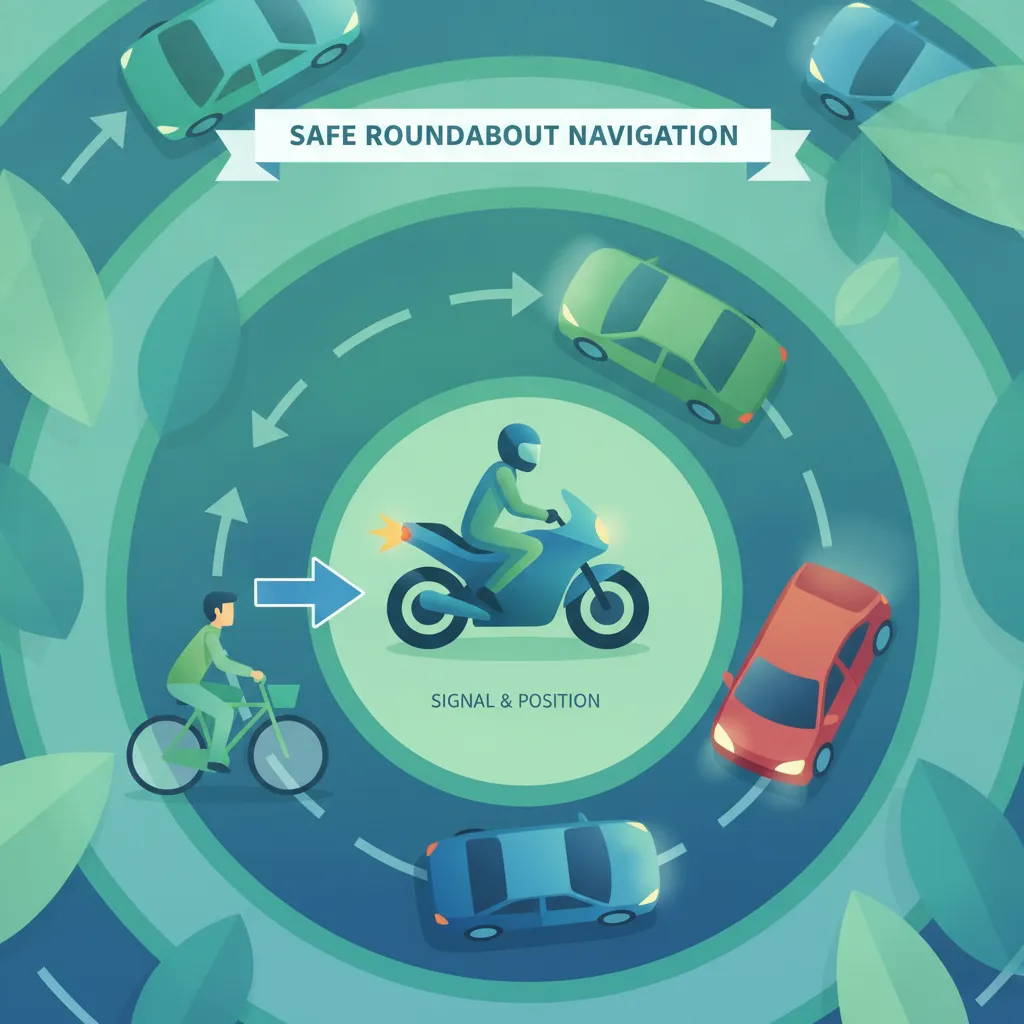
This lesson details the specific skills needed to navigate roundabouts on a motorcycle. It explains how to approach at a safe speed, select the correct lane based on your intended exit, and yield to circulating traffic. Proper use of signals to indicate intentions when entering and exiting is also covered.
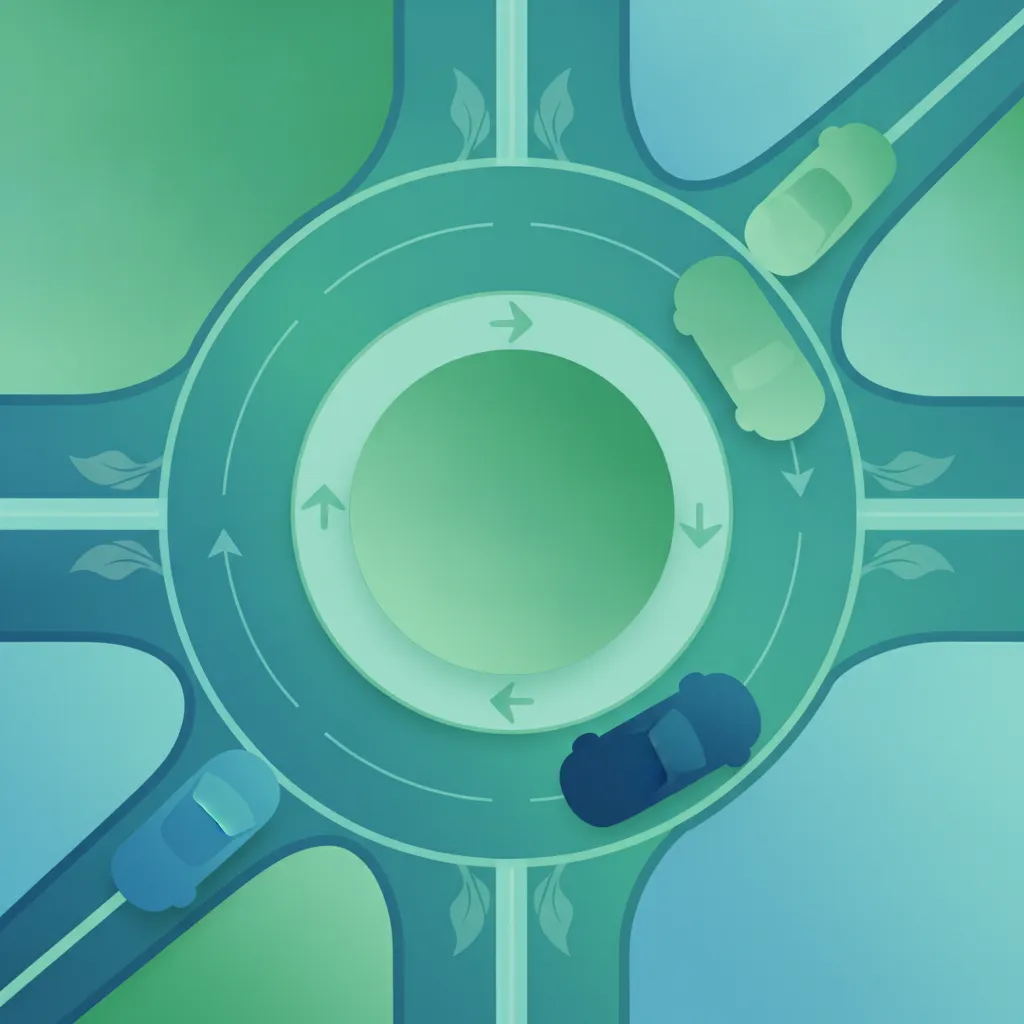
This lesson provides detailed instructions for navigating Danish roundabouts. It covers the rules for yielding upon entry, selecting the correct lane based on the intended exit, and signalling intentions clearly. The lesson also highlights the specific rules regarding priority for cyclists crossing entry and exit lanes.
This lesson outlines the legal responsibilities of a rider involved in a traffic accident. It explains the legal duty to stop, render aid, and report the incident to the police and insurance providers. The content covers the concepts of liability and the potential legal consequences following an accident.
This lesson details the specific speed limits applicable to stor knallert riders in various Danish environments, including urban zones and rural roads. It emphasizes the concept of 'appropriate speed,' which requires adjusting speed based on weather, visibility, and traffic density. The content explains how to manage speed to ensure safety and legal compliance.
Find clear answers to common questions learners have about Legal Implications and Penalties for Traffic Violations. Learn how the lesson is structured, which driving theory objectives it supports, and how it fits into the overall learning path of units and curriculum progression in Denmark. These explanations help you understand key concepts, lesson flow, and exam focused study goals.
It is a penalty point system where you receive a 'klip' (clip) on your license for specific traffic violations. Accumulating three points within a three-year period leads to a mandatory driving test and potentially a temporary license suspension.
Yes, for severe violations such as reckless driving or extreme speeding, the police may confiscate your license on the spot, leading to an unconditional revocation regardless of your points history.
Yes, new riders in their first three years of holding a license are subject to a 'conditional' license (prøveperiode). Getting two points during this time results in a mandatory new driving test.
No, depending on the severity, you may face fines, penalty points, suspension of your driving rights, or, in the most serious cases involving accidents or endangerment, imprisonment.
Use our powerful search tool to pinpoint specific Danish driving theory topics, road signs, or traffic situations you need to review. Start exploring relevant practice sets now to reinforce your knowledge and build confidence for your upcoming driving licence exam.