
This lesson explores the essential safety techniques and legal requirements for riding your stor knallert in darkness. As part of our Unit 6 curriculum, you will learn how to maximize your visibility and navigate challenging light conditions with confidence.
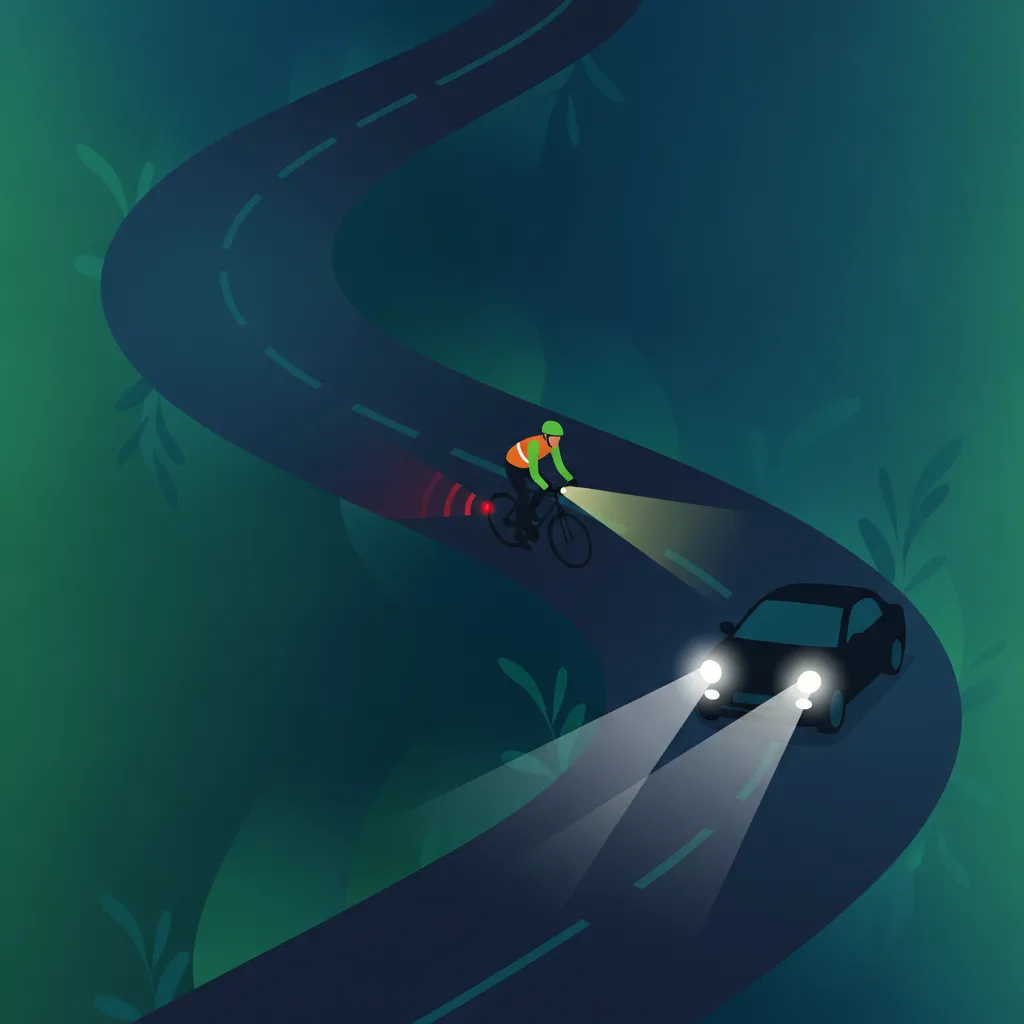
Lesson content overview
Riding a motorized vehicle, such as a stor knallert, after sunset or in conditions of poor visibility presents unique challenges. Your ability to see the road ahead and, crucially, for other road users to see you, diminishes significantly. This lesson will equip you with the knowledge and understanding necessary to ride safely and legally in darkness, focusing on the correct use of your vehicle's lighting system, the importance of reflectivity, and essential maintenance practices.
Darkness fundamentally alters the riding environment. What might be easily visible during the day becomes obscured or disappears entirely at night. This reduction in ambient light – the natural or artificial light present in the environment – impacts both your perception and the perception of others. Your field of vision narrows, contrasts are harder to distinguish, and distances can be misjudged. This directly affects your reaction time, meaning you have less time to identify hazards, process information, and respond safely.
Other road users may also struggle to see you, especially if your vehicle's lights are not properly maintained or if you are not wearing appropriate reflective gear. Pedestrians, cyclists, and animals can be almost invisible until the last moment. Understanding these challenges is the first step towards mitigating the associated risks and ensuring a safe journey for yourself and everyone else on the road.
Your stor knallert is equipped with a comprehensive vehicle lighting system designed to serve two primary purposes: to illuminate the road ahead for you and to make your vehicle visible to others. Each component of this system plays a vital role in ensuring your safety after dark.
The headlights are the most crucial part of your lighting system for forward visibility. They come with two primary settings:
Low Beam (Dipped Beam): This is your standard headlight setting for normal night riding. It provides adequate forward illumination without creating excessive glare for oncoming drivers or those you are following. The beam is directed downwards and slightly to the right (in countries with right-hand traffic), illuminating the immediate road ahead for a safe distance while minimizing the risk of dazzling others. You will use your low beam in urban areas, when following other vehicles, and whenever there is oncoming traffic.
High Beam (Main Beam): This setting offers extended illumination, projecting light much further down the road and illuminating a wider area. High beam is designed for use on open, dark roads where there is no street lighting and no oncoming traffic. While it significantly enhances your visibility of distant hazards, its powerful light can temporarily blind other drivers if used improperly.
Beyond your headlights, other lights on your stor knallert are crucial for communicating your presence and intentions to other road users:
The ability to correctly select between high beam and low beam is a fundamental aspect of safe night riding. This practice, known as the Beam Selection Principle, prevents you from dazzling oncoming traffic while ensuring you have sufficient road illumination.
Low beam headlights are your default setting for night riding and conditions with reduced visibility during the day.
High beam headlights are a powerful tool for enhancing your vision on unlit roads.
Dazzling other drivers is not just inconsiderate; it's dangerous and illegal. When another vehicle is approaching, their lights illuminate you, and your high beam will blind them, potentially causing them to lose control or deviate from their lane. Similarly, if you're following another vehicle, your high beam will reflect intensely in their mirrors, creating a significant distraction. Always be proactive in switching to low beam.
While your vehicle's lights are essential for emitting light, reflectivity is about reflecting light back to its source, making you more visible to other road users, especially those whose headlights are shining on you. This is governed by the Light Visibility Principle, which states that overall visibility is a combination of emitted light (from your headlights) and reflected light (from reflective surfaces).
Riders on stor knallerter are inherently less visible than cars or trucks, making personal reflectivity even more important. Reflective clothing is apparel with built-in reflective material that reflects light, significantly increasing your visibility in low-light conditions.
For maximum safety, consider wearing:
Remember, simply having lights on your vehicle isn't always enough. Your body is often the most prominent part of your profile, and making it reflective is a powerful way to increase your presence on the road.
Riding with faulty lights or obscured reflectors is not only dangerous but also illegal. Ensuring all your lighting components are in perfect working order is a fundamental responsibility of every stor knallert rider. This falls under the Light Functionality Principle, which mandates that all vehicle lights and reflectors must be operational and clean.
Before every ride, especially when riding after dark, perform a quick pre-ride check.
Turn on your ignition and activate your headlights. Verify that both your low beam and high beam are working.
Check your taillight by standing behind your stor knallert.
Activate your brake lever(s) and confirm that your brake light illuminates brightly.
Test each turn signal individually (front and rear) to ensure they flash correctly.
Visually inspect all reflectors on your vehicle. Ensure they are clean and not cracked or damaged.
Beyond daily checks, regular maintenance is crucial:
Neglecting these simple checks and maintenance tasks can significantly compromise your safety and lead to legal penalties.
Adhering to Danish traffic laws regarding lighting is mandatory for stor knallert riders. These regulations are designed to enhance safety for all road users.
It is a strict legal requirement in Denmark that your headlights must be turned on whenever visibility is insufficient. This typically means from sunset to sunrise and at any other time when visibility is poor due to weather conditions like rain, fog, or heavy cloud cover. This applies to both the front and rear lights of your stor knallert.
While reflective clothing is strongly recommended for enhanced safety, specific reflectors on your stor knallert are legally mandated. These must be clean, unobstructed, and functional at all times.
Failure to comply with lighting regulations can result in fines and other legal penalties. More importantly, it significantly increases your risk of being involved in an accident. Riding without operational lights or improperly using your high beam can have severe safety consequences for yourself and others.
The appropriate use of your lights and the importance of reflectivity can change based on environmental factors.
Adverse weather conditions further reduce visibility, making proper lighting and reflectivity even more critical.
Your environment dictates your lighting strategy.
Understanding the fundamental principles of light and human perception reinforces why proper lighting and reflectivity are non-negotiable for safe night riding.
Your ability to detect and react to hazards is directly dependent on how well you can see and how well you are seen. The Light Visibility Principle explains this: the more light you emit and the more light you reflect, the greater your visibility. Proper lighting improves your reaction time by allowing you to detect obstacles and dangerous situations earlier, giving you more precious seconds to respond safely.
Light travels in straight lines until it interacts with an object. Reflective materials are engineered to bounce light directly back to its source, which is why reflective gear on a rider is so effective at night – it redirects a driver's headlights straight back to their eyes. This makes the rider highly conspicuous. Psychologically, bright, reflective objects tend to capture attention and can be perceived as more immediate or 'threatening,' prompting other drivers to take earlier and safer evasive actions.
Let's look at a few common scenarios to solidify your understanding of these principles.
Mastering night riding requires both theoretical knowledge and practical experience. Continue to refine your skills and stay updated on local regulations.
Riding your stor knallert in darkness requires understanding both legal requirements and practical safety principles. Your lighting system serves dual purposes: illuminating the road ahead and making you visible to others. Low beam is your default setting for urban areas and whenever traffic is present, while high beam should only be used on unlit roads with no oncoming vehicles. Reflective clothing significantly enhances your visibility by reflecting light back to its source, making you stand out to drivers whose headlights illuminate you. Daily pre-ride checks of all lights and reflectors are mandatory for safety and legal compliance.
A short set of high-value points that capture the most important learning from this lesson.
Headlights are legally mandatory from sunset to sunrise and whenever visibility is insufficient in Denmark
Low beam (dipped beam) is the default setting for urban areas, when following vehicles, and when approaching oncoming traffic
High beam should only be used on unlit roads with no oncoming traffic or vehicles ahead
Reflective clothing dramatically increases your visibility to other road users beyond what vehicle lights alone can achieve
Pre-ride checks of all lights and reflectors are essential before every night ride
Explore all units and lessons included in this driving theory course.
Switch from high beam to low beam immediately when approaching oncoming traffic
Always use low beam when following other vehicles to avoid dazzling them through their mirrors
Vehicle reflectors are legally mandatory; reflective clothing is strongly recommended for maximum visibility
In adverse weather (rain, fog, snow), low beam is generally safer as high beam can create excessive glare
Keep headlights, taillights, and reflectors clean and functional; mud and road salt drastically reduce effectiveness
Failing to switch to low beam when approaching oncoming traffic, causing dangerous dazzle
Using high beam in urban areas where streetlights and pedestrians make it inappropriate
Riding with faulty or dirty lights, thinking the ambient light from streetlamps is sufficient
Neglecting reflective clothing and relying solely on vehicle lights for visibility
Not performing pre-ride checks and discovering a failed light only when riding in darkness
Lesson content overview
A short set of high-value points that capture the most important learning from this lesson.
Headlights are legally mandatory from sunset to sunrise and whenever visibility is insufficient in Denmark
Low beam (dipped beam) is the default setting for urban areas, when following vehicles, and when approaching oncoming traffic
High beam should only be used on unlit roads with no oncoming traffic or vehicles ahead
Reflective clothing dramatically increases your visibility to other road users beyond what vehicle lights alone can achieve
Pre-ride checks of all lights and reflectors are essential before every night ride
Explore all units and lessons included in this driving theory course.
Switch from high beam to low beam immediately when approaching oncoming traffic
Always use low beam when following other vehicles to avoid dazzling them through their mirrors
Vehicle reflectors are legally mandatory; reflective clothing is strongly recommended for maximum visibility
In adverse weather (rain, fog, snow), low beam is generally safer as high beam can create excessive glare
Keep headlights, taillights, and reflectors clean and functional; mud and road salt drastically reduce effectiveness
Failing to switch to low beam when approaching oncoming traffic, causing dangerous dazzle
Using high beam in urban areas where streetlights and pedestrians make it inappropriate
Riding with faulty or dirty lights, thinking the ambient light from streetlamps is sufficient
Neglecting reflective clothing and relying solely on vehicle lights for visibility
Not performing pre-ride checks and discovering a failed light only when riding in darkness
Explore search topics learners often look for when studying Riding in Darkness: Lights and Reflectivity. These topics reflect common questions about road rules, driving situations, safety guidance, and lesson level theory preparation for learners in Denmark.
Browse additional driving theory lessons that cover connected traffic rules, road signs, and common driving situations related to this topic. Improve your understanding of how different rules interact across everyday traffic scenarios.
Understand the specific Danish legal requirements for using headlights, taillights, and reflectors on your stor knallert after dark. Ensure compliance and maximize your visibility to other road users.
This lesson explains the critical importance of being visible to other road users. It details the proper use of headlights and daytime running lights as required by Danish law. The content also covers the effectiveness of wearing reflective clothing and ensuring the vehicle's reflectors are clean and functional.
This lesson provides a comprehensive overview of a vehicle's lighting systems and their proper use. It covers the functions of low and high beams, fog lights, and all signal lights, emphasizing their importance for visibility and communication with other drivers. The material explains the legal requirements for using lights in various conditions, including daytime, darkness, and adverse weather, as specified by Danish regulations.
This lesson provides strategies for safe riding after dark, when visibility is significantly reduced. It explains how to use high and low beams effectively, avoid being dazzled by other vehicles' lights, and look for road markings to guide your path. The importance of wearing reflective clothing to be seen is strongly emphasized.
Properly functioning lighting and signaling systems are fundamental for safe communication on the road. This lesson details the purpose and correct use of all exterior lights, including headlights, brake lights, turn signals, and hazard lights, according to Danish law. It emphasizes the driver's responsibility to ensure these systems are clean and operational to maintain visibility and clearly signal maneuvers to other road users.
This lesson details the function and meaning of traffic light signals in Denmark. It covers the standard red, amber, and green sequences, as well as special signals like flashing amber lights and green arrows for turning. The content also explains signals specific to cyclists and pedestrians that moped riders must observe at intersections.
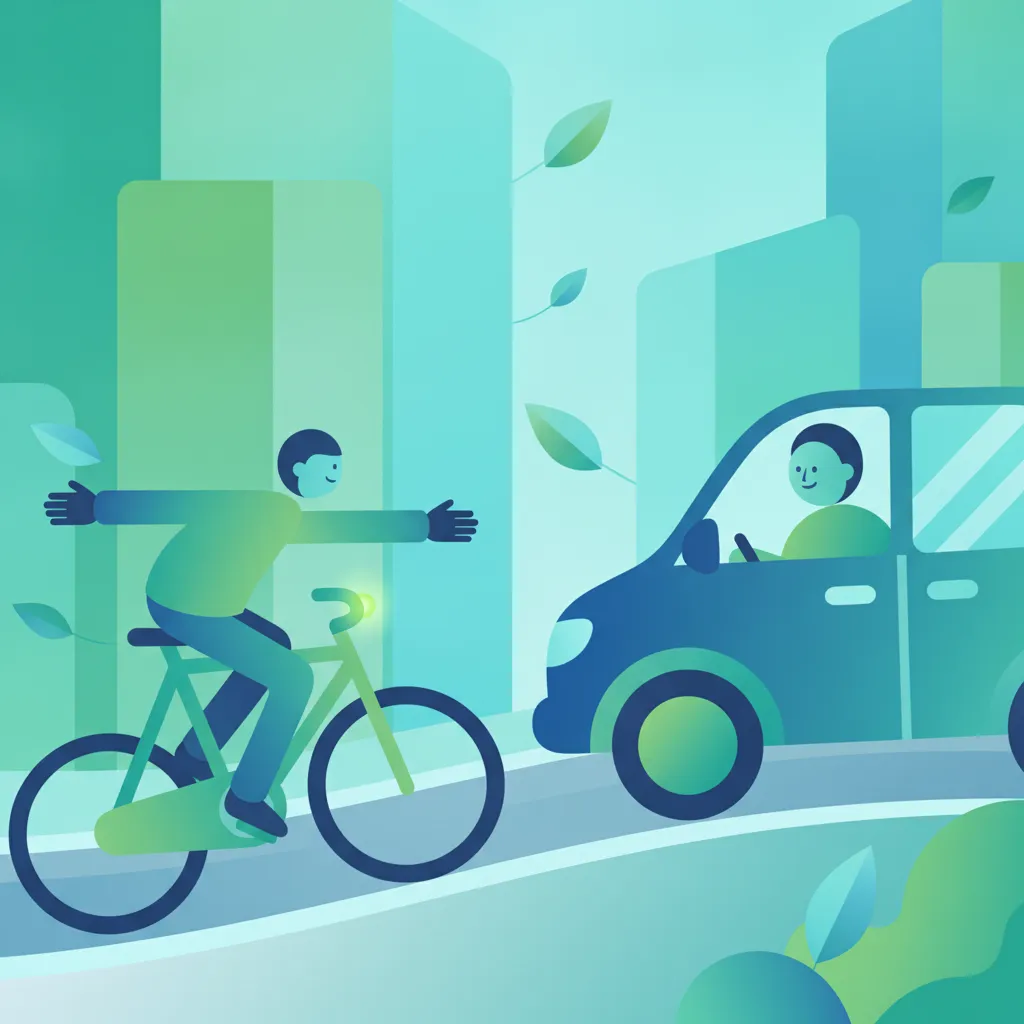
This lesson covers the proper methods for signalling intentions to other road users. It details the legal requirements for using turn indicators before turning or changing lanes. The content also explains how to use legally recognized hand signals as a backup or for added clarity.
Learn essential techniques for riding safely at night on your stor knallert. This includes mastering headlight beam selection, understanding reflectivity, and adapting to varying weather and road conditions.
This lesson provides strategies for safe riding after dark, when visibility is significantly reduced. It explains how to use high and low beams effectively, avoid being dazzled by other vehicles' lights, and look for road markings to guide your path. The importance of wearing reflective clothing to be seen is strongly emphasized.
This lesson explains the critical importance of being visible to other road users. It details the proper use of headlights and daytime running lights as required by Danish law. The content also covers the effectiveness of wearing reflective clothing and ensuring the vehicle's reflectors are clean and functional.
This lesson focuses on techniques for riding when visibility and traction are compromised by weather. It explains how to adjust speed, increase following distance, and use lights to see and be seen in rain or fog. Understanding the risk of hydroplaning and making smooth control inputs are key takeaways.
This lesson focuses on the core safety duties of a stor knallert rider. It explains the legal requirement for wearing a helmet and the benefits of other protective gear. The content also covers essential pre-ride checks, including brakes, tyres, and lights, to ensure the vehicle is in safe operating condition.
This lesson provides a step-by-step guide for managing a vehicle breakdown safely. It instructs the rider on moving the vehicle to a safe location, making it visible to other traffic using hazard lights, and personal safety while waiting for assistance. The importance of staying away from active traffic lanes is a key point.
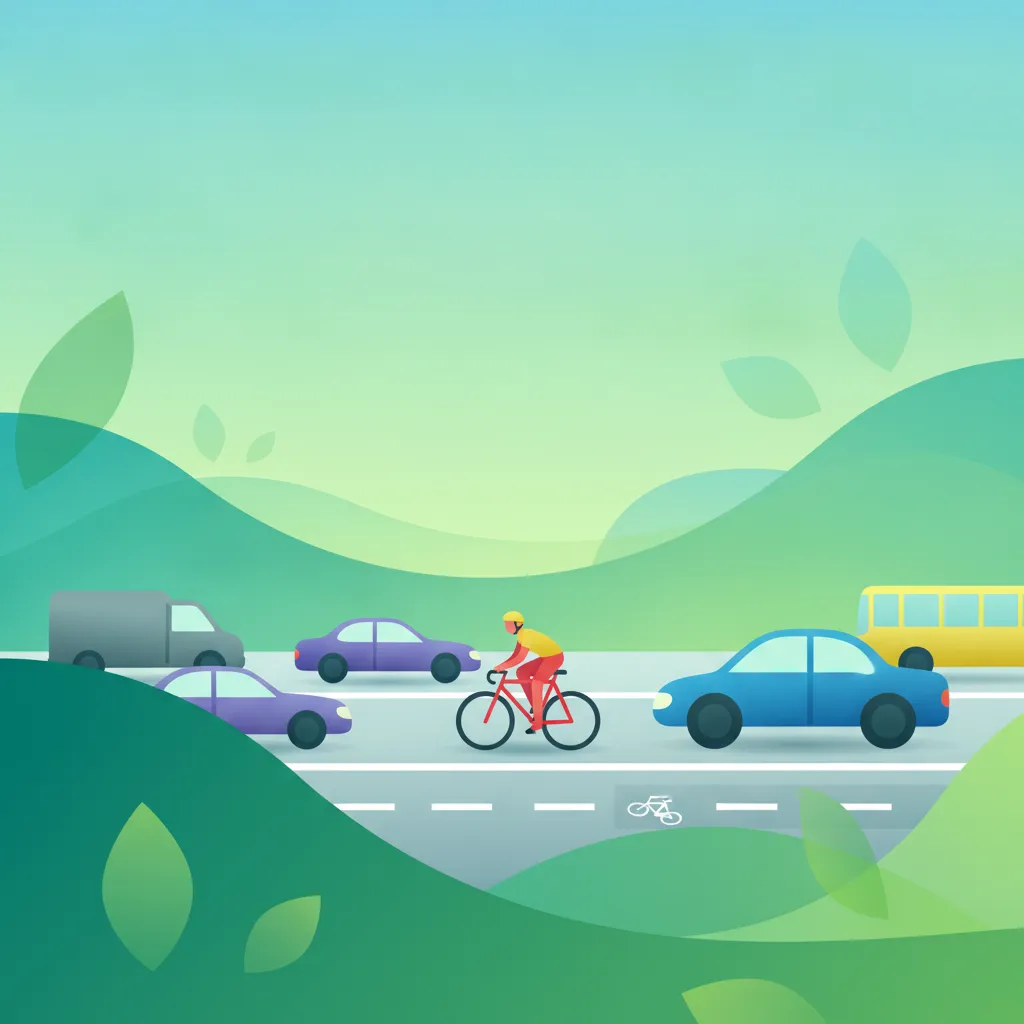
This lesson teaches strategic road positioning to enhance safety and visibility. It explains how to select the correct part of the lane in different scenarios, such as approaching intersections or riding in heavy traffic. The goal is to maintain a safe buffer zone and avoid the blind spots of larger vehicles.
This lesson details how to adapt riding techniques for rain and wind. It explains how wet surfaces reduce tyre grip and increase braking distances, requiring smoother control inputs and lower speeds. The content also provides strategies for managing the force of strong crosswinds on a small vehicle.
This lesson highlights the rider's responsibility for ensuring their vehicle is in a safe, roadworthy condition. It provides a systematic guide to pre-ride checks, including inspecting tyres for correct pressure and wear, testing brakes, and verifying all lights work. Regular maintenance is presented as a critical component of overall rider safety.
This lesson equips riders with the knowledge to handle imperfect road surfaces safely. It covers how to adjust speed, steering, and braking inputs when encountering loose gravel, slippery wet leaves, or other hazards. The focus is on smooth control inputs to avoid upsetting the motorcycle's stability.
This lesson focuses on the fundamental skills of balance and steering. It explains how body position affects the vehicle's center of gravity and stability. The concept of counter-steering is introduced as the primary method for initiating turns at moderate to high speeds, a key skill for effective control.
Find clear answers to common questions learners have about Riding in Darkness: Lights and Reflectivity. Learn how the lesson is structured, which driving theory objectives it supports, and how it fits into the overall learning path of units and curriculum progression in Denmark. These explanations help you understand key concepts, lesson flow, and exam focused study goals.
By law in Denmark, your stor knallert must have the dipped headlight (low beam) and taillight illuminated at all times. This ensures you are visible to others even during daylight hours, and is strictly enforced for night riding.
Yes, you can use high beams on unlit roads, but you must immediately switch to low beam when meeting oncoming traffic or following another vehicle closely to avoid blinding other road users.
Stor knallert riders are more vulnerable than car drivers. Reflective clothing significantly increases your silhouette and distance visibility to other motorists, which is a major focus in both the theory test and safe riding practice.
In the context of the theory test, you must recognize that riding with a broken light is illegal and dangerous. You would be expected to identify this as a critical fault that prevents the vehicle from being used on public roads.
Use our powerful search tool to pinpoint specific Danish driving theory topics, road signs, or traffic situations you need to review. Start exploring relevant practice sets now to reinforce your knowledge and build confidence for your upcoming driving licence exam.