
This lesson focuses on the critical safety requirements for riding motorcycles through tunnels, as mandated by the Italian Codice della Strada. You will learn how to adapt your vision to sudden lighting changes, manage speed in confined spaces, and handle emergency situations. Mastering these procedures is vital for both your theory exam and your safety on the road.

Lesson content overview
Riding a motorcycle through tunnels presents a unique set of challenges that demand heightened awareness, specific riding techniques, and adherence to safety regulations. This comprehensive guide, part of your Italian Driving License Theory Course for Motorcycle Categories A1, A2, & A, delves into the essential principles and practices for safely navigating these confined environments. Understanding how to adapt your vision, manage your speed, and react to potential emergencies is paramount for rider safety on Italian roads.
Tunnels are engineered structures designed to facilitate traffic flow through natural or man-made obstacles. However, their enclosed nature creates distinct risks for motorcyclists that differ significantly from open-road riding. These hazards stem primarily from the abrupt changes in lighting, confined space, and the specific dynamics of air quality and emergency response within these structures.
The transition into a tunnel often means entering a significantly darker environment, which can temporarily impair vision. Inside, the enclosed space limits maneuverability and reduces reaction time, while tunnel walls and pillars pose direct collision risks. Furthermore, ventilation systems, though crucial for air quality, can create unexpected air currents, potentially affecting motorcycle stability. These factors combine to make tunnels areas where focused attention and precise control are non-negotiable.
Human eyes require time to adjust to changes in light intensity, a process known as visual adaptation. When entering a tunnel from bright daylight, your eyes need to undergo dark adaptation, where the pupils dilate to let in more light. Conversely, upon exiting into daylight, light adaptation occurs, with pupils constricting. This process is not instantaneous; during the brief period of adaptation, your vision can be significantly compromised, leading to temporary "blindness" or severely reduced visual acuity. Failing to account for this physiological delay is a major contributor to accidents in tunnel zones.
Safe navigation through tunnels is governed by several core principles designed to mitigate the inherent risks. By consciously applying these principles, motorcyclists can ensure a safer and smoother journey.
The principle of light adaptation dictates that riders must anticipate and prepare for rapid changes in illumination. This means consciously slowing down before entering a tunnel to give your eyes more time to adjust to the dim light. Similarly, as you approach the exit, be prepared for the sudden brightness, which can cause momentary discomfort or even temporary loss of vision. Dipped headlights (low beams) are mandatory inside tunnels, even during the day, to enhance your visibility to others and improve your own perception of the road ahead.
Confined spaces, coupled with potentially reduced visibility, necessitate careful speed management. The Speed Management Principle emphasizes maintaining a speed appropriate to tunnel conditions, which often means significantly reducing speed before entry and adhering strictly to posted limits inside. A longer following distance is also crucial, providing more time to react to sudden braking by vehicles ahead or unforeseen obstacles. The enclosed nature of tunnels amplifies the consequences of sudden stops or collisions.
Lane discipline is vital in tunnels. The Lane Discipline Principle requires motorcyclists to maintain a steady, centered position within their lane, respecting lane markings. This practice provides maximum clearance from tunnel walls and other vehicles, reducing the risk of collisions. Riding too close to walls can also expose you to glare from light fixtures or create a claustrophobic sensation that can affect concentration.
Tunnels are equipped with specific safety features designed for emergencies. The Emergency Preparedness Principle highlights the importance of being aware of these features, such as emergency exits, fire extinguishers, and emergency telephones. Knowing their locations and understanding evacuation procedures can be life-saving in the event of a breakdown, fire, or accident. Observe all tunnel signage related to emergencies.
Tunnels, especially those with heavy traffic, can accumulate vehicle emissions. The Air Quality Awareness Principle acknowledges that ventilation systems may not be uniform throughout the entire length of a tunnel. Riders should be prepared for potential changes in air quality, which might manifest as haze or a stronger smell of exhaust fumes. Avoiding engine idling inside tunnels is not only a legal requirement but also a crucial step in preventing the buildup of harmful gases for all tunnel users.
To effectively apply these principles, a detailed understanding of related concepts and practical actions is necessary.
Visual adaptation is a physiological process. When the human eye moves from a brightly lit environment to a dimly lit one, the pupils dilate to let in more light (dark adaptation), and the retina becomes more sensitive. The reverse happens when moving from dim to bright light (light adaptation). This process takes time, and during the transition, your ability to perceive hazards and judge distances can be significantly compromised.
Upon entering a tunnel from daylight, your vision will be temporarily reduced. It takes several seconds for your eyes to adjust. During this period, objects ahead may appear darker and less distinct.
To mitigate the effects of dark adaptation, reduce your speed significantly before entering the tunnel. This gives your eyes more time to adjust and increases your reaction window for any unforeseen obstacles. Ensure your dipped headlights are on well before entry.
When exiting a tunnel into bright daylight, the sudden glare can be dazzling. This "white-out" effect can momentarily blind you, making it difficult to perceive the road ahead or surrounding traffic.
Anticipate the exit. Maintain a moderate speed, and consider adjusting your visor if it has a tint, or be ready to blink if you experience strong glare. Never accelerate sharply until your vision has fully recovered.
Speed management in tunnels is about more than just obeying posted limits; it's about anticipating conditions and ensuring you have adequate time to react in a confined space.
Always reduce your speed before entering a tunnel, especially if transitioning from a high-speed road like an Autostrada (motorway). This prepares you for the change in lighting and the reduced sight distances within the tunnel. Look for specific speed limit signs as you approach.
Inside the tunnel, maintain a steady, moderate speed that allows for a safe stopping distance. This speed should be well within the posted limit and comfortable for the conditions. Avoid sudden acceleration or deceleration. Keep a greater following distance than you would on an open road.
Do not immediately accelerate when you see the tunnel exit. Your vision may still be adapting to the returning daylight. Maintain a cautious speed until you are fully clear of the tunnel and your eyes have completely adjusted to the ambient light.
Maintaining a consistent and safe lane position is critical for preventing collisions within the often-narrow confines of a tunnel.
Always ride centrally within your lane markings. This gives you equal clearance from both tunnel walls and adjacent traffic lanes. Avoid riding too close to the tunnel walls, as this can reduce your margin for error and make you vulnerable to air currents or unexpected debris. Hugging one side can also make you prone to glare from internal lighting fixtures.
Tunnels are typically well-equipped with specific signage designed to guide and warn drivers. These signs provide crucial information regarding speed limits, overtaking restrictions, and emergency procedures.
Pay close attention to all signs at the entrance, within, and at the exit of tunnels. These signs, such as speed limit signs, "No Overtaking" signs, and emergency exit indicators, must be strictly obeyed. Ignoring them can lead to dangerous situations and legal penalties.
In the event of an emergency, such as a breakdown, fire, or accident, knowing the location of emergency exits is vital. These are typically marked with illuminated signs and are positioned at regular intervals.
If your motorcycle breaks down, pull over to the furthest possible side of the road (usually the right shoulder), turn on your hazard lights, and proceed to the nearest emergency exit on foot if it is safe to do so. Never block emergency exits or routes. Italian regulations require drivers to follow all evacuation signs calmly and quickly.
Proper use of your motorcycle's lighting system is fundamental for tunnel safety.
The Codice della Strada (Italian Road Code) has specific regulations that apply to tunnels to ensure the safety of all road users. Adherence to these rules is mandatory.
All motor vehicles, including motorcycles, must switch on their dipped headlights (low beams) before entering any tunnel, regardless of whether it is daytime or nighttime.
This rule is in effect for the entire duration you are inside the tunnel. Failure to comply can result in fines and points on your license. This regulation enhances your visibility to other drivers and helps your own eyes cope with the sudden change in light.
Drivers must observe all posted speed limits within tunnels. If no specific speed limit is posted, the general speed limit for the type of road on which the tunnel is located applies.
The reduced visibility and confined nature of tunnels often necessitate lower speed limits than on open roads. It is crucial to respect these limits to ensure you have adequate time to react to any hazards and maintain a safe stopping distance.
Overtaking another vehicle is generally prohibited inside tunnels unless specifically permitted by clear road signage and lane markings.
This rule is in place due to the limited sight distances and narrow confines, which make overtaking maneuvers exceptionally dangerous and significantly increase the risk of head-on collisions. Always assume overtaking is forbidden unless explicitly stated otherwise.
It is prohibited to keep your vehicle's engine idling while stationary inside a tunnel.
This regulation is crucial for maintaining acceptable air quality within tunnels. Idling engines contribute to the accumulation of exhaust gases, which can quickly become a health hazard in an enclosed space, especially for other motorcyclists and drivers.
Vehicles must not obstruct any emergency exits or evacuation routes within a tunnel. These areas must be kept clear at all times.
These exits are critical lifelines during emergencies. Parking near or blocking an emergency exit can severely impede evacuation efforts and rescue operations, potentially endangering many lives.
Being aware of common mistakes can help you avoid them and respond correctly in critical situations.
Tunnel riding safety is also influenced by external factors and specific circumstances.
Understanding the underlying principles helps reinforce why specific safety measures are so important.
The human eye is not an instantaneous camera; it needs time for physiological adjustments. This visual latency means that an abrupt change in lighting, such as entering a dark tunnel, will result in a period of reduced visual acuity. This directly translates to delayed hazard detection and impaired judgment of distance and speed, increasing accident risk. By activating dipped beams and reducing speed, you actively bridge this visual gap.
In any driving scenario, higher speed equates to longer stopping distances. In a tunnel, this effect is exacerbated by potential reduced visibility and the psychological impact of confinement. A confined space offers less room for evasive maneuvers. Therefore, speed reduction directly and proportionally increases the available reaction time and allows for a safer stopping distance within the limited environment, preventing rear-end collisions or impacts with obstacles.
Tunnels are essentially enclosed tubes. Vehicle exhaust fumes, containing harmful gases like carbon monoxide, can accumulate rapidly if not properly ventilated. Ventilation systems are designed to move fresh air through the tunnel and expel contaminated air. However, these systems can be overwhelmed, especially during heavy traffic or if vehicles are idling. By avoiding idling and moving promptly, motorcyclists contribute to the efficient operation of the ventilation system, ensuring better air quality for everyone.
Tunnel riding requires specific preparation and behavior changes governed by the Italian Codice della Strada. The primary hazard is visual adaptation—your eyes need several seconds to adjust from bright daylight to tunnel darkness (dark adaptation) and vice versa upon exit (light adaptation)—so reducing speed before entry is critical. Inside tunnels, dipped headlights are mandatory, overtaking is generally prohibited, and maintaining a centered lane position with increased following distance provides maximum safety margins. In emergencies, use hazard lights, pull to the far side, and proceed to clearly marked illuminated emergency exits while never blocking evacuation routes.
A short set of high-value points that capture the most important learning from this lesson.
Visual adaptation is a physiological process requiring time for pupils to adjust, making speed reduction before tunnel entry essential for safety.
Dipped headlights (low beams) are mandatory inside all tunnels in Italy, regardless of time of day, to enhance visibility and comply with Codice della Strada.
Confined tunnel spaces amplify stopping distances and consequences of sudden stops, requiring reduced speed and increased following distance compared to open roads.
Emergency exits in Italian tunnels are marked with illuminated signs; never obstruct these routes and know their locations before entering.
Overtaking is generally prohibited inside Italian tunnels unless explicitly permitted by clear signage and lane markings.
Explore all units and lessons included in this driving theory course.
Dark adaptation: pupils dilate entering tunnels; light adaptation: pupils constrict upon exiting—neither is instantaneous.
High beams must be switched off before tunnel entry; they cause dangerous glare in enclosed spaces.
If breakdown occurs in a tunnel, pull to the far side, activate hazard lights, and proceed to nearest emergency exit on foot if safe.
Engine idling is prohibited inside Italian tunnels to prevent harmful exhaust gas accumulation.
Maintain a centered lane position to maximize clearance from tunnel walls and avoid air current effects.
Entering a tunnel at full speed without reducing speed, compromising reaction time during visual adaptation.
Using high beams inside tunnels, creating severe glare that blinds oncoming drivers and reduces overall visibility.
Attempting to overtake another vehicle inside a tunnel where overtaking is prohibited, risking head-on collision in confined space.
Stopping or parking near emergency exits, obstructing critical evacuation routes and emergency services.
Failing to switch on dipped headlights before entering, which is mandatory under Italian traffic law regardless of daylight conditions.
Lesson content overview
A short set of high-value points that capture the most important learning from this lesson.
Visual adaptation is a physiological process requiring time for pupils to adjust, making speed reduction before tunnel entry essential for safety.
Dipped headlights (low beams) are mandatory inside all tunnels in Italy, regardless of time of day, to enhance visibility and comply with Codice della Strada.
Confined tunnel spaces amplify stopping distances and consequences of sudden stops, requiring reduced speed and increased following distance compared to open roads.
Emergency exits in Italian tunnels are marked with illuminated signs; never obstruct these routes and know their locations before entering.
Overtaking is generally prohibited inside Italian tunnels unless explicitly permitted by clear signage and lane markings.
Explore all units and lessons included in this driving theory course.
Dark adaptation: pupils dilate entering tunnels; light adaptation: pupils constrict upon exiting—neither is instantaneous.
High beams must be switched off before tunnel entry; they cause dangerous glare in enclosed spaces.
If breakdown occurs in a tunnel, pull to the far side, activate hazard lights, and proceed to nearest emergency exit on foot if safe.
Engine idling is prohibited inside Italian tunnels to prevent harmful exhaust gas accumulation.
Maintain a centered lane position to maximize clearance from tunnel walls and avoid air current effects.
Entering a tunnel at full speed without reducing speed, compromising reaction time during visual adaptation.
Using high beams inside tunnels, creating severe glare that blinds oncoming drivers and reduces overall visibility.
Attempting to overtake another vehicle inside a tunnel where overtaking is prohibited, risking head-on collision in confined space.
Stopping or parking near emergency exits, obstructing critical evacuation routes and emergency services.
Failing to switch on dipped headlights before entering, which is mandatory under Italian traffic law regardless of daylight conditions.
Explore search topics learners often look for when studying Tunnel Riding Safety and Light Adaptation. These topics reflect common questions about road rules, driving situations, safety guidance, and lesson level theory preparation for learners in Italy.
Browse additional driving theory lessons that cover connected traffic rules, road signs, and common driving situations related to this topic. Improve your understanding of how different rules interact across everyday traffic scenarios.
Understand the critical process of visual adaptation when riding through tunnels. Learn how to manage light transitions entering and exiting to maintain clear vision and identify hazards effectively for your Italian motorcycle theory.
This lesson is focused on strategies to increase a motorcyclist's conspicuity in traffic. It explains the benefits of using high-visibility clothing in fluorescent colors for daytime riding and the critical role of reflective materials at night. The content also covers how proper use of lighting, including daytime running lights, can significantly reduce the risk of accidents by making the rider more noticeable to others.
This lesson focuses on the vital systems for visibility and communication: mirrors, lighting, and signals. It provides instruction on the proper adjustment of mirrors to minimize blind spots and the correct use of headlamps, indicators, and brake lights as per Italian regulations. The content underscores how maintaining these systems in full working order is crucial for being seen and signalling intentions clearly in traffic.
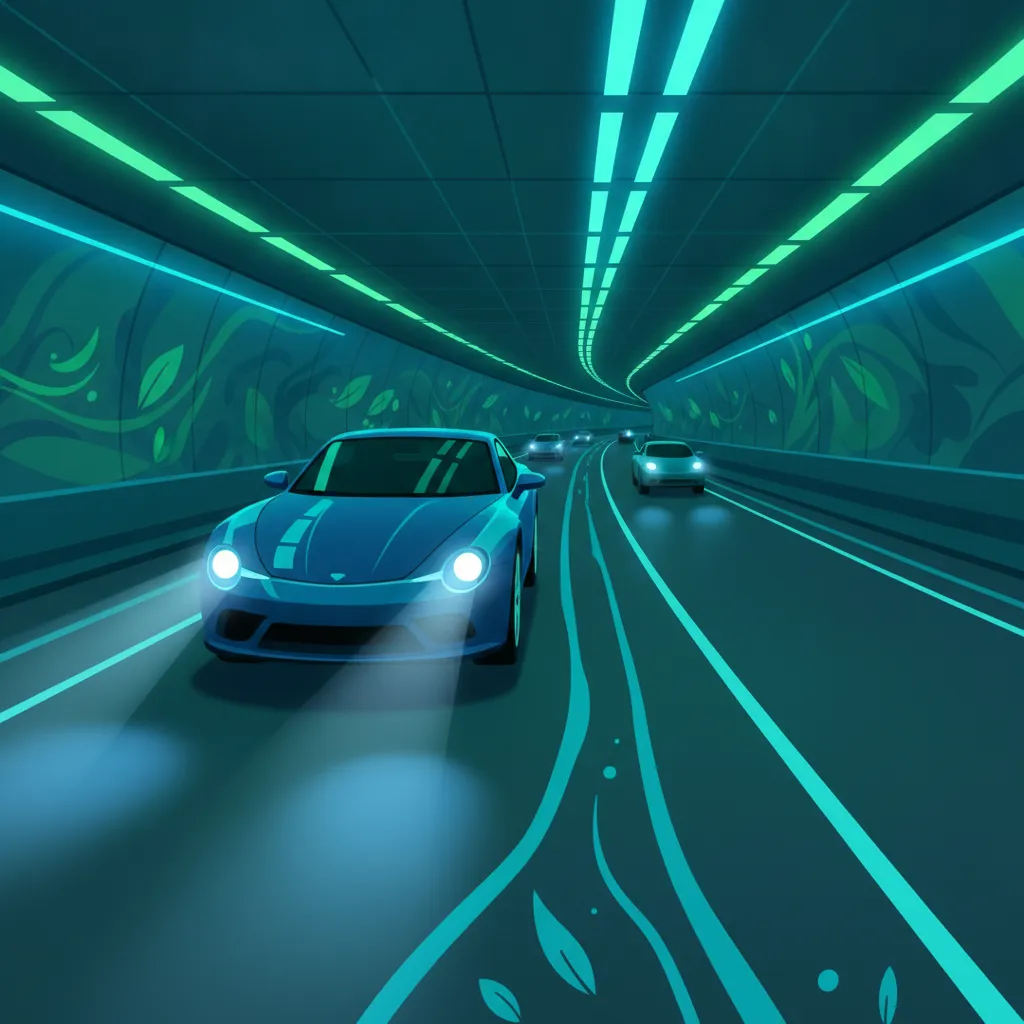
This lesson details the specific safety protocols required when driving through tunnels. It covers the mandatory use of dipped headlights, adherence to specific speed limits, and the general prohibition on overtaking or stopping. The content also explains the correct procedures to follow in case of a breakdown, traffic jam, or fire inside a tunnel, including how to use emergency exits and SOS call boxes.
This lesson trains riders to recognize and safely negotiate common road surface hazards that can suddenly reduce traction. It covers the risks posed by elements like loose gravel, wet leaves, painted lines, and manhole covers, especially when wet. The content provides strategies for scanning the road ahead to identify these dangers early and using smooth control inputs to maintain stability when crossing them.

This lesson provides a comprehensive guide to a vehicle's lighting systems and their correct use according to the Codice della Strada. It explains the functions of low beams, high beams, fog lights, and daytime running lights, detailing when each should be used to ensure visibility for the driver and by other road users. Proper use of lighting is critical for safety during night driving and in conditions of poor visibility.
This lesson teaches riders how to strategically position their vehicle within a lane for maximum visibility to others. It explains how to avoid riding in the blind spots of larger vehicles and how to maintain a safe buffer zone. Proper positioning enhances a rider's presence on the road and is a key component of defensive driving in mixed traffic.

This lesson explains the principles of maintaining proper lane discipline and strategic positioning in an urban context. It covers how to adapt your position within the lane to enhance visibility, avoid road surface hazards, and prepare for turns or lane changes. The content also provides awareness of specific urban features like restricted traffic zones (ZTL) and how to navigate them legally and safely.

This lesson focuses on the correct use of mirrors to maintain situational awareness and the techniques required to manage blind spots. It explains how to adjust mirrors for the best possible view of surrounding traffic. You will also learn why shoulder checks are critical before changing lanes or turning to detect vehicles hidden in blind zones.
This lesson details the specific rules and safety considerations for driving through the extensive tunnels and high viaducts common in Italy. It covers pre-entry checks, maintaining a safe following distance, and the correct procedures to follow in case of a breakdown or fire inside a tunnel. The lesson also addresses the hazard of strong crosswinds on exposed viaducts and how to maintain vehicle control.

This lesson explains the concept of using lane positioning as a proactive safety tool. It details how to select a position within the lane to maximize visibility to other drivers, especially at junctions, and to create a buffer of space from potential dangers. The content emphasizes the 'see and be seen' principle, teaching riders to constantly adjust their position based on traffic, road conditions, and potential escape routes.
Master essential emergency procedures for motorcycle tunnel riding in Italy. Learn about emergency exits, breakdown protocols, and responding to incidents within tunnels to ensure rider safety and compliance with the highway code.
This lesson details the specific safety protocols required when driving through tunnels. It covers the mandatory use of dipped headlights, adherence to specific speed limits, and the general prohibition on overtaking or stopping. The content also explains the correct procedures to follow in case of a breakdown, traffic jam, or fire inside a tunnel, including how to use emergency exits and SOS call boxes.
This lesson details the specific rules and safety considerations for driving through the extensive tunnels and high viaducts common in Italy. It covers pre-entry checks, maintaining a safe following distance, and the correct procedures to follow in case of a breakdown or fire inside a tunnel. The lesson also addresses the hazard of strong crosswinds on exposed viaducts and how to maintain vehicle control.

This lesson provides a clear, step-by-step guide for handling a mechanical breakdown on the road. It emphasizes the priority of moving the motorcycle to a safe location away from traffic flow and making oneself visible by using hazard lights and wearing a high-visibility vest. The content covers the correct procedure for contacting roadside assistance or emergency services and waiting for help in a secure position.
This lesson equips riders to safely manage the challenges posed by road construction zones. It explains how to interpret temporary signage, navigate lane closures or diversions, and maintain heightened awareness for surface hazards like gravel or steel plates. The content emphasizes the need to reduce speed and increase following distances to safely share the road with large construction vehicles and workers.
This lesson provides a comprehensive guide to riding on high-speed motorways, or autostrade. It details the correct procedures for safely merging into traffic from an entry ramp and exiting via a deceleration lane. The content reinforces strict lane discipline, rules for overtaking, and the importance of maintaining a significantly larger following distance to compensate for higher speeds and potential wind gusts.

This lesson equips riders with the correct procedures to follow in the event of a breakdown or accident. It covers how to move the vehicle to a safe location, alert other traffic, and contact emergency services using the universal 112 number. You will also learn the basics of accident scene management and the necessary steps for reporting the incident to police and insurance.

This lesson provides specific strategies for riding on narrow rural roads, which often feature poor surfaces and limited sightlines. It details the techniques for approaching and navigating hairpin bends, including selecting the correct line, managing speed before entry, and using appropriate gear selection. The content emphasizes anticipating oncoming traffic and potential hazards hidden around blind corners for enhanced safety.
This lesson outlines the proper conduct when encountering emergency vehicles on the road or interacting with responders at an incident. It details the rules for yielding the right-of-way to ambulances, police, and fire services, ensuring they have a clear path. You will also learn how to provide clear and concise information to authorities to facilitate an effective emergency response.
This lesson focuses on the vital systems for visibility and communication: mirrors, lighting, and signals. It provides instruction on the proper adjustment of mirrors to minimize blind spots and the correct use of headlamps, indicators, and brake lights as per Italian regulations. The content underscores how maintaining these systems in full working order is crucial for being seen and signalling intentions clearly in traffic.

This lesson addresses the increased complexity of overtaking in urban environments with dense traffic and frequent intersections. It stresses the importance of thorough observation, including mirror and blind spot checks, to ensure a safe gap is available. The content covers judging speed differentials and the necessity of clear signalling to execute the maneuver without causing conflict with other road users.
Find clear answers to common questions learners have about Tunnel Riding Safety and Light Adaptation. Learn how the lesson is structured, which driving theory objectives it supports, and how it fits into the overall learning path of units and curriculum progression in Italy. These explanations help you understand key concepts, lesson flow, and exam focused study goals.
No, you should use low beams (anabbaglianti). High beams (abbaglianti) can reflect off tunnel walls and cause dangerous glare for yourself and oncoming traffic.
You must adjust your speed before entering and ensure your lights are on. Be prepared for a sudden decrease in visibility and potential changes in road surface grip.
Yes, always adhere to the posted speed limits. If no specific sign is present, the general speed limit for the type of road (e.g., motorway or extra-urban) applies, but you should always ride at a speed that allows for a safe stop.
Try to move to a designated emergency lane or bay. If impossible, turn on hazard lights, switch off the engine, and exit the tunnel using the marked pedestrian escape routes, calling for help from an emergency phone or your mobile.
Start searching now to pinpoint exactly which Italian driving theory topics, road signs, or traffic rules you need to master. Use our advanced filters to build a custom practice session and ensure you're fully prepared for every aspect of your official driving licence exam.