
This lesson details the strict safety protocols required when approaching and traversing railway crossings in Italy. You will learn to recognize essential warning signs, interpret light and sound signals, and master the specific conduct required to safely cross tracks, an essential skill for both your theory exam and real-world driving.
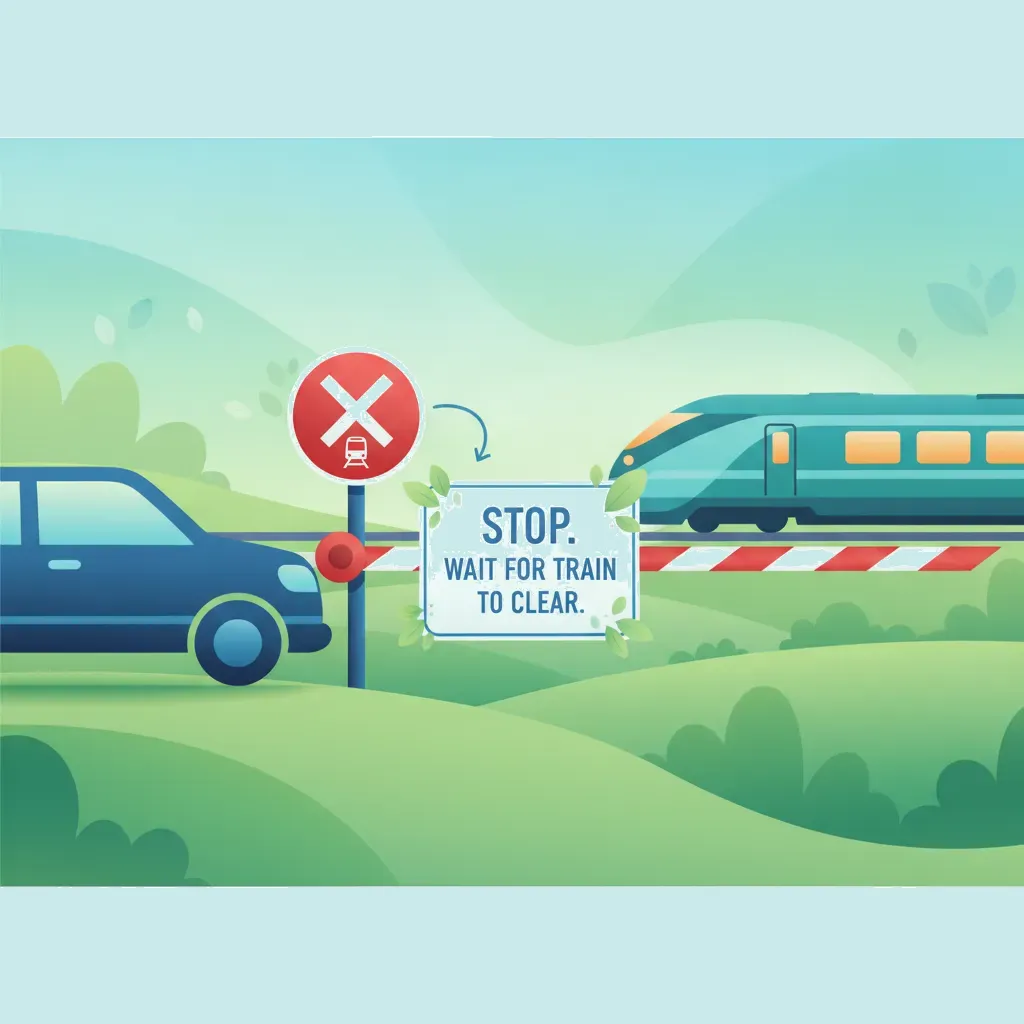
Lesson content overview
Railway crossings, known in Italy as passaggi a livello, represent points on the road network where vehicular traffic directly intersects with railway lines. These intersections are inherently dangerous due to the immense mass and high speeds of trains, which require significantly longer braking distances than road vehicles. Consequently, strict safety procedures and driver vigilance are paramount to prevent catastrophic accidents. This lesson details the necessary actions and legal obligations for drivers approaching and crossing these vital points in Italy.
The potential for severe accidents at railway crossings necessitates a clear understanding of the risks involved and the specific regulations governing driver behavior. Even seemingly minor misjudgments can lead to fatal outcomes given the destructive power of a train. Adherence to all warning systems and rules is not merely a suggestion but a legal imperative designed to protect lives.
Trains cannot stop quickly. A typical freight train traveling at 100 km/h can require over a kilometer to come to a complete stop, far exceeding the stopping distance of any road vehicle. This physical reality underpins all safety regulations at passaggi a livello. Drivers must understand that the responsibility for avoiding a collision lies almost entirely with the road user, as trains cannot deviate from their tracks or stop on demand. Ignoring warning signals or attempting to "beat" a train is an extremely dangerous and often fatal gamble.
In Italy, the rules governing behavior at railway crossings are primarily outlined in the Codice della Strada (Italian Highway Code), specifically Articles 149 and 150. These articles mandate specific actions for drivers, emphasizing the requirement to stop, observe, and only proceed when it is unequivocally safe. Violations of these regulations carry significant penalties, including fines and demerit points, reflecting the severity of the potential consequences.
Italian railway crossings are equipped with various warning systems designed to alert drivers to an approaching train and to prohibit passage when unsafe. These systems can include visual signals, acoustic alarms, and physical barriers, often working in combination to provide a layered approach to safety.
The most common and critical visual warning at a passaggio a livello is the presence of flashing red lights. These lights are typically mounted on gantries above the roadway or to the side of the crossing, positioned for clear visibility from a distance.
When these red flashing lights (segnali rossi lampeggianti) are active, drivers are legally required to bring their vehicle to a complete halt before the designated stop line or barrier. The lights continue to flash until the train has passed and the crossing is safe to traverse. It is crucial to respect these signals even if no train is immediately visible, as trains can appear quickly and unexpectedly, especially at night or in adverse weather conditions.
In addition to visual signals, many railway crossings are equipped with acoustic warning signals (segnali acustici), which are audible alarms that sound when a train is approaching. These can be traditional bells, electric horns, or continuous sirens.
The purpose of these acoustic signals is to provide an additional layer of warning, particularly useful in conditions of reduced visibility (fog, heavy rain, snow, or darkness) or for drivers who may be distracted. Just like flashing red lights, when an acoustic signal is active, drivers must stop and remain stopped until the sound ceases and all other warning devices indicate it is safe to proceed. Ignoring an acoustic signal because visual signals are also present, or vice versa, constitutes a serious safety violation.
Physical barriers, often referred to as gates or barriere, are mechanical structures that lower across the roadway to physically block vehicle passage when a train is approaching. These provide a tangible deterrent to crossing when unsafe.
Full-length barriers are designed to cover the entire width of the road, completely preventing vehicles from entering the crossing area. When these barriers begin to lower, or are already lowered, drivers must stop before them. Under no circumstances should a driver attempt to drive around or through a fully lowered barrier. Waiting for the barrier to fully rise and for all other warning signals to deactivate is the only safe and legal course of action.
Some railway crossings are equipped with half-length barriers (barriere semilunghe) which only cover part of the road width, typically the right-hand side in the direction of travel. This design might leave a gap on the left, leading some drivers to mistakenly believe they can bypass the barrier. However, this is an extremely dangerous and illegal maneuver.
Attempting to cross a railway line when half-barriers are lowered, or when any warning signals are active, is strictly prohibited and extremely dangerous. The gap is not an invitation to proceed.
Regardless of whether the barrier is full or half, the rule is the same: if the barrier is lowered or in the process of lowering, passage is prohibited. Drivers must stop before the barrier and wait until it is fully raised and all other warning signals (flashing lights, acoustic alarms) have ceased, indicating that the tracks are clear and safe to cross.
Correct positioning when stopping at a railway crossing is as crucial as stopping itself. The placement of your vehicle ensures both your safety and that of the crossing infrastructure.
At all railway crossings, a stop line (linea di arresto) is painted on the roadway. This is a solid white line, often accompanied by the word "STOP" or other markings, indicating the precise point where vehicles must halt when warning signals are active. This line is strategically placed to ensure that your vehicle remains clear of the barrier's path (if present) and well away from the railway tracks.
Drivers must always stop before the stop line. Stopping beyond it could place your vehicle in the path of lowering barriers or too close to the tracks, limiting your ability to react if an unexpected situation arises.
Even at crossings without physical barriers, or if the stop line is unclear, drivers must maintain a safe distance from the tracks. The general rule is to stop at least 5 meters from the nearest rail. This distance provides a crucial safety margin, preventing your vehicle from accidentally encroaching on the railway line and allowing for a clear view down the tracks in both directions.
When in doubt about the exact location of a stop line at an unprotected crossing, always err on the side of caution and stop at least 5 meters from the nearest rail.
While many railway crossings are equipped with physical barriers, some are not. These unprotected passaggi a livello place a higher reliance on driver vigilance and strict adherence to visual and acoustic warnings.
Crossings without physical barriers carry an inherently higher risk, as there is no physical impediment to prevent a driver from entering the tracks prematurely. At these locations, the absence of a barrier means drivers must exercise extreme caution and heightened vigilance. Before the crossing, warning signs indicate the presence of an unprotected railway crossing.
When approaching such a crossing, reduce your speed significantly and be prepared to stop. Actively scan for any warning signals and listen carefully for approaching trains.
At passaggi a livello without barriers, drivers must exclusively rely on the flashing red lights (segnali rossi lampeggianti) and acoustic alarms (segnali acustici). When these devices are active, a full stop before the stop line or at least 5 meters from the nearest rail is mandatory. Drivers must wait for all warning devices to cease (lights stop flashing, alarms stop sounding) before even considering crossing.
Reduce Speed: Approach slowly, ready to stop immediately.
Observe and Listen: Look for flashing red lights and listen for acoustic alarms.
Full Stop: If any warning device is active, stop completely before the stop line or at least 5 meters from the nearest rail.
Confirm Safety: Wait until all warning devices are inactive. Look carefully in both directions along the tracks to confirm no train is approaching.
Proceed Safely: Only then, proceed across the tracks without delay, ensuring your vehicle can clear the crossing completely.
Railway crossings are not just for vehicles; pedestrians and cyclists also use them. Italian traffic law grants vulnerable road users (utenti vulnerabili) specific rights at these intersections, which drivers must respect.
After bringing your vehicle to a complete stop at a railway crossing and after the barriers have lifted (if present) and signals have ceased, you might find pedestrians or cyclists still in the process of crossing the tracks.
Drivers are legally obliged to yield the right-of-way to these vulnerable users. This means you must not begin to move your vehicle or accelerate until all pedestrians and cyclists have completely cleared the railway tracks. Pedestrians and cyclists cannot accelerate as quickly as vehicles, and starting to move while they are still crossing puts them in immense danger. Prioritizing their safety is a fundamental responsibility for all drivers.
Understanding the standard procedures is crucial, but it's equally important to be aware of common mistakes and how to handle less common scenarios at railway crossings.
Occasionally, warning devices at a railway crossing may malfunction due to power outages, technical faults, or other issues. If you approach a crossing where the flashing lights are not working, the acoustic alarm is silent, or barriers are stuck in the raised position despite a train approaching (or the potential for one), you must assume the worst-case scenario.
If warning devices appear to be malfunctioning, drivers must treat the crossing as if the devices were active. Stop before the stop line or at least 5 meters from the nearest rail.
Under Art. 150 bis of the Codice della Strada, if devices are out of order (stato di guasto del dispositivo), drivers are legally required to treat the crossing as if the warning devices were fully active. This means you must stop your vehicle before the stop line, observe and listen carefully for any approaching trains, and only proceed across the tracks after confirming visually and audibly that it is safe to do so. Report any malfunctioning signals to the authorities once it is safe to do so.
Adverse weather conditions significantly increase the risk at railway crossings.
Drivers of heavy vehicles (veicoli di massa), such as trucks, buses, or vehicles towing trailers, must exercise even greater caution at railway crossings. These vehicles require:
Mastering the following principles will ensure safe passage at all passaggi a livello for Italian Patente B holders:
By consistently applying these principles, you contribute to your safety and the safety of all road and rail users on Italian roads.
This lesson covers the critical safety procedures for navigating Italian railway crossings (passaggi a livello) as required for the Patente B theory exam. It details the mandatory stop requirements triggered by flashing red lights, acoustic alarms, and physical barriers, emphasizing that any single active warning signal demands a complete halt. The content specifies correct stopping positions at protected crossings using the stop line and a minimum 5-meter distance from tracks at unprotected crossings. Key distinctions between full and half-barriers are explained, with clear warnings against misusing the gap left by half-barriers. The lesson also addresses priority rules for vulnerable road users, device malfunction protocols under Article 150 bis, and special considerations for heavy vehicles and adverse weather conditions, providing comprehensive vocabulary in Italian for all key terms.
A short set of high-value points that capture the most important learning from this lesson.
Always stop completely before the stop line whenever flashing red lights, acoustic signals, or barriers are active, regardless of whether a train is visible
At unprotected crossings, stop at least 5 meters from the nearest rail and look in both directions before proceeding
Half-barriers are not an invitation to cross: the gap on the left side is strictly prohibited to use when barriers are lowering
If warning devices malfunction, treat the crossing as active and stop before the stop line or 5 meters from tracks
Yield to pedestrians and cyclists completely clearing the tracks before accelerating, even after barriers have risen
Explore all units and lessons included in this driving theory course.
Flashing red lights (segnali rossi lampeggianti) and acoustic signals (segnali acustici) both independently require a full stop
Full barriers block the entire road width; half-barriers (barriere semilunghe) only block part but prohibit passage equally
Trains require over a kilometer to stop at 100 km/h, making it the driver's responsibility to avoid collisions
Heavy vehicles must ensure they can fully clear the crossing before entering, accounting for longer stopping distances
Under Article 150 bis, device malfunction means treating the crossing as fully active with mandatory stopping
Attempting to cross around a half-barrier through the gap on the left side of the road
Proceeding when lights stop flashing but acoustic alarm is still sounding
Failing to check both directions along the tracks before crossing after signals cease
Entering the crossing without ensuring there is enough space to clear it completely on the other side
Assuming no train is coming because one has just passed, when multiple trains may follow
Lesson content overview
A short set of high-value points that capture the most important learning from this lesson.
Always stop completely before the stop line whenever flashing red lights, acoustic signals, or barriers are active, regardless of whether a train is visible
At unprotected crossings, stop at least 5 meters from the nearest rail and look in both directions before proceeding
Half-barriers are not an invitation to cross: the gap on the left side is strictly prohibited to use when barriers are lowering
If warning devices malfunction, treat the crossing as active and stop before the stop line or 5 meters from tracks
Yield to pedestrians and cyclists completely clearing the tracks before accelerating, even after barriers have risen
Explore all units and lessons included in this driving theory course.
Flashing red lights (segnali rossi lampeggianti) and acoustic signals (segnali acustici) both independently require a full stop
Full barriers block the entire road width; half-barriers (barriere semilunghe) only block part but prohibit passage equally
Trains require over a kilometer to stop at 100 km/h, making it the driver's responsibility to avoid collisions
Heavy vehicles must ensure they can fully clear the crossing before entering, accounting for longer stopping distances
Under Article 150 bis, device malfunction means treating the crossing as fully active with mandatory stopping
Attempting to cross around a half-barrier through the gap on the left side of the road
Proceeding when lights stop flashing but acoustic alarm is still sounding
Failing to check both directions along the tracks before crossing after signals cease
Entering the crossing without ensuring there is enough space to clear it completely on the other side
Assuming no train is coming because one has just passed, when multiple trains may follow
Explore search topics learners often look for when studying Railway Crossings: Safety Procedures. These topics reflect common questions about road rules, driving situations, safety guidance, and lesson level theory preparation for learners in Italy.
Browse additional driving theory lessons that cover connected traffic rules, road signs, and common driving situations related to this topic. Improve your understanding of how different rules interact across everyday traffic scenarios.
Explore advanced scenarios at railway crossings including device malfunctions, adverse weather conditions, and specific considerations for heavy vehicles. Understand how to navigate these challenging situations safely according to Italian traffic law.
This lesson details the specific rules and safety considerations for driving through the extensive tunnels and high viaducts common in Italy. It covers pre-entry checks, maintaining a safe following distance, and the correct procedures to follow in case of a breakdown or fire inside a tunnel. The lesson also addresses the hazard of strong crosswinds on exposed viaducts and how to maintain vehicle control.

This lesson clarifies the special priority rules for emergency vehicles and public transport. It explains the legal obligation to safely pull over and clear a path for any vehicle with active sirens and flashing lights. The content also details the absolute right-of-way that trams have in most situations and the requirement to yield to public buses signaling to pull out from a stop.
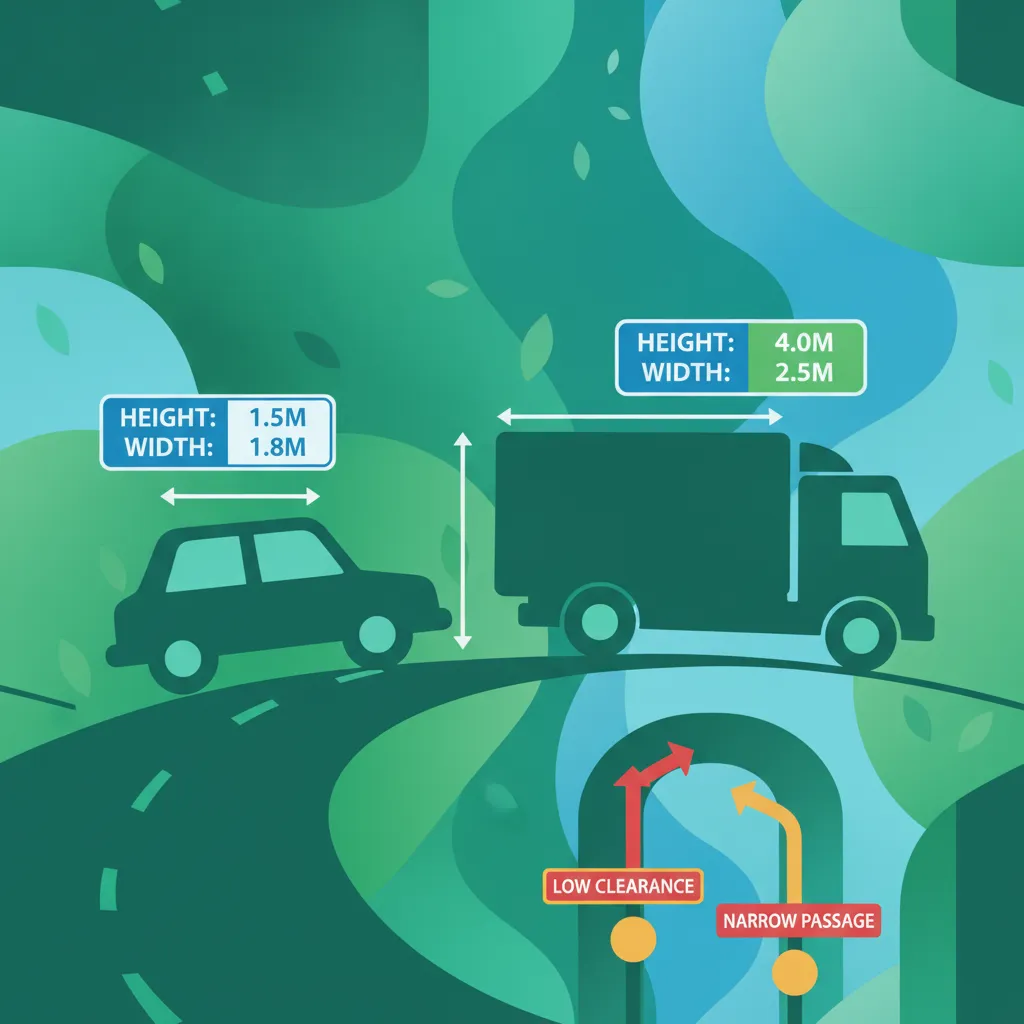
This lesson focuses on the specific dimensional limits that heavy goods vehicles must adhere to on Italian roads, as stipulated by the Codice della Strada. It covers the maximum permissible length, width, and height, explaining how these restrictions impact navigation through tunnels, under bridges, and within urban environments. Learners will also understand the conditions under which special permits for exceptional or oversized transport are required.

This lesson focuses on the specific regulations and techniques for operating a heavy vehicle on high-speed motorways. It covers mandatory lane discipline for trucks, the rules governing overtaking other heavy vehicles, and the specific speed limits that apply. Best practices for merging onto and exiting the motorway, maintaining safe following distances, and using the hard shoulder only in genuine emergencies are also detailed.
This lesson bridges the gap between general traffic laws and their specific application to heavy goods vehicles. It examines how rules regarding speed limits, lane discipline, overtaking, and priority are modified or have special considerations for trucks due to their size, weight, and reduced maneuverability. Drivers will learn to correctly interpret road signs and signals within the context of operating a large vehicle, ensuring safe and compliant integration with other traffic.
Learn the specific rules and priorities for yielding to pedestrians and cyclists at railway crossings in Italy. Understand your obligations to ensure the safety of all road users after trains have passed.
This lesson provides critical guidance on how to safely share the road with vulnerable users, including pedestrians, cyclists, motorcyclists, and children. It highlights the importance of increased awareness in specific areas like school zones and crosswalks. The content teaches techniques for maintaining a safe lateral distance when overtaking, checking blind spots thoroughly, and anticipating the often unpredictable movements of these users.

This lesson is dedicated to fostering awareness and safe interaction with vulnerable road users commonly found in cities. It details the legal priority of pedestrians at crossings and the importance of giving ample space to cyclists. Additionally, it covers the specific hazards associated with tram tracks and the need to be vigilant around public transport vehicles like buses and taxis.

This lesson focuses on the driver's responsibility to protect pedestrians, especially at designated crossings (strisce pedonali). It reinforces the legal requirement to yield to pedestrians who are on or about to enter a crosswalk. The content also covers the importance of reducing speed and increasing vigilance in urban areas, school zones, and other places with high pedestrian activity.

This lesson provides an in-depth focus on sharing the road with the most vulnerable users. It teaches drivers to be acutely aware of pedestrians at crossings, cyclists filtering through traffic, and motorcyclists who may be in blind spots. The lesson emphasizes the importance of leaving extra space, signaling intentions clearly, and exercising extreme caution at junctions, where the majority of serious incidents occur.
This lesson covers the general principles of priority at intersections governed by traffic signs and signals. It explains how to identify a priority road and the obligation to yield to traffic when encountering a 'dare la precedenza' (yield) or stop sign. The content also reviews the hierarchy of authority, where signals from a traffic officer override all other signs and lights.
This lesson delivers a comprehensive explanation of right-of-way regulations at Italian intersections. It covers the interpretation of traffic light signals, the absolute requirement to stop at stop signs, and yielding at give-way signs. Furthermore, it details the default priority rules for unmarked intersections and the specific obligations a rider has towards pedestrians on crossings.
This lesson details how to safely approach and enter intersections by correctly interpreting traffic lights, stop signs, and give-way rules. It emphasizes the importance of scanning for hazards, checking blind spots, and anticipating the actions of other road users. You will learn to adjust your speed and position your vehicle correctly to navigate crossings without incident.

This lesson focuses on the crucial rule for navigating uncontrolled intersections in Italy: yielding to vehicles approaching from the right (precedenza a destra). It explains how to apply this default rule when no signs or signals are present to direct traffic flow. Learners will understand how to approach these junctions with caution, assess traffic, and proceed safely, while also learning about the few exceptions to this rule.

This lesson explains the fundamental principles of right of way that govern interactions between different types of road users in Italy. It clarifies the legal precedence at intersections, pedestrian crossings, and when interacting with public transport like buses and trams. The content also details the absolute priority given to emergency vehicles and how to safely yield in accordance with the Codice della Strada.
This lesson details the correct procedures for interacting with public transport and school buses. It explains the rules for dedicated bus lanes, the absolute priority of trams, and the legal requirement to yield to buses pulling out from a stop. The content also covers the specific laws requiring drivers to stop when a school bus is loading or unloading passengers, to ensure child safety.
Find clear answers to common questions learners have about Railway Crossings: Safety Procedures. Learn how the lesson is structured, which driving theory objectives it supports, and how it fits into the overall learning path of units and curriculum progression in Italy. These explanations help you understand key concepts, lesson flow, and exam focused study goals.
You must stop immediately. The flashing red lights, often accompanied by an acoustic alarm, indicate that a train is approaching and the barriers are either closing or already closed. You are strictly prohibited from crossing until the lights stop flashing and the barriers are fully raised.
Yes. At crossings without barriers, you must be extra vigilant. You should reduce your speed, check both directions of the tracks, and only proceed when you are certain no train is approaching. Even if you do not see a train, always ensure the road beyond the tracks is clear so you do not get stuck on them.
If your vehicle stalls, you must immediately evacuate all passengers and move them to a safe distance away from the tracks. Attempt to restart the vehicle if it is safe, but your priority is human life. If a train is approaching, signal to the driver if possible, but stay clear of the tracks.
No. Never attempt to drive around or under barriers, regardless of whether they are full or half-barriers. Doing so is a severe traffic violation, extremely dangerous, and will lead to an automatic failure in your practical or theoretical assessment of driving conduct.
Start searching now to pinpoint exactly which Italian driving theory topics, road signs, or traffic rules you need to master. Use our advanced filters to build a custom practice session and ensure you're fully prepared for every aspect of your official driving licence exam.