
This lesson explores the essential rules for interacting with pedestrians, a critical component of the Italian Patente B curriculum. You will learn the legal requirements for yielding at designated crossings (strisce pedonali) and how to adopt a defensive approach in urban environments. This knowledge is vital for both your theory exam and real-world safety.
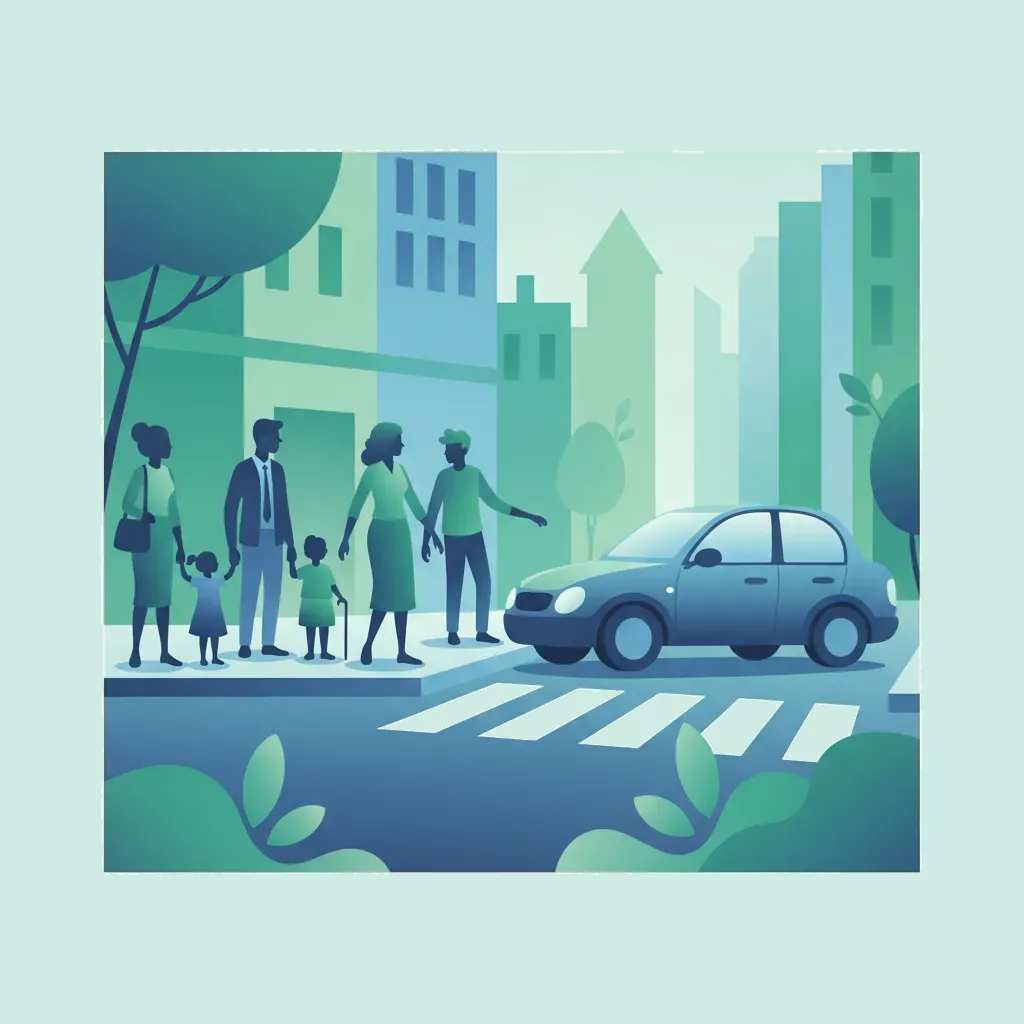
Lesson content overview
Navigating Italian roads requires a deep understanding of driver responsibilities, particularly concerning the safety of pedestrians. Pedestrians are among the most vulnerable road users, making their protection a paramount concern for every driver preparing for the Italian Patente B theory test. This lesson delves into the legal requirements and best practices for interacting with pedestrians, with a special focus on designated crossing points and urban environments.
Understanding these rules is not just about avoiding penalties; it's about fostering a safer road environment for everyone and preventing serious accidents. Your ability to anticipate pedestrian movements, adjust your speed, and yield the right-of-way correctly is fundamental to safe and responsible driving in Italy.
Pedestrian crossings, known in Italy as "strisce pedonali," are clearly marked areas on the road specifically designated for pedestrians to cross safely. These markings are crucial for creating predictable interactions between vehicles and those on foot. Recognizing them and knowing your obligations is a cornerstone of Italian traffic law.
The most common type of pedestrian crossing features two parallel white lines across the carriageway, often with a series of white stripes (resembling a zebra pattern) between them. These are typically found in urban areas, at intersections, and near places with high pedestrian activity. Some crossings may be "raised crosswalks," which are elevated platforms designed to increase driver awareness and encourage slower speeds. While functionally similar, the raised design physically emphasizes the crossing point.
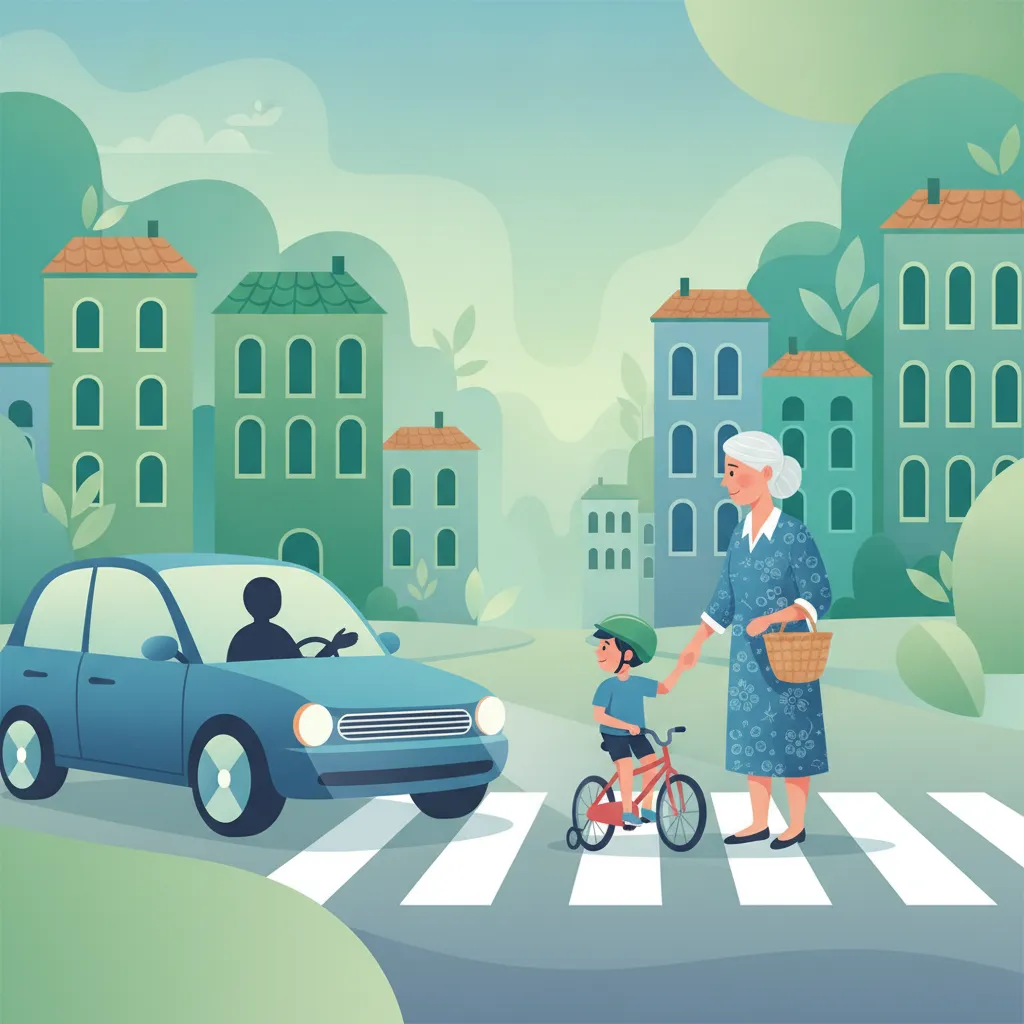
A fundamental principle of the Italian Highway Code (Codice della Strada) is that pedestrians who are on a marked crosswalk, or are clearly about to step onto one, have absolute priority over vehicular traffic. This means that drivers must yield the right-of-way to them. It is not sufficient to simply slow down; a driver must come to a complete stop before the white line if a pedestrian is present or clearly indicating their intention to cross. This rule applies universally, regardless of other traffic signals or conditions, unless specific additional signs indicate otherwise.
Always be prepared to stop when approaching a pedestrian crossing. Look for pedestrians not just on the crossing, but also waiting at the curb, showing intent to cross.
Even at intersections controlled by traffic lights, the priority rule for pedestrians on a crosswalk remains crucial. If your traffic light is green, but a pedestrian is already on the strisce pedonali (for example, they started crossing before the lights changed, or the pedestrian signal allowed them to), you must stop before the white line and allow them to complete their crossing safely. Proceeding while a pedestrian is still in the crossing is illegal and extremely dangerous.
In some situations, a yield sign might accompany a pedestrian crossing, reinforcing the need for drivers to give way.
This sign emphasizes that you must stop if necessary to ensure the safe passage of pedestrians and other traffic that has priority.
Beyond marked crossings, certain areas are designated as pedestrian priority zones, requiring heightened vigilance and reduced speeds from drivers. These zones are designed to protect pedestrians in environments where they are particularly vulnerable or where vehicle traffic is less dominant.
Speed limits are significantly reduced in areas with high pedestrian density to enhance safety. For instance, many urban residential zones have a speed limit of 30 km/h, while school zones often enforce limits as low as 20 km/h during school hours. These lower speeds provide drivers with more time to react to unexpected pedestrian movements, especially children who may act impulsively. Observing these limits is mandatory and a key aspect of defensive driving.
Failing to reduce your speed in these critical areas dramatically increases stopping distances and reduces your ability to avoid collisions. Even if no pedestrians are immediately visible, the potential for them to appear warrants strict adherence to the posted speed limits.
Many Italian cities feature "Zone a Traffico Limitato" (ZTLs) or historic centers where vehicle access is restricted and pedestrian priority is significantly heightened. These areas are often characterized by narrow streets, limited visibility, and high foot traffic, sometimes without clearly marked strisce pedonali. Within a ZTL, drivers must be exceptionally attentive to pedestrians, yielding to them even if no explicit crosswalk is present, as the entire area is often considered a pedestrian-friendly space.
Local signage will indicate the specific rules for entry and circulation within these zones, which drivers must meticulously follow to avoid fines and ensure pedestrian safety.
When operating near schools or school transport vehicles, drivers have additional responsibilities. If a school bus stops and signals that children are loading or unloading (often indicated by flashing lights or a stop sign extending from the bus), you must stop your vehicle. You must remain stopped until the bus moves off or the signals are retracted, ensuring all children have safely cleared the roadway. This rule is in place to protect children, who may cross the road without fully checking for traffic.
Effective driving for pedestrian safety goes beyond just following rules; it involves actively enhancing your visibility and anticipating the actions of others.
Proper use of vehicle lighting is crucial, especially during low-light conditions, at dusk, dawn, or at night. Drivers must ensure their dipped beam headlights are on in urban areas, making their vehicle visible to pedestrians and illuminating the crossing area. Fog lights should be used in conditions of reduced visibility, such as fog, heavy rain, or snow, but never as a substitute for headlights in clear conditions. Ensuring that your vehicle is well-lit significantly increases the chances of pedestrians seeing you, and vice-versa.
Conversely, interior vehicle lighting should be switched off or dimmed when driving, as it can reduce your night vision and make it harder to spot pedestrians outside the vehicle.
Defensive driving mandates anticipating potential hazards, and pedestrian behavior is a prime example. Drivers should continuously scan the environment around pedestrian crossings, schools, parks, and residential areas. Be alert for children who might run into the street, elderly individuals who may move slowly, or distracted pedestrians (e.g., using mobile phones) who might not be paying attention to traffic. By anticipating these possibilities, you can prepare to react in advance, such as by slowing down or covering your brake.
Pedestrians, especially children and the elderly, may not always follow traffic rules or make eye contact. Always be prepared for the unexpected.
Understanding common errors can help drivers avoid dangerous situations and legal penalties associated with pedestrian interactions.
Safe driving around pedestrians requires adjusting your behavior to various environmental and situational factors.
Adverse weather like rain, fog, or snow significantly increases stopping distances due to reduced tire grip. In such conditions, you must reduce your speed even further than usual when approaching crossings to allow for a longer deceleration period. Low light conditions (night, dusk, dawn) reduce the visibility of both pedestrians and road markings. Ensure your headlights are on and clean, and actively scan for poorly visible pedestrians.
The type of vehicle you are driving directly impacts your stopping distance. Heavy vehicles, such as trucks, or vehicles towing trailers, require considerably more distance to come to a complete stop compared to a standard car. Drivers of such vehicles must anticipate crossings much earlier and begin decelerating well in advance to ensure they can stop safely for pedestrians.
While all pedestrians are vulnerable, some require extra consideration. Children may be unpredictable and small, making them harder to spot. Elderly pedestrians may move slower, have impaired hearing or vision, and take longer to cross. Visually impaired pedestrians using canes or guide dogs require your utmost patience and a full stop. Cyclists, while not strictly pedestrians, may also use pedestrian crossings or shared paths, and drivers must be prepared to yield to them as well in such contexts.
Adherence to pedestrian priority rules is a non-negotiable aspect of driving in Italy. The Codice della Strada imposes strict penalties for violations.
Drivers are legally obligated to:
Failure to comply with these rules can result in significant fines, the accumulation of demerit points on your driving license, and in severe cases, even license suspension. More importantly, it dramatically increases the risk of causing serious injury or fatality to a vulnerable road user. The rationale behind these strict laws is to protect pedestrians, ensure predictable traffic flow at crossings, and mitigate the physical disadvantage pedestrians face against vehicles.
By mastering the principles outlined in this lesson, you will be well-prepared to navigate pedestrian crossings safely and responsibly, contributing to safer Italian roads for everyone.
This lesson covers the driver's legal obligations regarding pedestrians in Italy, centered on the absolute priority rule at marked pedestrian crossings (strisce pedonali) established by the Codice della Strada. Learners must understand that stopping is mandatory when pedestrians are on or about to enter a crossing, regardless of traffic light status. The lesson details mandatory speed reductions in urban and school zones, special rules for ZTL pedestrian priority areas, and requirements around school buses. Seven common violations are explicitly identified, including failing to stop for pedestrians, overtaking stopped vehicles at crossings, and ignoring school zone limits. Understanding these rules is essential for both passing the Patente B theory exam and practicing safe urban driving.
A short set of high-value points that capture the most important learning from this lesson.
Pedestrians on or clearly about to enter a marked crosswalk (strisce pedonali) have absolute priority over vehicles, requiring a complete stop even if your traffic light is green.
Speed must be reduced to 30 km/h in urban residential zones and 20 km/h in school zones during operating hours, regardless of whether pedestrians are immediately visible.
Never overtake a vehicle that has stopped at a pedestrian crossing, as it is likely yielding to a pedestrian you cannot see.
In ZTL (Limited Traffic Zones) and historic centers, pedestrian priority applies even without marked crossings due to the pedestrian-friendly design of these areas.
You must stop completely when a school bus signals children are loading or unloading and remain stopped until the bus moves or signals are retracted.
Explore all units and lessons included in this driving theory course.
Drivers must stop before the white line at a strisce pedonale whenever a pedestrian is present or clearly intending to cross, not merely slow down.
Even at green lights, you must yield to pedestrians still on the crossing who began crossing before the light changed.
Reduced speed limits in pedestrian zones are mandatory and exist because stopping distances increase dramatically at normal speeds.
Overtaking a stopped vehicle at a crossing is illegal because the stopped vehicle is likely yielding to an invisible pedestrian.
Children and elderly pedestrians may act unpredictably; always be prepared for unexpected movements near crossings.
Proceeding on a green light while a pedestrian is still on the strisce pedonali, assuming the green signal grants unconditional right-of-way.
Failing to reduce speed in school zones or urban areas, believing the limit only applies when pedestrians are visibly present.
Overtaking a vehicle that has stopped at a crossing, creating a blind spot hazard for pedestrians.
Assuming normal road priority rules apply inside ZTL zones, where pedestrians often have priority even without marked crossings.
Misinterpreting a flashing amber pedestrian signal as granting vehicles automatic right-of-way; it means proceed with caution and be prepared to stop.
Lesson content overview
A short set of high-value points that capture the most important learning from this lesson.
Pedestrians on or clearly about to enter a marked crosswalk (strisce pedonali) have absolute priority over vehicles, requiring a complete stop even if your traffic light is green.
Speed must be reduced to 30 km/h in urban residential zones and 20 km/h in school zones during operating hours, regardless of whether pedestrians are immediately visible.
Never overtake a vehicle that has stopped at a pedestrian crossing, as it is likely yielding to a pedestrian you cannot see.
In ZTL (Limited Traffic Zones) and historic centers, pedestrian priority applies even without marked crossings due to the pedestrian-friendly design of these areas.
You must stop completely when a school bus signals children are loading or unloading and remain stopped until the bus moves or signals are retracted.
Explore all units and lessons included in this driving theory course.
Drivers must stop before the white line at a strisce pedonale whenever a pedestrian is present or clearly intending to cross, not merely slow down.
Even at green lights, you must yield to pedestrians still on the crossing who began crossing before the light changed.
Reduced speed limits in pedestrian zones are mandatory and exist because stopping distances increase dramatically at normal speeds.
Overtaking a stopped vehicle at a crossing is illegal because the stopped vehicle is likely yielding to an invisible pedestrian.
Children and elderly pedestrians may act unpredictably; always be prepared for unexpected movements near crossings.
Proceeding on a green light while a pedestrian is still on the strisce pedonali, assuming the green signal grants unconditional right-of-way.
Failing to reduce speed in school zones or urban areas, believing the limit only applies when pedestrians are visibly present.
Overtaking a vehicle that has stopped at a crossing, creating a blind spot hazard for pedestrians.
Assuming normal road priority rules apply inside ZTL zones, where pedestrians often have priority even without marked crossings.
Misinterpreting a flashing amber pedestrian signal as granting vehicles automatic right-of-way; it means proceed with caution and be prepared to stop.
Explore search topics learners often look for when studying Pedestrians and Crossings. These topics reflect common questions about road rules, driving situations, safety guidance, and lesson level theory preparation for learners in Italy.
Browse additional driving theory lessons that cover connected traffic rules, road signs, and common driving situations related to this topic. Improve your understanding of how different rules interact across everyday traffic scenarios.
Understand the specific rules for driving in pedestrian priority zones, ZTLs, and historic centers in Italy. Learn how to navigate these areas safely and avoid violations according to the Codice della Strada.
This lesson covers the general principles of priority at intersections governed by traffic signs and signals. It explains how to identify a priority road and the obligation to yield to traffic when encountering a 'dare la precedenza' (yield) or stop sign. The content also reviews the hierarchy of authority, where signals from a traffic officer override all other signs and lights.

This lesson clarifies the special priority rules for emergency vehicles and public transport. It explains the legal obligation to safely pull over and clear a path for any vehicle with active sirens and flashing lights. The content also details the absolute right-of-way that trams have in most situations and the requirement to yield to public buses signaling to pull out from a stop.

This lesson provides a detailed explanation of the priority rules that govern Italian intersections and roundabouts. You will learn to identify priority roads and correctly apply the rules for stop and give way signs. It also covers the specific procedures for entering, navigating, and exiting roundabouts, emphasizing when to yield to circulating traffic.
This lesson delivers a comprehensive explanation of right-of-way regulations at Italian intersections. It covers the interpretation of traffic light signals, the absolute requirement to stop at stop signs, and yielding at give-way signs. Furthermore, it details the default priority rules for unmarked intersections and the specific obligations a rider has towards pedestrians on crossings.
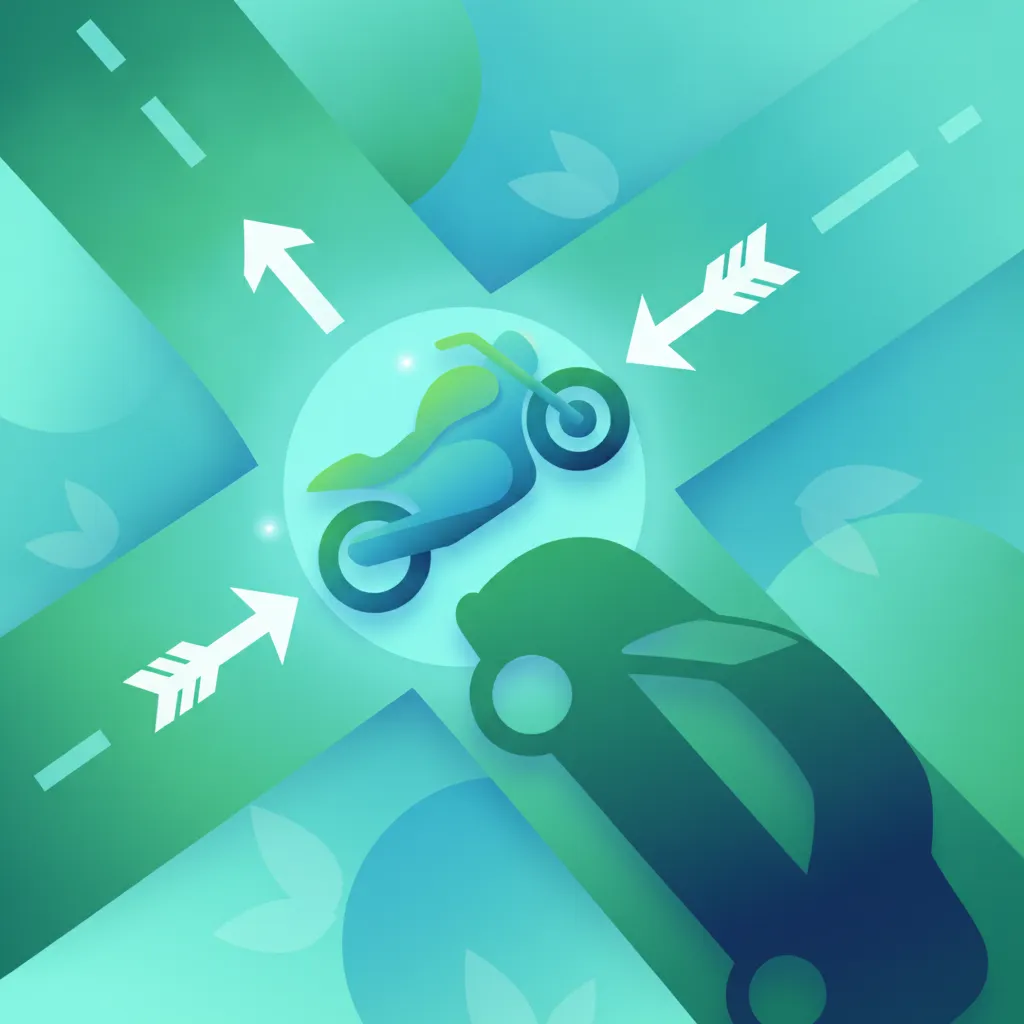
This lesson focuses on the crucial rule for navigating uncontrolled intersections in Italy: yielding to vehicles approaching from the right (precedenza a destra). It explains how to apply this default rule when no signs or signals are present to direct traffic flow. Learners will understand how to approach these junctions with caution, assess traffic, and proceed safely, while also learning about the few exceptions to this rule.
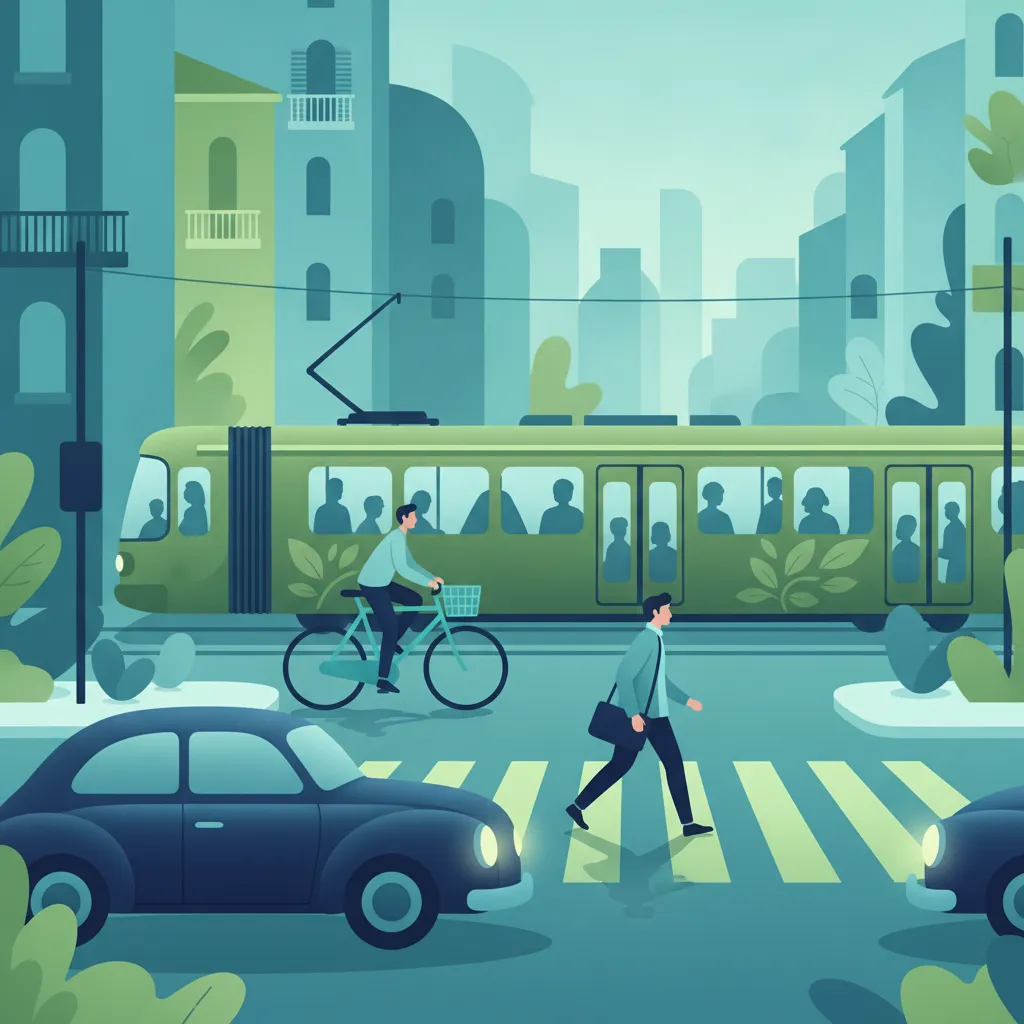
This lesson explains the fundamental principles of right of way that govern interactions between different types of road users in Italy. It clarifies the legal precedence at intersections, pedestrian crossings, and when interacting with public transport like buses and trams. The content also details the absolute priority given to emergency vehicles and how to safely yield in accordance with the Codice della Strada.
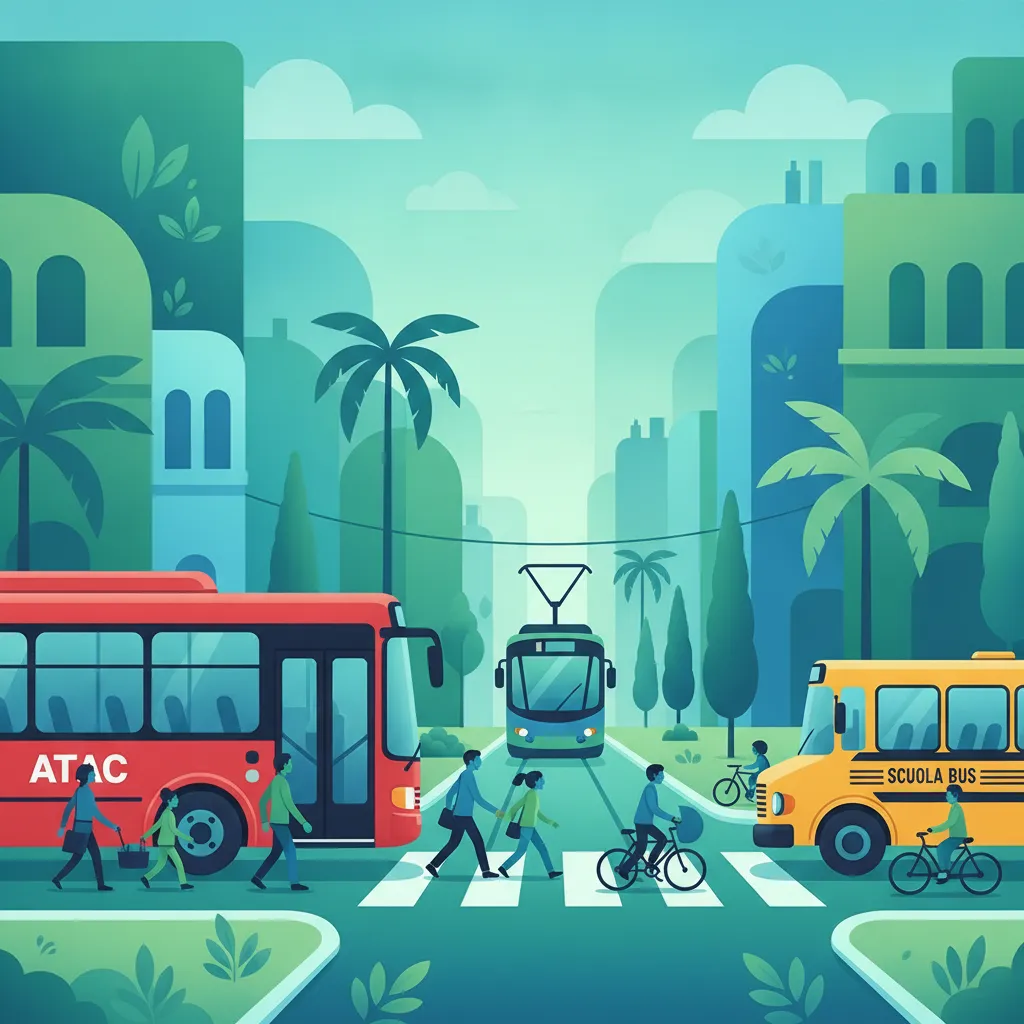
This lesson details the correct procedures for interacting with public transport and school buses. It explains the rules for dedicated bus lanes, the absolute priority of trams, and the legal requirement to yield to buses pulling out from a stop. The content also covers the specific laws requiring drivers to stop when a school bus is loading or unloading passengers, to ensure child safety.
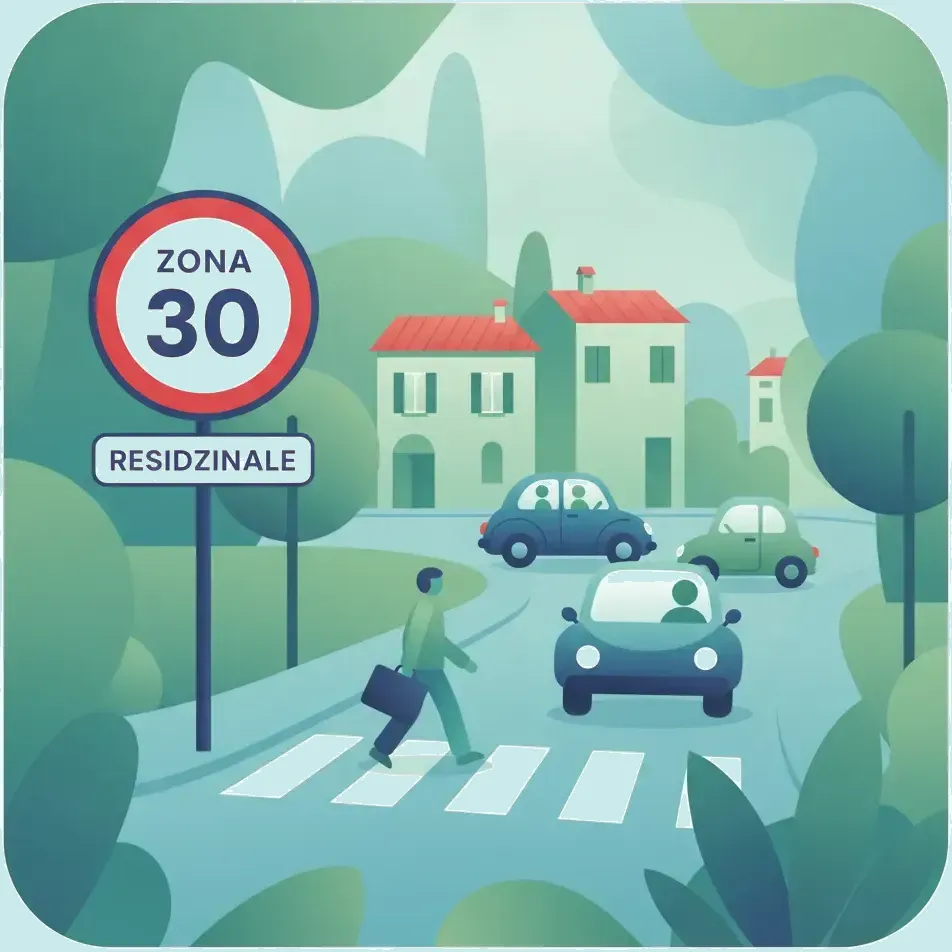
This lesson focuses on the specific signage and regulations for low-speed zones, such as "Zone 30" areas common in Italian towns. You will learn to recognize the signs that indicate reduced speed limits in residential areas, school zones, and other pedestrian-heavy environments. The content also explains various traffic calming measures and the priority rules that apply within these designated zones.

This lesson provides an in-depth focus on sharing the road with the most vulnerable users. It teaches drivers to be acutely aware of pedestrians at crossings, cyclists filtering through traffic, and motorcyclists who may be in blind spots. The lesson emphasizes the importance of leaving extra space, signaling intentions clearly, and exercising extreme caution at junctions, where the majority of serious incidents occur.
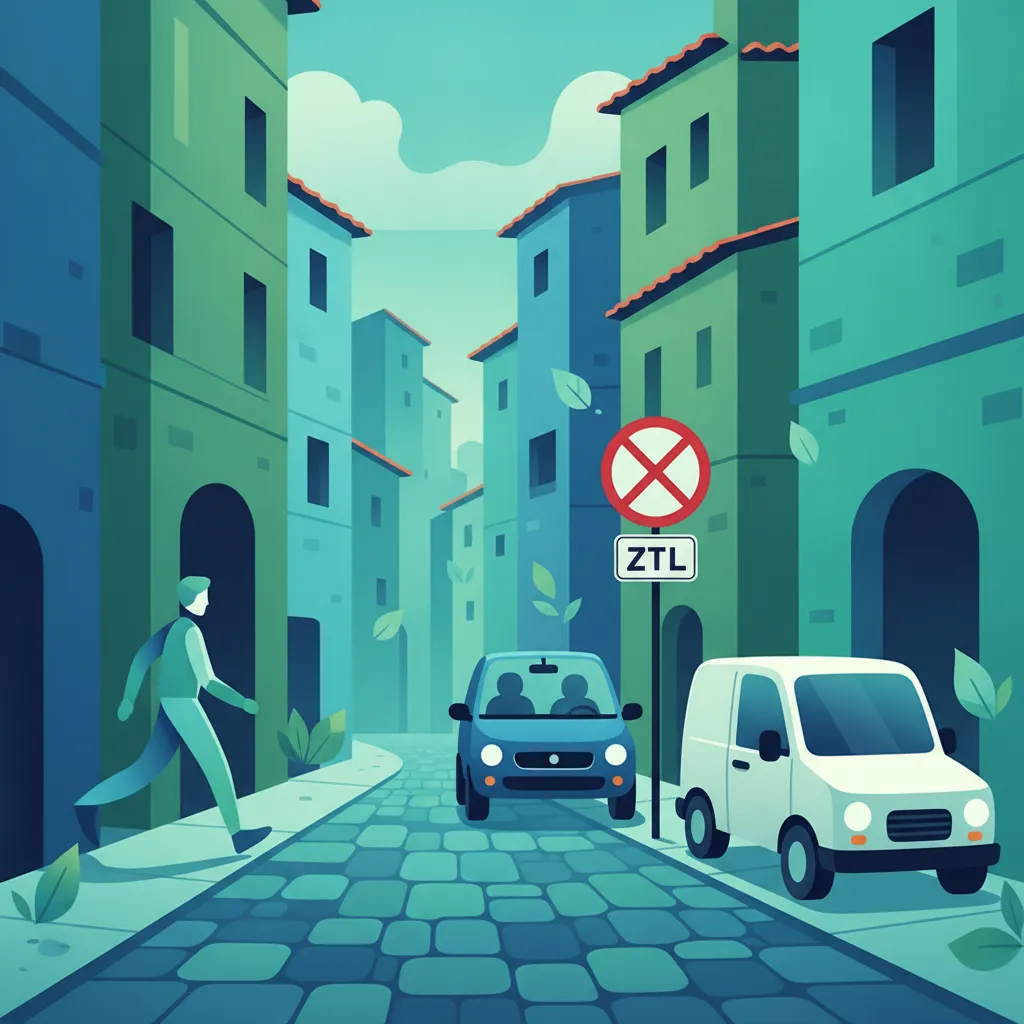
This lesson explains the rules for special urban traffic situations common in Italy. It provides a detailed explanation of Limited Traffic Zones (ZTL), including how to recognize the signage and understand the access restrictions to avoid fines. The content also offers guidance on navigating the narrow and complex streets of historic centers and safely maneuvering around frequently stopping delivery vehicles.
Explore typical mistakes and hazardous situations drivers encounter at pedestrian crossings in Italy. Learn to anticipate risks, understand vulnerable road user behavior, and ensure maximum safety for pedestrians.
This lesson provides an in-depth focus on sharing the road with the most vulnerable users. It teaches drivers to be acutely aware of pedestrians at crossings, cyclists filtering through traffic, and motorcyclists who may be in blind spots. The lesson emphasizes the importance of leaving extra space, signaling intentions clearly, and exercising extreme caution at junctions, where the majority of serious incidents occur.
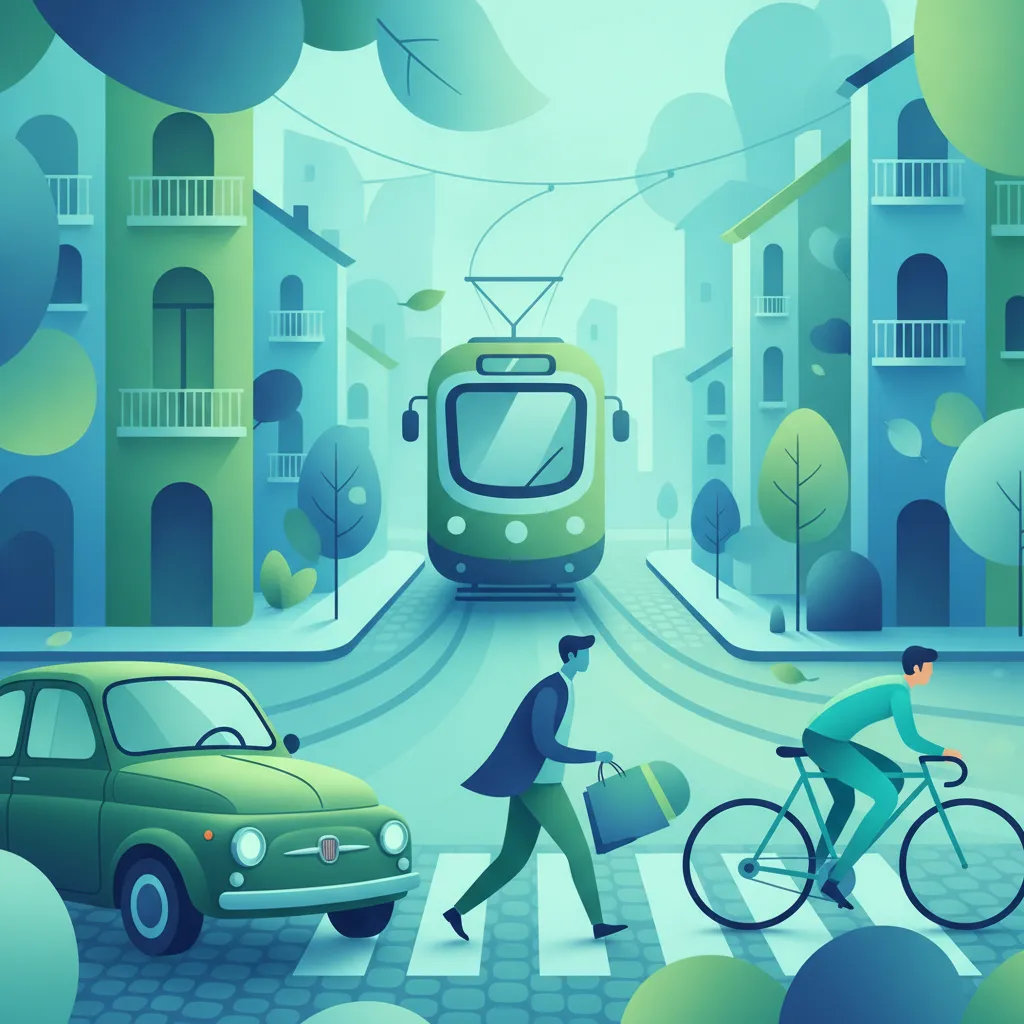
This lesson is dedicated to fostering awareness and safe interaction with vulnerable road users commonly found in cities. It details the legal priority of pedestrians at crossings and the importance of giving ample space to cyclists. Additionally, it covers the specific hazards associated with tram tracks and the need to be vigilant around public transport vehicles like buses and taxis.
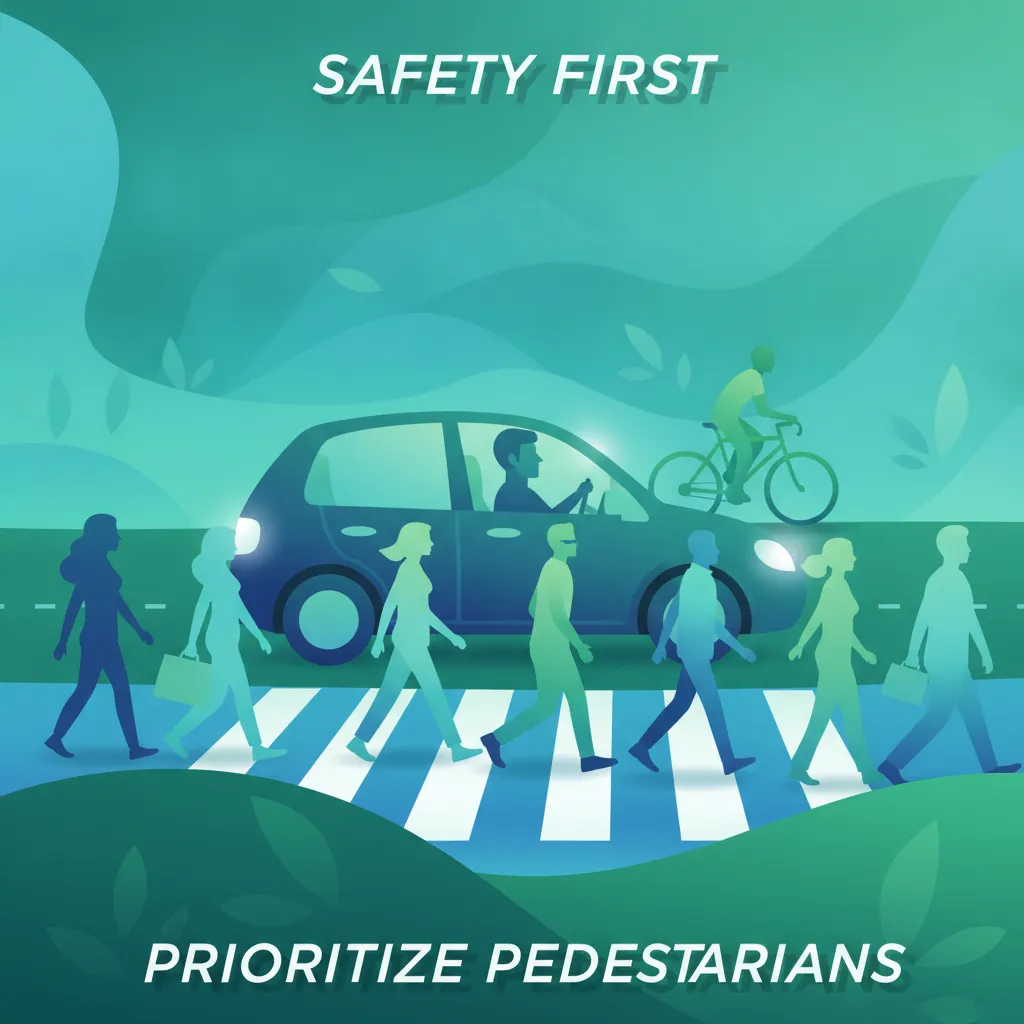
This lesson provides critical guidance on how to safely share the road with vulnerable users, including pedestrians, cyclists, motorcyclists, and children. It highlights the importance of increased awareness in specific areas like school zones and crosswalks. The content teaches techniques for maintaining a safe lateral distance when overtaking, checking blind spots thoroughly, and anticipating the often unpredictable movements of these users.
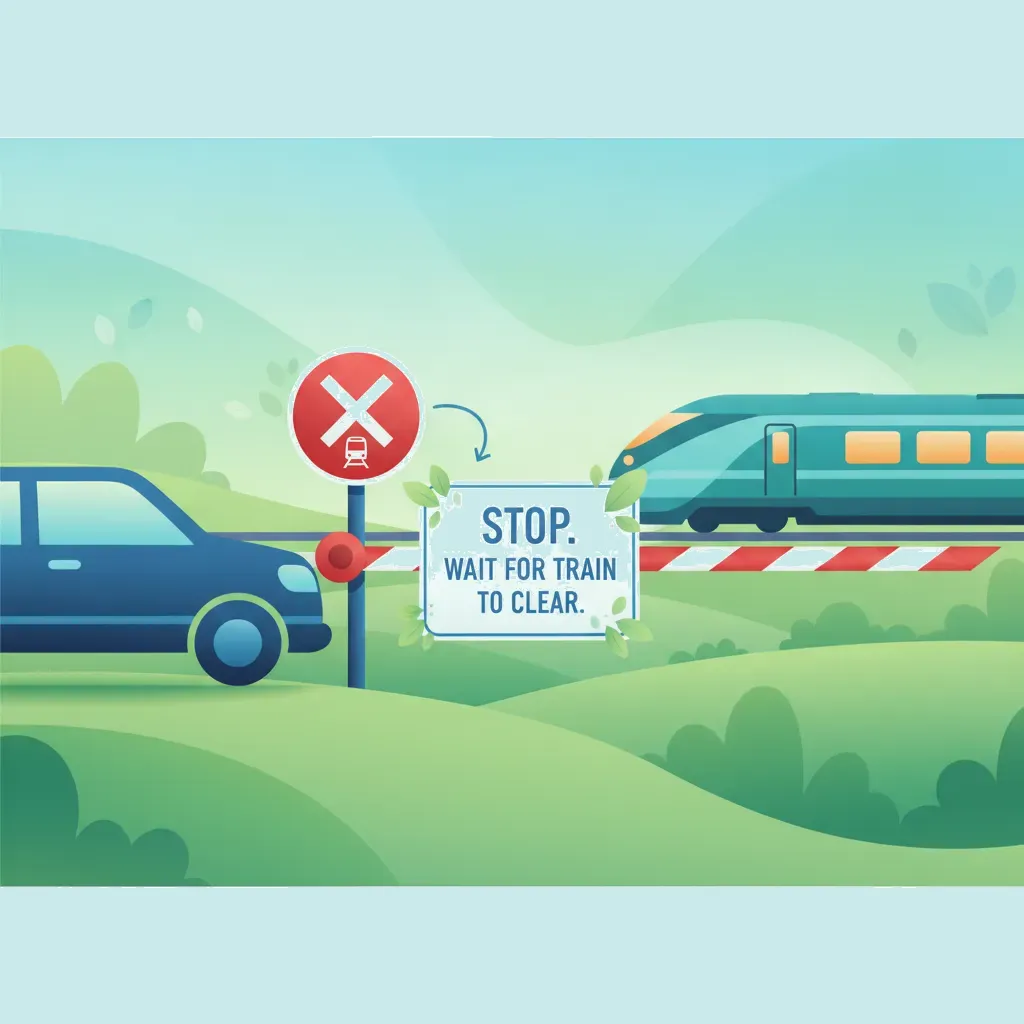
This lesson focuses on the vital safety procedures required when approaching and crossing railway lines (passaggio a livello). It details how to interpret the warning systems, including flashing red lights, audible alarms, and lowering barriers, all of which mandate a complete stop. The content also covers procedures for crossings without barriers and emphasizes the importance of ensuring tracks are clear in both directions before proceeding.
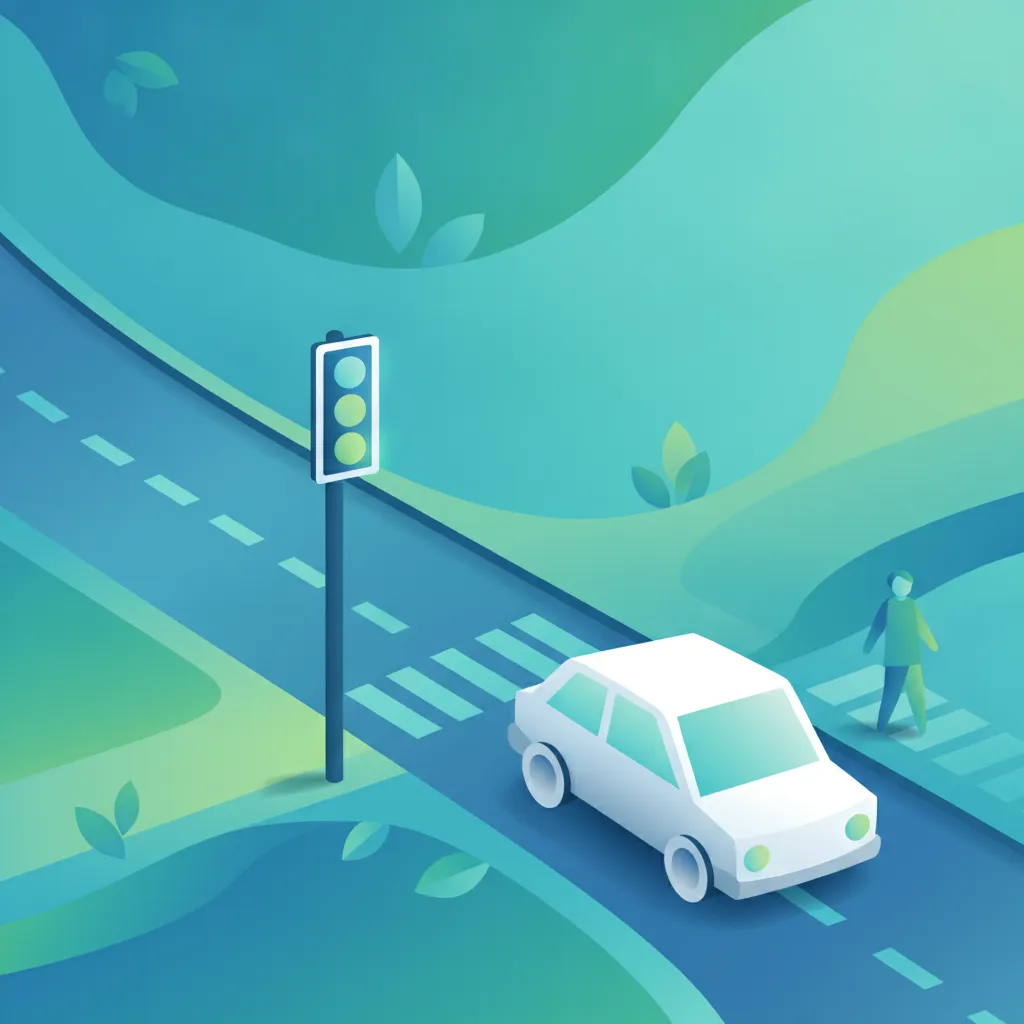
This lesson details how to safely approach and enter intersections by correctly interpreting traffic lights, stop signs, and give-way rules. It emphasizes the importance of scanning for hazards, checking blind spots, and anticipating the actions of other road users. You will learn to adjust your speed and position your vehicle correctly to navigate crossings without incident.
This lesson addresses the critical responsibility of protecting vulnerable road users, such as pedestrians, cyclists, and motorcyclists, who are most at risk in a collision with a heavy vehicle. It teaches drivers to be hyper-aware in urban settings, to anticipate the unpredictable movements of VRUs, and to provide ample space, especially when turning at junctions. A key focus is on scanning for VRUs in blind spots before moving off or making any maneuver.
This lesson delivers a comprehensive explanation of right-of-way regulations at Italian intersections. It covers the interpretation of traffic light signals, the absolute requirement to stop at stop signs, and yielding at give-way signs. Furthermore, it details the default priority rules for unmarked intersections and the specific obligations a rider has towards pedestrians on crossings.
This lesson covers the general principles of priority at intersections governed by traffic signs and signals. It explains how to identify a priority road and the obligation to yield to traffic when encountering a 'dare la precedenza' (yield) or stop sign. The content also reviews the hierarchy of authority, where signals from a traffic officer override all other signs and lights.
This lesson focuses on the crucial rule for navigating uncontrolled intersections in Italy: yielding to vehicles approaching from the right (precedenza a destra). It explains how to apply this default rule when no signs or signals are present to direct traffic flow. Learners will understand how to approach these junctions with caution, assess traffic, and proceed safely, while also learning about the few exceptions to this rule.
Find clear answers to common questions learners have about Pedestrians and Crossings. Learn how the lesson is structured, which driving theory objectives it supports, and how it fits into the overall learning path of units and curriculum progression in Italy. These explanations help you understand key concepts, lesson flow, and exam focused study goals.
Yes, if a pedestrian is on or clearly about to enter the crossing (strisce pedonali), you are legally required to stop and yield, allowing them to cross safely. Failure to do so is a common cause for exam failure and a serious traffic violation.
If your view is obscured by other vehicles or obstacles, you must slow down and be prepared to stop. Never overtake or drive quickly near a crossing if you cannot clearly see if any pedestrians are waiting to cross.
Yes, school zones often have reduced speed limits and higher pedestrian activity. You must exercise extreme caution, anticipate sudden movements by children, and always be ready to yield even if there is no marked crossing.
Generally, pedestrians should use designated crossings. However, drivers must always avoid endangering pedestrians, regardless of where they are. In the theory exam, always choose the safest, most defensive option that prioritizes the pedestrian's safety.
Start searching now to pinpoint exactly which Italian driving theory topics, road signs, or traffic rules you need to master. Use our advanced filters to build a custom practice session and ensure you're fully prepared for every aspect of your official driving licence exam.