
Navigating city streets safely includes changing lanes smoothly and decisively. This lesson builds on fundamental principles, specifically adapting them to the challenges of dense urban traffic in Poland. You'll learn to master the critical 'mirror, signal, maneuver' sequence and execute lane changes with confidence, preparing you for real-world driving and specific exam scenarios.
Lesson content overview
Changing lanes is a routine maneuver in driving, yet it demands heightened awareness, especially in the dynamic and often congested environment of urban traffic. For aspiring drivers preparing for their Polish Category B driving theory test, mastering safe lane changes is not merely a matter of convenience; it is a critical skill for preventing collisions, maintaining smooth traffic flow, and fulfilling legal obligations under Polish traffic law. This lesson adapts fundamental lane-changing principles to the unique challenges of city driving, ensuring you can execute this maneuver safely and confidently.
In cities and towns across Poland, vehicle density is high, speeds fluctuate, and a diverse mix of road users—including pedestrians, cyclists, and motorcyclists—share the road. This complex environment makes lane changes a primary source of collisions if not performed correctly. A minor misjudgment or oversight can lead to serious incidents. Mastering safe lane-changing techniques reduces the risk to all road users, contributes to efficient traffic movement, and directly aligns with the legal responsibilities outlined in Polish traffic law, specifically Prawo o ruchu drogowym (the Road Traffic Act) of 1997.
This guide will walk you through the complete procedure for changing lanes in city environments, covering the essential "mirror-signal-maneuver" sequence, critical blind spot verification, precise gap assessment, and the decisive execution required for a smooth and safe transition.
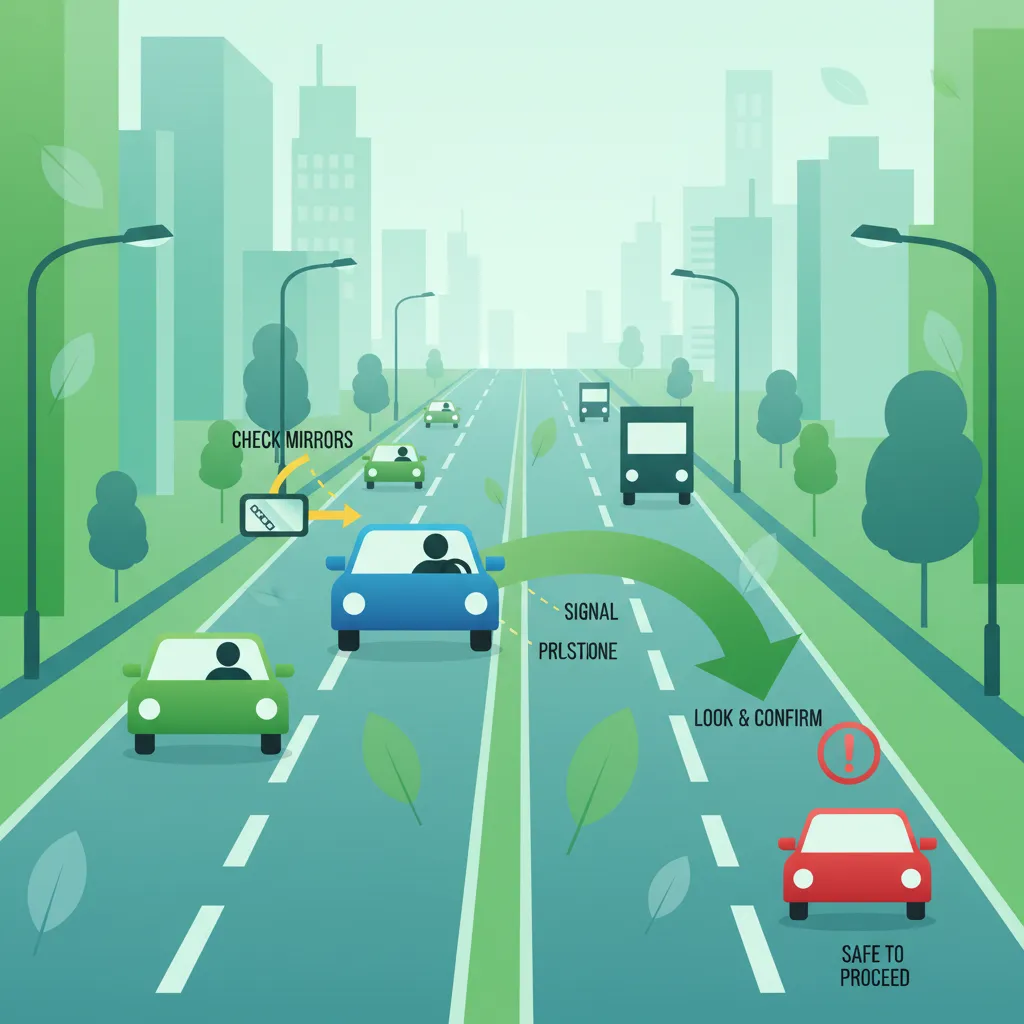
The Mirror-Signal-Maneuver (MSM) sequence is the cornerstone of any safe lane change. It is a systematic, three-step process designed to ensure you gather necessary information, communicate your intentions, and confirm clearance before making any lateral movement. Each step must be completed thoroughly before proceeding to the next; skipping any part significantly increases the risk of an incident and constitutes a violation of safe driving practice.
Mirror Check: Begin by checking your interior rearview mirror, then your exterior side mirrors on both sides. This gives you a comprehensive view of traffic behind and to your sides, helping you assess speed and distance of other vehicles.
Signal Intention: Once you have a preliminary understanding of the surrounding traffic, activate your turn signal (indicator) for the direction you intend to move. This step is crucial for communicating your intentions to other drivers and vulnerable road users, allowing them time to react. In Poland, this signal must be given sufficiently in advance, typically at least 5 seconds before the maneuver in urban areas.
Maneuver (after blind spot verification): After signaling and confirming your blind spot is clear, execute the lane change. This involves smoothly steering into the new lane, maintaining your speed, and canceling the signal once you are fully established in the new lane.
Common Mistakes: Drivers often signal too late, fail to check their side mirrors adequately, or initiate the lane change while still attempting to check mirrors. This incomplete process can lead to misjudgments and dangerous situations.
Even with properly adjusted mirrors, every vehicle has blind spots—areas around the vehicle that are not visible in any mirror. These areas can easily hide an entire car, a motorcycle, or especially a bicycle, making a direct visual check absolutely essential before any lateral movement.
Blind-spot verification involves a quick glance over your shoulder towards the intended lane of travel. This "shoulder check" ensures that no vehicle, cyclist, or pedestrian occupies the space you intend to move into. Some modern vehicles are equipped with blind-spot monitoring systems, which use sensors to detect vehicles in these areas and provide a warning. While helpful, these systems should always be considered an aid, not a replacement, for a direct visual check.
Practical Meaning: The lane change must not be initiated until you have visually confirmed that your blind spot is clear. Performing this check immediately after signaling and just before steering ensures you have the most up-to-date information about your immediate surroundings.
Common Mistakes: Relying solely on mirrors, neglecting to perform a shoulder check, or performing the check too early or too late can lead to collisions, particularly with vulnerable road users who might be rapidly approaching.
Gap assessment is the critical process of evaluating the distance and speed of vehicles in the target lane to determine if a safe interval exists for your vehicle to enter. In urban traffic, this assessment is complicated by varying speeds, frequent stops, and diverse vehicle types. You must ensure there is enough space to complete the lane change without forcing other drivers to brake abruptly or take evasive action.
Associated Rules: After completing a lane change, you must maintain a minimum safe front-back distance from the vehicle ahead in your new lane. The two-second rule is a commonly recommended guideline for urban traffic under normal conditions: choose a fixed point on the road (e.g., a sign, a tree). When the vehicle ahead passes that point, you should be able to count "one thousand one, one thousand two" before your vehicle reaches the same point. If you reach it sooner, you are too close.
Common Mistakes: Drivers often underestimate the closing speed of vehicles, attempt to "fit" into a gap that is rapidly diminishing, or fail to consider the speed of vehicles behind them that might also be preparing for a maneuver. Misjudging a gap can lead to sudden braking, increased accident risk, and aggressive driving behavior from others.
Once you have completed your mirror checks, signaled your intention, verified your blind spot, and confirmed a safe gap, the final step is decisive execution. This means performing the lane change in a single, smooth motion without hesitation or unnecessary swerving.
Hesitation after signaling can confuse surrounding traffic, leading to unpredictable reactions from other drivers. It also prolongs the period of lateral exposure, increasing risk. When you commit to the lane change, steer gently and smoothly into the new lane, maintaining your speed. The turn signal should remain activated until your vehicle is fully within the new lane.
Common Mistakes: Drivers sometimes "drift" across the lane line, hesitate mid-maneuver, or retract their signal before fully completing the lane change. These actions can be dangerous and are indicative of a lack of confidence or proper planning.
After confirming your safety checks, commit to the lane change with confidence. Smooth, controlled steering is key to avoiding sudden movements that could upset your vehicle's stability or surprise other drivers.
Under Polish law, specifically Article 30 of the Road Traffic Act (Prawo o ruchu drogowym, ustawa z 1997 r.), drivers are legally obligated to indicate any lane change using their vehicle's turn signals. This is not merely a courtesy; it is a mandatory safety requirement designed to provide advance warning to other road users, allowing them sufficient time to anticipate and react to your maneuver.
Specific Requirement: In urban areas, drivers must activate their turn signal at least 5 seconds before initiating the lane change. This lead time is crucial in busy city traffic, where situations can change rapidly. The signal must be maintained throughout the entire maneuver until the vehicle has fully occupied the new lane.
Consequences of Non-Compliance: Failure to signal, or signaling too late, is a punishable offense under Polish law. It can result in a fine and penalty points on your driving license. More importantly, it significantly increases the risk of collision, as other drivers are not given adequate warning of your intentions.
Lane discipline refers to your adherence to road markings, which are vital for guiding traffic flow and ensuring safety. Road markings dictate where and when lane changes are permitted or prohibited.
Associated Rules: The Regulation of Traffic Signs and Signals (Dz.U. 1997 nr 98 poz. 602) specifies these rules. Crossing a solid line without a justified emergency is a violation and may result in penalties. Always be observant of these markings, especially in complex urban junctions or areas with dedicated lanes (e.g., bus lanes).
Example: On a city street with a solid white line separating a bus lane, you must refrain from entering the bus lane, even during congestion, until you reach a permitted opening at a junction where the line becomes broken.
Several articles and regulations within Polish law govern safe lane changes, reinforcing the principles discussed above. Understanding these legal frameworks is essential for responsible driving and passing your Category B driving theory test.
Article 30 (Polish Road Traffic Act, 1997):
Regulation of Traffic Signs and Signals (Dz.U. 1997 nr 98 poz. 602):
Polish Highway Code (Rozporządzenie Ministra Infrastruktury, 2002):
Even experienced drivers can make mistakes when changing lanes, especially in the fast-paced urban environment. Awareness of these common errors can help you avoid them.
Safe driving requires constant adaptation. The principles of safe lane changing remain constant, but their application must be adjusted based on environmental and vehicle conditions.
Vulnerable road users (VRUs) – pedestrians, cyclists, and motorcyclists – are at much higher risk of injury in a collision than vehicle occupants. Their smaller size also makes them harder to spot, especially in blind spots.
To drive safely and confidently in Poland's urban environments, integrate these principles into your daily driving practice:
By diligently applying these principles, you will significantly reduce the risks associated with lane changes in urban traffic, contributing to your safety and the safety of everyone on Polish roads.
This lesson teaches the essential procedure for safely changing lanes in Polish urban traffic, emphasizing the Mirror-Signal-Maneuver sequence as the foundation for safe lane changes. Key Polish legal requirements include signaling at least 5 seconds before the maneuver and respecting lane markings (solid lines prohibit, broken lines permit). Blind spot checks via shoulder verification are mandatory before moving, as mirrors cannot capture all surrounding vehicles, especially smaller road users. The two-second rule provides the minimum safe following distance after completing a lane change, and gap assessment must account for both static distances and dynamic speed changes of surrounding traffic.
A short set of high-value points that capture the most important learning from this lesson.
Always follow the Mirror-Signal-Maneuver sequence completely before changing lanes, completing each step before moving to the next.
A direct shoulder check is essential to eliminate blind spots since mirrors alone cannot capture all surrounding traffic.
In Polish urban areas, activate your turn signal at least 5 seconds before initiating a lane change.
Only change lanes where broken white lines permit it; solid white lines prohibit lane changes.
Maintain at least a two-second following distance after completing a lane change to ensure safe spacing.
Explore all units and lessons included in this driving theory course.
The three-step MSM sequence: check mirrors, signal your intention, then maneuver after blind spot verification.
Blind spots can hide entire vehicles, motorcycles, and bicycles that mirrors cannot detect.
Solid white lines mean lane changes are prohibited; broken lines mean they are permitted.
Gap assessment requires evaluating both the static distance and dynamic speed relationships of surrounding vehicles.
Vulnerable road users like cyclists and pedestrians require extra vigilance as they are harder to spot and more easily injured.
Signaling late (less than the required 5 seconds in urban areas), giving other drivers insufficient warning.
Relying solely on mirrors and skipping the shoulder check, leading to collisions with vehicles in blind spots.
Crossing solid white lines when changing lanes, which violates road marking regulations.
Attempting to fit into a gap that is rapidly closing, misjudging the closing speed of vehicles in the target lane.
Hesitating after signaling, confusing other drivers who may anticipate a maneuver that does not happen.
Lesson content overview
A short set of high-value points that capture the most important learning from this lesson.
Always follow the Mirror-Signal-Maneuver sequence completely before changing lanes, completing each step before moving to the next.
A direct shoulder check is essential to eliminate blind spots since mirrors alone cannot capture all surrounding traffic.
In Polish urban areas, activate your turn signal at least 5 seconds before initiating a lane change.
Only change lanes where broken white lines permit it; solid white lines prohibit lane changes.
Maintain at least a two-second following distance after completing a lane change to ensure safe spacing.
Explore all units and lessons included in this driving theory course.
The three-step MSM sequence: check mirrors, signal your intention, then maneuver after blind spot verification.
Blind spots can hide entire vehicles, motorcycles, and bicycles that mirrors cannot detect.
Solid white lines mean lane changes are prohibited; broken lines mean they are permitted.
Gap assessment requires evaluating both the static distance and dynamic speed relationships of surrounding vehicles.
Vulnerable road users like cyclists and pedestrians require extra vigilance as they are harder to spot and more easily injured.
Signaling late (less than the required 5 seconds in urban areas), giving other drivers insufficient warning.
Relying solely on mirrors and skipping the shoulder check, leading to collisions with vehicles in blind spots.
Crossing solid white lines when changing lanes, which violates road marking regulations.
Attempting to fit into a gap that is rapidly closing, misjudging the closing speed of vehicles in the target lane.
Hesitating after signaling, confusing other drivers who may anticipate a maneuver that does not happen.
Explore search topics learners often look for when studying Changing Lanes Safely in Urban Traffic. These topics reflect common questions about road rules, driving situations, safety guidance, and lesson level theory preparation for learners in Poland.
Browse additional driving theory lessons that cover connected traffic rules, road signs, and common driving situations related to this topic. Improve your understanding of how different rules interact across everyday traffic scenarios.
Understand the essential rules and procedures for safe lane changes in busy city environments according to Polish driving theory. Covers signaling, blind spot checks, and gap assessment for urban driving.

This lesson focuses on the rules of lane usage for maintaining safe and efficient traffic flow. It covers the meaning of different lane markings, such as solid versus broken lines, and the general principle of keeping to the rightmost lane unless overtaking. Proper lane discipline is crucial for predictability and preventing conflicts on multi-lane roads.

This lesson provides strategies for safely navigating the numerous intersections typical of urban environments. It reinforces the application of priority rules in situations with limited visibility and high traffic volume. Techniques for making turns in narrow streets and being aware of pedestrians and cyclists at junctions are central to the instruction.

This lesson focuses on traffic control signals, primarily traffic lights. It details the meaning of each color in the sequence—red, amber, and green—as well as flashing signals and arrows for specific turns. The content also covers lane control signals and pedestrian signals to ensure safe and compliant navigation through controlled intersections.
This lesson emphasizes the importance of systematic observation for safe driving. It teaches how to correctly adjust and use rearview and side mirrors to monitor traffic, and explains why shoulder checks are essential for detecting hazards in blind spots. These techniques are fundamental for safe lane changes, turns, and overall situational awareness.
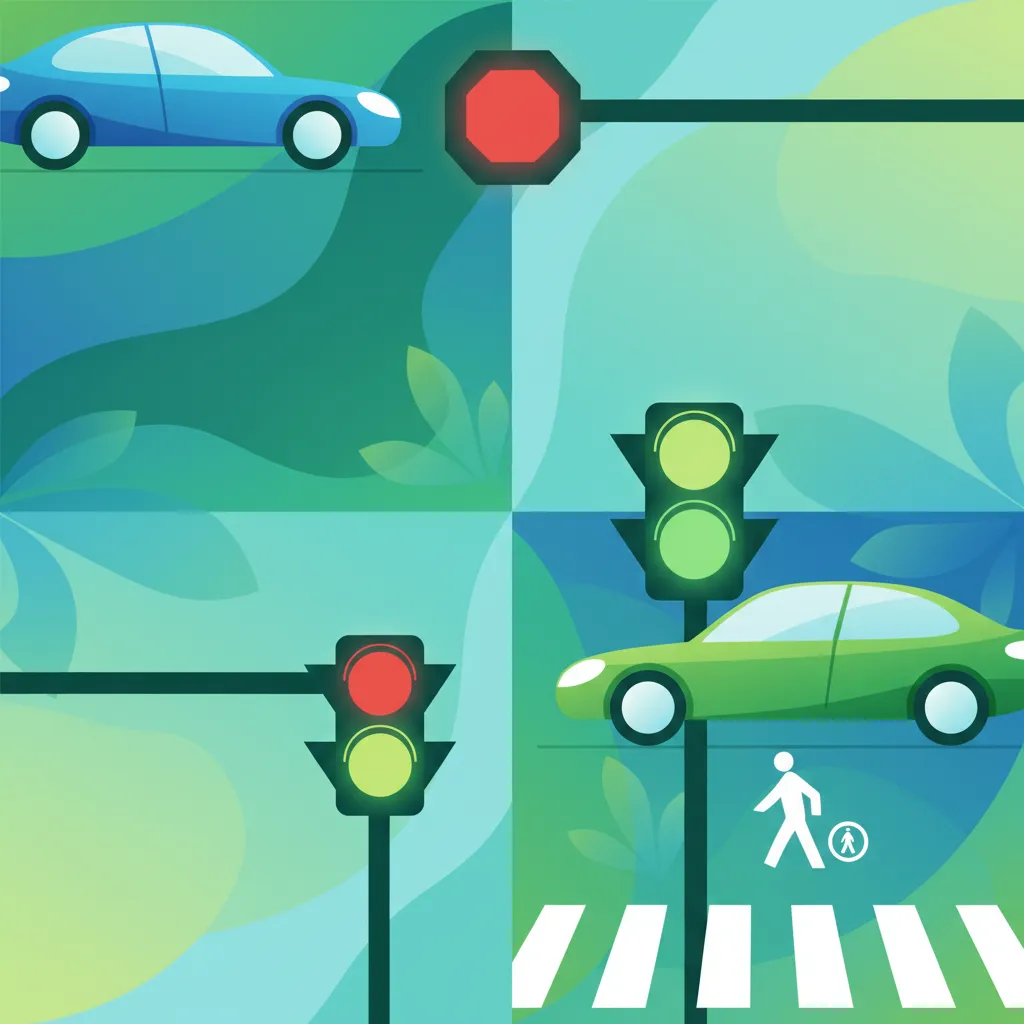
This lesson provides a detailed breakdown of traffic light operations in Poland. It explains the sequence of red, amber, and green lights, and the specific rules for turning when a green arrow signal is displayed. The meaning of a flashing amber light and the rules for pedestrian crossings at signalized intersections are also covered.

This lesson focuses on safe coexistence with cyclists and pedestrians, who are prevalent in urban areas. It covers the rules for driving alongside dedicated bicycle lanes and the legal requirement to yield to pedestrians at marked crossings. The content stresses the importance of constant awareness, especially when turning at intersections, to prevent conflicts with vulnerable road users.
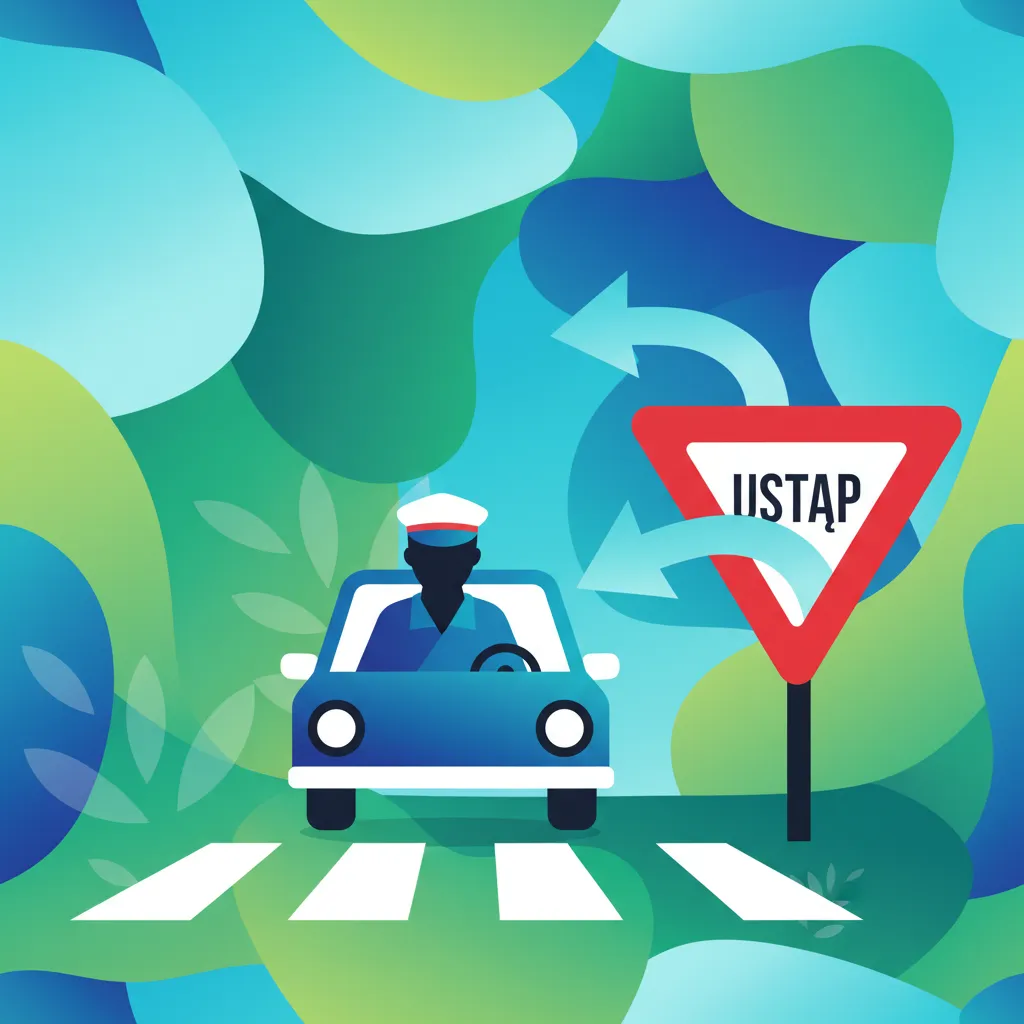
This lesson focuses on navigating intersections that are not controlled by traffic signals. It covers the interpretation of the 'Yield' sign (ustąp pierwszeństwa) and the application of the 'priority to the right' rule at junctions of equal roads. Safe decision-making and proper observation techniques are emphasized for these common scenarios.

This lesson addresses advanced scenarios, including multi-lane intersections and interactions with vulnerable road users. It reinforces the legal obligation to give absolute priority to pedestrians at marked crossings (zebra crossings). The content also covers navigating around traffic islands and using dedicated turning lanes in complex urban environments.

This lesson provides a guide to safely entering high-speed roads. It explains the function of the acceleration lane, where drivers must increase their speed to match the flow of traffic on the main carriageway. The importance of signaling, checking mirrors, and looking over the shoulder for blind spots before merging is heavily emphasized.
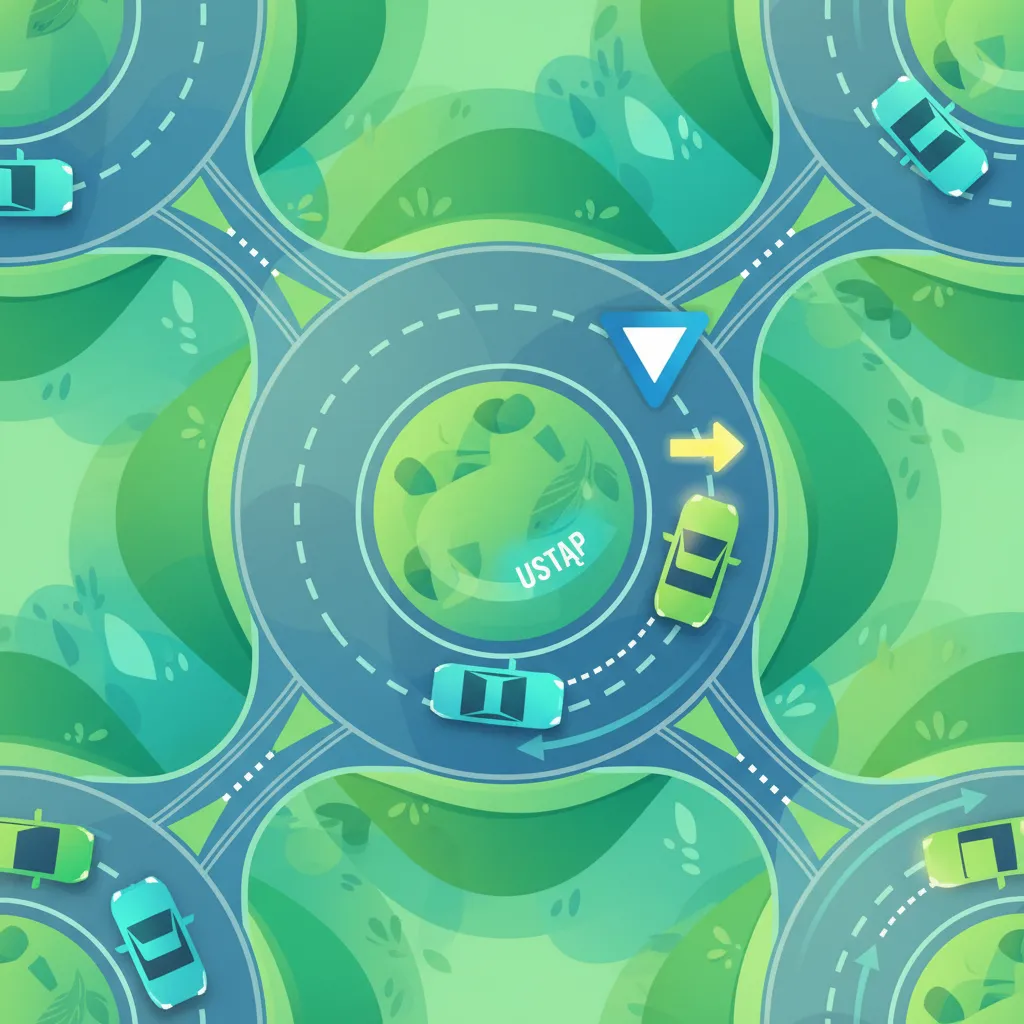
This lesson explains the specific rules for navigating roundabouts, a common feature on Polish roads. It emphasizes the primary rule of yielding to traffic already circulating within the roundabout before entering. The content also covers correct lane positioning for different exits and the proper use of indicators when exiting.
Learn about frequent mistakes and dangers encountered when changing lanes in city traffic. This lesson details how to identify and avoid hazards for safer urban driving in Poland.
This lesson focuses on the rules of lane usage for maintaining safe and efficient traffic flow. It covers the meaning of different lane markings, such as solid versus broken lines, and the general principle of keeping to the rightmost lane unless overtaking. Proper lane discipline is crucial for predictability and preventing conflicts on multi-lane roads.
This lesson focuses on safe coexistence with cyclists and pedestrians, who are prevalent in urban areas. It covers the rules for driving alongside dedicated bicycle lanes and the legal requirement to yield to pedestrians at marked crossings. The content stresses the importance of constant awareness, especially when turning at intersections, to prevent conflicts with vulnerable road users.

This lesson explores the unique characteristics of driving on rural roads. It highlights potential hazards such as sharp, unbanked curves, poor road surfaces, and limited visibility due to hills and vegetation. The content teaches drivers to anticipate these conditions and adjust their speed and position to navigate safely.

This lesson focuses on the unique demands of urban riding within Polish cities, addressing traffic lights, pedestrian zones, one-way streets, and the presence of tram tracks. Learners will study safe lane positioning on narrow roads, blind-spot management, and how to share the road with buses and cyclists. The content also covers strategies for navigating stop-and-go traffic, anticipating signal changes, and maintaining visibility in dense urban environments.
This lesson provides strategies for safely navigating the numerous intersections typical of urban environments. It reinforces the application of priority rules in situations with limited visibility and high traffic volume. Techniques for making turns in narrow streets and being aware of pedestrians and cyclists at junctions are central to the instruction.

This lesson prepares drivers for the event of a vehicle breakdown on a motorway or expressway. It details the correct procedure: pulling over to the emergency lane, activating hazard lights, and placing the warning triangle at the legally required distance. The importance of wearing a reflective vest when outside the vehicle is also a key safety point.

This lesson introduces defensive driving principles for rural settings, teaching learners how to continually scan the environment and anticipate potential hazards. It discusses the unique challenges posed by slow-moving agricultural traffic, field entrances, and unpredictable farm equipment maneuvers. The lesson emphasizes proactive decision-making and early brake application to avoid collisions in mixed traffic.
This lesson addresses advanced scenarios, including multi-lane intersections and interactions with vulnerable road users. It reinforces the legal obligation to give absolute priority to pedestrians at marked crossings (zebra crossings). The content also covers navigating around traffic islands and using dedicated turning lanes in complex urban environments.
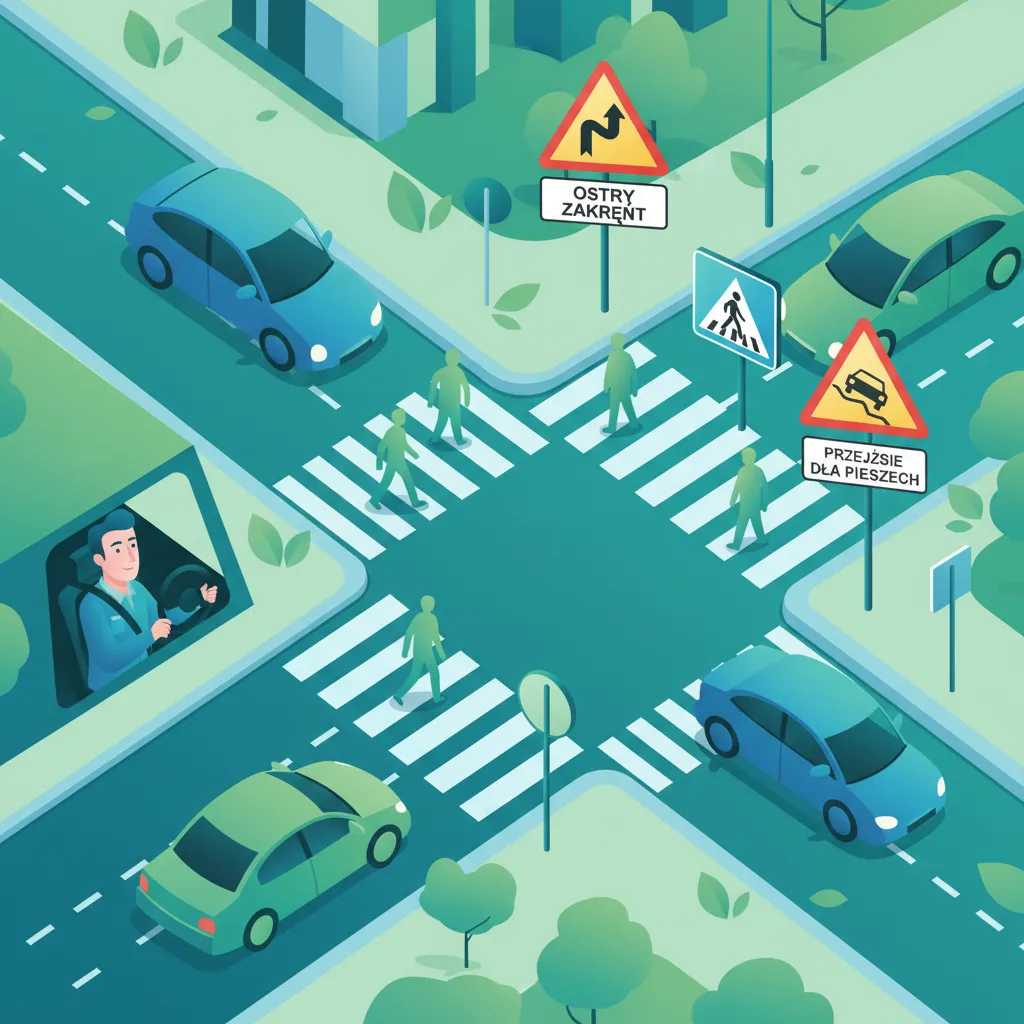
This lesson focuses on triangular warning signs, which are designed to alert drivers to upcoming hazards on the road. It covers the interpretation of various pictograms that indicate dangers like sharp turns, animal crossings, or road construction. Understanding these signs allows a driver to anticipate conditions and adjust their driving proactively.
This lesson focuses on navigating intersections that are not controlled by traffic signals. It covers the interpretation of the 'Yield' sign (ustąp pierwszeństwa) and the application of the 'priority to the right' rule at junctions of equal roads. Safe decision-making and proper observation techniques are emphasized for these common scenarios.
Find clear answers to common questions learners have about Changing Lanes Safely in Urban Traffic. Learn how the lesson is structured, which driving theory objectives it supports, and how it fits into the overall learning path of units and curriculum progression in Poland. These explanations help you understand key concepts, lesson flow, and exam focused study goals.
The most common mistake is failing to adequately check the blind spot immediately before moving. In busy cities, this can lead to collisions with cyclists, motorcyclists, or other vehicles that are not visible in the mirrors. Always perform a final, quick head-check.
Changing lanes is prohibited where signs (e.g., continuous white lines, prohibition signs) forbid it. It's also unsafe and often illegal near pedestrian crossings, bus stops where buses are boarding, or on very narrow roads where it could impede traffic or endanger cyclists.
You need to consider the speed of the traffic in the target lane and the distance to the nearest vehicle. In urban traffic, anticipate that gaps can close quickly. It's better to wait for a larger, more comfortable gap than to force your way in. Remember to factor in your own vehicle's acceleration capabilities.
The core principle remains the same, but the intensity and timing are critical in urban settings. You must perform checks much more rapidly and be prepared for other road users to react unpredictably. Ensure your signal is given well in advance, but not so early that it causes confusion for other drivers.
This is a common occurrence in urban traffic. If a vehicle significantly closes the gap in the lane you intend to move into after you've signaled, you must abort the lane change and maintain your current lane. Safety and avoiding conflict are paramount; never assume other drivers will let you in.
Build custom practice sessions tailored precisely to your needs. Focus on areas requiring improvement, review specific Polish road signs, or master complex traffic rules to ensure full preparation for your official driving license exam.