
Welcome to the lesson on Stopping Rules, Zones, and Time Limits. This crucial topic builds on your understanding of road signs and priority rules from previous units, and directly supports your preparation for the Polish Category B driving theory exam. Mastering these rules will help you avoid fines and ensure safe traffic flow in all situations.
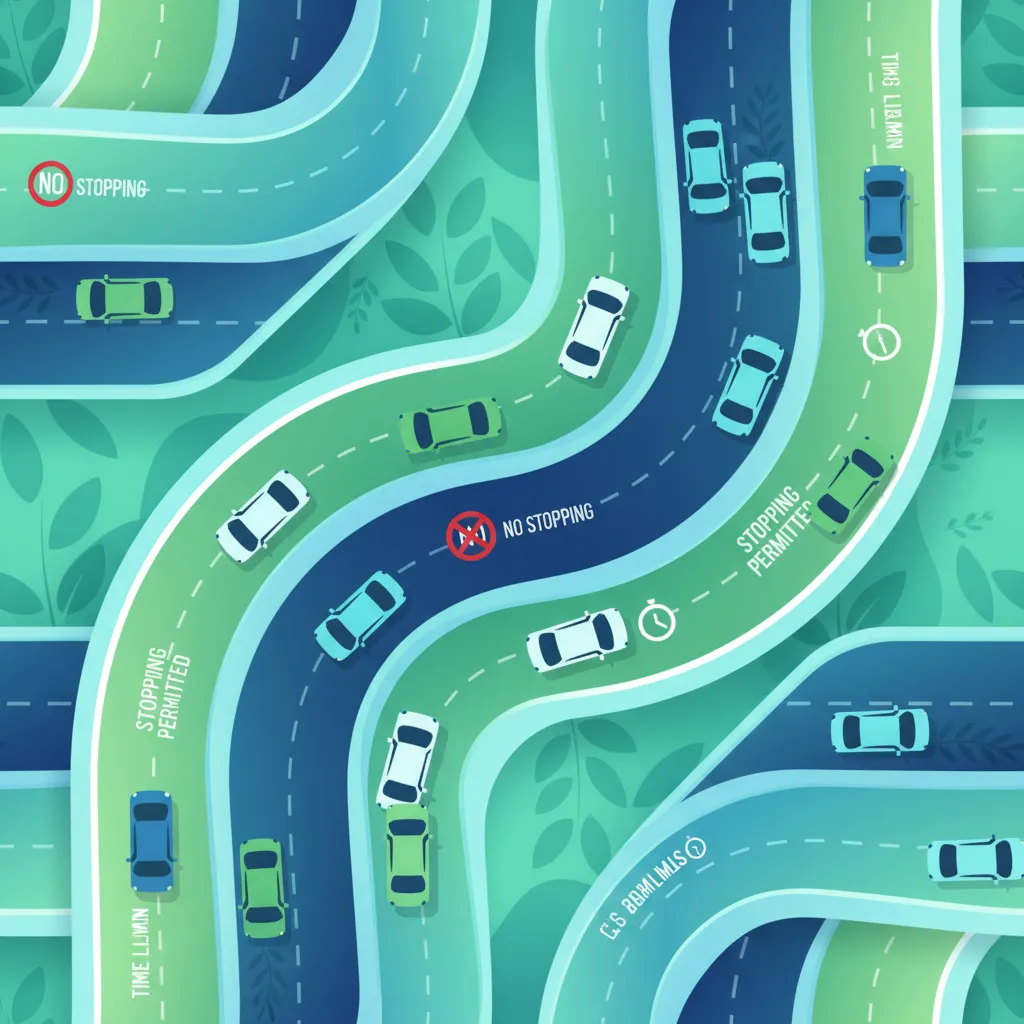
Lesson content overview
Navigating the complexities of urban and rural roads requires more than just knowing how to operate a vehicle; it demands a thorough understanding of traffic regulations, especially those governing where and for how long you can stop or park. This lesson clarifies the legal distinctions between 'stopping' and 'parking' under Polish law, delves into the interpretation of various traffic signs and road markings that regulate these actions, and explains the implications of time limits, paid parking zones, and areas where stopping is completely forbidden. Mastering these rules is crucial not only for passing your Polish Category B driving theory test but also for ensuring traffic fluidity, preventing accidents, and avoiding costly fines in your everyday driving.
In Polish traffic law, 'stopping' and 'parking' are distinct actions with different sets of rules and legal consequences. Understanding this fundamental difference is the cornerstone of compliant roadside behavior.
A stop (Polish: zatrzymanie) refers to a temporary halt of a vehicle, typically for a brief period. This can occur for various reasons:
The key characteristic of a stop is its transient nature and the driver's immediate availability to resume movement. It is generally not considered an occupation of a parking space in the long term.
Parking (Polish: postój), in contrast, signifies a prolonged stationary state of a vehicle, typically when the driver leaves the vehicle unattended. It means the vehicle occupies a designated space for an extended period, beyond what is considered a brief stop. This implies:
The distinction is critical: you might be allowed to stop in an area where parking is prohibited, provided you stay with the vehicle and move it promptly.
A frequent source of driver confusion lies in misinterpreting signs that prohibit stopping versus those that prohibit parking. Many drivers incorrectly assume that a "No Parking" sign means they cannot stop at all. This is incorrect.
Remember: If you see a 'No Parking' sign (B-35), you can stop briefly if you stay in the vehicle. If you see a 'No Stopping' sign (B-39), you cannot stop at all.
Traffic signs are the primary means of communication for regulating stopping and parking. Interpreting them correctly is vital for legal compliance.
These signs typically have a red circle, indicating a prohibition.
Sign B-39 (No Stopping): This sign features a red circle with a blue background and a diagonal red line (from top-left to bottom-right) across it. It strictly prohibits stopping or parking a vehicle for any reason, even for a brief moment to pick up or drop off passengers, unless it is a mandatory stop due to traffic conditions (e.g., at a red light or to avoid an accident). Its purpose is to ensure the continuous flow of traffic and maintain clear visibility, especially in critical areas.
Sign B-35 (No Parking): This sign is a red circle with a blue background and a single diagonal red line (from top-left to bottom-right), forming a 'P' shape with an additional vertical line, or a red diagonal line over the letter 'P'. It indicates that parking is prohibited. However, unlike the B-39 sign, stopping is permitted for a short duration, such as for boarding or alighting passengers, or for loading/unloading goods, provided the driver remains in or immediately next to the vehicle, ready to move it at any moment.
The concept of "No Standing/Waiting" (sometimes internally referred to as P-5 in some course materials) often implies a restriction similar to 'no parking' but with specific additional limitations on waiting, even with the driver present. While there isn't a single universal sign like B-39 or B-35 for "No Standing" in Polish traffic law, such restrictions are typically conveyed through additional plates beneath B-35 or B-39, or through local regulations in specific areas like school zones. Its purpose is to prevent vehicles from waiting for extended periods, even briefly, in areas prone to congestion, such as busy commercial streets or near public transport stops.
These signs are typically blue and rectangular or square, providing information about parking possibilities and conditions.
Sign D-18 (Parking Zone): This standard sign, a blue square with a white 'P', indicates a general area where parking is permitted. Unless accompanied by additional plates, parking in such a zone is generally unrestricted in terms of time or payment, though local regulations might still apply.
Parking zones with time limits are designated by a D-18 sign usually accompanied by a supplementary plate, such as T-23, which specifies the maximum permitted parking duration (e.g., "Max 2h", "15 min"). These limits are implemented to optimize the use of popular parking spaces, ensuring fair access for more drivers throughout the day and preventing long-term occupation of short-turnover areas. Drivers must monitor the elapsed time from when they park, and exceeding the limit constitutes a violation, even if no payment is required.
Paid parking zones are often marked by a D-18 sign along with a supplementary plate T-29, or sometimes specific information panels with a price table. These zones typically exist in city centers and commercial areas. Drivers are required to pay a fee for the duration of their parking. Payment mechanisms can include parking meters (accepting coins or cards), pay-and-display ticket machines, or mobile payment applications. It is mandatory to display proof of payment (e.g., a ticket on the dashboard) or ensure electronic payment is correctly linked to the vehicle's registration.
These vital zones are identified by a D-18 sign accompanied by a supplementary plate bearing the international wheelchair symbol (T-29 with wheelchair graphic). These spaces are strictly reserved for vehicles transporting persons with disabilities and must display a valid, officially issued disabled parking permit. Unauthorised parking in such a space is a serious violation, leading to significant fines and potential towing, as it obstructs necessary access for individuals with reduced mobility. While often unlimited in time, some disabled spots may still have time limits, in which case the permit generally overrides them.
Special zones are sometimes designated for loading and unloading goods or passengers. These are usually indicated by D-18 signs with specific information plates detailing the permitted activity and duration. The blueprint mentioned a concept of P-47 with a "T" symbol, which isn't a standard Polish sign code for this purpose. In Poland, these areas are typically marked by signs D-18 with specific instructions or B-35 (No Parking) with additional plates clarifying that brief stops for loading/unloading are permitted. Drivers in these zones must remain present with their vehicles and be prepared to move immediately upon completion of the task. Prolonged waiting or leaving the vehicle unattended is prohibited and constitutes illegal parking.
Sign D-2 (STOP Sign): This red octagonal sign with the word "STOP" in white demands a full and complete stop before the white horizontal stop line (P-14) painted on the road. This sign is primarily about right-of-way and safety at intersections, not parking. Stopping here to comply with the sign is mandatory, but parking at or immediately beyond this line is strictly prohibited as it would obstruct visibility and traffic flow.
Beyond vertical signs, horizontal road markings play a crucial role in defining stopping and parking regulations.
10 meters before or after it, is strictly forbidden due to extreme danger.Adhering to specific rules and regulations is paramount for safe and legal driving in Poland. Violations can lead to significant penalties.
Any halt of the vehicle in a zone marked by sign B-39 is prohibited. This means you cannot stop to drop off a passenger, quickly run into a shop, or wait for someone. The only exception is if you are forced to stop due to traffic conditions (e.g., a traffic jam or a red light).
Incorrect Example: Stopping your car briefly in a B-39 zone to let a passenger out, even if you remain in the driver's seat, is a violation.
In a zone with a B-35 sign, you are permitted to stop your vehicle momentarily for the specific purpose of loading/unloading goods or allowing passengers to board/alight. However, you must remain with the vehicle, capable of moving it at any moment. The key restriction is against parking – leaving the vehicle unattended.
Correct Example: Stopping your car in a B-35 zone for 30 seconds to drop off a friend, while you remain in the driver's seat, is generally permissible. Parking your car and going into a shop for 5 minutes is not.
When a D-18 sign is accompanied by a time-limit plate (e.g., "Max 2h"), you must move your vehicle before the specified duration expires. The time starts from when you park. Exceeding this limit is a violation. Enforcement often involves parking attendants checking vehicle positions periodically or digital systems.
Practical Tip: Always make a note of your parking start time. Consider using a parking disc (zegar postojowy) if required by local regulations, or use a mobile parking app that tracks time.
In zones marked for paid parking (D-18 with relevant plates), payment is mandatory for the duration of your stay. Drivers must choose a payment method:
Parking spaces marked with the wheelchair symbol are exclusively for vehicles displaying a valid disabled parking permit. This permit, issued to individuals with reduced mobility, must be clearly visible on the dashboard. Misusing these spaces by parking without a valid permit is a serious offense that carries heavy penalties, reflecting its impact on accessibility for disabled persons.
These zones, often near commercial buildings or in busy urban areas, are intended for temporary stops solely for the purpose of loading or unloading goods or passengers. The driver must remain with the vehicle and ensure the process is completed as quickly as possible. These are not general parking spaces, and leaving the vehicle unattended for extended periods constitutes illegal parking.
Avoiding fines is straightforward if you understand common pitfalls and adopt best practices.
A frequent error is stopping in a B-39 (No Stopping) zone to quickly drop off a passenger. Even a momentary halt is forbidden.
B-35 (No Parking) zone (if you stay in the car) or a designated parking space.Many drivers lose track of time in time-limited zones.
In paid parking zones, forgetting to pay or failing to display your ticket properly is a common cause of fines.
Parking in a disabled spot without a valid, displayed permit is a serious offense.
Effective driving involves adapting your behavior to various conditions, including when stopping or parking.
Even if parked legally, drivers have a responsibility to move their vehicle to clear the path for approaching emergency vehicles (ambulance, fire engine, police) using flashing lights and sirens. This is a matter of critical safety and legal obligation.
A comprehensive understanding of stopping and parking regulations is fundamental for any driver in Poland. It contributes to road safety, ensures efficient traffic flow, and protects you from unnecessary fines and penalties. Remember the key distinctions between stopping and parking, pay close attention to both vertical signs (such as B-39, B-35, D-18, D-2) and horizontal road markings (yellow lines, stop lines), and always adjust your actions to prevailing conditions. By integrating this knowledge into your driving habits, you will not only pass your Category B theory exam but also become a more responsible and confident driver on Polish roads.
Polish traffic law distinguishes between stopping (brief halt with driver present) and parking (leaving vehicle unattended), with different rules applying to each. B-39 prohibits any halt while B-35 allows momentary stops for passenger exchange or loading if the driver remains ready to move. Horizontal markings and distance rules (5m from crossings, 10m from railways) also restrict stopping. Paid and time-limited zones require active monitoring of duration and payment, while disabled spaces demand valid permits. Mastering these distinctions and sign codes is essential for both passing the Category B theory exam and avoiding fines on Polish roads.
A short set of high-value points that capture the most important learning from this lesson.
In Polish law, a 'stop' (zatrzymanie) is a brief halt with the driver remaining present, while 'parking' (postój) means leaving the vehicle unattended for a longer period
Sign B-39 (No Stopping) prohibits any halt whatsoever unless required by traffic conditions; B-35 (No Parking) allows brief stops if the driver stays with the vehicle and can move immediately
You must stop at least 5 meters before a pedestrian crossing and 10 meters from railway crossings to maintain visibility and safety
Time-limited parking zones (D-18 with T-23 plate) require you to monitor duration from parking time; exceeding the limit is a violation even without payment
Paid parking zones require proof of payment on display (ticket, app confirmation) regardless of the payment method used
Explore all units and lessons included in this driving theory course.
B-39 = no stopping at all; B-35 = no parking but brief stops with driver present are allowed
Continuous double yellow edge line functions like B-39 (no stopping); single yellow line means no parking
Disabled parking spaces require a valid displayed permit; misuse carries heavy penalties and potential towing
Time-limited parking starts from when you park; use a parking disc (zegar postojowy) or app to track time
Never stop within 5m of a pedestrian crossing or 10m of a railway crossing, even momentarily
Assuming a 'No Parking' sign (B-35) means you cannot stop at all; drivers incorrectly believe they cannot briefly drop off passengers
Leaving a vehicle unattended in a B-35 zone, mistaking a permitted brief stop for legal parking
Overstaying time limits in restricted parking zones because drivers lose track of elapsed parking time
Parking without a valid disabled permit in spaces marked with the wheelchair symbol, often due to assumed tolerance
Failing to display proof of payment clearly in paid parking zones, such as forgetting to place a ticket on the dashboard
Lesson content overview
A short set of high-value points that capture the most important learning from this lesson.
In Polish law, a 'stop' (zatrzymanie) is a brief halt with the driver remaining present, while 'parking' (postój) means leaving the vehicle unattended for a longer period
Sign B-39 (No Stopping) prohibits any halt whatsoever unless required by traffic conditions; B-35 (No Parking) allows brief stops if the driver stays with the vehicle and can move immediately
You must stop at least 5 meters before a pedestrian crossing and 10 meters from railway crossings to maintain visibility and safety
Time-limited parking zones (D-18 with T-23 plate) require you to monitor duration from parking time; exceeding the limit is a violation even without payment
Paid parking zones require proof of payment on display (ticket, app confirmation) regardless of the payment method used
Explore all units and lessons included in this driving theory course.
B-39 = no stopping at all; B-35 = no parking but brief stops with driver present are allowed
Continuous double yellow edge line functions like B-39 (no stopping); single yellow line means no parking
Disabled parking spaces require a valid displayed permit; misuse carries heavy penalties and potential towing
Time-limited parking starts from when you park; use a parking disc (zegar postojowy) or app to track time
Never stop within 5m of a pedestrian crossing or 10m of a railway crossing, even momentarily
Assuming a 'No Parking' sign (B-35) means you cannot stop at all; drivers incorrectly believe they cannot briefly drop off passengers
Leaving a vehicle unattended in a B-35 zone, mistaking a permitted brief stop for legal parking
Overstaying time limits in restricted parking zones because drivers lose track of elapsed parking time
Parking without a valid disabled permit in spaces marked with the wheelchair symbol, often due to assumed tolerance
Failing to display proof of payment clearly in paid parking zones, such as forgetting to place a ticket on the dashboard
Explore search topics learners often look for when studying Stopping Rules, Zones, and Time Limits. These topics reflect common questions about road rules, driving situations, safety guidance, and lesson level theory preparation for learners in Poland.
Browse additional driving theory lessons that cover connected traffic rules, road signs, and common driving situations related to this topic. Improve your understanding of how different rules interact across everyday traffic scenarios.
Explore detailed explanations of Poland's special parking zones, including disabled spots and loading areas. Learn about exceptions to stopping rules and how to interpret complex signs and road markings to avoid violations and ensure safe traffic flow.
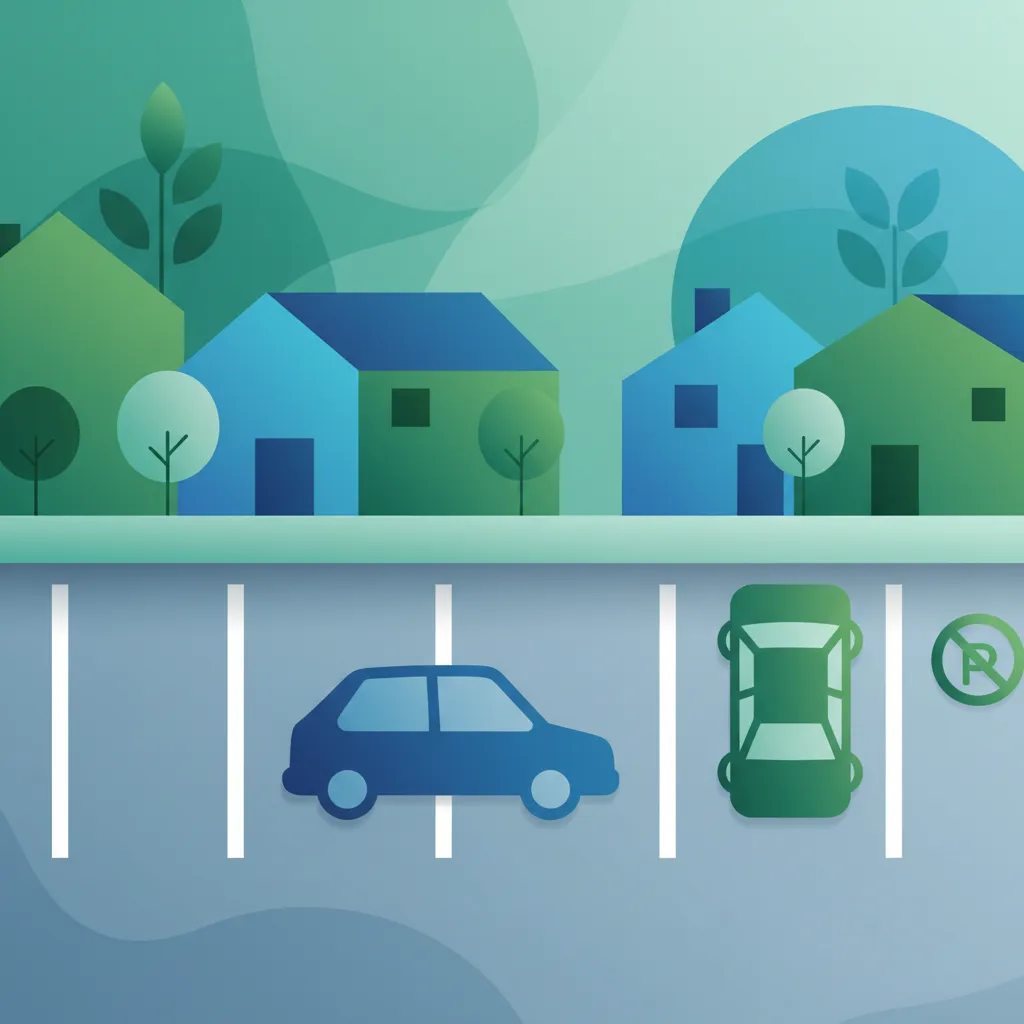
This lesson details the various parking regulations encountered in residential areas. It explains how to interpret signs indicating permitted parking zones, time restrictions, and areas where parking is prohibited. Correctly positioning the vehicle within marked bays and understanding rules about pavement parking are also covered to avoid fines and obstruction.

This lesson focuses on the rules and social responsibility surrounding parking spaces designated for disabled individuals. It explains the eligibility requirements for a disabled parking permit and the correct way to display it. The content stresses the severe penalties for misuse and the importance of leaving these spaces available for those who genuinely need them.

This lesson breaks down the often-daunting task of parallel parking into a simple, repeatable process. It teaches drivers how to use specific reference points on their vehicle to gauge positioning relative to the curb and other cars. Correcting the maneuver and ensuring the final position is legal and safe are also key components.

This lesson defines what constitutes a 'built-up area' in Poland, marked by specific informational signs. It explains the default speed limit of 50 km/h that applies within these zones unless otherwise indicated. The content highlights the need for increased vigilance due to higher traffic density and the frequent presence of pedestrians.
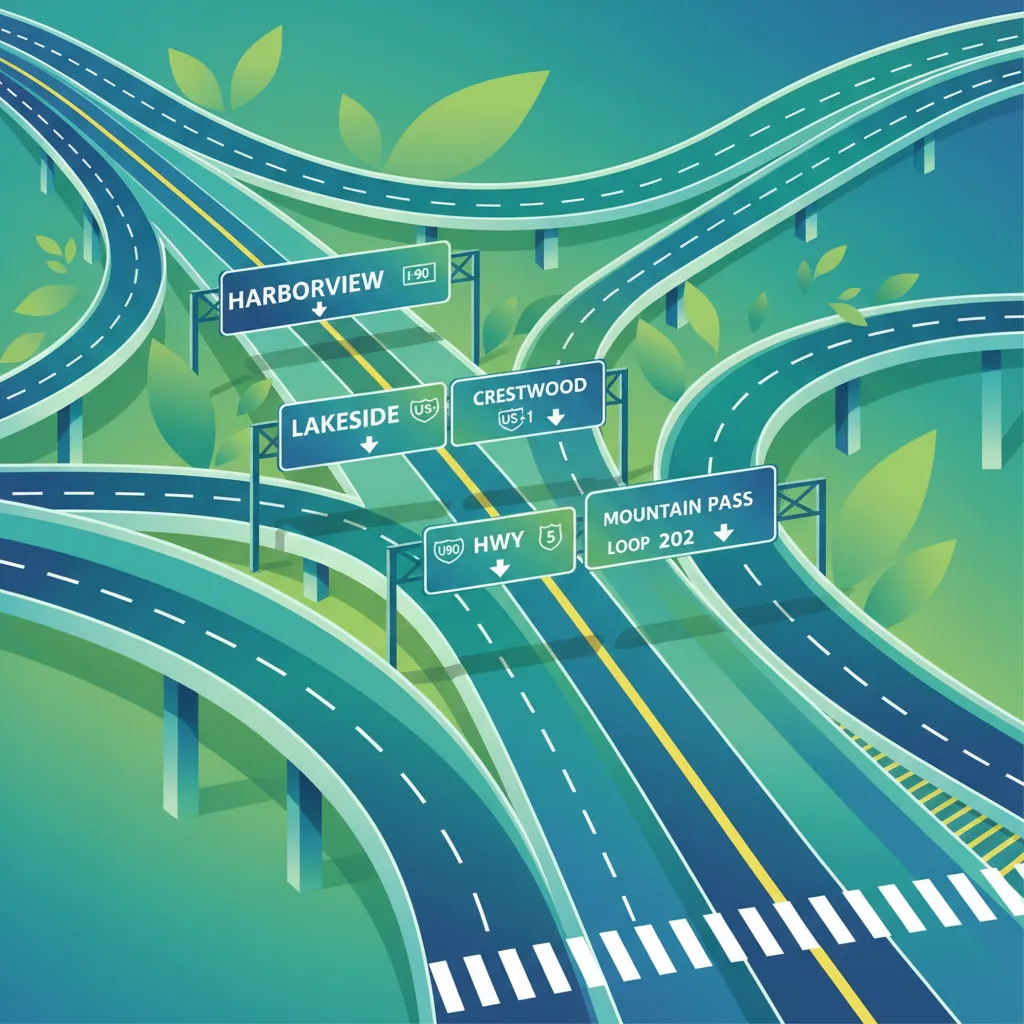
This lesson covers a wide range of signs and markings that provide information and guidance to drivers. It explains how to read destination signs, locate services, and interpret road markings like lane lines, stop lines, and pedestrian crossings. This knowledge is essential for navigation, lane discipline, and safe interaction with other road users.
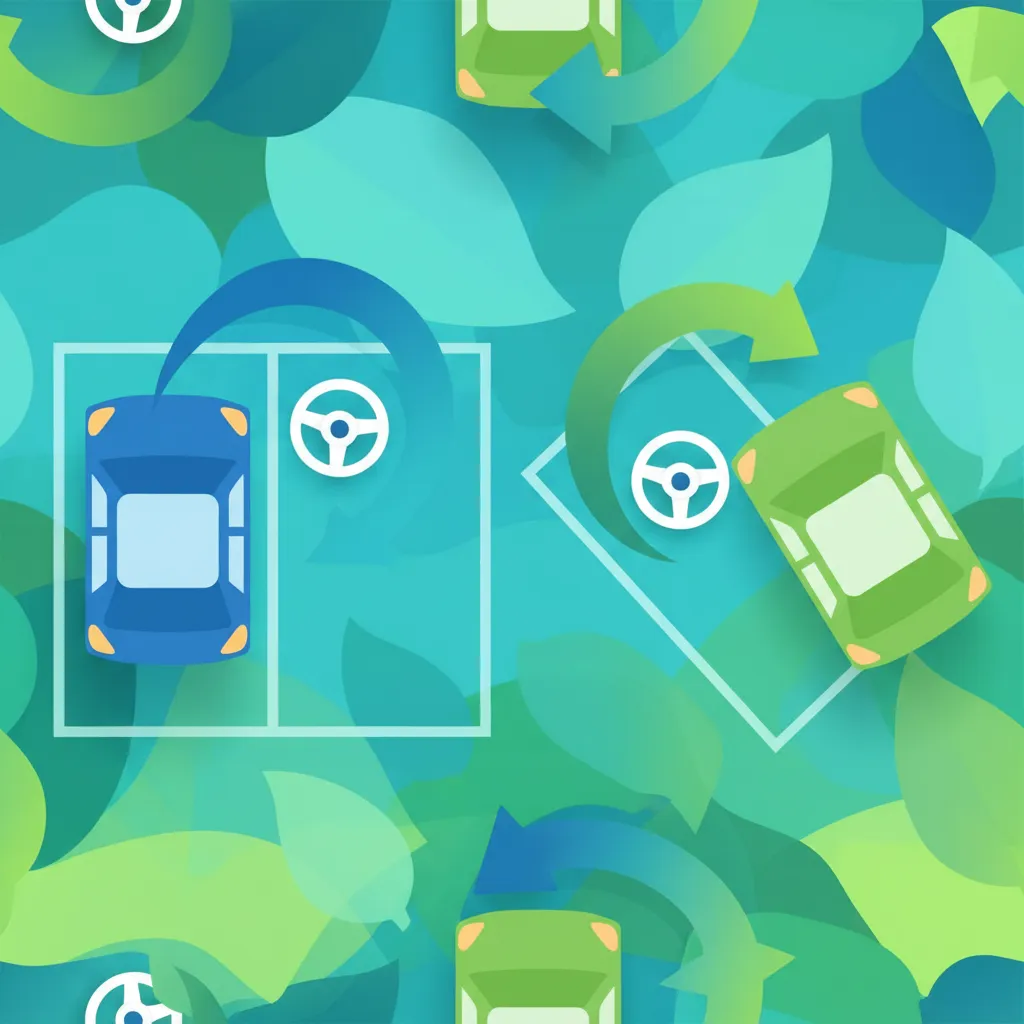
This lesson covers the common parking scenarios found in car parks: perpendicular (90-degree) and angled bays. It explains the techniques for both driving in forwards and reversing in, highlighting the visibility and safety advantages of the latter. Proper alignment within the marked lines is a key focus to ensure space for other vehicles.

This lesson focuses on the rules of lane usage for maintaining safe and efficient traffic flow. It covers the meaning of different lane markings, such as solid versus broken lines, and the general principle of keeping to the rightmost lane unless overtaking. Proper lane discipline is crucial for predictability and preventing conflicts on multi-lane roads.

This lesson focuses on areas with high pedestrian activity, requiring special caution. It covers the rules for 'living zones' (strefa zamieszkania), where pedestrians have priority and the speed limit is 20 km/h. The content also addresses regulations for school zones and other designated pedestrian areas to ensure the safety of the most vulnerable road users.

This lesson addresses advanced scenarios, including multi-lane intersections and interactions with vulnerable road users. It reinforces the legal obligation to give absolute priority to pedestrians at marked crossings (zebra crossings). The content also covers navigating around traffic islands and using dedicated turning lanes in complex urban environments.

This lesson teaches fundamental maneuvering skills essential for everyday driving. It provides a step-by-step guide to reversing in a straight line and around a corner, emphasizing constant observation. The lesson also details the procedure for a three-point turn, a necessary skill for changing direction on a narrow road safely and efficiently.
Clarify the crucial legal differences between stopping and parking in Poland. Understand prohibitory signs (B-39, B-35), yellow lines, and curb markings that regulate vehicle halts to comply with traffic regulations and avoid fines.
This lesson details the various parking regulations encountered in residential areas. It explains how to interpret signs indicating permitted parking zones, time restrictions, and areas where parking is prohibited. Correctly positioning the vehicle within marked bays and understanding rules about pavement parking are also covered to avoid fines and obstruction.
This lesson explains the function of circular prohibition signs, which impose legal restrictions on drivers. It details common prohibitions such as speed limits, 'no entry' signs, and restrictions on overtaking or parking. Compliance with these signs is mandatory, and this lesson ensures learners can correctly identify and obey them.
This lesson covers a wide range of signs and markings that provide information and guidance to drivers. It explains how to read destination signs, locate services, and interpret road markings like lane lines, stop lines, and pedestrian crossings. This knowledge is essential for navigation, lane discipline, and safe interaction with other road users.
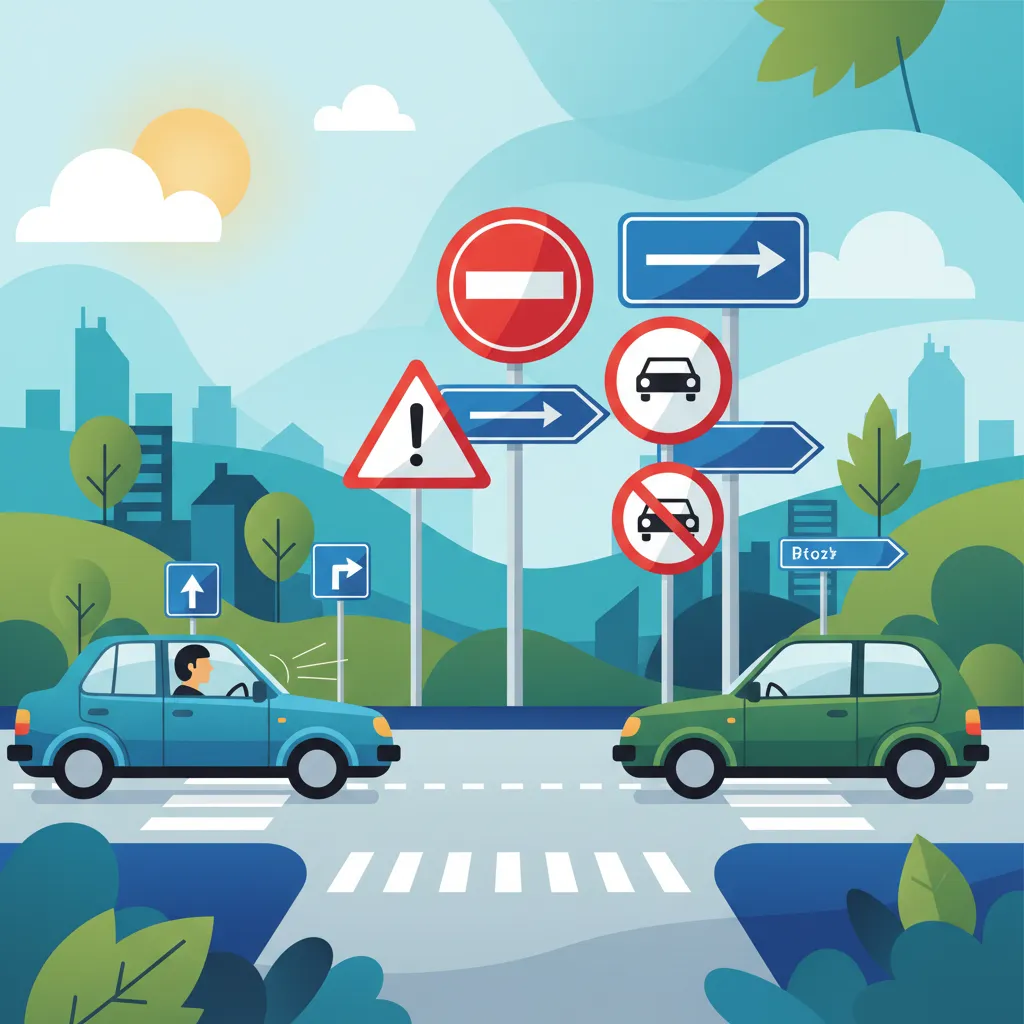
This lesson provides a foundational understanding of the Polish road sign system, categorizing signs into three main types: warning, prohibitory/mandatory, and informational. It explains the significance of different shapes and color codes, enabling drivers to quickly interpret their meaning and legal obligation. By mastering the visual language of road signs, learners will be equipped to make correct and safe decisions in any traffic situation they encounter.
This lesson focuses on the rules and social responsibility surrounding parking spaces designated for disabled individuals. It explains the eligibility requirements for a disabled parking permit and the correct way to display it. The content stresses the severe penalties for misuse and the importance of leaving these spaces available for those who genuinely need them.
This lesson covers the common parking scenarios found in car parks: perpendicular (90-degree) and angled bays. It explains the techniques for both driving in forwards and reversing in, highlighting the visibility and safety advantages of the latter. Proper alignment within the marked lines is a key focus to ensure space for other vehicles.
This lesson defines the scope of vehicles permitted under a Category B licence, primarily passenger cars up to 3,500 kg maximum permissible mass. It clarifies the rules on seating capacity and the regulations for towing trailers, distinguishing between a standard B licence and a B+E entitlement. Understanding these classifications ensures drivers operate vehicles legally and safely.
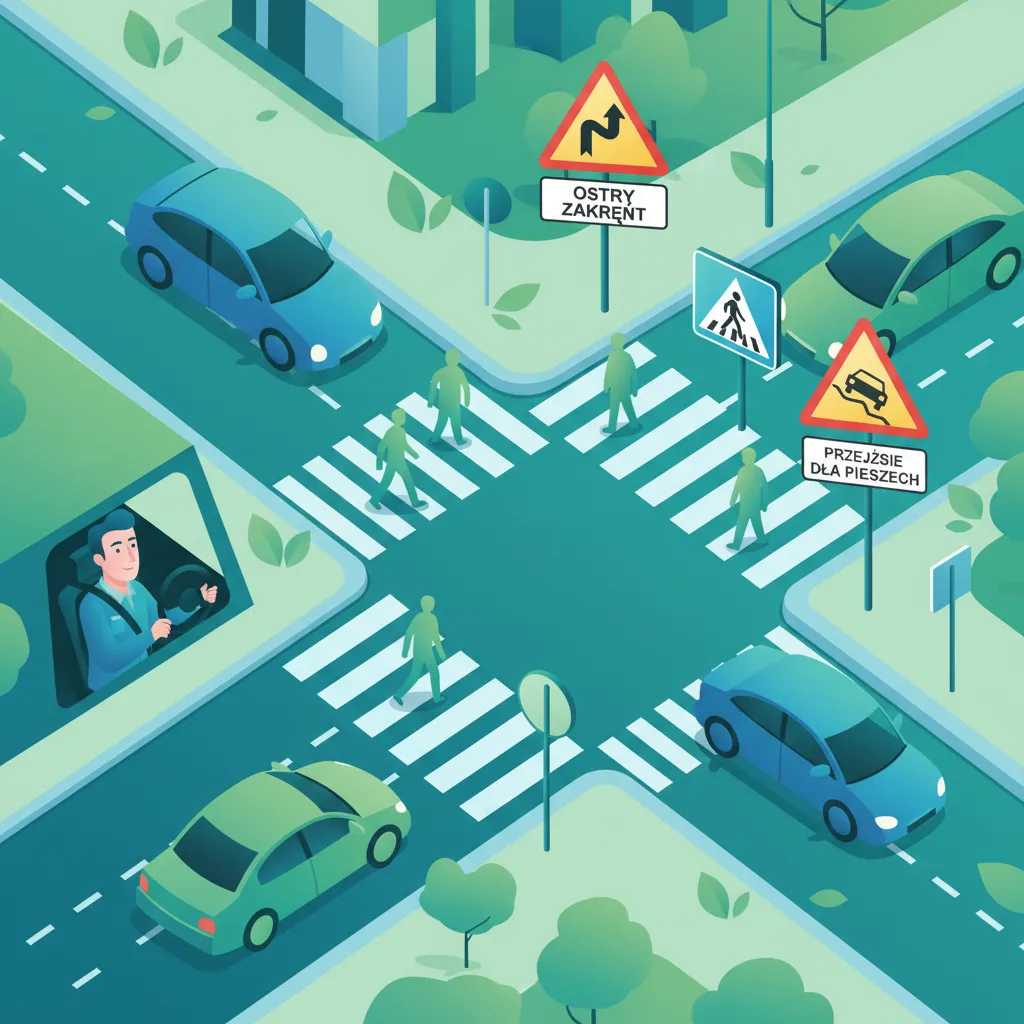
This lesson focuses on triangular warning signs, which are designed to alert drivers to upcoming hazards on the road. It covers the interpretation of various pictograms that indicate dangers like sharp turns, animal crossings, or road construction. Understanding these signs allows a driver to anticipate conditions and adjust their driving proactively.
This lesson defines what constitutes a 'built-up area' in Poland, marked by specific informational signs. It explains the default speed limit of 50 km/h that applies within these zones unless otherwise indicated. The content highlights the need for increased vigilance due to higher traffic density and the frequent presence of pedestrians.
This lesson breaks down the often-daunting task of parallel parking into a simple, repeatable process. It teaches drivers how to use specific reference points on their vehicle to gauge positioning relative to the curb and other cars. Correcting the maneuver and ensuring the final position is legal and safe are also key components.
Find clear answers to common questions learners have about Stopping Rules, Zones, and Time Limits. Learn how the lesson is structured, which driving theory objectives it supports, and how it fits into the overall learning path of units and curriculum progression in Poland. These explanations help you understand key concepts, lesson flow, and exam focused study goals.
In Poland, 'stopping' refers to any interruption of movement that is temporary and necessitated by traffic conditions, road signs, or traffic signals, lasting no longer than approximately one minute. 'Parking' is a longer interruption, typically for longer than one minute, and is not due to traffic conditions, such as leaving the vehicle unattended or loading/unloading passengers or goods. Understanding this distinction is crucial for obeying rules and avoiding fines.
Paid parking zones are usually indicated by a blue sign with a white 'P' and often supplemented by signs specifying the hours of operation and payment methods. You will also typically see meters or payment machines nearby. Always check supplementary signs for specific time limits and charges applicable within the zone.
A white 'P' sign with a red border and a single red diagonal line across it signifies that stopping is prohibited. This means you cannot even briefly stop your vehicle in this marked area, even for a moment, unless compelled by traffic conditions or a traffic signal. This often applies near pedestrian crossings, junctions, or emergency access points.
Yes, it is generally forbidden to stop or park in a way that obstructs visibility or access to pedestrian crossings. Polish law requires a certain distance to be maintained from crossings to ensure pedestrian safety and visibility for both drivers and pedestrians. Look for signs or pavement markings that reinforce these prohibitions.
Parking signs often indicate a maximum permitted parking duration, for example, '1h' or '2h'. You may also see signs showing specific times of day or days of the week when a time limit applies. If a parking disc (dyspozycyjny) is required, you must set it to your arrival time. Exceeding the stated limit can result in a ticket.
Stopping or parking on a cycle path is generally prohibited. Stopping or parking on a pavement (chodnik) is also typically forbidden, unless a specific sign permits it and it does not impede pedestrian traffic. Even then, a minimum clearance for pedestrians must be maintained.
Build custom practice sessions tailored precisely to your needs. Focus on areas requiring improvement, review specific Polish road signs, or master complex traffic rules to ensure full preparation for your official driving license exam.