
The A-22 road sign warns of a steep downhill slope ahead, which can be particularly challenging for your vehicle's braking system. You'll often see this sign in mountainous areas or on long inclines where constant braking can lead to overheating and brake failure. To navigate this safely, it's crucial to select a lower gear before you start the descent to use engine braking, significantly reducing the strain on your brakes and maintaining better control. Always increase your following distance and use your brakes intermittently rather than continuously to allow them to cool.
Master the A-22 'Dangerous Descent' sign to prepare for steep downhill stretches in Poland, crucial for your theory test revision. This sign demands careful interpretation to ensure safe braking and prevent overheating, a key aspect of safe driving knowledge.
The A-22 sign is used for descents of at least 10% in mountains or 7% elsewhere. Going down a steep hill can cause your brakes to overheat and fail if used constantly. The sign often includes a T-9 plate showing the actual percentage of the slope. Drivers should shift to a lower gear to let the engine's compression help control the speed, preserving the brakes for emergencies.
Warning of a steep downhill slope ahead that may require the use of engine braking.
Get clear, practical answers to the most common questions about the A-22 - Dangerous Descent road sign. Learn how the sign works, what rules it represents, and how it affects real driving situations. This FAQ strengthens your understanding and supports accurate decision making for the Polish driving theory exam in Poland.
The A-22 sign is a warning that a steep downhill slope is approaching. It alerts drivers to potential dangers related to speed and braking, advising them to prepare for a challenging descent by using lower gears and appropriate braking techniques to prevent brake fade.
When you see the A-22 sign, you should anticipate a steep downhill road. It's essential to reduce your speed by shifting to a lower gear to engage engine braking. Avoid constantly applying your brakes, as this can cause them to overheat and fail. Also, increase your following distance from the vehicle in front.
Engine braking, achieved by selecting a lower gear, uses the engine's compression to slow the vehicle down. This significantly reduces the need for continuous use of the service brakes, preventing them from overheating and losing effectiveness. It's a vital technique for controlling speed on steep descents like those indicated by the A-22 sign.
Yes, you should avoid riding your brakes by keeping them lightly applied constantly, as this will cause them to overheat and fail. Also, avoid coasting in neutral or with the clutch disengaged for extended periods, as this removes the engine's braking effect and reduces your control over the vehicle's speed.
On steep descents, continuously using your brakes generates significant heat. If this heat builds up too much, the braking system can become less effective or fail entirely (brake fade). This is a serious safety risk, which is why the A-22 sign warns drivers to use engine braking and brake intermittently to allow them to cool.
A clear reference image of the A-22 - Dangerous Descent road sign used in Poland.
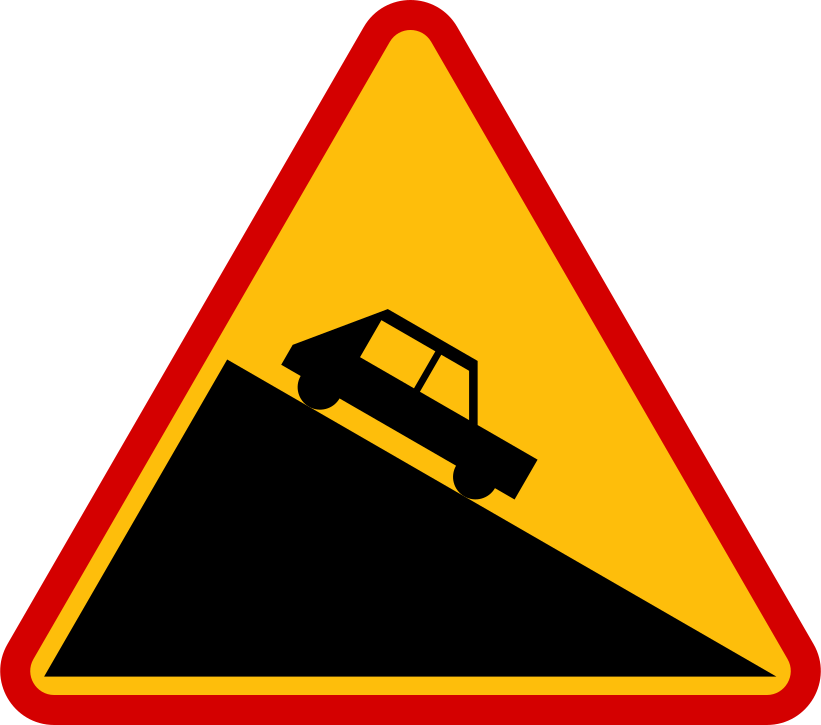
The A-22 - Dangerous Descent road sign may also be known by these alternative names or terms.
The A-22 - Dangerous Descent road sign is part of the Warning Signs (A) category, which groups together signs with similar rules and functions.
Reviewing similar road signs alongside the A-22 Dangerous Descent helps solidify your understanding and prevents confusion during your theory test revision. Master traffic sign comparison and improve sign recognition for confident driving.
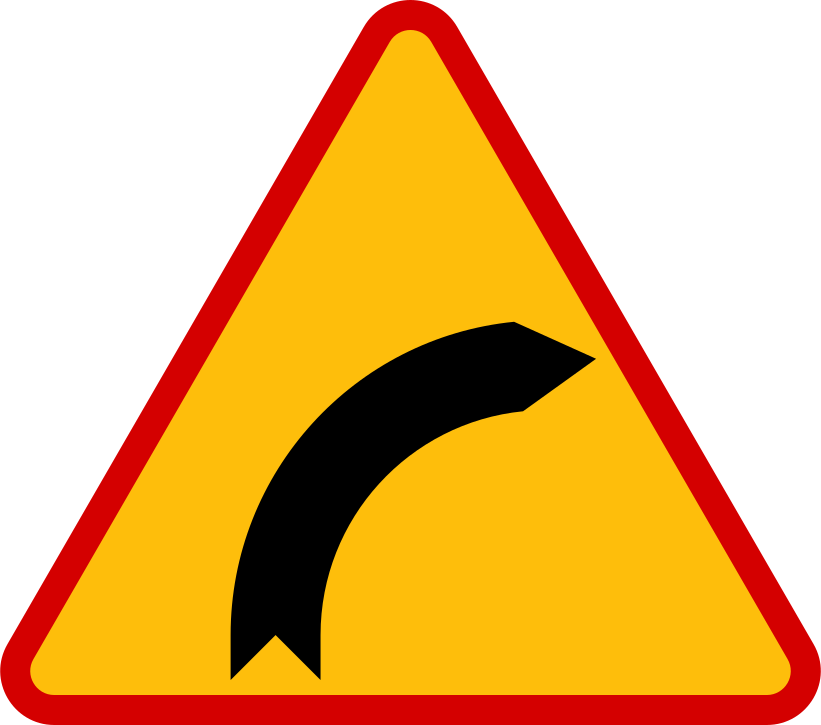
Watch Out for Dangerous Bends to the Right with the A-1 Sign
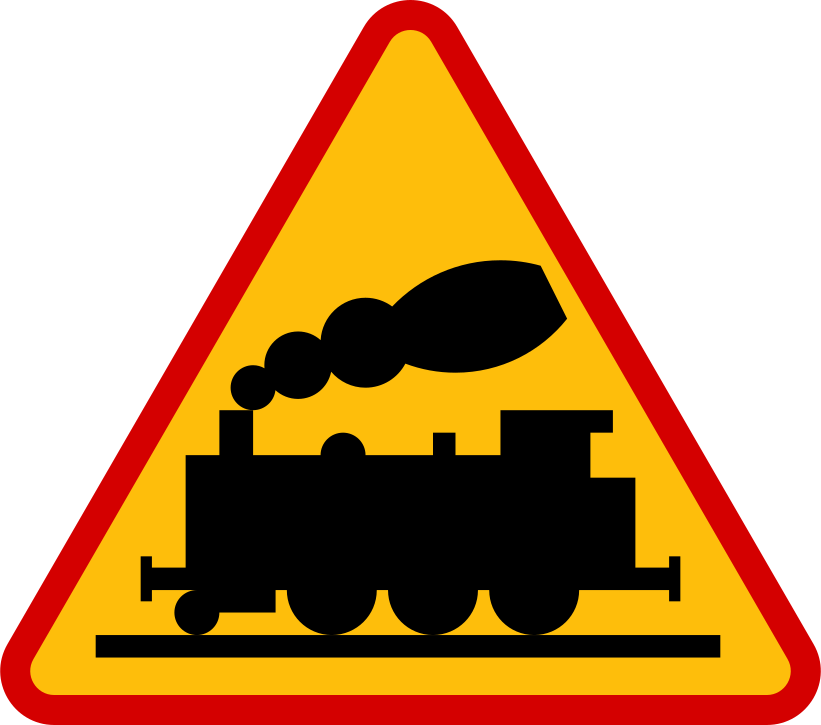
Beware of Ungated Railway Crossings with the A-10 Sign!
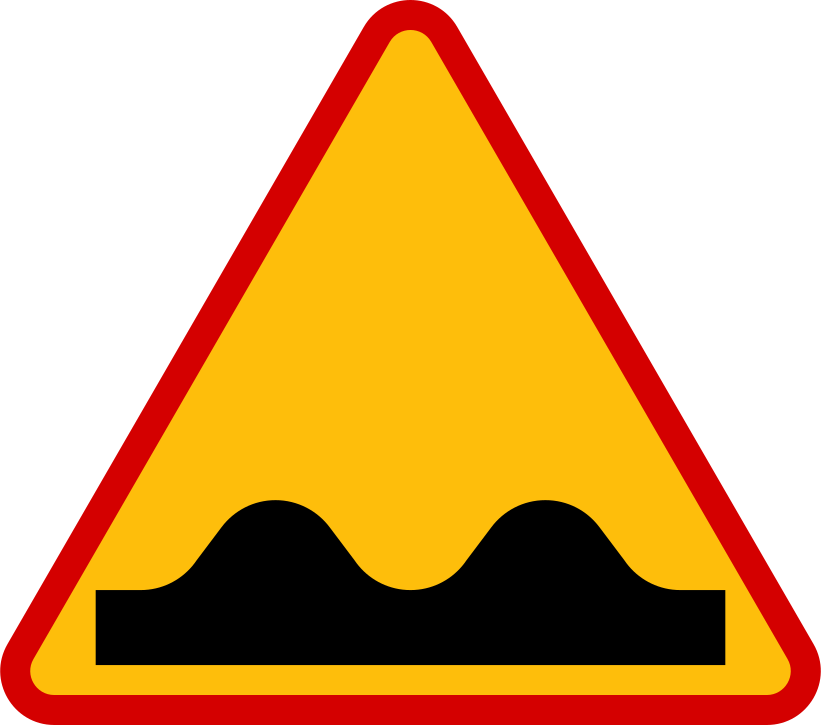
Warning: Prepare for an Uneven Road Surface Ahead!
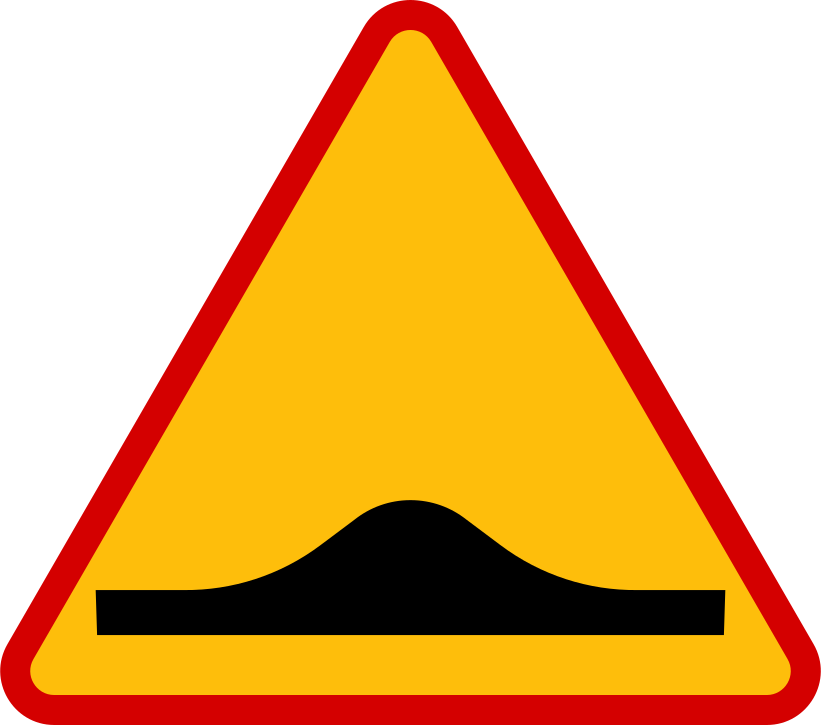
The A-11a Speed Bump sign warns you to significantly reduce your speed.
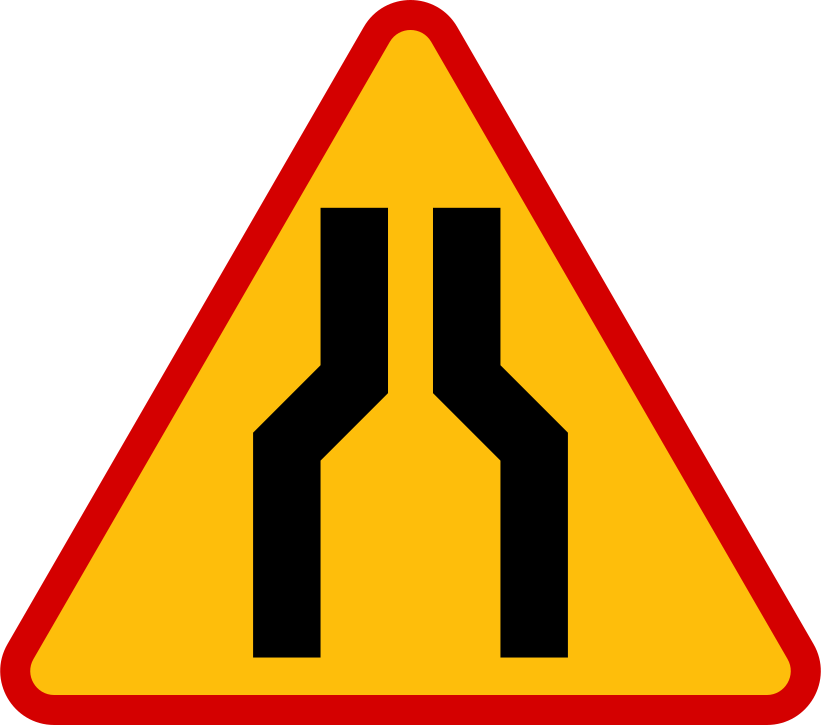
Prepare for Road Narrows on Both Sides with the A-12a Warning Sign
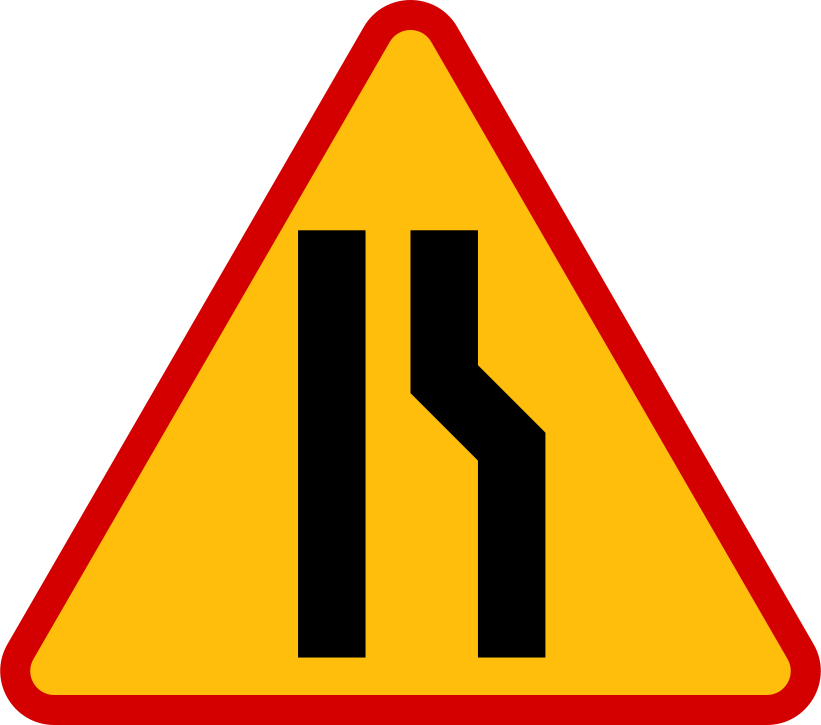
A-12b: Road Narrows Ahead on the Right – Prepare to Merge Left
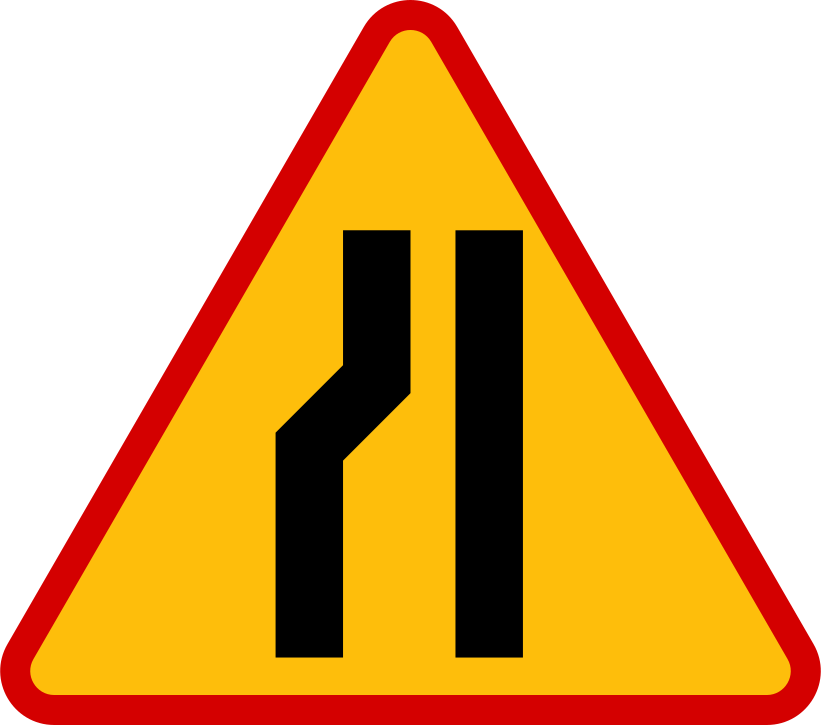
Warning: The Road Narrows Ahead on the Left!
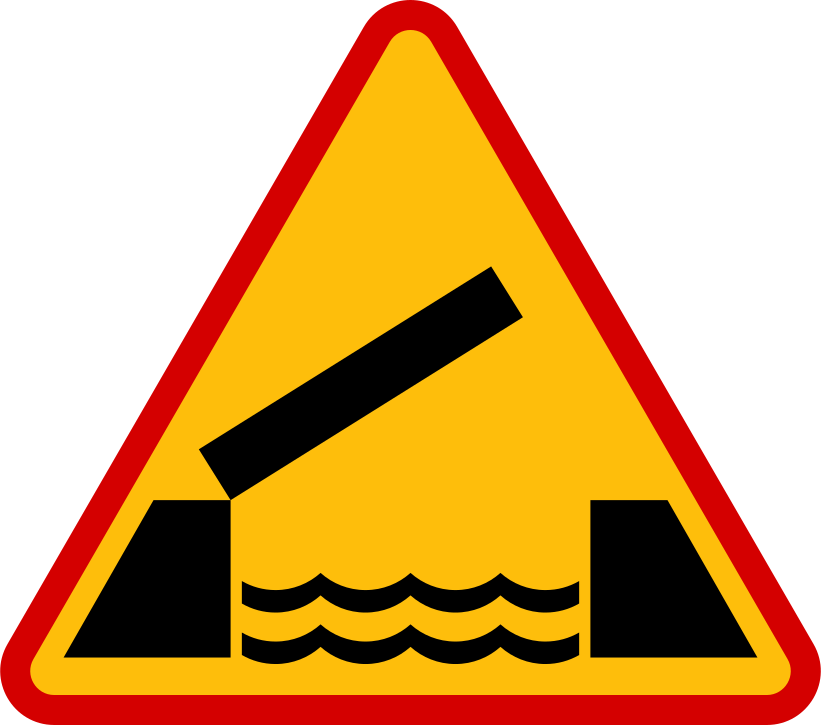
Prepare to stop for a Movable Bridge ahead!
Deepen your understanding of specific road signs by reviewing official Polish traffic rules and associated real-world driving scenarios. These expert-led resources help you bridge the gap between visual recognition and practical exam application.
Master Polish Crossing Markings for a Safer Drive and Exam Success.
Navigate Polish roads with confidence by understanding critical cyclist priority rules at junctions and crossings. This guide explains your legal obligations as a driver to yield to cyclists, a common area of confusion and potential exam pitfalls. Learn the nuances of right-of-way at intersections and designated cyclist passages to drive safely and pass your theory test.
Navigate Tram Intersections Like a Pro: Essential for Your Polish Driving Exam.
Learn the exact Polish traffic regulations for yielding to pedestrians at crossings, a crucial element of the national driving theory test. We clarify what constitutes 'yielding' and the significant consequences of non-compliance, including a common €1500 PLN fine and 10 penalty points. This essential knowledge will help you navigate pedestrian areas safely and pass your theory exam.
The D-34b sign acts as a summary for a rest area or a nearby town. Instead of multiple separate signs, it groups symbols together on one large blue board. For example, it might show symbols for a petrol station, a restaurant, and a hotel simultaneously. This allows drivers to see at a glance what services are available at an upcoming exit or stop without cluttering the roadside with too many individual signs.
This sign is found at T-junctions or intersections where the road directly ahead is closed to traffic, or where driving straight would lead into a restricted area like a tram-only lane or a pedestrian square. It forces the driver to choose between two diverging paths, ensuring that no one accidentally continues into a prohibited forward zone.
After reviewing the full list of Polish road signs, explore specific sign categories for in-depth understanding. Challenge your knowledge with practice questions focused on sign recognition and interpretation to solidify your preparation for the driving theory exam.
Browse All Polish Road Signs