
The A-23 road sign warns you of a steep uphill climb approaching, which can be challenging for vehicles, especially those with trailers or heavy loads. You might encounter reduced speeds from other vehicles and potential visibility issues at the crest of the hill. Polish traffic rules require you to anticipate this change in road gradient, adjust your speed, and be ready to shift to a lower gear to maintain sufficient power for the climb.
The A-23 sign warns of a significant uphill gradient, demanding careful speed management and gear selection for safe passage. Master this vital road sign meaning for your Polish theory test revision and ensure confident driving interpretation.
The A-23 sign alerts drivers to an upcoming steep incline (8% in mountains, 6% elsewhere). Heavy vehicles or those with trailers may move very slowly on these sections. It also warns of potential visibility issues at the 'crest' of the hill. Drivers should be prepared to shift to a lower gear to maintain enough power to climb without stalling the engine.
Warning of a steep uphill climb ahead that may be difficult for some vehicles.
Get clear, practical answers to the most common questions about the A-23 - Steep Ascent road sign. Learn how the sign works, what rules it represents, and how it affects real driving situations. This FAQ strengthens your understanding and supports accurate decision making for the Polish driving theory exam in Poland.
The A-23 sign is a warning sign indicating a steep uphill gradient is ahead. It alerts drivers to potential difficulties for certain vehicles and reduced visibility over the crest of the hill. This means you should prepare to slow down, potentially encounter slow-moving vehicles, and be ready to adjust your driving.
When you see the A-23 sign, anticipate a challenging climb. It's advisable to shift to a lower gear before reaching the steepest part to ensure your engine has enough power and to avoid stalling or losing momentum. Be patient with slower vehicles ahead and be aware that visibility may be limited when you reach the top of the incline.
You should avoid overtaking slow-moving vehicles on a steep ascent unless you are absolutely certain your vehicle has sufficient power and there is a safe passing zone. Also, avoid staying in a high gear if your engine starts struggling; shift down early. Stopping or parking on a steep incline should only be done in an absolute emergency.
Overtaking is generally not recommended on a steep ascent indicated by the A-23 sign. This is because your vehicle may lack the power to complete the manoeuvre quickly and safely. Additionally, visibility over the crest of the hill is often limited, meaning you might not see oncoming traffic. Always prioritise safety and only overtake if it's clearly safe and legal.
If your vehicle is moving slower than other traffic on the steep ascent, you should ideally use the right-hand lane or a designated climbing lane if available. This allows faster vehicles to pass safely. Remember to maintain your momentum by using an appropriate lower gear.
The '8% or 6%' refers to the gradient of the slope. An 8% gradient typically applies in mountainous areas, while a 6% gradient is standard elsewhere. This percentage indicates how steep the incline is, giving you a clearer idea of the driving challenge ahead. The specific gradient might be indicated by a supplementary plate (T-9).
A clear reference image of the A-23 - Steep Ascent road sign used in Poland.
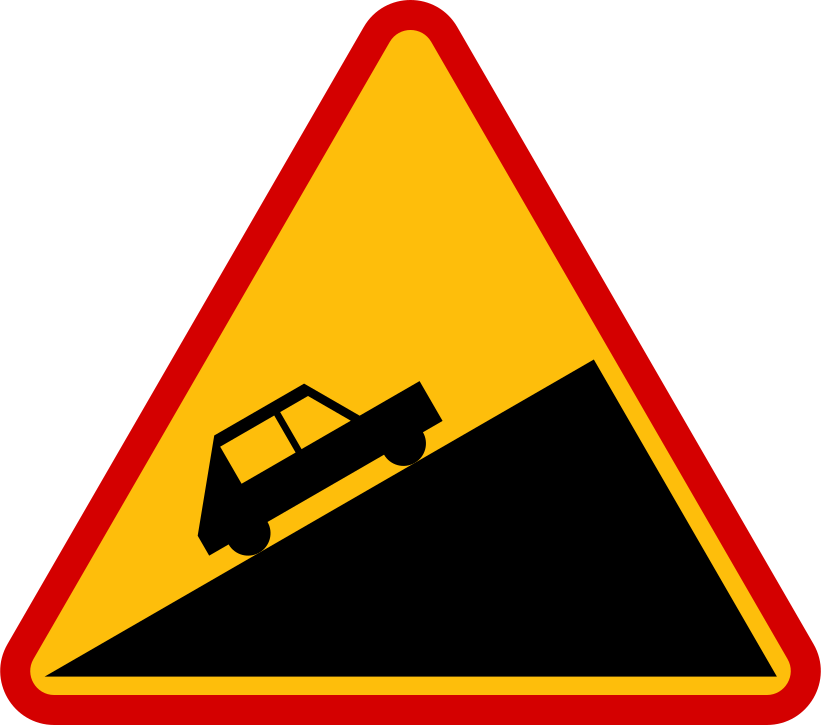
The A-23 - Steep Ascent road sign may also be known by these alternative names or terms.
The A-23 - Steep Ascent road sign is part of the Warning Signs (A) category, which groups together signs with similar rules and functions.
Comparing signs like the Steep Ascent (A-23) with others helps solidify your understanding and recall for the theory test. Effective traffic sign comparison and revision boost your confidence in identifying road signs quickly and accurately.
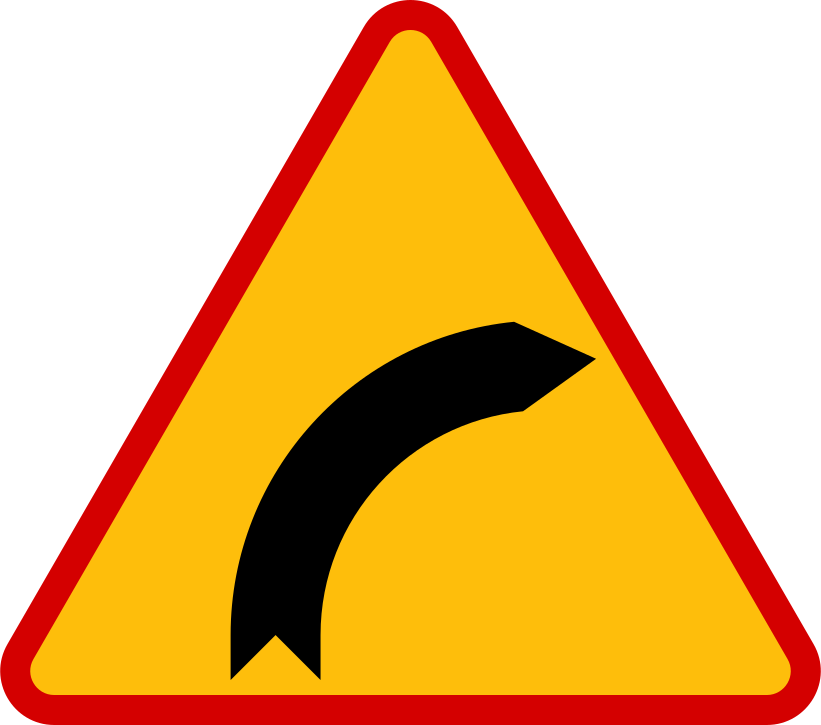
Watch Out for Dangerous Bends to the Right with the A-1 Sign
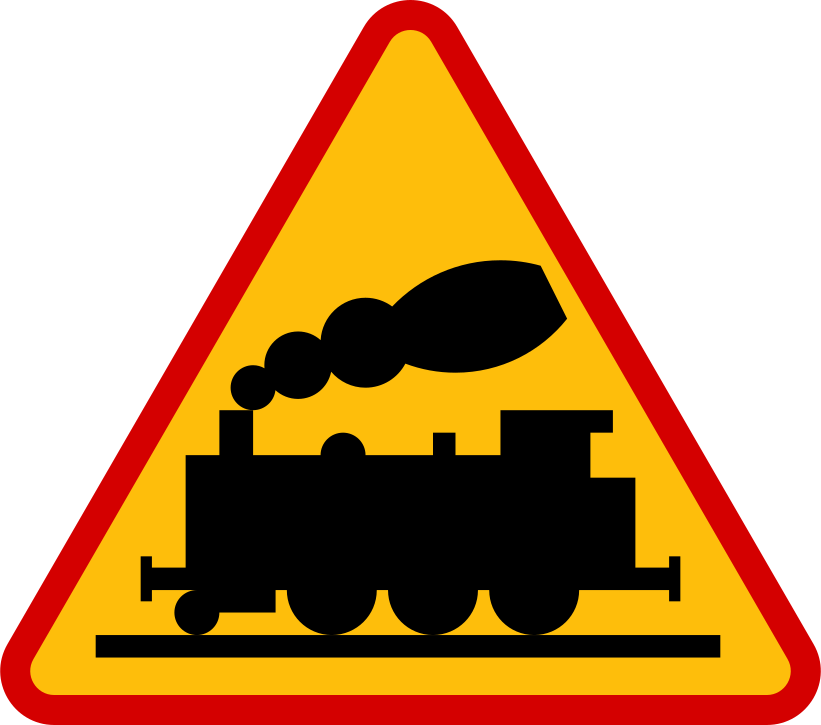
Beware of Ungated Railway Crossings with the A-10 Sign!
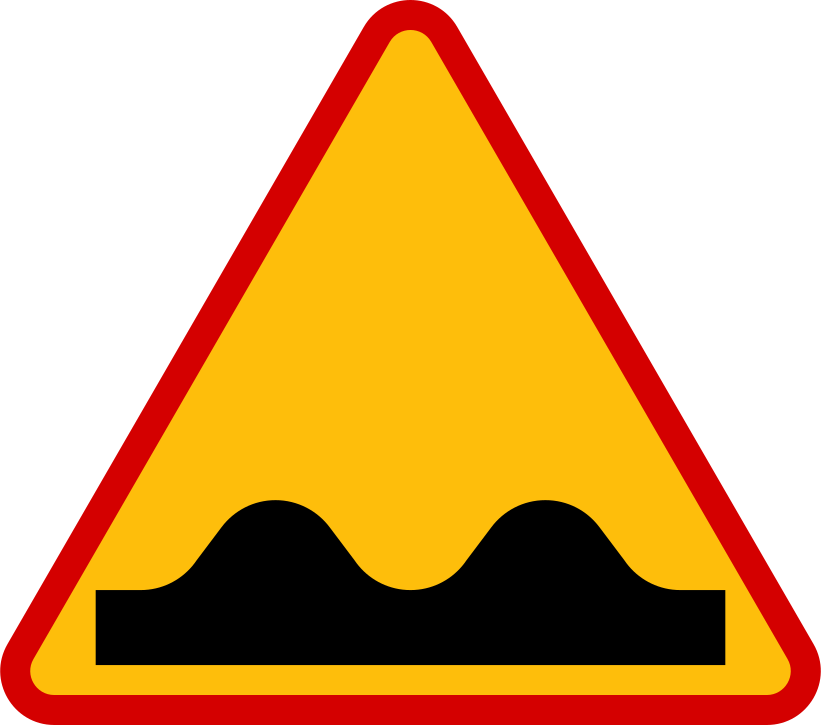
Warning: Prepare for an Uneven Road Surface Ahead!
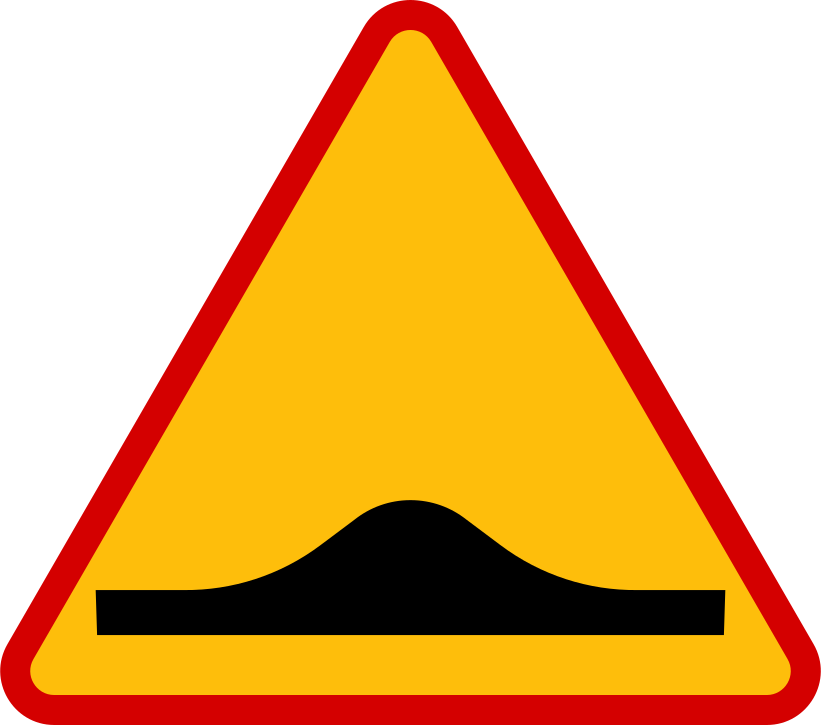
The A-11a Speed Bump sign warns you to significantly reduce your speed.
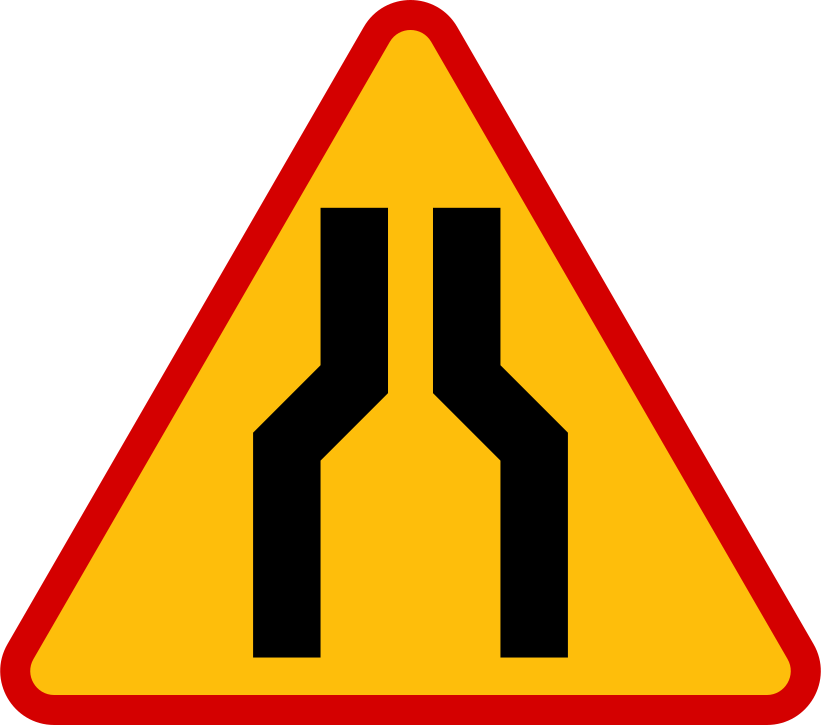
Prepare for Road Narrows on Both Sides with the A-12a Warning Sign
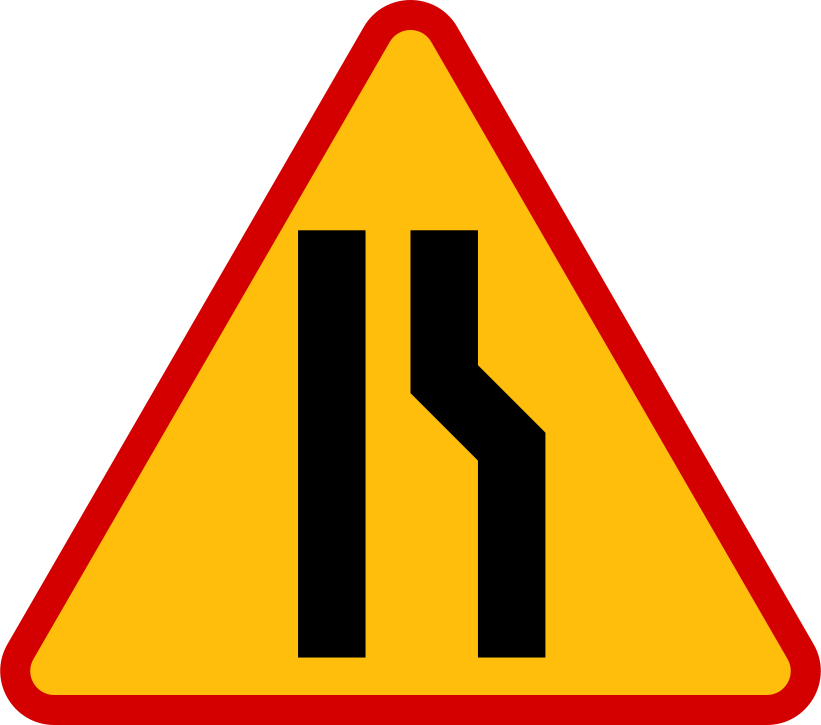
A-12b: Road Narrows Ahead on the Right – Prepare to Merge Left
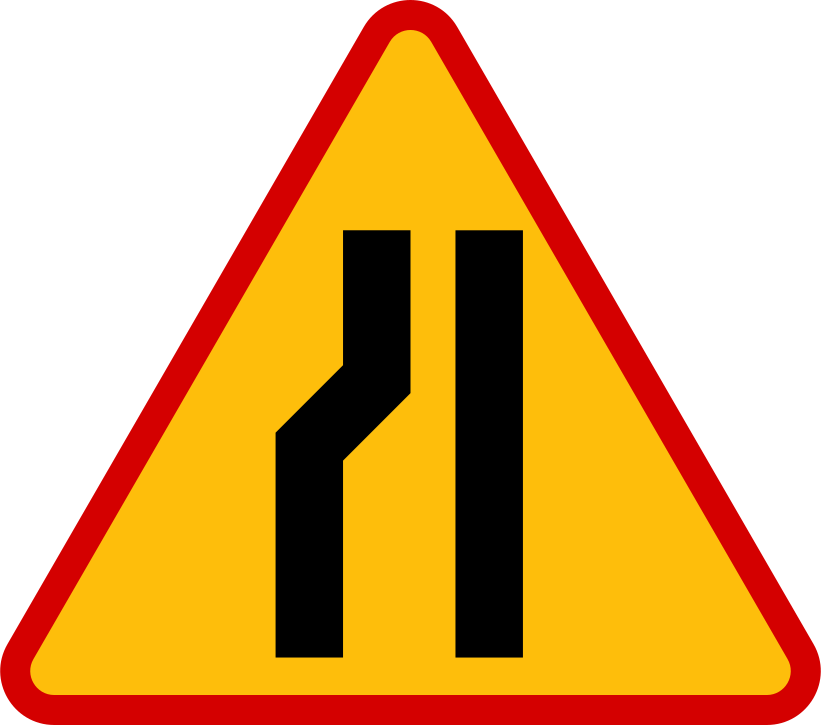
Warning: The Road Narrows Ahead on the Left!
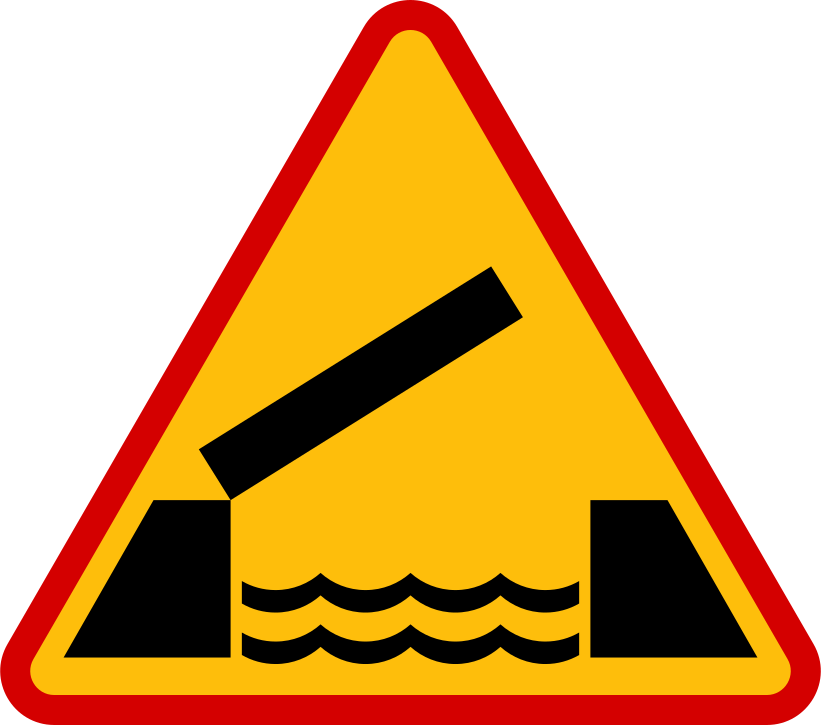
Prepare to stop for a Movable Bridge ahead!
Deepen your understanding of specific road signs by reviewing official Polish traffic rules and associated real-world driving scenarios. These expert-led resources help you bridge the gap between visual recognition and practical exam application.
Navigate Tram Intersections Like a Pro: Essential for Your Polish Driving Exam.
Master Polish Crossing Markings for a Safer Drive and Exam Success.
Navigating Polish intersections requires a clear understanding of priority rules, particularly the differing obligations imposed by the mandatory Stop sign (B-20) and the Yield sign (A-7). This article will break down the legal requirements for each sign, explaining precisely when and how you must act to ensure safety and compliance with Polish traffic law. Mastering these distinctions is vital for success in your driving theory exam and for safe driving.
When you start your car in Poland, you might notice the engine running at higher revolutions per minute (RPM). This article explains that while elevated RPMs are often a normal part of the engine's automated warm-up process, they can also signal underlying faults. Understanding this distinction is essential for safe driving and for preparing effectively for the Polish driving theory exam.
The AT-4 sign alerts the tram driver to an upcoming steep incline. While not as dangerous as a descent in terms of stopping, an ascent can cause wheel-spin on wet or icy rails. It also informs the driver that the tram will require more electrical current and may lose speed. It is essential for managing the tram's momentum and power consumption efficiently.
The D-21 sign is an informational sign showing a black hospital bed silhouette on a white background within a blue square. It alerts drivers to the presence of a medical facility nearby. Drivers should be aware that ambulances may be entering or exiting the area frequently with sirens and lights. It is also common for traffic around hospitals to be slower due to people looking for entrances or dropping off patients.
After reviewing the full list of Polish road signs, explore specific sign categories for in-depth understanding. Challenge your knowledge with practice questions focused on sign recognition and interpretation to solidify your preparation for the driving theory exam.
Browse All Polish Road Signs