
Logo
Spanish theory topics and rule explanationsSafe driving

Mastering hazard perception is crucial for proactive driving and avoiding common accident scenarios in Spain.

Hazard Perception: Spotting Dangers Early on Spanish Roads

Hazard perception is the critical skill of identifying potential dangers on the road well in advance. This involves continuously scanning your surroundings and predicting how situations might develop with other road users or environmental factors in Spain. By mastering early hazard detection, you gain crucial extra time to react safely and prevent incidents, moving beyond just responding to immediate threats.
Defensive drivingRoad safetyObservation skillsRisk awarenessDGT theoryAnticipation
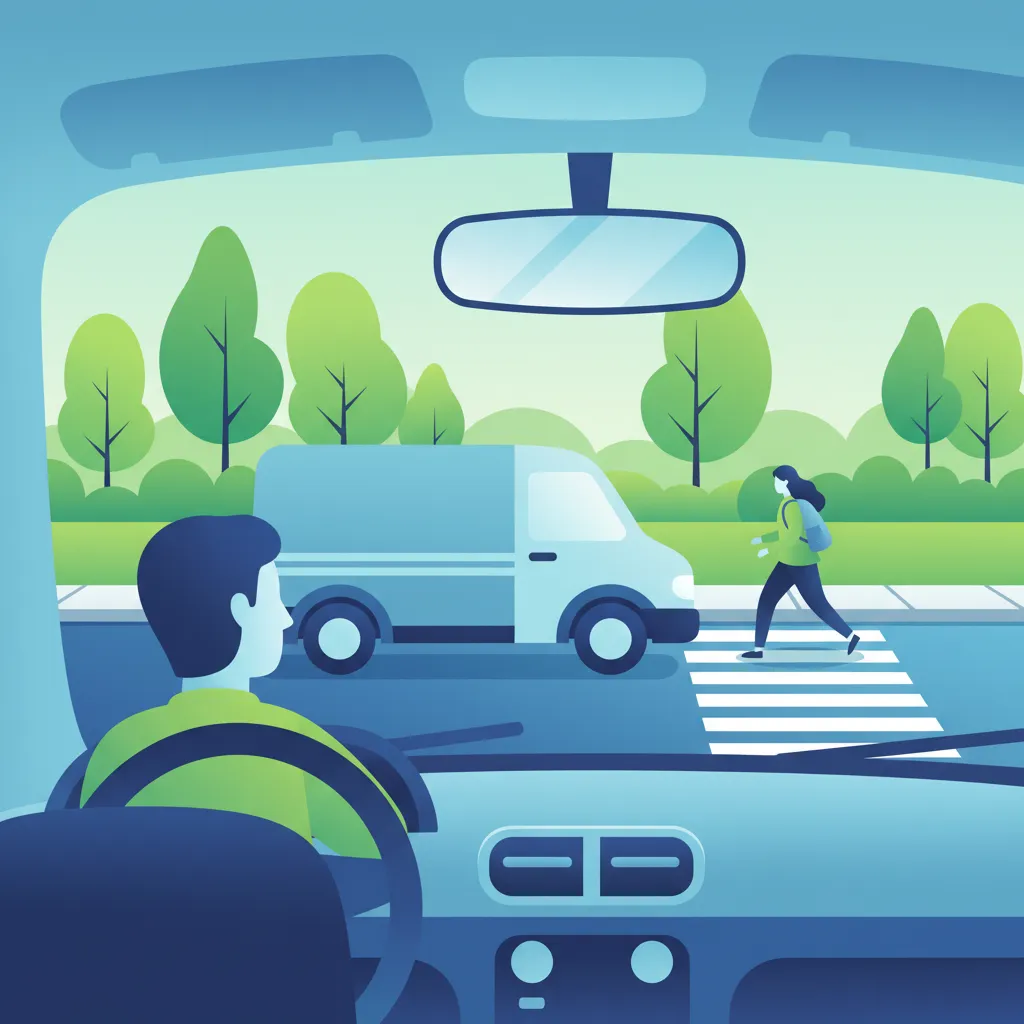
Illustration for the driving theory topic Hazard Perception for learners in Spain

Theory topic content overview

Complete Driving Theory Explanation: Hazard Perception

Read the full theory topic guide for Hazard Perception with structured, easy-to-scan content built for learners in Spain. This detailed section explains the exact rule, meaning, traffic context, comparison points, and exam logic behind this Spanish driving theory topic so you can study faster, understand the concept more clearly, and avoid common interpretation mistakes on the theory test.

What is Hazard Perception in Driving?

Hazard perception is the crucial skill of continuously identifying potential dangers on the road and anticipating how they might develop before they become immediate threats. It's about looking beyond what's directly in front of you and actively searching for situations that could require you to change your speed, direction, or take evasive action.

Unlike simply reacting to an emergency once it happens, hazard perception is a proactive process. It gives you invaluable extra time to plan a safe response, significantly reducing the likelihood of an accident. For drivers on Spanish roads, mastering hazard perception is a cornerstone of safe and preventive driving (conducción preventiva), which is highly emphasized in DGT training.

Why Hazard Perception Matters for Your DGT Exam and Road Safety

Understanding and practicing hazard perception is fundamental for several reasons:

  • Accident Prevention: By spotting hazards early, you can often avoid dangerous situations entirely or mitigate their severity. This is the core of safe driving.
  • Reduced Reaction Time: Early detection means you have more time to process information and initiate a response, effectively decreasing your necessary reaction time.
  • DGT Theory Exam Relevance: The Spanish DGT theory exam frequently includes scenarios designed to test your hazard perception skills. Questions often focus on identifying subtle cues that indicate a developing risk, rather than obvious, immediate dangers. This skill is critical for passing and for real-world safety.
  • Proactive Driving: It shifts your driving from merely responding to events to actively predicting and preparing for them. This creates a smoother, safer, and less stressful driving experience.
  • Adapting to Spanish Road Conditions: Spain's diverse road network, from busy urban centers to winding rural routes and high-speed autovías, demands constant vigilance and adaptability. Hazard perception allows you to navigate these varying conditions with greater confidence and safety.

How Hazard Perception Works in Practice: The Principles of Conducción Preventiva

Hazard perception is an ongoing mental process involving three core principles, often summarized as "Vision, Anticipation, Space" (Visión, Anticipación, Espacio) in the context of conducción preventiva:

  1. Vision (Visión): Continuous Scanning and Observation

    This is the foundation. You must constantly scan the entire road environment, not just the vehicle in front.

    • Look Far Ahead: Monitor traffic flow, road signs, and potential issues well beyond the vehicle directly in front of you. Aim to see what your vehicle will encounter in the next 15-20 seconds.
    • Check Mirrors Regularly: Use your rear-view and side mirrors every 5-8 seconds (or more frequently in dense traffic, as noted in the DGT's Guía de seguridad vial) to be aware of vehicles behind and to the sides.
    • Scan to the Sides: Pay attention to junctions, driveways, pedestrians, cyclists, and animals at the edges of the road. This helps detect movement that could enter your path.
    • Address Blind Spots (Ángulos Muertos): Before any manoeuvre (changing lanes, turning, pulling out), always physically check your blind spots by glancing over your shoulder. Remember, mirrors alone cannot show you everything, especially motorcyclists (motoristas) or cyclists.
  2. Anticipation (Anticipación): Predicting Potential Dangers

    Once you've observed, you must interpret what you see and predict what could happen.

    • Predict Other Road Users' Actions: Assume others might make mistakes, fail to signal, misjudge distances, or behave unexpectedly.
    • Recognize Early Warning Signs: Look for cues like brake lights ahead, a ball rolling into the street, a vehicle swerving, pedestrians looking like they might step out, or a parked car with its reverse lights on.
    • Consider Environmental Factors: Think about how weather (rain, fog, sun glare), road conditions (wet, icy, uneven surfaces, trampas like manhole covers or potholes), and visibility might affect situations.
  3. Space (Espacio): Creating a Safety Buffer

    Having perceived and anticipated, the final step is to create a safe buffer around your vehicle to give yourself time and room to react.

    • Maintain Adequate Following Distance: This is your primary safety margin. The DGT strongly emphasizes maintaining a sufficient distance to stop safely if the vehicle ahead suddenly brakes, especially in adverse conditions or on high-speed roads (autovías).
    • Ensure Side Clearance: Give plenty of space to parked cars, cyclists, and pedestrians.
    • Position Your Vehicle Safely: Choose a lane position that gives you the best view of potential hazards and an escape route if needed.

Key Factors Affecting Hazard Perception

Several elements can impact your ability to perceive hazards effectively:

  • Speed: The faster you drive, the less time you have to perceive and react to hazards. High speeds drastically reduce your field of vision and available decision-making time.
  • Visibility: Fog, heavy rain, snow, sun glare, darkness, or even dirty windows severely restrict your ability to see and identify hazards early.
  • Road Conditions: Wet, icy, or uneven roads reduce grip, increasing stopping distances and making sudden manoeuvres risky. This requires earlier hazard detection and gentler responses.
  • Distractions: Anything that takes your attention away from driving – mobile phones, passengers, loud music, internal thoughts – compromises your hazard perception.
  • Fatigue and Impairment: Being tired, under the influence of alcohol or drugs, or feeling unwell significantly dulls your senses and slows your processing speed, making hazard perception extremely difficult and dangerous.

Hazard Perception vs. Reaction Time

It's important to distinguish between hazard perception and reaction time, though they are closely related:

  • Hazard Perception: This is the cognitive process of identifying a potential danger before it becomes an immediate threat. It's about anticipating and understanding risk.
  • Reaction Time: This is the physical time it takes to act once a hazard has been identified. It's the period between seeing a hazard and initiating a response (e.g., moving your foot from the accelerator to the brake).

Effective hazard perception improves overall safety by giving you more time, thus effectively extending your available reaction time. If you perceive a hazard early, you can react sooner and more smoothly, often avoiding the need for a sudden, emergency reaction.

Real-World Spanish Driving Scenarios

Let's look at how hazard perception applies in common situations on Spanish roads:

  • Approaching a Roundabout (Rotonda): As you approach, don't just look for cars immediately at the entrance. Scan ahead for vehicles already circulating, observe their indicators, and anticipate if they are exiting or continuing. Look for pedestrians or cyclists near the entries/exits. This early assessment allows you to adjust your speed and select the correct lane well in advance, rather than braking sharply at the entrance.
  • Driving Through an Urban Residential Area (Urbanización): Maintain a low speed and scan actively. Look for children playing, parked cars (someone might open a door or pull out), delivery vans stopping, and small street signs indicating speed bumps (badenes) or pedestrian crossings. The presence of trees or high walls might hide upcoming dangers.
  • Motorway Driving (Autovía/Autopista): While often smoother, high speeds demand excellent hazard perception. Look far ahead for brake lights, debris on the road, or merging traffic from slip roads. Regularly check your mirrors for faster vehicles or those entering your blind spot. Anticipate sudden lane changes from other drivers, especially near exits or during heavy traffic.
  • Motorcyclists (Motoristas) and Vulnerable Users: Motorcyclists are harder to see due to their smaller profile. Actively look for them, especially when turning or changing lanes. Pedestrians and cyclists can be unpredictable. When approaching a marked pedestrian crossing (paso de peatones) in Spain, even if it seems clear, scan for anyone approaching it who might step out.

Common Hazard Perception Mistakes for Learners in Spain

Spanish driving theory learners often make these mistakes:

  • Fixed Gaze ("Tunnel Vision"): Staring only at the vehicle directly in front, missing crucial information from the sides or further ahead.
  • Not Checking Blind Spots (Ángulos Muertos): Relying solely on mirrors, especially before lane changes, is a significant oversight and a common cause of accidents, particularly involving motorcyclists.
  • Assuming Other Drivers are Competent: Failing to anticipate mistakes or erratic behaviour from other road users. Defensive driving means assuming the worst to be prepared.
  • Distraction: Allowing mobile phones, car radios, or conversations to divert attention from the road environment.
  • Over-reliance on "Right of Way": Even if you have priority, failing to perceive a vehicle that isn't giving way can lead to a collision. Always be prepared for others to break the rules.
  • Ignoring Subtle Cues: Missing early warning signs like a pedestrian pausing at the curb or distant brake lights.

Practical Takeaway: Drive with Your Eyes and Mind

Hazard perception is not a passive activity; it's an active mental engagement with the driving environment. To truly master it for your DGT exam and for lifelong safe driving on Spanish roads:

  • Be a detective: Constantly look for clues about what might happen next.
  • Think ahead: Predict scenarios and plan your escape routes.
  • Maintain your space: Give yourself the time and room needed to react safely.
  • Practice conducción preventiva: Embed the principles of Vision, Anticipation, and Space into every journey you make.

Quick Answer: Hazard Perception

Start with a short, direct summary of Hazard Perception before reading the full explanation below.

Hazard perception is the ability to continuously scan the road environment, identify potential dangers, and anticipate how they might develop before they become immediate threats. In Spain, this skill is fundamental for safe driving, allowing you to proactively adjust your speed, position, or prepare for evasive action, rather than reacting suddenly. It involves observing traffic, road conditions, and the behavior of pedestrians and cyclists, giving you more time to respond effectively.

Key Terms and Rule Signals for Hazard Perception

Review the most important terms, rule signals, and traffic concepts linked to Hazard Perception.

hazard perception
driving hazards
anticipating dangers
road scanning techniques
defensive driving
preventive driving
conducción preventiva
driving safety Spain
dgt hazard perception
theory test hazards
risk awareness driving
early hazard detection

Popular Search Queries for Hazard Perception

See the common search queries learners use when trying to understand Hazard Perception in Spain.

what is hazard perception drivinghazard perception DGT examhow to improve hazard perceptionanticipating hazards while driving in Spainroad scanning techniques driving theorydifference between reaction and hazard perceptiondefensive driving tips Spainwhat is conducción preventivapredicting driver behavior hazardsimportance of hazard perception for new drivers
Decorative theory topics background
50 theory topics

Ready to Master Spanish Driving Theory?

Continue your preparation by exploring specific Spanish driving theory topics in depth. Review road signs, understand priority rules, and master DGT traffic laws. This section provides the essential knowledge to pass your exam and drive safely across Spain.

Explore Spanish Driving Theory Topics

Theory Exam Tip for Hazard Perception

Use this exam-focused revision tip to understand how Hazard Perception is likely to appear in theory questions for learners in Spain. This section helps you identify the most testable part of the rule, avoid common traps, and remember the concept more effectively during Spanish driving theory exam preparation.

In the DGT theory exam, hazard perception questions often test your ability to identify subtle cues or developing situations, not just obvious dangers. Pay attention to changes in traffic flow, parked cars with people inside, or distant road signs that indicate upcoming changes, as these are common traps designed to test your observational skills.

Hazard Perception: Frequently Asked Theory Questions

Read direct answers to the most common learner questions about Hazard Perception in Spain. This FAQ focuses on rule confusion, practical meaning, comparison with similar concepts, and the exact uncertainties that appear most often in Spanish driving theory revision and exam preparation.

What is hazard perception?

Hazard perception is the ability to identify potential dangers in the road environment early, anticipating how they might evolve into a risk, giving you more time to react safely.

Why is hazard perception important for Spanish drivers?

It's crucial for avoiding accidents, especially given varied road conditions and traffic in Spain, by allowing proactive responses instead of sudden maneuvers. It's also a key skill tested in the DGT theory exam.

How can I improve my hazard perception?

Practice continuous scanning of the road ahead, to the sides, and in your mirrors. Look for clues like brake lights, sudden movements, or changes in road conditions, and predict potential risks.

What are common examples of hazards?

Examples include a ball rolling into the road, a vehicle indicating a turn unexpectedly, a pedestrian stepping off the curb, or a distant traffic jam forming.

What is "conducción preventiva"?

"Conducción preventiva" (preventive driving) is a concept promoted by the DGT that heavily relies on hazard perception, focusing on vision, anticipation, and maintaining safe space to avoid risks.

Is hazard perception tested in the DGT driving theory exam?

Yes, the DGT exam often includes questions or scenarios where you must identify potential hazards or situations requiring early anticipation and reaction.

Start Your Targeted DGT Theory Practice Search

Use our powerful search functionality to pinpoint specific Spanish DGT driving theory practice sets. Filter by road sign categories, traffic law topics, or question difficulty to build custom study sessions and reinforce your knowledge precisely where it matters for your official exam.

Search Practice Questions