
Roads in Spain are shared by many different types of users, each with unique characteristics and vulnerabilities. As a driver, it's your responsibility to anticipate their movements, understand specific rules for interaction, and adjust your behavior to ensure everyone's safety. This includes providing adequate space, recognizing less visible users, and cooperating to maintain smooth traffic flow.
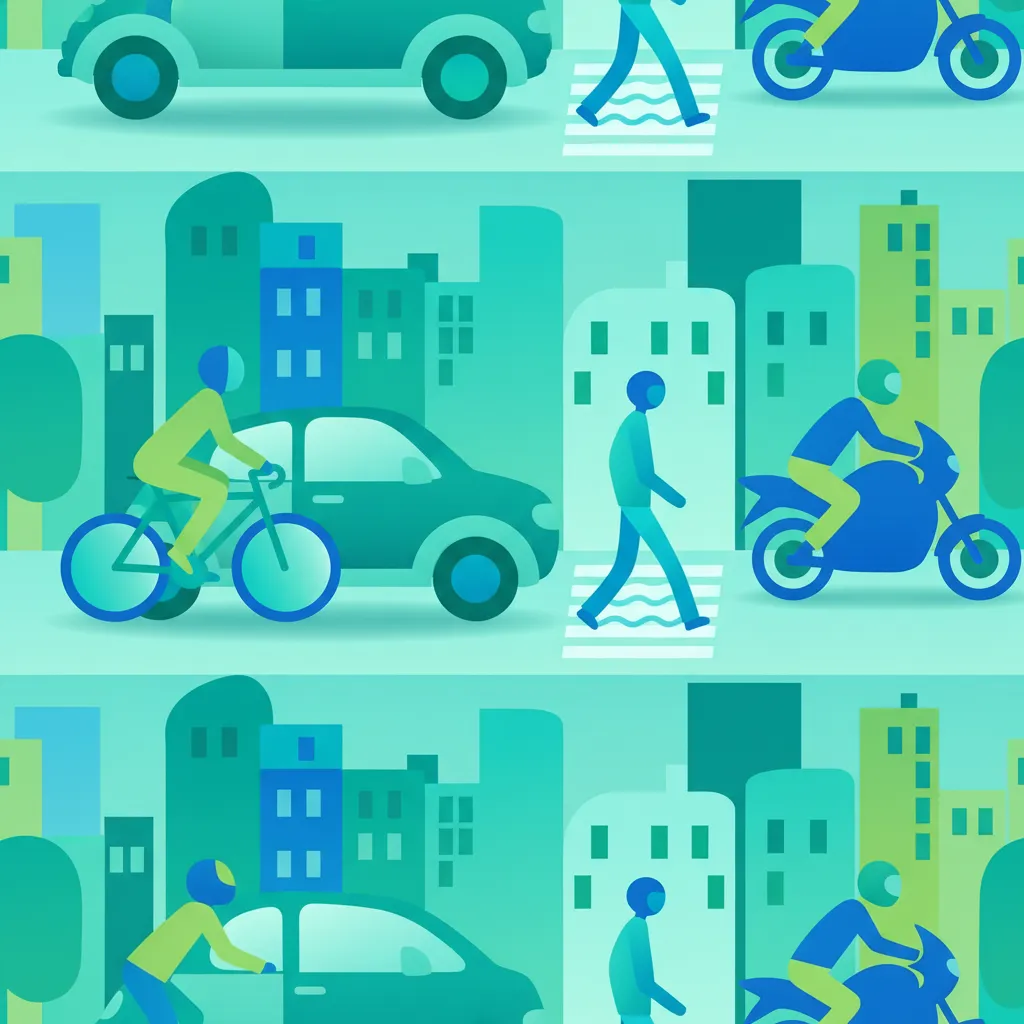
Theory topic content overview
Read the full theory topic guide for Road Sharing & Vulnerable Users with structured, easy-to-scan content built for learners in Spain. This detailed section explains the exact rule, meaning, traffic context, comparison points, and exam logic behind this Spanish driving theory topic so you can study faster, understand the concept more clearly, and avoid common interpretation mistakes on the theory test.
Roads in Spain, much like anywhere else, are shared spaces where many different types of users interact. As a driver, understanding how to safely and respectfully share the road with everyone – from pedestrians and cyclists to motorcyclists and large vehicles – is not just good practice; it's a fundamental principle of the Spanish driving code (DGT) and critical for passing your theory exam. This topic isn't just about following rules; it's about anticipation, adapting your driving, and taking responsibility for the safety of all, especially the most vulnerable.
Sharing the road is the active principle of cooperation and mutual awareness among all users of the public highway. For drivers in Spain, this translates into a legal and moral obligation to anticipate the actions of others, adjust driving behaviour to different speeds and vulnerabilities, and provide adequate space and respect. It acknowledges that not all road users are equally protected or visible, placing a greater duty of care on those operating larger, faster vehicles.
The DGT categorises specific groups as vulnerable road users (grupos vulnerables), including pedestrians, cyclists, motorcyclists, and often children and the elderly. Understanding their unique characteristics and common risks is central to safe driving in the Spanish traffic environment.
Misjudging or disregarding the presence of other road users is a primary cause of accidents in Spain. This topic is vital for several reasons:
Safe road sharing requires tailored approaches for different user groups.
Pedestrians are the most vulnerable. Always assume they may act unpredictably, especially children and the elderly.
Cyclists are less stable, harder to see, and often share lanes with motor vehicles.
Motorcyclists are often overlooked in traffic due to their smaller profile and can be difficult to judge for speed and distance.
While they are less vulnerable to damage, large vehicles present their own challenges due to size, weight, and restricted visibility.
Learners and even experienced drivers often make these mistakes, which are frequently highlighted in DGT exam questions:
To master sharing the road in Spain, adopt the mindset of a proactive, responsible driver. Prioritise the safety of others by always asking yourself: "Can they see me? Have I given them enough space? Am I anticipating their next move?" By applying the DGT's emphasis on awareness, specific distance rules, and anticipation, you will not only pass your theory exam but also contribute to safer roads for everyone in Spain.
Sharing the road in Spain requires drivers to actively cooperate with all users while showing extra care toward vulnerable groups defined by the DGT. The topic covers specific rules such as the 1.5-metre mandatory overtaking distance for cyclists outside urban areas, the prohibition on signalling pedestrians to cross, and the priority rights of groups of cyclists at junctions. Key skills include anticipating unpredictable behaviour, maintaining safe distances, performing thorough blind spot checks, and adapting driving to weather or road conditions that disproportionately affect less protected users. These principles are heavily tested in the DGT theory exam and form the foundation of responsible driver conduct in Spanish traffic.
A short set of high-value points that capture the most important ideas from this theory explanation.
Drivers have a legal and moral obligation to anticipate and protect vulnerable road users including pedestrians, cyclists, motorcyclists, and often children and the elderly
When overtaking a cyclist outside urban areas, you must maintain a minimum lateral safety distance of 1.5 metres – this is a specific DGT rule
Never signal or gesture to a pedestrian that they can cross; this is an illegal act under Spanish traffic law that could mislead them into danger
Large vehicles have extensive blind spots; avoid lingering alongside or directly behind trucks and buses where you are invisible to their mirrors
Anticipation and predictable behaviour are fundamental – always ask whether other road users can see you and whether you have given them enough space
1.5 metres is the mandatory lateral overtaking distance for cyclists outside urban areas (fuera de poblado)
Pedestrians have priority at marked crossings (pasos de peatones) – approach with reduced speed and be prepared to stop
When a group of cyclists has started crossing a junction or roundabout, the entire group has priority
Motorcyclists and cyclists are easily hidden in blind spots (ángulos muertos) – always perform head checks before changing lanes
Large vehicles require more space for turning and have longer braking distances due to their weight
Failing to perform head checks for blind spots, missing motorcycles or cyclists before lane changes or merging
Overtaking cyclists too closely outside urban areas, violating the mandatory 1.5-metre minimum distance
Illegally signalling pedestrians to cross, which can mislead them into dangerous situations
Underestimating the speed or presence of two-wheelers at junctions, leading to collisions when misjudging their approach
Lingering in large vehicle blind spots where truck or bus drivers cannot see your vehicle in their mirrors
Start with a short, direct summary of Road Sharing & Vulnerable Users before reading the full explanation below.
Sharing the road safely in Spain requires drivers to be constantly aware of and adapt to the presence of all road users. This means exercising extra caution around vulnerable groups like pedestrians, cyclists, and motorcyclists, who are less protected, and understanding the unique challenges of large vehicles. Prioritizing safety through patience, space, and predictable behavior helps prevent accidents and promotes a cooperative driving environment.
Review the most important terms, rule signals, and traffic concepts linked to Road Sharing & Vulnerable Users.
Explore related theory topic pages connected to Road Sharing & Vulnerable Users and continue with the next useful rule explanation.
See the common search queries learners use when trying to understand Road Sharing & Vulnerable Users in Spain.

Continue your preparation by exploring specific Spanish driving theory topics in depth. Review road signs, understand priority rules, and master DGT traffic laws. This section provides the essential knowledge to pass your exam and drive safely across Spain.
Explore Spanish Driving Theory TopicsTheory topic content overview
A short set of high-value points that capture the most important ideas from this theory explanation.
Drivers have a legal and moral obligation to anticipate and protect vulnerable road users including pedestrians, cyclists, motorcyclists, and often children and the elderly
When overtaking a cyclist outside urban areas, you must maintain a minimum lateral safety distance of 1.5 metres – this is a specific DGT rule
Never signal or gesture to a pedestrian that they can cross; this is an illegal act under Spanish traffic law that could mislead them into danger
Large vehicles have extensive blind spots; avoid lingering alongside or directly behind trucks and buses where you are invisible to their mirrors
Anticipation and predictable behaviour are fundamental – always ask whether other road users can see you and whether you have given them enough space
1.5 metres is the mandatory lateral overtaking distance for cyclists outside urban areas (fuera de poblado)
Pedestrians have priority at marked crossings (pasos de peatones) – approach with reduced speed and be prepared to stop
When a group of cyclists has started crossing a junction or roundabout, the entire group has priority
Motorcyclists and cyclists are easily hidden in blind spots (ángulos muertos) – always perform head checks before changing lanes
Large vehicles require more space for turning and have longer braking distances due to their weight
Failing to perform head checks for blind spots, missing motorcycles or cyclists before lane changes or merging
Overtaking cyclists too closely outside urban areas, violating the mandatory 1.5-metre minimum distance
Illegally signalling pedestrians to cross, which can mislead them into dangerous situations
Underestimating the speed or presence of two-wheelers at junctions, leading to collisions when misjudging their approach
Lingering in large vehicle blind spots where truck or bus drivers cannot see your vehicle in their mirrors
Start with a short, direct summary of Road Sharing & Vulnerable Users before reading the full explanation below.
Sharing the road safely in Spain requires drivers to be constantly aware of and adapt to the presence of all road users. This means exercising extra caution around vulnerable groups like pedestrians, cyclists, and motorcyclists, who are less protected, and understanding the unique challenges of large vehicles. Prioritizing safety through patience, space, and predictable behavior helps prevent accidents and promotes a cooperative driving environment.
Review the most important terms, rule signals, and traffic concepts linked to Road Sharing & Vulnerable Users.
Explore related theory topic pages connected to Road Sharing & Vulnerable Users and continue with the next useful rule explanation.
See the common search queries learners use when trying to understand Road Sharing & Vulnerable Users in Spain.
Continue your preparation by exploring specific Spanish driving theory topics in depth. Review road signs, understand priority rules, and master DGT traffic laws. This section provides the essential knowledge to pass your exam and drive safely across Spain.
Explore Spanish Driving Theory TopicsUse this exam-focused revision tip to understand how Road Sharing & Vulnerable Users is likely to appear in theory questions for learners in Spain. This section helps you identify the most testable part of the rule, avoid common traps, and remember the concept more effectively during Spanish driving theory exam preparation.
In the DGT exam, pay close attention to questions involving vulnerable road users. Always prioritize their safety by applying rules about safe distances, anticipation, and blind spot awareness. Remember that a driver's responsibility to protect these users is a key theme.
Read direct answers to the most common learner questions about Road Sharing & Vulnerable Users in Spain. This FAQ focuses on rule confusion, practical meaning, comparison with similar concepts, and the exact uncertainties that appear most often in Spanish driving theory revision and exam preparation.
In Spain, vulnerable road users primarily include pedestrians, cyclists, and motorcyclists due to their lack of protection compared to occupants of closed vehicles. Children and the elderly are also considered particularly vulnerable pedestrians.
Always provide ample lateral space when passing cyclists (at least 1.5 meters outside urban areas) and anticipate their movements. Cyclists can be affected by road conditions and are less visible, especially at night. Be cautious when turning and always check your blind spots.
Motorcyclists are often less visible and can be easily overlooked, especially in mirrors and blind spots. Always perform thorough checks before changing lanes or turning, and maintain a safe following distance. Assume they might be present even if you don't immediately see them.
Pedestrians generally have priority at marked pedestrian crossings, provided they cross safely and responsibly. Drivers must slow down and be prepared to stop. However, pedestrians should not cross against traffic signals or in prohibited areas.
Large vehicles like buses and trucks have significant blind spots, require more space for maneuvering (especially when turning), and take longer to accelerate and brake. Drivers should avoid lingering in their blind spots and give them plenty of room.
The DGT exam often includes questions about specific rules for vulnerable users, safe distances, priority situations involving different road users, and identifying potential hazards when sharing the road. It emphasizes the driver's responsibility to protect others.
Use our powerful search functionality to pinpoint specific Spanish DGT driving theory practice sets. Filter by road sign categories, traffic law topics, or question difficulty to build custom study sessions and reinforce your knowledge precisely where it matters for your official exam.